REVIEW · PRIVATE
12 Days Private Tour in Romania from Bucharest
Romania rewards the curious. This 12-day private tour links Bucharest, Transylvania, Maramureș, Bukovina, and the Carpathians in one long sweep, with a local guide and private car or minibus for your group. I like the mix of famous sights and less expected stops, especially the Merry Cemetery, Densuș Church, Ciocănești, and the Muddy Volcanoes. I also like that the daily plan can change after the tour begins.
The main drawback is the pace. You cover a large part of Romania in 12 days, so several days involve long road journeys and many stops. Accommodation, meals, drinks, and your own entrance fees are not included in the $4,072.47 per-person price, so you need to budget beyond the headline cost.
In This Review
- Six details that define this Romanian journey
- Bucharest begins with communism, village life, and revolution
- Curtea de Argeș and the Transfăgărășan Highway
- Dacian strongholds and a church built from ancient stones
- Fortified Saxon towns and Turda Gorge
- Salt, gardens, and a very tall wooden church
- Maramureș: humor, memory, and wooden faith
- Bukovina’s blue frescoes and fortified monasteries
- Egg art, folk sculpture, and the Bicaz Gorges
- Sighișoara, Viscri, and the castles of Brașov County
- Prejmer, mud volcanoes, and Snagov
- What the price covers, and what it leaves to you
- Who should book this tour?
- FAQ
- Where does the 12-day tour begin and end?
- Is this a private tour?
- Who guides and drives the tour?
- Is accommodation included?
- Are meals and drinks included?
- Are entrance fees included?
- Can the daily plan be changed?
- Is the Transfăgărășan Highway open all year?
Six details that define this Romanian journey
- A genuinely private road trip: Only your group travels in the private car or minibus, with a licensed English-speaking guide and driver available throughout.
- A wide view of Romania: The route moves from Bucharest and Wallachia through Transylvania, Maramureș, Bukovina, Moldavia, and back toward Bucharest.
- History without one narrow theme: You see communist-era Bucharest, Dacian ruins, medieval fortresses, royal castles, Saxon churches, and painful memorials to political oppression.
- The road itself is part of the attraction: The Transfăgărășan Highway, Tihuța Pass, Bicaz Gorges, and the Carpathian mountain routes are major parts of the experience.
- Unusual local culture: The painted houses of Ciocănești, the Lucia Condrea egg museum, Nicolae Popa’s folk art collection, and the Merry Cemetery give the tour its strongest sense of place.
- A personal guide matters here: The guide and owner is identified as Nicolas, also referred to as Razvan in the guest account, and was praised for making the group feel like part of his family.
Bucharest begins with communism, village life, and revolution
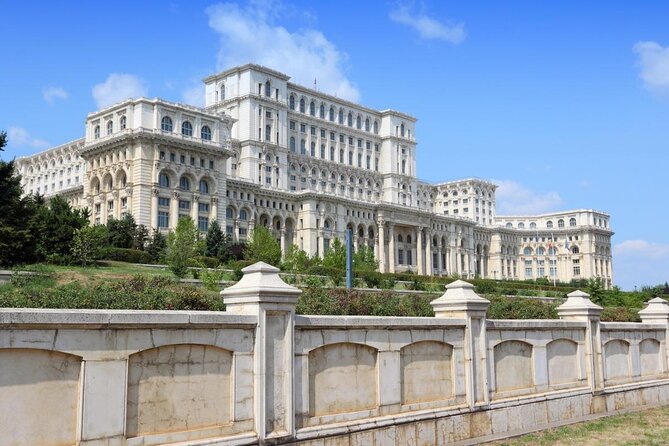
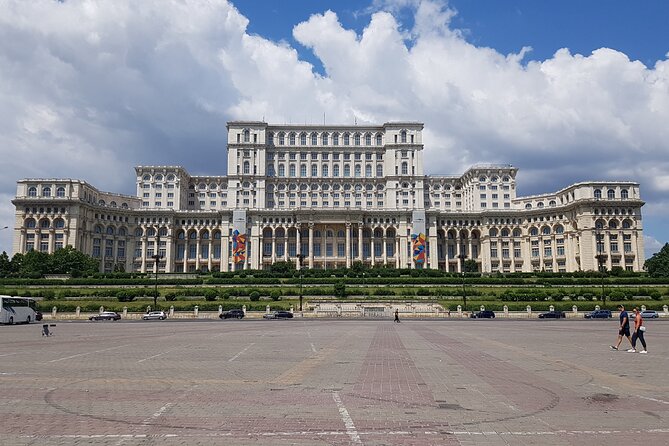
Your first day gives you three different Bucharests. At the Palace of Parliament, scale is the first lesson. It is the world’s second-largest administrative building after the Pentagon, and its sheer size explains something about the Nicolae Ceaușescu regime: power was displayed through stone, marble, and waste.
The visit is not just an architectural photo stop. It offers a direct way to discuss how totalitarian rule reshaped a capital and drained national resources. Two hours here gives the guide room to explain the building’s political meaning rather than simply point out oversized rooms.
The National Village Museum, or Muzeul Național al Satului Dimitrie Gusti, changes the mood. Traditional houses, churches, and rural buildings gathered beside the city show how Romanian communities once organized daily life around local materials and practical skills. I like this stop because it gives you a useful counterpoint to the Palace of Parliament. One celebrates excess. The other shows modest living shaped by the seasons and surroundings.
At the Romanian Athenaeum, you get Bucharest’s cultural face. The building is treated as one of the city’s key symbols, and 45 minutes is enough for a look without making the first day feel overloaded.
Revolution Square brings the story back to politics. You see the former Central Committee building of the Romanian Communist Party, tied to the December 1989 uprising that removed Ceaușescu from power. The stop helps connect the grand building from earlier in the day with the people who challenged the system.
The day ends in the Old Town, beginning around Hanul lui Manuc. This old fortified inn was built around 1806 by Manuc Bei and once served merchants crossing through Bucharest. You can expect historic buildings, restaurants, and a sharper contrast between old commerce and modern city life. The two-hour visit is useful for strolling and eating, but the experience will depend partly on how much free time your guide leaves you.
A few more Bucharest days worth comparing
- Bucharest: Dracula’s Castle, Peles Castle, & Brasov Old Town
★ 4.5 · 17,858 reviews - Bucharest: Dracula Castle, Peles Castle & Brasov Old Town
★ 4.6 · 10,891 reviews - Bucharest: Dracula’s Castle, Peleș Castle & Brașov Day Trip
★ 4.5 · 5,919 reviews
Curtea de Argeș and the Transfăgărășan Highway
Day two heads toward the mountains. Curtea de Argeș combines princely ruins, a 13th-century Royal Church, royal tombs, and the famous monastery. The monastery also carries the old Romanian idea that beautiful, durable work demands sacrifice, a theme tied to its sad foundation story.
Poienari Fortress offers a different kind of medieval site. Its ruins sit high on a cliff over the Argeș River and are linked with Vlad the Impaler, the historical figure later turned into Dracula. The fortress was repaired and strengthened under Vlad, then captured by the Turks in 1462. According to the account presented here, Vlad escaped through a secret mountain passage.
The setting is the main attraction. This is not a polished castle with furnished halls. It is a ruined stronghold above the river, surrounded by the Carpathian foothills. Allow two hours, and expect the visit to feel more like a mountain history stop than a standard castle tour.
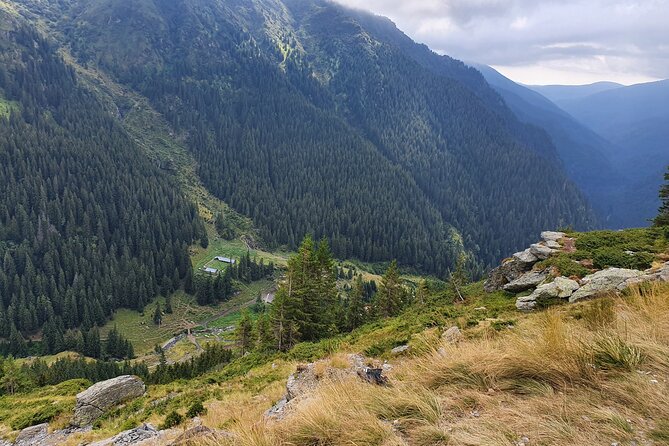
Then comes the Transfăgărășan Highway, Romania’s best-known mountain road. It runs for more than 150 kilometers and reaches 2,042 meters at the tunnel near Lake Bâlea. The road is fully open only from June through October, so the season matters greatly. Outside that window, the route may not offer the same experience, and the tour needs careful timing.
Sibiu closes the day with Big Square and the old center. The city’s 900-year story includes the Evangelical Cathedral and a well-kept historic core. After the remote fortress and high road, Sibiu gives you cafés, architecture, and a more relaxed urban pause.
Dacian strongholds and a church built from ancient stones
Day three has a strong archaeological focus. Corvin Castle in Hunedoara is one of Romania’s grandest Gothic-Renaissance buildings and one of Europe’s larger castles. Two hours allows time to appreciate its towers, courtyards, and defensive character.
Densuș Church is smaller but, for me, more unusual. Its present form dates to the 13th century, while the site began as a 2nd-century Roman temple. Some building materials came from the Dacian fortress at Sarmizegetusa. Inside, 15th-century paintings show Jesus wearing Romanian traditional clothing, an image that links Christian art with local identity.
Sarmizegetusa Regia takes you farther back. It was the Dacian capital and a major military, religious, and political center before the wars with Rome. The site sits on a mountain about 1,200 meters high and formed part of a defensive system in the Orăștie Mountains.
These stops work well together because they show layers of Romania rather than one clean historical story: Dacian power, Roman influence, medieval worship, and later European architecture. The tradeoff is that the day is history-heavy and includes remote mountain sites. If you prefer relaxed town time, this will feel demanding.
Fortified Saxon towns and Turda Gorge
Biertan introduces the Transylvanian Saxons. Its fortified church rises on a hill in the center of the town, protected by three walls and seven bastions. The settlement dates to 1224, and the church is part of a UNESCO World Heritage tradition of fortified villages in Transylvania.
At Cheile Turzii, the focus shifts from masonry to rock. The reserve lies about 40 kilometers south of Cluj-Napoca, where a stream runs between steep stone walls. The easiest route follows the bottom of the gorge, and other routes vary in length and difficulty.
That range makes this a practical stop for a private tour. You can choose a gentler walk rather than treating the gorge as a serious hiking day. Still, allow two hours and wear sensible shoes. The program identifies several route options but does not specify which one your group will take, so discuss your preference with Nicolas before setting out.
Alba Carolina Citadel in Alba Iulia brings you to an enormous star-shaped Habsburg fortress. Construction began in 1715 and ended in 1738, with about 20,000 serfs involved and an estimated cost of three million guldens. The fortress also occupies the site of earlier Roman and medieval defenses.
I like the sequence of this day. Biertan shows a fortified religious community, Turda gives you a natural break, and Alba Iulia shows military planning on a grand scale.
A completely different kind of day out:
- Bucharest: Palace of Parliament Tickets and Guide
★ 4.3 · 3,182 reviews - Bucharest: Day Trip to Dracula Castle, Peles Castle & Brașov
★ 4.4 · 3,049 reviews - Bucharest to Dracula Castle, Peles Castle and Brasov Guided Tour
★ 4.5 · 2,933 reviews - Bucharest: Palace of Parliament Tickets and Guided Tour
★ 4.4 · 1,877 reviews
Salt, gardens, and a very tall wooden church
Salina Turda is one of the tour’s most distinctive stops. The salt mine combines industrial history with unusual underground spaces and saline air. The program presents the air as potentially helpful for people with allergies or asthma, but you should treat that as a feature of the environment, not medical advice.
Cluj-Napoca’s botanical garden and old center give you a city interlude. The city includes Baroque, Renaissance, and Gothic buildings, with some dating to the 17th century. The one-hour botanical garden visit is brief, so you will not have time for a long exploration of every corner.
Surdești Wooden Church is a fine example of local craftsmanship. Its tower reaches about 54 meters, while the church is also described as a 72-meter wooden structure. The figures in the description are inconsistent, but the key point is clear: this is an exceptionally tall wooden church, built in 1721.
The stop lasts only 45 minutes. That is enough to admire the construction and setting, but not enough for a slow architectural study.
Maramureș: humor, memory, and wooden faith
The Merry Cemetery at Săpânța is not a typical cemetery. Its painted crosses and humorous poems describe the lives of the dead with an openness that can feel surprising. The tradition is linked in the tour explanation to older Dacian ideas about laughter and death.
This is one of the best cultural stops because it feels local rather than grand. The art is colorful, direct, and personal. Give yourself time to read the inscriptions if possible. The humor will not translate perfectly in every case, but the idea is easy to grasp.
The Memorial of the Victims of Communism and of the Resistance supplies a much heavier hour. Its purpose is to show the damage caused by Romania’s communist regime and the suffering of those who opposed it. Two hours here gives the subject proper weight.
The contrast between the Merry Cemetery and the memorial is important. One treats death through wit and village tradition. The other records state violence and forced silence. Together, they make Maramureș more than a scenic detour.
Day seven continues with Bârsana Monastery, known for its tall wooden church, listed here at 57 meters. Its setting and carved wooden buildings offer a calm, spiritual pause.
Tihuța Pass then carries you into the Dracula story. Bram Stoker called it the Borgo Pass in his novel, though he never visited the area. The modern Hotel Castel Dracula sits at 1,116 meters and adopted its current name after the Dracula story became a major part of the region’s identity.
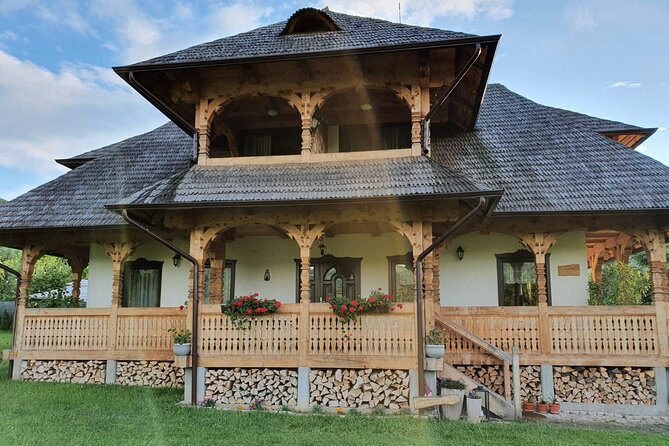
Ciocănești is the day’s most charming stop. Houses are painted with traditional motifs, and the village lies along the Bistrița River among pine and spruce forests and meadows. It is a good reminder that Romanian identity is visible not only in museums and churches, but also on ordinary homes.
Bukovina’s blue frescoes and fortified monasteries
Day eight is devoted to the painted monasteries of Bukovina. Voroneț is the star, with exterior frescoes known for their intense blue, often called Voroneț blue. Stephen the Great founded the monastery in 1488 after victory at the Battle of Vaslui, and the church was built in only three months and three weeks according to the supplied account.
Humor Monastery adds another fortified religious site. Its first church was built around 1400 and later replaced after destruction. The walls and defensive design show how worship and protection were joined in a region repeatedly threatened by invasion.
Sucevița and Moldovița continue the visual story. Sucevița’s painted walls present biblical scenes in a form that works almost like an outdoor book. Moldovița combines Byzantine, Gothic, and Moldavian elements, with murals inside and outside the church.
Each monastery visit lasts about 45 minutes. That is enough for a first look, but four monasteries in one day can blur together. I would ask the guide to explain the differences between the fresco programs and building styles, rather than treating each stop as another quick photo opportunity.
Egg art, folk sculpture, and the Bicaz Gorges
The Lucia Condrea International Egg Museum is a surprising addition. It contains more than 5,500 exhibits arranged across two floors and 56 display cases. One hour gives you a focused look at an art form that many visitors would not expect to find on a major Romanian route.
The Popa Museum near Târgu Neamț was created in the home of sculptor Nicolae Popa. His life adds weight to the collection. Wounded in the Second World War and later imprisoned by the communist regime, he worked to preserve Romanian values through sculpture and folklore.
These small museums are exactly why a private tour can be more rewarding than a standard highlights route. They are personal, specific, and tied to local people.
Bicaz Gorges finishes the day with a two-hour walk beside a river that cut through the mountains and forests. It is a straightforward scenic counterpoint to the indoor collections.
Sighișoara, Viscri, and the castles of Brașov County
Sighișoara’s Clock Tower and Arms Museum introduce one of Romania’s most complete medieval towns. The citadel was built in 1280 and has remained inhabited for more than 700 years. Its connection with Vlad the Impaler gives it a Dracula association, but the town is worth your time even without the legend.
Viscri’s white fortified church gives you another view of Transylvanian Saxon life. The site began with a small Szekler church, later expanded by German colonists. Fortifications were added in the 15th century, and some defensive spaces were eventually used for practical community purposes.
Rupea Fortress rises on a 120-meter basalt cliff. It was first documented in 1324 and restored between 2010 and 2013. The position gives the stop its force, while the restoration makes it easier to understand the fortress layout.
Brașov’s Black Church, old square, and medieval walls form the center of day 11. You get a walking tour and free time for cafés, which is welcome after several days of road stops.
Bran Castle is the most famous name on the route, but history and fiction need separating. Its appearance fits the Dracula image, yet the connection to Bram Stoker’s fictional castle is not confirmed. Outside, you can try handmade cheeses, pálinka, ham, and sausages.
Peleș Castle offers a different kind of grandeur. It was the Romanian royal family’s summer residence and is one of the country’s most admired castles. Two hours at both Bran and Peleș lets you compare a fortress shaped by legend with a royal residence shaped by ceremony and comfort.
Prejmer, mud volcanoes, and Snagov
The final day begins at Prejmer’s fortified church, founded by the Teutonic Knights and later taken over by the Transylvanian Saxon community. It became Lutheran after the Reformation and forms part of the UNESCO group of fortified villages in Transylvania.
The Berca Mud Volcanoes are among the route’s strangest natural sights. Gas rising from about 3,000 meters below the surface pushes salty water and mud upward, creating small cones that dry into cracked formations. The stop lasts three hours, longer than many of the churches, because the site needs time to walk around and observe.
Snagov Monastery closes the Dracula thread. It is associated with the supposed tomb of Vlad the Impaler, and the stop offers a final chance to separate historical figures from later fiction. After 12 days of castles, fortresses, and legends, it is a fitting ending.
What the price covers, and what it leaves to you
At $4,072.47 per person, this is a high-cost private trip. Its value depends on your group size and how much you value flexibility. You are paying for a private car or minibus, a licensed English-speaking guide and driver, fuel, parking, road tolls, the guide’s accommodation and meals, and wireless internet in the vehicle.
You are not paying for your own accommodation, meals, beverages, or entrance fees. The details also say that guide admission is covered, while your own admission fees are not. Ask for a current estimate of those extra costs before booking, since the route includes many paid sites.
The strongest value is not a single attraction. It is the ability to alter the daily plan for your group, avoid joining strangers, and have Nicolas available throughout a demanding route. One guest from October 2023 described him as friendly, kind, and family-like. That is especially meaningful on a 12-day tour, where the guide can shape the whole experience.
Free cancellation is available up to 24 hours before the start time. Changes or cancellations inside that window are not accepted for a refund.
Who should book this tour?
I would choose this tour if you want to see far more than Bucharest, prefer private transport, and enjoy history, churches, castles, mountain roads, museums, and local customs in one trip. It suits families or friends who want control over the pace and do not want to manage Romania’s long distances alone.
I would think twice if you prefer slow travel, long stays in each town, or a small number of major sights. The program covers a huge area, and the repeated 45-minute visits can feel quick. You should also confirm the Transfăgărășan operating season, clarify your own entrance costs, and ask how much time will be spent on the road each day.
For the right group, this is an ambitious introduction to Romania. Nicolas’s personal approach, the private vehicle, and the unusual stops make it more than a castle checklist. Book it if variety and flexibility matter more to you than an easy, unhurried schedule.
FAQ
Where does the 12-day tour begin and end?
The tour is based in Bucharest and includes pickup. The final listed stop is Snagov Monastery, but the provided details do not state the exact end point.
Is this a private tour?
Yes. Only your group participates, and transport is provided by a private car or minibus for you and your friends or family.
Who guides and drives the tour?
A private, licensed English-speaking guide and driver is available throughout the tour. The guide is identified as Nicolas, and the guest account also refers to him as Razvan.
Is accommodation included?
No. Your accommodation is not included. The tour does cover the guide’s accommodation and meals.
Are meals and drinks included?
No. Your meals and beverages are not included in the price.
Are entrance fees included?
Your own entrance fees are not included. The guide’s accommodation, meals, and entrance fees are covered, according to the tour details.
Can the daily plan be changed?
Yes. The tour allows considerable flexibility, including changes to the daily plan after the tour has started.
Is the Transfăgărășan Highway open all year?
No. The road is fully open only from June through October, with its highest point at 2,042 meters near Lake Bâlea.
Just added in Bucharest
- Bucharest: Dealu Mare Winery Private Trip with Wine Tasting★ 4.9 · 6 reviews
- Winery touring & private wine tasting – one day private tour★ 5.0 · 3 reviews
- Village Museum Bucharest Guided Tour★ 5.0 · 6 reviews
- Transylvania Tour: Dracula’s Castle, Peles Palace & Brasov★ 5.0 · 19 reviews
- Transfer Airport Otopeni – Bucharest★ 5.0 · 2 reviews
- Private Transfer Bucharest Otopeni Airport (OTP) to/from Brasov★ 5.0 · 2 reviews
- Bucharest Airport Transfer To Constanta Mamaia★ 5.0 · 3 reviews
- Airport Henri Coanda (Otopeni) to Bucharest – Private Transfer – Driver★ 5.0 · 5 reviews
Private, compared.

Castles of Transylvania: Private Day Trip from Bucharest
Read our review →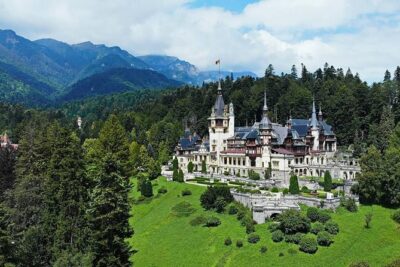
Dracula’s Castle, Peles Castle and Brasov – Private Day Trip from Bucharest
Read our review →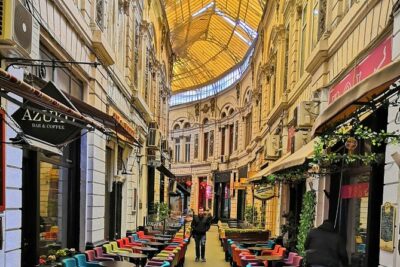
Bucharest Panoramic Sightseeing – Private City Tour
Read our review →
THERME “Take It Easy” Pack: Full Spa Access + Private Transfers
Read our review →
Piatra Craiului National Park Private Hiking Tour from Brasov
Read our review →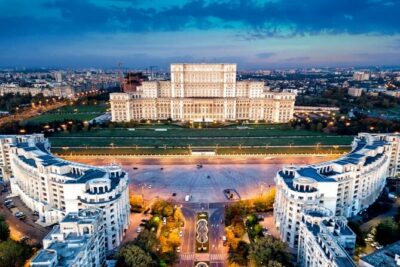
4h Bucharest Private Tour (2h by Car and 2h Walking in Old Town)
Read our review →