REVIEW · PRIVATE
15 Days Private Tour in Romania, Moldova and Transnistria
Romania rewards patient explorers. This 15-day private journey links Bucharest, Transylvania, Maramureș, Moldova, Transnistria, and the Danube Delta in one long road trip, giving you far more than a quick Dracula-themed visit. I like the private car and flexible schedule, which let your group adjust the pace, and I like the unusual mix of famous sights and small cultural stops, from the Merry Cemetery to a family-created folk museum. The main concern is the price and the amount of time spent on the road.
You travel with a private English-speaking guide and driver, rather than joining a large coach group. Nicolas and Razvan are specifically praised for flexibility, safe driving, country knowledge, and solving unexpected problems. Still, you need to budget separately for hotels, meals, drinks, and many entrance fees, since the published price of $5,209.21 per person covers the touring service but not all trip costs.
In This Review
- Key points to know before booking
- Bucharest begins with communism, village life, and revolution
- From Curtea de Argeș to Sibiu on Romania’s great mountain road
- Castles, Roman ruins, and the Dacian highlands
- Brașov, Bran, and Peleș, three very different icons
- Fortified churches and Sighișoara’s medieval streets
- Turda, Cluj, and the wooden churches of Maramureș
- Maramureș: humor, suffering, and wooden monasteries
- Bukovina’s painted monasteries and Iași
- Transnistria and Moldova’s underground wine city
- The Danube Delta and Romania’s Black Sea coast
- What the $5,209.21 price really buys
- Who should book this 15-day journey?
- FAQ
- Is this a private tour?
- What is included in the tour price?
- Are my hotels and meals included?
- Is pickup available?
- Is the Transfăgărășan Highway open all year?
- Can I cancel for a full refund?
Key points to know before booking
- This is a true cross-border road trip: You cover Romania from Bucharest to the Black Sea, then continue into Moldova and Transnistria before returning to eastern Romania.
- The private format changes the pace: Your group alone travels in the car or minibus, with room to request itinerary changes during the trip.
- Maramureș gives the tour its strongest local flavor: Two nights in a guest house place you near wooden churches, painted homes, village customs, and the Merry Cemetery.
- The monasteries are a major reason to go: Voroneț, Humor, Sucevița, and Moldovița offer painted walls, fortified courtyards, and a strong sense of Moldavian religious art.
- The Danube Delta requires time: The eight-hour visit is not a quick photo stop. It gives you a proper day in one of Europe’s key wetland areas.
- Season matters on the Transfăgărășan Highway: The high section is generally open only from June through October, so the road trip needs careful timing.
Bucharest begins with communism, village life, and revolution
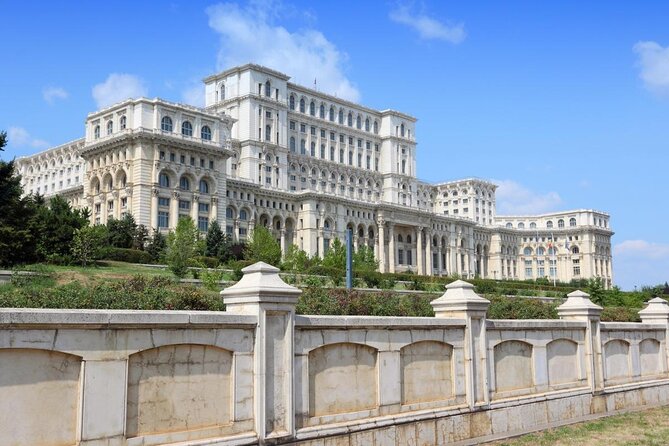
Your first day sets up modern Romania through three very different views of Bucharest. At the Palace of Parliament, you confront the sheer scale of Nicolae Ceaușescu’s communist-era building project. The tour presents the structure not just as an enormous administrative building, but as a lesson in what unchecked political power can create.
Two hours here makes sense. The building is vast, and the story behind it is more important than the architecture alone. The visit also gives you useful context for later stops connected with communism and the 1989 revolution.
The National Village Museum offers a needed change of mood. Traditional houses, churches, and farm buildings from across Romania have been brought together in an open-air setting. You get a clear picture of village life, local building methods, and the way rural communities used nearby materials.
At the Romanian Athenaeum, the focus shifts to national culture and architecture. The 45-minute stop is short, but enough to appreciate the building as one of Bucharest’s main cultural symbols.
Revolution Square brings the recent past into the street. You see the former Central Committee building, linked to the December 1989 uprising that ended Ceaușescu’s rule. This stop works best if you pay attention to the guide’s explanation, since the square itself cannot tell the full story.
The Old Town closes the day with a more relaxed walk. Hanul lui Manuc, built around 1806, recalls the days when merchants and visitors met in a large fortified inn. Bucharest’s historic center is full of contrasts, with old courtyards, churches, restaurants, and newer nightlife sharing the same streets.
A few more Bucharest days worth comparing
- Bucharest: Dracula’s Castle, Peles Castle, & Brasov Old Town
★ 4.5 · 17,858 reviews - Bucharest: Dracula Castle, Peles Castle & Brasov Old Town
★ 4.6 · 10,891 reviews - Bucharest: Dracula’s Castle, Peleș Castle & Brașov Day Trip
★ 4.5 · 5,919 reviews
From Curtea de Argeș to Sibiu on Romania’s great mountain road
Day two packs royal history, Dracula associations, mountain views, and Sibiu into one route. At Curtea de Argeș Monastery, you see an important Wallachian religious site along with royal tombs and the remains of a princely court. The church and monastery carry a dramatic story built around the old belief that beautiful, lasting work requires sacrifice.
Poienari Castle is a sharper physical challenge, though this itinerary lists only a brief 10-minute stop and does not include admission. The fortress sits high above the Argeș River and is linked with Vlad the Impaler, the historical figure who helped inspire the Dracula legend. You should confirm exactly how much walking and stair access your schedule allows, since the ruins are on a steep site.
The Transfăgărășan Highway is the day’s major visual reward. More than 150 kilometers long, it climbs to about 2,042 meters at the tunnel near Lake Bâlea. Curving roads, high mountain air, and the changing views make this one of Romania’s most memorable drives.
The catch is weather and season. The highest part is normally fully open only between June and October, so a date outside that window may require a revised route.
Sibiu’s Big Square gives you a pleasant evening finish. The old center, Evangelical Cathedral, and medieval streets show the influence of the Transylvanian Saxon community. After the long drive, the hour in the square may feel brief, but it is enough to get your bearings and enjoy the city’s cafés.
Castles, Roman ruins, and the Dacian highlands
Corvin Castle is one of the tour’s most theatrical stops. Its Gothic and Renaissance forms, towers, courtyards, and defensive features make it easy to understand why it is counted among Romania’s major castles. Two hours allows time for more than a quick exterior photograph.
Densuș Church is smaller but more unusual. The stone church dates in its present form to the 13th century and incorporates material from earlier Roman and Dacian sites. Inside, medieval mural paintings show Jesus in Romanian-style clothing, an unexpected local detail that makes the church memorable.
Sarmizegetusa Regia takes you into the Orăștie Mountains and the world of the Dacians. It was the Dacian political, religious, and military center before the wars with Rome. The site sits at about 1,200 meters, so the visit adds a mountain walk to an already full day.
I like this sequence because it moves beyond standard castle tourism. You see medieval power at Corvin Castle, early Christian tradition at Densuș, and pre-Roman history at Sarmizegetusa. The drawback is distance: these sites are spread out, and the road time is part of the experience.
Brașov, Bran, and Peleș, three very different icons
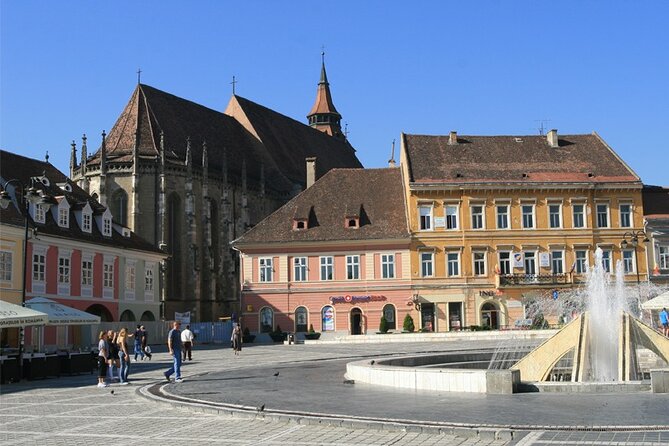
Brașov is one of Romania’s easiest cities to enjoy on foot. The Black Church, Old Town square, and medieval walls provide a compact introduction to Transylvanian urban history. Two hours gives you guided sightseeing plus some time to pause in a café.
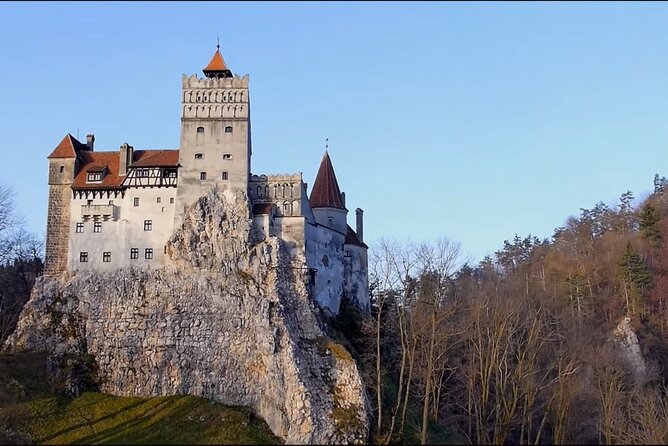
Bran Castle is the crowd-pleaser, but keep the legend in proportion. Its connection with Count Dracula is largely literary and commercial, while its real story involves a mountain fortress and royal associations. The stop is still worthwhile for the setting, the rooms, and the chance to try local foods such as handmade cheeses, plum or pear brandy, ham, and sausages.
Peleș Castle offers a completely different style. This was the Romanian royal family’s summer residence, built and decorated as a refined mountain retreat. If you enjoy interiors, royal stories, and careful architectural detail, the two-hour visit may be your favorite castle stop.
The three sites together make a strong day, but it is a full one. You are moving between popular attractions, and the schedule leaves little room for lingering. Your private guide should help by adjusting the timing if your group prefers one castle over another.
A completely different kind of day out:
- Bucharest: Palace of Parliament Tickets and Guide
★ 4.3 · 3,182 reviews - Bucharest: Day Trip to Dracula Castle, Peles Castle & Brașov
★ 4.4 · 3,049 reviews - Bucharest to Dracula Castle, Peles Castle and Brasov Guided Tour
★ 4.5 · 2,933 reviews - Bucharest: Palace of Parliament Tickets and Guided Tour
★ 4.4 · 1,877 reviews
Fortified churches and Sighișoara’s medieval streets
Day five takes you into the Saxon villages of southern Transylvania. Viscri’s white fortified church is especially worthwhile because it combines a working village setting with defensive architecture. The church began with a small Szekler building, later expanded under German settlers, and was fortified in the 15th century.
Rupea Fortress rises on a basalt cliff about 120 meters above the surrounding area. It was restored between 2010 and 2013, so the site is easier to read than many ruined fortresses. The view is part of the appeal, but the restored walls also show how regional strongholds were organized.
Sighișoara is the day’s main attraction. The inhabited citadel has remained a real town for centuries, not just a preserved museum quarter. The Clock Tower and Arms Museum help explain the town’s defensive role, while the streets and colorful buildings provide the atmosphere people hope to find in medieval Romania.
The Dracula connection appears again because Vlad the Impaler was born here. Still, Sighișoara is more interesting when you look beyond the legend and focus on daily life inside a fortified settlement.
Turda, Cluj, and the wooden churches of Maramureș
Turda Salt Mine is one of Romania’s most surprising sights. The underground chambers show how salt extraction created an entirely different world beneath the town. The two-hour visit is visually striking, and the saline air may appeal to people with allergies or asthma, though you should not treat the stop as medical care.
Cluj-Napoca adds a city break with Baroque, Renaissance, and Gothic buildings around the old center. The two-hour botanical garden visit gives the day a calmer rhythm and provides a change from fortresses and churches.
The Surdești Wooden Church brings you into Maramureș, a region known for remarkable timber construction. Its tower reaches about 54 meters, and the church was built in 1721. The short visit is enough to appreciate the height and craftsmanship, though you may wish the schedule allowed more time in the surrounding village.
Maramureș: humor, suffering, and wooden monasteries
The Merry Cemetery in Săpânța is unlike any ordinary cemetery. Brightly painted crosses carry humorous poems about the people buried there. The tone is playful, but the site also reflects a local way of treating death with directness rather than silence.
At the Memorial of the Victims of Communism and of the Resistance, the mood changes completely. The museum records imprisonment, repression, and resistance under Romania’s communist regime. Two hours here adds emotional weight to the Palace of Parliament and Revolution Square visits from the first day.
Barsana Monastery returns you to the region’s wooden religious tradition. Its church reaches about 57 meters, and the grounds are known for careful timber work and a strong mountain setting. The 45-minute stop is short, so listen closely to the guide and take time to look at the carved details.
Tihuța Pass links Transylvania with Bukovina and is also known through Bram Stoker’s fictional Borgo Pass. The nearby Castel Dracula hotel adopted its name later, since Stoker never visited the area. Ciocănești then offers something more local and cheerful, with houses decorated in traditional painted motifs along the Bistrița River.
The two nights in a Maramureș guest house are important. They slow the pace and give you a better chance to see how the region differs from Bucharest and the large Transylvanian cities.
Bukovina’s painted monasteries and Iași

Voroneț is often called the Sistine Chapel of the East because of its exterior frescoes and famous blue color. Founded by Stephen the Great in 1488, it is one of the clearest examples of how religious art was used to teach biblical stories to a largely non-literate population.
Humor Monastery has its own fortified character and a history of survival through conflict and change. Sucevița is especially impressive for its defensive walls and extensive painted scenes, while Moldovița combines Byzantine, Gothic, and Moldavian elements.
The four monasteries are each worth seeing, but the schedule can feel repetitive if you are not interested in religious art. I recommend taking notes on the different colors, compositions, and settings instead of trying to absorb every painted scene at once.
The Popa Museum near Târgu Neamț provides a welcome personal touch. Nicolae Popa created the collection in his own home after wartime injury, communist imprisonment, and the loss of his possessions. His sculptures and folk art show how one person preserved Romanian traditions through creative work.
In Iași, the Monastery of the Three Hierarchs is an ornate 17th-century building listed among Romania’s historic monuments. The two-hour visit gives you time to consider the city’s religious and cultural importance before the international portion of the trip begins.
Transnistria and Moldova’s underground wine city
Tiraspol offers a rare look at Transnistria, an autonomous region with its own political identity and Soviet-era symbols. The Suvorov Monument and Tank Monument provide the main historical focus. These are not neutral tourist decorations, so your guide’s explanation matters.
The stop is unusual, but it also requires a practical mindset. Political borders and local conditions can affect a visit, and the schedule may need flexibility. The private format is useful here because you are not trying to move a large group through a sensitive destination.
Cricova Winery is one of Moldova’s signature experiences. Its underground roads extend about 120 kilometers, with sections named after the wines stored there. The cellars hold around 1.25 million bottles, including older wines, and the three-hour visit includes admission.
In Chișinău, the Nativity Cathedral has had several lives. Built in the 1830s, damaged during World War II, and later used as an exhibition center during the Soviet period, it now serves again as a place of worship. The cathedral and park offer a quieter counterpoint to the underground winery.
The Danube Delta and Romania’s Black Sea coast
Brăila takes up much of day 13 and serves as a transition back into Romania. The Danube Bridge is a major local engineering project, nearly two kilometers long, intended to improve links between eastern Romania’s regions. The four-hour stop may appeal most to people interested in infrastructure and regional development.
The Danube Delta deserves the full eight-hour visit. The delta covers about 580,000 hectares and supports more than 300 bird species and 45 freshwater fish species. Pelicans, herons, storks, cormorants, and terns are among the birds associated with the wetlands.
This is the part of the trip where patience pays. You are looking for open water, reed beds, birds, and quiet movement rather than monuments. Bring sun protection and a camera, and accept that wildlife sightings depend on conditions.
The final day moves to Constanța and Mamaia. The Carol I Mosque combines Egyptian, Byzantine, and Romanian influences and reflects the long-standing Muslim community of the region. Mamaia supplies a few hours by the Black Sea, with beaches, food, entertainment, and an amusement park.
Constanța Casino, beside the water, recalls the city’s early seaside resort era. Its changing use and long history make it more interesting than a simple photo stop, even if restoration work or restricted areas affect what you can see.
What the $5,209.21 price really buys
The price is high, but this is not a standard city tour. It covers 15 days of private transport, an English-speaking guide and driver, fuel, parking, road tolls, guide accommodation and meals, wireless internet in the vehicle, and the ability to change the daily plan.
The major omission is important: your own accommodation, meals, drinks, and entrance fees are not included, despite many individual stops listing admission. You should calculate those costs before booking.
The value is strongest for a family or group of friends that wants one vehicle, one guide, and no strangers. Divided among several people, private transport can make more sense. For a solo visitor, the per-person cost is much harder to justify.
The high praise for Nicolas and Razvan focuses on the parts that matter most on a long road trip: safe driving, flexibility, and solving unexpected problems. Those qualities can save time and stress when roads, borders, weather, or opening conditions disrupt the original plan.
Who should book this 15-day journey?
You should consider this tour if you want broad coverage and prefer private travel to independent planning. It suits people who enjoy castles, churches, political history, traditional villages, wine, nature, and long scenic drives.
I would not choose it for a short, relaxed holiday. The itinerary is ambitious, several days involve long road sections, and the included sights range from major attractions to brief roadside or city stops.
Before paying, confirm the final hotel plan, which entrance fees are covered, the expected vehicle, border arrangements for Transnistria, and the seasonal status of the Transfăgărășan Highway. If those details fit your needs, this is a rare way to connect Romania and Moldova in one carefully guided trip. If you prefer slow mornings and several nights in each city, build a shorter custom route instead.
FAQ
Is this a private tour?
Yes. Only your group participates, using a private car or minibus with a licensed English-speaking guide and driver.
What is included in the tour price?
The service includes private transportation, fuel, parking, road tolls, wireless internet in the vehicle, guide accommodation and meals, entrance fees for the guide, and flexibility to change the daily itinerary.
Are my hotels and meals included?
No. Your accommodation, meals, drinks, and entrance fees listed for your group are not included.
Is pickup available?
Yes. Pickup is offered, and confirmation is provided at the time of booking.
Is the Transfăgărășan Highway open all year?
The highest section is fully open only from June through October, so the route depends on the season.
Can I cancel for a full refund?
Yes, if you cancel at least 24 hours before the experience start time. Cancellations or changes made less than 24 hours in advance are not accepted for a refund.
Just added in Bucharest
- Bucharest: Dealu Mare Winery Private Trip with Wine Tasting★ 4.9 · 6 reviews
- Winery touring & private wine tasting – one day private tour★ 5.0 · 3 reviews
- Village Museum Bucharest Guided Tour★ 5.0 · 6 reviews
- Transylvania Tour: Dracula’s Castle, Peles Palace & Brasov★ 5.0 · 19 reviews
- Transfer Airport Otopeni – Bucharest★ 5.0 · 2 reviews
- Private Transfer Bucharest Otopeni Airport (OTP) to/from Brasov★ 5.0 · 2 reviews
- Bucharest Airport Transfer To Constanta Mamaia★ 5.0 · 3 reviews
- Airport Henri Coanda (Otopeni) to Bucharest – Private Transfer – Driver★ 5.0 · 5 reviews
Private, compared.

Castles of Transylvania: Private Day Trip from Bucharest
Read our review →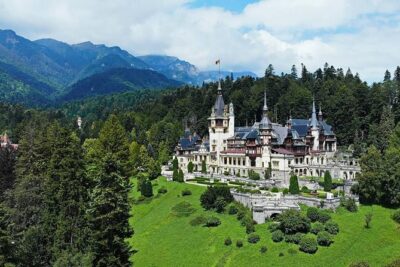
Dracula’s Castle, Peles Castle and Brasov – Private Day Trip from Bucharest
Read our review →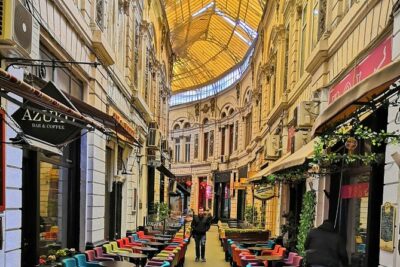
Bucharest Panoramic Sightseeing – Private City Tour
Read our review →
THERME “Take It Easy” Pack: Full Spa Access + Private Transfers
Read our review →
Piatra Craiului National Park Private Hiking Tour from Brasov
Read our review →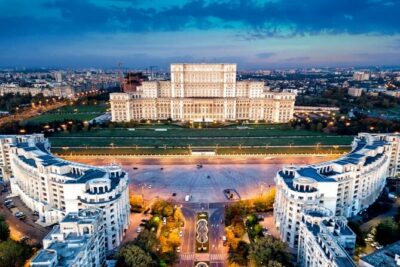
4h Bucharest Private Tour (2h by Car and 2h Walking in Old Town)
Read our review →