REVIEW · BUCHAREST TOURS
Bucarest Recorrido Peatonal Personalizado
Bucharest rewards curious walkers. This four-hour tour links ancient Gumelnița traces, Dacian and Roman beginnings, medieval rulers, monarchy, and the fall of Ceaușescu through the city’s streets. I like the small maximum of six people and the way guide Adriana Chirau connects grand events to ordinary buildings. I also like that the route ends at the Romanian Athenaeum, one of the city’s most recognizable landmarks. The main consideration is pace: you cover a lot of ground and political history, with no private transport and only a few formal admissions included.
This is a strong first-day choice if you want context before exploring Bucharest on your own. Adriana has earned praise for explaining clearly and with real passion, and one comment says the tour delivered more historical understanding in three hours than a week of independent sightseeing. Just confirm the meeting details with her by WhatsApp before you arrive, since she makes a point of checking that everything is in order.
In This Review
- Key points about this Bucharest walking tour
- Why this four-hour walk works as a first look at Bucharest
- Starting at the National Theatre at 10:30 a.m.
- Saint George New Church and eighteenth-century Bucharest
- Curtea Veche and Saint Anthony Church
- From the former post office to Romania’s national story
- Macca-Villacrosse Passage, a lighter change of pace
- Stavropoleos Church and the end of an artistic era
- Revolution Square, where Romania’s modern story turns
- Finishing at the Romanian Athenaeum
- What $28.94 buys you
- Guide Adriana’s strongest asset
- Who should book this walk
- Should you book the Bucharest Personalized Walking Tour?
- FAQ
- Where does the tour start?
- What time does the tour begin?
- Where does the tour end?
- How long does the walking tour last?
- How many people can join?
- Is bottled water included?
- Is private transportation included?
- Are admission tickets included?
- Is the tour suitable for most people?
- Can I cancel for a full refund?
Key points about this Bucharest walking tour
- A six-person maximum keeps the walk personal, with room to ask Adriana questions and compare monarchy with communism.
- The route follows Romania’s story, from Gumelnița culture and the Dacians to Vlad Țepeș, King Carol I, and the 1989 Revolution.
- The Old Town stops are free to enter, including Saint George New Church, Saint Anthony Church, Curtea Veche, the Macca-Villacrosse Passage, and Stavropoleos Church.
- The tour begins at the National Theatre at 10:30 a.m. and finishes at the Romanian Athenaeum.
- Bottled water is included, but private transportation, meals, and other personal costs are not.
- The $28.94 price is good value if you want a guide to interpret the city rather than simply point out façades.
Why this four-hour walk works as a first look at Bucharest
Bucharest can feel difficult to read at first. Medieval churches sit near grand nineteenth-century buildings, communist-era scars, cafés, and busy modern streets. Without some explanation, the city’s layers can seem disconnected.
This walk gives those layers a clear order. Adriana begins with the oldest known traces connected to the area, including Gumelnița culture, then moves through the Dacians, Roman conquest, medieval Romanian principalities, the reign of Vlad Țepeș, the monarchy, and the communist period. The result is less a list of monuments and more a way to understand why Bucharest looks the way it does.
I especially like this approach for a first morning or afternoon in the capital. You are not only seeing churches and squares. You are learning why one building represents royal ambition, why another recalls state power, and why Revolution Square still matters.
The four-hour length gives Adriana time to explain rather than rush from photo stop to photo stop. The published stop times add up to only a portion of the experience, so the rest is walking, commentary, orientation, and time between places. Wear comfortable shoes and expect a city walk rather than a museum-heavy excursion.
A few more Bucharest days worth comparing
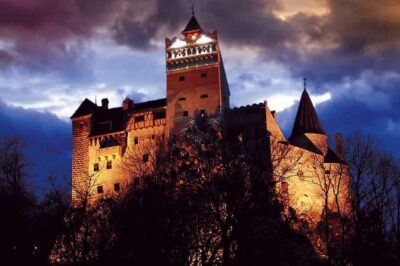
- Bucharest: Dracula’s Castle, Peles Castle, & Brasov Old Town
★ 4.5 · 17,858 reviews - Bucharest: Dracula Castle, Peles Castle & Brasov Old Town
★ 4.6 · 10,891 reviews - Bucharest: Dracula’s Castle, Peleș Castle & Brașov Day Trip
★ 4.5 · 5,919 reviews
Starting at the National Theatre at 10:30 a.m.
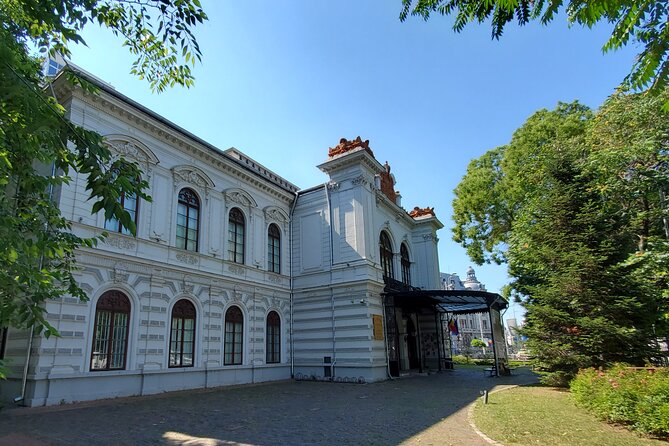
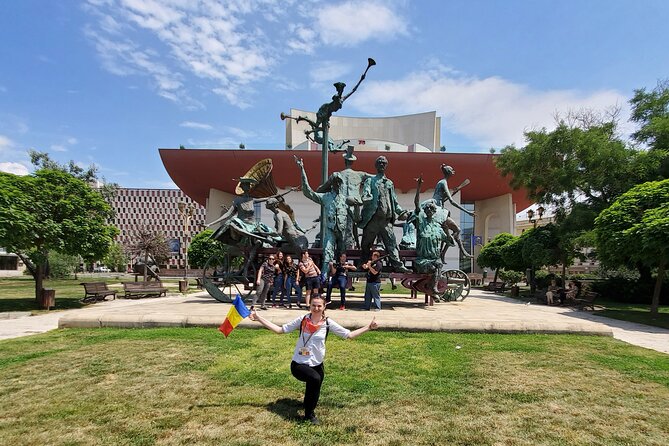
The meeting point is the Ion Luca Caragiale National Theatre, at Bulevardul Nicolae Bălcescu 2. Starting here places you close to central Bucharest, with access to public transportation nearby. The group begins at 10:30 a.m., a useful time if you want breakfast first without losing the whole morning.
The opening discussion sets up the story of the city. Adriana explains how the known history of Bucharest is relatively short, while human activity in the wider area reaches much farther back. That distinction matters. You are not simply hearing that Bucharest is old. You are learning how archaeological cultures, ancient peoples, Roman rule, and later Romanian states fit into the country’s larger story.
The route also introduces a practical option for later. Adriana can describe what is most interesting inside the Bucharest Municipality History Museum, should you want to visit it after the walk. That is helpful because a guided explanation can tell you which museum displays deserve your limited sightseeing time.
Saint George New Church and eighteenth-century Bucharest
The first formal stop is Biserica Sfântul Gheorghe Nou, or Saint George New Church. You have about 15 minutes here, and admission is free.
The church was built at the start of the eighteenth century, during an important period for Romanian post-medieval art and culture. This is one of the places where the tour’s method becomes clear. Adriana uses a church not only to discuss architecture, but also to explain the cultural world that produced it.
You should expect an exterior description and an account of the church’s place in Bucharest. Since this is a short stop, you will not have unlimited time to linger or study every detail. Still, free admission and a focused explanation make it a useful introduction to the city’s religious buildings.
If ornate church interiors are a major reason for your visit, pay attention to the available time. The tour is designed to connect several sites, not to provide a long private visit at each one.
Curtea Veche and Saint Anthony Church
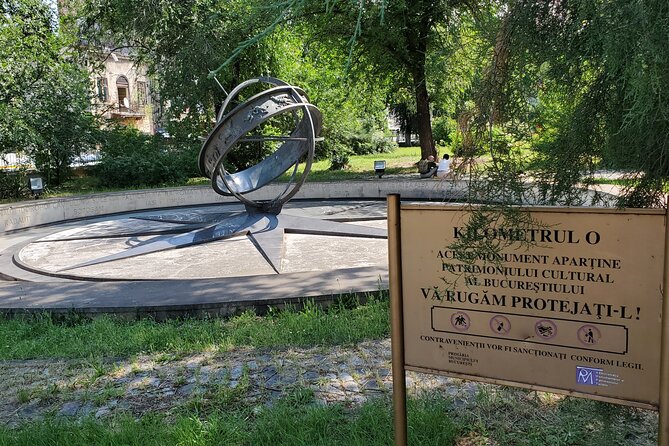
The next major stop is Biserica Sfântul Anton, beside Curtea Veche. This is the oldest surviving stone church in Bucharest, built in the middle of the sixteenth century as a place connected with the residence of the ruling prince.
That setting gives you a direct link to medieval political power. Curtea Veche was tied to the princely court, so Saint Anthony Church is not an isolated religious monument. It belongs to the part of Bucharest where rulers, administration, worship, and daily urban life met.
The formal visit lasts about 10 minutes and admission is free. That is enough for a concise explanation and a look around, though it may feel brief if you want to explore at a slow pace. I would treat this stop as a foundation for understanding medieval Bucharest rather than as a full church tour.
The route also brings in Vlad Țepeș, the ruler often linked with the Dracula legend. The useful point here is that Vlad is presented as part of Romanian history, not just as a fictional horror character. The tour uses his connection with Bucharest to move from medieval politics toward the city’s later development.
A completely different kind of day out:
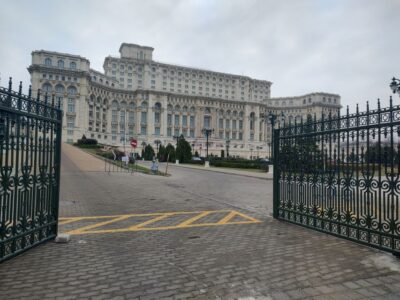
- Bucharest: Palace of Parliament Tickets and Guide
★ 4.3 · 3,182 reviews - Bucharest: Day Trip to Dracula Castle, Peles Castle & Brașov
★ 4.4 · 3,049 reviews - Bucharest to Dracula Castle, Peles Castle and Brasov Guided Tour
★ 4.5 · 2,933 reviews - Bucharest: Palace of Parliament Tickets and Guided Tour
★ 4.4 · 1,877 reviews
From the former post office to Romania’s national story
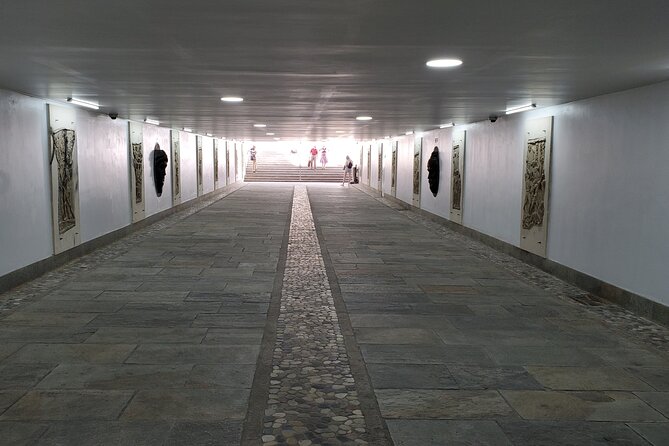
One stop highlights the former Bucharest Post Palace, now the National Museum of Romanian History and Archaeology. The building gives Adriana another chance to explain how institutions and architecture changed as Romania developed.
The tour does not list a museum admission as part of the experience, so you should not assume you will go inside as a group. Instead, expect an explanation of the building and its importance. Adriana can also point out what may be worth seeing if you decide to return on your own.
This is a sensible use of time. A four-hour walking tour cannot include every museum, and stopping outside keeps the group moving while still giving you a useful reference point. If you enjoy archaeology or want more detail on Romania’s earliest periods, mark the museum as a possible follow-up visit.
Macca-Villacrosse Passage, a lighter change of pace
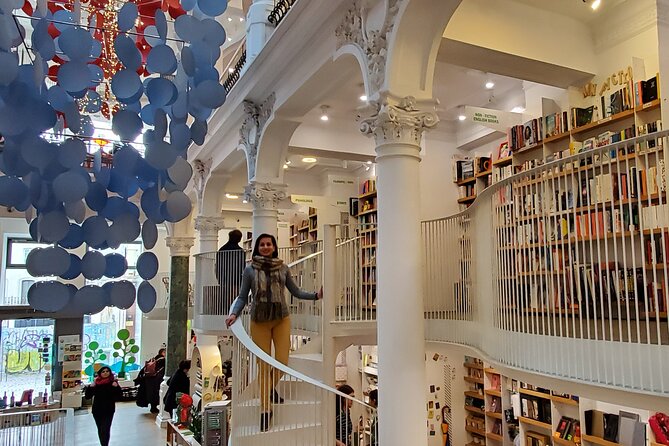
Macca-Villacrosse Passage is one of Bucharest’s most interesting pedestrian arcades. The covered passage offers a change from churches, courts, and political squares. It is also known for places serving narghilea, or hookah.
You have about 10 minutes here, with free admission. This is a short pause, but it helps show another side of the city. The route is not only about rulers and revolutions. It also includes places where people eat, meet, linger, and enjoy the city.
The passage is a good spot for photographs and orientation. If you want to eat there later, Adriana can help you make a reservation at the restaurant discussed during the walk. The restaurant itself is described as historically important, but its name is not specified in the tour details, so ask Adriana to identify it when you meet.
That practical help is one of the tour’s nicer touches. A guide who can connect a historical site with a possible meal makes the walk more useful after the official four hours end.
Stavropoleos Church and the end of an artistic era
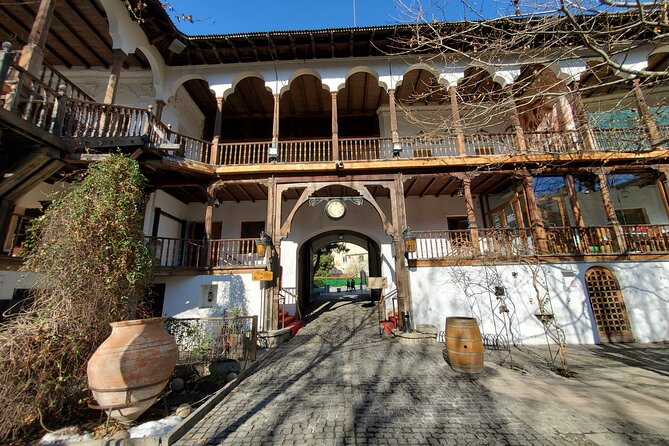
The Church of the Stavropoleos Monastery is one of the most appealing stops on the route. The visit lasts about 15 minutes and admission is free.
Built in the first part of the eighteenth century, the church represents the closing phase of a Romanian cultural revival before the Phanariote period. You will hear how the building fits into the shift from one political and cultural era to another.
This is likely to be one of the most memorable churches on the walk, but the short scheduled visit again means you should keep your expectations realistic. You will receive an explanation and time to look, not a long guided study of every architectural feature.
I like having Stavropoleos between the Old Town passages and Revolution Square. It gives the route a quiet pause before the subject turns toward monarchy, dictatorship, and the violent political changes of the twentieth century.
Revolution Square, where Romania’s modern story turns
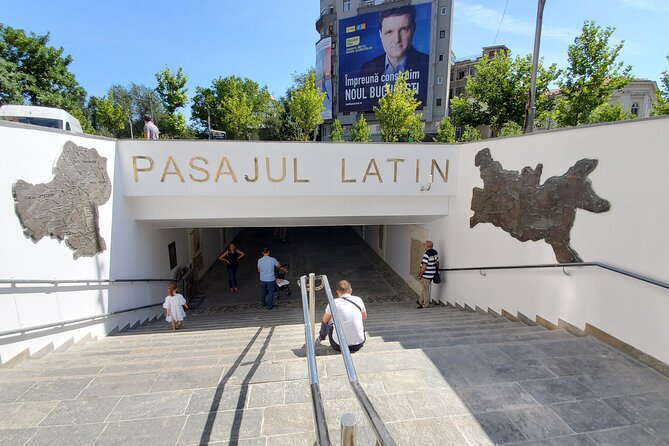
Piața Revoluției, or Revolution Square, is the tour’s most important modern-history stop. You spend about 20 minutes here, with no admission fee.
Adriana compares the monarchy and communism by placing their major buildings in the same area. In front of you are the former Royal Palace and the former headquarters of the Romanian Communist Party’s Central Committee. That physical contrast makes the political story easier to grasp.
This is also where the tour addresses decisions made by a dictatorial king and the 1989 Revolution against Nicolae Ceaușescu. The square is not treated as a decorative plaza. It becomes a place where Romania’s political systems can be read through architecture and public space.
For me, this is the strongest reason to take the walk with a guide. You can photograph the buildings alone, but it is harder to understand their relationship without someone laying out the sequence of monarchy, communist rule, dictatorship, and revolution.
The 20-minute stop is long enough for a solid explanation, but you may want to return later if modern Romanian history is a central interest. The tour introduces the subject clearly. It does not replace a dedicated museum visit or a longer political-history program.
Finishing at the Romanian Athenaeum
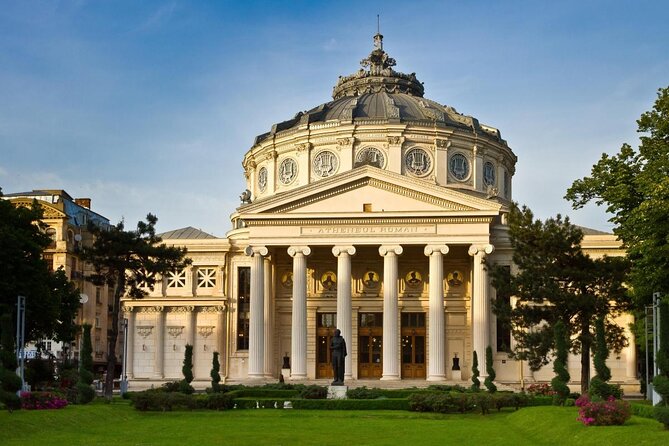
The walk ends at the Romanian Athenaeum, on Strada Benjamin Franklin 1-3. It is described as Bucharest’s most emblematic building, and the location makes a fitting final point.
The Athenaeum represents the city’s grand ambitions under King Carol I, when Bucharest was being reshaped as Le Petit Paris. Ending here brings the story from medieval churches and princely courts to the monarchy’s effort to create a modern European capital.
The end point is also practical. You finish in a central area rather than being returned by vehicle to the starting point. Since private transportation is not included, you remain responsible for your onward plans, but the central finish should make it easier to continue sightseeing or use public transport.
Do not assume that admission inside the Athenaeum is included. The tour information identifies it as the end point, not as a ticketed interior visit.
What $28.94 buys you
At $28.94 per person, this is a fair price for a four-hour private-feeling walk with a maximum of six people. You are paying mainly for interpretation, route planning, and Adriana’s ability to tie scattered sites into one Romanian story.
The value is strongest if you are new to Bucharest, have limited time, or feel unsure about the difference between medieval, royal, and communist landmarks. It is less compelling if you prefer to wander alone, read plaques, and spend long periods inside churches or museums.
Bottled water is included. Private transport is not, and neither are meals or museum tickets. The free admission at the listed churches and passages helps keep extra costs down, but bring money if you decide to eat or visit a museum afterward.
The average booking time is five days ahead. That is not a rule, but it suggests planning a few days in advance is sensible, especially because the group limit is small.
Guide Adriana’s strongest asset
The most highly praised part of this experience is Adriana herself. She is described as passionate, clear, and highly professional. One account credits her with making three hours of history feel more useful than a week of sightseeing.
That praise fits the tour’s design. The subject is broad, and Romania’s history is often unfamiliar to first-time visitors. A guide who can explain the country through churches, palaces, party headquarters, and streets is more useful than someone who simply recites dates.
Adriana also follows up on practical matters. Contact her by WhatsApp before the tour to confirm the visit and make sure arrangements are clear. If you want help reserving the historical restaurant mentioned during the walk, ask her directly.
The small group supports that personal approach. With no more than six people, you should have a better chance to ask about Vlad Țepeș, Carol I, Ceaușescu, the Revolution, or any building that catches your eye.
Who should book this walk
I would choose this tour if you want a clear introduction to Bucharest and Romania before exploring independently. It suits people who enjoy political history, religious architecture, archaeology, and city walks that connect many periods.
It is also a good fit if you are traveling alone or with a small party and want more conversation than a large group tour usually allows. Service animals are allowed, public transportation is nearby, and most people can participate.
I would hesitate if you need step-free details, a vehicle between sites, or long indoor visits. The experience is a walking tour, private transport is not included, and the itinerary moves through several central locations in four hours.
Free cancellation is available up to 24 hours before the start time for a full refund. Changes or cancellations made within 24 hours are not accepted for a refund, and the cut-off follows Bucharest local time.
Should you book the Bucharest Personalized Walking Tour?
Book it if you want Bucharest to make sense quickly. The route covers an unusually broad stretch of Romanian history, from Gumelnița culture to the 1989 Revolution, while the churches, passages, former palace, and party headquarters give that story physical anchors.
The best reason to book is Adriana’s teaching style and the six-person limit. The main tradeoff is that each stop is fairly short, so you gain breadth rather than long, detailed visits. For a first introduction at $28.94, that is a sensible exchange, especially if you contact Adriana in advance and arrive ready for a serious but approachable walk.
FAQ
Where does the tour start?
The tour starts at the Ion Luca Caragiale National Theatre, Bulevardul Nicolae Bălcescu 2, Bucharest.
What time does the tour begin?
The scheduled start time is 10:30 a.m.
Where does the tour end?
The tour ends at the Romanian Athenaeum, Strada Benjamin Franklin 1-3, Bucharest.
How long does the walking tour last?
The tour lasts approximately four hours.
How many people can join?
The experience has a maximum of six participants.
Is bottled water included?
Yes. Bottled water is included in the tour price.
Is private transportation included?
No. Private transportation is not included.
Are admission tickets included?
The listed stops at Saint George New Church, Saint Anthony Church, Curtea Veche, Macca-Villacrosse Passage, Stavropoleos Church, and Revolution Square have free admission. The tour does not list paid museum or interior tickets as included.
Is the tour suitable for most people?
The tour information says most people can participate. Service animals are also allowed, and the route is near public transportation.
Can I cancel for a full refund?
Yes. You can cancel at least 24 hours before the local start time for a full refund. Cancellations or changes made less than 24 hours before the start are not refunded or accepted.
Just added in Bucharest
- Bucharest: Dealu Mare Winery Private Trip with Wine Tasting★ 4.9 · 6 reviews
- Winery touring & private wine tasting – one day private tour★ 5.0 · 3 reviews
- Village Museum Bucharest Guided Tour★ 5.0 · 6 reviews
- Transylvania Tour: Dracula’s Castle, Peles Palace & Brasov★ 5.0 · 19 reviews
- Transfer Airport Otopeni – Bucharest★ 5.0 · 2 reviews
- Private Transfer Bucharest Otopeni Airport (OTP) to/from Brasov★ 5.0 · 2 reviews
- Airport Henri Coanda (Otopeni) to Bucharest – Private Transfer – Driver★ 5.0 · 5 reviews
- Private Bucharest Otopeni Airport (OTP) Transfer★ 5.0 · 2 reviews
Bucharest Tours, compared.
Dracula’s Castle, Peles Castle, & Brasov Old Town
Read our review →
Dracula Castle, Peles Castle & Brasov Old Town
Read our review →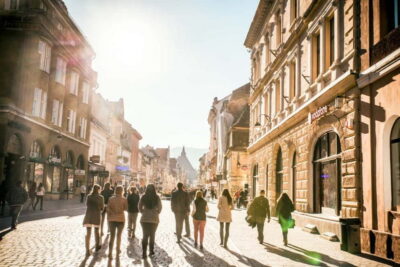
Dracula’s Castle, Peleș Castle & Brașov Day Trip
Read our review →
Day Trip to Dracula Castle, Peles Castle & Brașov
Read our review →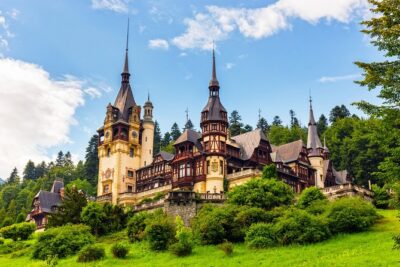
Bucharest to Dracula Castle, Peles Castle and Brasov Guided Tour
Read our review →