REVIEW · TOURS
Bucharest Old Centre Tour
Bucharest rewards a closer look. This one-hour private walk links the Princely Old Court, St Anthony Church, Lipscani Street, and Stavropoleos Monastery with clear local context. I like the personal scale and the choice of morning or afternoon departure. The main tradeoff is simple: one hour gives you a useful introduction, not a full study of Bucharest.
I also like the option of pickup and drop-off from selected central hotels, which can save time at the start of a busy visit. Bring sturdy shoes, since the old centre includes uneven flagstones, and keep your expectations realistic: food and drinks are not included, and the tour ends back at the meeting point.
In This Review
- Key points to know before you book
- Why this one-hour walk works as a Bucharest introduction
- Starting beside the National Museum of Romanian History
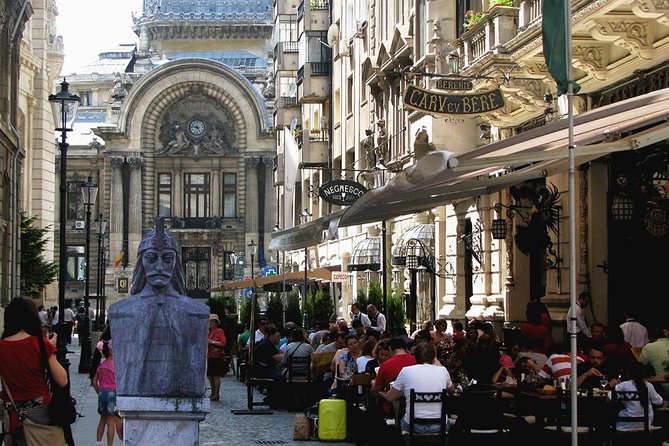
- The Princely Old Court and Vlad the Impaler
- St Anthony Church in the heart of the old centre
- Old Coffee House, Gabroveni Inn, and Linden Tree Inn
- Lipscani Street and the commercial core
- The National Bank and the ruins of Șerban Voda Inn
- Stavropoleos Monastery, built in 1724
- What the guide adds to the experience
- Price, timing, and practical value
- Who will get the most from this walk
- Should you book the Bucharest Old Centre Tour?
- FAQ
- Where does the Bucharest Old Centre Tour start?
- Where does the tour end?
- How long does the tour last?
- Is hotel pickup available?
- Is this a private tour?
- Can I choose a morning or afternoon departure?
- What is included in the price?
- Are food and drinks included?
- Can children join the tour?
- Can I cancel for a full refund?
Key points to know before you book
- Vlad the Impaler’s former court gives the walk a strong starting point in medieval Wallachia.
- Alina’s local connection adds personal insight, as she grew up in the area and knows places beyond the main route.
- Lipscani Street and the old inns show how trade, lodging, coffee, and court life shaped central Bucharest.
- Stavropoleos Monastery, built in 1724, adds a quieter architectural stop to the busy old centre.
- The private format means only your own group takes part, which is useful for questions and pacing.
- Sturdy footwear matters, since parts of the route cross old flagstones.
Why this one-hour walk works as a Bucharest introduction
Bucharest’s Old Centre can feel confusing at first. Streets change character quickly, modern restaurants sit beside old walls, and many important buildings do not explain themselves. This tour gives you a framework for understanding what you are seeing rather than leaving you to connect the pieces alone.
The route focuses on the city’s oldest central quarter, an area with more than 500 years of recorded stories. You move on foot between royal ruins, churches, inns, banks, and former civic buildings. That compact mix makes the walk useful on your first day, especially if you want to learn the basic shape of the city before exploring on your own.
I like that the experience is private. You are not trying to hear a guide over a large crowd, and your group can ask questions as the walk unfolds. The short duration also makes it easy to fit around museum visits, lunch, or an afternoon departure.
Still, an hour passes quickly. The route includes many stops, so some places receive a concise explanation rather than a long visit. If you want extensive time inside museums or churches, this is not that kind of tour. It is a focused orientation walk.
A few more Bucharest days worth comparing
- Bucharest: Dracula’s Castle, Peles Castle, & Brasov Old Town
★ 4.5 · 17,858 reviews - Bucharest: Dracula Castle, Peles Castle & Brasov Old Town
★ 4.6 · 10,891 reviews - Bucharest: Dracula’s Castle, Peleș Castle & Brașov Day Trip
★ 4.5 · 5,919 reviews
Starting beside the National Museum of Romanian History
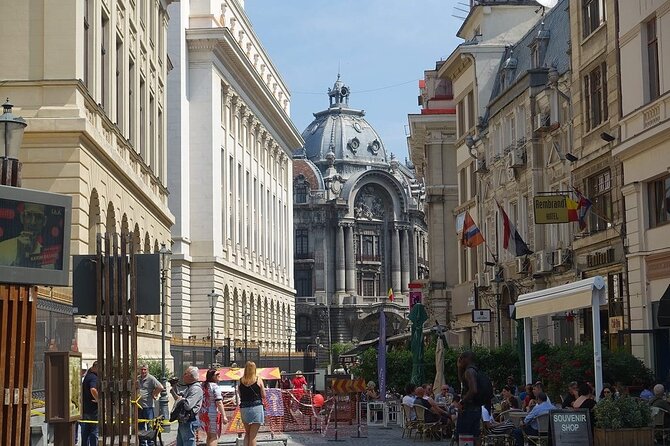
The official meeting point is the National Museum of Romanian History at Calea Victoriei 12. The building itself is part of the story, since it was formerly a post office. That detail gives the opening stop a useful civic angle: Bucharest’s centre was shaped not only by rulers and churches, but also by communication, administration, trade, and public services.
You begin by entering the old centre on foot. The guide sets out the background of the quarter and points to landmarks that are easy to miss if you hurry through the lanes. I would pay attention to the transitions here. The appeal is not just one grand monument, but the way royal, religious, commercial, and everyday buildings sit close together.
Pickup and drop-off are offered from selected central hotels. If you use that option, check that your hotel qualifies when booking. The listed meeting point remains important, since the activity ends back there.
The Princely Old Court and Vlad the Impaler
The Old Princely Court is the route’s strongest historical anchor. You see the ruins of one of Bucharest’s oldest buildings, once connected with Vlad the Impaler, the Wallachian ruler whose name later became tied to Dracula stories.
The value here is separating the real place from the legend. The court was a working centre of power, not simply a dramatic backdrop. A guide can explain why this location mattered to Wallachian rulers and how a settlement around the court helped Bucharest grow into a capital.
I like this stop because ruins demand explanation. Stone fragments alone rarely tell you how a building was used or why it mattered. The guide’s account gives the remains a human and political setting.
Do not expect a long archaeological visit during this tour. The itinerary moves through several sites, and the court is one part of a wider walk. If this is the place you most want to study, you may want to return later with extra time.
St Anthony Church in the heart of the old centre
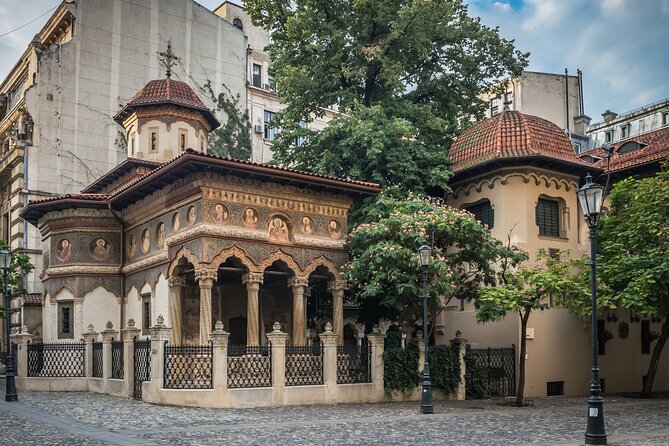
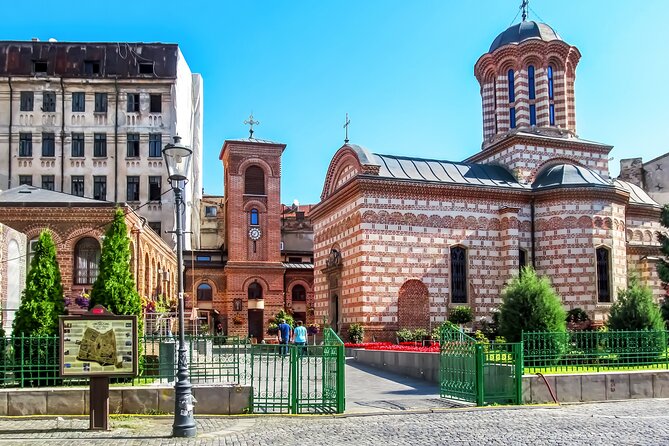
St Anthony Orthodox Church is described as the church of Wallachian rulers. Its position in the old centre makes it an important link between the royal court and the religious life of the city.
This stop helps show how closely power and faith were tied in historic Bucharest. The church is not presented as an isolated monument. It belongs to the same old quarter shaped by rulers, merchants, inns, and travelers moving through the capital.
The guide explains the church’s place in Bucharest’s story, which is useful if you are unfamiliar with the religious traditions of Wallachia. The tour information does not promise a long interior visit, so I would treat this as a historical and architectural stop rather than a formal church tour.
As with any active place of worship, your guide’s instructions should take priority if you enter. The route includes several churches and historic buildings, but the supplied details do not specify interior access at every stop.
A completely different kind of day out:
- Bucharest: Palace of Parliament Tickets and Guide
★ 4.3 · 3,182 reviews - Bucharest: Day Trip to Dracula Castle, Peles Castle & Brașov
★ 4.4 · 3,049 reviews - Bucharest to Dracula Castle, Peles Castle and Brasov Guided Tour
★ 4.5 · 2,933 reviews - Bucharest: Palace of Parliament Tickets and Guided Tour
★ 4.4 · 1,877 reviews
Old Coffee House, Gabroveni Inn, and Linden Tree Inn
Some of the most engaging stops are not the grandest ones. The Old Coffee House, Gabroveni Inn, and Linden Tree Inn point to the social and commercial life of the old quarter.
Historic inns mattered because they served as places for lodging, trade, news, and meetings. In a city that grew around a court and market district, these buildings help explain how people passed through Bucharest and how business was conducted before modern hotels and offices.
The route also includes the ruins of Șerban Voda Inn. Seeing several former inns in one short walk gives you a better sense of the old centre as a working district. You are not just looking at picturesque façades. You are tracing the places where merchants, officials, and other visitors once found rooms, food, and contacts.
I appreciate this part of the tour because it brings ordinary life into a story often dominated by princes. The drawback is that ruins and old buildings can be easy to overlook without a guide. Their importance is not always obvious from the street.
Lipscani Street and the commercial core
Strada Lipscani is the heart of Bucharest’s Old Centre. It is one of the route’s most recognizable sections, and the guide places it within the wider story of the district rather than treating it as a simple shopping or nightlife street.
This is where the old centre’s many layers come together. You see a place linked to commerce and movement, but also one shaped by later changes in Bucharest. The street can feel more contemporary than the court ruins or monastery, which makes it a helpful point of comparison.
I would use this stop to ask questions. How did the street relate to the inns? How did the court influence nearby trade? Which buildings survived, and which were lost? Since the tour is private, you have a good chance to steer the conversation toward the parts of Bucharest that interest you most.
The practical point is that Lipscani is part of a walking route, not a separate free period for shopping. If you want to browse, eat, or linger, plan to return after the tour.
The National Bank and the ruins of Șerban Voda Inn

The National Bank of Romania adds a striking change of scale. After smaller streets, churches, and old inns, you see the grandeur of a major financial institution and hear about its history.
This stop broadens the tour beyond medieval and early modern Bucharest. A national bank represents the city’s development as a modern capital, with formal institutions alongside older royal and religious sites. The nearby ruins of the former Șerban Voda Inn bring those periods together in one view.
I like the contrast. A short walk can take you from fragments of an old inn to the formal architecture of national finance. That contrast helps you see Bucharest as a city rebuilt and reshaped over time, rather than a preserved medieval quarter.
The information provided does not include entry to the bank, so expect to view it from the route and hear its story from outside. The same applies to several other sites: the experience is primarily a guided street walk.
Stavropoleos Monastery, built in 1724
Stavropoleos Monastery is likely to be one of the walk’s most appealing final stops. Built in 1724, it brings religious architecture and a quieter sense of place into the route.
The monastery’s age makes it an important marker of Bucharest’s past, but the guide’s explanation is what gives the stop meaning. You learn how it fits into the city’s religious and architectural story rather than simply taking a photograph and moving on.
After the busy streets of Lipscani and the broad presence of the National Bank, the monastery offers a different mood. I would slow down here and look carefully at the details your guide points out.
Again, the supplied tour details do not guarantee a full interior visit. If access is possible on the day, follow the guide’s directions and dress respectfully. If not, the exterior and historical explanation still make it a worthwhile stop.
What the guide adds to the experience
The strongest praise is directed at the guiding. Alina is singled out for her command of the different eras of Bucharest, her personal connection to the area, and her ability to point out places you might otherwise miss. She grew up nearby, which gives her local perspective beyond a list of dates.
That matters on a compact tour. With only an hour, the guide must decide what deserves attention and how to connect scattered remains. A well-prepared local guide can make the court, churches, inns, bank, and monastery feel like parts of one story.
The tone also seems important. Alina is described as funny, engaging, and passionate about sharing what she knows. Another review praises a guide for making the period feel different and prompting fresh thought. That suggests the tour is not limited to dry facts.
Guide quality can vary on any scheduled activity, but this experience is private, so you can ask for clarification and focus on your interests. If you enjoy history explained through people and places, that is a real advantage.
Price, timing, and practical value
At $16.77 per person, the tour is priced as an affordable introduction rather than a full-day historical program. I think the value is strongest if you are new to Bucharest and want a local framework before spending more time in the Old Centre.
The price includes a local guide, a professional guide, and hotel pickup and drop-off from selected hotels. Food and drinks are not included, which is reasonable for a one-hour walking experience. You can easily arrange your own coffee or meal before or after the walk.
You can choose a morning or afternoon departure. That flexibility helps you fit the tour around your arrival, museum plans, or evening schedule. The listed duration is about one hour, though you should allow extra time if using hotel transfers.
The tour is normally booked about 30 days ahead. That does not mean you must reserve that early, but it is a useful sign if you are planning a tightly scheduled Bucharest visit. Confirmation is provided at booking in most cases, while bookings made within one day of departure are confirmed as soon as possible, subject to availability.
The activity is private, and only your group participates. Most people can take part, but children must be accompanied by an adult. The route is on foot, and the flagstones make sturdy shoes a sensible choice.
Free cancellation is available up to 24 hours before the start time for a full refund. Changes or cancellations inside that window are not accepted for a refund. The tour also requires good weather, so poor conditions may lead to a different date or a full refund.
Who will get the most from this walk
I would recommend this tour to first-time visitors who want a quick orientation and a human explanation of Bucharest’s centre. It also suits anyone interested in rulers, old churches, urban trade, and the way a capital changes over time.
The private format makes it a good choice for couples, families with an accompanying adult, or small groups who prefer to ask questions without holding up strangers. The one-hour length is useful if you have only a short window between other plans.
You may want something longer if you already know the Old Centre or want detailed museum access. This route gives you historical context at many locations, but it does not offer extended time at each one. It is best viewed as a starting point for further exploring.
Should you book the Bucharest Old Centre Tour?
I would book it if you want an affordable, compact introduction led by a local guide, especially on your first day in Bucharest. The mix of Vlad the Impaler’s court, St Anthony Church, old inns, Lipscani Street, the National Bank, and Stavropoleos Monastery gives you more range than a simple street stroll.
I would skip it only if your schedule cannot spare an hour of walking or if you are looking for a long museum-focused tour. Wear sturdy shoes, confirm the hotel pickup details, and save time afterward to revisit any place that catches your interest. At $16.77, the tour offers a practical way to get your bearings and understand why the Old Centre feels like several periods of Bucharest sharing the same streets.
FAQ
Where does the Bucharest Old Centre Tour start?
The tour starts at the National Museum of Romanian History, Calea Victoriei 12, București 030026, Romania.
Where does the tour end?
The activity ends back at the meeting point.
How long does the tour last?
The walking tour lasts approximately one hour.
Is hotel pickup available?
Pickup and drop-off are offered from selected central hotels. You should confirm that your hotel is included when booking.
Is this a private tour?
Yes. Only your group participates in the activity.
Can I choose a morning or afternoon departure?
Yes. The tour offers a choice of morning or afternoon departure.
What is included in the price?
The price includes a local guide, a professional guide, and hotel pickup and drop-off from selected hotels.
Are food and drinks included?
No. Food and drinks are not included.
Can children join the tour?
Most people can participate, but children must be accompanied by an adult.
Can I cancel for a full refund?
Yes, if you cancel at least 24 hours before the experience start time. Cancellations made less than 24 hours before the start time are not refunded. If poor weather causes the operator to cancel, you will be offered another date or a full refund.
Just added in Bucharest
- Bucharest: Dealu Mare Winery Private Trip with Wine Tasting★ 4.9 · 6 reviews
- Winery touring & private wine tasting – one day private tour★ 5.0 · 3 reviews
- Village Museum Bucharest Guided Tour★ 5.0 · 6 reviews
- Transylvania Tour: Dracula’s Castle, Peles Palace & Brasov★ 5.0 · 19 reviews
- Transfer Airport Otopeni – Bucharest★ 5.0 · 2 reviews
- Private Transfer Bucharest Otopeni Airport (OTP) to/from Brasov★ 5.0 · 2 reviews
- Airport Henri Coanda (Otopeni) to Bucharest – Private Transfer – Driver★ 5.0 · 5 reviews
- Private Bucharest Otopeni Airport (OTP) Transfer★ 5.0 · 2 reviews
Tours, compared.
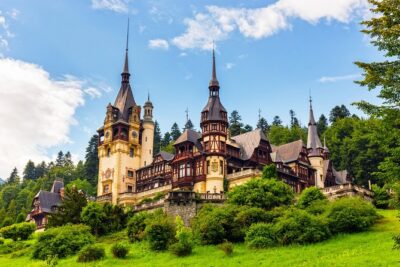
Bucharest to Dracula Castle, Peles Castle and Brasov Guided Tour
Read our review →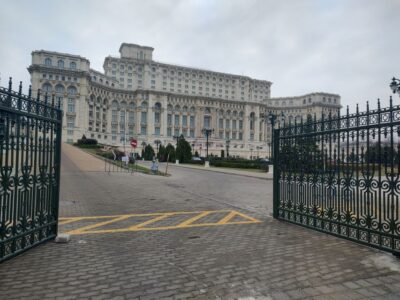
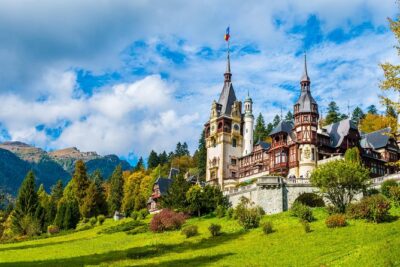
Transylvania and Dracula Castle Full Day Tour from Bucharest
Read our review →
Peles Castle, Bran Castle, & Brasov Old Town Tour
Read our review →
Small-group tour Bran, Rasnov, and Peles Castles
Read our review →