REVIEW · TOURS
Bucharest Sightseeing Tour
Bucharest tells its story in stone. This four-hour private sightseeing tour links grand avenues, Communist-era landmarks, royal buildings, and old merchant streets, giving you a useful first look at Romania’s capital without the stress of arranging transport. I like the mix of short walks and minivan travel, and I like that the guide can adjust the plan around the Palace of Parliament’s uncertain opening schedule. The main drawback is price: at $324 per group of up to four, it can feel steep for one or two people, especially since entrance fees are extra.
You’ll get the most from this outing if you want history explained as you move through the city, rather than a long museum visit. Guides speak English, French, German, Italian, or Spanish, and past guests have singled out Elisabeth for valuable explanations and Claudio for calm driving. Still, one German-speaking booking felt the tour leaned too heavily toward past events and wanted more about present-day politics, incomes, restaurants, and daily life.
In This Review
- Key points to know before booking
- Starting at Revolution Square in Bucharest
- Walking Victoriei Avenue past royal and civic buildings
- Lipscani, the Princely Court, and the old merchant quarter
- The Palace of Justice and the power of the state
- Unirii Square and the optional Parliament visit
- The Metropolitan Church and Orthodox decoration
- The Arch of Triumph and possible Village Museum stop
- How the minivan changes the experience
- Price, group size, and overall value
- Who will enjoy this Bucharest tour most
- Should you book the Bucharest Sightseeing Tour?
- FAQ
- Where does the Bucharest Sightseeing Tour begin?
- How long does the tour last?
- What transportation is included?
- Is this a private tour?
- Which languages can the guide speak?
- Is the Palace of Parliament guaranteed to be open?
- What happens if the Palace of Parliament is closed?
- Are entrance fees included?
- What should I bring, and what is not allowed?
Key points to know before booking
- Revolution Square sets the historical tone: You begin where the 1989 uprising brought Nicolae Ceausescu’s rule to an end.
- Victoriei Avenue gives you Bucharest in sequence: Royal buildings, libraries, statues, old courts, and grand civic architecture appear along one central route.
- The tour combines driving with walking: An air-conditioned car or minivan saves time, while guided strolls bring you closer to the old quarters.
- The Palace of Parliament is not guaranteed: It may close without notice, with Ceausescu’s Spring Palace offered as a possible substitute.
- Lipscani shows the city’s commercial past: The Princely Court, old church, and merchant quarter help explain how Bucharest developed.
- The $324 price favors a full group: Four people bring the effective cost to $81 each, but entrance tickets still come on top.
Starting at Revolution Square in Bucharest
The tour begins with pickup in Bucharest, usually at the entrance to your hotel, address, or other stated location. That matters in a spread-out capital where finding a meeting point can eat into a four-hour tour.
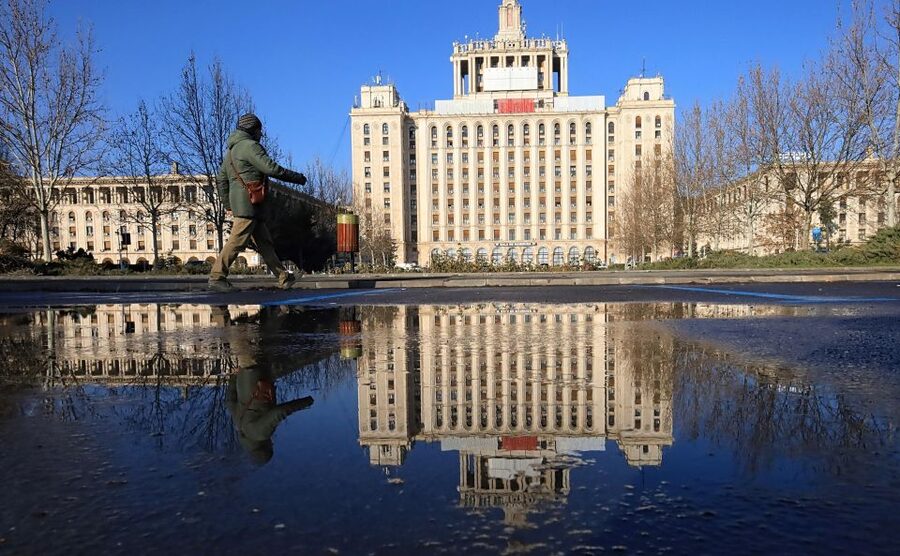
Revolution Square is the right place to begin. It is not simply another open plaza with statues. It is where the final public crisis of Ceausescu’s government unfolded in December 1989. From here, your guide can connect the buildings around you with the collapse of a regime that had shaped daily life for decades.
You will see royal buildings, libraries, and monuments gathered around this central area. The setting helps you understand how Bucharest mixes old authority with newer political memory. It is also a useful first stop because the story is told outdoors, before you settle into the vehicle or begin the longer walk.
I would pay close attention to how the guide explains the square, not just which buildings are pointed out. A list of dates is easy to forget. The best part of this stop is understanding why this particular place mattered to ordinary Romanians in 1989.
A few more Bucharest days worth comparing
- Bucharest: Dracula’s Castle, Peles Castle, & Brasov Old Town
★ 4.5 · 17,858 reviews - Bucharest: Dracula Castle, Peles Castle & Brasov Old Town
★ 4.6 · 10,891 reviews - Bucharest: Dracula’s Castle, Peleș Castle & Brașov Day Trip
★ 4.5 · 5,919 reviews
Walking Victoriei Avenue past royal and civic buildings
From Revolution Square, the route continues down Victoriei Avenue toward the city center. This is where the tour shifts from one historic event to the broader shape of Bucharest.
The avenue brings together formal architecture and the signs of a working capital. You pass royal buildings, libraries, and statues, then continue toward the old commercial quarters. The grand scale can make Bucharest seem ceremonial, but the guide’s job is to show how these buildings fit into the city’s political and social story.
The walking portion is one of the tour’s better features. You are not viewing every sight through a window. You can stop, look up, and ask questions while the guide places each building in context. One German-language booking specifically praised the amount of information given along the driving route, though the same booking wanted less emphasis on historical facts and more discussion of current life.
That is a fair point to keep in mind. If you mainly want present-day recommendations, ask directly about restaurants, neighborhoods, income levels, and the political situation. The tour description promises history and architecture first, so you should not expect a full introduction to modern Romanian society.
Lipscani, the Princely Court, and the old merchant quarter
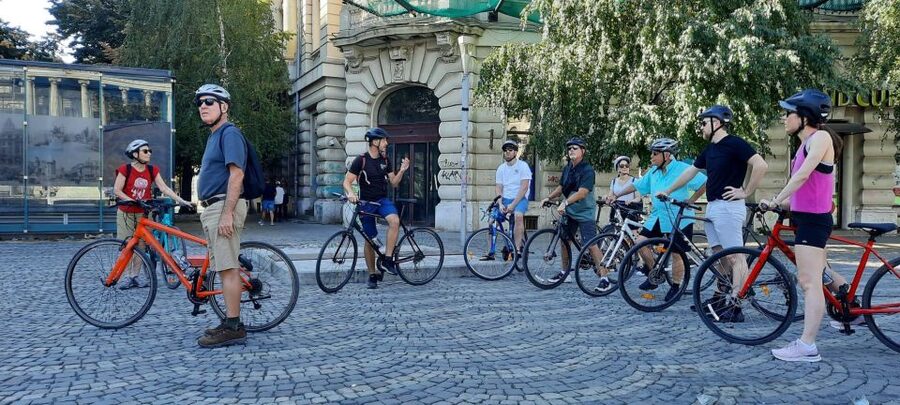
The route eventually reaches Lipscani and Bucharest’s older central districts. This is where the city’s merchant past becomes easier to picture.
You will pass the Princely Court and its church, reminders of the rulers and traders who once shaped this part of town. The remains of merchant life are less about one perfect building than about reading the district as a former center of buying, selling, administration, and movement.
The old quarter also gives the tour a change of pace. After the ceremonial spaces along Victoriei Avenue, Lipscani feels more connected to street life. The contrast is useful: Bucharest is not only a city of monumental avenues and government buildings. It also grew through commerce and the daily activity of shopkeepers, craftsmen, and visitors.
A guide can make this stop far more useful than a quick photograph. Ask how the old district changed over time and what parts survived political rebuilding. The supplied information does not promise a restaurant stop or free time for shopping, so treat Lipscani as a guided sightseeing visit rather than a food tour.
The Palace of Justice and the power of the state
The Palace of Justice appears along the route with its heavy columns and imposing formal design. The building offers a clear visual lesson in how the state wanted to present itself: powerful, permanent, and larger than the individual.
You do not need a long lecture to appreciate this stop. Look at the scale, the symmetry, and the way the building faces the city. It works well beside the Princely Court and the old merchant quarter because the three places suggest different forces in Bucharest: rulers, commerce, and law.
The tour’s broad theme is the way history remains visible in the city. At one stop, you are thinking about an uprising. At another, you are looking at the machinery of state power. Then you are walking through streets shaped by trade. That variety is more useful than spending four hours on one period alone.
A completely different kind of day out:
- Bucharest: Palace of Parliament Tickets and Guide
★ 4.3 · 3,182 reviews - Bucharest: Day Trip to Dracula Castle, Peles Castle & Brașov
★ 4.4 · 3,049 reviews - Bucharest to Dracula Castle, Peles Castle and Brasov Guided Tour
★ 4.5 · 2,933 reviews - Bucharest: Palace of Parliament Tickets and Guided Tour
★ 4.4 · 1,877 reviews
Unirii Square and the optional Parliament visit
The walk leads toward Unirii Square, a huge transportation hub and one of the city’s most imposing urban spaces. It is also the point where the Palace of Parliament enters the plan.
The palace can be visited if conditions allow and if you choose to stop. Entrance fees are not included, so you should budget for the ticket separately. The building is politically charged as well as enormous, and seeing it gives physical scale to the ambitions of the former Communist government.
There is an important catch. International conferences and meetings can cause the palace to close without prior notice. That is not a minor technicality, since the building is one of the tour’s main possible highlights. If it is closed, the guide may replace it with Spring Palace, Ceausescu’s former residence.
That replacement can be valuable for a different reason. Parliament shows the public face and size of state power, while Spring Palace offers a closer look at the private setting of the former leader. Still, the two visits are not interchangeable, so you should book this tour with some flexibility.
Churches and monasteries can also close without notice, especially in the low season. The operator says it will try to provide another relevant site where possible, but it does not accept responsibility for closures caused by unforeseen events. You should see this as a city orientation tour with changing components, not a fixed museum program.
The Metropolitan Church and Orthodox decoration
The route includes the Metropolitan Church, where you can see the iconography associated with Romanian Orthodox churches. This stop changes the subject again, moving from political buildings and royal authority to religious art and practice.
The church is useful for readers who want more than a parade of government monuments. Orthodox decoration can be unfamiliar if you have not spent time in this part of Europe, and a guide can explain what you are seeing without requiring you to know the details beforehand.
Keep in mind that church access is not certain. Religious sites may close without warning, particularly outside the busy season. Modest behavior is sensible at any active place of worship, though the supplied tour information does not set out a specific dress code.
The Arch of Triumph and possible Village Museum stop
Later, the tour heads back toward the University area and includes Bucharest’s Arch of Triumph as another possible sight. The arch gives the itinerary a broad national and ceremonial note, adding a major landmark beyond the central historic core.
There is also an option to stop at the Village Museum. The information provided does not specify how long you spend there or whether admission is included, so ask before the tour begins if this stop matters to you. Since the full experience lasts only four hours, a museum visit may need to be brief or may depend on the day’s timing and the other chosen stops.
This is one reason the tour works best as an introduction. You can see many important areas and decide where you want to return for a longer visit. It is less suited to someone who wants an unhurried examination of every interior.
How the minivan changes the experience
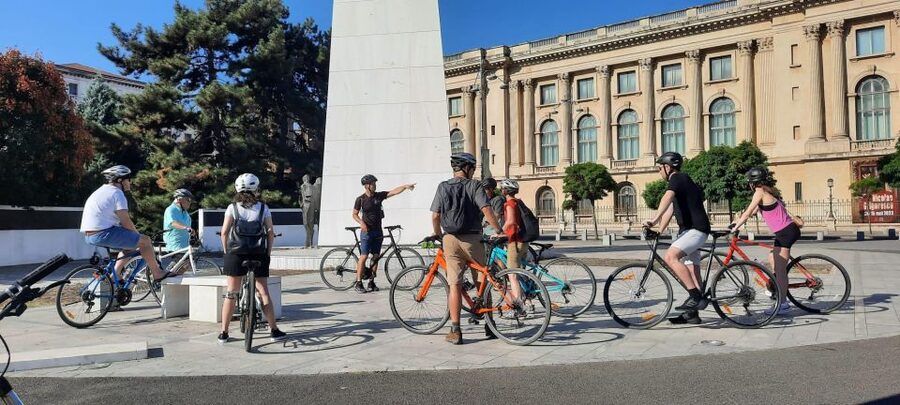
Transportation is provided in a modern, air-conditioned car or minivan. That is a practical advantage in Bucharest, especially when the tour connects distant points such as central squares, Parliament, the Arch of Triumph, and the Village Museum.
The vehicle also protects your limited time. You avoid arranging separate taxis between stops, and you can listen to explanations while moving through the city. One booking specifically praised Claudio for a calm drive, which is a useful detail if you prefer a relaxed ride over a hurried one.
The tradeoff is that a minivan tour cannot show every street at walking speed. The most meaningful parts of the old center are the sections where you get out and walk. The experience includes two walking explorations according to one detailed account, with much of the route explained from the vehicle. If you want a fully pedestrian tour, this may feel too vehicle-based.
Food is not allowed in the vehicle. Bring your passport, and plan any coffee or meal stop outside the transport portion unless the guide makes another arrangement.
Price, group size, and overall value
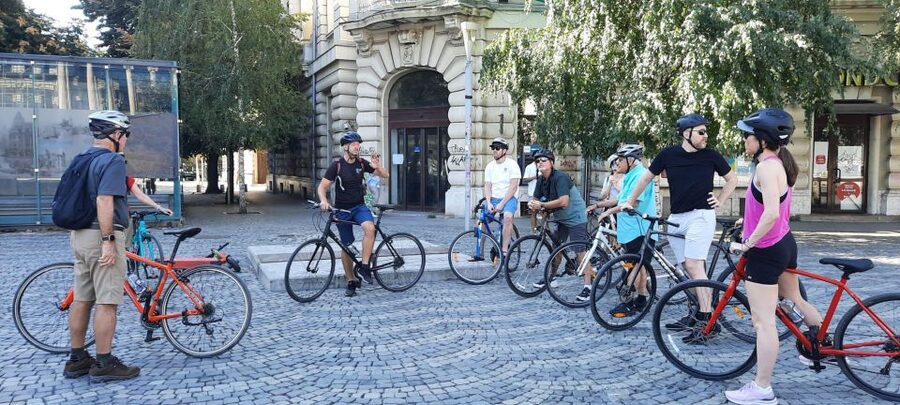
The listed price is $324 per group of up to four. Split four ways, that is $81 per person before entrance fees. For a group that values a private vehicle, hotel pickup, multilingual guiding, and a custom choice between major sites, the price can be reasonable.
For one person or a couple, the calculation is less favorable. You are paying for the group service even if you do not fill the four-person allowance. The activity is described as a small group limited to eight participants, while the price is presented for a group of up to four, so confirm the exact setup at booking if party size matters to you.
The strongest value comes from the guide. The route itself includes public streets and exterior sights you could visit independently. What you are paying for is the explanation, the transport between areas, and help adapting the visit when Parliament or a church is closed.
A 4.7 rating from 26 bookings suggests a strong overall experience, but the detailed feedback also gives you a useful warning. One German-speaking participant felt the price was high and wanted more practical information about current Bucharest. I would agree that the cost is easier to justify for first-time visitors who want historical context than for repeat visitors who mainly need restaurant tips or independent transport.
Who will enjoy this Bucharest tour most
I would recommend it to first-time visitors with only a short stay in Bucharest. In four hours, you cover several central districts, hear the story of 1989, see major civic buildings, and get a sense of how the old commercial quarter fits into the modern city.
It also suits families or small groups who prefer a private vehicle to public transport. The air conditioning, hotel pickup, and limited group size make the day simpler, especially when you want a guide who can speak your language.
History and architecture fans should find plenty to like. You move from royal buildings to Communist-era power, Orthodox art, old commerce, and national monuments. The tour is less ideal if you want long interior visits, extensive free time, or a detailed account of present-day economics and politics.
Book it with realistic expectations. Parliament may be closed, entrances cost extra, and some church or museum stops may change. Those limits do not ruin the experience, but they do mean the value depends on flexibility.
Should you book the Bucharest Sightseeing Tour?
Book it if you want a well-organized first look at Bucharest, especially with three or four people sharing the $324 cost. The route covers the city’s main historical themes, and the combination of minivan travel and guided walks gives you more ground than a purely walking tour.
Skip it if you are traveling alone on a tight budget or already know the central districts. You may prefer to visit the exterior landmarks independently and spend your money on a longer museum visit or a meal in Lipscani.
For most first-time visitors, I would consider this a solid orientation tour. Ask at the start about Parliament access, the possible Spring Palace substitute, and the Village Museum timing. Also tell the guide if you want present-day recommendations, not only dates and political events. That small conversation could make the four hours fit your interests much better.
FAQ
Where does the Bucharest Sightseeing Tour begin?
Pickup is provided in Bucharest from the entrance of your hotel, address, or stated location.
How long does the tour last?
The tour lasts four hours, including guided sightseeing and walking.
What transportation is included?
Transportation is provided in a modern, air-conditioned car or minivan.
Is this a private tour?
The tour is described as private, with a price for a group of up to four. It is also listed as a small-group activity limited to eight participants, so confirm the exact group arrangement when booking.
Which languages can the guide speak?
Live guiding is available in English, French, German, Italian, and Spanish.
Is the Palace of Parliament guaranteed to be open?
No. The palace may close without prior notice because of international conferences or meetings.
What happens if the Palace of Parliament is closed?
The tour may replace the visit with Spring Palace, the former Ceausescu residence, or another relevant site where possible.
Are entrance fees included?
No. Entrance fees to the sites are not included in the tour price.
What should I bring, and what is not allowed?
Bring your passport. Food is not allowed inside the vehicle.
Just added in Bucharest
- Bucharest: Dealu Mare Winery Private Trip with Wine Tasting★ 4.9 · 6 reviews
- Winery touring & private wine tasting – one day private tour★ 5.0 · 3 reviews
- Village Museum Bucharest Guided Tour★ 5.0 · 6 reviews
- Transylvania Tour: Dracula’s Castle, Peles Palace & Brasov★ 5.0 · 19 reviews
- Transfer Airport Otopeni – Bucharest★ 5.0 · 2 reviews
- Private Transfer Bucharest Otopeni Airport (OTP) to/from Brasov★ 5.0 · 2 reviews
- Airport Henri Coanda (Otopeni) to Bucharest – Private Transfer – Driver★ 5.0 · 5 reviews
- Private Bucharest Otopeni Airport (OTP) Transfer★ 5.0 · 2 reviews
Tours, compared.
Bucharest to Dracula Castle, Peles Castle and Brasov Guided Tour
Read our review →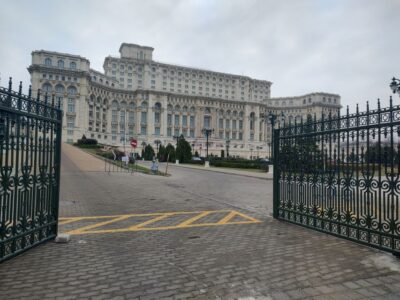
Transylvania and Dracula Castle Full Day Tour from Bucharest
Read our review →
Peles Castle, Bran Castle, & Brasov Old Town Tour
Read our review →
Small-group tour Bran, Rasnov, and Peles Castles
Read our review →