REVIEW · BUCHAREST TOURS
Eastern Orthodox Church Art in Bucharest
Bucharest’s churches hide in plain sight. This 2.5-hour walking tour leads you from the Old Princely Court through the old center to six active Orthodox churches, where painted walls, Byzantine forms, and local religious traditions tell a story that city sightseeing often misses. I especially like the small group of no more than 10 people, and I like that the route includes churches that can be difficult to locate on your own.
The tour is also a good choice if you want more than pretty photographs. Guides such as Helen, and Elena in one Spanish-language comment, have been praised for explaining Romanian Orthodox art and history in clear, personal terms. The main caution is that these are working churches, not quiet museum displays, and one past participant felt uncomfortable with the guide’s handling of their Catholic background.
In This Review
- Key points before you book
- Why Bucharest’s church art deserves your time
- Starting at Saint Anton near the Old Princely Court
- Saint George Km0 and a major Romanian church painter
- Saint Elijah, one of Bucharest’s two Orthodox basilicas
- The Lady’s Church and its preserved original frescoes
- Stavropoleos Monastery, the ornate centerpiece
- The final church and an itinerary detail to confirm
- What the guide adds to the $57 price
- Dress, behavior, and practical comfort
- Who should take this church walk?
- Should you book Eastern Orthodox Church Art in Bucharest?
- FAQ
- How long does the Eastern Orthodox Church Art in Bucharest tour last?
- How much does the tour cost?
- Which churches are included?
- What languages are available?
- Where is the meeting point?
- What should I wear?
Key points before you book
- Six churches in 2.5 hours: The compact route covers Saint Anton, Saint George Km0, Saint Elijah, the Lady’s Church, Stavropoleos Monastery, and Saint Cyprian.
- A walking tour through old Bucharest: You begin near the Old Princely Court and continue along Lipscani Street, keeping the focus on the historic center.
- Active places of worship: Modest dress and quiet behavior are required, and services or family ceremonies may be taking place.
- Strong guide-led interpretation: Helen has earned praise for her explanations of Byzantine art, Romanian history, and Orthodox practice.
- Easy to tailor in a small group: The guide has adjusted the pace for people using crutches or a walking stick, according to one detailed account.
- Good value at $57: The price makes the most sense if you want context, church access, and expert explanation rather than a fast exterior walk.
Why Bucharest’s church art deserves your time
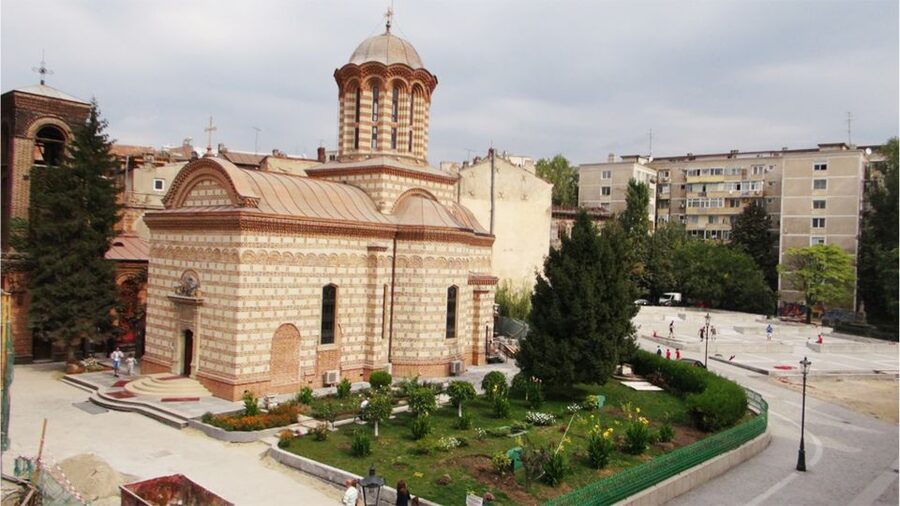
Bucharest is often introduced through grand boulevards, communist-era buildings, cafés, and the Old Town’s nightlife. That gives you only part of the picture. The city’s older churches are smaller, less obvious, and often tucked between modern streets, shops, and apartment buildings.
That contrast is part of the appeal. You can walk along Lipscani Street, surrounded by restaurants and bars, then step through a church door into a darker, quieter world of icons and frescoes. The change is quick. It also helps explain how Bucharest developed: older Wallachian religious buildings remain woven into the modern city instead of being separated in a formal historic district.
The tour focuses on Byzantine and Orthodox art, but you do not need a background in theology to follow it. A good guide can show you how paintings function inside a church, how saints are arranged, and why a building’s style matters. You will also hear about Romanian church history and the Wallachian Middle Ages, giving the paintings a setting beyond simple decoration.
I would not choose this experience if you want a purely architectural walk with no religious context. The churches are active, and the tour asks you to respect their purpose. For someone interested in how art, worship, and local history meet, that is exactly what makes the route worthwhile.
A few more Bucharest days worth comparing
- Bucharest: Dracula’s Castle, Peles Castle, & Brasov Old Town
★ 4.5 · 17,858 reviews - Bucharest: Dracula Castle, Peles Castle & Brasov Old Town
★ 4.6 · 10,891 reviews - Bucharest: Dracula’s Castle, Peleș Castle & Brașov Day Trip
★ 4.5 · 5,919 reviews
Starting at Saint Anton near the Old Princely Court
The meeting point is in front of the Anton icon shop, near the Old Princely Court. This is a practical place to begin because it puts you close to one of the central threads of Bucharest’s early history.
Saint Anton Church is the opening stop. The church helps set the tone for the tour: you are not simply ticking off famous buildings, but looking at how Orthodox worship has continued inside old urban spaces. Starting here also gives the guide a natural chance to explain the Wallachian setting before the route moves into the busier streets.
The nearby icon shop may interest you even if you do not plan to buy anything. One person who took the tour privately was accompanied to an icon shop by the guide and found pieces that completed a planned purchase. That does not mean shopping is a formal part of every tour, but it suggests that the guide may offer useful local help when the group format and schedule allow.
Arrive with comfortable shoes. The distance is not described as strenuous, but the tour is on foot and includes several church entrances, street sections, and periods of standing. Anyone who prefers a slow pace should tell the guide at the start.
Saint George Km0 and a major Romanian church painter
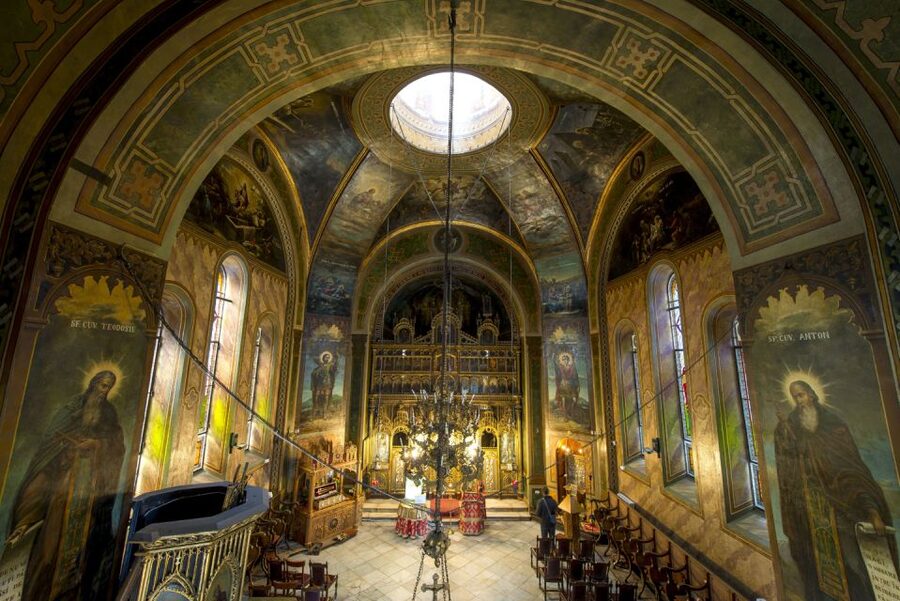
From Saint Anton, the route continues down Lipscani Street to Saint George Km0 Church. Lipscani is one of the city center’s best-known streets, so this part of the walk connects the church stops with the everyday energy of Bucharest’s old commercial quarter.
Saint George is especially important for its fresco by one of Romania’s greatest church painters. That detail gives you something specific to look for. Rather than treating the interior as one large decorative scene, ask the guide to point out the painter’s style, the arrangement of the figures, and the features that mark the work as Romanian Orthodox art.
The label Km0 also matters as a city reference. It places the church within Bucharest’s symbolic center, where history, commerce, tourism, and religious life all overlap. You get a useful sense of place here: the church is not isolated from the city, but part of it.
This stop may appeal most to you if you enjoy close looking. The building itself is only half the story. The value comes from having someone explain what you are seeing, especially if you are unfamiliar with Orthodox imagery.
Saint Elijah, one of Bucharest’s two Orthodox basilicas
Saint Elijah is one of the more unusual stops because it is described as an Orthodox basilica, with only one other example in the city. It is also one of the churches that can be hard to find, even for people who live in Bucharest.
That is an important reason to take the tour rather than attempt the route alone. The city center has plenty of visible landmarks, but some of its religious buildings do not announce themselves from the main street. A guide saves you the time and uncertainty of searching for doors and entrances.
The basilica label also gives the tour a chance to compare styles. Orthodox churches in Bucharest do not all share the same shape or mood. As you move from the earlier churches to Saint Elijah, you can pay attention to the building’s scale, layout, and visual character instead of assuming every church follows one model.
You should keep your expectations realistic. The supplied information does not promise a long visit at each church, so the guide will need to balance six stops within 2.5 hours. You will gain a broad introduction rather than a detailed study of every wall.
A completely different kind of day out:
- Bucharest: Palace of Parliament Tickets and Guide
★ 4.3 · 3,182 reviews - Bucharest: Day Trip to Dracula Castle, Peles Castle & Brașov
★ 4.4 · 3,049 reviews - Bucharest to Dracula Castle, Peles Castle and Brasov Guided Tour
★ 4.5 · 2,933 reviews - Bucharest: Palace of Parliament Tickets and Guided Tour
★ 4.4 · 1,877 reviews
The Lady’s Church and its preserved original frescoes
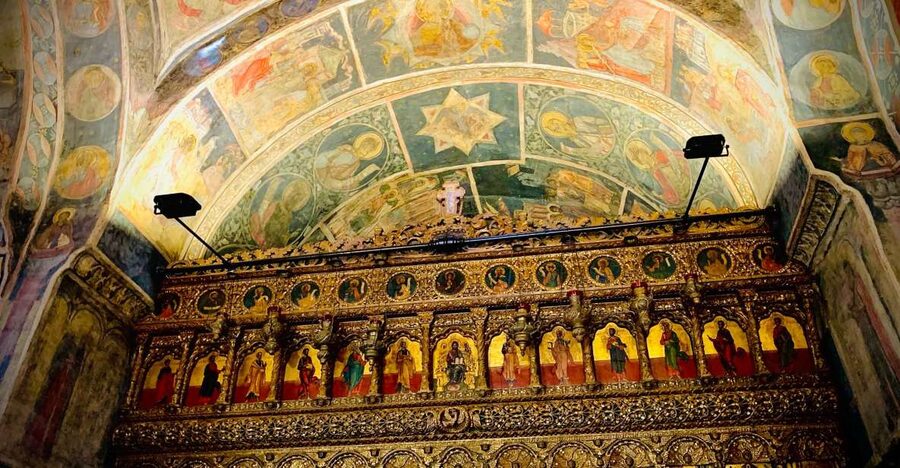
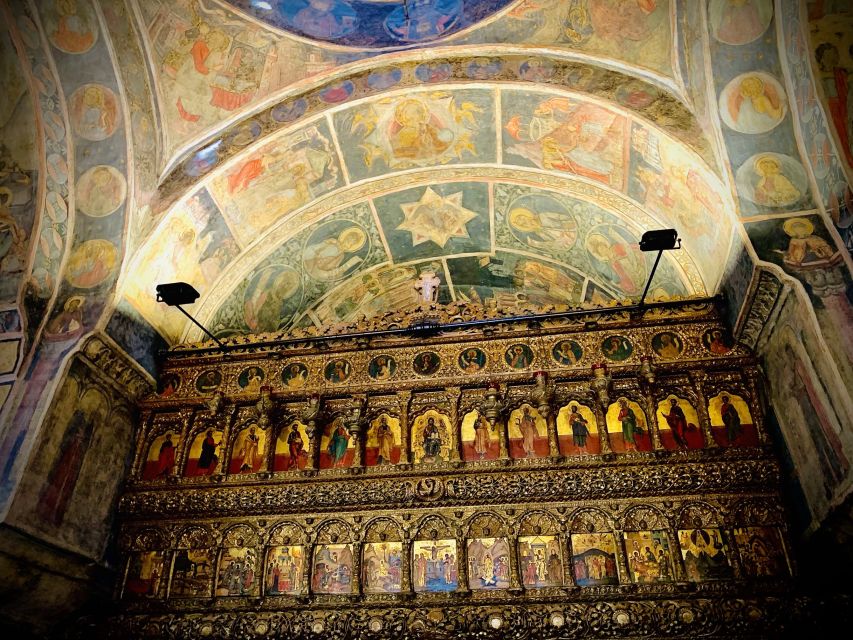
The Lady’s Church is another stop chosen partly because it is easy to miss. Its main draw is its original fresco work, described as some of the oldest preserved in Bucharest.
Age changes the way you look at church art. A newer painting can impress you through color and detail, but older frescoes carry the marks of survival. You may find areas where time has affected the surface, and that is part of the meaning of the visit. These paintings have remained in an active place of worship rather than being presented under museum conditions.
This is where the guide’s background becomes especially useful. Without explanation, you might notice old paint but miss why preservation matters, how the work relates to Orthodox practice, or how Bucharest’s churches have changed over time. The tour gives you a framework for reading what remains.
The Lady’s Church may also be a good moment to slow down mentally. The route includes several stops, and it is easy to rush when moving through the center. I would pay close attention here and let the guide explain the paintings before taking photographs, if photography is permitted at the time of your visit.
Stavropoleos Monastery, the ornate centerpiece
Stavropoleos Monastery is likely to be the most familiar name on the route. Its eclectic style gives the tour a visual change after the older and harder-to-find churches.
The monastery is located next to the final church area, making this section of the walk compact. Its ornate appearance can attract a crowd, but a guide helps you look past the first impression. You can ask how its style differs from the Byzantine and Wallachian elements seen earlier, and how it fits into Bucharest’s changing architectural story.
I like the way this stop broadens the tour. You are not being shown one single version of Orthodox design. Instead, you see a range of forms, periods, and artistic approaches within a short walk. That makes the itinerary more useful than a single famous-church visit.
Because Stavropoleos is a functioning religious site, the atmosphere can vary. A service, prayer, or other activity may affect the visit. The tour is not a guaranteed private viewing, and you should be ready to observe quietly or accept a shorter stop if worship is taking place.
The final church and an itinerary detail to confirm
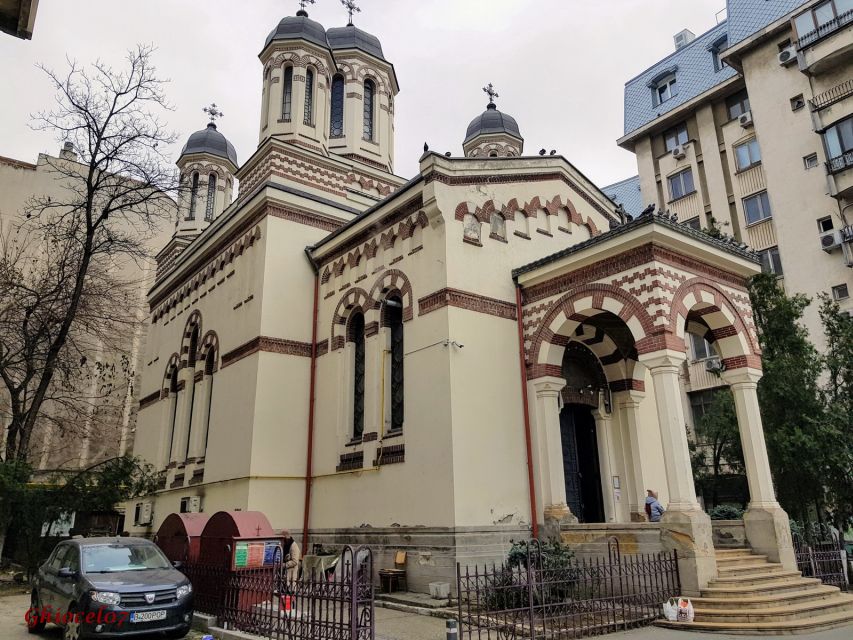
The description of the route identifies Saint Demetrios as the last stop, calling it a nineteenth-century neo-Baroque building. The included attractions list Saint Cyprian instead. That is a small but important inconsistency, so I would confirm the final church with Bucharest Break before booking if the closing stop matters to you.
Saint Demetrios, as described, would give the route another change in style. Its nineteenth-century neo-Baroque character contrasts with the medieval associations, older frescoes, and Orthodox basilica form seen earlier. That kind of contrast helps you understand that Bucharest’s church heritage is not fixed in one period.
Saint Cyprian is also listed among the included churches, but no separate description is supplied. I would not assume that both Saint Demetrios and Saint Cyprian are always visited. Ask which six churches are planned for your date, particularly if you are choosing the tour because of one specific building.
This is not a reason to reject the experience. It is simply the sort of detail worth checking before paying, especially when the tour is built around a short list of carefully chosen stops.
What the guide adds to the $57 price
At $57 per person, this is not the cheapest way to walk around central Bucharest. You can see many church exteriors without paying for a tour. The price becomes easier to justify if you want the buildings identified, the art explained, and the less obvious entrances found without guesswork.
The group limit of 10 is a real advantage. It gives you a better chance to hear inside the churches and ask questions without competing with a large crowd. If the group is very small, the guide may be able to adjust the pace or focus. One person had a private experience and received help finding an icon shop, while another praised the guide for adapting the walk for a friend on crutches and a companion using a walking stick.
The strongest praise centers on the guide’s command of Romanian Orthodox art, church history, and Byzantine subjects. A good explanation can change the value of a modest-looking church. You begin to notice why a building matters, not only whether it looks impressive in a photograph.
Still, guide quality is central here, so expectations should be balanced. One participant described the guide as condescending after learning that they were Catholic. That is a serious concern for anyone who wants a neutral, respectful discussion of religion. The positive accounts describe a warm, flexible, and engaging guide, but I would state your interests and religious background plainly if you have concerns.
Dress, behavior, and practical comfort
These are active churches, not museums. Wear clothing that covers your shoulders and knees, and avoid short skirts, sleeveless shirts, tight clothing, and ripped clothing. Strong fragrances are also not allowed.
You should behave as you would in any place of worship. Keep your voice low, follow the guide’s instructions, and accept that a ceremony may change the order or length of a stop. One visit included a Christening, and the group was invited to share sweets and drinks with the family. That is a memorable example of the kind of unscripted human moment that can happen in a working church, but it cannot be promised.
Comfortable shoes are the only item specifically requested. No food or drinks are included. If you want a break, the route can stop at one of the many cafés, bars, or restaurants in the area, but you should not count on a meal being part of the tour.
The experience is offered in English, Spanish, and Romanian. Check your preferred language when selecting a date, since the guide’s ability to explain art and religious terms clearly will shape your enjoyment.
Who should take this church walk?
I would recommend it to you if you want to understand Bucharest beyond its headline sights. It suits people interested in sacred art, medieval Wallachia, Romanian culture, architecture, and the way historic buildings remain part of modern city life.
It is also a good option for a first visit, provided you enjoy walking and listening. The route gives you a useful orientation around the Old Princely Court and Lipscani area while introducing places you might not find alone.
You may want another activity if your priority is a relaxed café stop, a long photography session, or a museum-style tour where you can wander independently. Six churches in 2.5 hours means the pace has purpose. You will see a lot, but you may not have time to study every fresco at leisure.
People with mobility concerns should contact the provider in advance. The experience has been adapted for a guest using crutches and another using a walking stick, which is encouraging, but the tour remains a walking route through active urban and religious spaces. Do not assume every surface or entrance will be easy without checking.
Should you book Eastern Orthodox Church Art in Bucharest?
Book this tour if you want the stories behind Bucharest’s church interiors, not just a list of buildings. The strongest reasons are the small group, the hard-to-find churches, and the guide’s detailed grasp of Orthodox art and Romanian history.
Before you commit, confirm the final stop, since the information names both Saint Demetrios and Saint Cyprian. Also make sure you are comfortable with the dress code and with visiting active churches where ceremonies can interrupt the planned route.
At $57, I see this as a focused specialist tour rather than a general city walk. For the right reader, it offers a compact way to see old frescoes, unusual church styles, and living religious spaces with proper context. If that sounds like your kind of Bucharest, it is a sound booking.
FAQ
How long does the Eastern Orthodox Church Art in Bucharest tour last?
The tour lasts 2.5 hours.
How much does the tour cost?
The listed price is $57 per person.
Which churches are included?
The included attractions are Saint Anton Church, Saint George Km0 Church, Saint Elijah, the Lady’s Church, Stavropoleos Monastery, and Saint Cyprian Church. The route description also identifies Saint Demetrios as the final stop, so confirm the exact church list before booking.
What languages are available?
The tour is offered in English, Spanish, and Romanian.
Where is the meeting point?
Meet in front of the Anton icon shop, near the Old Princely Court.
What should I wear?
Wear modest clothing suitable for an active place of worship. Short skirts, sleeveless shirts, tight clothing, ripped clothing, and strong fragrances are not allowed. Comfortable shoes are recommended.
Just added in Bucharest
- Bucharest: Dealu Mare Winery Private Trip with Wine Tasting★ 4.9 · 6 reviews
- Winery touring & private wine tasting – one day private tour★ 5.0 · 3 reviews
- Village Museum Bucharest Guided Tour★ 5.0 · 6 reviews
- Transylvania Tour: Dracula’s Castle, Peles Palace & Brasov★ 5.0 · 19 reviews
- Transfer Airport Otopeni – Bucharest★ 5.0 · 2 reviews
- Private Transfer Bucharest Otopeni Airport (OTP) to/from Brasov★ 5.0 · 2 reviews
- Bucharest Airport Transfer To Constanta Mamaia★ 5.0 · 3 reviews
- Airport Henri Coanda (Otopeni) to Bucharest – Private Transfer – Driver★ 5.0 · 5 reviews
Bucharest Tours, compared.
Dracula’s Castle, Peles Castle, & Brasov Old Town
Read our review →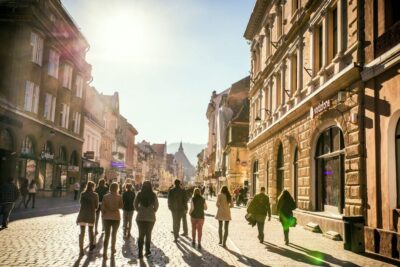
Dracula Castle, Peles Castle & Brasov Old Town
Read our review →
Dracula’s Castle, Peleș Castle & Brașov Day Trip
Read our review →
Day Trip to Dracula Castle, Peles Castle & Brașov
Read our review →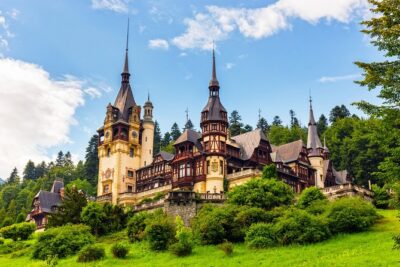
Bucharest to Dracula Castle, Peles Castle and Brasov Guided Tour
Read our review →