
REVIEW · 4-DAY EXPERIENCES
Explore Transylvania Tour 4 days
Castles, citadels, and mountain roads fill four days. This private circuit gives you a well-planned taste of Transylvania, from Peles Castle and Bran Castle to Sighisoara, Sibiu, Saxon villages, and the Carpathian Mountains. I like the private vehicle and personal guide, which let you keep a comfortable pace, and I like that three nights of central accommodation and breakfast are included.
The main thing to consider is the amount of road time. You cover a lot of ground, and Day 4 includes about five hours on the road. Castle admission, some church and museum tickets, food, and drinks cost extra, so the $877.16 price needs to be judged as a package rather than as an all-inclusive fare.
In This Review
- Four details that shape the experience
- What the four-day route really offers
- Day 1: Peles Castle, Bran, and Brasov
- Day 2: Viscri and Sighisoara’s medieval lanes
- Day 3: Biertan and the Saxon capital of Sibiu
- Day 4: The Olt Valley and Transfagarasan route
- Hotels, transport, and the value of $877.16
- How the private guide changes the trip
- Who should book this Transylvania route?
- Should you book it?
- FAQ
- Where does the Explore Transylvania Tour begin and end?
- What time does the tour start?
- Is this a private tour?
- What accommodation is included?
- Are meals included?
- Are entrance tickets included?
- Is the Transfagarasan Highway available all year?
Four details that shape the experience
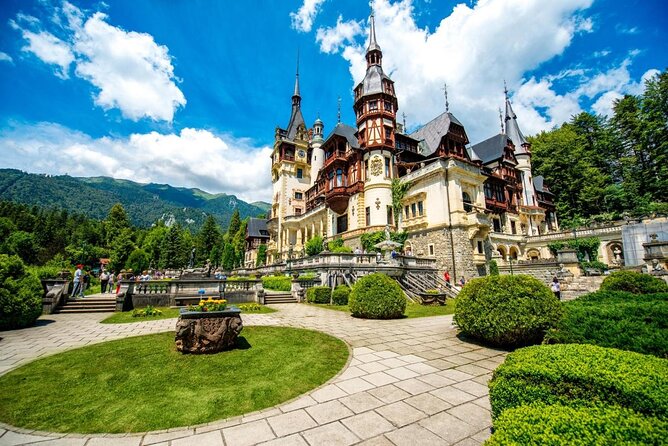
- Peles Castle begins the trip in grand style: You visit one of Romania’s most ornate royal residences in Sinaia, with time set aside for the interior.
- Bran Castle is only one part of the Dracula story: The tour also gives you a guided walk through Brasov, where the medieval setting is more than a quick photo stop.
- Sighisoara, Viscri, and Biertan show rural Transylvania: These places add fortified churches, old Saxon homes, cobbled lanes, and village life to the castle circuit.
- Three nights in central hotels save planning time: Accommodation is included, with Casa Wagner in Brasov named for the first night.
- The Transfagarasan depends on the season: The mountain road extension is offered from June through September, so the exact Day 4 experience depends on when you go.
- The private format suits curious, flexible groups: You travel only with your own party, with a minimum of two people required per booking.
What the four-day route really offers
This is not a single-city tour with a few nearby excursions. It is a moving journey through several regions of Romania, with Bucharest as both starting and ending point. You will see royal architecture, medieval towns, German-Saxon settlements, Orthodox and Lutheran churches, and dramatic mountain routes.
That range is the tour’s biggest strength. In four days, you get a useful first look at Transylvania without having to arrange trains, hotels, driving routes, or parking yourself. A private guide can also explain the links between Romania’s royal family, Transylvanian Saxons, fortified churches, and the Dracula legend.
The pace is active but not frantic on paper. Most stops allow about two hours, and the longest driving day is the return from Sibiu through the Olt River Valley and toward Bucharest. One direct account of the trip describes the distances between stops as generally no more than two hours, leaving time for guided visits, photos, museums, and independent wandering. That balance is important because these towns are better enjoyed on foot than from a coach window.
More Transylvania trips:
- Transylvania and Dracula Castle Full Day Tour from Bucharest
★ 4.5 · 1,589 reviews - Castles of Transylvania: Private Day Trip from Bucharest
★ 4.5 · 248 reviews - 2-Day Transylvania from Bucharest: Brasov, Bran, Sighisoara
★ 5.0 · 60 reviews
Day 1: Peles Castle, Bran, and Brasov
Your pickup begins at 8:00 a.m. in Bucharest. The guide or driver comes to your hotel reception, and airport pickup is also available at Henri Coanda Airport, where the guide waits in the main arrivals hall with a sign bearing your name.
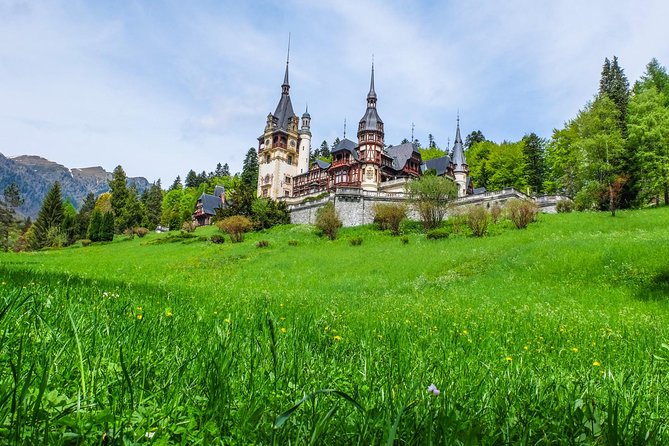
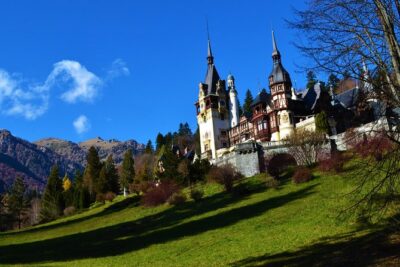
The morning drive heads north toward Sinaia and the Southern Carpathians. Peles Castle is a strong opening stop. Commissioned by King Carol I in 1873 and completed in 1883, it was built in German New-Renaissance style and is often regarded as one of Europe’s most beautiful castles.
You have about two hours here. That is enough time for a proper visit, but admission is not included, so you should budget for the ticket separately. The castle is not simply a Dracula-themed attraction. It introduces Romania’s royal story and gives the first day a polished, architectural focus before the route turns toward medieval Transylvania.
Next comes Bran Castle, widely marketed as Dracula’s Castle. The tour description links it to the story of Dracula’s imprisonment before his removal to Budapest. The historical and literary strands around Vlad Tepes and Dracula are not identical, so it is sensible to enjoy Bran as both a real medieval castle and a place shaped by later legend.
Again, about two hours are allowed, and the entry ticket costs extra. Bran can attract strong interest, but it is also the most obvious tourist stop on the route. The advantage of having a private guide is that you can ask questions and get more context than you might from simply moving room to room alone.
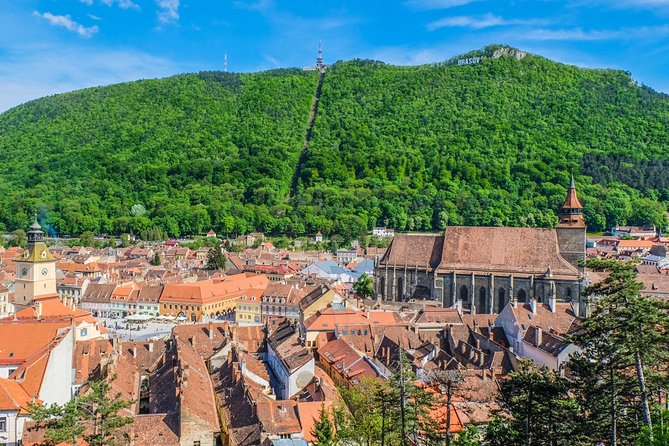
The day finishes in Brasov, with a guided walk through its historical center. This is where the tour begins to feel less like a castle checklist. You can see the medieval core, visit key sites, and get an introduction to one of Transylvania’s most appealing cities.
Accommodation is provided at Boutique Hotel Casa Wagner, a three-star property in Brasov. The central location matters after a full day because you can finish the guided walk near the old town instead of facing another transfer to an outlying hotel.
Day 2: Viscri and Sighisoara’s medieval lanes
The second day shifts from famous castles to the Saxon villages and fortified churches that give Transylvania its particular character. Viscri is the first stop, and its appeal lies in its scale. Instead of grand royal rooms, you get a village setting linked to the German-speaking communities that settled parts of Transylvania.
The village is also associated with Prince Charles of Great Britain, who became fond of rural Romania. That connection helped bring wider attention to Viscri, but the place is worth seeing for its old buildings and slower rhythm rather than for royal celebrity alone.
A visit to the fortified church is optional, and admission is not included. You should confirm the day’s opening arrangements with your guide, since the church visit is not part of the included ticket package. The two-hour stop gives you time to walk around and decide how much attention you want to give the church compared with the village itself.
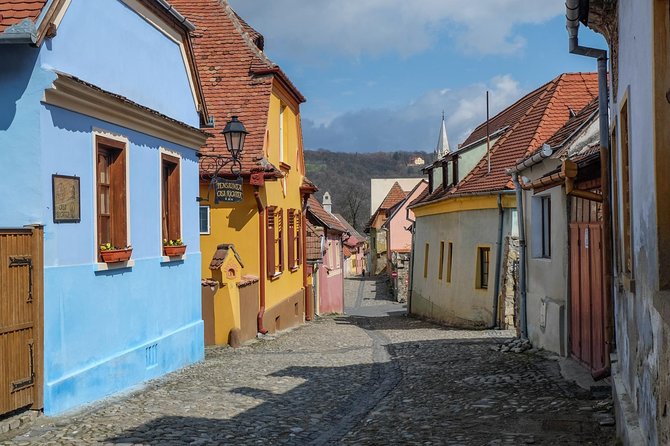
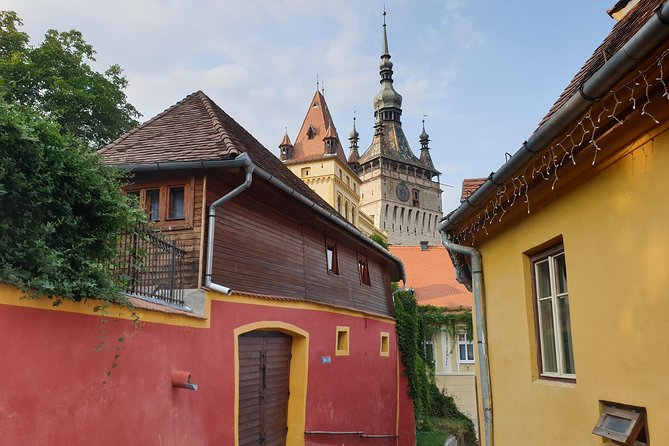
Sighisoara provides the day’s strongest medieval setting. Its old town has cobbled streets, burgher houses, ornate churches, and a very walkable historic core. The Clock Tower, also called the Council Tower, was built in the second half of the 14th century and expanded in the 16th century.
The route continues to the Venetian House, built in the 16th century, and the house associated with Vlad Tepes, who was born there in 1431 and lived with his father until 1435. This is a more direct connection to the Dracula story than Bran Castle, though the real interest is the preserved town around it.
You also walk the covered stairs to the Church on the Hill. Sighisoara’s inclines and stone streets make sturdy shoes a smart choice. The two-hour schedule should let you see the major sights, but it will not allow unlimited museum time or a leisurely stop at every shop and cafe.
This is one of the tour’s better-designed days. The drive is broken by a village and a major historic town, and you get both guided explanation and free time. That combination lets you learn the story without having every minute filled.
Day 3: Biertan and the Saxon capital of Sibiu
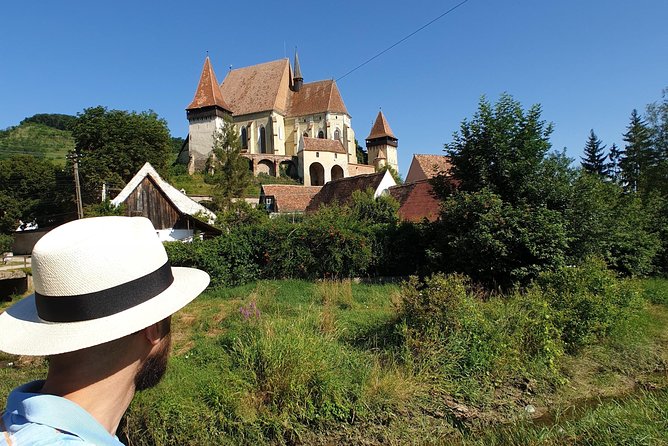
Biertan is the first important stop on Day 3. Its fortified church is a UNESCO-listed site and one of the clearest examples of the German settlements that shaped Transylvania.
The church is surrounded by three rows of fortifications. It served for almost 300 years as the residence of the Transylvanian Archbishop, which gives the site a religious and defensive role at the same time. You will also hear about a room in the citadel used as a place of reconciliation for couples considering divorce. It is a memorable detail, and your guide can explain the full local story on site.
Admission is extra, and the visit lasts about two hours. Biertan rewards attention to construction, walls, towers, and community life more than a quick photo. If you prefer only headline sights, the stop may feel quiet. If you want to understand how villages protected themselves, it is one of the most useful visits on the route.
Before noon, you reach Sibiu, the chief city of the Transylvanian Saxons. The walking tour takes in the old defense walls and surviving towers, each linked to a guild. That guild connection helps you see the city as a working medieval center rather than simply a pretty square.
The Brukenthal Museum is another major sight. It was assembled by Baron Brukenthal, governor of Transylvania at the end of the 18th century. The Evangelical Cathedral took its present form in 1520 and contains a 1445 Crucifixion fresco on the north wall of the choir.
The walk also includes the Passage of Stairs between the Upper and Lower towns, the 1859 Liar’s Bridge, and the Byzantine-style Orthodox Cathedral, modeled after Hagia Sophia in Constantinople. The range of buildings reflects the mix of religious and cultural traditions that you see across the region.
Sibiu’s walking tour is listed as free of admission charges, but individual museums or special interiors may have their own policies. One practical point is the hotel location. The accommodation is described as clean and close to the old town in general, but in Sibiu it may be about one kilometer away. That is not a major distance, but it is worth knowing if you want to step out for an evening stroll right from your hotel door.
A few more Bucharest days worth comparing
- Bucharest: Dracula’s Castle, Peles Castle, & Brasov Old Town
★ 4.5 · 17,858 reviews - Bucharest: Dracula Castle, Peles Castle & Brasov Old Town
★ 4.6 · 10,891 reviews - Bucharest: Dracula’s Castle, Peleș Castle & Brașov Day Trip
★ 4.5 · 5,919 reviews - Bucharest: Palace of Parliament Tickets and Guide
★ 4.3 · 3,182 reviews
Day 4: The Olt Valley and Transfagarasan route
The final day leaves Sibiu through the Olt River Valley, one of the dramatic routes across the Southern Carpathians. The Transfagarasan extension is available from June through September, so you should not assume that the full mountain-road experience operates outside those months.
This is the longest day in the vehicle, at about five hours. The reward is the high mountain crossing and the chance to see a very different side of Romania after several days of towns, churches, and castles. The exact feel of the road depends on weather, access, and the season, so keep your schedule flexible.
The route also includes Curtea de Arges, the first capital of Wallachia. You visit the old Princely Court and the monastery, where three of the four Romanian kings from the Hohenzollern dynasty are buried.
Curtea de Arges gives the final day a useful historical counterpoint. After spending time with Transylvanian Saxon towns and medieval fortifications, you return to the story of Wallachia and Romania’s royal past. The drive then continues to Bucharest, with hotel drop-off included.
A direct account of the journey describes seeing bears after driving the Transfagarasan. That is not a promised part of the program, so treat it as a possible bonus rather than a feature to count on. The same account also praised the laid-back pace and room for spontaneous choices, which is one of the main advantages of traveling privately.
Hotels, transport, and the value of $877.16
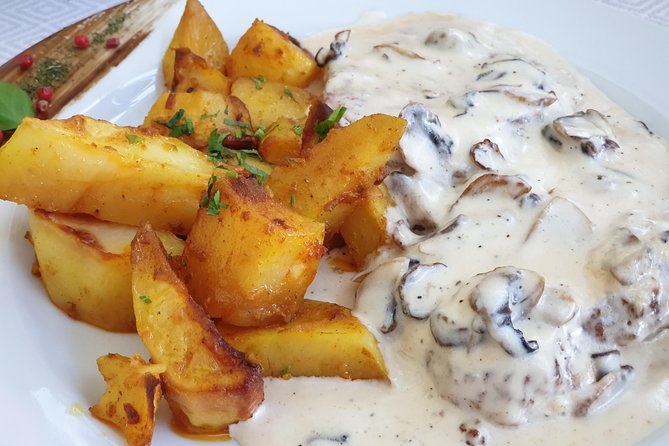
The price is $877.16 per person. At first glance, that is a serious sum for four days, but it includes three nights in three-star hotels, breakfast, fuel, private transport, a driver-guide, hotel pickup, and hotel drop-off.
The value improves if you are traveling as a pair or small private group and would otherwise need to arrange a rental car, fuel, parking, hotels, and guided visits yourself. You are also paying for time saved. The route includes several places that are awkward to connect efficiently without a car.
It is less compelling for a solo visitor because the booking requires at least two people. The tour also does not include food, drinks, castle admission, church tickets, museum entry, or souvenir photos. Put some extra money aside for those costs.
The three-star hotel level is practical rather than luxurious. The available details point to clean properties with central or near-central locations. Casa Wagner in Brasov is specifically identified, while the Sibiu hotel may sit roughly one kilometer from the old town.
Because this is a private tour, you avoid a large bus group and can ask for more explanation at places that interest you. You also have a better chance of pausing for photos or taking a little extra time in a village, subject to the day’s route. That flexibility is a real part of the price.
How the private guide changes the trip
The driver-guide is central to this experience. Ion is praised for a friendly, personal manner, for making room for spontaneous moments, and for helping create a relaxed trip that included village walks, fall scenery, local food, and the mountain road.
Angelika is also named as a guide who led a group through villages, fortified churches, castles, and citadels. Her approach included both guided visits and time to explore independently. That mix is worth asking for when you book: you should know when the guide will walk with you and when you will have free time.
Since the group is private, only your party participates. This suits couples, families, or friends who prefer conversation and flexibility over a fixed bus schedule. Most people can participate, and service animals are allowed, though the itinerary does involve walking on cobbled streets, stairs, and historic sites.
The tour is offered in English. Confirmation comes at booking, and cancellation is free up to 24 hours before the start time. Changes or cancellations inside that 24-hour window are not accepted for a refund.
Who should book this Transylvania route?
I would choose this tour if you want a broad first visit to Transylvania and do not want to drive. It gives you the headline sights, but it also reaches Viscri, Biertan, and the Saxon towns that make the region feel like more than a Dracula theme park.
It works best for someone comfortable with changing hotels and spending part of each day in a private vehicle. You should also be happy with a four-day overview rather than long, slow stays in each town.
I would think twice if you want deep museum time, a luxury hotel standard, or a trip centered only on Brasov and Bran Castle. You will see many places, but each stop has a set time, and admission costs are mostly separate.
Should you book it?
Book this tour if you value private guiding, included hotels, and a wide mix of castles, villages, churches, and mountain roads. The strongest moments are likely to come from the contrast between grand Peles Castle, atmospheric Sighisoara, quiet Viscri, fortified Biertan, and the final Carpathian crossing.
Before paying, confirm the season for the Transfagarasan extension, ask which hotels will be used, and set aside money for admission fees and meals. For two or more people who want Romania handled in one well-organized sweep, this is a strong and practical choice.
FAQ
Where does the Explore Transylvania Tour begin and end?
The tour begins in Bucharest and includes pickup from your hotel. Airport pickup is also available at Henri Coanda Airport. The route returns to Bucharest on Day 4, with hotel drop-off included.
What time does the tour start?
The stated start time is 8:00 a.m.
Is this a private tour?
Yes. Only your own group participates, and a minimum of two people per booking is required.
What accommodation is included?
The price includes three nights in centrally located three-star hotels. Boutique Hotel Casa Wagner in Brasov is named as the accommodation there.
Are meals included?
Breakfast is included. Food and drinks beyond breakfast are not included.
Are entrance tickets included?
No. Admission to Peles Castle, Bran Castle, Viscri’s fortified church, Sighisoara attractions, and Biertan Fortified Church is not included. The tour lists the Brasov, Sibiu, and Transfagarasan stops without an admission charge.
Is the Transfagarasan Highway available all year?
The Transfagarasan extension is offered from June through September. If that mountain-road section matters to you, check the operating dates before booking.
Just added in Bucharest
- Bucharest: Dealu Mare Winery Private Trip with Wine Tasting★ 4.9 · 6 reviews
- Winery touring & private wine tasting – one day private tour★ 5.0 · 3 reviews
- Village Museum Bucharest Guided Tour★ 5.0 · 6 reviews
- Transylvania Tour: Dracula’s Castle, Peles Palace & Brasov★ 5.0 · 19 reviews
- Transfer Airport Otopeni – Bucharest★ 5.0 · 2 reviews
- Private Transfer Bucharest Otopeni Airport (OTP) to/from Brasov★ 5.0 · 2 reviews
- Bucharest Airport Transfer To Constanta Mamaia★ 5.0 · 3 reviews
- Airport Henri Coanda (Otopeni) to Bucharest – Private Transfer – Driver★ 5.0 · 5 reviews
4-Day Experiences, compared.
4-Day Private Tour in Transylvania from Bucharest
Read our review →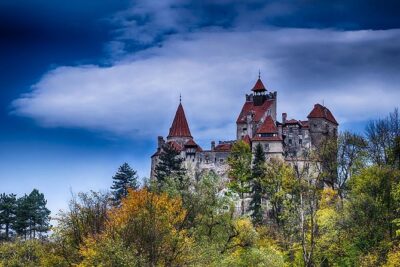
Transylvania Castles 4-day tour from Bucharest
Read our review →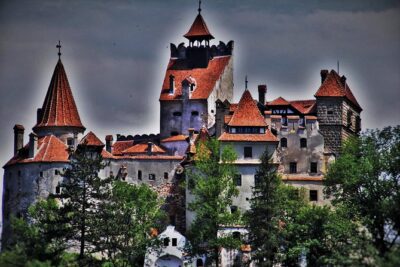
4 Days Private Tour in Transylvania: Sibiu, Sighisoara and Brasov
Read our review →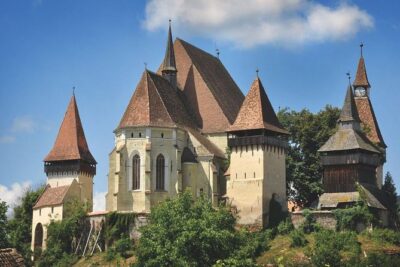
4-Day Private Tour of Transylvania from Bucharest
Read our review →
4-Day Carpathian Trek: Bucegi Mountains and Piatra Craiului National Park
Read our review →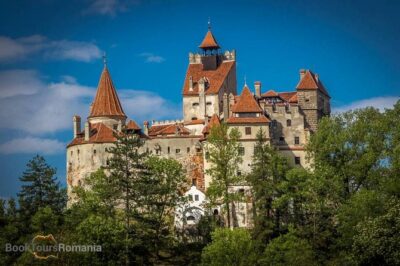
Private Tour: 4-day Transylvania Famous Landmarks
Read our review →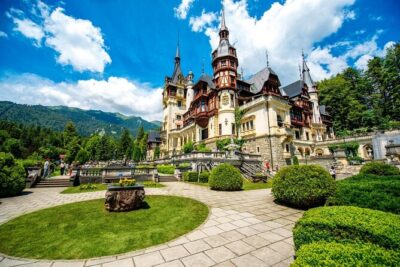
Private 4-Day Tour in Transylvania including Transfagarasan Road from Bucharest
Read our review →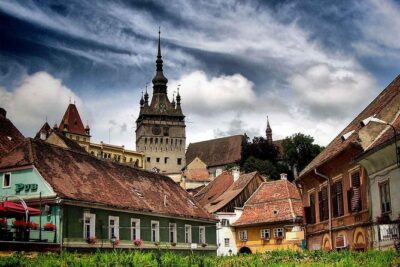
4-Day Transylvania and Dracula Tour from Bucharest
Read our review →Browse the lists this tour appears in