

REVIEW · OLD TOWN WALKS
Hidden Bucharest: Discover Secrets of the Old Town
Old Town keeps its secrets close. This two-hour walk brings Bucharest’s layered past into focus, from the 1989 Revolution and communist demolitions to churches, statues, cafés, and traces of the medieval city. I like the small maximum of 12 people, and I like the included covrig, a simple local snack that makes the route feel grounded in daily life. The main drawback is that two hours goes quickly, so some stops receive more explanation than sightseeing time.
The $33 price is fair if you want a guide who can explain what you are seeing rather than simply point at facades. The route is central, begins and ends at University Square, and suits first-time visitors who want local context without a full-day commitment. Bring comfortable shoes, since cobbled streets and steady walking are part of the deal.
In This Review
- Key points at a glance
- Starting at University Square with Michael the Brave
- The Russian Church and the courage of 1989
- A small alley and Bucharest’s Lady Liberty
- The Wolf Statue and the city’s ancient claim
- St. George Old Church and the Great Fire
- Covaci Street and the marks of communism
- The theatre inside a hospital
- French Street and a different face of Bucharest
- The History Museum from an unusual angle
- What the $33 price buys you
- Who will enjoy this walk most
- Should you book Hidden Bucharest?
- FAQ
- Where does the tour begin?
- Where does the tour end?
- How long does the tour last?
- What language is the tour in?
- How large is the group?
- Is food included?
- Are children allowed?
- What should I bring?
- Can I cancel the booking?
Key points at a glance
- A covrig break adds local flavor: You receive a traditional Romanian pretzel snack during the walk.
- The Russian Church has a dramatic recent past: Its ornate golden cupolas frame stories from the 1989 Revolution.
- Small alleys reward close attention: Look for the tour’s version of Lady Liberty, tucked away from the main streets.
- The route mixes several eras: You move from legendary Rome and medieval Bucharest to French-style buildings and communist-era change.
- The group stays small: A maximum of 12 people gives you a better chance to ask questions.
- English guidance is the focus: The tour is led by a live English-speaking guide and lasts two hours.
Starting at University Square with Michael the Brave
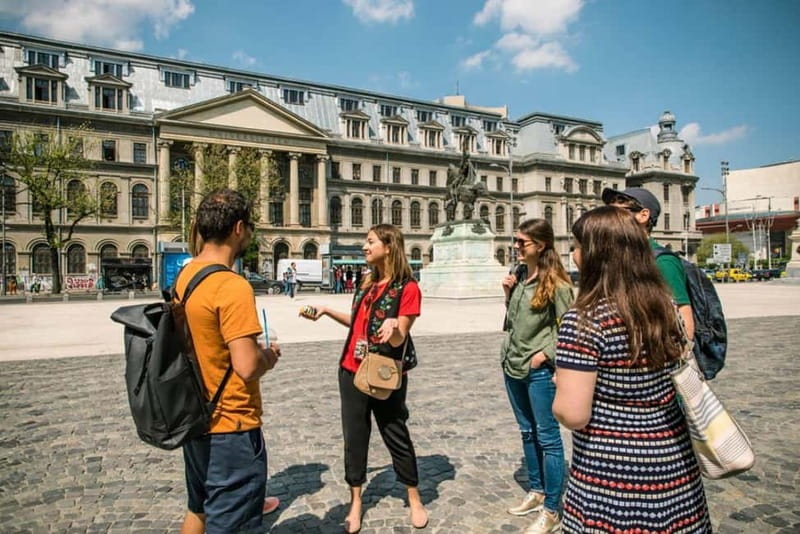
Your meeting point is easy to identify: University Square, in front of the statue of Michael the Brave. Look for the only horse statue in the square. The tour then moves toward Bucharest’s Old Town, so you begin with a useful sense of place instead of being dropped into a maze of narrow streets.
This is a good starting point for a walking tour because University Square connects the modern city with the older center. Your guide can set up the broad story of Bucharest before the details begin: royal ambition, church life, trade, fire, war, communism, and the city’s return to public life.
The route is compact, but the subject matter is not. You will not get a long museum-style lecture at each stop. Instead, the guide links the buildings and street corners so you can understand why this part of Bucharest looks so uneven. A grand facade may sit beside a patched wall, a church may be squeezed between newer construction, and a busy street may conceal an older trade route.
A few more Bucharest days worth comparing
- Bucharest: Dracula’s Castle, Peles Castle, & Brasov Old Town
★ 4.5 · 17,858 reviews - Bucharest: Dracula Castle, Peles Castle & Brasov Old Town
★ 4.6 · 10,891 reviews - Bucharest: Dracula’s Castle, Peleș Castle & Brașov Day Trip
★ 4.5 · 5,919 reviews
The Russian Church and the courage of 1989
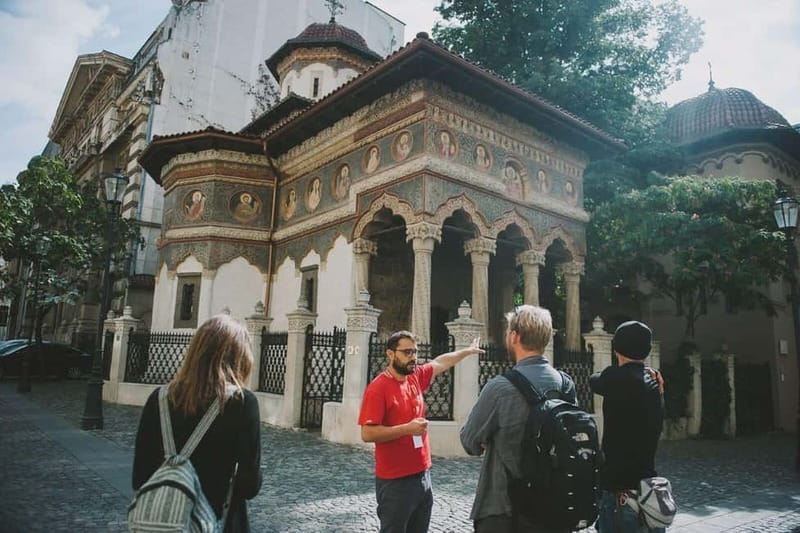
The first major stop is the Russian Church, known for its golden cupolas and ornate, almost confectionery appearance. It is an immediate visual change from the surrounding streets, and the decoration gives you a reason to stop and look upward.
The important part is not only the church’s appearance. Your guide uses it to tell stories from the 1989 Revolution, when Romanians challenged the communist regime. The building becomes a setting for human events rather than just another photograph. This is one of the tour’s strongest features because Bucharest’s recent past can be difficult to read from its architecture alone.
You should expect a story-led explanation rather than an extended visit inside the church. If your main goal is religious art or interior decoration, this stop may feel brief. If you want to understand how public spaces and familiar buildings became tied to political change, it gives the walk real weight.
A small alley and Bucharest’s Lady Liberty
The route then turns into a treasure hunt of sorts. In a small alley, you look for a local version of Lady Liberty. The pleasure here comes from not having the feature placed directly in front of you. You need to pay attention to side streets and upper corners instead of walking from one obvious monument to the next.
This is a useful reminder that Bucharest is best read at street level. The main roads tell only part of the story. Small passages, unusual statues, and overlooked details give the Old Town its character, especially when a guide explains why they matter.
The stop is also a good fit for families. Children under six can join free, and the search for the statue gives younger walkers a simple task. Still, the tour is not built as a children’s activity, so adults will get the most from the political and architectural context around it.
The Wolf Statue and the city’s ancient claim
The Wolf Statue shows the legendary story of Romulus and Remus, the twins associated with the founding of Rome. The image connects Romania to its Latin roots and helps explain why the wolf and twins appear in Romanian public art.
You may already know the Roman story, but the statue has value as a clue to national identity. It gives your guide a chance to discuss the way Bucharest presents its ancient connections while the surrounding streets show centuries of more local change.
Do not expect a large archaeological site here. The statue is a short stop, best understood as part of the route’s wider pattern. The tour keeps asking you to compare what Bucharest says about itself with what remains on the ground.
A completely different kind of day out:
- Bucharest: Palace of Parliament Tickets and Guide
★ 4.3 · 3,182 reviews - Bucharest: Day Trip to Dracula Castle, Peles Castle & Brașov
★ 4.4 · 3,049 reviews - Bucharest to Dracula Castle, Peles Castle and Brasov Guided Tour
★ 4.5 · 2,933 reviews - Bucharest: Palace of Parliament Tickets and Guided Tour
★ 4.4 · 1,877 reviews
St. George Old Church and the Great Fire
St. George Old Church offers a quieter pause. Its architectural details and religious importance provide a change of pace after the city statues and revolutionary stories. This is the kind of stop where a guide adds value by drawing your eye to features you might otherwise pass without noticing.
The church also helps explain the role of religious buildings in Old Town. They are not simply isolated monuments. They mark older communities, shifting neighborhoods, and the way Bucharest rebuilt itself over time.
The Great Fire is another key part of the route. The fire shaped the city’s streets and buildings, and your guide explains how a major disaster affected Bucharest’s development. This context matters because the Old Town is not a perfectly preserved medieval quarter. Its appearance reflects destruction, rebuilding, modernization, and periods of neglect.
That makes the tour more honest than a simple prettiest-streets walk. You see attractive churches and old facades, but you also learn why so much has changed. Some visitors may prefer a route focused only on polished architecture. I think the discussion of fire and rebuilding makes the city easier to understand.
Covaci Street and the marks of communism
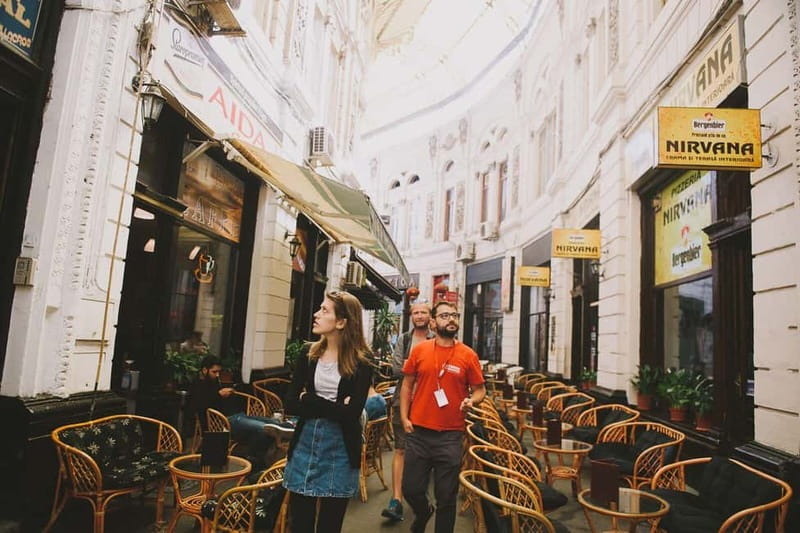
Covaci Street once served artisans and craftsmen. As you walk along it, the guide points out traces of its working past and explains how communist-era demolitions damaged or erased parts of the old commercial district.
This is where the walk moves beyond dates and monuments. Street names and building fronts become evidence of how city life worked. You can picture a district shaped by trades and workshops, then compare that older pattern with the changes forced by demolition and redevelopment.
The communist period receives useful attention throughout the tour. Guides have also been praised for answering broader questions about politics and everyday life during that era. Anita, one guide mentioned by name, was especially appreciated for connecting Jewish Bucharest, French-style architecture, and communist construction. Another guide, Mihelia, was praised for giving practical advice about food and places to visit as well as explaining the city’s past.
Guide quality matters greatly on a short walk. A fact-heavy presentation can feel rushed, but a guide who welcomes questions can make the two hours much more useful. The small group helps here. With no more than 12 people, you have a better chance to ask about a facade, neighborhood, restaurant, or period of history that interests you.
The theatre inside a hospital
One of the tour’s unusual promises is a theatre hidden inside a hospital. The detailed route identifies the Comedy Theatre, a cultural venue associated with laughter and performance. This is an appealing stop because it shows that Bucharest’s cultural life is not confined to grand opera houses or obvious concert halls.
The hospital connection is exactly the sort of odd detail that makes a city walk memorable, but you should listen carefully to the guide for the full explanation of how the site fits together. The available description does not give enough detail to promise a particular interior visit or performance. Treat it as an architectural and cultural stop, not as a theatre show.
The Comedy Theatre also gives the route a welcome change from churches, statues, and political history. You see how the city’s public life includes entertainment and performance, not only monuments to the past.
French Street and a different face of Bucharest
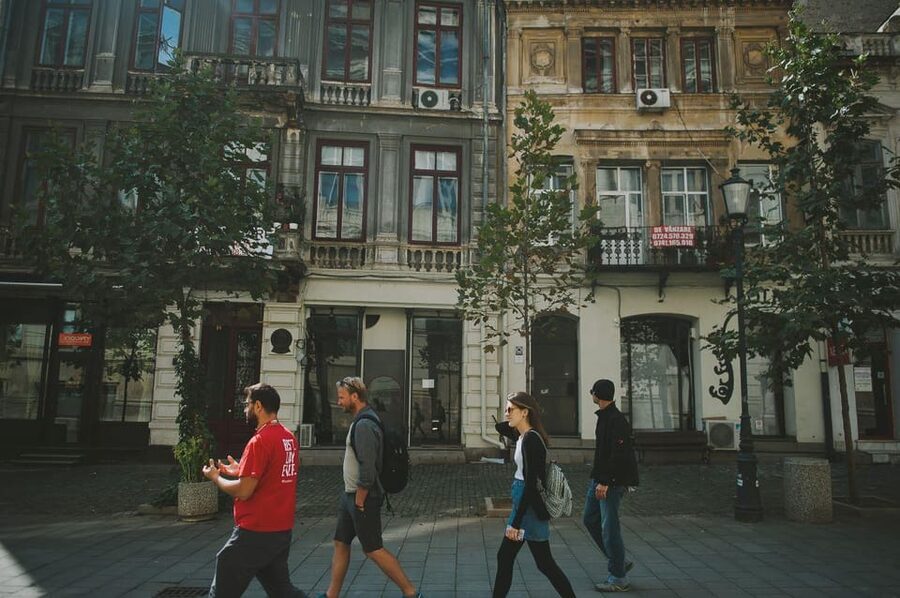
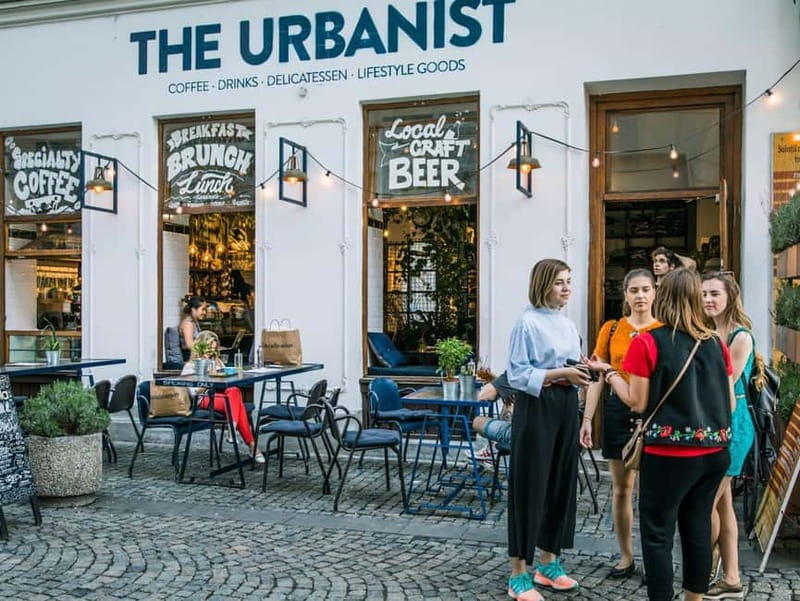
French Street brings a more relaxed stretch of the walk, with cafés and boutiques that create a Paris-inspired feel. This section may appeal to you if you want a sense of present-day Old Town alongside the historical material.
The street is not presented as a replica of Paris, and it should not be judged by that standard. Its value is in the contrast. Bucharest has absorbed outside styles while keeping its own mix of Balkan, Romanian, French, religious, and communist influences.
This is also a practical point in the tour. If you are deciding where to return for a meal or coffee, the guide can suggest places in the center. One highly praised guide was asked about where to eat and what to see after the walk, and offered useful answers. That kind of local orientation can save you time on a short visit.
The History Museum from an unusual angle
The final main stop is the History Museum, viewed from a different angle. The building represents Bucharest’s interest in preserving and explaining its past, but the tour does not simply send you inside for a standard museum visit.
Instead, your guide uses the exterior and its setting to close the walk. After seeing churches, statues, old trade streets, performance spaces, and signs of communist change, you have a broader framework for understanding the museum and the city around it.
The walk ends back at the University Square meeting point. That makes the tour easy to fit into a day of sightseeing. You are not left at an unfamiliar edge of the city, and you can use the remaining day to visit a museum, continue exploring Old Town, or follow a restaurant recommendation from the guide.
What the $33 price buys you
At $33 per person, this is not the cheapest way to walk through Old Town. You can explore the streets without paying anything. The question is whether the guide’s interpretation is worth the extra cost.
For me, the value comes from the connections. A free walk can show you the Russian Church, St. George Old Church, Covaci Street, and the History Museum. A good guide explains how fire, trade, religion, revolution, and communist planning altered the same small part of the city.
The covrig is a modest inclusion, not a reason to book by itself. Still, it adds a local food moment and gives you a taste of something familiar to Bucharest residents. The small group is more important. A maximum of 12 people is large enough for a social tour but small enough for direct questions and personal attention.
The 4.9 rating from 16 published ratings points to a strong experience, though the sample is not huge. The praise centers on friendly presentation, clear answers, local recommendations, and strong knowledge of buildings, culture, and politics. One guide even offered a Romanian chocolate bar at the meeting point, a small personal touch that suggests the welcome may feel warmer than a scripted city walk.
Who will enjoy this walk most
I would recommend it to first-time visitors who want a clear introduction to Bucharest in two hours. It is especially useful early in your stay, since the route can help you decide which streets, museums, churches, and cafés deserve a second look.
It also suits people interested in modern Romanian history. The 1989 Revolution and communist demolitions are not side notes here. They shape the way the guide explains the buildings and neighborhoods.
You will probably enjoy it if you like unusual details: a statue in an alley, a theatre connected with a hospital, an old trade street, and a church that looks modest until someone points out its design. The route is less suitable if you want long interior visits, a museum tour, or a slow photographic walk with lots of free time.
Families can join, and children under six are free. Still, adults should be ready for regular walking and discussion. Comfortable shoes are essential on cobbled streets.
The tour is in English with a live guide. Free cancellation is available up to 24 hours before the start, and you can reserve now and pay later, which helps if your Bucharest schedule is still shifting. The operator also describes the activity as carbon neutral and part of a B Corp certified company committed to responsible travel.
Should you book Hidden Bucharest?
Book it if you want context, conversation, and overlooked details rather than a checklist of famous buildings. At $33, the walk offers good value when your guide is as warm and responsive as Anita or Mihelia, especially if you take advantage of the chance to ask about restaurants, Jewish Bucharest, architecture, and the communist period.
Skip it if you prefer to explore alone, spend time inside each church, or move at your own pace. For most first visits, though, this is a well-sized introduction to Old Town, with enough odd corners and serious history to make the two hours worthwhile.
FAQ
Where does the tour begin?
It begins in University Square, in front of the statue of Michael the Brave. This is the only horse statue in the square.
Where does the tour end?
The tour ends back at the meeting point in University Square.
How long does the tour last?
The walking tour lasts two hours. Starting times vary, so check availability when booking.
What language is the tour in?
The live tour guide speaks English.
How large is the group?
The group has a maximum of 12 people.
Is food included?
Yes. A traditional Romanian covrig street snack is included.
Are children allowed?
Yes. The tour is child-friendly, and children under six may join free of charge.
What should I bring?
Bring comfortable shoes for walking on the cobbled streets of Old Town.
Can I cancel the booking?
Yes. You can cancel up to 24 hours in advance for a full refund. You can also reserve now and pay later.
Just added in Bucharest
- Bucharest: Dealu Mare Winery Private Trip with Wine Tasting★ 4.9 · 6 reviews
- Winery touring & private wine tasting – one day private tour★ 5.0 · 3 reviews
- Village Museum Bucharest Guided Tour★ 5.0 · 6 reviews
- Transylvania Tour: Dracula’s Castle, Peles Palace & Brasov★ 5.0 · 19 reviews
- Transfer Airport Otopeni – Bucharest★ 5.0 · 2 reviews
- Private Transfer Bucharest Otopeni Airport (OTP) to/from Brasov★ 5.0 · 2 reviews
- Airport Henri Coanda (Otopeni) to Bucharest – Private Transfer – Driver★ 5.0 · 5 reviews
- Private Bucharest Otopeni Airport (OTP) Transfer★ 5.0 · 2 reviews
Old Town Walks, compared.
Dracula’s Castle, Peles Castle, & Brasov Old Town
Read our review →
Dracula Castle, Peles Castle & Brasov Old Town
Read our review →
Peles Castle, Bran Castle, & Brasov Old Town Tour
Read our review →
Dracula’s Castle, Peles Castle, & Brasov Old Town
Read our review →
Bucharest Essential Tour: Old Town, Calea Victoriei & Communism
Read our review →
Dracula’s Castle, Peles Castle and old town Brasov from Bucharest
Read our review →
4h Bucharest Private Tour (2h by Car and 2h Walking in Old Town)
Read our review →
Sibiu Old Town Exploration Game and Self-Guided Tour
Read our review →Browse the lists this tour appears in