REVIEW · PRIVATE
Private 8 Day Romania UNESCO Tour
Romania rewards curious detours. This private eight-day circuit links Bucharest with medieval Transylvania, Maramures villages, Bucovina’s painted monasteries, and the Carpathian Mountains, giving you far more than a checklist of famous sights. I especially like the horse-drawn village ride near Sibiel and the chance to meet craftsmen, taste local preserves, and see how rural traditions still shape daily life. The private guide is another major plus, since you can ask questions as you go and adjust the pace to your group.
The main drawback is the amount of time spent on the road. Several days cover long distances between regions, and admission fees are mostly extra, adding about 85 euros per person. Still, the mix of cities, castles, churches, food, and countryside makes this one of the most useful ways to get a broad first look at Romania.
In This Review
- Key points before you book
- What this eight-day route does well
- Day 1: Bucharest, Cozia, and the old streets of Sibiu
- Day 2: Corvin Castle and Alba Iulia’s fortified center
- Day 3: Cluj-Napoca and the wooden churches of Maramures
- Day 4: Merry Cemetery and Maramures traditions
- Day 5: Crossing to Bucovina and the painted monasteries
- Day 6: Voronet, Bicaz Gorge, and the approach to Sighisoara
- Day 7: Sighisoara, Saschiz, Prejmer, and Brasov
- Day 8: Bran, Peles, and return to Bucharest
- What the $2,315.49 price really buys
- Who should book this Romania tour?
- FAQ
- Where does the tour start and finish?
- How long does the tour last?
- Is this a private tour?
- What type of transport is used?
- Are hotel stays included?
- Are meals included?
- Are entrance tickets included?
- Does the tour visit UNESCO sites?
- Is the Sibiel horse-drawn wagon ride included?
- Can the tour visit the Communist Prison Museum?
- Should you book it?
Key points before you book
- Seven nights, four distinct regions: You move from Bucharest and Wallachia through Transylvania, Maramures, Bucovina, and back to southern Romania.
- Private travel from start to finish: Your group has its own guide and car or minibus, with hotel pickup and final drop-off in Bucharest.
- The rural stays matter: Nights in Sibiel and Botiza add home cooking, village walks, a horse-drawn wagon ride, and contact with local traditions.
- Painted monasteries are a major focus: Moldovita, Sucevita, and Voronet offer some of the tour’s most memorable art.
- UNESCO sites come with variety: You see wooden churches, a cemetery, a fortified church, medieval towns, and monasteries, not one repeated type of monument.
- Plan for extras: Meals beyond seven breakfasts and three dinners are not included, and most entrance tickets cost extra.
What this eight-day route does well
Romania can be awkward to cover independently if you want to connect remote churches, small villages, and several historic towns. This route solves that problem with private transport and a guide who stays with you throughout the trip.
I like the overall shape of the journey. The first days introduce Transylvania and its Saxon towns. Then the route turns north to Maramures, where wooden churches and village customs are central. Bucovina follows with its famous exterior frescoes, before the road crosses the Carpathians again and returns to Sighisoara, Brasov, Bran, Sinaia, and Bucharest.
The tour also gives rural life proper attention. Many organized circuits rush from castle to castle, but this one includes a local guesthouse in Sibiel, two nights in Botiza, a household visit, craftsmen, a sheepyard visit depending on the season, and traditional dinners. If you want Romania to feel like more than a series of monuments, these moments are important.
Your guide is a key part of the experience. The guide explains Romanian history, answers questions, and helps connect what you see in churches and fortresses with the country’s changing cultures. Past praise has focused strongly on the guide’s friendly manner, flexibility, and ability to go beyond the expected sightseeing program.
A few more Bucharest days worth comparing
- Bucharest: Dracula’s Castle, Peles Castle, & Brasov Old Town
★ 4.5 · 17,858 reviews - Bucharest: Dracula Castle, Peles Castle & Brasov Old Town
★ 4.6 · 10,891 reviews - Bucharest: Dracula’s Castle, Peleș Castle & Brașov Day Trip
★ 4.5 · 5,919 reviews
Day 1: Bucharest, Cozia, and the old streets of Sibiu
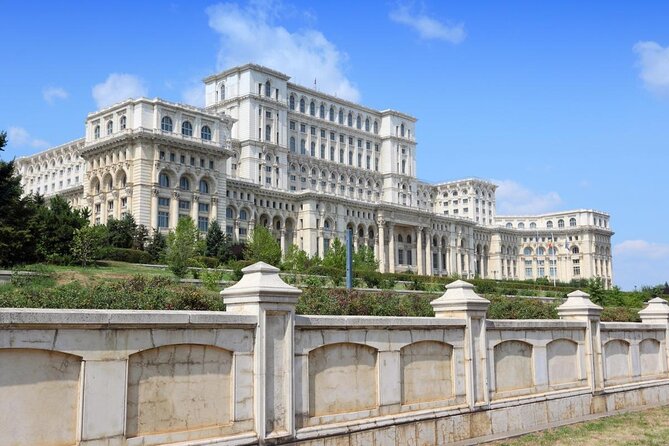
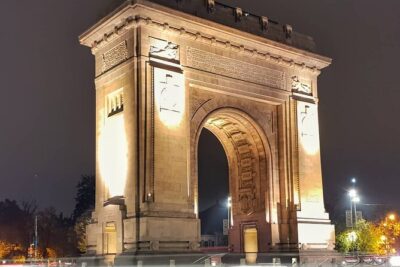
The tour begins at 9:00 a.m. with pickup at your Bucharest hotel. A panoramic introduction covers the Parliament Palace, Revolution Square, the Romanian Athenaeum, the former Royal Palace, Victory Avenue, and the Triumph Arch.
This opening drive is useful because Bucharest’s landmarks are spread across a large city. Revolution Square deserves special attention: it was the starting point of the anti-communist revolution in 1989. The former Royal Palace now houses the National Art Museum, while the Athenaeum remains one of the city’s best-known buildings.
You then leave the capital for Cozia Monastery, built near the end of the 14th century. It is an important example of Wallachian church architecture and the burial place of Mircea the Old, one of the region’s major rulers. The stop lasts about 45 minutes and helps set the historical tone before you reach Transylvania.
Sibiu is the day’s main destination. A two-hour walking tour takes in the Big Square, Small Square, the Staircase Tower, the Liar’s Bridge, medieval fortifications, and the city’s Evangelical, Catholic, and Orthodox churches.
Sibiu was founded in 1190 and became the chief city of the Transylvanian Saxons. Its squares and narrow lanes have a distinctly Central European feel. The Evangelical Cathedral gives the old town a strong medieval presence, while the Orthodox Cathedral offers a very different style, with an impressive interior and frescoes.
The day ends outside Sibiu in Sibiel. A horse-drawn wagon ride through the village and a homemade dinner provide a pleasant change from formal sightseeing. You spend the night in a local guesthouse, and this is one of the tour’s best choices. The accommodation is simpler than a city hotel, but the setting gives you a closer look at village life.
Day 2: Corvin Castle and Alba Iulia’s fortified center
The morning drive leads to Hunedoara and Corvin Castle, also called Hunyad Castle. Dating from the 15th century, it was once the residence of Transylvanian governors and is described as Romania’s largest medieval castle.
Allowing about an hour here gives you enough time to appreciate the towers, courtyards, and defensive setting. The castle’s theatrical appearance makes it a natural favorite, though the visit is fairly short for such a large site. The entrance ticket is extra.
Alba Iulia follows, with about two hours to explore its long historical story. Roman ruins recall the ancient city that once occupied this area, while the later fortress reflects the city’s military importance.
The Vauban-style fortifications are the highlight. You also see the Orthodox Cathedral and Catholic Cathedral, along with the place associated with the Union of Romania. This stop adds political and religious context that balances the romantic appeal of castles and medieval streets.
You end the day in Cluj-Napoca, staying at the four-star Napoca Hotel or a similar property. After a full day on the road, the city hotel provides a more modern base than the village pension.
Day 3: Cluj-Napoca and the wooden churches of Maramures
Cluj-Napoca gets a morning walking tour of about two hours. The route includes Union Square, St. Michael’s Cathedral, Museum Square, the Orthodox Cathedral, the National Theatre, and the statue of Matei Corvin.
St. Michael’s Cathedral, built in the 15th century, is the city’s largest cathedral and a central stop. Cluj is Transylvania’s largest city, so this morning gives you a quick sense of its urban scale before the tour turns toward the northern countryside.
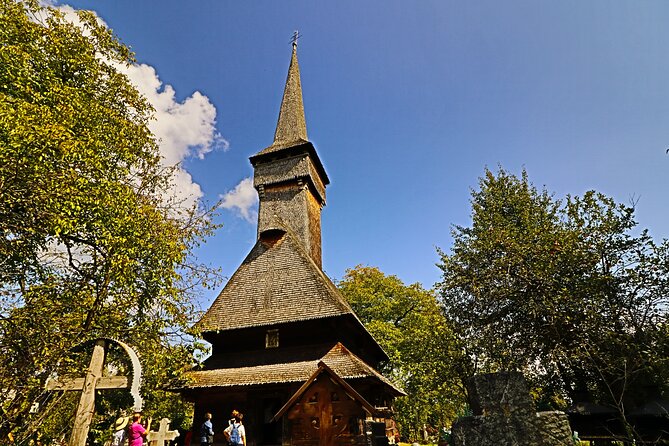
The next destination is Maramures, a region known for wooden churches, folk customs, and old village patterns. At Surdesti, you visit a UNESCO-listed wooden church built in 1766. Its 54-meter tower is considered the tallest old wooden church in Europe.
At Desesti, another UNESCO-listed wooden church shows a different side of the region. The churches are not grand in the stone-cathedral sense. Their appeal comes from the timber construction, painted interiors, tall towers, and the way they remain tied to village communities.
The day also includes opportunities to meet a traditional weaver, wood carver, and water-mill operator. These visits are valuable because they explain how objects were made, not simply display them behind glass.
Barsana Monastery adds a more recent example of Maramures wooden architecture and monastic life. An optional stop at a local carving workshop is available. The day ends in Botiza with a household visit, dinner, and an overnight stay at a local pension. A sheepyard visit may be possible depending on the season.
A completely different kind of day out:
- Bucharest: Palace of Parliament Tickets and Guide
★ 4.3 · 3,182 reviews - Bucharest: Day Trip to Dracula Castle, Peles Castle & Brașov
★ 4.4 · 3,049 reviews - Bucharest to Dracula Castle, Peles Castle and Brasov Guided Tour
★ 4.5 · 2,933 reviews - Bucharest: Palace of Parliament Tickets and Guided Tour
★ 4.4 · 1,877 reviews
Day 4: Merry Cemetery and Maramures traditions
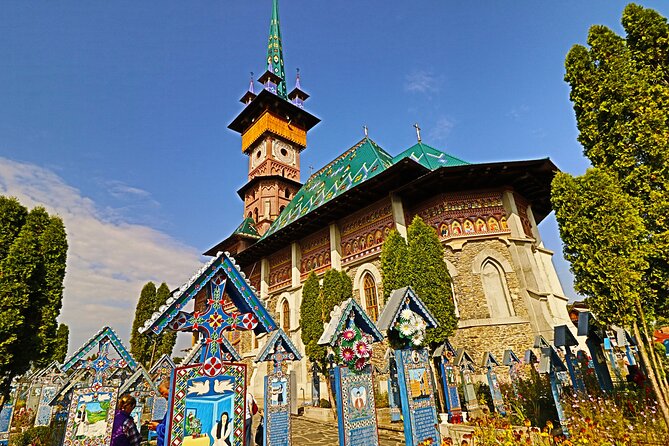
Start with Sapanta’s Merry Cemetery, one of Romania’s most unusual cultural sights and a UNESCO-listed place. Brightly painted tombstones carry humorous poems about the people buried there.
The humor may surprise you, but that is the point. The cemetery presents death through stories, personality, and local language rather than solemn stone alone. You should expect a short visit of about 30 minutes, yet it often becomes one of the most memorable stops.
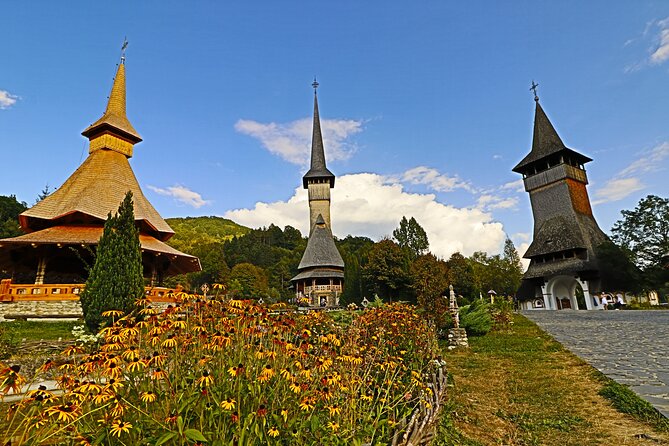
Nearby, Sapanta-Peri Monastery has a wooden tower listed at about 78 meters. The present monastery was founded in 1997 to revive the tradition of the older Peri monastery, whose site is now in Ukraine. It is a striking modern expression of Maramures woodwork, though it should not be confused with one of the region’s old medieval churches.
The route continues through Sighet, where you may optionally visit the Communist Prison Museum. Since this stop is optional, ask your guide about timing if modern Romanian history interests you.
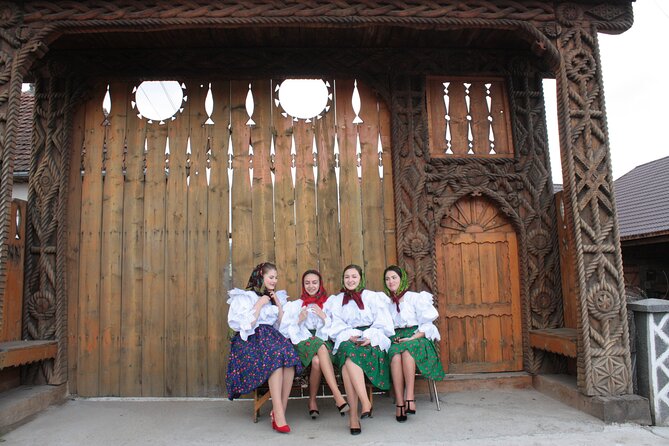
In Dragomiresti, the Maramures Woman Museum offers a small but useful look at household life, clothing, customs, and traditions. Pay attention to the wooden gate at the entrance. Its carved symbols give your guide a natural way to explain the meaning of Maramures village architecture.
Bogdan Voda’s wooden church, dating from the early 18th century, provides another UNESCO-listed stop, with frescoes painted on wood by local artists. You then return to Botiza for free time, a short walk, dinner, and another night at the local pension.
Two rural nights in Botiza are a real advantage. They avoid the usual pattern of arriving late, eating quickly, and leaving the next morning. You get at least a little time to slow down and see the village at your own pace.
Day 5: Crossing to Bucovina and the painted monasteries
The route crosses the Carpathians toward Bucovina, one of the most rewarding sections for scenery. Ciocanesti provides a brief stop, with decorated houses and a local tradition of painted eggs. The village museum is optional.
Moldovita Monastery is the first major painted monastery. Built in 1532 under Prince Petru Rares, it resembles a fortified compound, with thick walls and towers. Its frescoes cover both interior and exterior surfaces, so take time to look closely rather than treating the stop as a quick photograph.
The International Lucia Condrea Egg Museum follows. This unusual collection explains painted egg designs, techniques, and local customs. It works well beside the monasteries because it shows that decorative art in Bucovina is not limited to church walls.
Sucevita Monastery is another fortress-like complex, with towers, buttresses, and defensive features. It is often considered the grandest monastic achievement in Bucovina. The setting and scale make it a strong second monastery visit, but entrance fees are extra at both sites.
The day ends at a family workshop in Marginea, famous for black pottery made with traditional methods. This is exactly the sort of small stop that makes the route feel connected to living craft rather than only past monuments.
Day 6: Voronet, Bicaz Gorge, and the approach to Sighisoara
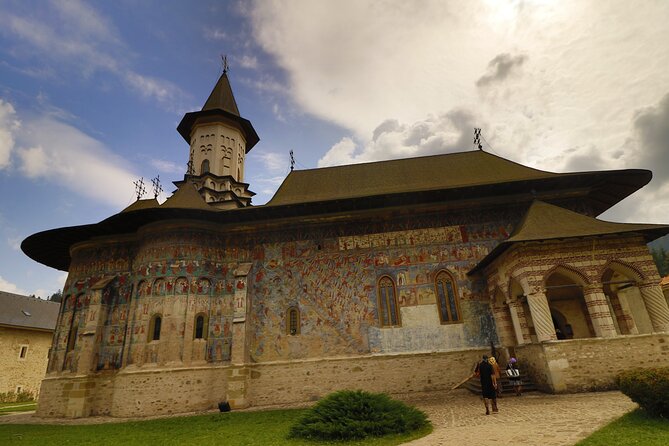
Voronet Monastery is the morning highlight. Founded in 1488 by Stephen the Great, it is famous for its blue background color and its well-preserved Last Judgment fresco.
The painted monasteries are valuable because the decoration is not confined inside. Exterior walls turn the buildings into large storybooks, and your guide can help you read the religious scenes and local artistic details. You should expect another entrance fee.
The road then crosses back over the Carpathians. Red Lake and Bicaz Gorge offer a welcome change from churches and towns. The gorge is one of Romania’s major natural sights, with a dramatic road through steep mountain walls. The listed stops are short, about 30 minutes each, so your best views may come from the drive itself.
You finish in Sighisoara, with an initial one-hour stop before a fuller walking tour the next morning. This split gives you a first look at the citadel without trying to force every detail into a late afternoon.
Day 7: Sighisoara, Saschiz, Prejmer, and Brasov
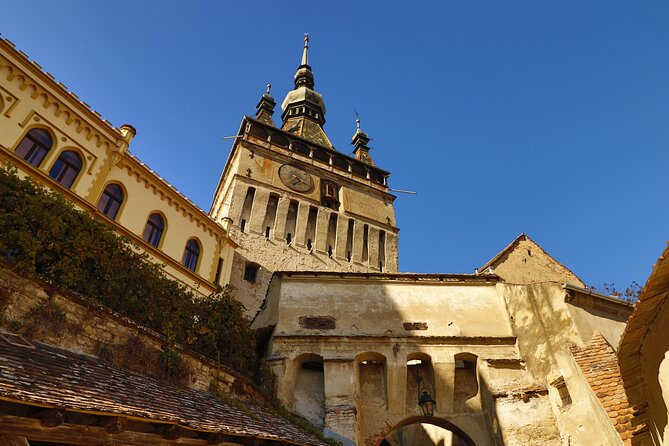
Sighisoara is one of the strongest urban stops on the route. The citadel was built in the 13th century by German Saxon settlers and remains one of Europe’s best-preserved medieval towns.
A two-hour walking tour covers the historic center and lets you enjoy the old streets at a reasonable pace. The town is known as the Pearl of Transylvania, but its real appeal is simpler: towers, walls, lanes, and colorful historic buildings still form a coherent medieval town rather than isolated monuments.
In Saschiz, you stop at a local producer for homemade jam, chutney, and syrup tasting. This is a small experience, but it gives you a flavorful connection to the rural area and a chance to buy something more personal than a standard souvenir.
Prejmer’s fortified church is next. Dating from the 13th century, it combines religious and defensive functions in a way that is unusual and easy to understand on site. The entrance ticket is extra.
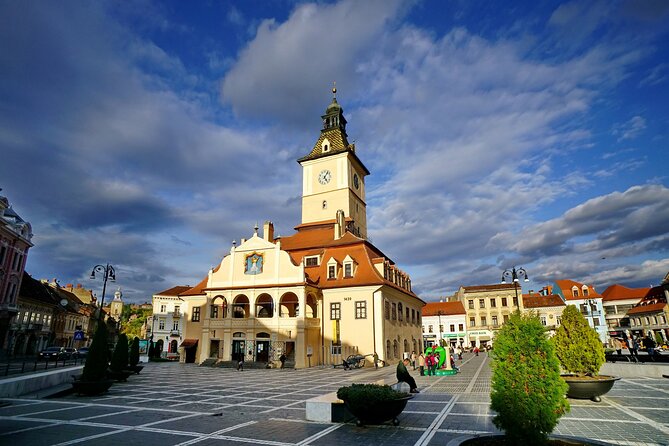
Brasov gets a two-hour walking tour through Council Square, past the Black Church, the White and Black Towers, Weaver’s Bastion, and Catherine’s Gate. The city began in the 13th century and developed as a fortified Saxon center.
The Black Church is Romania’s largest Gothic cathedral. Weaver’s Bastion adds a more military note, showing how the city protected itself. Some Brasov admissions are also extra, so keep a little cash available for the sites you choose to enter.
Day 8: Bran, Peles, and return to Bucharest
Bran Castle is the final major sightseeing stop. Built in the 14th century to control access into Transylvania, it is now closely tied to the Dracula legend.
The connection to Dracula is more popular culture than a complete account of the castle’s past. I would visit for its medieval position, architecture, and atmosphere first, then enjoy the legend as an added layer. The visit lasts about 90 minutes, and admission is extra.
Peles Castle in Sinaia offers a very different experience. It was the summer residence of Romania’s kings and is one of Europe’s most attractive former royal residences. The 90-minute visit makes a good contrast with Bran: Bran is defensive and medieval, while Peles reflects royal comfort and later European taste.
The tour returns to Bucharest at about 4:00 p.m., with drop-off at a hotel or the airport. That timing is useful, but I would avoid scheduling a tight onward flight without checking traffic and your guide’s final transfer plan.
What the $2,315.49 price really buys
At $2,315.49 per person, this is not a budget coach tour. The price includes seven nights in double or twin rooms, private guiding, transport by car or minibus, seven breakfasts, three dinners, the Sibiel wagon ride, visits to craftsmen, and the jam, chutney, and syrup tasting.
The value comes from the route and the private format. Public transport would be difficult for the remote churches and villages, while arranging separate drivers, hotels, and local visits could take considerable time. A private group also avoids being tied to strangers’ pace.
You should budget for about 85 euros in entrance tickets, plus lunches, other dinners, drinks, tips, and services not listed as included. Group discounts may be available, so larger private parties should ask for the current rate before booking.
The accommodation varies. You have a four-star city hotel in Cluj-Napoca or a similar property, but the rural pensions are part of the point. If you need uniform hotel standards every night, this may feel uneven. If you value local atmosphere, the village stays are a major part of the price’s value.
Who should book this Romania tour?
I would choose this tour if you want one guided trip that covers Romania’s major cultural regions without planning every transfer yourself. It suits first-time visitors, couples, families, and small groups who prefer private attention and a flexible conversation with their guide.
It is especially good for you if painted monasteries, traditional crafts, medieval towns, and village food matter as much as castles. The strongest parts are not only Bran and Peles. They are the quieter stops: Botiza, Sibiel, Marginea, Saschiz, and the wooden churches of Maramures.
You should think twice if you dislike long drives, short visits, or changing accommodation. The route is ambitious, and some days include several hours between major stops. It is also not the best match if your main goal is only Bucharest and Dracula, since much of the tour heads into northern Romania.
Cancellation is allowed for a full refund when you cancel at least three full days before the start time. Confirmation is sent within 48 hours, subject to availability, and most travelers can participate.
FAQ
Where does the tour start and finish?
The tour starts and ends in Bucharest. Pickup is offered from your Bucharest hotel at 9:00 a.m., and the final drop-off can be at a Bucharest hotel or the airport.
How long does the tour last?
The experience lasts approximately eight days and includes seven nights of accommodation.
Is this a private tour?
Yes. Only your group participates, and you have a private guide throughout the tour.
What type of transport is used?
Transport is provided by car or minibus. The specific vehicle depends on the size of your group.
Are hotel stays included?
Yes. Seven nights in double or twin rooms are included. The tour specifies a four-star Napoca Hotel or similar accommodation in Cluj-Napoca, plus local guesthouses and pensions in rural areas.
Are meals included?
Seven breakfasts and three dinners are included. Other meals and services are not included.
Are entrance tickets included?
Most entrance tickets are not included. The estimated total for the listed admissions is about 85 euros per person.
Does the tour visit UNESCO sites?
Yes. Stops include UNESCO-listed wooden churches in Maramures, Merry Cemetery, the painted monasteries of Bucovina, Sighisoara’s historic center, and Prejmer’s fortified church.
Is the Sibiel horse-drawn wagon ride included?
Yes. The village tour by horse-drawn wagon near Sibiel is included.
Can the tour visit the Communist Prison Museum?
The museum in Sighet is an optional stop. Ask your private guide about adding it while allowing enough time for the rest of the day.
Should you book it?
Book this tour if you want a broad, carefully connected introduction to Romania, with rural contact built into the plan rather than added as an afterthought. The private guide, village pensions, local food, craftsmen, painted monasteries, and medieval towns give you a much fuller picture than a castle-only itinerary.
Skip it if you want slow travel in one region or dislike long road days. For everyone else, the cost is justified by the difficult transport links it handles and by the access to places you would struggle to connect on your own. Ask about the exact hotel list, vehicle size, entrance fees, and planned meal stops before paying, then prepare for a busy but rewarding week.
Just added in Bucharest
- Bucharest: Dealu Mare Winery Private Trip with Wine Tasting★ 4.9 · 6 reviews
- Winery touring & private wine tasting – one day private tour★ 5.0 · 3 reviews
- Village Museum Bucharest Guided Tour★ 5.0 · 6 reviews
- Transylvania Tour: Dracula’s Castle, Peles Palace & Brasov★ 5.0 · 19 reviews
- Transfer Airport Otopeni – Bucharest★ 5.0 · 2 reviews
- Private Transfer Bucharest Otopeni Airport (OTP) to/from Brasov★ 5.0 · 2 reviews
- Airport Henri Coanda (Otopeni) to Bucharest – Private Transfer – Driver★ 5.0 · 5 reviews
- Private Bucharest Otopeni Airport (OTP) Transfer★ 5.0 · 2 reviews
Private, compared.

Castles of Transylvania: Private Day Trip from Bucharest
Read our review →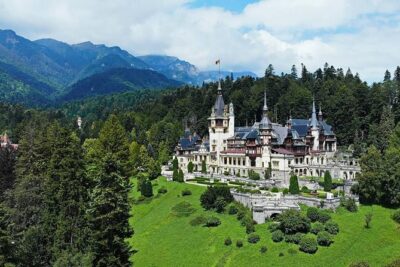
Dracula’s Castle, Peles Castle and Brasov – Private Day Trip from Bucharest
Read our review →
Bucharest Panoramic Sightseeing – Private City Tour
Read our review →
THERME “Take It Easy” Pack: Full Spa Access + Private Transfers
Read our review →
Piatra Craiului National Park Private Hiking Tour from Brasov
Read our review →
4h Bucharest Private Tour (2h by Car and 2h Walking in Old Town)
Read our review →