REVIEW · PRIVATE
Private -RedPatrol Tour of Bucharest with a Romanian Vintage Car
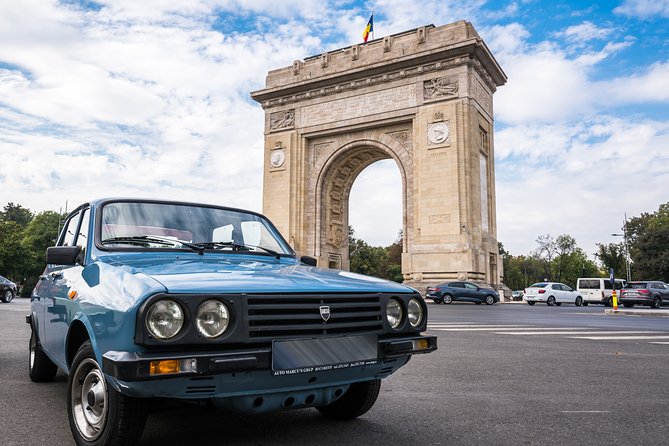
Bucharest’s past comes with four wheels. This private Red Patrol tour combines a restored Communist-era Dacia with a guided look at the places shaped by Nicolae Ceaușescu’s Romania, giving you a personal way to understand the city’s recent past. I like the chance to drive a 1970s or 1980s Dacia and the guide’s use of personal stories, especially the commentary praised from Serban. The main consideration is comfort: these classic cars have no air conditioning, power steering, ABS, GPS, or automatic transmission.
The three to three-and-a-half-hour route covers Revolution Square, abandoned Communist buildings, the Palace of Parliament, Ceaușescu’s former home, and the House of the Free Press. I also like that hotel pickup and drop-off are included, and you can choose to drive or let the private driver handle the car. At $120.68 per person, the price makes the most sense for a small private group that values the car and personal guide as much as the sightseeing.
In This Review
- Key points to know before booking
- Why this Bucharest tour feels different
- Starting at Revolution Square
- Seeing Bucharest’s unfinished Communist projects
- The Palace of Parliament and the scale of power
- Driving through Communist apartment quarters
- Ceaușescu’s private residence
- A stop at the House of the Free Press
- What driving the Dacia is really like
- The guide and the personal stories
- Is $120.68 per person a fair price?
- Who should book this experience?
- Final call: book it for the car and the stories
- FAQ
- How long does the Red Patrol Bucharest tour last?
- Is hotel pickup included?
- Can I choose the tour start time?
- Can I drive the Dacia myself?
- Does the tour include a private driver?
- Does the vintage car have air conditioning or automatic transmission?
- Are food and drinks included?
Key points to know before booking
- You can drive a restored Dacia 1300 or 1310, a genuine Romanian car from the 1970s or 1980s, or ride with the included private driver.
- The tour focuses on Communist Bucharest, including Revolution Square, Casa Radio, the Socialist Academy, Ceaușescu’s residence, and the House of the Free Press.
- Personal storytelling is a major strength, with guide Serban singled out for his engaging commentary and firsthand perspective on Communism.
- Pickup is available from any address in Bucharest, which saves you from finding a separate meeting point.
- Classic-car comfort is basic, with no air conditioning, ABS, GPS, power steering, or automatic gearbox.
- The experience is private, so you set the start time and tour only with your own group.
Why this Bucharest tour feels different
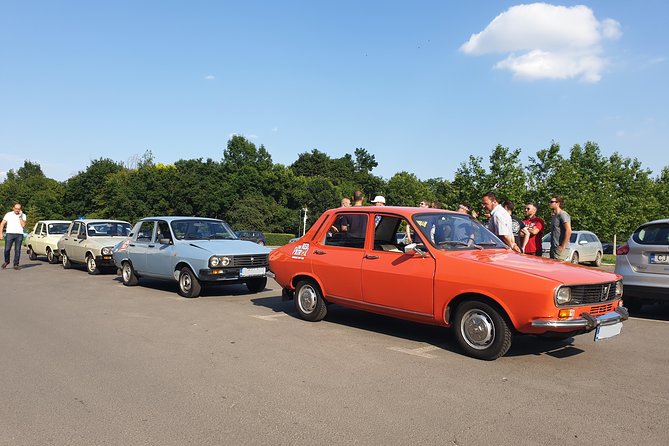
Many city tours show you Bucharest’s grand buildings from a modern minibus. Red Patrol adds a piece of the city’s past before you even reach the first stop. The Dacia 1300 and 1310 were common Romanian cars during the Communist period, so the vehicle is not just a prop for photographs. It helps set the mood for a tour about daily life, state power, and the changes that followed 1989.
The experience is private, and the guide rides in your car. That gives you more room to ask questions than you would have on a large group outing. You can choose a start time that suits your day, and pickup is offered from addresses throughout Bucharest.
The route is not limited to famous monuments. It also includes broad residential areas, Communist apartment blocks, government quarters, older parts of the city, and a full drive along one of Bucharest’s oldest boulevards. That wider view matters. You see how grand political projects were placed beside ordinary housing and older city streets.
The tour is offered in English and lasts about three hours to three and a half hours. That is enough time for a focused introduction to Communist Bucharest without taking up your whole day.
A few more Bucharest days worth comparing
- Bucharest: Dracula’s Castle, Peles Castle, & Brasov Old Town
★ 4.5 · 17,858 reviews - Bucharest: Dracula Castle, Peles Castle & Brasov Old Town
★ 4.6 · 10,891 reviews - Bucharest: Dracula’s Castle, Peleș Castle & Brașov Day Trip
★ 4.5 · 5,919 reviews
Starting at Revolution Square
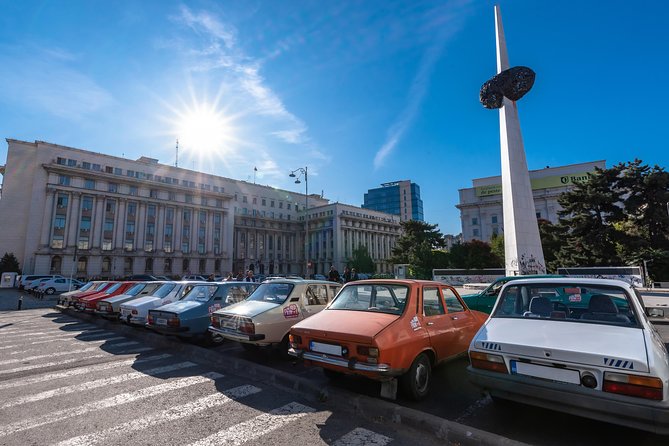
Revolution Square is the right place to begin. It is presented as the place where Communism both started and ended in Romania, making it an important setting for the tour’s political story.
Allow about 30 minutes here. Your guide can place the surrounding buildings and public space within the larger story of Romania’s Communist era and its collapse. The value of this stop comes less from checking off a monument and more from hearing how the square connects to the country’s turning point.
This is also a useful early chance to ask questions. If you want to understand Ceaușescu’s rule, the 1989 revolution, or what changed afterward, ask here. The guide’s personal experience can add meaning that a plaque or standard audio guide cannot provide.
The square is free to visit, and there is no admission charge included or required for this stop. Because the tour is private, the time can feel more flexible than a fixed group itinerary, although the overall route still lasts only a few hours.
Seeing Bucharest’s unfinished Communist projects
The next stops reveal a less polished side of the city. At Casa Radio, you pause for stories and photographs while exploring what is described as Bucharest’s Communist Ghost Palace. The building’s unfinished or underused character makes it a striking contrast to the monumental projects elsewhere on the route.
You spend about 20 minutes here. Admission is not included, so treat this mainly as an exterior visit and photo stop unless your guide explains otherwise. The appeal is the story of a huge state project that never became the fully functioning symbol it was meant to be.
The Academia Română brings another brief look at a Communist-era building. This Socialist Academy building is also presented as a ghost palace, with around 10 minutes for an explanation and photographs. It is a short stop, but it helps show the scale and ambition of state construction during the period.
These locations may appeal most to visitors interested in architecture, politics, or the physical traces of a former system. If you prefer only restored churches, elegant streets, and finished museums, these rougher stops may feel less rewarding. I see them as valuable because they show the cost and oddness of grand planning rather than only its official successes.
The Palace of Parliament and the scale of power
The Palace of Parliament receives about 30 minutes on the route. It is described as the second-largest administrative building in the world, and its size is central to understanding why it remains such a powerful symbol of Ceaușescu’s rule.
The tour includes a presentation of the area, but admission to the building is not included. That distinction matters. You should not assume this experience gives you a full interior visit or a standard Palace of Parliament ticket. The exact treatment is best confirmed when booking if entering the building is important to you.
Even from outside, the building helps explain the scale of Communist urban planning. Its presence is not simply a matter of architectural size. It represents state authority, centralized decisions, and the reshaping of Bucharest for political purposes.
I would pay close attention to the guide’s explanation here rather than treating the stop as a quick photo opportunity. A large building can be easy to admire and hard to understand. The local commentary gives the structure a human and political context.
A completely different kind of day out:
- Bucharest: Palace of Parliament Tickets and Guide
★ 4.3 · 3,182 reviews - Bucharest: Day Trip to Dracula Castle, Peles Castle & Brașov
★ 4.4 · 3,049 reviews - Bucharest to Dracula Castle, Peles Castle and Brasov Guided Tour
★ 4.5 · 2,933 reviews - Bucharest: Palace of Parliament Tickets and Guided Tour
★ 4.4 · 1,877 reviews
Driving through Communist apartment quarters
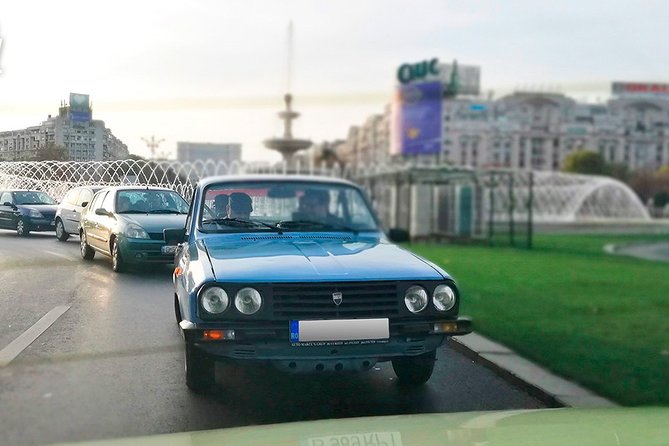
Between the named stops, the route explores Bucharest’s Communist apartment blocks and residential quarters. This part of the tour may be the most useful for anyone who wants to see how ordinary urban life fit into the system.
Large housing blocks tell a different story from monumental government buildings. They point to the practical side of state planning, with homes built in districts that changed the shape of Bucharest. The route also includes the residential quarter containing the Palace of the Romanian Government, so you see how government buildings and housing areas were placed within the city.
The car ride gives these sections their own character. Instead of stopping at one isolated building, you move through several parts of Bucharest and see the relationship between streets, apartment blocks, public buildings, and older areas.
You should expect a panoramic tour rather than a detailed walking visit in every neighborhood. The classic Dacia makes the drive memorable, but the car’s age also means the ride is not designed around modern comfort. Wear comfortable clothes, especially if you plan to drive.
Ceaușescu’s private residence
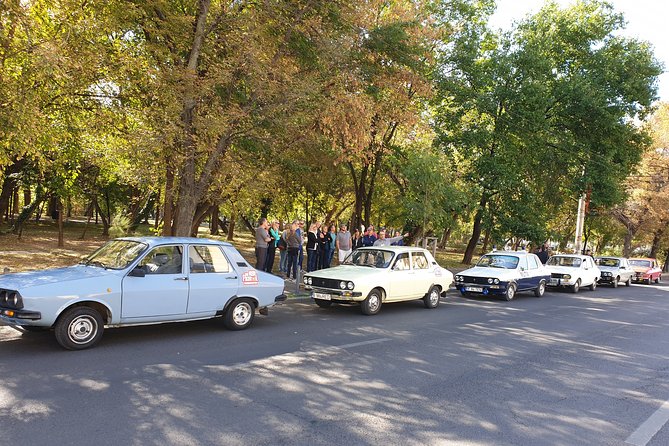
The stop at the Ceaușescu House lasts about 15 minutes and focuses on Nicolae Ceaușescu’s private residence. Your guide provides a brief presentation, with time to place the house within the wider story of the former leader and his family.
The house adds a more personal scale to a tour otherwise filled with government buildings, boulevards, and apartment districts. It can help you compare the public image of Communist leadership with the private setting associated with it.
Admission is not included. The itinerary describes this as a brief presentation rather than a long museum visit, so plan for an overview rather than an extensive interior tour. If the house is one of your main reasons for booking, ask Red Patrol what access is available on your chosen date.
A stop at the House of the Free Press
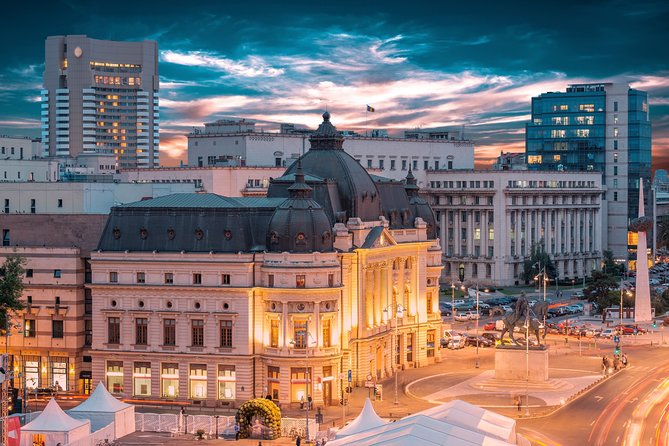
The House of the Free Press is the final named sightseeing stop and receives about 20 minutes. The tour explores the former Communist press palace area, connecting the building to the role of media under the Communist state.
Unlike several other stops, admission is listed as included. The site also rounds out the political story. Revolution Square introduces the end of Communism, while the House of the Free Press helps explain how information and newspapers were organized during the system itself.
The area is worth seeing as part of the full route rather than as a stand-alone attraction. Its meaning comes from the pattern created by all the stops: leadership, administration, housing, media, and public space were closely tied to state power.
The tour also includes a full car ride along one of Bucharest’s oldest boulevards. That final stretch gives you more time to see the city at street level, rather than ending with one last building and a quick goodbye.
What driving the Dacia is really like
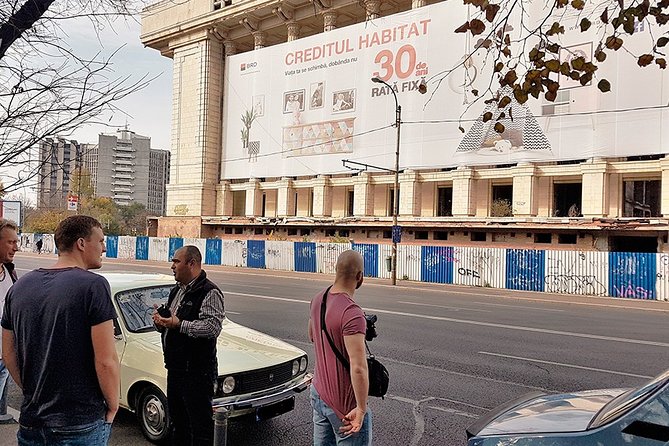
The car is one of the tour’s biggest attractions, but you should understand what you are signing up for. The Dacia 1300 or 1310 is a fully restored classic from the 1970s or 1980s and meets current traffic safety regulations according to the operator.
It does not have air conditioning, ABS, GPS navigation, power steering, or an automatic gearbox. If you drive, you need a valid driving license on the day of the tour and must bring both your ID card and driving license.
You can also choose not to drive. A private driver is included, so you can concentrate on the guide’s stories, take photographs, and watch Bucharest pass by. This is a good choice if you are not comfortable with a manual classic car or simply want a more relaxed ride.
The cars are heated during winter, but summer conditions deserve more thought because there is no air conditioning. A comfortable outfit is recommended for driving. The operator does not allow pets or children under 10 years old.
The guide and the personal stories
The strongest part of the experience is likely the guide’s commentary. The tour is not just a vintage-car outing with a few Communist buildings added along the way. It is designed to explain how Communism shaped Romania, and personal experience can make that subject easier to grasp.
Serban is specifically praised for his storytelling and for adding detail about life under Communism. That sort of commentary is useful at places such as Revolution Square and the Palace of Parliament, where the physical setting alone cannot explain what happened there.
The private format also helps. You can ask for more detail about a particular building, spend more time on a topic that interests you, or keep moving if a stop is less important to your group. Since the tour is offered in English, it suits visitors who want a guided introduction without switching between languages.
A newspaper and personalized gift are included. These are small additions, but they give you something tangible to keep from the experience. Bottled water is also provided.
Is $120.68 per person a fair price?
The listed price is $120.68 per person. That is not the cheapest way to see Bucharest, but the comparison should not be made with a basic group bus tour.
You are paying for a private experience, hotel pickup and drop-off, a professional local guide, a restored classic car, the option to drive, and a private driver if you prefer to ride. The tour also includes water, a tour newspaper, and a personalized gift.
The value improves for a small group because the price buys privacy and flexible timing rather than only a seat in a vehicle. Group discounts may also be available. If you are mainly interested in entering the Palace of Parliament or visiting museums, you may want to compare the cost with a standard sightseeing tour plus separate admission tickets.
I think the price is easiest to justify if the Dacia and the Communist-era focus are central to your plans. The car is not an incidental transfer vehicle. It is part of the subject and part of the fun.
Who should book this experience?
I would recommend this tour to:
- First-time visitors who want a quick introduction to Bucharest’s Communist past.
- History and architecture enthusiasts who prefer real city streets to a list of famous sights.
- Couples, families with children aged 10 or older, and small groups seeking a private outing.
- Visitors who enjoy unusual transport and want the option to drive a classic Romanian car.
- Anyone who values personal stories and direct questions during a guided tour.
It is less suitable if you need modern vehicle comfort, air conditioning, automatic transmission, or a fully indoor activity. It may also disappoint you if you expect long interior visits at every stop. Much of the route is about seeing buildings and districts from the car, with short presentations and photo pauses.
Because the experience depends on good weather, keep some flexibility in your schedule. Free cancellation is available until 24 hours before the start time, and poor weather may lead to a different date or a full refund.
Final call: book it for the car and the stories
Book the Red Patrol tour if you want Bucharest explained through its Communist-era buildings, residential districts, and political landmarks, with a restored Dacia adding a genuine sense of place. The private setup, hotel pickup, flexible start time, and guide Serban’s personal storytelling make it more than a standard city drive.
Before paying, confirm whether your group wants to drive or use the included private driver, and remember that the Palace of Parliament and several other sites do not include admission. If you can accept the basic comfort of a classic car, this is a distinctive and well-focused way to spend three hours in Bucharest.
FAQ
How long does the Red Patrol Bucharest tour last?
The tour lasts approximately three to three and a half hours.
Is hotel pickup included?
Yes. Pickup and drop-off are available from all addresses in Bucharest.
Can I choose the tour start time?
Yes. The experience allows you to choose a start time that works for your group.
Can I drive the Dacia myself?
Yes, you can drive the fully restored Dacia 1300 or 1310 if you bring a valid driving license on the date of the tour. You must also bring your ID card.
Does the tour include a private driver?
Yes. A private driver is included if you prefer not to drive.
Does the vintage car have air conditioning or automatic transmission?
No. The Dacia does not have air conditioning, ABS, GPS navigation, power steering, or automatic transmission. The cars are heated during winter.
Are food and drinks included?
Food and drinks are not included, but bottled water is provided.
Just added in Bucharest
- Bucharest: Dealu Mare Winery Private Trip with Wine Tasting★ 4.9 · 6 reviews
- Winery touring & private wine tasting – one day private tour★ 5.0 · 3 reviews
- Village Museum Bucharest Guided Tour★ 5.0 · 6 reviews
- Transylvania Tour: Dracula’s Castle, Peles Palace & Brasov★ 5.0 · 19 reviews
- Transfer Airport Otopeni – Bucharest★ 5.0 · 2 reviews
- Private Transfer Bucharest Otopeni Airport (OTP) to/from Brasov★ 5.0 · 2 reviews
- Airport Henri Coanda (Otopeni) to Bucharest – Private Transfer – Driver★ 5.0 · 5 reviews
- Private Bucharest Otopeni Airport (OTP) Transfer★ 5.0 · 2 reviews
Private, compared.

Castles of Transylvania: Private Day Trip from Bucharest
Read our review →
Dracula’s Castle, Peles Castle and Brasov – Private Day Trip from Bucharest
Read our review →
Bucharest Panoramic Sightseeing – Private City Tour
Read our review →
THERME “Take It Easy” Pack: Full Spa Access + Private Transfers
Read our review →
Piatra Craiului National Park Private Hiking Tour from Brasov
Read our review →
4h Bucharest Private Tour (2h by Car and 2h Walking in Old Town)
Read our review →