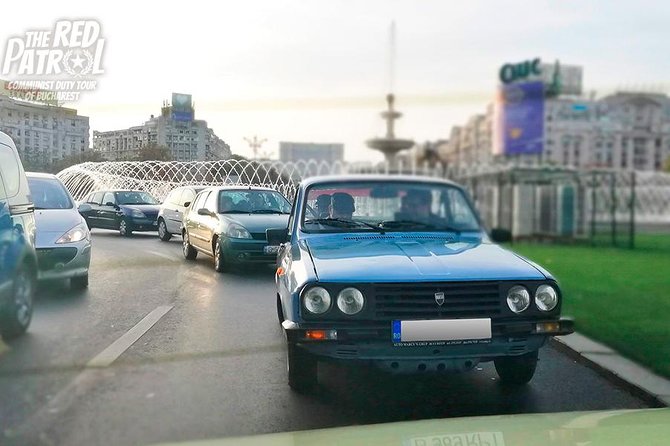
REVIEW · PRIVATE
Private – Romanian Vintage Car Driving Tour of Bucharest 120 min
History rides shotgun here. This private Bucharest tour combines a restored Romanian Dacia with stories about daily life under communism, giving you a more personal view of the city than a standard sightseeing circuit. I especially like the chance to ride or drive a genuine 1970s or 1980s Dacia and the way the route links major landmarks with social stories about Romania. The main drawback is the car itself: it has no air-conditioning, ABS, GPS navigation, power steering, or automatic transmission.
The two-hour experience costs about $115.59 per person. That is not a bargain for a short city tour, but the price covers a private guide and driver, a classic Romanian car, and a small-group experience. If you have three people sharing a car, the outing feels far better value than it does for a solo visitor.
In This Review
- Key things to know before you book
- Why the Dacia matters more than a modern tour vehicle
- Starting at Revolution Square
- Cotroceni and the royal quarter
- Constitution Square and the Palace of Parliament
- A photo stop at Triumph Arch
- The panoramic ride through old Bucharest
- The guide makes or breaks the experience
- Driving the Dacia yourself
- Group size, comfort, and practical limits
- Is $115.59 per person good value?
- Who will enjoy this tour most?
- My booking advice
- Should you book The Red Patrol Dacia tour?
- FAQ
- Where does the Romanian vintage car tour start and end?
- How long does the tour last?
- What language is the tour offered in?
- How many people can ride in one car?
- Can I drive the vintage Dacia?
- Do the cars have air-conditioning or automatic transmission?
- Are admission fees to the landmarks included?
Key things to know before you book
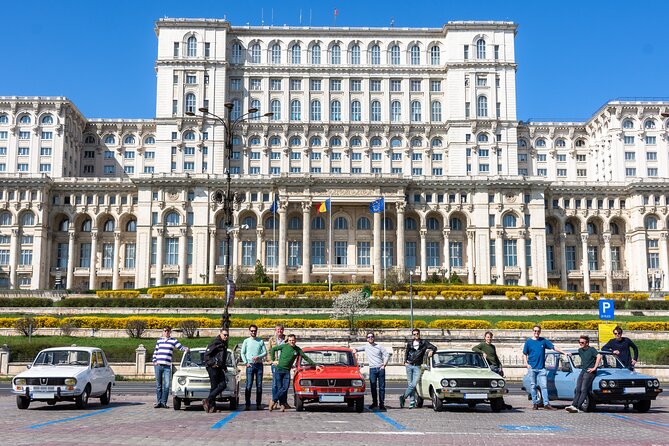
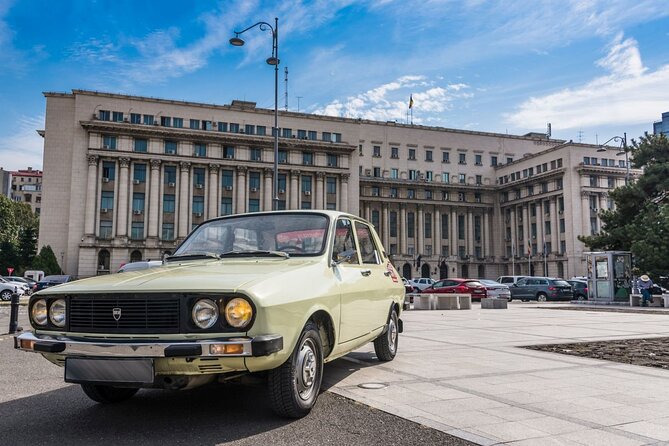
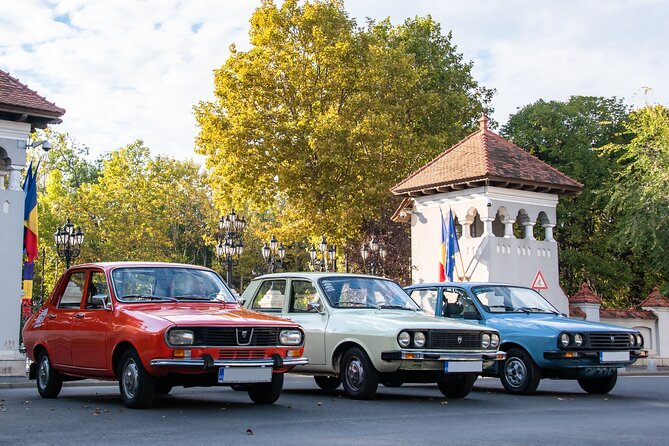
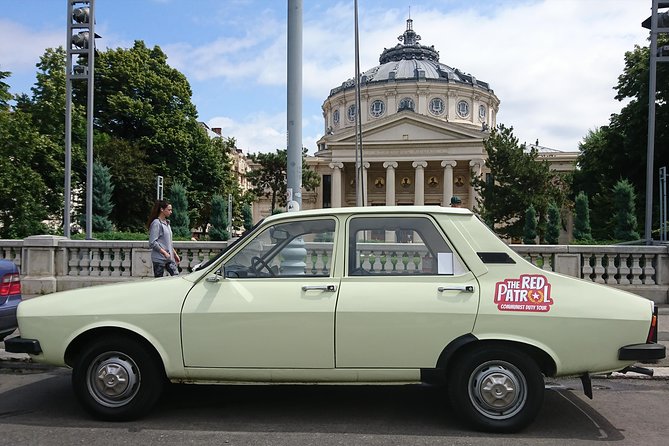
- You ride in a real Romanian Dacia 1300 or 1310: These cars were common in communist-era Romania, so the vehicle is part of the historical lesson, not just decoration.
- You can drive the Dacia yourself: You must present a valid European Union or international driving license.
- The tour stays private: Up to three people ride in one car. Larger groups travel in a convoy of two or three restored vehicles.
- The stories focus on life in the 1970s and 1980s: Guide Serban is especially praised for explaining the social side of communist Romania.
- The route covers major Bucharest sights: You stop at Revolution Square, Cotroceni, Constitution Square by the Palace of Parliament, and Triumph Arch.
- Winter is not a deal breaker: The cars are heated, although they are not fitted with modern comforts such as air-conditioning or power steering.
Why the Dacia matters more than a modern tour vehicle
Bucharest has grand avenues, royal buildings, communist monuments, and elegant old neighborhoods. A modern minibus can show you all of them, but it cannot make the recent past feel quite so close.
The Dacia 1300 and 1310 were among the most familiar cars in Romania during the communist period. Getting into one gives the tour an immediate sense of place. You are not simply hearing about shortages, restricted travel, or the routines of the 1970s and 1980s. You are sitting in a car that belonged to that era.
The vehicles used by The Red Patrol are fully restored and meet current traffic safety rules. Still, restoration does not turn them into new cars. You should expect a slower, more basic ride with a manual gearbox and none of the electronic help found in a modern vehicle.
That old-fashioned feel is part of the fun, especially if you enjoy cars. It can also be tiring if you expect a quiet, cool, effortless ride. In warm weather, the lack of air-conditioning matters. In winter, the heating helps, but the car remains a classic rather than a luxury vehicle.
For me, the strongest idea behind the tour is the match between subject and setting. The Dacia is not a gimmick added to a normal city tour. It is the object that helps explain the period.
A few more Bucharest days worth comparing
- Bucharest: Dracula’s Castle, Peles Castle, & Brasov Old Town
★ 4.5 · 17,858 reviews - Bucharest: Dracula Castle, Peles Castle & Brasov Old Town
★ 4.6 · 10,891 reviews - Bucharest: Dracula’s Castle, Peleș Castle & Brașov Day Trip
★ 4.5 · 5,919 reviews
Starting at Revolution Square
The tour begins at Revolution Square, Piața Revoluției, a fitting place for a conversation about modern Romanian history. This is where you meet the guide, see the cars, and receive the opening presentation.
Allow about 20 minutes here. The car presentation gives you time to look over the vehicle before setting off, and it also lets your guide establish the historical frame for the ride.
The square is important because of its link to the fall of Nicolae Ceaușescu’s regime in 1989. The experience description specifically promises stories from communist-era Romania, and this first stop gives those stories a natural starting point.
The strength of this stop is context. You are not whisked directly from one monument to another. You begin with the car, the guide, and the political setting that shapes much of the discussion.
One practical point: the listed meeting place is Revolution Square, and the activity ends back there. Plan your day around that location unless the operator confirms another arrangement. Do not count on admission to any building, since entrance fees are not included.
Cotroceni and the royal quarter
The next stop is listed as Fântână, in the Cotroceni Quarter. You spend about 10 minutes here.
Cotroceni grew around the royal palace, so this part of the route adds a different layer to Bucharest. The Dacia story is tied to ordinary life under communism, while Cotroceni points toward the city’s royal and older architectural past.
This short stop is best understood as a neighborhood presentation rather than a full museum visit. You may hear how the area developed and how the royal presence shaped it. The stop is brief, so you should not expect an extended walk or a detailed visit inside a building.
That limited time is both a strength and a weakness. It keeps the two-hour route moving, but it means you will mainly see Cotroceni from the car and during a short pause. If you want a long look at the quarter, you will need to return on your own.
Constitution Square and the Palace of Parliament
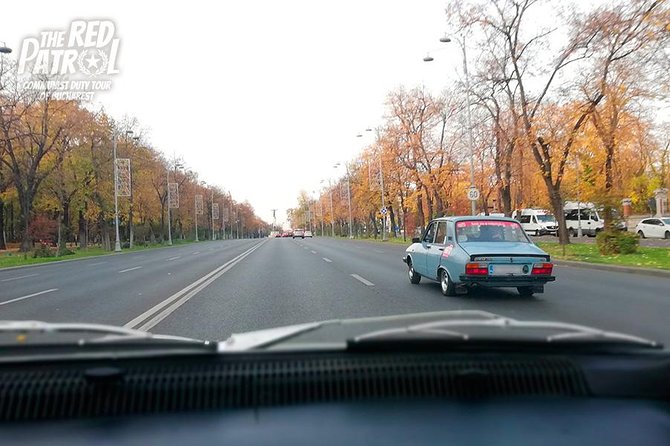
The tour then stops in Constitution Square, beside the Palace of Parliament, for roughly 15 minutes.
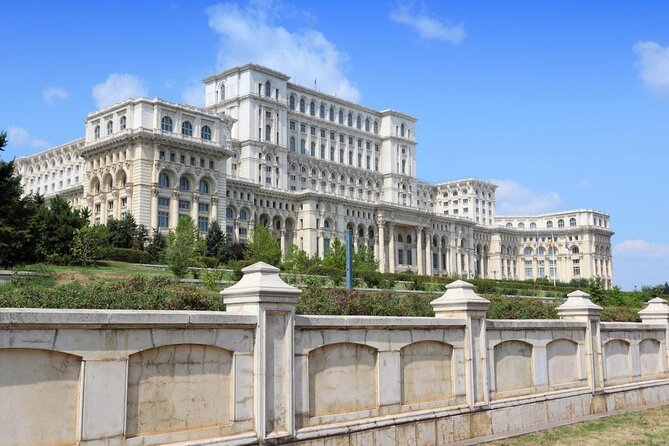
This is the largest and most imposing stop on the route. The Palace of Parliament is closely tied to Ceaușescu’s grand rebuilding plans and the immense changes imposed on Bucharest during the 1970s and 1980s.
Your guide presents the story of the palace and discusses Romania during those decades. The value here is not only the building itself. It is the chance to connect the scale of the structure with the political system and the social cost behind it.
The stop works well for photographs and orientation. You get a clear view of the palace area without spending the whole tour inside a building. Admission fees are not included, so any interior visit would require a separate ticket and additional time.
The 15-minute stop is enough for a concise explanation and photographs, but not enough for a full architectural study. If the palace is your main interest, treat this tour as an introduction and arrange a separate visit.
A completely different kind of day out:
- Bucharest: Palace of Parliament Tickets and Guide
★ 4.3 · 3,182 reviews - Bucharest: Day Trip to Dracula Castle, Peles Castle & Brașov
★ 4.4 · 3,049 reviews - Bucharest to Dracula Castle, Peles Castle and Brasov Guided Tour
★ 4.5 · 2,933 reviews - Bucharest: Palace of Parliament Tickets and Guided Tour
★ 4.4 · 1,877 reviews
A photo stop at Triumph Arch
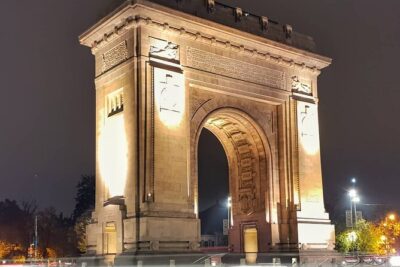
At Triumph Arch, or Arcul de Triumf, you stop for about 10 minutes.
The arch is one of Bucharest’s most recognizable landmarks and gives the route a strong visual change. After the political weight of Revolution Square and the Palace of Parliament, this stop offers an easier photo opportunity and a chance to hear about another important city symbol.
The tour does not promise entry into the arch. You should think of this as a roadside presentation and picture stop. Ten minutes is enough to get out, take photographs, and listen, but it will feel short if you want to explore the surrounding area on foot.
The route’s choice of landmarks is sensible. You see places linked to monarchy, communism, national identity, and the city’s grand public spaces. The stops are not meant to replace a full Bucharest sightseeing program. They work as visual anchors for the guide’s stories.
The panoramic ride through old Bucharest
Between the formal stops, the tour includes a panoramic drive along a famous promenade area associated with Bucharest in the 1940s.
The exact promenade is not specified, so you should not book this expecting a named attraction or a fixed walking visit. The point is the ride itself: seeing parts of central Bucharest from a slow-moving classic car while the guide explains what you are passing.
This is where the tour can feel less like a checklist. You get glimpses of neighborhoods and architecture that might not receive their own stop. The social commentary also appears to be a major part of the experience. Guide Serban is praised for explaining how people lived, worked, and adapted during the communist era, rather than offering only dates and official monuments.
That human focus is a real advantage. A conventional city tour may tell you when a building was completed. This experience aims to explain what the city felt like for people living through political change.
The guide makes or breaks the experience
The Red Patrol provides a professional local guide and driver in your car. Serban is specifically praised for his relaxed manner, clear English, and strong command of Romania’s recent past.
The most useful feature is the social angle. You will hear more than a standard account of political events. The guide can connect the car, the neighborhoods, and the monuments to everyday Romanian life.
Several details make the guiding feel personal. The guide is described as answering questions without rushing, adapting to group wishes, and using stories to explain cultural differences between the communist period and Romania today.
The tour also supplies a newspaper-style handout with facts about what you see and learn. Keep it if you want a quick reminder of the route after the ride. It is a small touch, but useful after a fast two-hour circuit.
English is the advertised language. A group from several European countries also found the English-speaking drivers easy to work with, which suggests the operator has experience handling larger international groups.
Driving the Dacia yourself
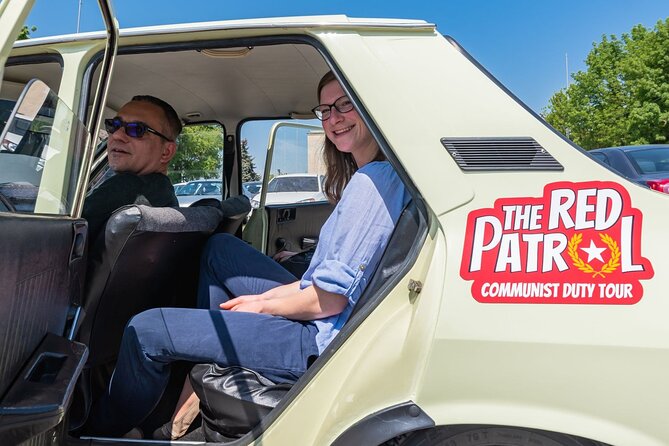
Self-driving is one of the most unusual parts of the experience. You can take the wheel after presenting a valid EU or international driving license.
This option will appeal to anyone who likes old cars and wants more than a passive sightseeing ride. Handling a Dacia from the communist period gives you a direct feel for its simple controls and manual driving style.
You should be comfortable with an older car before choosing to drive. The Dacia does not have automatic transmission, power steering, ABS, GPS navigation, or air-conditioning. Those limits are central to the experience, but they may surprise anyone used to newer rental cars.
If you would rather focus on the scenery and stories, let the guide drive. The booking includes a professional guide and driver, so you do not need to operate the car yourself to enjoy the tour.
The driving arrangement also affects group size. One car holds three people. If your party is larger, the operator creates a convoy of two or three cars. That makes the tour suitable for groups, but it also means the experience will be spread across several vehicles rather than shared in one cabin.
Group size, comfort, and practical limits
This is a private activity, so only your group takes part. That is a major advantage if you want to ask questions, set the pace at the stops, or focus on a particular part of Romanian history.
Up to three people share one car. Larger groups can still book, with two or three cars traveling together. One group of 18 people used the convoy format and found the organization and timing easy to manage.
The small car is part of the charm, but it limits personal space. Three adults will fit, though anyone wanting a roomy vehicle should choose a modern bus tour instead.
The operator does not allow pets or children under 10. Most older children and adults can participate, but the provided information does not specify wheelchair access or detailed mobility arrangements. Ask before booking if you have a specific accessibility need.
The cars are heated during winter, making a chilly morning manageable. In summer, remember that the cars do not have air-conditioning. Dress for the weather and expect classic-car comfort, not climate-controlled comfort.
Is $115.59 per person good value?
At about $115.59 per person, this is a premium short tour. The price makes the most sense when you value the private format, the restored Dacia, and the guide’s personal stories.
For one person, the cost is hard to justify as simple transportation around Bucharest. You are paying for the character of the vehicle and the tailored experience, not just for getting from Revolution Square to the Palace of Parliament.
For two or three people sharing a car, the value improves. You receive a private guide, a two-hour circuit, several major stops, and the chance to drive a rare local classic. A larger group can also spread the cost across a convoy, though each car still has its own guide and driver arrangement.
I would compare this with the price of a standard private city tour, not with a public bus ride. If your goal is to cover every major sight at the lowest possible cost, choose a cheaper option. If your goal is to understand communist-era Bucharest through an object from that time, the extra cost has a clear purpose.
Free cancellation is available if you cancel at least 24 hours before the start time. Changes or cancellations within 24 hours are not accepted for a refund, so check your plans before booking.
Who will enjoy this tour most?
I would recommend it to couples, small groups of friends, and visitors who want a city tour with a strong story rather than a long list of monuments.
It is especially well suited to:
- First-time visitors who know little about Romania’s communist period
- Car enthusiasts who enjoy restored classics
- People who prefer private tours and direct conversation
- Groups looking for a memorable shared activity
- Visitors who want to drive instead of simply ride
- Anyone interested in how political history affected ordinary life
It may not suit you if you need a cool, quiet, modern vehicle, dislike manual transmission, or want extended time inside the Palace of Parliament and other buildings.
It is also not the best choice if you have only a few hours in Bucharest and need a full overview of every district. The tour focuses on selected landmarks and stories, with short stops rather than long visits.
My booking advice
Book this early in your Bucharest stay if you want the communist-era stories to shape the rest of your sightseeing. Afterward, you will have useful context for visiting the Palace of Parliament, Revolution Square, and the city’s older neighborhoods.
For the best value, go with two or three people. Decide in advance who wants to drive, and bring the required EU or international license if you plan to take the wheel.
I would also ask the operator about the day’s weather and the exact panoramic route, especially in summer. The classic car is the star, but its lack of air-conditioning is a real comfort issue on a hot day.
Should you book The Red Patrol Dacia tour?
Book it if you want Bucharest explained through a local car, personal stories, and a private guide. The restored Dacia, Serban’s social history commentary, and the chance to drive make this much more distinctive than a routine city circuit.
Skip it if you want a low-cost overview, a modern vehicle, or lengthy visits inside landmarks. For the right visitor, though, this is a memorable two hours and one of the clearest ways to connect Bucharest’s streets with the people who lived through its hardest decades.
FAQ
Where does the Romanian vintage car tour start and end?
The tour starts at Revolution Square, Piața Revoluției, in Bucharest. It ends back at the same meeting point.
How long does the tour last?
The experience lasts approximately two hours, or 120 minutes.
What language is the tour offered in?
The tour is offered in English.
How many people can ride in one car?
Up to three people can ride in one car. Larger groups travel in a convoy of two or three cars.
Can I drive the vintage Dacia?
Yes. You can drive the Dacia after presenting a valid EU or international driving license.
Do the cars have air-conditioning or automatic transmission?
No. The Dacia 1300 and 1310 do not have air-conditioning, ABS, GPS navigation, power steering, or automatic transmission. The cars are heated during winter.
Are admission fees to the landmarks included?
No. Admission fees for buildings at the stops are not included in the tour price.
Just added in Bucharest
- Bucharest: Dealu Mare Winery Private Trip with Wine Tasting★ 4.9 · 6 reviews
- Winery touring & private wine tasting – one day private tour★ 5.0 · 3 reviews
- Village Museum Bucharest Guided Tour★ 5.0 · 6 reviews
- Transylvania Tour: Dracula’s Castle, Peles Palace & Brasov★ 5.0 · 19 reviews
- Transfer Airport Otopeni – Bucharest★ 5.0 · 2 reviews
- Private Transfer Bucharest Otopeni Airport (OTP) to/from Brasov★ 5.0 · 2 reviews
- Bucharest Airport Transfer To Constanta Mamaia★ 5.0 · 3 reviews
- Airport Henri Coanda (Otopeni) to Bucharest – Private Transfer – Driver★ 5.0 · 5 reviews
Private, compared.

Castles of Transylvania: Private Day Trip from Bucharest
Read our review →
Dracula’s Castle, Peles Castle and Brasov – Private Day Trip from Bucharest
Read our review →
Bucharest Panoramic Sightseeing – Private City Tour
Read our review →
THERME “Take It Easy” Pack: Full Spa Access + Private Transfers
Read our review →
Piatra Craiului National Park Private Hiking Tour from Brasov
Read our review →
4h Bucharest Private Tour (2h by Car and 2h Walking in Old Town)
Read our review →