
REVIEW · BRAN CASTLE AND DRACULA TOURS
Real Dracula Princely Court and Real Dracula’s Fortress
Dracula’s real story begins far from the castle myths. This long private day trip from Bucharest links Târgoviște’s princely court with Poenari Castle, the mountain stronghold tied to Vlad the Impaler. I like the mix of serious medieval history and big Romanian scenery, especially the climb to Chindiei Tower and the stop at Vidraru Dam. I also like having a private car and guide, so you can ask questions and adjust the pace.
The main drawback is the length. Eleven hours is a full day, and Poenari Castle requires climbing 1,480 stairs. Entrance fees and food are extra, and Poenari has sometimes been closed, so you should treat the schedule as an ambitious historical outing rather than a relaxed sightseeing drive.
In This Review
- Key points to know before you book
- Why this day trip is different from a Dracula castle tour
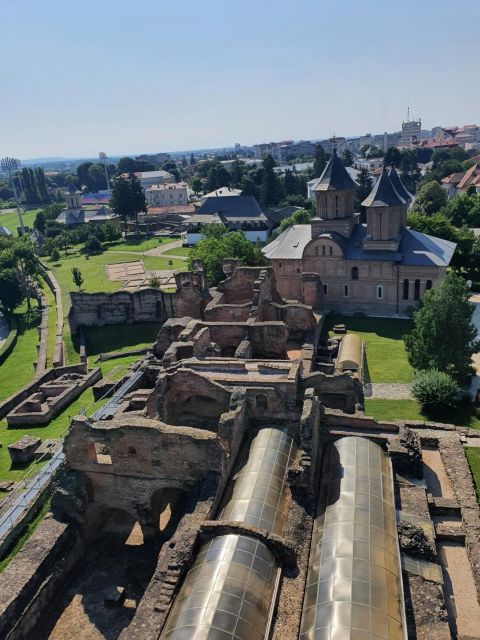
- Târgoviște: entering Vlad’s former princely court
- Climbing Chindiei Tower
- Curtea de Argeș: old capital, royal graves, and a sad story
- Poenari Castle and the 1,480-step test
- Vidraru Dam: a modern break in a medieval day
- The Wallachian route and the long ride back
- Price, inclusions, and real value
- Who should book this experience?
- Should you book the Real Dracula Princely Court and Fortress tour?
- FAQ
- Where does the tour begin and end?
- How long does the experience last?
- Is this a private tour?
- Which languages are available?
- How many stairs are there at Poenari Castle?
- Are food, drinks, and entrance fees included?
- What happens if Poenari Castle is closed?
Key points to know before you book

- Târgoviște reveals the real court behind the Dracula legend: Explore the former Wallachian princely residence, churches, palace ruins, and Chindiei Tower.
- Chindiei Tower gives the best view of the old court: From its balcony, you can see the remains of the two princely palaces and a church dating to 1415.
- Poenari Castle is reached by 1,480 stairs: This is the most demanding part of the day and the closest stop to Vlad the Impaler’s mountain refuge.
- Curtea de Argeș adds royal and religious history: See the old princely court, the 13th-century Royal Church, and the monastery connected with Romania’s royal family.
- Vidraru Dam breaks up the history with a major engineering sight: You get time for photographs, a visit, and a short break.
- Private guiding makes the packed route workable: Nicolas is specifically praised for his historical knowledge, friendly conversation, and flexible timing.
Why this day trip is different from a Dracula castle tour
Many Dracula-themed outings focus on legend. This one takes a more grounded route through Wallachian history, where Vlad the Impaler appears as a medieval ruler rather than a horror character.
At Târgoviște, you see the court connected with Vlad Dracul and Vlad the Impaler. At Poenari, you reach the fortress associated with Vlad’s mountain refuge. The distinction matters. You are not simply visiting a place marketed as Dracula’s castle. You are following a chain of sites tied to princes, royal power, warfare, religion, and the old Wallachian state.
I especially like that the day includes more than Vlad. Curtea de Argeș adds the story of Romania’s royal family, while Vidraru Dam shows a major work of modern Romanian engineering. The route gives you several periods of history instead of repeating the same medieval tale all day.
The private format is useful here. You travel by car from Bucharest with a licensed English-speaking driver-guide, and private groups can often use the time more sensibly than a large coach group. Nicolas is the named guide associated with this experience, and his style is described as friendly, professional, and generous with time.
Still, this is not a short outing. You spend much of the day on the road, with several stops and walks. If you want a quiet day in one town, choose something smaller. If you want to connect major sites in southern Romania without arranging several separate trips, this route makes good sense.
More Bran Castle and Dracula trips:
- Bucharest: Dracula’s Castle, Peles Castle, & Brasov Old Town
★ 4.5 · 17,858 reviews - Bucharest: Dracula Castle, Peles Castle & Brasov Old Town
★ 4.6 · 10,891 reviews - Bucharest: Dracula’s Castle, Peleș Castle & Brașov Day Trip
★ 4.5 · 5,919 reviews
Târgoviște: entering Vlad’s former princely court
The first major stop is the Royal Court of Târgoviște, a medieval complex whose written record reaches back to 1417 or 1418. It began as a fortress and later grew into a princely residence. Several important rulers of southern Romania used it, including Constantin Brâncoveanu and Vlad the Impaler.
This is where the tour earns its title. The court was not a stage set for a Dracula story. It was a working center of political power, where princes lived, governed, and defended their territory.
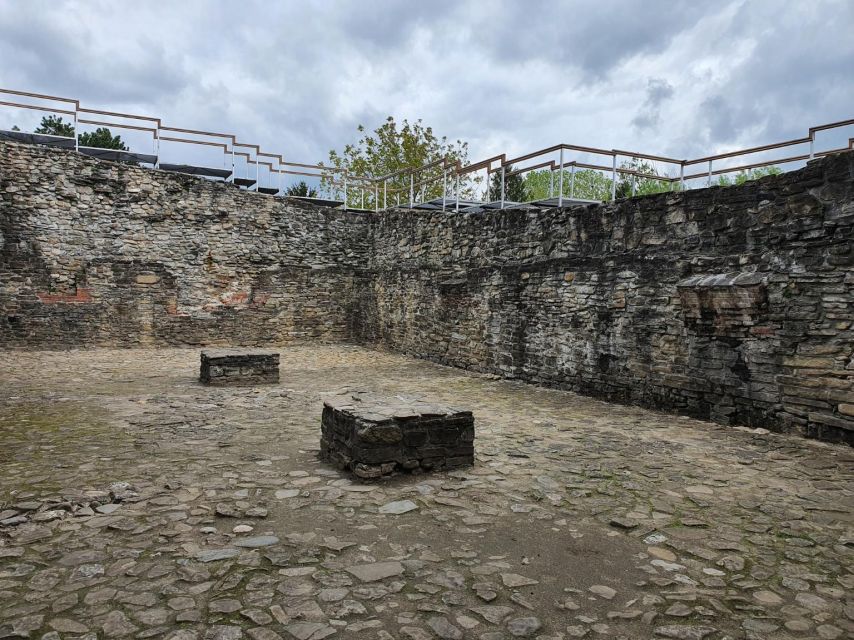
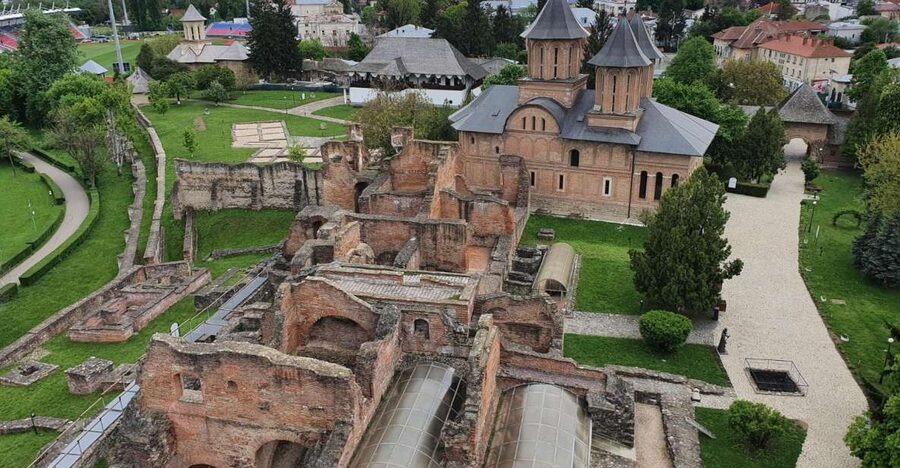
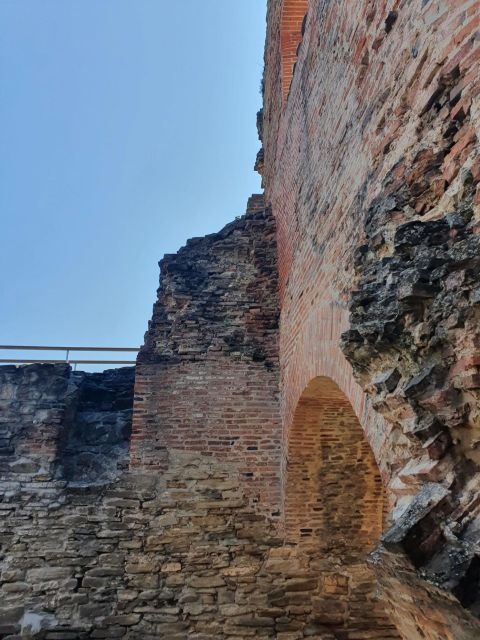
Your guide can help you read the site in layers. You will see the remains of two princely palaces, surviving churches, and the emblematic Chindiei Tower. Ruins can be hard to understand on your own, so the historical explanation matters more here than at a fully preserved building.
Climbing Chindiei Tower
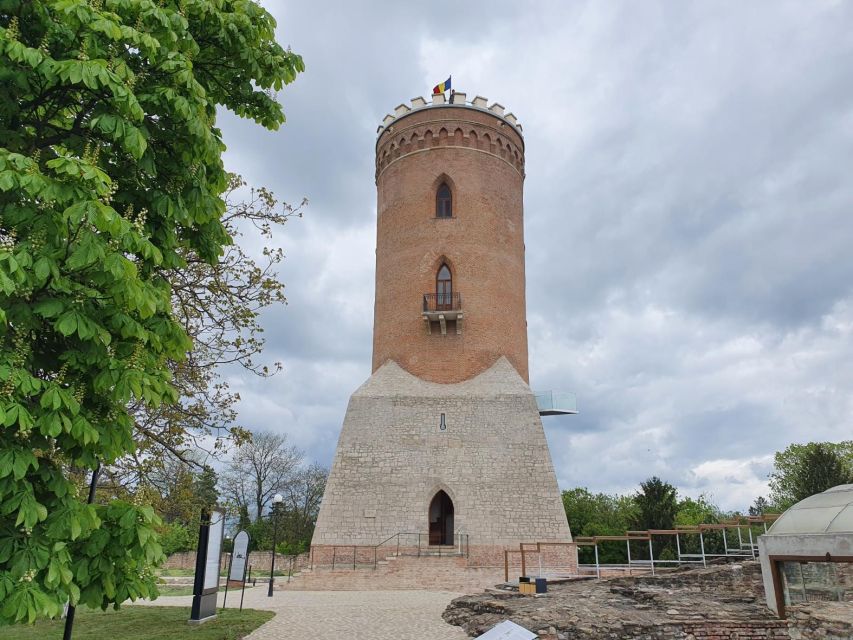
Chindiei Tower is the visual centerpiece of Târgoviște. Vlad the Impaler is credited with building the tower, and it became a symbol of the old princely court.
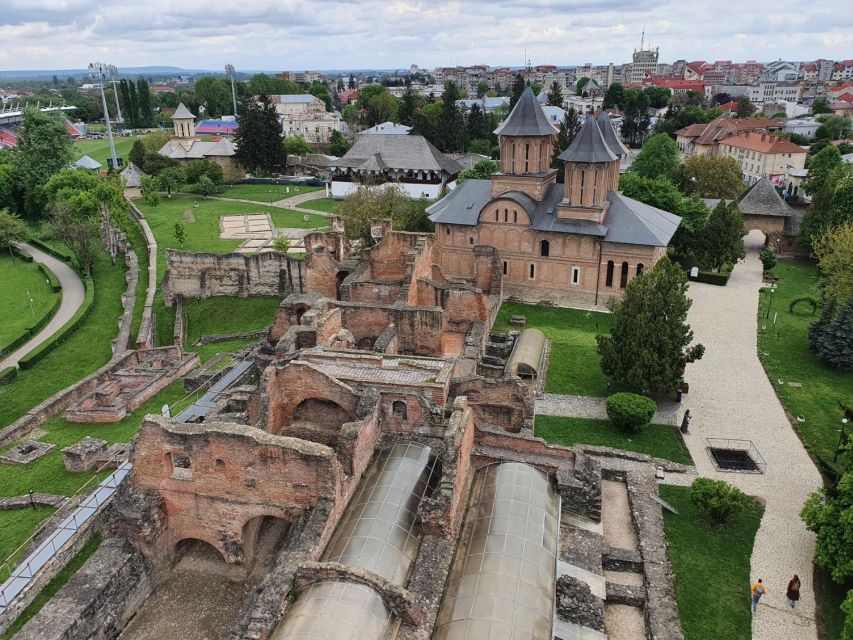
You walk up to the tower and climb to the balcony. From there, you can look across the whole court, including the palace remains and the silhouette of a church dating from 1415. I would save time for this view rather than rushing through the tower. It gives you the clearest sense of how the site once functioned as a large royal compound.
The tower climb is much easier than Poenari’s stairway, but you should still wear stable shoes. The stop includes a guided visit, sightseeing, photographs, and time to look around. Afterward, you have about 30 minutes in Târgoviște for more walking, photographs, and a break.
The court’s surviving religious buildings are worth attention. The small Holy Friday Church and the Great Princely Church help show how worship fitted into daily court life. The Great Princely Church is particularly important because it is described as the only southern Romanian monument from the 15th century still preserved in its original form.
Curtea de Argeș: old capital, royal graves, and a sad story
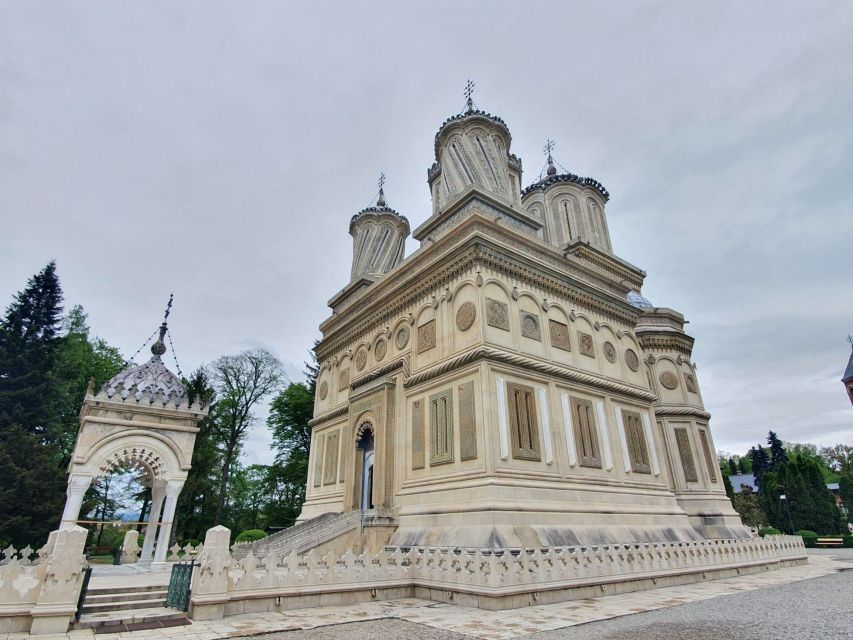
The route continues to Curtea de Argeș, an old Wallachian capital with an eventful past. The visit lasts about 45 minutes, so you should expect a focused stop rather than hours of free exploration.
You see the ruins of the Wallachian princely court and the 13th-century Royal Church. These remains add an older layer to the day, before the later princely court at Târgoviște became the main focus.
The famous Curtea de Argeș Monastery is the emotional center of this stop. It is associated with Romania’s royal family, and the graves of Romanian kings are located here. The guide explains the difficult and sad history connected with the site, which gives the visit more weight than a quick photograph outside a beautiful church.
I like this stop because it changes the mood. Târgoviște is about medieval authority and Vlad’s reputation. Curtea de Argeș brings in royal memory, religion, and national identity. You get a fuller picture of Romania’s past instead of a single-character story.
The short visit also means you should listen closely to the guide and decide what you most want to photograph. Free time is included, but the schedule has several major stops still ahead.
A completely different kind of day out:
- Bucharest: Palace of Parliament Tickets and Guide
★ 4.3 · 3,182 reviews - Bucharest: Day Trip to Dracula Castle, Peles Castle & Brașov
★ 4.4 · 3,049 reviews - Bucharest to Dracula Castle, Peles Castle and Brasov Guided Tour
★ 4.5 · 2,933 reviews - Bucharest: Palace of Parliament Tickets and Guided Tour
★ 4.4 · 1,877 reviews
Poenari Castle and the 1,480-step test
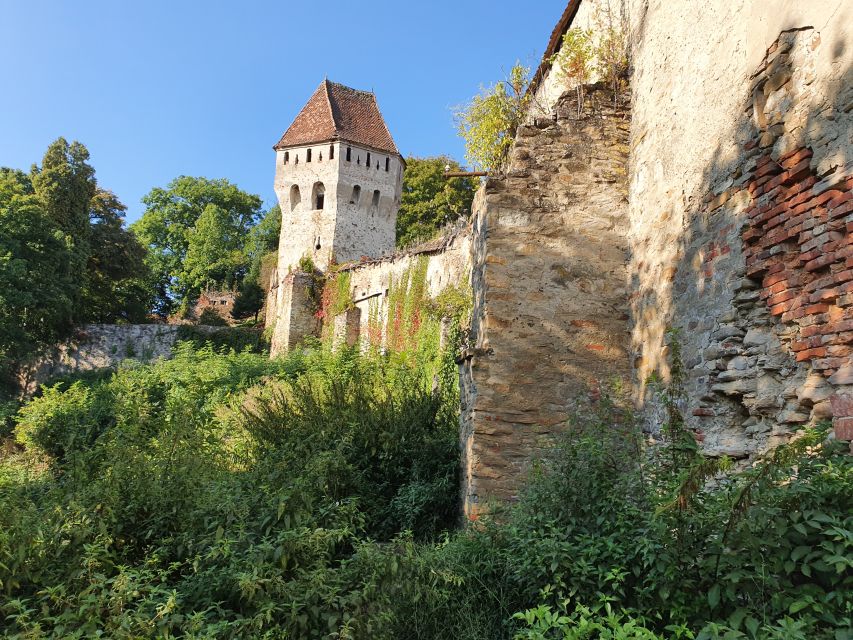
Poenari Castle is the day’s most demanding stop. The fortress sits in Poenari village and is associated with Vlad the Impaler, who used the area as a refuge. The site is also linked with the story that Vlad hid the country’s gold there.
The approach requires climbing 1,480 stairs. That number is not decorative tour copy. It should shape your decision to book. You need enough stamina for a long stair climb, time to pause, and suitable footwear. The reward is a fortress site with a direct connection to Vlad’s defensive world, not a polished palace built for easy sightseeing.
The visit is listed at about an hour and a half, including photographs and the walk. The climb itself takes a large share of that time, so do not expect a long, leisurely stay among extensive ruins. Poenari is important because of its position, story, and association with Vlad, even though the remains are not presented as a fully intact castle.
There is also a practical warning. Poenari Castle was closed during one earlier outing, and Nicolas handled the change by filling the time with other nearby places and a chance to try traditional food. That tells you two useful things: the site can be affected by closure, and the private format gives the guide more room to adapt.
Do not book this tour solely because you want a guaranteed castle interior. Book it because you want to make the climb and see the mountain fortress connected with Vlad. If the castle is closed, you may still have a worthwhile day, but the central Dracula-related stop will be altered.
Vidraru Dam: a modern break in a medieval day
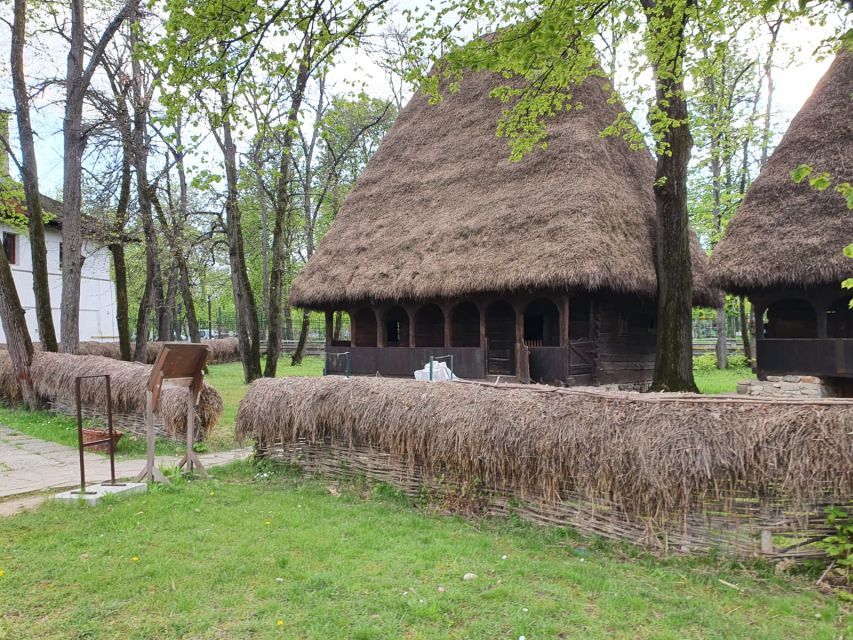
After the castle area, the route reaches Vidraru Dam, described as Romania’s biggest dam. The stop lasts about an hour and includes a break, photographs, sightseeing, and time to visit or shop.
This is a smart addition to the route. After medieval courts, church ruins, and a steep climb, a large modern engineering project gives the day a different rhythm. You can take photographs, stretch your legs, and hear about the dam’s history from the guide.
I would not treat Vidraru Dam as filler. It shows another side of Romania, one concerned with infrastructure and national projects rather than princes and fortresses. The stop also helps prevent the historical visits from blending together.
The information provided does not promise a special activity at the dam beyond the visit, free time, and photographs. Keep your expectations focused on the view, the structure, and the story behind it. It is a useful scenic and cultural pause, not a separate full-day attraction.
The Wallachian route and the long ride back
The final portion includes more time in Wallachia, with sightseeing, a guided visit, photographs, and sections of the route passed by car. This part helps connect the stops geographically and historically.
Because the tour covers Bucharest, Târgoviște, Curtea de Argeș, Poenari, and Vidraru Dam in one day, road time is unavoidable. I would use the drive to ask about Vlad Dracul, Wallachian rulers, the move from fortress to princely residence, and the royal history of Curtea de Argeș.
The private car makes this long route more comfortable than a large group coach. You have a dedicated driver-guide, and the schedule can be flexible. One earlier outing allowed plenty of time at each stop for photographs, exploration, lunch, and conversation without pressure to hurry from place to place.
That flexibility is one of the strongest reasons to choose this experience. You are not locked into a rigid public-tour rhythm. If you need a little more time at Chindiei Tower or a pause after the Poenari climb, the private setup gives the guide room to work with you.
Price, inclusions, and real value
At $323 per person, this is not a budget day trip. The price needs to be judged against what you receive: an 11-hour private experience from Bucharest, a private vehicle, a licensed guide-driver, hotel pickup and drop-off, fuel, parking, and road tolls.
For one or two people, the cost may feel high. For a small private group that values direct guiding and a flexible pace, the calculation looks better. You are paying to connect several difficult-to-arrange locations in one day without renting a car or managing the route yourself.
Food, drinks, and entrance fees are not included. Set aside extra money for those items, and confirm the current entrance costs before departure because the tour information does not list exact amounts.
The guide’s role is central to the value. At a ruin such as Târgoviște, a good explanation turns scattered walls into a court. At Curtea de Argeș, the story of the royal graves gives meaning to the monastery. At Poenari, the guide helps separate Vlad’s historical role from later Dracula fantasy.
The strongest praise for Nicolas centers on his historical knowledge, friendly manner, professionalism, and attention to the pace of the day. He is also credited with making sensible alternatives when Poenari was closed. That combination is valuable on a route where conditions can affect the plan.
Who should book this experience?
I would recommend it to you if you want a history-heavy day with several major stops and do not mind a long ride. It suits people interested in Vlad the Impaler, Wallachian rulers, Romanian royal history, churches, medieval ruins, and large-scale scenery.
It is also a good fit if you prefer private guiding to a fixed group schedule. You can ask questions, talk with the guide during the drive, and make better use of free time.
You should think twice if you dislike stairs, have limited mobility, or want a gentle day. The 1,480 steps at Poenari are the key physical challenge, and the overall schedule is packed. You should also accept that the castle stop may be changed if Poenari is closed.
The tour offers live guiding in English, Italian, Romanian, French, or Spanish. Pickup and drop-off are included in Bucharest, and you are asked to wait in your hotel lobby five minutes before pickup while the driver looks for your surname.
Cancellation is free up to 24 hours before the start, and you can reserve now and pay later. Those terms help if your Romania plans are still shifting, but the main booking decision should come down to stamina and interest in a full historical route.
Should you book the Real Dracula Princely Court and Fortress tour?
Book it if you want the real places behind the Vlad story, not a simple Dracula-themed photo stop. The combination of Târgoviște’s court, Chindiei Tower, Curtea de Argeș, Poenari Castle, and Vidraru Dam gives you a broad day with strong historical variety.
I would consider the tour good value for a small private group that wants a guide and does not want to drive. I would skip it if the price feels too high for one person, if you want a slower schedule, or if climbing 1,480 stairs is not realistic.
The best reason to choose it is the guide-led context. Nicolas’s flexible approach, clear historical explanations, and willingness to adjust when Poenari was closed can make a demanding route feel manageable. Just arrive ready for a very long day, extra entrance costs, and a serious climb.
FAQ
Where does the tour begin and end?
The tour includes hotel pickup and drop-off in Bucharest. You should wait in the hotel lobby five minutes before the scheduled pickup time.
How long does the experience last?
The full experience lasts 11 hours, including travel from Bucharest and the visits along the route.
Is this a private tour?
Yes. You travel by private car with a private, licensed driver-guide and a private group.
Which languages are available?
Live guiding is available in English, Italian, Romanian, French, and Spanish.
How many stairs are there at Poenari Castle?
The visit to Poenari Castle involves climbing 1,480 stairs.
Are food, drinks, and entrance fees included?
No. Food, drinks, and entrance fees required during the tour are not included in the price.
What happens if Poenari Castle is closed?
The guide can use the time for other nearby places and activities. On one earlier outing, the alternative included additional local stops and a chance to try traditional food.
Just added in Romania
- Bucharest: Dealu Mare Winery Private Trip with Wine Tasting★ 4.9 · 6 reviews
- Winery touring & private wine tasting – one day private tour★ 5.0 · 3 reviews
- Turda salt mine and Corvin Castle day tour from Cluj★ 5.0 · 9 reviews
- Private tour to Turda Salt Mine, Rimetea and Alba Iulia★ 4.8 · 5 reviews
- Village Museum Bucharest Guided Tour★ 5.0 · 6 reviews
- Transylvania Tour: Dracula’s Castle, Peles Palace & Brasov★ 5.0 · 19 reviews
- Turda Salt Mine : 1 Day auto tour from Oradea★ 4.4 · 2 reviews
- Turda Salt Mine, Gorge & Rimetea Village (private from Cluj)★ 5.0 · 5 reviews
Bran Castle and Dracula Tours, compared.
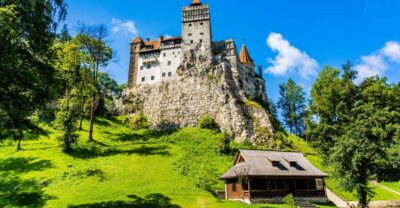
Dracula’s Castle, Peles Castle, & Brasov Old Town
Read our review →
Dracula Castle, Peles Castle & Brasov Old Town
Read our review →
Dracula’s Castle, Peleș Castle & Brașov Day Trip
Read our review →Day Trip to Dracula Castle, Peles Castle & Brașov
Read our review →
Bucharest to Dracula Castle, Peles Castle and Brasov Guided Tour
Read our review →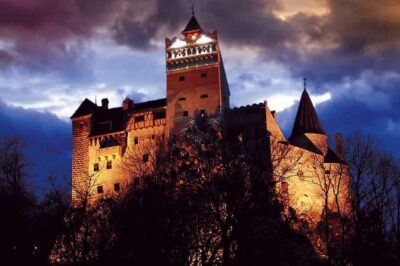
Dracula’s Castle, Peles Castle and Brasov Day Trip from Bucharest
Read our review →
Transylvania and Dracula Castle Full Day Tour from Bucharest
Read our review →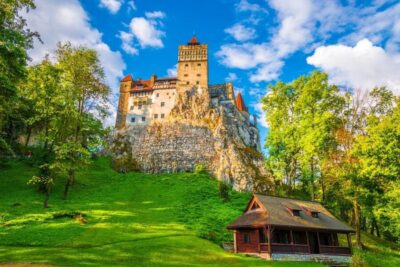
Browse the lists this tour appears in