
REVIEW · ROMANIA
Slavery in Romania,Myths and Truths on Gypsies, Walking Tour
History can hide in ordinary city streets. This three-hour Bucharest walk connects the Roma community’s past and present with slavery, Holocaust remembrance, communism, music, craft, and daily life. I especially like the visit to the former slave market site and the stop at the Romania Holocaust Memorial, two places that give the subject real weight.
I also like the guides’ careful, human approach. Daniela, Andreea, Mihai, and Mihail have all been praised for clear explanations, empathy, patience, and a good sense of humor. The main consideration is that this is a focused history and culture tour, not a general Bucharest sightseeing walk. You will pass major landmarks, but the Roma experience remains the center of attention.
At $29 per person, the tour offers good value if you want context that most city tours skip. The optional jewelry workshop at Mesteshukar ButiQ adds a hands-on finish, but food, drinks, and the workshop are not included in the basic price.
In This Article
- Key points to know before you book
- Why this Bucharest walk matters
- Starting near Piața Romană and the Ion Creangă Theatre
- The former slave market and Romania’s difficult past
- The Romanian Athenaeum and the stories a nation tells
- Cișmigiu Gardens: myths, music, and a needed break
- The Holocaust Memorial and the Roma victims of genocide
- Communist Bucharest from Piața Kogălniceanu to Revolution Square
- Stories that keep the tour human
- Finishing at Mesteshukar ButiQ and the jewelry option
- Is $29 a fair price?
- Who should book this experience?
- Should you book the Roma history walking tour?
- FAQ
- How long does the walking tour last?
- What language is the tour conducted in?
- Where does the tour begin?
- What places are included on the route?
- Is the jewelry workshop included?
- Are food and drinks included?
- Can I cancel the booking?
Key points to know before you book
- The former slave market site gives the tour its moral center: You learn about the centuries when Roma people were held in slavery in the Romanian principalities and how that past still affects identity and prejudice.
- The Romanian Athenaeum and Revolution Square add national context: These landmarks help connect Roma history with Romania’s arts, politics, and modern statehood.
- Cișmigiu Gardens provides a welcome pause: The walk includes time to sit, ask questions, and discuss common myths in a calmer setting.
- The Holocaust Memorial is an important stop: The tour addresses the persecution and murder of Roma people during the Holocaust in Romania.
- The tone is serious but not bleak: Guides use stories, humor, photographs, music links, and everyday examples to make difficult subjects easier to understand.
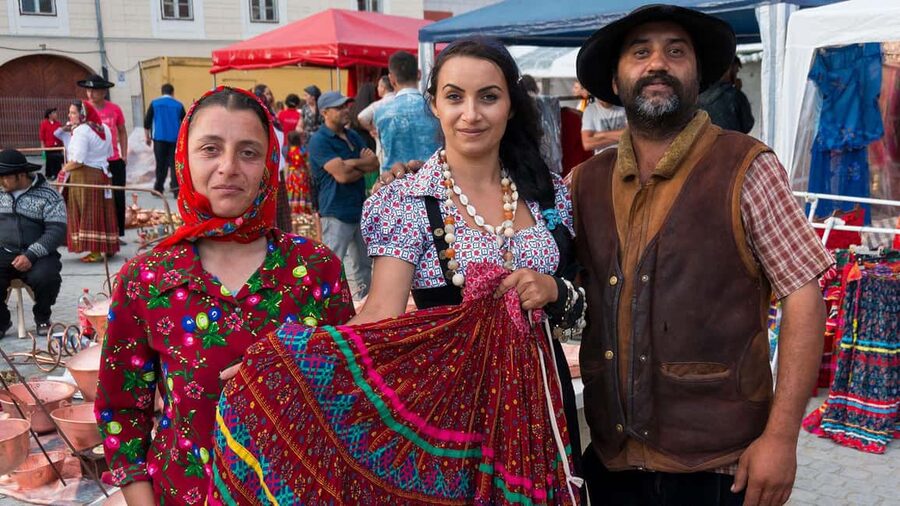
- The optional jewelry workshop supports direct contact with Roma craft: You can make a piece of jewelry with an authentic Roma craftsman at Mesteshukar ButiQ.
Why this Bucharest walk matters
Bucharest offers plenty of grand buildings, pleasant parks, and dramatic twentieth-century stories. What it does not always offer on a standard city walk is a clear explanation of the Roma community’s place in Romanian society.
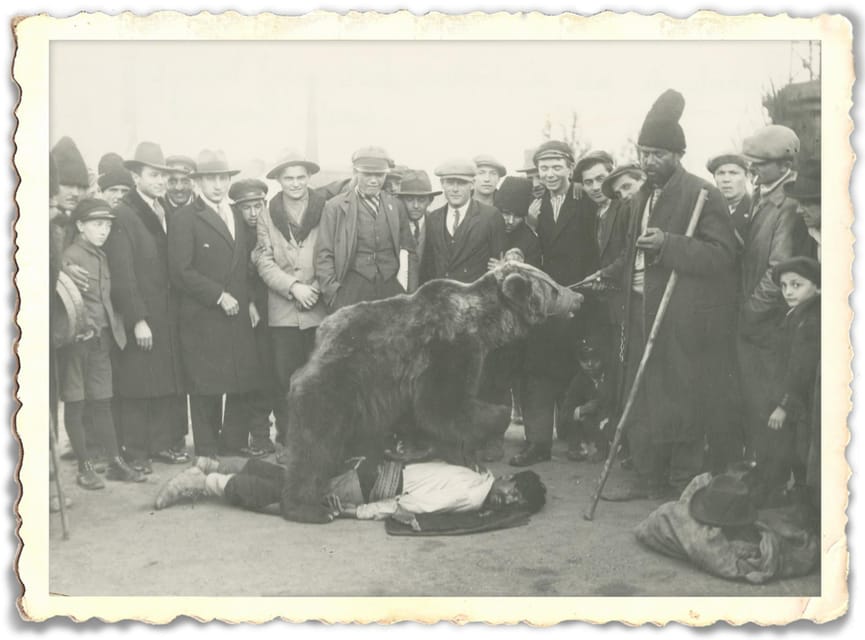
This tour fills that gap. It explains how Roma people arrived in the region, how slavery operated, how emancipation changed legal status without ending prejudice, and how later persecution and communism shaped the community. The subject is difficult, but the tour is designed to explain rather than shock.
I appreciate that the experience does not treat Roma culture as a collection of colorful costumes, songs, or craft traditions. Those subjects may appear, but they are placed beside forced labor, discrimination, property disputes, genocide, poverty, and modern efforts to improve opportunity.
You should also expect discussion of the language used for Roma people, including the harmful stereotypes built into everyday speech. A good guide will help you understand why some familiar ideas about Roma identity are inaccurate or unfair.
The tour is conducted in English and lasts about three hours. That gives the guide enough time to explain events properly without turning every stop into a long lecture.
Starting near Piața Romană and the Ion Creangă Theatre
The meeting point is in the small square in front of Teatrul Ion Creangă, Sala Mare. It is about a three-minute walk from Piața Romană metro station, making the start fairly easy to reach from other parts of Bucharest.
The opening location is practical rather than grand. That suits the subject. You are not beginning with a polished monument or a sweeping view, but with an ordinary city setting and a guide who begins building the larger story.
Your guide may be Daniela, Andreea, Mihai, or Mihail. The strongest guide qualities reported across the tours are patience, clarity, candor, and respect. That matters here because the topic includes terms and events that can easily be simplified or handled poorly.
The pace appears moderate. The walk is broken up by stops, photographs, visual material, and chances to ask questions. One guide was especially praised for finding shade and making regular water pauses during hot weather, a useful detail in Bucharest’s summer heat.
The former slave market and Romania’s difficult past
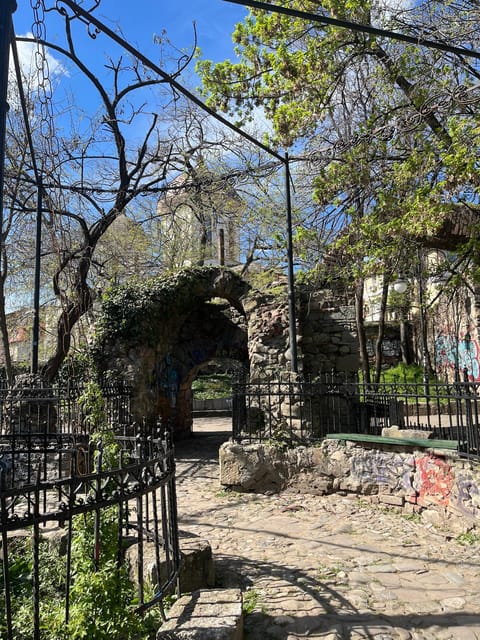
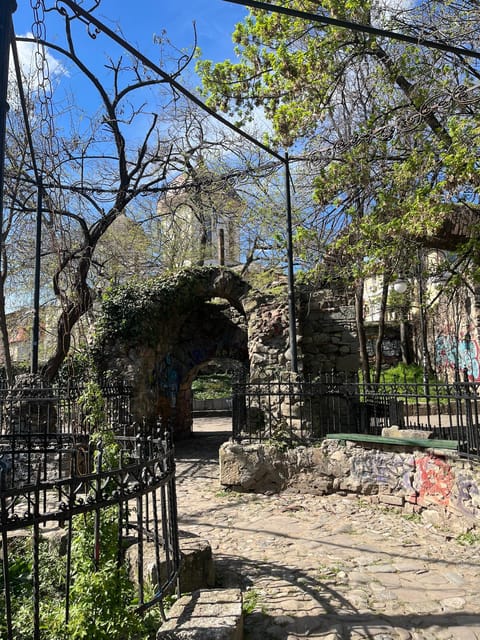
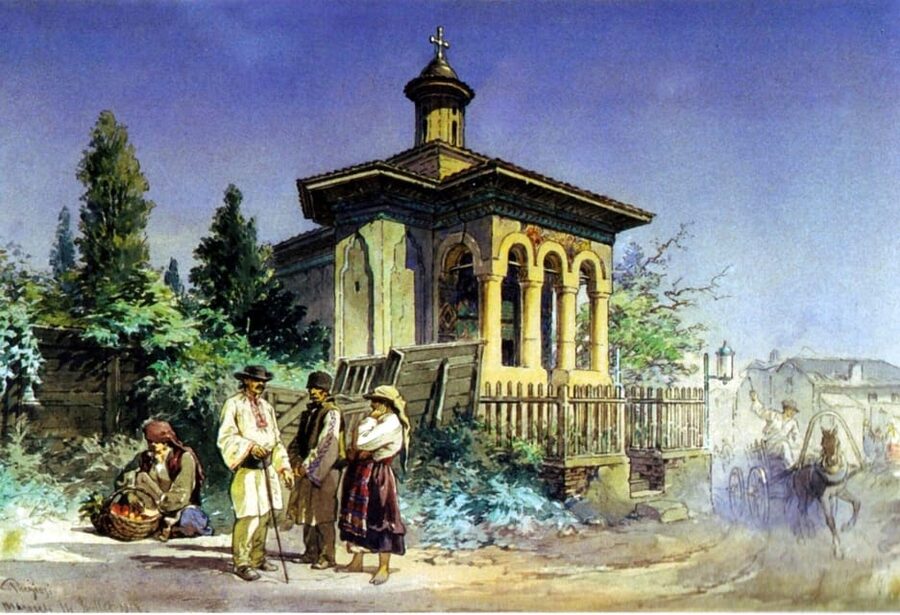
One of the first major stops is the site of a former slave market. It is not simply another old building or picturesque corner. The stop asks you to confront the fact that Roma people were enslaved in the Romanian principalities for centuries.
The tour explains the trade in human lives and the way enslaved Roma were controlled by different owners, including religious institutions, state authorities, and private landowners. The exact details are presented by the guide, but the main lesson is clear: slavery was not a brief or minor episode in Romanian history.
This stop helps correct a common misunderstanding. Roma poverty and exclusion did not appear from nowhere, and they cannot be explained by vague claims about culture or personal behavior. Centuries of forced labor, legal discrimination, and social separation left a lasting mark.
For me, this is one of the strongest parts of the walk because the guide connects a physical place with a historical system. You are not hearing a floating list of dates. You are standing where people were bought and sold, then considering how that memory has been treated in modern Romania.
The site itself may not provide a large museum display or a dramatic structure. That is a drawback if you expect a traditional attraction. The value comes mainly from the explanation, so the quality and care of your guide matter greatly.
The Romanian Athenaeum and the stories a nation tells
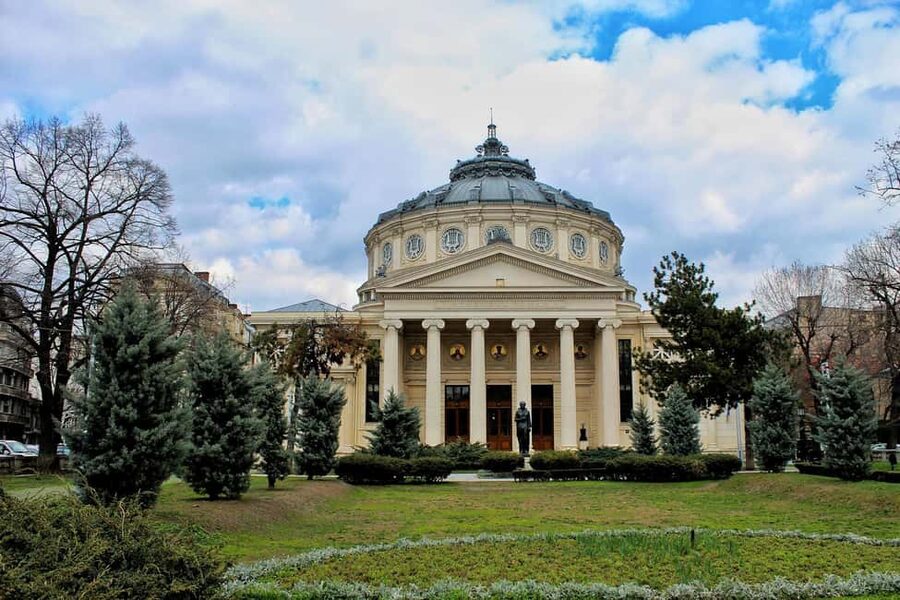
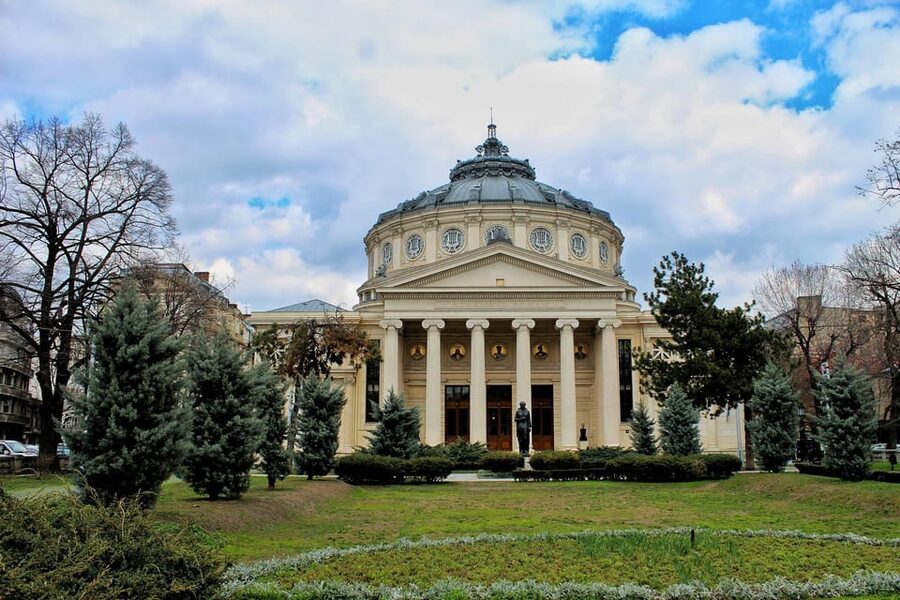
The route then passes the Romanian Athenaeum, one of Bucharest’s most famous cultural buildings. Its grand architecture represents national pride, education, and the arts.
At first, the Athenaeum may seem unrelated to the Roma story. The guide uses it to discuss how national culture is created and who gets included in official ideas of Romanian identity.
The stop is brief, around fifteen minutes. You have time to look at the building and take in its place in the city, but this is not an interior tour of the Athenaeum. Think of it as a backdrop for a conversation about representation, culture, and public memory.
The wider point is useful. A country’s celebrated institutions often tell a selective story. Roma musicians, craftspeople, and performers have influenced Romanian culture, yet Roma people have also been pushed to the margins of the national story.
This is where the tour begins moving beyond slavery. You learn how Roma identity has been shaped not only by oppression, but also by artistic work, family traditions, language, music, and adaptation.
Cișmigiu Gardens: myths, music, and a needed break
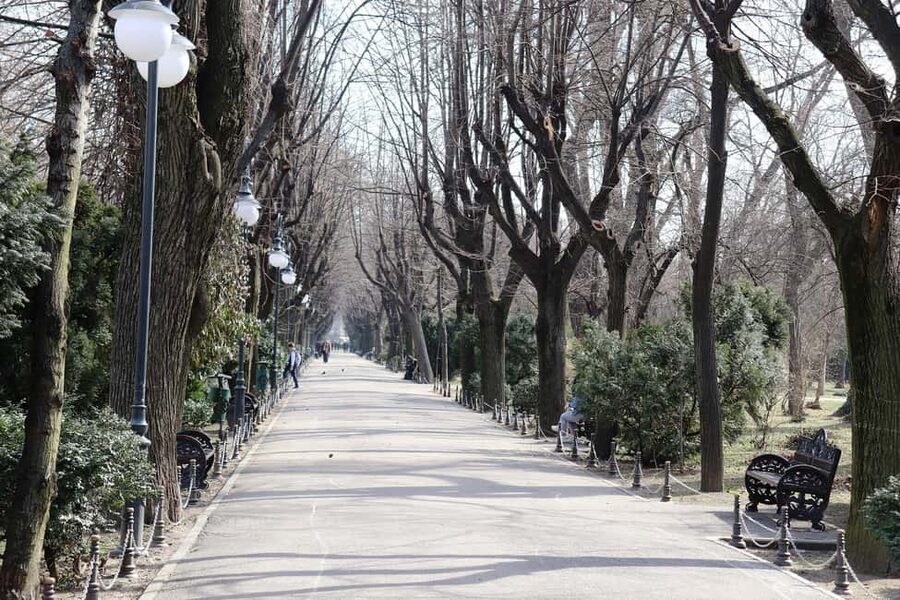
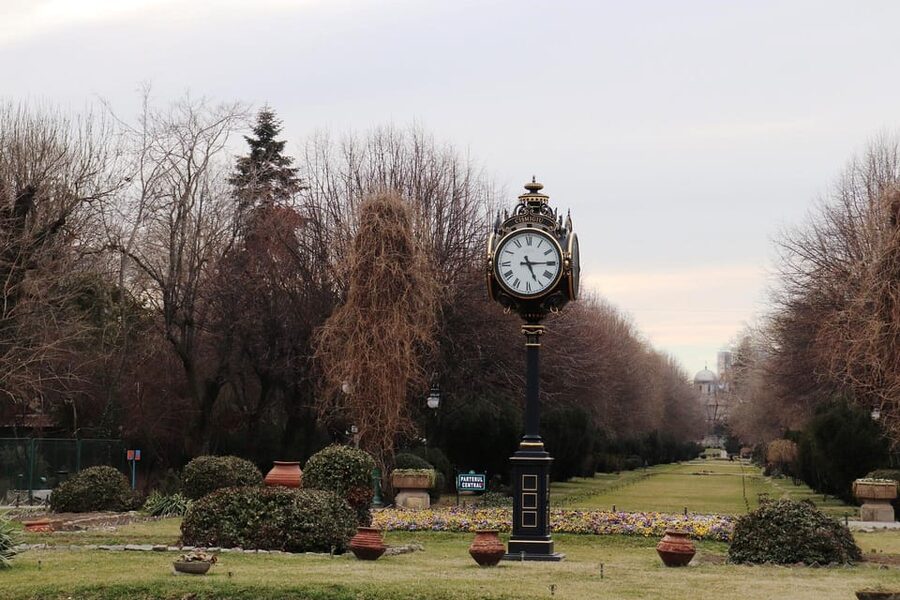
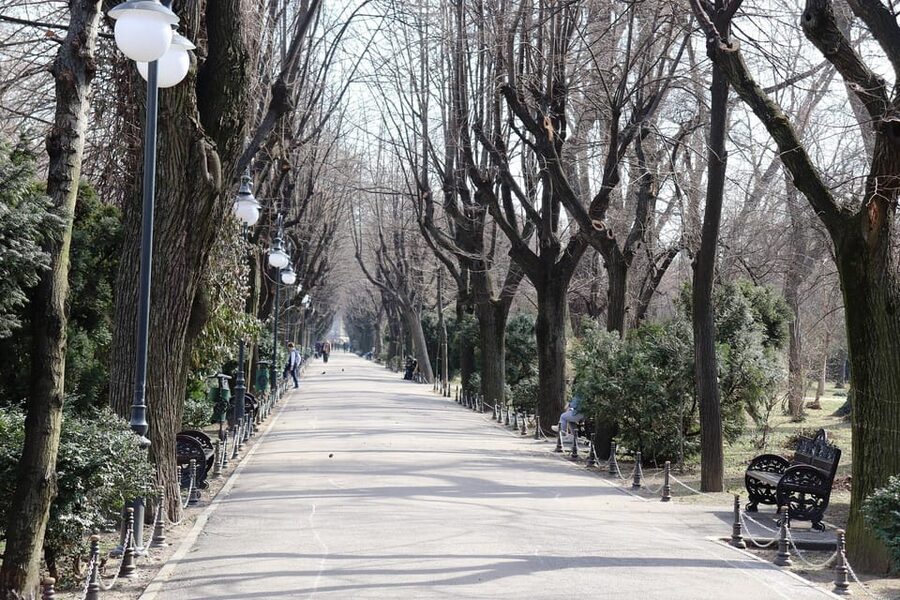
Cișmigiu Gardens is the oldest and largest garden in Bucharest. After walking through central streets, the park offers shade, benches, and a slower setting for discussion.
The stop lasts about thirty minutes, making it one of the longer pauses on the route. That timing is helpful. The subject is demanding, and the park gives you space to absorb what you have heard rather than rushing from one painful fact to another.
Here the guide addresses myths and truths about Roma culture and traditions. You may hear about family structure, craft, music, language, work, migration, and the way outsiders have described Roma communities.
The best part is the chance to ask questions. Several guides have been praised for explaining sensitive subjects without reinforcing stereotypes. One also followed up with links to folkloric and manele music, giving visitors a way to keep learning after the walk.
Do not expect an arranged performance or a visit to a Roma neighborhood. This is a public park used for conversation and historical interpretation. That makes the experience less voyeuristic, but it also means direct contact with Roma residents is limited.
A previous participant felt that more Roma voices would improve the tour. That is a fair point. The tour aims to avoid turning people into exhibits, yet hearing directly from Roma community members could add another layer. The optional craft workshop offers a more direct connection later in the route.
The Holocaust Memorial and the Roma victims of genocide
The Holocaust Memorial is perhaps the most emotionally serious stop. The tour discusses the persecution and genocide of Roma people in Romania during the Holocaust, alongside the wider history of Romania’s wartime collaboration and violence.
You have around fifteen minutes for a guided visit, sightseeing, and photographs. The memorial gives the subject a place of public recognition, which is important because Roma victims have often received less attention in popular accounts of the Holocaust.
The guide places this event within the longer story of exclusion. Slavery had ended, but legal emancipation did not bring equal treatment. Anti-Roma prejudice continued, and wartime persecution turned that prejudice into mass deportation, suffering, and murder.
This stop is not presented as a detached history lesson. It connects the memorial with the question of how a society remembers its victims and how silence can allow old stereotypes to survive.
You should be ready for a sober moment. The tour includes humor and entertaining stories elsewhere, but the memorial requires respect. It is also one of the places where a clear guide makes a real difference, helping you understand the historical facts without flattening the human cost.
Communist Bucharest from Piața Kogălniceanu to Revolution Square
The route continues through streets marked by Romania’s communist past. At Piața Kogălniceanu, the guide discusses how the communist regime affected Roma families and wider society.
This section adds another layer to the story. Communism changed housing, work, property, education, and movement, but it did not erase prejudice. Some Roma people gained access to industrial jobs or state services, while others faced new forms of pressure, discrimination, and social control.
The tour also discusses property ownership and the disputes that help explain why some buildings remain run down. This is useful context when you walk through Bucharest and see neglected structures. The causes are not always simple decay or lack of care.
At Revolution Square, the focus shifts toward the end of the communist era and the political changes that followed. You pass by rather than making a full museum visit, so do not book this tour expecting a detailed account of the 1989 revolution.
Instead, the square helps place Roma experiences within Romania’s broader political story. Regime change created new hopes, but it did not quickly solve long-standing inequality or public prejudice.
The walk through this section is a good mix of city sightseeing and social history. You see important Bucharest landmarks while learning how national events affected a community that was often left out of official accounts.
Stories that keep the tour human
Facts about slavery and genocide are essential, but a tour made only of facts could feel heavy and distant. The guides balance the difficult material with stories about resilience, family, music, work, and changing social attitudes.
That balance is one of the experience’s strongest features. Daniela has been praised for combining candor, humor, and empathy. Andreea is described as using photographs and links between public sculptures, historic places, and major events. Mihai and Mihail have also been praised for making the walk clear, relaxed, and easy to follow.
These details matter because the Roma community is not presented as a frozen group from the past. You hear about triumphs, challenges, and continuing efforts to gain fair treatment in Romanian society.
The tour also discusses Roma identity within the wider population. You are encouraged to question the habit of treating Roma people as outsiders, even though Roma families have lived in Romania for generations.
Finishing at Mesteshukar ButiQ and the jewelry option
The route finishes at Mesteshukar ButiQ, usually shortened to MBQ. This organization is associated with Roma craft and provides the option of a jewelry workshop with an authentic Roma craftsman.
If you choose the workshop, you make your own piece of jewelry. It is a welcome change of pace after several hours of listening and walking. You are not just looking at a craft object in a shop window. You take part in the work and hear more about a living tradition.
The workshop is optional. Jewelry workshop access and transportation are included only when that option is selected, so check the booking choice carefully before paying.
The craft activity also addresses one limitation of the walking portion. Most of the historical explanation comes through the guide, while the workshop gives you a direct connection with a Roma artisan.
Do not choose the workshop simply because it sounds like a souvenir stop. Choose it if you want a practical, creative ending and more time with the craft side of the experience. If your main interest is history, the basic walk may be enough.
Is $29 a fair price?
At $29, this is priced above a casual free walking tour but below many specialized private experiences. The value comes from the subject and the amount of explanation rather than from expensive admissions or transport.
You are paying for a three-hour English-language guided walk through central Bucharest, with stops at the former slave market site, the Romanian Athenaeum, Cișmigiu Gardens, the Holocaust Memorial, Piața Kogălniceanu, and Revolution Square.
There are no meals or drinks included. The local café stop lasts about fifteen minutes, so plan to buy anything you want there or bring water with you.
The optional jewelry workshop changes the value calculation. If you want hands-on craft and direct contact with a Roma artisan, it can make the experience feel more complete. If you prefer a lower-cost history walk, skip the add-on.
The high rating of 4.9 from 42 reviews fits the strongest qualities of the tour: excellent guides, respectful handling of a sensitive topic, good pacing, and a useful mix of walking and conversation. Still, the tour is only as strong as the guide on your date, and the content can feel serious for anyone seeking light sightseeing.
Who should book this experience?
I would choose this tour if you have already seen Bucharest’s main center and want to understand the people and forces behind the city’s public story.
It suits you especially well if you:
- Want a serious look at Roma history in Romania
- Care about slavery, discrimination, and Holocaust memory
- Prefer small-scale walking and discussion to a bus tour
- Like asking questions and examining common assumptions
- Want context for Bucharest’s communist-era buildings and public spaces
- Are interested in music, craft, and the place of Roma culture in Romanian life
It may not suit you if you want interiors, major museum visits, or a broad first-time overview of every Bucharest attraction. The route passes several landmarks, but the city itself is the setting for the Roma story.
Wear comfortable shoes and bring water, especially in hot weather. The route includes sitting opportunities and a café break, but you are still walking for several hours.
Should you book the Roma history walking tour?
Yes, if you want a thoughtful and unusually focused Bucharest experience. The tour explains subjects that are often ignored, and it does so with a strong mix of historical fact, personal stories, humor, visual material, and respect.
I would book it early in a Bucharest stay, before the city’s monuments become disconnected names. After this walk, the Athenaeum, the park, the memorial, and Revolution Square carry more meaning.
The main caution is simple: this is not a cheerful highlights tour. It asks you to think about slavery, genocide, prejudice, and inequality. If that is the kind of travel experience you value, $29 is a fair price for three hours of guided context, with the jewelry workshop available when you want a more hands-on finish.
FAQ
How long does the walking tour last?
The tour lasts three hours. Starting times vary, so check availability when booking.
What language is the tour conducted in?
The live guided tour is conducted in English.
Where does the tour begin?
You meet in the small square in front of Teatrul Ion Creangă, Sala Mare. It is about a three-minute walk from Piața Romană metro station.
What places are included on the route?
The route includes the former slave market site, the Romanian Athenaeum, Cișmigiu Gardens, the Romania Holocaust Memorial, Piața Kogălniceanu, and Revolution Square. The tour finishes at Mesteshukar ButiQ, also called MBQ.
Is the jewelry workshop included?
The jewelry workshop is optional. It is included only when you select the workshop option, which also includes transportation connected with that option.
Are food and drinks included?
No. Food and drinks are not included. The route has a fifteen-minute café break.
Can I cancel the booking?
You can cancel up to 24 hours in advance for a full refund. You can also reserve now and pay later, which keeps your plans flexible.