
REVIEW · CITY TOURS
2-Hours Private Bucharest City Tour
Bucharest wears its past in plain sight. This two-hour private tour links the Palace of Parliament, the 1989 Revolution sites, the Village Museum, and the city’s grand central monuments in one compact outing. I like the hotel pickup and the freedom to adjust the route, and I also like having a private car and guide for your own group. The main drawback is time: two hours is short for so many major stops, and admission fees are not listed among the inclusions.
The strongest part of the experience is its range. You move from communist excess and revolution to wooden village homes, royal buildings, churches, and the Romanian Athenaeum. It is a good way to get your bearings quickly, though you should expect a selective overview rather than a slow, detailed visit inside every attraction.
In This Review
- Key points to know before you book
- Why this compact Bucharest tour works
- The Palace of Parliament and the cost of communist power
- The National Village Museum and rural Romania
- The Senate Palace and the December 1989 Revolution
- The Ceauşescu Mansion and private power
- The Arch of Triumph and Romania’s national story
- The Romanian Athenaeum, a symbol of culture
- Revolution Square and the city’s grand center
- What the private format adds
- Is two hours enough for Bucharest?
- Who should book this tour?
- FAQ
- How long is the Bucharest city tour?
- Is hotel pickup available?
- Is this a private tour?
- Is the tour offered in English?
- Can the itinerary be changed?
- Are transportation costs included?
- Are food and drinks included?
- What is the cancellation policy?
- Should you book the 2-Hours Private Bucharest City Tour?
Key points to know before you book
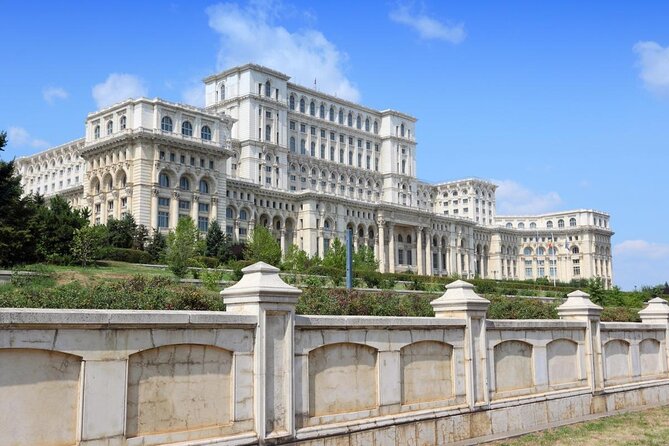
- The Palace of Parliament puts communist megalomania front and center, with a chance to see one of the world’s largest administrative buildings.
- The National Village Museum offers a sharp change of mood, showing traditional homes, mills, and wooden churches from across Romania.
- Your private car and guide keep the route flexible, with gasoline, parking, road tolls, and taxes covered.
- The December 1989 Revolution gets real attention, including the former Communist Party headquarters at the Senate Palace.
- The route gathers Bucharest’s grandest symbols, from the Arch of Triumph and Romanian Athenaeum to Revolution Square.
- The tour is best for a small group with limited time, especially if you want a broad introduction rather than long museum visits.
Why this compact Bucharest tour works
Bucharest can be hard to read at first. Its broad avenues, grand government buildings, old churches, elegant houses, and communist blocks do not always tell their stories clearly from the pavement. A guide helps connect the pieces.
This tour takes a useful approach. Instead of focusing on just one period, it moves across several layers of Romanian life. You see the ambitions of the communist state, the older traditions that survived it, the royal and cultural symbols of the capital, and the public places tied to the 1989 Revolution.
I like that the experience is private. You are not working around the pace of a large group, and you can ask for changes after the tour begins. That matters in Bucharest, where traffic and opening arrangements can affect how much time you have at each place.
The driver is also the English-speaking guide, and the vehicle is described as a private car or minibus used only by your party. All car expenses are included. You do not need to stop and pay for gasoline, parking, road tolls, or taxes during the outing.
At $140.58 per person, the price needs some thought. For one or two people, it is a significant cost for a two-hour experience. For a family or group of friends, the private format may offer better value, especially if a group discount applies. You are paying for direct transport, a dedicated guide, and flexibility, not simply a ride past the sights.
More City Tours in Bucharest
- Bucharest: City Highlights Guided Walking Tour
★ 4.9 · 1,482 reviews - Bucharest: 2-Hour City Highlights Bike Tour
★ 4.8 · 269 reviews - Bucharest Tuk Tuk city tour
★ 5.0 · 188 reviews
The Palace of Parliament and the cost of communist power
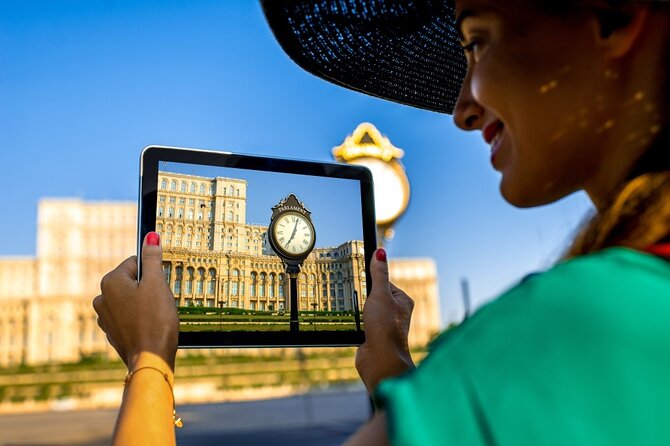
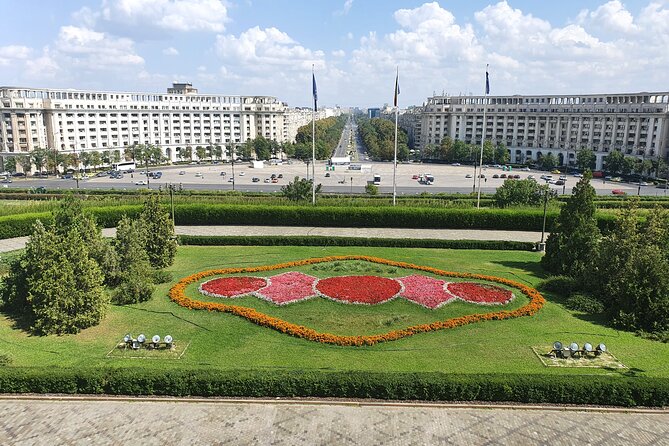
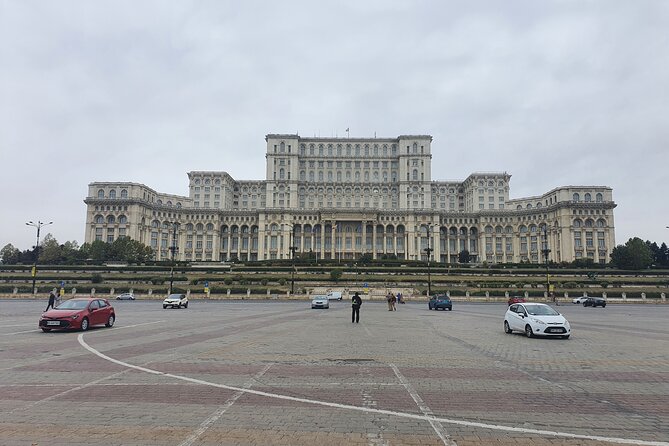
The Palace of Parliament is the tour’s most dramatic stop. It is often called the People’s House, a name that carries a sharp irony given the building’s connection to Nicolae Ceaușescu’s communist rule.
The scale is difficult to grasp from photographs. It is described as the second-largest administrative building in the world after the Pentagon. That size is central to the story. The building was not just an office complex. It was a display of state power, personal ambition, and huge public spending.
A good guide can help you read the building beyond its stone and ceremony. The point is not only that the Palace is large or ornate. It shows how a totalitarian system can turn public resources toward one leader’s vision while ordinary people face hardship.
I like this stop because the architecture becomes historical evidence. The excess is the message. You may feel physically small beside it, but the real lesson concerns how political power can reshape an entire city.
The supplied information does not confirm whether an interior visit is included, and entrance fees are not listed among the inclusions. Ask about access before booking if you want a full tour inside. In a two-hour route with many stops, the Palace may receive only a short visit or exterior presentation.
The National Village Museum and rural Romania

After the Palace of Parliament, the National Village Museum provides a welcome change in scale and tone. Here, the focus shifts from the state and its grand plans to homes, tools, religious buildings, and everyday life.
The museum brings traditional Romanian buildings together in one place. You might see houses made from wood, adobe, stone, and other local materials, representing different parts of the country. Mills and wooden churches are also part of the picture.
I like the contrast. The Palace tells you what a regime wanted to project. The Village Museum shows how people actually shaped their lives around local materials, weather, work, faith, and family. The buildings are modest, but they carry a clear sense of practical design.
The experience also raises an interesting point about sustainability. Traditional villages often used what was available nearby and built according to local needs. That does not mean rural life was easy, but the homes and tools show a close relationship with the surrounding environment.
Do not expect a full ethnographic course in this short tour. The museum is large enough to reward unhurried exploration, and two hours shared among many Bucharest sights leaves limited time here. If traditional architecture is your main interest, ask whether the route can spend longer at the museum.
The Senate Palace and the December 1989 Revolution
The tour then turns to the former Central Committee headquarters of the Romanian Communist Party, now associated with the Senate Palace. This is one of the most important places connected with the Romanian Revolution of December 1989.
The story here is more immediate than the grand architectural history of the Palace of Parliament. This is where the uprising began in Bucharest and where Nicolae Ceaușescu was eventually removed from power. The building also became linked with his flight from the capital.
You will get more from this stop if you listen for the human element. The end of the regime was not simply a change of government announced from above. It involved protest, force, sacrifice, confusion, and courage. The guide’s explanation can help you understand why this place matters beyond its formal name.
The tour also connects the revolution with the unresolved questions left by Ceaușescu’s fall, including claims about his wealth, the role of the state security service, and offshore accounts. These subjects can be politically charged. A balanced explanation is useful, especially when a short stop cannot cover every disputed detail.
A few more Bucharest days worth comparing
- Bucharest: Dracula’s Castle, Peles Castle, & Brasov Old Town
★ 4.5 · 17,858 reviews - Bucharest: Dracula Castle, Peles Castle & Brasov Old Town
★ 4.6 · 10,891 reviews - Bucharest: Dracula’s Castle, Peleș Castle & Brașov Day Trip
★ 4.5 · 5,919 reviews - Bucharest: Palace of Parliament Tickets and Guide
★ 4.3 · 3,182 reviews
The Ceauşescu Mansion and private power
The Ceauşescu Mansion was the private home of Nicolae and Elena Ceauşescu and their children, Nicu, Zoia, and Valentin, from 1965 until 1989. This gives you another way to examine the communist period.
The Palace of Parliament shows public grandeur. The mansion offers a more personal view of how the ruling family lived. That contrast can be revealing. Public ideology stressed equality, while the leadership occupied a protected world of privilege.
Because the tour is short, it is worth confirming whether the mansion visit includes entry or an outside explanation. Admission is not included in the stated package, and the schedule includes several other major locations. If seeing the interior is essential to you, ask the provider, Romania Driver and Guide, how much time is normally allowed there.
The Arch of Triumph and Romania’s national story
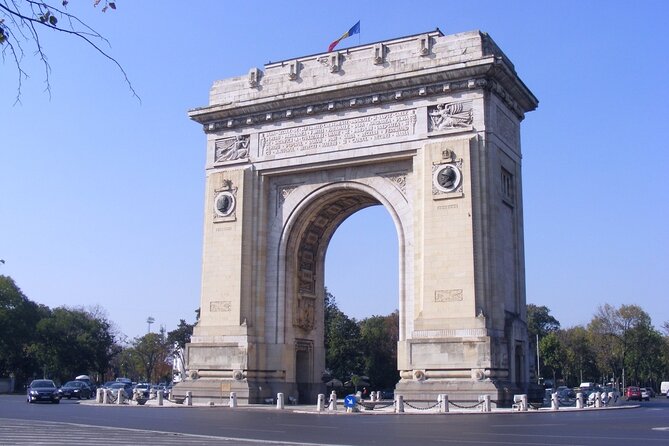
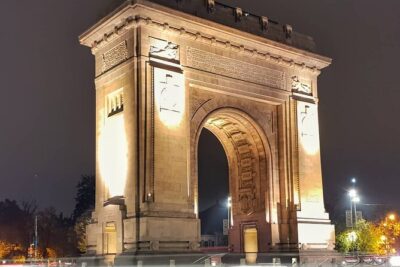
The Arch of Triumph rises 27 meters and recalls the better-known monument in Paris. Its shape is familiar, but its meaning is specifically Romanian. It has changed several times before reaching its current design, reflecting the country’s shifting political and national story.
The monument is tied to Romania’s fight for freedom and national unity. Depending on access and timing, you may be able to see exhibits connected with the First World War and the unification of Romania, the heraldry of major boyar families, the history of the arch itself, and the Great Union of 1918.
The phrase with some luck matters here. The information does not promise that all four exhibits will be open during every tour. Treat them as a possible bonus, not a guaranteed part of the two-hour experience.
The arch also makes a good photo stop. It gives the route a physical landmark after the heavier political subjects at the Palace and Revolution sites. If you want to stop for photographs, tell your guide early, since flexible timing is one of the tour’s advantages.
The Romanian Athenaeum, a symbol of culture
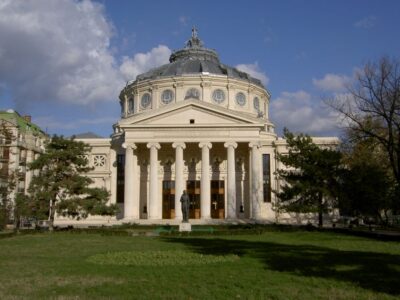
The Romanian Athenaeum is often regarded as one of Bucharest’s main symbols of culture. Even a short visit helps balance the tour’s focus on communism and political power.
This is a place to look for the city’s artistic and national identity. Its presence on the route reminds you that Bucharest is not only a capital of government buildings and political upheaval. It is also a city of music, public culture, and civic pride.
The supplied details do not say that a concert or interior admission is included. You should therefore think of the Athenaeum as a sightseeing stop unless the guide confirms otherwise. A private guide can still explain why the building matters and help you decide if it deserves a longer visit later.
Revolution Square and the city’s grand center

The route also covers the area filled with royal buildings, churches, museums, shops, cafés, restaurants, hotels, statues, and state institutions. This is where Bucharest’s layers sit close together.
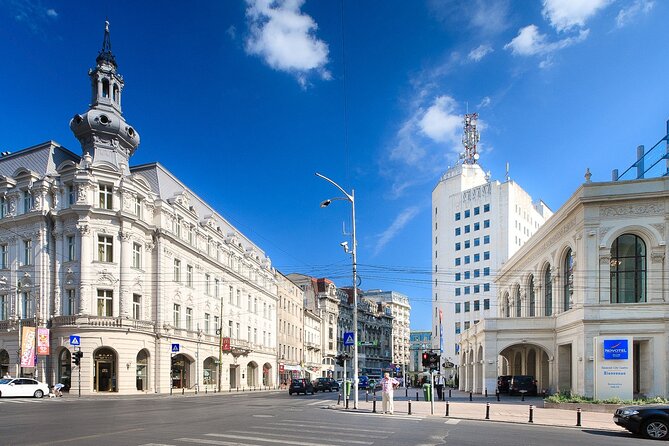
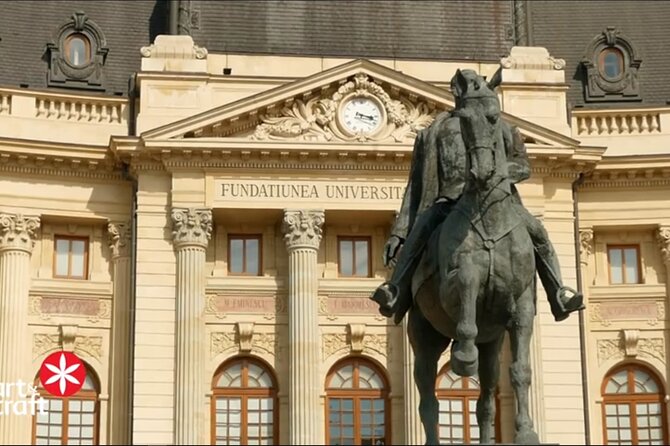
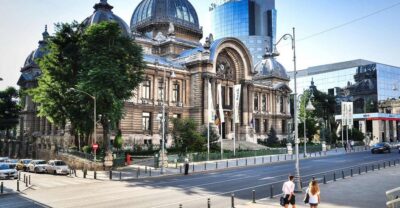
The Royal Palace, the National History Museum, the CEC Palace, the Palace of the National Military Circle, the Cantacuzino Palace, the Central University Library, and the Lady’s Church are among the notable sights named for this part of the tour. The Senate Palace and former Communist Party headquarters are also part of the story.
This section is ideal for orientation. You can see how Bucharest’s political, religious, commercial, and cultural life developed around the same central spaces. The architecture is varied, so even a drive between stops can help you understand the city’s layout.
The tradeoff is obvious. There is far too much here for a detailed examination in a few minutes. I would use the tour to mark the places you want to revisit on foot. The private guide can help you decide which building deserves your limited time after the tour ends.
What the private format adds
The private setup is more than a comfort feature. You can ask questions without waiting for a group to catch up, and you can request changes to the daily itinerary even after the tour has started.
That flexibility is especially useful if your interests are specific. You might prefer more communist-era history, more traditional architecture, or more time around the Athenaeum and central monuments. The route is not locked into a fixed group schedule.
Hotel pickup and return transfers also simplify a short stay. You provide the pickup address and time, and the guide and driver handle the transport. That saves you from sorting out local transfers before the tour even begins.
The vehicle covers all gasoline, parking, road tolls, and taxes. Food and drinks are not included, but that is not a serious concern for a two-hour outing. You should simply eat beforehand or plan your own stop afterward.
The tour is offered in English. Confirmation arrives at booking, service animals are allowed, and the meeting setup is near public transportation. Most people can participate, though the information does not provide specific details about vehicle accessibility or the physical demands of each site. Ask the provider if anyone in your group has mobility needs.
Is two hours enough for Bucharest?
Two hours is enough for a strong first look, not enough for full visits at every stop. The route names more sights than any visitor could properly explore in that period.
I would approach it as a guided overview by car, with selected stops and explanations. If you have only one free morning or afternoon, it can give you useful context fast. You can then return to the Village Museum, the Palace of Parliament, or the central square on your own if time allows.
If you want long museum visits, extended photography, or a slow architectural walk, choose a longer experience. The provider’s flexibility may help, but no private car can solve the basic limit of a two-hour clock.
The tour received a five-star rating from all 17 recorded reviews, and one written response praised the local perspective and the guide’s strong grasp of history. Nicolas, who answered that review, emphasized the importance of customer satisfaction. The practical lesson is simple: the human guide is a major part of the value, so use the time well. Ask questions, request context, and say which subjects matter most to you.
Who should book this tour?
I would recommend it to first-time visitors who want a broad introduction to Bucharest without managing transport between far-flung sights. It also suits families and small groups who value privacy and want the route adjusted around their interests.
It is particularly useful for anyone curious about Romania’s communist period and the December 1989 Revolution. The inclusion of the Palace of Parliament, former Communist Party headquarters, and Ceauşescu Mansion creates a clear political thread.
The tour also works for people who want more than communism. The Village Museum, Arch of Triumph, Romanian Athenaeum, and central Bucharest buildings give you a wider picture of the country.
I would be more cautious if you are paying alone and want lengthy interior visits. At $140.58 per person, the cost is easier to justify when divided among a group. Before booking, ask which sites include entry, how much time is planned at each one, and whether your preferred stop can receive extra attention.
Free cancellation is available if you cancel at least 24 hours before the start time. Changes made within 24 hours are not accepted, and the amount paid is not refunded for a late cancellation.
FAQ
How long is the Bucharest city tour?
The tour lasts approximately two hours.
Is hotel pickup available?
Yes. Pickup and return transfers from your Bucharest hotel are offered. You need to provide the pickup address and preferred time.
Is this a private tour?
Yes. The private car or minibus is reserved for your group of friends or family.
Is the tour offered in English?
Yes. A private licensed English-speaking guide and driver are available throughout the tour.
Can the itinerary be changed?
Yes. The tour allows flexibility for itinerary changes, including changes after the tour has started.
Are transportation costs included?
Yes. Gasoline, parking, road tolls, and all stated taxes are included.
Are food and drinks included?
No. Food and drinks are not included in the tour price.
What is the cancellation policy?
You can cancel at least 24 hours before the experience starts for a full refund. Cancellations or changes made less than 24 hours before the start time are not accepted, and no refund is provided.
Should you book the 2-Hours Private Bucharest City Tour?
Book it if you want a private, flexible introduction to Bucharest and your group values a local English-speaking guide. The mix of communist landmarks, traditional village buildings, national monuments, and Revolution sites gives you more context than a simple drive around town.
Skip it if you want to spend serious time inside museums or if the per-person price feels high for a two-hour overview. For the best value, bring a small group, state your priorities at pickup, and confirm admission arrangements before you go.
Just added in Bucharest
- Bucharest: Dealu Mare Winery Private Trip with Wine Tasting★ 4.9 · 6 reviews
- Winery touring & private wine tasting – one day private tour★ 5.0 · 3 reviews
- Village Museum Bucharest Guided Tour★ 5.0 · 6 reviews
- Transylvania Tour: Dracula’s Castle, Peles Palace & Brasov★ 5.0 · 19 reviews
- Transfer Airport Otopeni – Bucharest★ 5.0 · 2 reviews
- Private Transfer Bucharest Otopeni Airport (OTP) to/from Brasov★ 5.0 · 2 reviews
- Bucharest Airport Transfer To Constanta Mamaia★ 5.0 · 3 reviews
- Airport Henri Coanda (Otopeni) to Bucharest – Private Transfer – Driver★ 5.0 · 5 reviews
City Tours, compared.

Bucharest Panoramic Sightseeing – Private City Tour
Read our review →
SB01 – City Tour Sibiu: Exploring the Heart of Transylvania
Read our review →
City Tour Sighisoara Legends & Landmarks A Walk Through Time
Read our review →Browse the lists this tour appears in