
REVIEW · 6-DAY EXPERIENCES
6 Days Transylvania and Bukovina Small Group Tour from Bucharest
Romania rewards travelers who keep moving. This six-day circuit links medieval Transylvania, painted monasteries, and Carpathian mountain roads in one well-organized trip from Bucharest. You visit Sibiu, Sighisoara, Bistrita, Bucovina, Brasov, Bran Castle, Peles Castle, and several important religious sites without having to arrange a new hotel or long-distance transfer each night.
I like the way the route mixes famous sights with places that are easy to miss alone, especially Moldovita, Sucevita, Marginea, and the Bicaz Gorges. I also like the small group size, capped at seven people, and the chance to have the guide act as both driver and storyteller. The main drawback is the pace: this is a serious amount of Romania in six days, with long road sections and several short visits.
The advertised price is $1,163.56 per person, including five nights of 3- or 4-star accommodation, breakfast each morning, transport, and a professional licensed guide. Entrance tickets, lunches, dinners, tips, and the €120 single-room supplement cost extra. One small point needs checking before you book: the overview describes the experience as an eight-day tour, but the detailed schedule runs from Day 1 through Day 6.
In This Review
- Key points to know before you book
- Why this route works for seeing Romania
- Day 1: Cozia Monastery and Sibiu’s medieval squares
- Day 2: Sighisoara, Targu Mures, and Bistrita
- Day 3: The painted monasteries of Bucovina
- Day 4: Bicaz Gorges, Red Lake, and the Carpathian road
- Day 5: Brasov and the Dracula stop at Bran Castle
- Day 6: Peles Castle and the Bucharest finish
- Accommodation, transport, and what the price covers
- Guide quality and group atmosphere
- Who should book this Romanian circuit?
- Should you book the 6-day Transylvania and Bukovina tour?
- FAQ
- How long is the tour?
- Where does the tour start?
- What is the maximum group size?
- What accommodation is included?
- Is breakfast included?
- Are entrance fees included?
- Who leads the tour?
- What clothing is required?
Key points to know before you book
- Seven-person maximum: The small vehicle and limited group should make the long drives more personal and easier to manage.
- George is a major part of the experience: Past feedback praises guide-driver George for his enthusiasm, Romanian pride, historical explanations, and practical help at busy attractions.
- Bucovina is the tour’s special strength: Moldovita, Sucevita, and Voronet give you three different examples of Romania’s famous painted monastery tradition.
- The route is ambitious: You cover many towns and regions, so expect full days and limited free time in some places.
- Tickets are not included: Budget separately for monasteries, castles, museums, and other paid entries.
- Dress carefully: Religious sites require covered knees and shoulders for both men and women.
Why this route works for seeing Romania
Romania is a large country by European touring standards, and its best sights are spread across several regions. Bucharest, Transylvania, Bucovina, and the eastern Carpathians do not fit neatly into a relaxed weekend. This tour solves that problem by using one vehicle, one guide, and a planned chain of overnight stops.
That convenience matters. You do not need to compare Romanian rail schedules, find taxis in small towns, or work out how to reach a monastery in the countryside. You can give your attention to the changing scenery and the stories behind the places.
The tradeoff is that you are accepting the tour company’s rhythm. A three-hour visit in Sibiu gives you time to see the main squares and monuments, but not to explore every museum. A one-hour monastery stop lets you appreciate the frescoes, but it will not suit someone who wants to sit quietly and study every painted detail.
The group size is especially useful here. With no more than seven people, the guide can explain things in a more direct way than on a large coach. A small vehicle also makes the winding roads through the mountains less cumbersome. Still, you should be comfortable with sitting in a vehicle for extended periods.
More Transylvania trips:
- Transylvania and Dracula Castle Full Day Tour from Bucharest
★ 4.5 · 1,589 reviews - Castles of Transylvania: Private Day Trip from Bucharest
★ 4.5 · 248 reviews - 2-Day Transylvania from Bucharest: Brasov, Bran, Sighisoara
★ 5.0 · 60 reviews
Day 1: Cozia Monastery and Sibiu’s medieval squares
The first day begins at 8:00 a.m. with a drive toward the Olt Valley and Cozia Monastery. Founded in the fourteenth century by Mircea the Old, Cozia is an important Wallachian monument, later restored in the seventeenth century by a Cantacuzino. You have about 30 minutes here, enough for a focused look rather than a long, quiet visit.
Pay attention to the monastery’s exterior decoration and frescoed interior. The Armenian elements on the facade give the building a distinctive appearance, while the religious art helps set the tone for the days ahead. Admission is listed as free, though you should still follow the guide’s instructions about appropriate clothing and behavior.
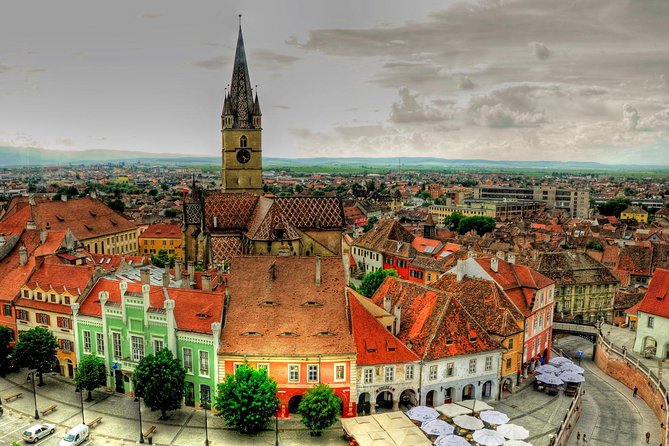
Sibiu receives about three hours, making it the first major town visit of the tour. Its appeal comes from the way several cultural traditions meet in a compact old center. Catholic, Orthodox, and Protestant buildings reflect the city’s long history of different communities living side by side.
I would use your time here for a slow walk through the Big Square, Small Square, and Huet Square. The towers, old defensive walls, museums, and famous houses with eye-shaped roof windows give Sibiu a memorable character. The large Gothic Evangelical Church is another key stop.
Sibiu was European Capital of Culture in 2007 and is known for its theater festival. You may not have time for a performance on this tour, but that detail helps explain why the city feels like more than a preserved medieval setting. It remains a cultural center with an active modern life.
Day 2: Sighisoara, Targu Mures, and Bistrita
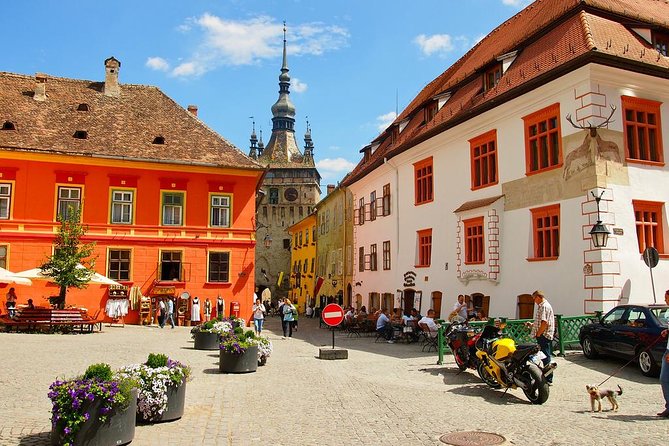
Sighisoara is one of the strongest historic stops on the route. The old citadel remains inhabited, and its historic center has UNESCO status. You have about two hours, so plan your walk before you arrive.
The Clock Tower is the obvious landmark, but the citadel rewards attention beyond its main photo point. You can see the church on the hill, reached by the wooden Schoolchildren’s Staircase, along with the Shoemakers’ Tower and the Catholic church associated with the town’s Hungarian community.
The birthplace of Vlad the Impaler is in Sighisoara, and lunch there is possible at your own cost. This is the point where the Dracula story begins to connect with real history, though the old house and the later vampire legend are not the same thing. I like that the tour gives you the context without making the entire town depend on folklore.
Targu Mures is a brief 30-minute stop. The Palace of Culture is the main sight, with its Baroque design and strong connection to the city’s Hungarian architectural tradition. This is a quick orientation visit, not a full museum day, so keep your expectations in check.
Bistrita receives about an hour for a walking tour. Its Lutheran church, begun in the fourteenth century in Gothic style and later modified with Renaissance features, is the central monument. This sequence of short visits makes Day 2 feel busy, but it also gives you a wider view of Transylvania than a route focused only on Brasov and Bran.
Day 3: The painted monasteries of Bucovina
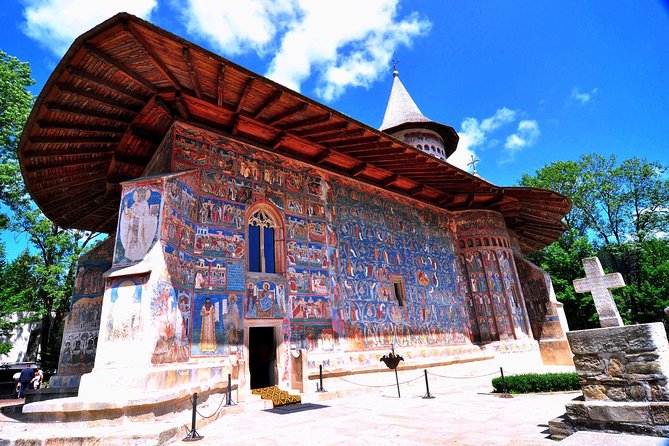
Day 3 is the artistic heart of the trip. Bucovina is known for churches covered in painted scenes, and the tour visits Moldovita, Sucevita, and Voronet in the same day. Each stop lasts about an hour, with entrance fees paid separately.
Moldovita was founded by Petru Rares in the sixteenth century. Its interior and exterior frescoes are the main reason to visit, and the hour allows time to study the colors and religious scenes with help from your guide.
Sucevita dates from the seventeenth century and combines Gothic and Byzantine elements. Its northern wall is especially important because protective walls helped preserve the frescoes there. This is a good example of why a guide adds value. Without context, you might see a colorful church. With explanation, you understand how architecture, faith, politics, and preservation meet in one place.
At Marginea, you spend about 15 minutes with local ceramic artisans. The black pottery is the signature craft, and you can watch part of the production process before buying ceramics or traditionally decorated eggs. The visit is short, so it is best viewed as a useful cultural pause rather than a full workshop experience.
Voronet is often called the Sistine Chapel of the Carpathians. Its famous blue color is the visual highlight, and the monastery was founded by Stephen the Great. You should dress properly for all three monasteries. Shorts and sleeveless tops are not allowed, and both knees and shoulders must be covered for men and women.
This day has real value for anyone interested in art, religion, or regional traditions. The drawback is that three major monasteries in one day can feel repetitive if you prefer slow travel. I would bring a small notebook or use your phone discreetly, if permitted, to record the names and features that distinguish each site.
A few more Bucharest days worth comparing
- Bucharest: Dracula’s Castle, Peles Castle, & Brasov Old Town
★ 4.5 · 17,858 reviews - Bucharest: Dracula Castle, Peles Castle & Brasov Old Town
★ 4.6 · 10,891 reviews - Bucharest: Dracula’s Castle, Peleș Castle & Brașov Day Trip
★ 4.5 · 5,919 reviews - Bucharest: Palace of Parliament Tickets and Guide
★ 4.3 · 3,182 reviews
Day 4: Bicaz Gorges, Red Lake, and the Carpathian road
Day 4 shifts from architecture to nature. After a short stop in Piatra Neamt, you head toward the Bicaz Gorges. Piatra Neamt is linked with the era of Stephen the Great and has a fifteenth-century citadel and an eighteenth-century synagogue, but the planned stop is only about 15 minutes.
The Bicaz Gorges are viewed from a road lined by steep cliffs and a stream. You have about an hour, including time near the roadside market where local handicrafts and souvenirs are sold. The setting is dramatic, but keep your footing and follow the guide’s advice around the road.
Red Lake formed when part of a mountain slid and created a natural barrier. Tree trunks remain visible in the water, which gives the lake its unusual appearance. You have about an hour here, and the guide explains the legends connected with the lake’s name.
The drive afterward toward Miercurea Ciuc is part of the experience. The road crosses the Carpathian chain and reaches a region known for very low temperatures and a nickname comparing it with Siberia. Since exact driving times are not provided, you should expect this to be another long day in the vehicle.
This is one of the tour’s best sections for scenery, but it is also one of the least flexible. Mountain roads and weather can affect the schedule. The tour requires good weather, and poor conditions can lead to a changed date or a full refund.
Day 5: Brasov and the Dracula stop at Bran Castle
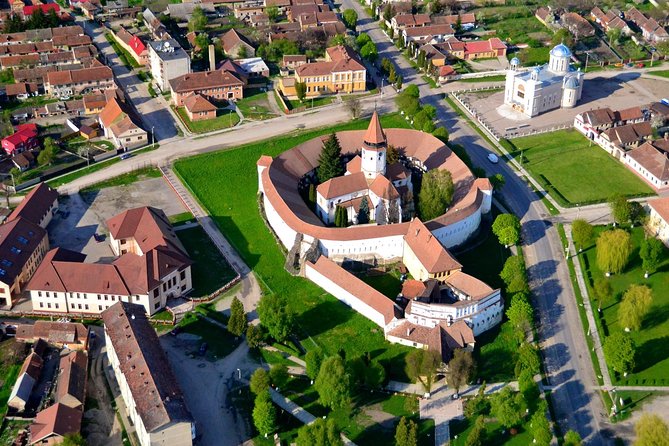
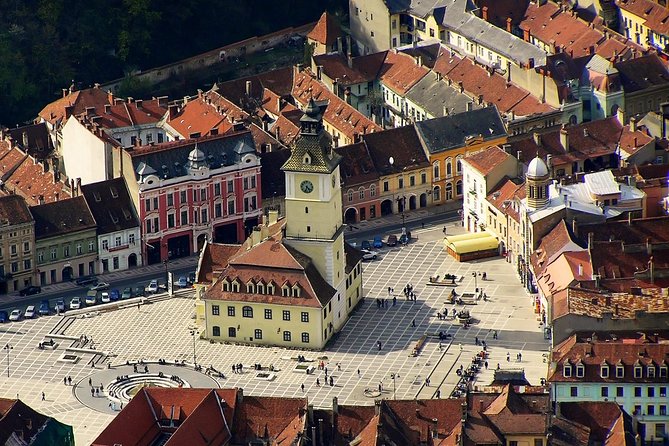
Brasov gets about two hours, and that is enough to see the old center and several major sights, though not enough for a leisurely city break. The town’s architecture reflects Gothic, Baroque, and Renaissance influences, with remnants of its former fortifications adding to the medieval feel.
The tour includes the Schei district, historically associated with the Romanian population, and the old entry points of Catherine’s Gate and Schei Gate. The First Romanian School is another important stop. The Black Church, one of the city’s most imposing buildings, is also included in the visit, with admission paid separately.
I like the way Brasov is presented as more than a pretty square. You get a glimpse of the city’s German, Romanian, and Hungarian connections, along with its role as a cultural and commercial center.
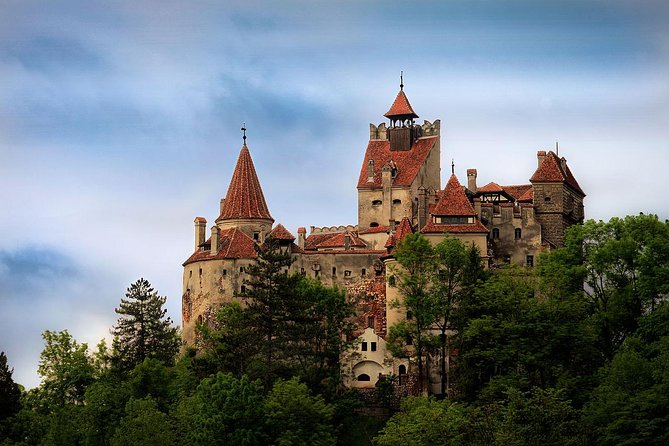
Bran Castle follows, with about two hours. The castle is better known as Dracula’s Castle, but its real importance was defensive. Bran sat near the old border between Wallachia and Transylvania, and Brasov’s residents depended on the stronghold to protect the route.
The Dracula label draws crowds, and the interior can feel more focused on the legend than on Vlad the Impaler himself. Still, the castle is worth seeing for its setting and medieval role. Go in with realistic expectations: this is a historic fortress wrapped in a later fictional story, not proof that the vampire lived there.
You arrive in Sinaia late in the evening. That late arrival is a practical warning. Day 5 will feel full, especially after the walking in Brasov and the castle visit.
Day 6: Peles Castle and the Bucharest finish
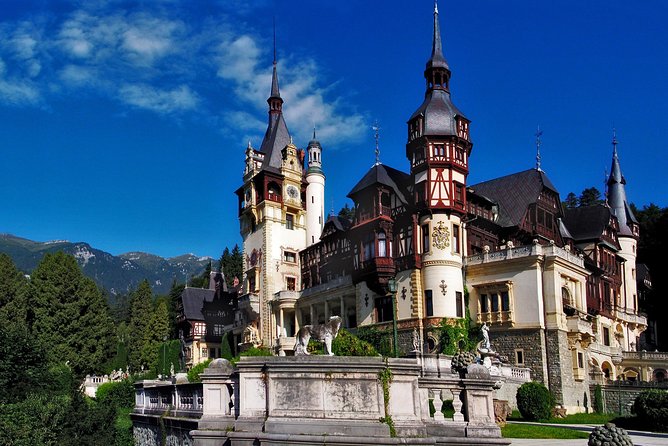
Peles Castle is the final major sight. Built between the nineteenth and twentieth centuries as the summer residence of Romania’s first king, Carol I of Hohenzollern, it reflects the country’s royal ambitions and its links with Central Europe.
A Czech architect designed the castle, and it was considered one of Europe’s most modern castles when built. The interior is particularly interesting because rooms use different styles rather than following one uniform design. The Florentine room is highlighted for its Italian Renaissance character.
You have about two hours, but entrance fees are not included. Check the practical arrangements with the guide, since castle access can involve different ticket categories. The visit is likely to be one of the tour’s most polished and visually impressive stops.
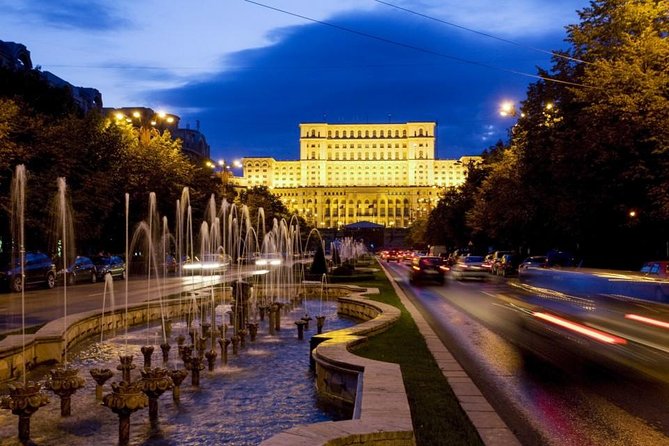
The route then returns to Bucharest for a panoramic tour. You see the Triumph Arch, the Romanian Athenaeum, Revolution Square, and the Parliament Palace. The schedule does not promise extended interior visits, so think of this as a useful final orientation to the capital rather than a complete Bucharest tour.
Accommodation, transport, and what the price covers
At $1,163.56 per person, the cost is not cheap, but the route covers a great deal of ground. You receive five nights in 3- or 4-star hotels, five breakfasts, an air-conditioned vehicle, and a licensed guide who also drives.
The value depends on how you would otherwise organize the trip. If you would need private transfers, several hotel bookings, and paid guiding at castles and monasteries, the package can make practical sense. If you prefer cheap public transport and longer stays in each town, the price will feel high.
Entrance fees are the biggest extra cost to plan for. Cozia, Sibiu, Targu Mures, Bistrita, Piatra Neamt, Bicaz Gorges, and Red Lake are listed without admission charges, but Sighisoara attractions, the Bucovina monasteries, Brasov sights, Bran Castle, and Peles Castle have paid entries noted.
Breakfast is included, but other meals are not clearly included beyond that. Budget for lunches and dinners, including the optional meal at Vlad the Impaler’s birthplace in Sighisoara. Tips for the guide-driver are also separate.
Solo visitors should note the €120 single-room supplement, payable locally by cash or card. Couples and friends avoid that extra charge by sharing a room.
Guide quality and group atmosphere
The guide can make or break a route with this many stops. George receives especially warm praise for his enthusiasm, pride in Romania, and ability to explain the country’s historical, political, social, artistic, and natural sides.
One useful detail is that George has helped with busy lines, which can save time at popular attractions. That kind of local handling matters on a schedule where every hour counts. His dual role as driver and guide also keeps the group together, though it means his attention must sometimes shift between the road and the commentary.
The maximum group size is seven, and at least two participants are needed for the tour to operate. If the minimum is not reached, you are offered another date or experience, or a full refund. That is worth knowing before you arrange nonrefundable flights or hotels around the tour.
Who should book this Romanian circuit?
You should consider this tour if you want a broad first look at Romania and prefer having transport, hotels, and guiding arranged in one purchase. It suits people who want castles, medieval towns, monasteries, folklore, and mountain scenery in the same trip.
It is also a good match for solo visitors who like the security of a small group. George’s warm guiding style, noted enthusiasm, and help with busy attractions could make the route feel more personal than a standard coach trip.
You may want a different plan if you dislike early starts, long drives, or short visits. Art lovers who want time inside every monastery, photographers who need flexible light, and slow-travel fans may find the schedule too tight.
Pack modest clothing for religious sites, comfortable walking shoes, and some local currency or a payment card for admission fees, meals, crafts, and the single-room supplement. The tour is near public transportation in its meeting arrangements, and most people can take part, but the schedule still favors people who are comfortable walking through historic centers and moving between many stops.
Should you book the 6-day Transylvania and Bukovina tour?
Book it if your priority is coverage. In six days, you see far more than the usual Bucharest, Brasov, and Bran combination, including three Bucovina monasteries, Cozia, Sighisoara, Bistrita, the Bicaz Gorges, Red Lake, and Peles Castle.
The strongest reasons to go are the small seven-person format, the carefully linked route, and the guide support, especially if George leads your departure. The main caution is the pace and the extra cost of admissions and meals.
Before paying, confirm the six-day schedule, hotel details, exact pickup point, and current entrance fees. Also note that the booking is nonrefundable and cannot be changed, except when poor weather or an insufficient number of participants forces the operator to cancel. If you accept those terms and want a concentrated introduction to Romania, this is a strong choice.
FAQ
How long is the tour?
The detailed schedule runs for six days, beginning on Day 1 and ending with the return to Bucharest on Day 6. The tour overview describes it as an eight-day tour, so you should confirm the duration with Trip2Ro before booking.
Where does the tour start?
The tour starts in Bucharest, with a listed start time of 8:00 a.m. Pickup is offered.
What is the maximum group size?
The tour has a maximum of seven travelers.
What accommodation is included?
The package includes accommodation in 3- or 4-star hotels for the overnight stays. A €120 single-room supplement is payable locally by cash or card.
Is breakfast included?
Yes. Five breakfasts are included. Other meals are not listed as included.
Are entrance fees included?
No. Entrance fees for applicable monasteries, castles, churches, museums, and other attractions are paid separately.
Who leads the tour?
A professional licensed tour guide also serves as the driver. George is named in the available feedback and is praised for his enthusiasm, knowledge of Romania, historical explanations, and help with lines at attractions.
What clothing is required?
You must cover your knees and shoulders when entering places of worship and selected museums. Shorts and sleeveless tops are not allowed for men or women, and you may be refused entry if you do not follow the dress code.
Just added in Bucharest
- Bucharest: Dealu Mare Winery Private Trip with Wine Tasting★ 4.9 · 6 reviews
- Winery touring & private wine tasting – one day private tour★ 5.0 · 3 reviews
- Village Museum Bucharest Guided Tour★ 5.0 · 6 reviews
- Transylvania Tour: Dracula’s Castle, Peles Palace & Brasov★ 5.0 · 19 reviews
- Transfer Airport Otopeni – Bucharest★ 5.0 · 2 reviews
- Private Transfer Bucharest Otopeni Airport (OTP) to/from Brasov★ 5.0 · 2 reviews
- Bucharest Airport Transfer To Constanta Mamaia★ 5.0 · 3 reviews
- Airport Henri Coanda (Otopeni) to Bucharest – Private Transfer – Driver★ 5.0 · 5 reviews
6-Day Experiences, compared.
6 Days Private Tour in Romania Spectacular Places from Bucharest
Read our review →
Private 6-Day Dracula Tour in Transylvania from Bucharest
Read our review →
Private six days tour to Maramures and Bucovina from Cluj-Napoca
Read our review →Browse the lists this tour appears in