
REVIEW · BUCOVINA MONASTERY TOURS
Private six days tour to Maramures and Bucovina from Cluj-Napoca
Romania’s wooden churches tell the story. This six-day private tour from Cluj-Napoca takes you through Maramures and Bucovina, two northern regions where faith, craft, food, and village customs remain closely tied. I especially like the walk through Breb and the chance to meet a local woodcarver, plus the steam train ride through the Vaser Valley. The small group, capped at eight people, also gives the trip a personal feel.
The main drawback is the amount of road time. Crossing the Carpathians and returning to Cluj makes this a full six days, not a relaxed base-and-day-trip holiday. Still, the included hotels, transport, entrances, breakfasts, workshops, and airport transfers make the $1,698.19 per person price easier to justify, especially for a private trip with a guide such as Florin, praised for being informed, creative, and professional.
In This Review
- Key points to know before booking
- Why this northern Romania route works
- Day one: Cluj-Napoca’s medieval center
- Day two: wooden gates, painted crosses, and prison cells
- Day three: the Mocanita railway and Maramures craftsmanship
- Day four: crossing the Carpathians into Bucovina
- Day five: the green murals of Sucevita and famous Voronet blue
- Day six: back to Cluj and the airport
- What the $1,698.19 price includes
- Who should book this tour?
- Final recommendation
- FAQ
- Where does the tour begin?
- How long is the tour?
- What regions does the tour visit?
- Are airport transfers included?
- What type of accommodation is provided?
- Is transportation included?
- Which meals are included?
- What is the group size?
- Are entrance fees included?
- Can I cancel for a full refund?
Key points to know before booking
- Breb offers one of the most genuine village visits, with carved wooden gates, old houses, and footpaths along the river.
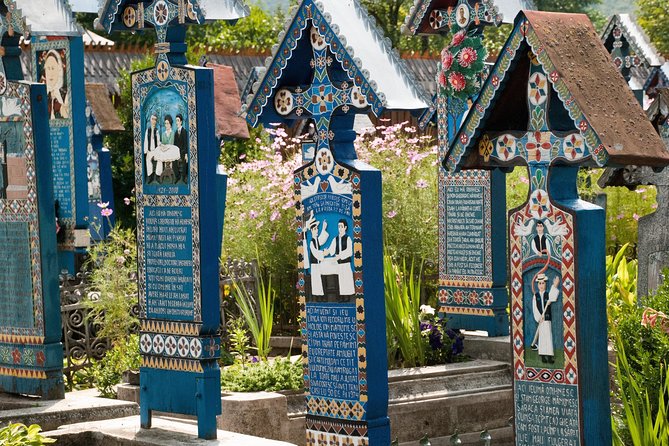
- The Merry Cemetery in Sapanta is unlike a standard cemetery, using colorful painted crosses and plain-spoken stories about the dead.
- The Mocanita steam train follows the Vaser Valley, using a railway once built to carry timber.
- Maramures and Bucovina feel different, with wooden churches in one region and painted monasteries in the other.
- The private group has a maximum of eight people, useful for questions, timing, and visits to craft workshops.
- Five nights in centrally located three-star hotels are included, along with five breakfasts and some additional meals.
Why this northern Romania route works
Cluj-Napoca is a practical starting point. It has good air connections within Romania and puts you within reach of Transylvania, Maramures, and Bucovina. Rather than spending six days in one city, this tour uses Cluj as both doorway and finish line, taking you into areas where traditional buildings and religious art remain part of daily life.
You will not simply check off churches. The strongest part of the route is the mix of grand sites and ordinary village settings. One stop explains communist repression. Another introduces a working sculptor. A third puts you on a steam railway in the mountains. That variety keeps the trip from becoming a procession of similar monuments.
The experience is also suited to people who prefer a private setting over a large coach. A maximum of eight participants means you should have more space to ask questions and more flexibility during personal visits. The one published evaluation gave the tour five out of five, with special praise for guide Florin’s ability to make the trip memorable and fun. That is useful here because the route depends heavily on good explanation, not just transportation.
More Maramures trips:
- Maramures best, full day tour from Cluj
★ 5.0 · 33 reviews - From Cluj-Napoca: Maramures Day Tour
★ 5.0 · 19 reviews - Two days tour to Maramures: local experiences and culture
★ 5.0 · 9 reviews
Day one: Cluj-Napoca’s medieval center
Your guide picks you up at the airport and begins with a city tour of Cluj-Napoca. The stop is listed as about one hour, so think of it as a focused introduction rather than a full exploration of the city.
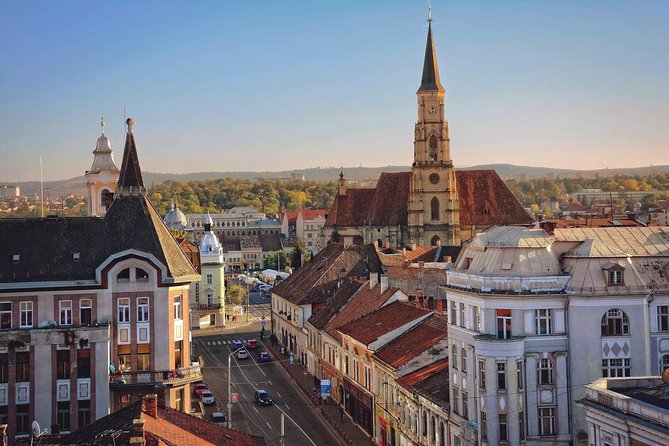
The key sight is St. Michael’s Church, one of Cluj’s main landmarks. Banffy Palace follows, with its Museum of Arts, then Mirror Street and the Cluj-Napoca Botanical Garden. Together, these stops give you several sides of the city: religious architecture, aristocratic culture, an unusual urban street, and green space.
I like this opening because it gives you a little context before the countryside begins. Cluj is described as the unofficial capital of Transylvania and an important education and cultural center. You get enough orientation to understand that northern Romania is not only about remote villages. It also has a modern regional capital with a strong urban identity.
The limitation is time. If you want a longer visit to the museum or botanical garden, you may need to return to Cluj after the tour. Use this first day to settle in, meet your guide, and learn how the coming days will work.
Day two: wooden gates, painted crosses, and prison cells
Day two moves into Maramures, a region known for its woodwork and village customs. The first important stop is the Wooden Church of Surdesti, part of the UNESCO World Heritage collection of wooden churches in the region.
These churches are valuable not only because they are old. They show how local builders adapted religious architecture to available materials and village life. Timber gives them a warm, human scale, while their tall forms are easy to spot above the surrounding homes. Your guide can help connect the building techniques to the wider traditions of Maramures.
From there, the road reaches Breb. This is one of the best stops for seeing village life without reducing it to a museum display. Traditional wooden houses line the river, and large carved gates mark entrances to homes. The gates are more than decoration. Their designs show the care local craftspeople put into ordinary structures that many places would replace with concrete or metal.
A walk through Breb should be one of the most rewarding parts of the tour. You get time to notice house details, the quiet streets, and the hills around the village. The Rooster Crest Peak, part of the Gutai volcanic mountains, provides a clear natural landmark.
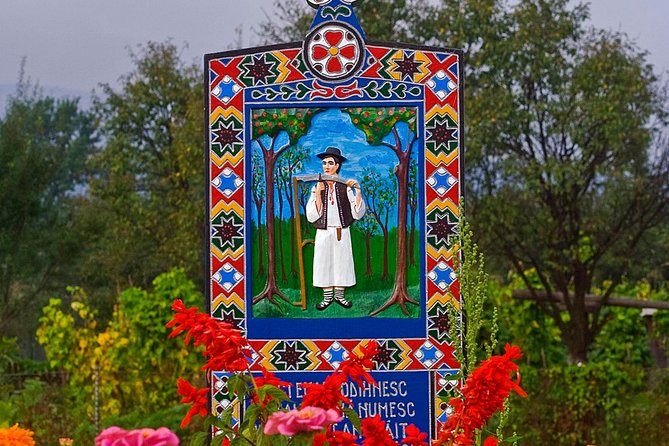
The next stop changes the mood. Sapanta’s Merry Cemetery uses brightly painted wooden crosses to describe the lives and deaths of local people. The style is direct, sometimes funny, and far removed from the solemn uniformity of many cemeteries.
Dumitru Pop, a well-known local woodcarver and artist, introduces you to the Romanian carving tradition. This personal connection matters. Instead of seeing the crosses only as colorful objects, you can learn how the craft continues through individual makers.
After the cemetery, the Memorial of the Victims of Communism and of the Resistance in Sighet presents the hardest subject of the trip. The former prison held political opponents after the communist party consolidated power in Romania in 1948. Students, pupils, peasants, and other opponents from Maramures were imprisoned there.
The memorial gives the region a necessary second layer. Maramures is not only wooden gates, church towers, and mountain scenery. It also carries painful memories of Soviet deportations, political imprisonment, and state control. Allow time to absorb this visit. Following a cheerful cemetery and a craft presentation with a prison memorial can feel abrupt, but the contrast reflects the region’s real story.
Day three: the Mocanita railway and Maramures craftsmanship
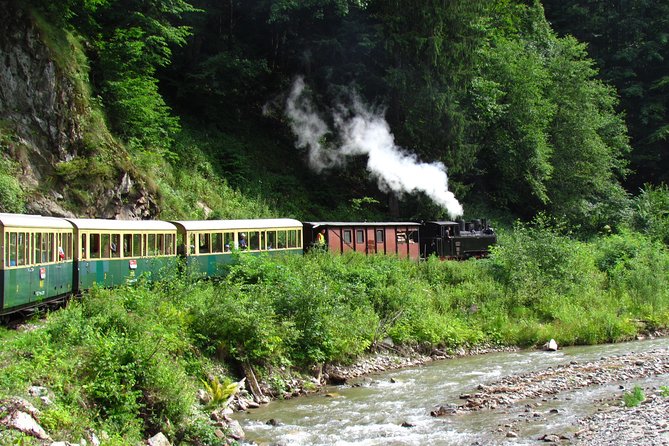
The third day begins with one of the route’s most unusual experiences, a ride on the Mocanita Maramures steam train. The railway was used from 1932 to transport timber and is described as the last forestry railway in Europe. Today, the small locomotive carries visitors along the Vaser Valley instead.
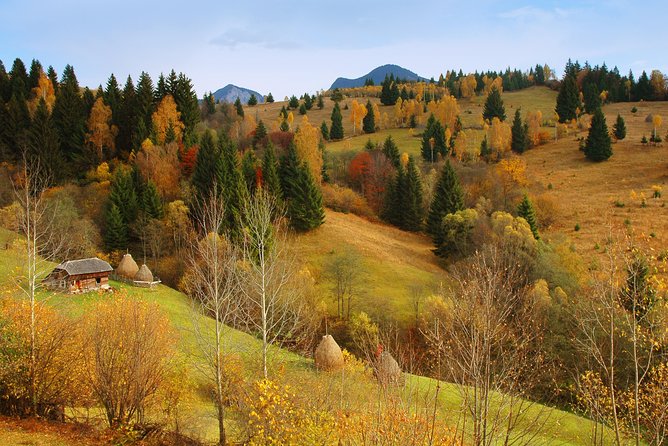
The train follows a mountain river through an area with few visible signs of modern life. This is a chance to see northern Romania at a slower pace. You are not looking at the mountains through a car window. You are moving along the railway at the pace of the steam engine, with the river and forested slopes beside you.
The listed stop lasts about an hour, so do not assume this is an all-day railway excursion. The exact rhythm may depend on the operating schedule, but the attraction is clear: a historic working railway, a small steam locomotive, and a hard-to-reach valley.
Later, the tour visits the wooden churches of Ieud and Poienile Izei, both part of the UNESCO heritage group. The itinerary specifically lists the Church of Saint Parascheva at Poienile Izei, while the description also refers to Ieud. These visits are valuable because they show that Maramures church architecture is not limited to one famous building.
You then meet sculptor Barsan in his workshop. His home-style museum contains family trophies, photographs, and sculptures. This workshop visit adds a human face to the region’s artistic traditions. You can see how carving is practiced by a living artist, rather than treating woodwork as something that ended in the past.
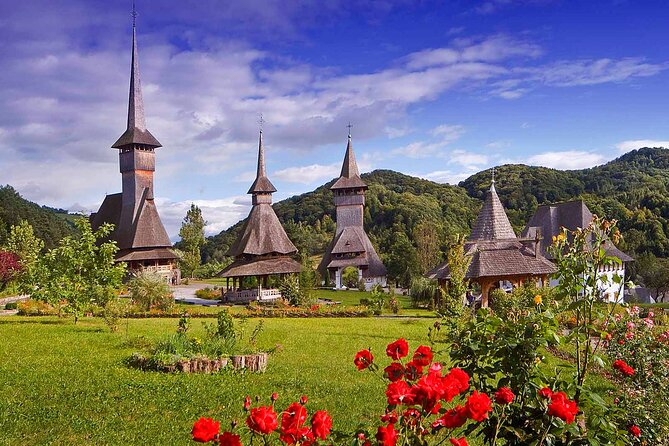
The day ends at Barsana Monastery. Its wooden churches were built as a thank-you to God for protecting local people from the plague of 1710. The site brings together religious belief, local memory, and traditional construction. Since the buildings are made from wood, the monastery also links back to the homes, gates, and churches seen earlier.
This is a busy day. The train, two church visits, a workshop, and a monastery all involve different kinds of attention. I would treat the craft workshop as an essential part of the day, not a spare extra. It helps you understand why wood matters so much in Maramures.
More Bucovina monastery trips:
- Two days tour to Bucovina & UNESCO Painted Monasteries
★ 5.0 · 3 reviews - Bucovina Painted Monasteries Day Tour
★ 5.0 · 83 reviews - 1-Day Bucovina Painted Monasteries tour from Suceava – English
★ 5.0 · 33 reviews - Day trip from Iasi to the UNESCO Painted Monasteries in Bucovina
★ 5.0 · 26 reviews
Day four: crossing the Carpathians into Bucovina
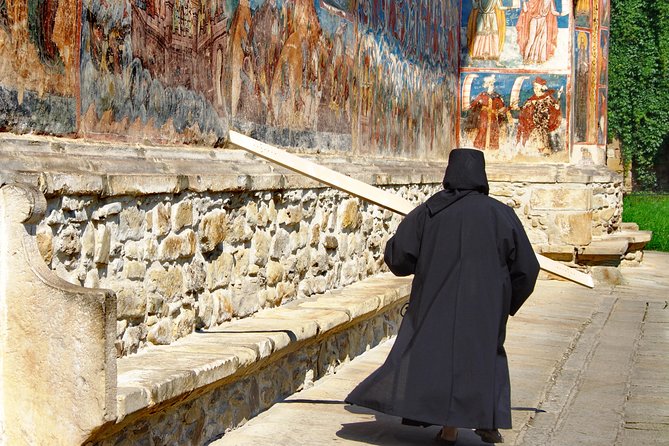
On day four, the route crosses the Carpathian Mountains and enters Bucovina, also spelled Bukovina. This is the clearest geographical transition of the tour. Maramures is associated with wooden churches, carved gates, and living village craft. Bucovina is best known for monasteries with exterior murals.
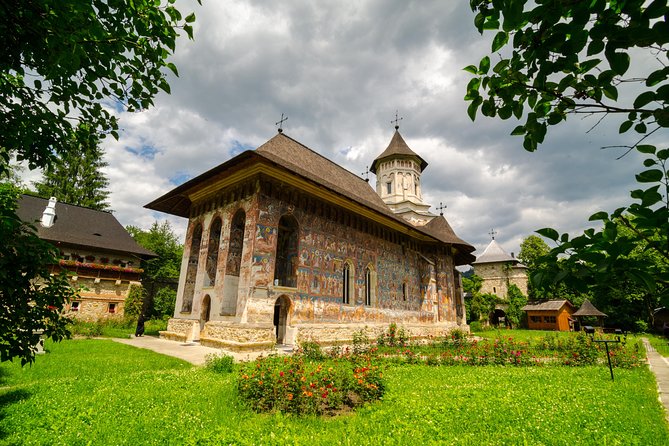
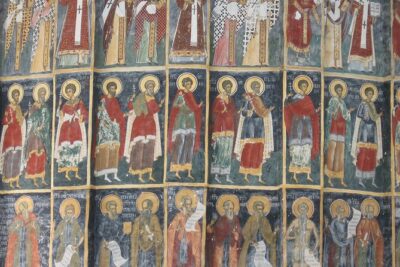
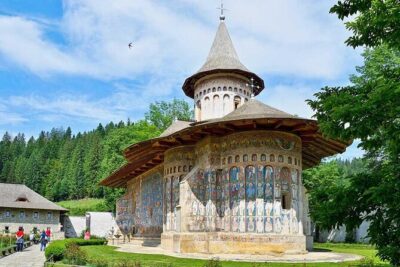
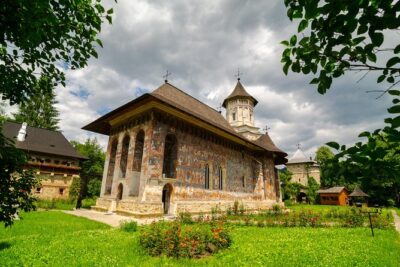
The first visit is Moldovita Monastery, a UNESCO World Heritage site since 1993. The painted monasteries combine Romanian art with Byzantine religious ideas. Their walls present scenes from Christian teaching in a way that was designed to be understood beyond the written word.
The paintings are not merely interior decoration. They turn the exterior walls into a visual lesson, using images to communicate biblical stories and religious ideas. Your guide’s explanations are important here because the scenes can be difficult to read without context.
The transfer through the mountains takes time, and this is one of the tour’s practical trade-offs. You gain access to two major cultural regions in one trip, but you spend part of the day on the road. For me, the change in architecture and art makes the crossing worthwhile, but you should not expect every day to be packed with long walks.
Day five: the green murals of Sucevita and famous Voronet blue
Day five focuses on three painted monasteries. Sucevita comes first, known for murals dominated by a green shade made from natural pigments through an old technique.
That detail gives you something specific to look for. Instead of treating each monastery as a general religious site, you can compare the colors, methods, and visual character of each one. Sucevita’s green tones offer a clear contrast with the intense blue associated with Voronet.
Voronet Monastery is often called the most beautiful of Bucovina’s painted monasteries, and its blue frescoes are its signature feature. The murals show Christian history in a sequence of scenes, influenced by folk beliefs, eastern culture, and Orthodox thought.
The effect is closer to a picture book spread across a building than to a single framed artwork. You can follow the broad subjects even if you do not know every figure or story. A guide helps explain what you are seeing and why Voronet is so important in Romanian art.
Humor Monastery is also included. The description repeats the Voronet wording when introducing this stop, so the available details about Humor are limited. Still, its place alongside Sucevita and Voronet gives you a useful chance to compare several Bucovina monasteries in one day.
This day rewards visitors who enjoy visual details. Look closely at the pigments, the placement of scenes, and the way the paintings interact with the architecture. The visits are each listed at about an hour, which is enough for an overview but may feel short if you want to study every mural.
Day six: back to Cluj and the airport
The final day crosses the mountains again and heads back to Cluj-Napoca airport. The listed stop at Cluj-Napoca City Hall is free and lasts about an hour, but this is mainly the return portion of the tour rather than another major sightseeing day.
The airport transfer is included, which is valuable after several days of regional driving. You do not need to arrange a separate connection from the final hotel to the airport, although you should confirm the precise departure timing when booking.
What the $1,698.19 price includes
At $1,698.19 per person, the tour is not a budget excursion. The price is based on two people sharing a double room, so the value changes if you are traveling alone and need a room to yourself.
For the stated price, you receive five nights in centrally located three-star hotels, modern vehicle transport, a professional English-speaking guide, entrance fees, airport transfers, five breakfasts, and workshops in both Maramures and Bucovina. Dinner and lunch are also included, though the information provided does not specify exactly which meals or how many are covered.
That package can represent fair value for a private six-day route. You are paying for long-distance transport, a specialist cultural itinerary, accommodation, admissions, and the convenience of not having to navigate mountain roads or coordinate several remote sites yourself.
You still need to budget for airline tickets, travel insurance, drinks, alcoholic beverages, meals not mentioned, photography fees, tips, room service, personal calls, and souvenirs. Ask about meal coverage and photography rules before departure so the final cost does not surprise you.
Who should book this tour?
I would recommend it to you if you want a focused introduction to northern Romania and care more about culture than nightlife. It suits people who enjoy religious art, traditional building, folk craft, difficult historical subjects, and long scenic drives between sites.
The small maximum group is a strong advantage for families, couples, and friends who want personal attention without arranging every detail alone. Children can participate, but they must be accompanied by an adult. Most people can take part, according to the tour information, though the schedule includes several full touring days and a steam train outing.
I would hesitate if you want a slow holiday with late mornings and long stays in each town. You will change regions, cover substantial distances, and visit several sites in a short period. The price may also feel high for solo travelers because it is calculated around shared double rooms.
Booking confirmation is sent within 48 hours, subject to availability. Free cancellation is available if you cancel at least 24 hours before the start time. The meeting time is 9:00 am, and pickup is offered from Cluj-Napoca, including the airport.
Final recommendation
Book this tour if you want northern Romania’s strongest mix of village tradition, wood carving, UNESCO churches, painted monasteries, recent political memory, and mountain scenery in one organized trip. The most valuable moments are not only the famous monuments. They are the Breb walk, the carving workshops, the quiet Vaser Valley railway, and the chance to connect the art with real people.
Skip it if you prefer independent travel, very light schedules, or low-cost accommodation. For everyone else, the route offers a well-planned way to see two distinctive regions that are difficult to combine without a car, and guide Florin’s praised style is an encouraging sign for the quality of the experience.
FAQ
Where does the tour begin?
The tour begins in Cluj-Napoca, Romania, with pickup offered from the airport. The stated start time is 9:00 am.
How long is the tour?
The experience lasts approximately six days and includes five nights of accommodation.
What regions does the tour visit?
The route visits Maramures and Bucovina, also known as Bukovina, in northern Romania. It begins and ends in Cluj-Napoca.
Are airport transfers included?
Yes. Round-trip airport transfers from Cluj-Napoca are included.
What type of accommodation is provided?
The tour includes five nights in centrally located three-star hotels. The price is based on two people sharing a double room.
Is transportation included?
Yes. Transport in a modern vehicle is included, along with the transfers to and from Cluj-Napoca airport.
Which meals are included?
Five breakfasts are included, as well as lunch and dinner according to the stated inclusions. Other meals, alcoholic drinks, and beverages are not included.
What is the group size?
This is a private tour with a maximum of eight participants. Children must be accompanied by an adult.
Are entrance fees included?
Yes. Entrance fees for the listed attractions are included. Photography fees are not included.
Can I cancel for a full refund?
You can cancel for a full refund if you cancel at least 24 hours before the experience start time. Cancellations or changes made less than 24 hours before the start time are not accepted for a refund.
Just added in Cluj Napoca
- Turda salt mine and Corvin Castle day tour from Cluj★ 5.0 · 9 reviews
- Private tour to Turda Salt Mine, Rimetea and Alba Iulia★ 4.8 · 5 reviews
- Turda Salt Mine, Gorge & Rimetea Village (private from Cluj)★ 5.0 · 5 reviews
- Cluj to Rosia: Day Trip to Ferrata and pittoresque country★ 5.0 · 1 review
- 7 Day Best of Transylvania Motorcycle Tour from Cluj★ 5.0 · 4 reviews
- Discover Apuseni Mountains – Scarita Summit,Sipote Waterfall and Dumesti Village★ 5.0 · 17 reviews
- Via Ferrata Transylvania★ 5.0 · 1 review
- Turda salt mine, Rimetea village and Alba Iulia, from Cluj★ 5.0 · 11 reviews
Bucovina Monastery Tours, compared.
1-Day Bucovina Painted Monasteries tour from Suceava – English
Read our review →
Day trip from Iasi to the UNESCO Painted Monasteries in Bucovina
Read our review →
11-Day Romania Tour from Bucharest with Transylvania & Bucovina
Read our review →
Bucovina Painted Monasteries & Transylvania Tour: 4-Day Private
Read our review →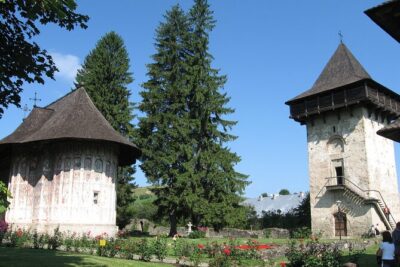
Two days tour to Bucovina & UNESCO Painted Monasteries
Read our review →Browse the lists this tour appears in