
REVIEW · BUCOVINA MONASTERY TOURS
Bucovina Painted Monasteries & Transylvania Tour: 4-Day Private
Romania’s finest art is often found far from its cities. This four-day private journey links Bucovina’s extraordinary frescoed monasteries with Sighișoara, Viscri, Brașov, and Peles Castle, giving you a broad look at Romanian faith, royal life, and medieval culture. I especially like the private transport, which keeps the trip comfortable and flexible, and the chance to learn directly from one guide rather than follow a large group. The included breakfasts, hotel pickup, three nights in three-star hotels, and entrance fees at several major stops also make the arrangements simple.
The main drawback is the pace. You cover a large section of Romania in only four days, so there will be plenty of time on the road. Some important admissions, including Viscri Fortified Church, the Black Church, and Peles Castle, are not included, and the ticket information gives both 25 and 30 euros per person, so I would confirm the current total before booking.
In This Review
- Six details that shape the experience
- Why the route works, and where it asks a lot
- Day 1: Agapia and Varatec, living convents in Neamț County
- Day 2: Three painted monasteries and five centuries of color
- Sucevita’s Byzantine and Gothic blend
- Moldovita, art with a defensive purpose
- Voronet and the famous blue
- The private van is a major part of the value
- Day 3: Sighișoara, Viscri, and Brașov
- Sighișoara’s preserved medieval citadel
- Viscri’s fortified church
- Brașov’s old center
- Day 4: Gothic Brașov and royal Peles Castle
- What past guests valued most
- Is $1,356.43 per person a fair price?
- Who should book this Romanian journey?
- Should you book the Bucovina and Transylvania tour?
- FAQ
- Where does the tour begin and end?
- What time does the tour start?
- How long is the tour?
- Is this a private tour?
- Are hotels included?
- Are breakfasts included?
- Are entrance fees included?
- What happens if the tour is canceled because of bad weather?
Six details that shape the experience
- Three famous Bucovina monasteries: Sucevita, Moldovita, and Voronet give you hours to study frescoes painted across both inner and outer walls.
- Two large convent communities: Agapia and Varatec offer a quieter view of Orthodox monastic life, with hundreds of nuns living on each site.
- A private guide and vehicle: You travel only with your own group and can receive more personal attention than on a coach tour.
- A strong Transylvania finish: Sighișoara, Viscri, Brașov, and Peles Castle shift the focus from religious art to fortified villages, Gothic architecture, and royal style.
- Practical inclusions: Bucharest pickup and return, three breakfasts, three hotel nights, and several entrance fees are included.
- A tour with real human care: Guides Toni Tatar and Marius have been praised for their warmth, historical explanations, comfortable vans, and help during a medical emergency.
Why the route works, and where it asks a lot
This is not a relaxed stay in one region. It is a point-to-point trip from Bucharest through northern Moldavia and then across to Transylvania before returning to Bucharest. That broad route is the reason the tour feels so rewarding, but it also means you need to be comfortable with repeated road journeys and fairly full sightseeing days.
I like the way the tour combines major names with places that are less familiar outside Romania. Voronet is the headline stop, often called the Sistine Chapel of the East because of its detailed exterior paintings and famous Voronet blue. Yet Agapia and Varatec add something different: these are living Orthodox convents, not simply monuments preserved for tourists.
A private format matters here. You can ask why one monastery uses a certain color, how the paintings survived, or what role the fortified churches played. The guide can give you one-on-one attention instead of delivering a short speech to a crowd and moving on.
The schedule is best for someone who wants range. In four days, you see religious art, medieval walls, Saxon architecture, Gothic church design, and a royal residence. If you prefer slow mornings, long meals, and several hours in each town, this plan may feel too packed.
More Bucovina monastery trips:
- 11-Day Romania Tour from Bucharest with Transylvania & Bucovina
★ 5.0 · 6 reviews - Transylvania & Bucovina Private Tour – 6 days
★ 5.0 · 3 reviews - Private 7-Day Tour in Transylvania, Maramures and Bucovina from Bucharest
★ 5.0 · 2 reviews
Day 1: Agapia and Varatec, living convents in Neamț County
The first day begins with pickup anywhere in Bucharest at about 9:00 a.m. From there, the route heads toward the monasteries around Agapia and Varatec. The two sites work well together because they show the scale and continuing life of Orthodox monastic communities.
Agapia Monastery was built between 1641 and 1643 by Gavriil Coci, a Romanian hetman and brother of Vasile Lupu. The church was later changed and restored several times, and its interior paintings were made by Nicolae Grigorescu between 1858 and 1861.
That name matters. Grigorescu is one of Romania’s best-known painters, and Agapia gives you a chance to see religious art connected to a major national figure. You have about an hour here, enough to look at the church and the surrounding buildings without turning the visit into a rushed photo stop.
Agapia is also one of Romania’s largest nunneries, with roughly 300 to 400 nuns. This is a working religious community, not merely an old church behind a ticket booth. Dress with care and keep your voice low. The setting rewards attention rather than speed.
You then spend about an hour at Varatec Monastery, described as the largest nun monastery in Romania, with more than 400 nuns. Its importance is less about one famous painter and more about the sheer scale of the community and the chance to see monastic life as an active part of the region.
I appreciate this opening because it eases you into the subject. Instead of beginning with the most famous frescoes, the route first shows you the people and institutions that have kept these places alive. If you are mainly interested in art, Agapia will likely be the stronger stop. If you want religious and cultural context, both visits earn their place.
Day 2: Three painted monasteries and five centuries of color
Day two is the artistic heart of the tour. You visit Sucevita, Moldovita, and Voronet, with about two hours at each. That generous timing is important. The paintings cover large areas, and you need time to step back, compare scenes, and notice how the buildings fit their surroundings.
Sucevita’s Byzantine and Gothic blend
Sucevita Monastery brings together Byzantine and Gothic elements, along with features shared by the painted churches of northern Moldavia. Its interior and exterior walls are covered with mural paintings showing scenes from both the Old and New Testaments.
Two hours gives you a fair chance to study the paintings instead of simply circling the church. Look for the contrast between the architectural form and the large painted surfaces. The power of these monasteries comes from the fact that the artwork is not placed in a museum. It covers the building itself.
Sucevita is a good place to ask your guide about differences in style, subject, and preservation. A private guide can help you compare it with Moldovita and Voronet while the details are fresh in your mind.
More Transylvania trips:
- Transylvania and Dracula Castle Full Day Tour from Bucharest
★ 4.5 · 1,589 reviews - Castles of Transylvania: Private Day Trip from Bucharest
★ 4.5 · 248 reviews - 2-Day Transylvania from Bucharest: Brasov, Bran, Sighisoara
★ 5.0 · 60 reviews - Transylvania: Cultural Full-Day Trip by Minivan
★ 4.8 · 57 reviews
Moldovita, art with a defensive purpose
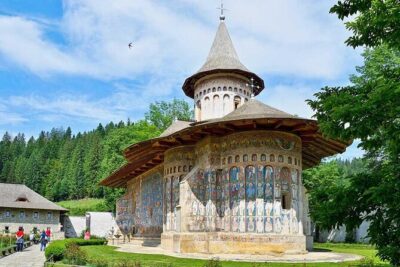
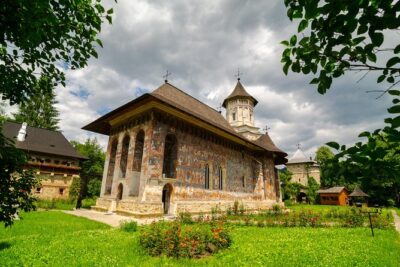
Moldovita Monastery was built in 1532 by Petru Rareș, the son of Stephen III of Moldavia. It was founded partly as a protective barrier against Ottoman forces approaching from the east.
That background helps explain why these monasteries were more than places of prayer. They also carried political and defensive meaning. Their walls, paintings, and location expressed the values of the ruling princes and the Orthodox community.
The visit lasts about two hours, which should allow time to inspect both the building and the surrounding grounds. The exterior paintings are especially important, but you should also give the interior a careful look. The scale of the scenes can make you feel as if you are reading a visual book, even if you do not recognize every biblical episode.
Voronet and the famous blue
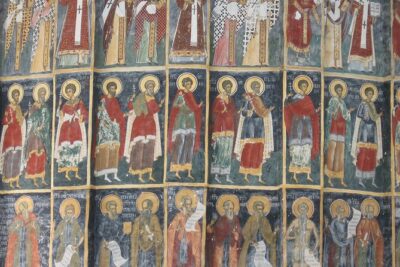
Voronet was built by Stephen the Great in 1488, reportedly in only three months and three weeks, to commemorate his victory at the Battle of Vaslui. Its frescoes are known for an intense blue that is now called Voronet blue.
This is the stop most likely to stay in your mind. The color is striking, but the appeal goes beyond one shade. The exterior walls are filled with figures and scenes, and the painting remains remarkably legible after more than five centuries.
You have about two hours here, enough to look closely rather than make a quick visit. If photography is important to you, check the local rules and any charge before raising your camera. At some monasteries, an outside photography receipt has cost about 10 lei, while indoor photography may not be allowed. Rules can vary by site.
The schedule gives you time to compare the monasteries, and that is where the day becomes more than a checklist. One past guide, Marius, focused on differences between older monasteries associated with Stephen I and his followers and a newly painted monastery. He also explained the contrast between artists and artisans, restoration work, religion, and local history. Those are exactly the questions that can turn beautiful walls into a more meaningful visit.
A painted egg museum was also part of one such journey. It is not listed as a guaranteed stop on this four-day program, so you should not assume it is included. Still, it shows the wider craft tradition that makes Bucovina such a rewarding region.
The private van is a major part of the value
A comfortable vehicle is not a small detail on this route. You are crossing large parts of Romania, and private transport means you avoid the limits of a public timetable or a full coach. One account specifically praised a spacious, air-conditioned, newer van, while another highlighted the comfort of the ride.
The private setup also gives you more control over the day. Your guide can explain a site at your pace, respond to questions, and pay attention if someone needs help. Marius was praised for assisting a sick passenger, including finding an emergency room, helping with parking and the medical system, and staying involved late into the night. That is an unusually strong example of personal care, though you should not book any tour expecting medical assistance.
The tradeoff is that private tours cost more than shared coach trips. The listed price is $1,356.43 per person, which is a serious outlay. But it includes three nights, three breakfasts, private transport, a private guide, Bucharest pickup and return, and several admission fees. For a solo guest or a couple, the cost may feel high. For a small group splitting the vehicle and guide costs, the value improves, especially with the stated group discounts.
The hotels are three-star properties, though individual accounts praised the accommodation as lovely and very comfortable, with one describing it as closer to five-star comfort. I would treat that as a positive possibility, not a guarantee. Hotel names are not supplied, so ask about the properties and room arrangements if accommodation standards matter greatly to you.
Day 3: Sighișoara, Viscri, and Brașov
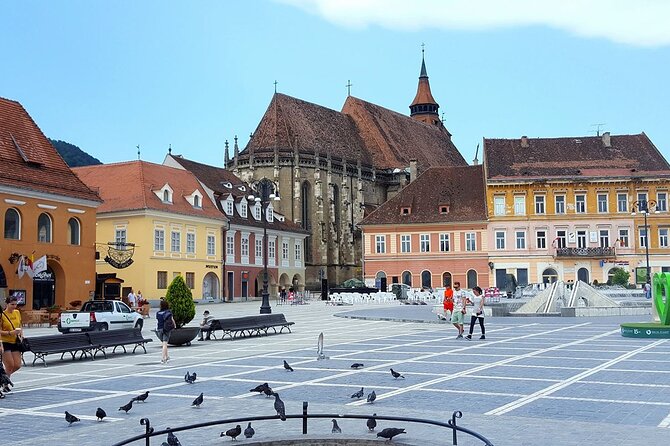
The third day changes the mood. The frescoed churches give way to fortified walls, Saxon villages, and urban squares.
Sighișoara’s preserved medieval citadel
Sighișoara is a walled old town and a UNESCO World Heritage Site. You have about two hours to explore its historic center, which should give you time to enjoy the lanes, buildings, and defensive character without trying to see every corner.
The great pleasure here is simply walking through a place that still reads as a medieval citadel. The compact setting makes it a good contrast with the rural monasteries. I would use the time to look up at the walls and towers, not just at the souvenir shops.
The program lists admission as included, though the exact attractions covered by that wording are not specified. Your guide can clarify what is included on the day.
Viscri’s fortified church
Viscri offers a different kind of medieval experience. Its fortified church, a UNESCO World Heritage Site, reflects the architecture and defensive needs of the Transylvanian Saxon communities.
You have one hour here. That is enough for a focused visit, but not a long village stay. Admission is not included, and the tour information gives a general entrance estimate of 25 to 30 euros per person for additional inside visits. Since the figures are inconsistent, confirm the current cost before departure and carry Romanian lei or a suitable payment method if advised by the operator.
Viscri is valuable because it connects architecture with community history. The church was not built only for worship. Fortified churches helped local people protect themselves during dangerous periods. Your guide’s explanation will add much more than a quick look at stone walls.
Brașov’s old center
Brașov was once the regional capital of the Transylvanian Saxons in the Burzenland administrative area and a major commercial center on trade routes between East and West. You spend about two hours in the historic center.
This is a good place to let the day breathe. Brașov has an urban scale that differs from Sighișoara, with a broader commercial and civic past. It is also linked to Romanian national identity as the birthplace of the country’s national anthem.
Admission is listed as included for the historical center, but specific attractions may have separate charges. I would ask your guide what the walking portion covers and save any extra time for the places that interest you most.
Day 4: Gothic Brașov and royal Peles Castle
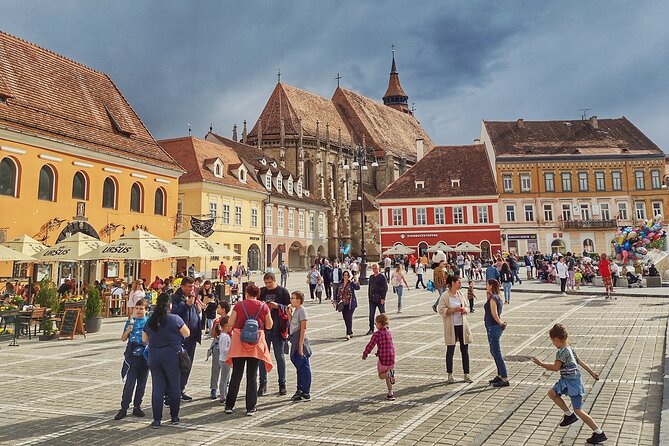
The final day begins with the Black Church, then moves to Peles Castle before returning to Bucharest.
The Black Church was built by Brașov’s German community and is the country’s main Gothic monument. It is also the largest and one of the most important Lutheran places of worship in the region.
You have one hour here. The admission is not included, so budget for it separately. The church gives the final day a strong architectural focus, and it helps you see how German-speaking communities shaped Transylvania alongside the Orthodox traditions of Bucovina.
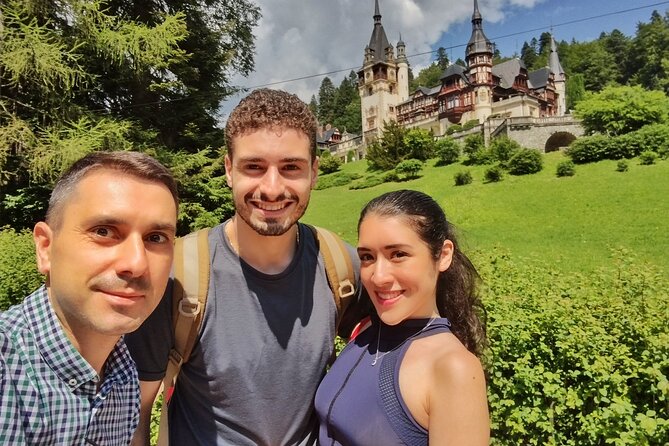
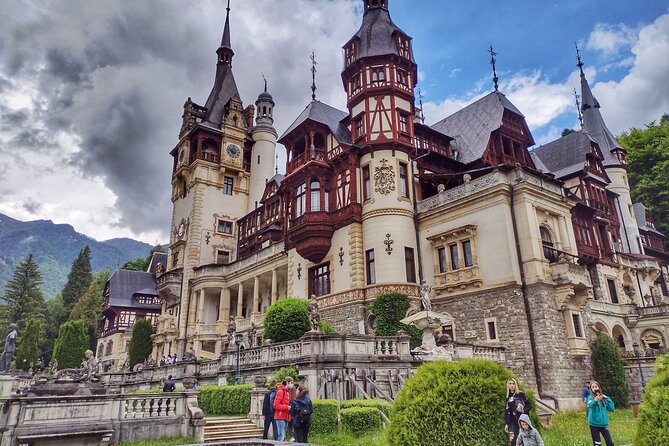
Peles Castle provides a grand change of scale. It was built between 1873 and 1914 near Sinaia in the Carpathian Mountains, along an old route between Transylvania and Wallachia. The castle served as the summer royal residence of King Carol I, with inauguration held in 1883.
The one-hour visit is enough to appreciate the setting and exterior, but you may find the time tight if you want an extended interior tour. Admission is not included. Since inside visits require additional payment, ask in advance which ticket level fits the schedule.
Peles is a strong final stop because it shows Romania’s royal ambitions after the monastery and fortress visits. The contrast is the point: Bucovina’s painted churches speak through religious scenes, Transylvania’s fortified churches speak through defense, and Peles speaks through royal taste and modern state-building.
What past guests valued most
The strongest praise centers on the guides. Toni Tatar was described as professional, kind, thorough, and a pleasant companion who brought Romania’s complicated past to life. Marius received especially warm praise for his explanations of art, religion, restoration, and regional history, as well as his care when a passenger became ill.
Food and accommodation also received favorable comments. The tour includes only breakfast, so lunch and dinner are your responsibility, but past experiences with the company included very good Romanian meals at reasonable prices. That is useful context, though restaurant choices are not guaranteed by the program.
The painted monasteries themselves are the clear centerpiece. Expect detailed frescoes, strong color, religious scenes, and a sense of peace in the surrounding area. At least one site may require modest dress, such as trousers or a long skirt, for access to the grounds. Pack accordingly.
Is $1,356.43 per person a fair price?
I see this as a convenience and expertise purchase, not a budget tour. You are paying for a private vehicle, a guide, hotel rooms, breakfasts, pickup and drop-off in Bucharest, and a route that would be difficult to arrange efficiently on your own in four days.
The value is strongest for a small group that wants privacy and direct explanations. Group discounts may improve the total. The value is weaker if you are comfortable driving long distances, planning hotels yourself, and visiting only a few sites.
Remember to set aside money for meals, drinks, snacks, and several admissions. The supplied information gives 25 euros and 30 euros as possible entrance totals, so ask Crafted Tours Romania for an exact current figure. That small bit of planning will prevent a surprise at the end.
The tour requires moderate physical fitness. You will be walking around monastery grounds, old towns, fortified sites, and castle areas. The program also depends on good weather. If poor weather forces cancellation, you are offered another date or a full refund.
Who should book this Romanian journey?
I would recommend it to you if you want a broad first look at Romania and prefer a guide-led trip over independent logistics. It suits couples, families, and small groups who value a private vehicle, flexible attention, and a mix of art, faith, architecture, and national history.
It is especially good for anyone drawn to painted church interiors and exteriors. The three Bucovina monasteries receive the most time, and their frescoes are the visual high point.
I would hesitate if you want a slow cultural holiday, dislike long transfers, or need every admission included. The route covers a lot, and the three-star hotel category may not suit someone seeking luxury at every stop.
Should you book the Bucovina and Transylvania tour?
Book it if your priority is seeing many of Romania’s major cultural sights with a private guide and without managing the transport yourself. The combination of Agapia and Varatec, the three painted monasteries, Sighișoara, Viscri, Brașov, the Black Church, and Peles Castle is unusually full for four days.
Before paying, confirm the hotel names, the exact entrance-fee total, which Peles and Black Church tickets fit the schedule, and whether Toni or Marius will guide your group. If those details suit you, this is a strong choice for an efficient and personal introduction to Romania.
FAQ
Where does the tour begin and end?
The tour begins in Bucharest and returns to Bucharest. Pickup and drop-off can be arranged anywhere in Bucharest.
What time does the tour start?
The stated start time is 9:00 a.m.
How long is the tour?
The experience lasts approximately four days and includes three nights of accommodation.
Is this a private tour?
Yes. Only your group participates, and the tour includes private transport and a private guide.
Are hotels included?
Yes. Three nights in three-star hotels are included.
Are breakfasts included?
Yes. Three breakfasts are included. Other meals, drinks, and snacks are not included.
Are entrance fees included?
Some entrance fees are included, including the listed visits to Agapia, Varatec, Sucevita, Moldovita, Voronet, Sighișoara, and Brașov Historical Center. Admission to Viscri Fortified Church, the Black Church, and Peles Castle is not included.
What happens if the tour is canceled because of bad weather?
You will be offered a different date or a full refund. You can also cancel for a full refund at least six full days before the start time.
Just added in Bucharest
- Bucharest: Dealu Mare Winery Private Trip with Wine Tasting★ 4.9 · 6 reviews
- Winery touring & private wine tasting – one day private tour★ 5.0 · 3 reviews
- Village Museum Bucharest Guided Tour★ 5.0 · 6 reviews
- Transylvania Tour: Dracula’s Castle, Peles Palace & Brasov★ 5.0 · 19 reviews
- Transfer Airport Otopeni – Bucharest★ 5.0 · 2 reviews
- Private Transfer Bucharest Otopeni Airport (OTP) to/from Brasov★ 5.0 · 2 reviews
- Bucharest Airport Transfer To Constanta Mamaia★ 5.0 · 3 reviews
- Airport Henri Coanda (Otopeni) to Bucharest – Private Transfer – Driver★ 5.0 · 5 reviews
Bucovina Monastery Tours, compared.
1-Day Bucovina Painted Monasteries tour from Suceava – English
Read our review →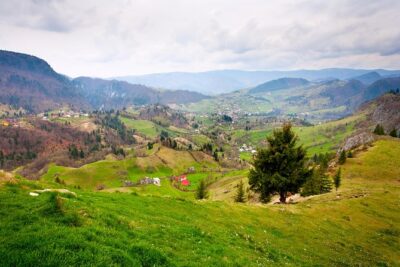
Day trip from Iasi to the UNESCO Painted Monasteries in Bucovina
Read our review →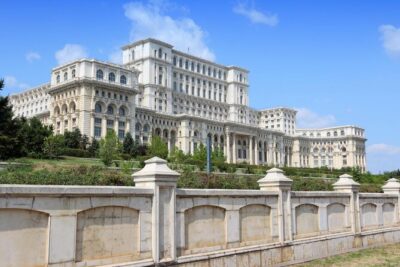
11-Day Romania Tour from Bucharest with Transylvania & Bucovina
Read our review →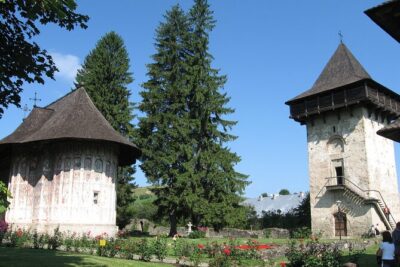
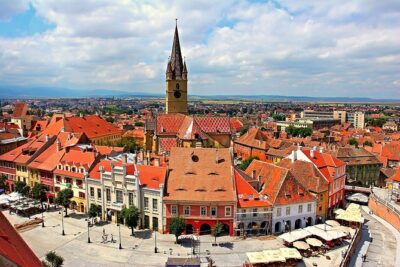
Two days tour to Bucovina & UNESCO Painted Monasteries
Read our review →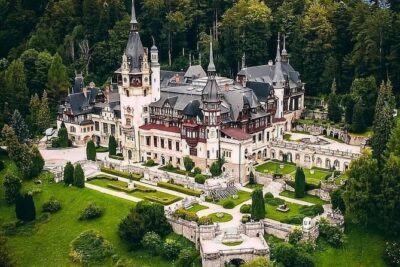
Private 7-Day Tour in Transylvania, Maramures and Bucovina from Bucharest
Read our review →Browse the lists this tour appears in