
REVIEW · BUCOVINA MONASTERY TOURS
Two days tour to Bucovina & UNESCO Painted Monasteries
Some journeys are worth the long road. This private two-day trip from Cluj-Napoca takes you into Bucovina for its UNESCO-listed painted monasteries, traditional villages, and local food, with a guide and driver handling the complicated route. I like the private format, which gives your group room to ask questions and adjust the day, and I like that the price includes entrance fees, lunch, dinner, and a centrally located hotel.
The main drawback is the amount of time spent on the road. Bucovina is far from Cluj-Napoca, and the tour covers Cluj-Napoca, Bistrita, Ciocanesti, Voronet, and Gura Humorului in only two days. If you want a slower visit with long stops at every monastery, this schedule may feel brisk.
In This Review
- Key points to know before booking
- Why Bucovina is worth the long ride from Cluj-Napoca
- Leaving Cluj-Napoca at 9:00 am
- Bistrita gives the route a useful first chapter
- Ciocanesti village brings the countryside into focus
- Voronet Monastery is the artistic centerpiece
- Gura Humorului is the practical base for the night
- A private guide changes the pace
- What the $696.97 price includes
- Who should book this Bucovina tour?
- The final call
- FAQ
- Where does the Bucovina tour begin?
- Is pickup available?
- Is this a private tour?
- How long does the experience last?
- Which places are included in the route?
- Is accommodation included?
- Which meals are included?
- Are entrance fees included?
- Can I cancel for a full refund?
Key points to know before booking
- Private transport from Cluj-Napoca: Hotel and airport pickup make the early start simple, with a modern vehicle and only your group on the tour.
- Voronet Monastery is the main artistic prize: Its famous exterior paintings are among the most memorable sights in Bucovina.
- Ciocanesti adds village character: This stop gives the trip more than churches and formal sightseeing.
- The long drives are part of the bargain: You see a remote region, but you trade time for distance.
- Meals and one hotel night are included: Lunch, dinner, accommodation, transport, guide service, and entrance fees are covered.
- Guide flexibility is a real advantage: Florin, also spelled Florian in one account, is praised for answering questions and adding an extra monastery visit when possible.
Why Bucovina is worth the long ride from Cluj-Napoca
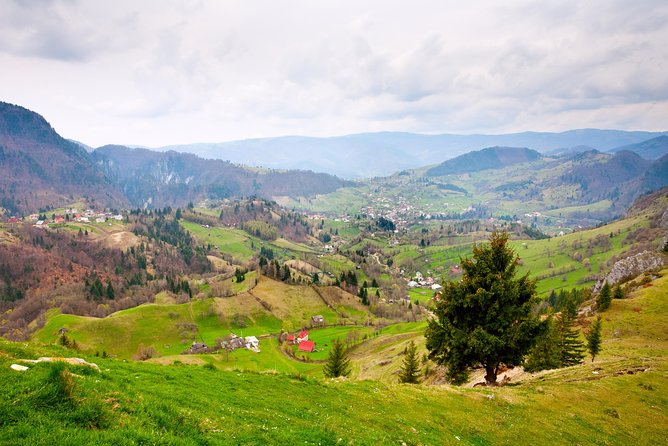
Bucovina sits in northern Romania, well away from the urban feel of Cluj-Napoca. The reward for making the trip is a different side of the country: village roads, traditional homes, church art, and a slower rural setting.
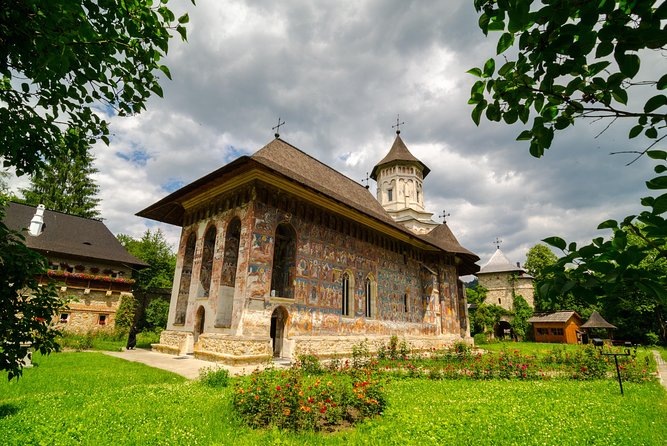
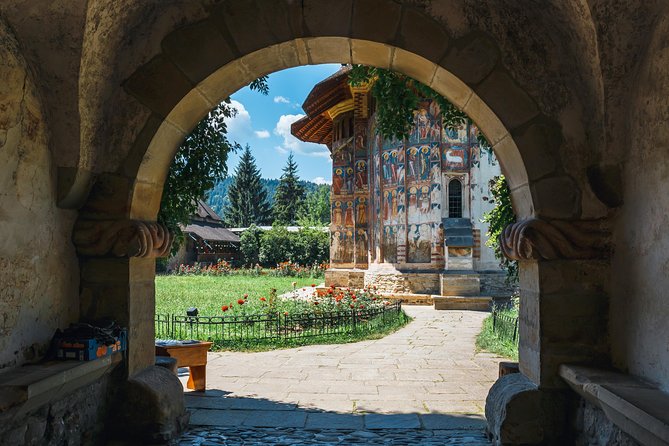
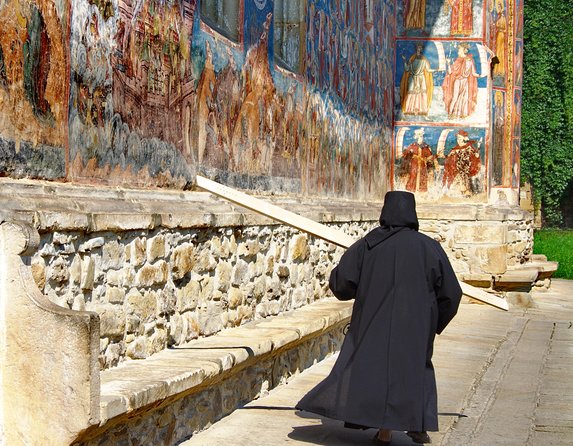
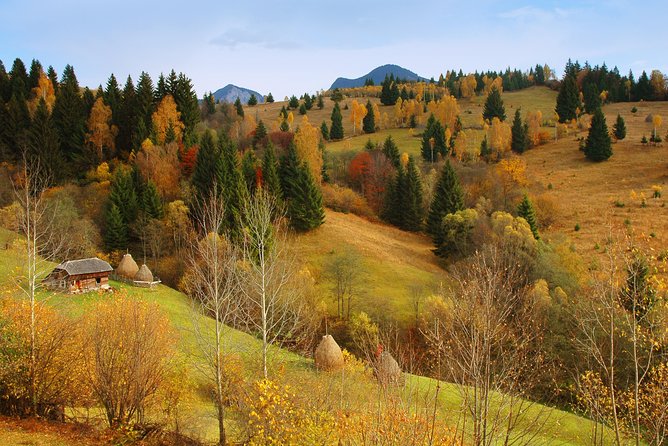
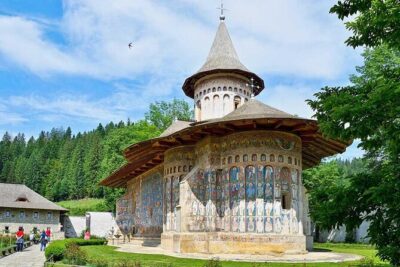
The painted monasteries are the reason to come. Their outside walls carry large religious scenes, often in strong colors that have survived for centuries. These are not plain stone churches with a small fresco inside. The paintings cover the exterior surfaces, turning the buildings into works of art that you can study from several steps away.
I like the way this tour pairs the monasteries with ordinary village life. You are not simply moved from one famous church to another. The stop in Ciocanesti gives you a chance to see a place known for traditional village character, while the drive itself helps show how Bucovina differs from Cluj-Napoca.
The UNESCO designation also matters here. It signals that the monasteries are not just attractive photo stops. Together, they represent an important body of religious art and Romanian cultural heritage. You do not need to be an art expert to appreciate them, but a guide can help explain what you are seeing and why the painted exteriors matter.
More Bucovina monastery trips:
- Private six days tour to Maramures and Bucovina from Cluj-Napoca
★ 5.0 · 1 review - Bucovina Painted Monasteries Day Tour
★ 5.0 · 83 reviews - 1-Day Bucovina Painted Monasteries tour from Suceava – English
★ 5.0 · 33 reviews
Leaving Cluj-Napoca at 9:00 am
The tour begins at 9:00 am, with pickup available from your Cluj-Napoca hotel or the airport. That is useful if you want the trip to begin without finding a separate taxi or meeting point in the city.
A morning departure also makes sense because the route is ambitious. The first day includes travel toward Bistrita and Ciocanesti before continuing to Voronet and Gura Humorului. Exact stop lengths are not provided, so you should ask the operator how much time is planned at each location if you have a particular interest in photography, church interiors, or village architecture.
The drive is not just a short transfer between nearby sights. One person who took the trip described the drives as long, but also used that time for wide-ranging conversations with the guide. That is a useful way to think about this experience. You will need to be comfortable sitting in a vehicle for substantial stretches, but a private guide can make the road time feel more useful than it would on a standard group coach.
The modern vehicle is another practical plus. It does not eliminate the distance, but it makes the journey easier than piecing together regional trains, buses, and local taxis. For a two-day trip into a part of Romania that can be awkward to reach independently, that convenience has real value.
Bistrita gives the route a useful first chapter
Bistrita appears early in the route between Cluj-Napoca and Bucovina. The supplied itinerary does not specify a detailed Bistrita sightseeing program, so you should not book this trip expecting a full guided tour of the city.
Its importance here is mainly geographical and cultural. Bistrita helps mark the transition from Cluj-Napoca toward the northern countryside. As the route continues, the trip becomes less about city breaks and more about villages, churches, and regional traditions.
This is also where expectations matter. The tour is built around Bucovina, not around extended visits in every town along the way. If Bistrita is high on your personal list, ask whether the schedule includes a dedicated stop. If your priority is the painted monasteries, the route works better as a focused regional excursion.
Ciocanesti village brings the countryside into focus
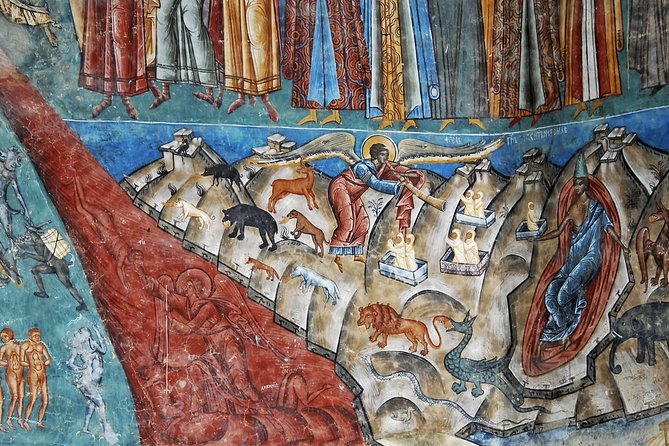
Ciocanesti is one of the most appealing stops because it gives the tour a human scale. The village is known for its traditional character, and it helps you see how Bucovina’s appeal goes beyond its major churches.
A village stop is valuable after a long drive and before more formal sightseeing. You can look at the local setting, notice traditional details, and get a sense of the region as a lived-in place rather than an open-air museum. The provided information does not promise a specific craft demonstration or scheduled activity, so keep your expectations centered on seeing the village itself.
This part of the trip may be especially rewarding if you prefer cultural details over a checklist of monuments. Bucovina’s painted churches are famous, but the surrounding villages explain why the region feels distinctive. The village visit also gives your guide an opening to explain local customs and daily life.
If photography matters to you, remember that photography fees are not included. The tour covers entrance fees, but any separate charge for taking pictures is your responsibility.
More Cluj Napoca trips:
- Curly Tour – Day trip from Cluj 🙂
★ 5.0 · 330 reviews - Cluj: Turda Salt Mine, Corvin Castle, Alba Carolina Tour
★ 4.8 · 184 reviews - Cluj-Napoca: 2.5-Hour Guided Walking Tour
★ 4.8 · 104 reviews - From Cluj: Turda Salt Mine, Gorge, and Remetea Full-Day Trip
★ 5.0 · 84 reviews
Voronet Monastery is the artistic centerpiece
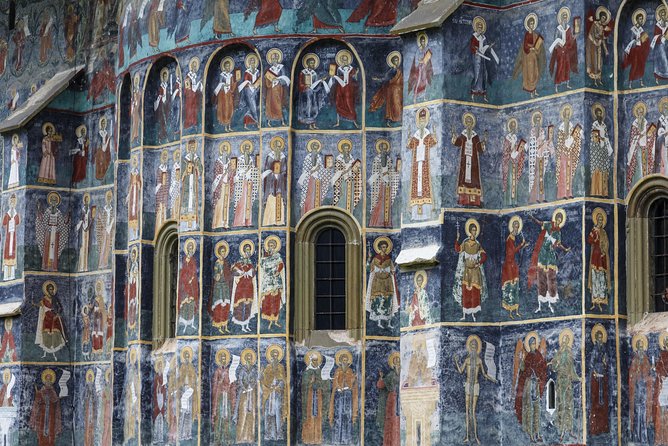
Voronet Monastery is the most clearly identified monastery on the route, and it is likely to be the emotional high point for many people. Its painted exterior is widely associated with Bucovina, and the strong blue coloring has made the site especially famous.
The best way to approach Voronet is to slow down and look carefully. At first, the overall effect can seem almost too large to absorb: entire outside walls are filled with religious scenes and figures. Then smaller details begin to appear. A guide can help you understand the subjects, symbols, and setting instead of leaving you with only a few hurried photographs.
One important practical point is that photographs do not fully convey the churches. The painted surfaces have scale, texture, and presence that a screen cannot reproduce. The second account supplied about this tour made exactly that point, noting that the churches were much more impressive in person than in photographs.
The visit is also more than an art stop. These monasteries combine worship, architecture, painting, and regional identity. You may appreciate the colors first, then begin to notice the age of the buildings and the skill involved in covering their walls with detailed scenes.
The tour includes entrance fees, which removes one small hassle at each paid site. Photography fees are separate, so bring a little extra money if you want to take pictures where charges apply.
Gura Humorului is the practical base for the night
Gura Humorului is included in the route and serves as the setting for the overnight portion of the trip. Accommodation is provided in a centrally located hotel, though the hotel name and exact facilities are not specified.
That central location should make it easier to reach nearby services, but do not assume a luxury property or a particular room setup. If you need a specific hotel standard, accessibility feature, or bedding arrangement, confirm it before booking.
The included overnight stay is important to the value of the experience. Without it, a visit from Cluj-Napoca would require an exhausting return journey or a separate hotel search. Here, the basic logistics are handled for you, leaving more time for the regional sights.
Dinner is included, as is lunch during the trip. Other meals are not covered, so budget separately for breakfast and any additional food, drinks, or snacks. The itinerary does not specify the restaurant or menu, so the exact dining experience may depend on the day and local arrangements.
A private guide changes the pace
This is a private tour, meaning only your group participates. That is a major difference from a large bus excursion. You can ask questions without feeling you are holding up dozens of people, and the guide can respond to your interests.
The available feedback gives useful detail about Florin, with one reference spelling his name Florian. He is praised for explaining the region’s past and for making room for special interests. Another account highlights his patience with questions and credits him with visiting an additional monastery that was not part of the planned program.
That flexibility is one of the strongest reasons to consider this tour. The route is fixed enough to keep the trip organized, but a private guide may be able to adjust a stop or add something when time and conditions allow. An extra visit is not guaranteed, so treat it as a possible bonus, not a promised feature.
The guide is also important during the long drives. A good conversation can turn transfer time into part of the experience. If you want detailed explanations at every site, tell the guide early. If you prefer quiet time during the road sections, say so. Private touring works best when you communicate clearly.
What the $696.97 price includes
At $696.97 per person, this is not a bargain-priced day trip. It is a premium cost for two days, but the price needs to be judged against what is included and the difficulty of arranging the same route alone.
The package includes:
- Private transportation in a modern vehicle
- Professional English-speaking guide
- Hotel and airport pickup in Cluj-Napoca
- One night in a centrally located hotel
- Lunch
- Dinner
- Entrance fees
That list covers many of the expenses that can make a short independent trip complicated. You would otherwise need to arrange long-distance transport, local transfers, accommodation, admission tickets, and a way to reach several rural sites.
The value is strongest for two or more people who want private transport and a guide without handling the planning themselves. The cost may feel less attractive to a solo visitor or a strict budget traveler, especially because not all meals and personal expenses are covered.
Group discounts are available, so ask how the price changes for your party before booking. Since the average booking point is 37 days ahead, this is not an experience to leave until the last minute if your dates are fixed.
Who should book this Bucovina tour?
I would recommend it to you if you have limited time in Romania and want a focused introduction to Bucovina from Cluj-Napoca. It is also a good fit if you value personal guiding, hotel pickup, and a vehicle over the freedom and lower cost of planning every detail yourself.
Art lovers, photographers, cultural tourists, and visitors interested in rural Romania should find plenty here. The painted monasteries provide the major sights, while Ciocanesti and the road through the countryside add local context.
The tour is less suitable if you dislike long drives, want an unhurried monastery schedule, or prefer choosing your own restaurants and hotels. The two-day format covers a lot of ground, and the available information does not provide exact stop durations.
Most people can participate, and the private setup means the pace belongs to your group within the limits of the route. Before paying, I would confirm the hotel details, planned monastery stops beyond Voronet, photography rules, and the approximate driving time on each day.
Free cancellation is available when you cancel at least 24 hours before the start time. Changes or cancellations inside that window are not accepted for a refund.
The final call
Book this tour if Bucovina’s painted monasteries are a priority and you want the simplest way to reach them from Cluj-Napoca. The inclusion of transport, a guide, lodging, meals, and entrance fees makes the high price easier to justify, especially for a private group.
Skip it if the long road worries you or if you want several quiet days in the region. For the right visitor, though, the combination of Voronet, Ciocanesti, village scenery, and a flexible guide makes this a strong two-day introduction to northern Romania.
FAQ
Where does the Bucovina tour begin?
The tour begins in Cluj-Napoca at 9:00 am.
Is pickup available?
Yes. Pickup is offered from Cluj-Napoca hotels and the airport.
Is this a private tour?
Yes. Only your group participates in the activity.
How long does the experience last?
The tour lasts approximately two days.
Which places are included in the route?
The route includes Cluj-Napoca, Bistrita, Ciocanesti village, Voronet Monastery, and Gura Humorului.
Is accommodation included?
Yes. One night in a centrally located hotel is included.
Which meals are included?
Lunch and dinner are included. Other meals are not included.
Are entrance fees included?
Yes. Entrance fees are included, but photography fees are not.
Can I cancel for a full refund?
Yes, if you cancel at least 24 hours before the experience start time. Cancellations made less than 24 hours ahead are not refunded.
Just added in Cluj Napoca
- Turda salt mine and Corvin Castle day tour from Cluj★ 5.0 · 9 reviews
- Private tour to Turda Salt Mine, Rimetea and Alba Iulia★ 4.8 · 5 reviews
- Turda Salt Mine, Gorge & Rimetea Village (private from Cluj)★ 5.0 · 5 reviews
- Cluj to Rosia: Day Trip to Ferrata and pittoresque country★ 5.0 · 1 review
- 7 Day Best of Transylvania Motorcycle Tour from Cluj★ 5.0 · 4 reviews
- Discover Apuseni Mountains – Scarita Summit,Sipote Waterfall and Dumesti Village★ 5.0 · 17 reviews
- Via Ferrata Transylvania★ 5.0 · 1 review
- Turda salt mine, Rimetea village and Alba Iulia, from Cluj★ 5.0 · 11 reviews
Bucovina Monastery Tours, compared.
1-Day Bucovina Painted Monasteries tour from Suceava – English
Read our review →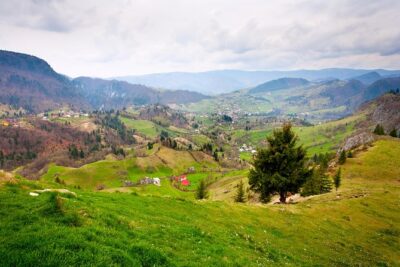
Day trip from Iasi to the UNESCO Painted Monasteries in Bucovina
Read our review →
11-Day Romania Tour from Bucharest with Transylvania & Bucovina
Read our review →
Bucovina Painted Monasteries & Transylvania Tour: 4-Day Private
Read our review →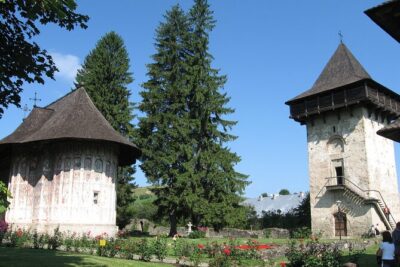
Private 7-Day Tour in Transylvania, Maramures and Bucovina from Bucharest
Read our review →Browse the lists this tour appears in