
REVIEW · WALKING TOURS
Cluj-Napoca: 2.5-Hour Guided Walking Tour
Cluj reveals its layers on foot. This 2.5-hour walk gives you a strong first look at the city’s German, Hungarian, and Romanian character, moving from medieval streets to grand 20th-century buildings. The route is built around stories, not just photo stops, so you get context for what you are seeing.
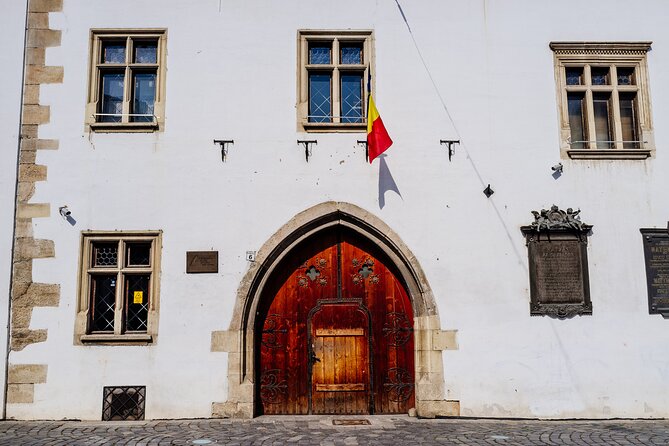
I like the visit to Matthias Corvinus’s birth house, a small but meaningful stop linked to Hungary’s famous 15th-century king. I also like the way the tour connects Gothic St. Michael’s Church, Babes-Bolyai University, old defensive walls, and Avram Iancu Square into one readable story. The main consideration is that the emphasis leans heavily toward history and religion, with less time for everyday culture, food, or interiors.
- Matthias Corvinus’s birthplace adds a personal detail to Cluj’s medieval story.
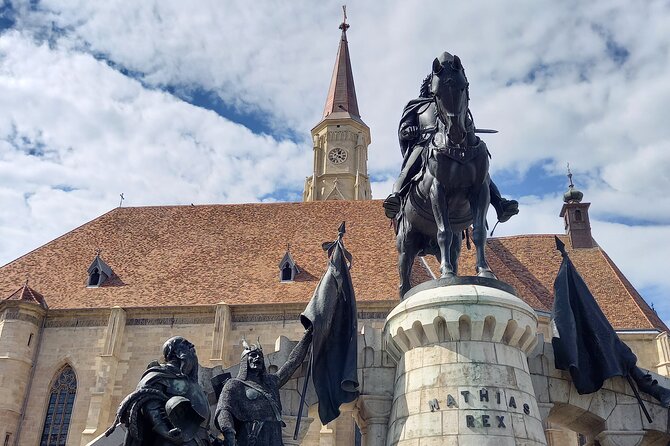
- Union Square and St. Michael’s Church provide the tour’s strongest architectural views.
- The Street of the Intellectuals links the old center with Babes-Bolyai University.
- Old city walls and guild stories show how medieval Cluj worked beyond its grand buildings.
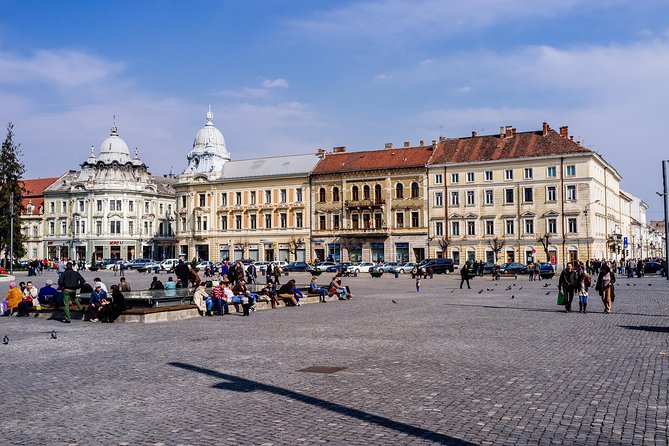
- Avram Iancu Square brings in the city’s Romanian identity, Orthodox cathedral, and National Theatre.
- English and German guiding is available, with a full 2.5-hour route for $34 per person.
In This Review
- What This Cluj Walking Tour Does Well
- Starting With Cluj’s Mixed Cultural Identity
- Matthias Corvinus’s Birth House and the Role of Wine
- Union Square, St. Michael’s Church, and a Royal Statue
- The Street of the Intellectuals and Babes-Bolyai University
- Medieval Witches, Guilds, and Defensive Walls
- Avram Iancu Square and the Romanian Chapter
- How the 2.5-Hour Pace Feels
- Guide Quality and Tour Style
- Is $34 Good Value?
- Who Should Book This Cluj Tour?
- Practical Booking Advice
- Should You Book the Cluj-Napoca Walking Tour?
- FAQ
- How long is the Cluj-Napoca walking tour?
- How much does the tour cost?
- Which languages are available?
- What sights are included?
- Is the tour suitable for people with limited mobility?
- What should I bring?
- Can I cancel the tour or pay later?
What This Cluj Walking Tour Does Well
At $34 per person, this is not a quick orientation stroll. You are paying for two and a half hours with a live guide, a full circuit through the historic center, and a steady stream of explanation about Cluj’s past.
That matters in Cluj because the city can look deceptively simple at first. A square, church, statue, university building, and theater may seem like separate sights. The guide’s job is to show how they fit together through shifting Hungarian, German, Romanian, religious, political, and educational influences.
The strongest praise goes to the guides. Daniela is repeatedly singled out for clear storytelling, humor, and a strong connection to Cluj. David is praised for showing less obvious streets and explaining the buildings and churches. Andrei is described as professional and open to questions, while Adrian has helped visitors with plans and meal ideas for the rest of their stay.
The exact guide will depend on the date and booking option, so do not assume Daniela will lead your walk. Still, the pattern is encouraging: the tour seems to depend on real local interpretation rather than a memorized speech.
The pace also earns credit. One recent guest found the walk manageable, with comfortable seated pauses along the way. Another guide adjusted the pace and level of explanation to suit the people on the tour, and one even stayed longer to finish the discussion. That kind of flexibility can make a big difference, especially if you want to ask questions.
Starting With Cluj’s Mixed Cultural Identity
The opening section introduces Cluj as a meeting point of German, Hungarian, and Romanian traditions. That is more useful than treating the city as simply Romanian or simply Transylvanian.
You will hear how different communities shaped the streets, institutions, religion, architecture, and political life of Cluj. The city’s identity changed over time, and the route gives you a way to notice those changes as you walk.
A good guide will also place the medieval period inside a longer story. One recent tour began with the Dacians and Romans before moving through the Middle Ages, the First and Second World Wars, Communism, and modern Romania. That broader timeline is one of the tour’s best features because it prevents the old center from becoming a collection of disconnected dates.
I would pay close attention during this introduction. The more you understand about the city’s changing rulers and communities, the more sense the later stops will make.
More Walking Tours in Cluj Napoca
- Cluj-Napoca: 2.5-Hour Guided Walking Tour
★ 4.5 · 29 reviews - Cluj-Napoca Walking City Tour
★ 4.5 · 16 reviews - Cluj : Must-See Attractions Walking Tour
★ 4.8 · 8 reviews
Matthias Corvinus’s Birth House and the Role of Wine
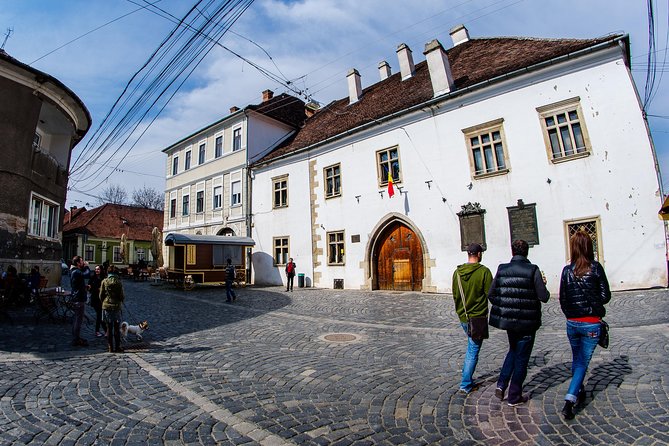
The first major historical stop is the birth house of Matthias Corvinus, Hungary’s best-known 15th-century king. The building itself is important because it links a modest urban setting with a major royal figure.
This is not just a name on a statue. The guide explains stories from Corvinus’s life and why his memory matters in Cluj and Hungary. His presence gives the tour a human beginning: you are looking at the place where a future king was born, not only at a later monument built in his honor.
The discussion also includes the role of wine in the region. That detail is easy to overlook, but it adds a social and practical side to the history. Medieval cities were shaped by trade, craft, food, and drink as much as by rulers and churches. Wine helps move the story away from kings alone and toward the daily life of the region.
Do not expect a long interior visit here. The tour is mainly a walking and street-level experience, and one piece of feedback specifically wished for more access to interiors. If you prefer museum-style touring, you may want to add separate indoor visits later.
Union Square, St. Michael’s Church, and a Royal Statue
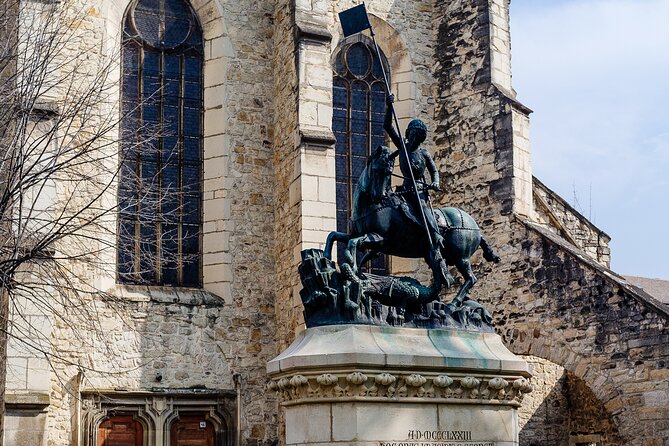
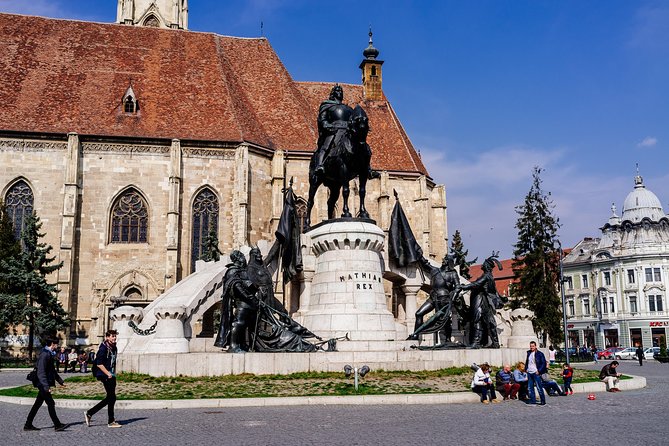
The route continues to Union Square, the visual center of the tour. Here you can admire St. Michael’s Church, a Gothic building dating from the 14th century, along with the large equestrian statue of Matthias Corvinus in front of it.
This is likely the clearest architectural high point of the walk. St. Michael’s Church gives you the vertical drama of Gothic design, while the Corvinus statue reinforces Cluj’s connection with medieval Hungary. Together, they show how religion, royal memory, and public space can occupy the same square.
The guide’s explanation is especially valuable here. Gothic architecture can be easy to admire without understanding, but details about the church’s age and style give your photographs more meaning. You can also ask questions about how the square functions in the city today, though the tour’s main emphasis remains historical.
The open square provides a useful pause after the earlier walking. It is also one of the places where you will want time to look up, step back, and take in the scale of the church rather than rushing from one fact to the next.
The Street of the Intellectuals and Babes-Bolyai University
From Union Square, the walk heads toward the Street of the Intellectuals, known for its educational institutions. Babes-Bolyai University is the key name here.
This section changes the mood. Instead of focusing only on kings and religious buildings, the route turns toward education and the role of ideas in city life. The university helps explain why Cluj remains an important cultural and academic center.
The title Street of the Intellectuals also gives the guide a natural opening to discuss the people who shaped the city through teaching, scholarship, and public life. You are not simply passing a university facade. You are seeing how learning became part of Cluj’s identity.
The tour is especially suitable for first-time visitors who want a framework for exploring later on. One guide described by a guest gave a full historical overview before explaining individual sights, and that order makes sense here. You understand the institution better when you know how Cluj developed as a regional center.
More Cluj Napoca trips:
- Curly Tour – Day trip from Cluj 🙂
★ 5.0 · 330 reviews - Cluj: Turda Salt Mine, Corvin Castle, Alba Carolina Tour
★ 4.8 · 184 reviews - From Cluj: Turda Salt Mine, Gorge, and Remetea Full-Day Trip
★ 5.0 · 84 reviews - Turda salt mine 4h tour from Cluj
★ 5.0 · 73 reviews
Medieval Witches, Guilds, and Defensive Walls
Some of the most unusual material comes from the stories about witches who lived in Cluj during the Middle Ages. This topic adds tension and personality to a route that could otherwise become a long parade of dates and architecture.
The subject also reminds you that medieval cities were not only places of kings, churches, and trade. They were communities shaped by fear, rumor, law, belief, and social pressure. Ask questions if this part interests you, since the amount of detail may depend on the guide and the group.
The guide also explains the formation of the guilds. Guilds help you understand how work and commerce were organized. Craftspeople did not operate in a modern free-for-all. Trades had rules, networks, and local influence, and those systems affected the growth of the city.
You then pass remains of the old defensive walls. These fragments may not look as imposing as the church or theater, but they are important evidence of the city’s earlier limits. They show where Cluj ended, how it protected itself, and how much the urban area later expanded.
This is a good reminder to look down side streets and along less celebrated sections of the route. One guest especially appreciated being taken along streets they would not have found alone.
Avram Iancu Square and the Romanian Chapter
The walk eventually reaches Avram Iancu Square, a newer part of the old city. Here the focus shifts more clearly toward Romanian national and civic identity.
The Orthodox Cathedral, built in the 1930s, gives the square its religious anchor. Its construction belongs to a much later period than St. Michael’s Church, so the two buildings together help you compare different eras and traditions.
The National Theatre, built in 1906 by Viennese architects, adds another layer. Its presence shows Cluj’s connection with Central European design and the cultural ambitions of the period. The square is a useful final chapter because it places Romanian institutions beside the older Hungarian and medieval landmarks seen earlier.
This contrast is one of the best reasons to choose a walking tour rather than visit only Union Square. In a short distance, you see several versions of Cluj: medieval, academic, imperial-era, religious, and modern Romanian.
Still, keep your expectations realistic. The tour is designed for exterior viewing and commentary. If you want to go inside the cathedral, theater, or church, ask the guide about practical options, but the supplied details do not promise interior access.
How the 2.5-Hour Pace Feels
Two and a half hours is long enough to cover the historic center properly without turning the experience into an all-day commitment. The route is described as lengthy, but recent feedback suggests it is not an exhausting march. There were seated pauses, and guides have adjusted the speed for the people present.
You should still wear comfortable shoes. This is a walking tour through an old urban center, and the route includes several stops rather than one concentrated square. A sun hat is sensible in warm weather, and the activity information also asks participants to bring a face mask or protective covering.
The tour is listed as wheelchair accessible, but it is also not recommended for people with limited mobility. Those two points do not fully agree, so I would contact the provider before booking if you use a wheelchair or have difficulty walking. The meeting point can also change with the option you book, so check your confirmation carefully.
Pets are not allowed.
Guide Quality and Tour Style
The guide is the main reason to book this experience. The best comments praise clear history, lively stories, humor, flexibility, and a genuine attachment to Cluj.
Daniela receives especially warm feedback for her explanations and passion for the city. She has led tours that were informative, engaging, and adaptable to different levels of historical interest. David is praised for adding streets and buildings that a visitor might otherwise miss. Andrei is described as professional and able to keep people involved through questions.
The range of guide names also suggests that you may receive a different personality and presentation style depending on your date. That is normal for a local walking tour, but it means the experience is not identical every time.
Most of the feedback is strongly positive, with a 4.8 rating from 104 reviews. The small amount of criticism is useful. One person wanted more culture beyond history and religion. Another wanted more enthusiasm and practical suggestions for the rest of a stay in Cluj. A third would have liked more interiors.
So, if you want an architectural and historical introduction, the format should suit you well. If you are mainly looking for food, music, modern culture, or inside visits, you may need to supplement it.
Is $34 Good Value?
At $34, the tour offers good value if you want structure and explanation during your first hours in Cluj. You receive a full 2.5-hour guided walk through several important parts of the center, rather than a short loop around one square.
The value is strongest for first-time visitors. You get a timeline, names, political context, religious background, architecture, and local stories in one session. That can save you from reading several disconnected guidebook entries and helps you decide what deserves a second visit.
The price is less compelling if you prefer to explore slowly on your own or spend most of your time inside museums and churches. The walk does not promise extensive interior access, and the emphasis is clearly on outdoor sights and spoken explanation.
I would book it near the beginning of a Cluj stay. You can use the guide’s explanations to plan later visits, and some guides may offer useful suggestions for your next days, as Adrian did for one previous participant.
Who Should Book This Cluj Tour?
I would recommend it to:
- First-time visitors who want a clear introduction to the city
- History and architecture enthusiasts
- People interested in the overlap of Hungarian, German, and Romanian culture
- Visitors who enjoy asking questions and listening to local stories
- Short-stay visitors who need a useful overview in one morning or afternoon
- Small groups who value an adjustable pace
I would think twice if you have limited mobility, since the activity is not recommended for that audience despite being marked wheelchair accessible. I would also choose another or additional experience if your main interests are local food, modern culture, nightlife, or extensive interior visits.
Practical Booking Advice
The activity costs $34 per person and lasts 2.5 hours. English and German tours are offered, and starting times depend on availability.
You can reserve now and pay later, which is helpful if your Cluj plans are still shifting. Cancellation is free up to 24 hours before the tour for a full refund.
Check the meeting point for the exact option you choose. Bring comfortable shoes and a sun hat, and note the request for a face mask or protective covering. Since pets are not allowed, arrange other care before arriving.
Should You Book the Cluj-Napoca Walking Tour?
Yes, if you want the city’s main story explained by someone who knows how the pieces fit together. The birth house of Matthias Corvinus, St. Michael’s Church, Babes-Bolyai University, medieval walls, the Orthodox Cathedral, and the National Theatre create a well-shaped route through Cluj’s past.
The tour’s best feature is not any single stop. It is the connection between them. You move from medieval kings to guilds, from Gothic architecture to Romanian civic buildings, and from old walls to a modern academic city.
Book it early in your stay, wear good shoes, and expect a history-first experience. Add your own food, museum, or interior visits afterward if you want a broader look at present-day Cluj.
FAQ
How long is the Cluj-Napoca walking tour?
The tour lasts 2.5 hours.
How much does the tour cost?
The listed price is $34 per person.
Which languages are available?
The live tour guide is available in English and German.
What sights are included?
The route includes Matthias Corvinus’s birth house, Union Square, St. Michael’s Church, the equestrian statue of Corvinus, the Street of the Intellectuals, Babes-Bolyai University, remains of the defensive walls, Avram Iancu Square, the Orthodox Cathedral, and the National Theatre.
Is the tour suitable for people with limited mobility?
The activity is not recommended for people with mobility impairments. It is also marked wheelchair accessible, so anyone with specific access needs should confirm the route before booking.
What should I bring?
Bring comfortable shoes, a sun hat, and a face mask or protective covering.
Can I cancel the tour or pay later?
You can reserve and pay later. Cancellation is free up to 24 hours in advance for a full refund.
Just added in Cluj Napoca
- Turda salt mine and Corvin Castle day tour from Cluj★ 5.0 · 9 reviews
- Private tour to Turda Salt Mine, Rimetea and Alba Iulia★ 4.8 · 5 reviews
- Turda Salt Mine, Gorge & Rimetea Village (private from Cluj)★ 5.0 · 5 reviews
- Cluj to Rosia: Day Trip to Ferrata and pittoresque country★ 5.0 · 1 review
- 7 Day Best of Transylvania Motorcycle Tour from Cluj★ 5.0 · 4 reviews
- Via Ferrata Transylvania★ 5.0 · 1 review
- Discover Apuseni Mountains – Scarita Summit,Sipote Waterfall and Dumesti Village★ 5.0 · 17 reviews
- Two days tour to Bucovina & UNESCO Painted Monasteries★ 5.0 · 3 reviews
Walking Tours, compared.
Walking Tour- Delightful Bucharest (Highlights, Stories, Sights)
Read our review →
4h Bucharest Private Tour (2h by Car and 2h Walking in Old Town)
Read our review →
City Tour Sighisoara Legends & Landmarks A Walk Through Time
Read our review →Browse the lists this tour appears in