
REVIEW · WALKING TOURS
Bucharest 3-hours Walking Tour (Small Groups)
History comes alive on Bucharest’s sidewalks. This three-hour walk connects medieval ruins, Orthodox churches, French-style streets, and the 1989 revolution in one compact route. I like the small group of no more than 10 and the way guides such as Mara and Elena add personal stories to Romania’s past. I also like that the tour ends near the Romanian Athenaeum, a useful place to continue exploring.
The main drawback is that some stops are brief, usually 15 minutes, so you get a strong introduction rather than a slow, detailed visit. The Palace of Parliament and Romanian Athenaeum also have admission costs if you want to go inside, and the Athenaeum fee requires cash.
In This Review
- Key points to know before booking
- Why this three-hour walk works for a short stay
- Unirii Square and the Palace of Parliament
- Manuc’s Inn and the medieval Old Town
- St. Anthony’s Church and Curtea Veche
- Stavropoleos Monastery and Bucharest’s Orthodox character
- Lipscani, Calea Victoriei, and Little Paris
- Revolution Square and the end of Ceausescu’s rule
- The Romanian Athenaeum and a useful tour ending
- Price, pace, and what you receive
- Who will get the most from this Bucharest walk?
- Should you book Mara’s Tours & Travel?
- FAQ
- How long does the Bucharest walking tour last?
- How many people can join the tour?
- Is the Romanian Athenaeum entrance included?
- What is included in the tour price?
- Where does the tour start and finish?
- Can I cancel the booking for a refund?
Key points to know before booking
- A compact Bucharest overview: In three hours, you cover Unirii Square, the Old Town, Revolution Square, and the Romanian Athenaeum.
- History with a human voice: Mara and Elena are praised for clear English, humor, personal memories, and strong knowledge of the communist period.
- Small-group format: The maximum group size is 10, with some departures becoming nearly private when few people book.
- The route mixes old and modern Romania: You see medieval churches and royal ruins beside reminders of Ceausescu’s rule and the 1989 uprising.
- Bring 15 lei in cash: Entry to the Romanian Athenaeum is not included and costs 15 lei, about 3 euros.
- A traditional snack is included: One Romanian snack gives the walk a small taste of local food without turning the tour into a food outing.
Why this three-hour walk works for a short stay
Bucharest can feel scattered at first. Grand boulevards, apartment blocks, old churches, ornate nineteenth-century buildings, and lively Old Town streets do not always appear in an obvious order. This walk gives you a useful framework quickly.
The route is especially good for a first day in the city. You see where Bucharest began, how it grew under the monarchy, how French ideas shaped its center, and how communist rule changed the city. You also hear how the 1989 revolution brought Ceausescu’s government to an end.
I would choose this tour early in a Bucharest visit because it helps you understand what you are seeing afterward. The guide points out landmarks you could easily pass without noticing, including courtyards, churches, passageways, and architectural details.
The group limit of 10 matters. A guide can answer questions and adjust the pace more easily than on a large coach outing. Several departures have had only two people, which allowed Mara or Elena to tailor the discussion and offer suggestions for the rest of the stay.
The walk lasts about three hours, though one guide-led outing ran closer to three and a half hours because there was so much to cover. That is useful if you enjoy conversation, but you should avoid booking a tight appointment immediately afterward.
More Walking Tours in Bucharest
- Bucharest: City Highlights Guided Walking Tour
★ 4.9 · 1,482 reviews - Bucharest Highlights Walking Tour
★ 5.0 · 469 reviews - Bucharest: Ghost Stories & Romanian Mythology Walking Tour
★ 4.9 · 287 reviews
Unirii Square and the Palace of Parliament
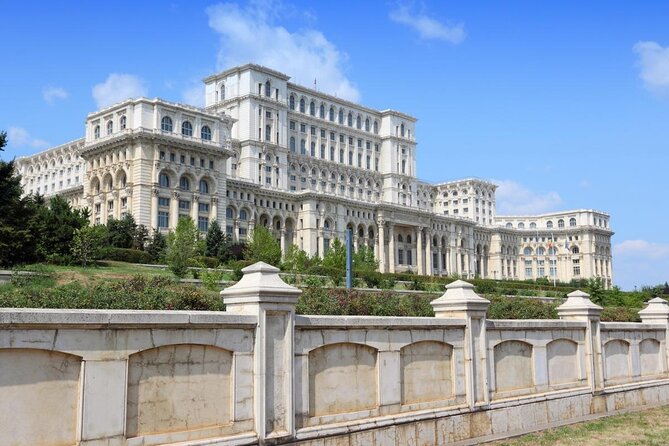
The tour begins at Unirii Square, with a broad view along Unirii Boulevard toward the Palace of Parliament. The boulevard is often compared with Paris’s Champs-Elysees, a clue to the French influence that runs through Bucharest’s architecture and city planning.
This opening gives you scale. The Palace of Parliament is the world’s second-largest administrative building, and its size helps explain the ambition of Ceausescu’s communist redevelopment projects. You do not enter the building as part of the tour, and admission is not included, so this stop is mainly about the view and the historical setting.
Allow about 15 minutes here. That may feel short if you want photographs or a detailed explanation of the building, but it keeps the walk moving. The palace is an important visual marker, and the guide’s wider explanation of communist planning makes the enormous structure easier to understand.
I appreciate this start because Bucharest’s modern political story begins before you reach the Old Town. You are not simply looking at a giant government building. You are seeing the physical result of a regime that reshaped parts of the capital on a massive scale.
Manuc’s Inn and the medieval Old Town
From Unirii Square, the route heads toward the Old Town and Manuc’s Inn, known locally as Hanul lui Manuc. This former caravanserai was once the city’s largest inn, providing a place for merchants and visitors to stay.
The building helps you picture Bucharest as a trading center rather than only a twentieth-century capital. Its courtyards and traditional form offer a sharp contrast with the broad communist boulevard you have just seen.
The stop lasts about 15 minutes, and admission is free. You will pass through the medieval Old Town, which is now the center of the city’s cafés, restaurants, and evening activity. The area can be lively, so listen carefully when the guide is speaking and expect the setting to feel more urban than quiet or preserved.
Manuc’s Inn is valuable because it gives the Old Town a clear focal point. Instead of wandering among attractive façades without context, you learn how commerce shaped this part of Bucharest. The guide can also help connect the old trading district with the French architectural influence that appears later on the route.
St. Anthony’s Church and Curtea Veche
Next comes St. Anthony’s Church, or Biserica Sfantul Anton, followed by Curtea Veche, the ruins of the former Royal Court. The church is described as the oldest in Bucharest, while the royal court offers one of the city’s most intriguing links with Vlad the Impaler, the historical figure associated with Dracula.
This is a short stop, about 15 minutes, but it carries plenty of weight. The church shows the role of Orthodox faith in the early city, while the ruins remind you that Bucharest once had a ruling court at the heart of this district.
The Dracula connection can attract attention, but the real value is separating history from legend. Vlad the Impaler was a historical ruler, and the guide uses Curtea Veche to explain his connection with Bucharest. That is more useful than treating the stop as a quick vampire story.
You may want more time here if medieval history interests you. The schedule gives you an introduction rather than a full archaeological visit. Still, the pairing of church and royal ruins makes the city’s early story easy to follow.
A completely different kind of day out:
- Bucharest: Dracula’s Castle, Peles Castle, & Brasov Old Town
★ 4.5 · 17,858 reviews - Bucharest: Dracula Castle, Peles Castle & Brasov Old Town
★ 4.6 · 10,891 reviews - Bucharest: Dracula’s Castle, Peleș Castle & Brașov Day Trip
★ 4.5 · 5,919 reviews - Bucharest: Palace of Parliament Tickets and Guide
★ 4.3 · 3,182 reviews
Stavropoleos Monastery and Bucharest’s Orthodox character
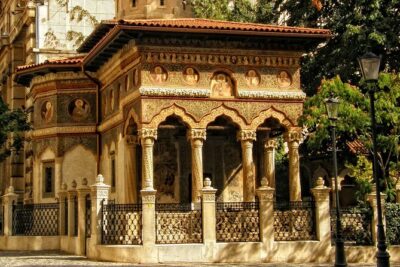
Stavropoleos Monastery is one of the visual highlights of the walk. It is presented as the finest example of Christian Orthodox art in the Old Town, and the visit adds detail and calm to a route that otherwise moves through busy streets.
The monastery is free to visit, and the planned stop lasts about 15 minutes. That is enough to appreciate its ornament and atmosphere, though anyone interested in religious art may wish to return later at a slower pace.
This stop also keeps the tour from becoming only a political history lesson. You move from trade and medieval power to religious art, then onward to the modern city. That range is one of the tour’s strengths.
The guides are praised for taking people to churches and smaller city landmarks that are easy to miss. If you enjoy seeing places beyond the obvious postcard sights, pay close attention to these brief detours. They often reveal more about everyday Bucharest than a grand avenue does.
Lipscani, Calea Victoriei, and Little Paris
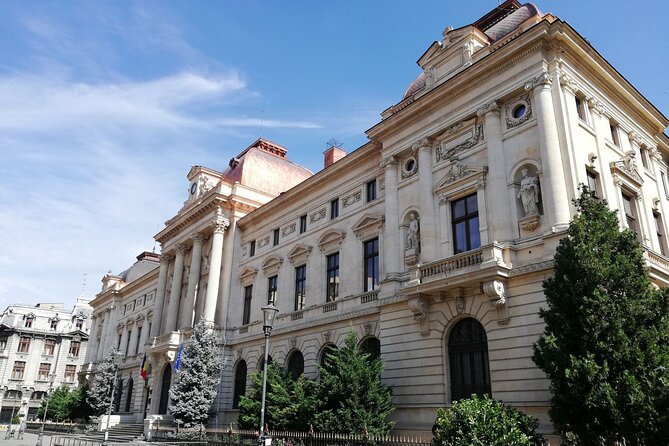
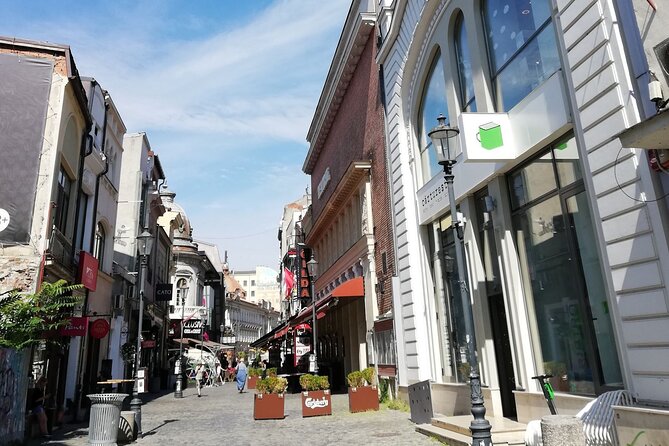
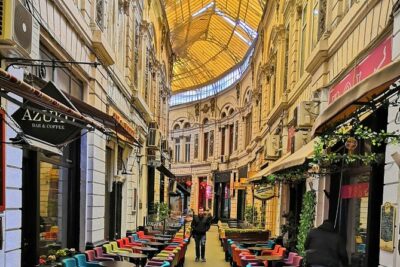
The Lipscani area shifts the story forward into the eighteenth and nineteenth centuries. Here, the guide points out French-style buildings and passageways along Lipscani and Calea Victoriei, explaining why Bucharest was once called Little Paris.
This is where the tour’s architecture and culture theme comes together. French influence affected more than façades. It shaped city style, food, and even parts of the Romanian language. The guide helps you see Bucharest as a city that borrowed from Western Europe while keeping its own Balkan and Romanian character.
The scheduled time is about 30 minutes, longer than most earlier stops. That makes sense because the area has more to explain and more details to notice. Look above street level for decorative elements, and watch for the passageways that connect the main streets with smaller spaces.
Lipscani today is a social center, with plenty of places to eat and drink. That makes it a good area to revisit after the tour. The walk may also give you practical ideas for where to spend an evening, although the tour itself is not designed as a restaurant crawl.
One traditional Romanian snack is included during the experience. It is a modest extra, but it gives you a direct taste of local food and breaks up the walking. If food is your main interest, you will want a separate culinary tour or more time exploring restaurants on your own.
Revolution Square and the end of Ceausescu’s rule
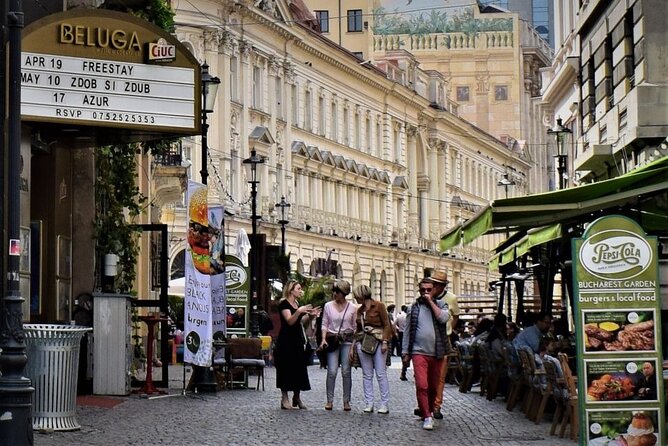
Revolution Square is the emotional center of the tour. Here, the guide explains what communist rule meant for Romania, how Nicolae Ceausescu’s regime collapsed, and how the country changed after the 1989 revolution.
The planned stop lasts about 30 minutes. That is enough time for a clear account, but this subject can easily fill an afternoon. The quality of the explanation matters, and this is where Mara and Elena receive especially strong praise.
Both guides are described as clear, engaging English speakers who combine facts with personal and family experiences. That personal angle can make the period easier to grasp. You are not hearing only dates and political labels. You are hearing how the period affected people and how Romanians view the country’s later changes.
The guide’s tone also seems important. Elena is described as funny, warm, and proud of Bucharest, while Mara is praised for her passion and ability to explain the city’s past in an interesting way. That combination helps keep a difficult subject from becoming a dry lecture.
I would not book this walk expecting a full study of communist Romania. Instead, think of Revolution Square as a strong starting point. It gives you enough background to understand the Palace of Parliament, the city’s appearance, and the meaning of the 1989 uprising.
The Romanian Athenaeum and a useful tour ending
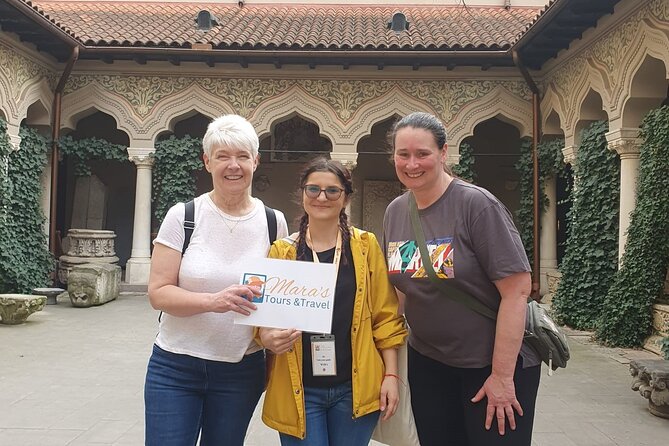
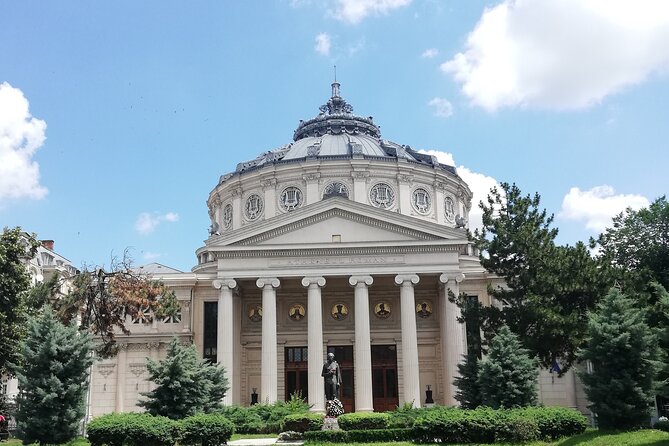
The walk ends at the Romanian Athenaeum, one of Bucharest’s best-known buildings. This concert hall reflects the cultural growth of Romania during the monarchy and provides a fitting final contrast with the communist-era sites earlier in the route.
The Athenaeum is not included in the tour price. Entry costs 15 lei, about 3 euros, and the fee is cash only. Bring a small amount of Romanian currency if you want to go inside. The tour ends in front of the building, so you can decide at that point.
This ending works well because it returns you to art, music, and the monarchy after the difficult discussion at Revolution Square. It also places you near a central part of Bucharest, making it easy to continue sightseeing afterward.
The route does not promise long interior visits at every landmark. You should think of it as a guided walk through the city center, with selected stops inside free sites and exterior explanations at places where admission is separate.
Price, pace, and what you receive
At $54.31 per person, this is not the cheapest way to walk around Bucharest. The value comes from the route, the small group, the English-speaking guide, the historical explanation, and the time you save sorting out the city’s layers on your own.
The price is easier to justify if you have only a short stay or want a strong first look at central Bucharest. A guide ties together places that might otherwise feel unrelated. You also receive a traditional Romanian snack, though that is a small part of the total value.
The maximum group size is 10, and that is a meaningful advantage. The guide can keep a comfortable walking pace, stop for questions, and respond to practical needs. Mara is specifically praised for noticing when someone needed a restroom break, while another departure moved at an easy pace throughout.
You should wear comfortable shoes. The route covers several central areas and includes roughly three hours of standing and walking. The activity is near public transportation, service animals are allowed, and most people can participate, but the description does not provide a precise distance or detailed information about surfaces.
The tour is offered in English. Confirmation arrives when you book. Free cancellation is available until 24 hours before the start time, but late cancellations and changes are not refunded or accepted. Poor weather or failure to reach the minimum group size can lead to a different date or a full refund.
Who will get the most from this Bucharest walk?
I would recommend it most strongly to first-time visitors, people with a short Bucharest stay, and anyone who wants history explained in plain English. It also suits active people who prefer walking to a bus tour and enjoy moving between major sights and smaller landmarks.
It is a good fit if you want to understand communism as part of the city’s story rather than treat it as a separate subject. The stops at Unirii Square, the Palace of Parliament, and Revolution Square give that period a clear physical setting.
Couples and solo visitors may especially like the small group. If only a few people book, the guide can make the experience feel personal. Families with older children may also find the mixture of Dracula, royal ruins, churches, architecture, and revolution more engaging than a standard monument tour.
I would hesitate only if you want long museum visits, a food-focused outing, or extensive time inside each church and landmark. The schedule favors breadth. You see many pieces of Bucharest, then choose which ones deserve a return visit.
Should you book Mara’s Tours & Travel?
Book this walk if you want a well-paced introduction to Bucharest that explains how medieval trade, Orthodox religion, French design, monarchy, communism, and modern democracy fit together. The strongest part is the guide-led storytelling, with Mara and Elena both praised for clear English, humor, warmth, and personal insight.
Bring comfortable shoes, keep 15 lei in cash for the Athenaeum, and leave some time afterward for lunch or further sightseeing near the ending point. If your visit is short, this tour gives you a useful map of the city and enough context to make the rest of your time more rewarding.
FAQ
How long does the Bucharest walking tour last?
The tour lasts approximately three hours. One scheduled outing continued for about three and a half hours because the guide covered additional material.
How many people can join the tour?
The maximum group size is 10 people. Some departures may have fewer participants.
Is the Romanian Athenaeum entrance included?
No. Entry costs 15 lei, about 3 euros, and payment is cash only.
What is included in the tour price?
The tour includes the guided walking experience and one traditional Romanian snack. Tips, gratuities, and entry to the Romanian Athenaeum are not included.
Where does the tour start and finish?
The tour starts at Unirii Square in Bucharest. It ends in front of the Romanian Athenaeum at Strada Benjamin Franklin 1-3.
Can I cancel the booking for a refund?
Yes. You can cancel at least 24 hours before the experience start time for a full refund. Cancellations or changes made less than 24 hours before the start time are not accepted, and poor weather or an insufficient number of participants may lead to a new date or a full refund.
Just added in Bucharest
- Bucharest: Dealu Mare Winery Private Trip with Wine Tasting★ 4.9 · 6 reviews
- Winery touring & private wine tasting – one day private tour★ 5.0 · 3 reviews
- Village Museum Bucharest Guided Tour★ 5.0 · 6 reviews
- Transylvania Tour: Dracula’s Castle, Peles Palace & Brasov★ 5.0 · 19 reviews
- Transfer Airport Otopeni – Bucharest★ 5.0 · 2 reviews
- Private Transfer Bucharest Otopeni Airport (OTP) to/from Brasov★ 5.0 · 2 reviews
- Bucharest Airport Transfer To Constanta Mamaia★ 5.0 · 3 reviews
- Airport Henri Coanda (Otopeni) to Bucharest – Private Transfer – Driver★ 5.0 · 5 reviews
Walking Tours, compared.
Walking Tour- Delightful Bucharest (Highlights, Stories, Sights)
Read our review →

4h Bucharest Private Tour (2h by Car and 2h Walking in Old Town)
Read our review →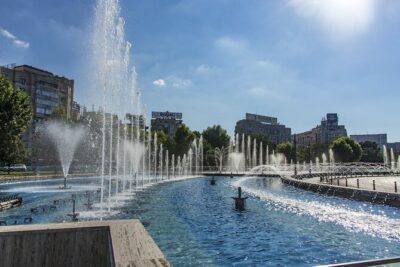
City Tour Sighisoara Legends & Landmarks A Walk Through Time
Read our review →Browse the lists this tour appears in