
REVIEW · BUCOVINA MONASTERY TOURS
Private 7-Day Tour in Transylvania, Maramures and Bucovina from Bucharest
Romania rewards the curious. This seven-day private trip links Bucharest with painted monasteries, medieval towns, wooden churches, mountain roads, and local workshops, giving you far more than a quick Dracula stop. I especially like the private vehicle and guide, which make long distances easier and let you ask questions as Romania changes from region to region. I also like the mix of famous sights and places with a more local feel, such as Marginea’s black pottery and Maramures’ wooden churches.
The main drawback is the pace. You cover a huge part of Romania in one week, so some stops last only 30 to 45 minutes and several days involve long road journeys. The cost, listed at $1,614.86 per person, is easier to justify for couples or small groups who value private transport, lodging, breakfasts, three dinners, and an expert guide, but you should budget extra for entrance fees and most lunches.
In This Review
- Key points to know before booking
- What the seven days really involve
- Day 1: Bucharest’s communist legacy and medieval Sibiu
- Day 2: Alba Iulia’s star fortress and Turda’s underground world
- Day 3: Maramures and the country’s wooden church tradition
- Day 4: Bucovina’s painted monasteries and Marginea pottery
- Day 5: Medieval defense and the Carpathian road
- Day 6: Sighisoara and the Dracula connection
- Day 7: Rescued bears and Peles Castle
- Is $1,614.86 per person good value?
- Who will enjoy this private tour most?
- Should you book this Romanian road trip?
- FAQ
- Is transportation included on the tour?
- Is the tour private?
- Are meals included?
- Are entrance fees included?
- What happens if Peles Castle is closed?
- How much physical fitness is required?
Key points to know before booking
- A private road trip with a dedicated guide: You travel by air-conditioned car or minivan with an English-speaking guide and live commentary throughout the journey.
- UNESCO sites are the backbone of the trip: Sibiu, Sighisoara, the wooden churches of Maramures, and Bucovina’s painted monasteries all bring different chapters of Romanian culture into view.
- The route covers serious ground: You move from Bucharest to Sibiu, Maramures, Bucovina, the Carpathians, Sighisoara, Bran, and Sinaia.
- Entrance fees are extra: Allow roughly 50 euros per person for the listed attractions, in addition to meals not specifically included.
- Bogdan earns special praise: The guide named in the supplied feedback is described as informative, professional, entertaining, and full of extra facts and surprises.
- Confirm the final route before paying: One account connected with Bogdan said Bucovina was missed, so ask for written confirmation that every major region and stop is included.
What the seven days really involve
This is not a gentle base-and-day-trip holiday. It is a moving tour, with each night likely placing you in a different part of Romania. That is the price of seeing so much in one week.
You get a private car or minivan rather than a large coach. That matters on Romania’s winding rural roads, especially around Bicaz Gorge and the mountain passes. You can also ask your guide to explain local customs, food, church traditions, and the changing history of each region as you go.
The schedule favors sightseeing over long free periods. Most stops last between 30 minutes and two hours. That is enough for a guided introduction, photographs, and a short walk, but not always enough for a slow museum visit or an unhurried meal.
The package includes six breakfasts and three dinners. Other meals are not included, although traditional lunches can be arranged in Sighisoara and Bran. Entrance fees are also separate, with the total estimated at about 50 euros per person. Comfortable shoes are important, since the trip includes fortresses, old stone streets, church grounds, and uneven paths.
More Maramures trips:
Day 1: Bucharest’s communist legacy and medieval Sibiu
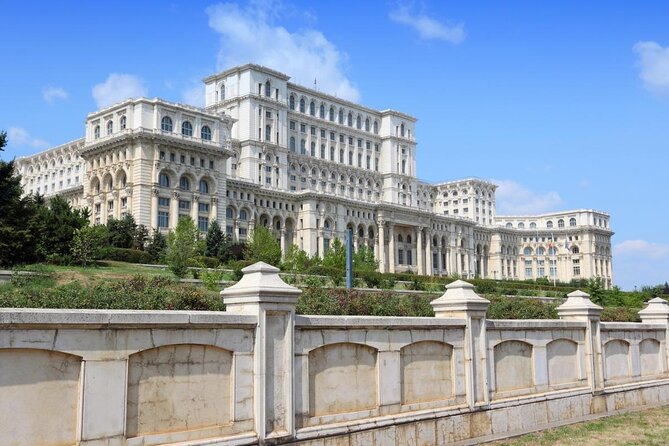
The opening day begins with one of Romania’s most powerful modern symbols, the enormous Palace of the Parliament in Bucharest. Ordered by Nicolae Ceausescu and built between 1984 and 1997, it was part of the dictator’s grand and deeply costly vision for communist Romania.
The building’s scale is the point. It was designed to be the largest building in Europe and the second largest in the world. You will not simply be admiring architecture here. You will also be looking at the physical remains of a political system that reshaped Bucharest through demolition, forced relocation, and monumental construction.
At Cozia Monastery, the story becomes more intimate. Portraits of Ceausescu and his wife once appeared in the monastery museum, while stained-glass images of the couple were later removed and hidden in the attic before the 1989 Revolution. This 45-minute stop gives your guide a useful chance to explain how religious sites survived, adapted, and sometimes clashed with communist power.
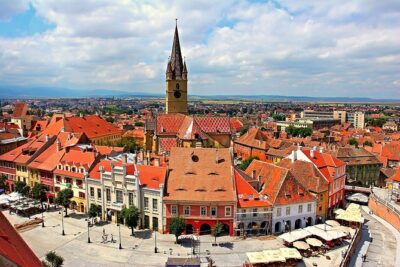
Sibiu is the day’s major reward. This former Saxon city is known for its Big Square, Small Square, and Huet Square, along with towers, bastions, museums, and the famous houses with eye-shaped dormer windows. Catholic, Orthodox, and Protestant monuments reflect the different communities that shaped the city.
You get about 90 minutes here, enough for a guided walk and a first look at the old center. I would want more time in Sibiu, especially if you enjoy cafés, museums, or architectural details, but the short visit gives you a strong introduction. Sibiu was European Capital of Culture in 2007 and remains one of the easiest places on this route to explore on foot.
Day 2: Alba Iulia’s star fortress and Turda’s underground world
Alba Iulia is an excellent first stop because it is broad, open, and easy to understand on foot. Its star-shaped citadel is the largest in Romania, with walls surrounding churches, museums, archaeological remains, and formal monuments.
You have about an hour here. That works well for a brisk walk through the fortifications, though history fans may wish for extra time inside the museums. The citadel is also a useful reminder that Transylvania is not only about castles and Dracula. Its military and religious past is just as important.
Then the mood changes completely at Salina Turda. This former salt mine has been turned into an underground attraction with a Ferris wheel, rowboats, bowling, and a museum about salt mining. It is an odd combination, but that is part of its appeal. You descend into a place shaped by labor and geology, then find a leisure complex far below ground.
The visit lasts around 90 minutes. That should let you see the main chambers and understand the mine’s history, but activities such as rowing or bowling may compete with sightseeing time. The salt mine can also feel like a major change in temperature from the outdoors, so a light layer is sensible.
Your guide can also explain the local belief that salt protects against evil beings. According to the legend, an unbroken line of salt across a doorway can keep vampires and demons out. Romania does not waste a good superstition.
Day 3: Maramures and the country’s wooden church tradition
Day three reaches Maramures, one of the strongest cultural sections of the trip. The region is known for old customs, music, costumes, festivals, hats, and wooden churches. The appeal is not just visual. You are seeing a place where village traditions remain central to local identity.
Surdesti Wooden Church is a fine example. Built from oak logs in 1721, it has a 54-meter tower and a total height of 72 meters. Its double-eaved roof is unusual in the Land of Chioar, as are the two rows of arches above the porch.
You have 45 minutes here, so listen closely to the explanation of how the church was built. The timber construction is easy to admire from outside, but the details make the visit worthwhile. Admission is extra.
The Merry Cemetery in Sapanta is one of the most unusual stops in Romania. Instead of solemn, uniform gravestones, you see brightly painted wooden crosses with poems, small pictures, and accounts of the dead person’s life. Some stories are affectionate. Others are blunt about bad habits, accidents, or difficult personalities.
The tradition began with Stan Ioan Patras, who carved crosses for more than 40 years until 1977. His apprentice continued the work afterward. You have only 45 minutes, which is enough to understand the idea but not enough to read every inscription. The humor can be startling, yet it makes the cemetery feel personal rather than remote.
Barsana Monastery provides a different view of Maramures. The complex is a convent with 16 nuns and tall wooden Orthodox buildings that fit the local architectural tradition. It is newly built compared with the older wooden churches, so do not expect every part of the visit to feel medieval.
Still, Barsana is visually impressive and helps show how old forms continue in modern religious life. With 45 minutes here, you can walk the grounds and take in the wooden spires. This is another stop where modest clothing and respectful behavior are appropriate.
More Bucovina monastery trips:
- Bucovina Painted Monasteries & Transylvania Tour: 4-Day Private
★ 5.0 · 6 reviews - 11-Day Romania Tour from Bucharest with Transylvania & Bucovina
★ 5.0 · 6 reviews - Transylvania & Bucovina Private Tour – 6 days
★ 5.0 · 3 reviews - Bucovina Painted Monasteries Day Tour
★ 5.0 · 83 reviews
Day 4: Bucovina’s painted monasteries and Marginea pottery
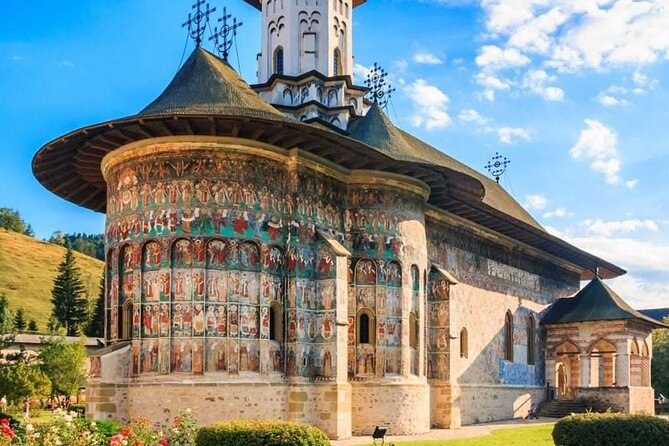
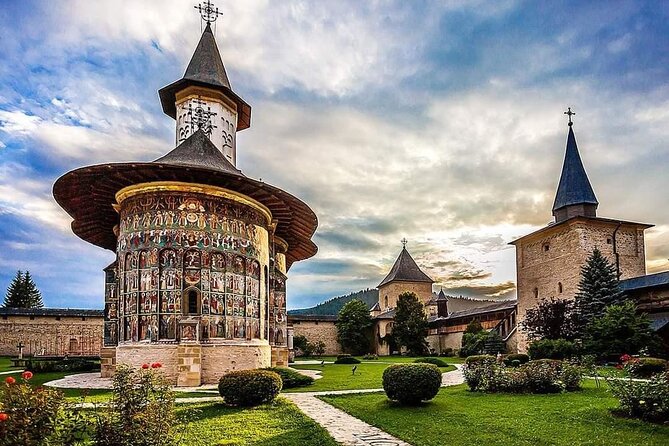
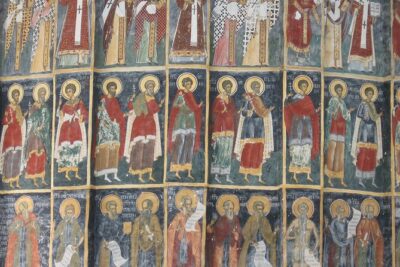
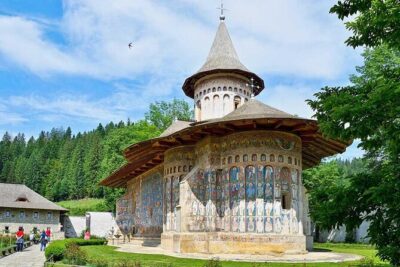
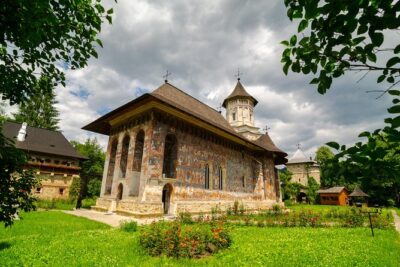
Bucovina is the artistic high point of the journey. The region’s painted churches are famous for exterior frescoes that cover entire walls with religious scenes. These buildings served spiritual, political, and educational purposes, and their paintings helped communicate biblical stories to communities with limited access to books.
At Moldovita Monastery, founded in the 16th century by Petru Rares, you spend about 45 minutes with the frescoes and architecture. The blue, red, green, and ochre colors create a remarkable effect, especially when you step back and see the full exterior cycle.
Sucevita Monastery brings a different mood. Founded in the 17th century by the Movila brothers, it combines Gothic and Byzantine elements. Its northern frescoes survived because the protective walls around that side were never demolished.
The churches are not interchangeable. Moldovita, Sucevita, Voronet, and Humor each have different settings, colors, and surviving details. Seeing several in one trip lets you compare them instead of treating each as a single isolated photo stop.
At Marginea, you visit a workshop producing the area’s famous black ceramics. You can watch the pot-making process and buy local pieces, as well as decorated eggs made using traditional Romanian techniques.
This 30-minute visit is short, but it adds something the monasteries cannot: a direct look at living craft. If you want to buy pottery, ask about packing and transport before making a large purchase. The tour includes the workshop visit, but purchases are your own expense.
Voronet is the best-known name of the day. Built in 1488 by Stephen the Great after a victory against Ottoman forces, its church is often called the Sistine Chapel of the East. Its most famous feature is the mysterious Voronet blue, a color that remains difficult to reproduce.
The visit lasts about 45 minutes. Take time to study the outer walls rather than rushing straight to the most famous image. The frescoes are not just decoration. They form complete religious scenes across the building and show the skill of Moldavian painters from the 15th and 16th centuries.
Day 5: Medieval defense and the Carpathian road
Humor Monastery begins the day with another painted church, built in 1530 by Toader Bubuioga and his wife Anastasia. It sits on a wooded hill near Gura Humorului, in a setting of trees and meadows.
You have 30 minutes here, so this is a focused visit. It works best if you already understand the basic style from Moldovita and Sucevita. Look for differences in the church’s open hallway, frescoes, and proportions rather than expecting another copy of Voronet.
Neamt Fortress shifts the story from religious art to military power. Built in the 14th century and first mentioned in 1395, it was linked to the growth of the medieval Moldavian state. The fortress endured attacks by the Ottomans in 1476 and the Poles in 1691.
The one-hour visit involves an uphill setting at about 480 meters. This is one reason the tour calls for moderate physical fitness and sturdy shoes. The views and stone defenses make the climb worthwhile, but anyone with mobility concerns should ask the operator for more detail before booking.
The road then reaches Bicaz Gorge and Hasmas Mountain National Park. Sheer rock walls press close to the road, and the area includes the Ghilgos Massif, Altar’s Stone, and Hasmasu Mare. The scheduled 30-minute stop is more of a scenic pause than a proper hike.
Red Lake, or Lacul Rosu, adds a strange natural feature. A landslide created the barrier lake, leaving tree trunks rising from the water. Local legends explain the name and add to the atmosphere.
You have another 30 minutes here. That is enough to see the lake and hear its stories, but not enough for the longer walking trails that make Bicaz Gorge especially rewarding. If nature is your main reason for booking, ask how much flexibility the guide can offer.
Day 6: Sighisoara and the Dracula connection
Sighisoara is among the prettiest stops on the route. Pastel buildings, stone lanes, fortified walls, and medieval towers create a compact old town that is easy to explore on foot.
The two-hour visit includes the Clock Tower, the Church on the Hill, and the house where Vlad the Impaler was born. Sighisoara’s Dracula connection is real in a narrow historical sense, but the town is more interesting when you look beyond the legend to its merchant houses, defensive walls, and Saxon character.
Lunch can be arranged at Dracula House Restaurant in the old town. In Bran, another traditional lunch can be arranged with salads, soups, sarmale, meat, chicken, vegetables, and other regional dishes. These meals are not included, so ask about menus and prices before ordering.
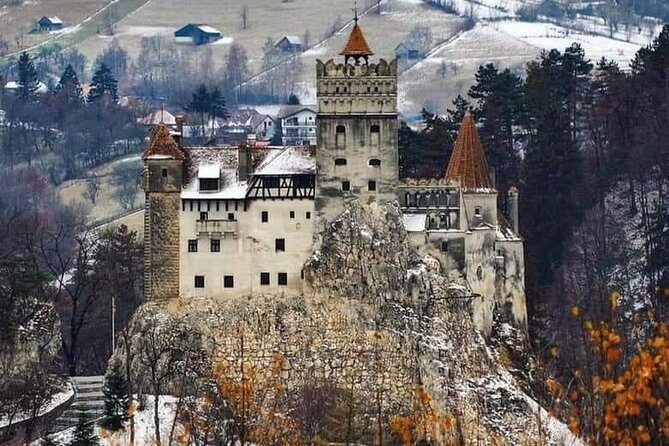
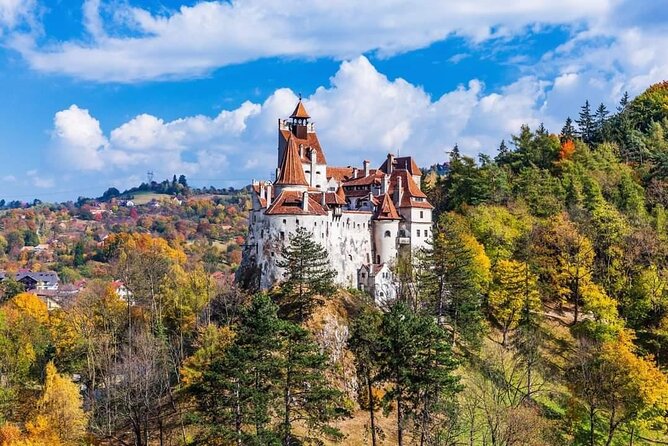
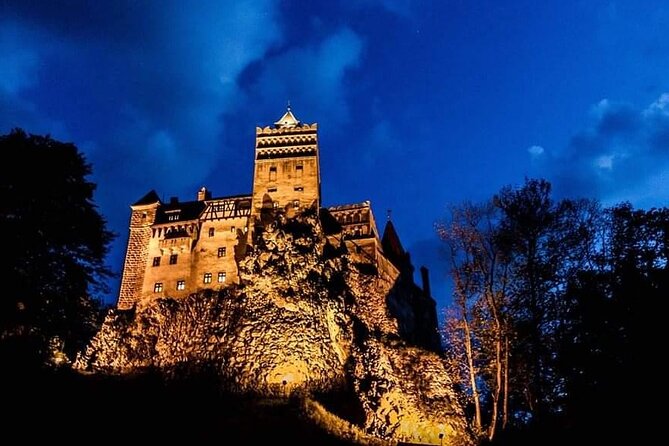
Bran Castle receives 90 minutes. Built on a rock about 60 meters high at the entrance to the Bran-Rucar pass, it has become known worldwide as Dracula’s Castle. The connection to the fictional vampire is stronger than the connection to Vlad the Impaler, but the castle is still worth seeing for its setting and architecture.
Bran can be crowded, and the interior is more compact than the name Dracula’s Castle may suggest. Go for the atmosphere, the mountain position, and the chance to separate popular legend from Romanian history.
The schedule notes that Bran Castle opens at noon on Monday. That matters if your sixth day falls on a Monday. Check the operating time carefully, since a late opening can affect the day’s order.
Day 7: Rescued bears and Peles Castle
Libearty Bear Sanctuary near Zarnesti offers a welcome change from churches and fortresses. Set in 69 hectares of forest, streams, and ponds, it provides a protected home for around 100 brown bears rescued from captivity.
The sanctuary is described as the largest of its kind in the world. You have about 90 minutes to see the animals and learn about their new lives. Photography is allowed, so keep your camera ready, but follow the sanctuary’s rules and do not treat the bears as performers.
This stop has clear value because it addresses animal welfare rather than simply presenting wildlife as entertainment. It also gives the final day a more open, natural setting.
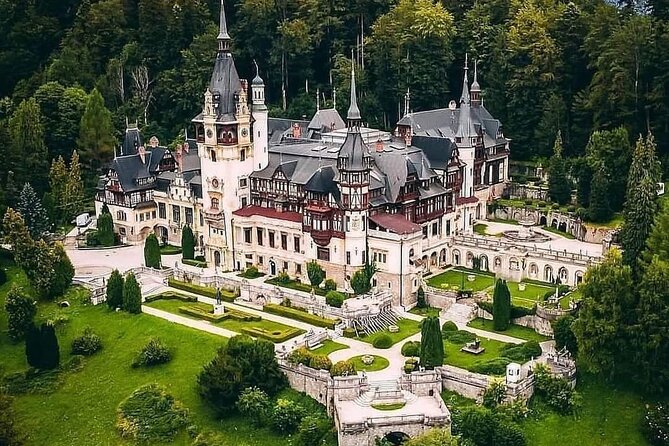
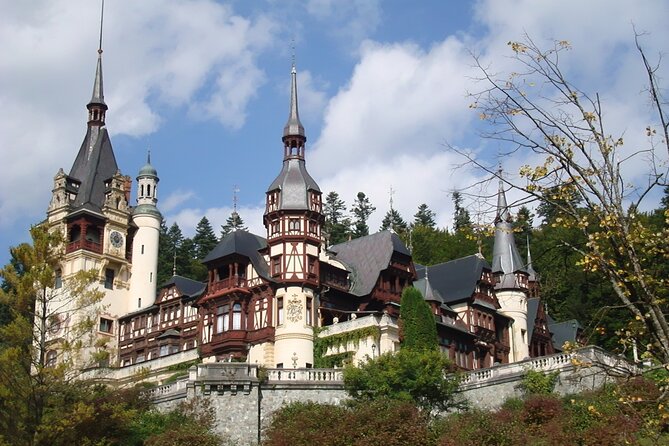
Peles Castle closes the tour in grand style. Built as the summer residence of Romania’s first king, Charles I of Hohenzollern, it was designed by a Czech architect and constructed between the 19th and 20th centuries.
The interior is known for rooms designed in different styles, including a Florentine room with Renaissance influence. You have about 75 minutes, enough for a meaningful visit if the castle is open. Peles is closed on Mondays, however, and on that day you may only see the exterior.
That closure is important. If Peles is a priority, check the day of the visit before booking and confirm the planned schedule. Seeing the castle from outside is still worthwhile, but it is not the same as exploring the rooms.
Is $1,614.86 per person good value?
The price is high for Romania, but this is not simply a seven-day sightseeing pass. You are paying for private transport, an English-speaking guide, live commentary, accommodation, six breakfasts, and three dinners.
The value improves if two or more people share the private experience. You avoid the fixed schedule and group dynamics of a large coach, and you can ask for explanations whenever something catches your attention. Group discounts may also be available.
Still, budget for roughly 50 euros per person in entrance fees, plus lunches, drinks, and any purchases at Marginea. The supplied information lists meals as both included and not included, but the detailed inclusions clarify the practical arrangement: six breakfasts and three dinners are included, while other meals are extra.
I would compare this price with the cost of arranging several hotels, a rental car, fuel, entrance tickets, and a private guide independently. The trip covers a lot of ground, and having someone else handle the driving is a major part of its value.
Who will enjoy this private tour most?
I would recommend it to couples, families, or small groups who want a broad first look at Romania without planning every hotel and road connection themselves. It suits people who care about architecture, religious art, local crafts, folklore, and historical context.
It is less suitable if you want slow mornings, long hikes, or several nights in one town. The schedule is full, and some days involve substantial driving between regions.
The tour requires moderate physical fitness. You should expect walking on old streets, monastery grounds, and fortress approaches. Comfortable footwear is not a minor suggestion here.
Bogdan is the named guide associated with the strongest praise in the supplied feedback. His strengths are described as clear explanations, extra facts, professional service, fun surprises, and a genuine affection for Romania. Since one account also says the group did not reach Bucovina, confirm the route and stops with Transylvania Discovery Tours before making a non-refundable booking.
Should you book this Romanian road trip?
Book it if you want Romania in broad strokes: communist Bucharest, Saxon Transylvania, Maramures woodwork, Bucovina frescoes, Carpathian scenery, Dracula folklore, rescued bears, and royal architecture. Few seven-day routes pack in such a wide range of subjects.
Think twice if your ideal holiday is slow and spontaneous. This trip is ambitious, and the short stop times mean you will sometimes leave just as a place begins to feel familiar.
My advice is simple: request written confirmation of the complete route, check the Monday closures for Bran and Peles, reserve extra money for admissions and lunches, and bring good shoes. If those conditions suit you, the private format and Bogdan’s reported guiding style make this a strong way to see Romania’s major cultural regions in one carefully organized week.
FAQ
Is transportation included on the tour?
Yes. Round-trip transportation from Bucharest is included in an air-conditioned car or minivan, with pickup offered.
Is the tour private?
Yes. Only your group participates in this private activity.
Are meals included?
Six breakfasts and three dinners are included. Other meals are not included, although traditional lunches can be arranged in Sighisoara and Bran.
Are entrance fees included?
No. Entrance fees are separate and are estimated at around 50 euros per person for all listed attractions.
What happens if Peles Castle is closed?
Peles Castle is closed on Mondays. If your visit falls on a Monday, the castle can only be viewed from outside.
How much physical fitness is required?
A moderate level of physical fitness is recommended. Comfortable footwear is advised for walking through medieval towns, monastery grounds, and fortress areas.
Just added in Bucharest
- Bucharest: Dealu Mare Winery Private Trip with Wine Tasting★ 4.9 · 6 reviews
- Winery touring & private wine tasting – one day private tour★ 5.0 · 3 reviews
- Village Museum Bucharest Guided Tour★ 5.0 · 6 reviews
- Transylvania Tour: Dracula’s Castle, Peles Palace & Brasov★ 5.0 · 19 reviews
- Transfer Airport Otopeni – Bucharest★ 5.0 · 2 reviews
- Private Transfer Bucharest Otopeni Airport (OTP) to/from Brasov★ 5.0 · 2 reviews
- Bucharest Airport Transfer To Constanta Mamaia★ 5.0 · 3 reviews
- Airport Henri Coanda (Otopeni) to Bucharest – Private Transfer – Driver★ 5.0 · 5 reviews
Bucovina Monastery Tours, compared.
1-Day Bucovina Painted Monasteries tour from Suceava – English
Read our review →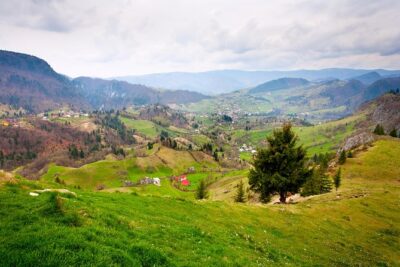
Day trip from Iasi to the UNESCO Painted Monasteries in Bucovina
Read our review →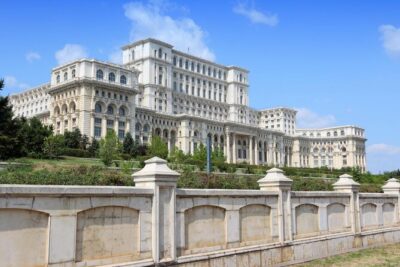
11-Day Romania Tour from Bucharest with Transylvania & Bucovina
Read our review →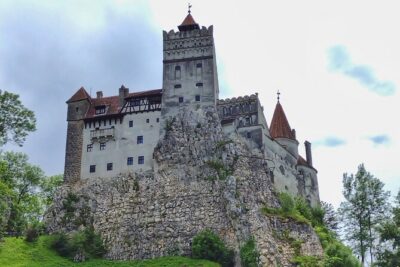
Bucovina Painted Monasteries & Transylvania Tour: 4-Day Private
Read our review →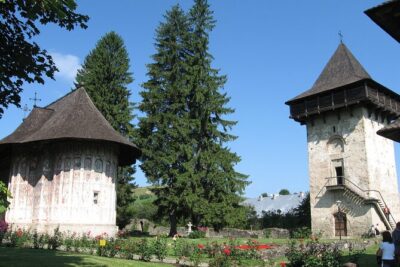
Two days tour to Bucovina & UNESCO Painted Monasteries
Read our review →Browse the lists this tour appears in