
REVIEW · MARAMURES TOURS
8 Days Private Tour in Romania – Transylvania, Maramures & Moldova
Romania rewards curious travelers. This eight-day private tour connects Bucharest, Transylvania, Maramures, and northern Moldova in one sweeping route. You move from communist-era monuments and medieval citadels to painted monasteries, wooden churches, salt mines, and the high roads of the Carpathians.
I especially like the private car and guide-driver arrangement, since it gives your group flexibility without the fixed pace of a large coach. I also like the range of places included, from Bucharest’s Revolution Square to Maramures’ unusual Merry Cemetery and the blue frescoes of Voronet. The main consideration is pace: this is an ambitious trip with many long drives, and entrance fees, hotels, meals, and drinks are extra.
Key points to know
- Eight days, four distinct regions: The route covers Bucharest, Wallachia, Transylvania, Maramures, and Moldova.
- Private travel only: You share the car or minibus with your own family or friends, with a licensed English-speaking guide-driver.
- The Transfagarasan depends on the season: The high section is fully open only from June through October.
- A strong church-and-castle itinerary: You visit Bran, Peles, Poienari, Sighisoara, Sibiu, and several UNESCO-listed or culturally important churches.
- Accommodation is not included: The operator can recommend hotels to suit your budget, but you pay separately for lodging, food, drinks, and attraction tickets.
- Nicolas is the named guide: A personal note from Camelia praises the company’s care and respect, and the guide’s reply identifies Nicolas as the person who led the trip.
In This Review
- What the Private Format Means on the Road
- Bucharest: Communism, Village Life, and the 1989 Revolution
- Curtea de Arges and the High Road to Sibiu
- Fortified Churches and Sighisoara’s Medieval Streets
- Turda Salt Mine and the Wooden Churches of Maramures
- Merry Cemetery and the Pain of Communism
- Barsana and the Painted Monasteries of Moldova
- Voronet, Humor, and the Bicaz Gorges
- Brasov, Bran, and Peles: A Grand Final Day
- Who Will Get the Most from This Tour?
- Should You Book This Romania Tour?
- FAQ
- Where does the tour begin?
- How long does the tour last?
- Is the tour private?
- Is a guide included?
- Are hotels and meals included?
- Are entrance tickets included?
- When is the Transfagarasan Highway fully open?
What the Private Format Means on the Road
At $2,565.50 per person, this is not a bargain group tour. The price needs to be judged against what it includes: a private vehicle, an English-speaking guide-driver available throughout the trip, fuel, parking, road tolls, internet in the car, and the guide’s own accommodation and meals.
You still pay for your own hotels, meals, beverages, and entrance tickets. That makes the final cost higher than the advertised figure, so ask for a full estimate before booking. On the other hand, private transport has real value in Romania, where this route links many towns and mountain areas that are not simple to connect by public transport.
The flexibility is useful. You can request changes to the daily plan even after the tour begins. That matters when you want more time in Sighisoara, less time in a museum, or a slower lunch in a small town. The tradeoff is that flexibility works best when your group agrees on priorities. With so many stops, you cannot linger everywhere.
A private car also makes the long road sections more manageable. You can use the complimentary wireless internet, watch the countryside pass, and ask your guide questions as the route changes from city streets to mountain roads. The available vehicle may be a tourism car or minibus, depending on your group.
Bucharest: Communism, Village Life, and the 1989 Revolution
The first day gives you a useful introduction to Romania’s recent past and older traditions. At the Palace of Parliament, you confront one of the world’s largest administrative buildings, second only to the Pentagon according to the tour description. Its vast scale was created under Nicolae Ceausescu’s communist regime, and the visit works best when you focus less on spectacle and more on what the building says about power and waste.
The Palace of Parliament ticket is not included. Allow about two hours for the visit, and remember that you may not simply walk in and begin exploring. Your guide can help with the visit arrangements, but you should confirm ticket details before the tour.
The Dimitrie Gusti National Village Museum provides a sharp contrast. Instead of monumental government architecture, you see traditional rural homes and structures gathered in an outdoor setting. The stop offers a practical look at how Romanian villagers built homes and communities around local materials, work, faith, and daily needs. The suggested visit lasts one hour, and admission is extra.
At the Romanian Athenaeum, you see one of Bucharest’s key cultural symbols. The stop is short, around 30 minutes, so treat it as an architectural and civic landmark rather than a full concert-hall visit. Admission is not included.
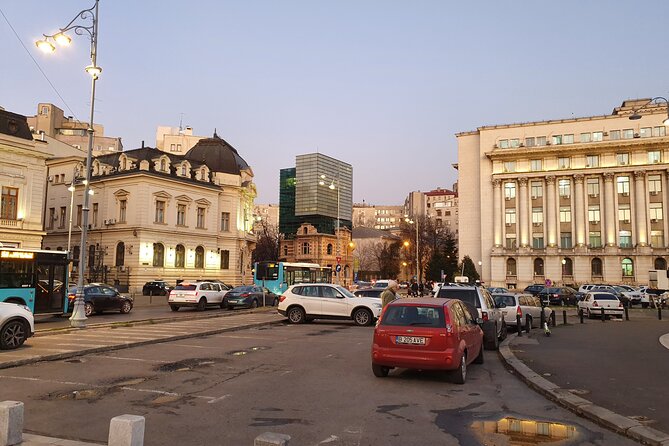
Revolution Square adds the political link between the first two sites. This is where the December 1989 uprising brought the Ceausescu era to an end. You see the former Central Committee building and the Senate Palace area, places connected with the final days of the regime. The stop is free and takes about 30 minutes.
The day finishes in Bucharest’s Old Town. Hanul lui Manuc, built around 1806 by Manuc Bei, recalls the city’s role as a meeting point for merchants and travelers. You also have time for restaurants and historic streets. Two hours is enough for an introduction, though the area can tempt you to stay longer for dinner.
More Maramures trips:
Curtea de Arges and the High Road to Sibiu
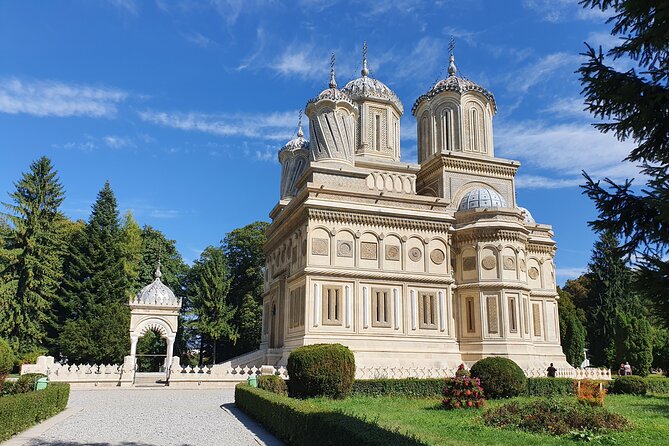
Day two begins with Curtea de Arges Monastery, known for its royal tombs and distinctive architectural story. You can also see the remains of the Wallachian princely court and the 13th-century Royal Church. The planned visit is only 30 minutes, so this is a quick look rather than a slow study of every building.
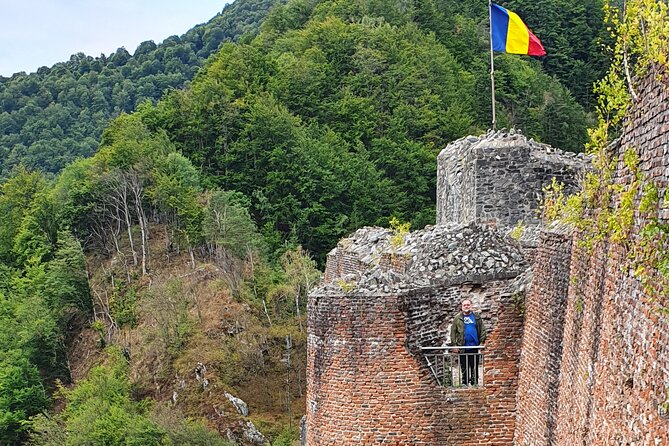
Poienari Fortress requires more time and effort. The ruins sit high above the Arges River, at the foot of the Carpathians, and are tied to Vlad the Impaler. The fortress was repaired and strengthened during Vlad’s rule, then captured by the Turks in 1462. A secret passage reportedly allowed Vlad to escape north through the mountains.
The listed duration is two hours, which gives you time for the climb and the view. The information provided does not state the exact number of steps or current access conditions, so ask your guide about the day’s physical demands. If you dislike steep walks, this may be one of the harder stops.
Sibiu brings you back to a refined medieval city. The Big Square, the Evangelical Cathedral, and the Old City Center help explain why Sibiu was chosen as a European Capital of Culture. The two-hour city visit gives you time to look at the buildings, walk the central streets, and choose a restaurant.
The Transfagarasan Highway is the day’s great scenery stop. Stretching for more than 150 kilometers, it reaches 2,042 meters at the tunnel near Balea Lake. The road is fully open only from June through October, so the season matters greatly. Outside that period, the route may not be available in the same form.
Two separate entries in the schedule allow about two hours each for the highway. That likely reflects time for viewpoints and road sections rather than a single ordinary stop. Even so, weather and road access can affect the plan. Ask the operator to confirm exactly which portions you will drive during your dates.
Fortified Churches and Sighisoara’s Medieval Streets
Day three focuses on the Saxon legacy of Transylvania. At Biertan Fortified Church, you see a church built on a hill in the center of town, protected by three defensive walls and seven bastions. The settlement dates to 1224, and the church is part of the UNESCO World Heritage list.
The two-hour visit should suit anyone who likes architecture, fortifications, and the story of Transylvanian Saxon communities. The church admission is extra, and the hilltop position means you should wear comfortable shoes.
Sighisoara is one of the tour’s strongest stops. Its citadel was built in 1280 and has remained inhabited for more than 700 years. The Clock Tower and Arms Museum offer a compact way to understand the town’s defensive past, while the streets themselves provide the atmosphere.
The town is also linked with Vlad the Impaler, who was born here, though the Dracula connection can easily overshadow the real place. I would give more attention to the living medieval town than to vampire folklore. Three hours allows a much better visit than a rushed photo stop, especially if you want time around the citadel.
Turda Salt Mine and the Wooden Churches of Maramures
Salina Turda is an unusual change of pace. The former salt mine is presented as both an impressive underground attraction and a place where saline air may benefit people with allergies or asthma. You should not treat that as medical advice, but the mine’s underground spaces are the reason this stop feels different from the castles and churches.
The planned visit lasts two hours, and admission is extra. Temperatures underground may differ from the weather outside, so carrying an extra layer is sensible, though the tour information does not specify exact conditions.
In Cluj-Napoca, the Alexandru Borza Botanical Garden offers one hour among a city known for Baroque, Renaissance, and Gothic buildings. The itinerary also points you toward the Old City Center and local restaurants. Since only one hour is assigned to the garden, you should ask whether the city walk is separate or folded into the wider driving schedule.
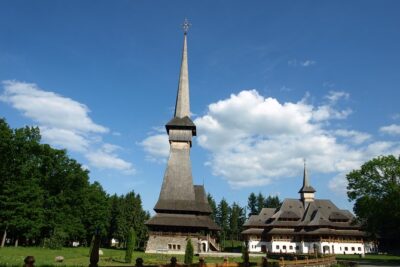
The Surdesti Wooden Church is a memorable piece of Maramures craftsmanship. Its tower reaches about 54 meters, and the church was built in 1721. The description also gives a total height of 72 meters, so the measurements are not entirely consistent. Either way, this is a remarkably tall wooden structure, and the 45-minute visit is enough to appreciate its scale and workmanship.
More Transylvania trips:
- Transylvania and Dracula Castle Full Day Tour from Bucharest
★ 4.5 · 1,589 reviews - Castles of Transylvania: Private Day Trip from Bucharest
★ 4.5 · 248 reviews - 2-Day Transylvania from Bucharest: Brasov, Bran, Sighisoara
★ 5.0 · 60 reviews - Transylvania: Cultural Full-Day Trip by Minivan
★ 4.8 · 57 reviews
Merry Cemetery and the Pain of Communism
At Sapanta’s Merry Cemetery, Romania’s traditional relationship with death takes an unexpected turn. Colorful crosses and carved verses describe the lives of the deceased with humor. The result is not simply cheerful decoration. It is a local way of remembering people as ordinary, flawed, funny human beings.
The visit takes about one hour. I would read as many of the inscriptions as possible rather than treating the cemetery as a quick photo stop. The humor can be blunt, and that is part of what makes the place distinctive.
The Memorial to the Victims of Communism and to the Resistance provides a much darker counterpoint. Its purpose is to show the damage caused by totalitarian rule and the suffering endured by Romanians who resisted it. The two-hour visit deserves attention, especially after seeing the Palace of Parliament and Revolution Square in Bucharest.
Together, these two stops show why Maramures is more than a rural postcard. You see local customs, humor, faith, and painful political memory in the same region.
Barsana and the Painted Monasteries of Moldova
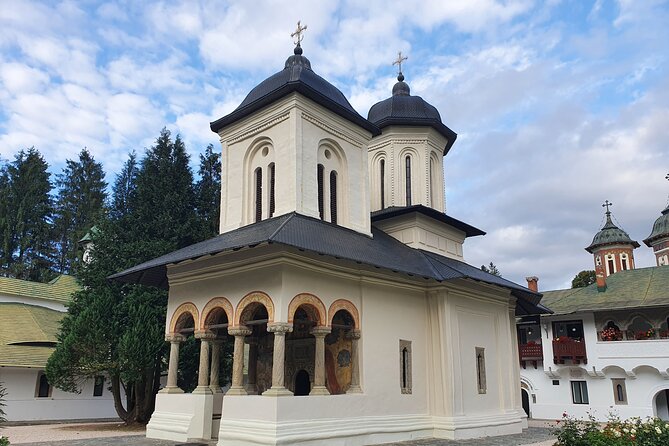
Barsana Monastery is known for its tall wooden church, listed at 57 meters. The complex is presented as one of Romania’s most beautiful wooden monastic sites, and the one-hour visit lets you see its buildings, grounds, and mountain setting.
From there, the tour reaches northern Moldova, also called Bukovina in connection with its painted monasteries. Sucevita Monastery is a fortified church covered with biblical scenes and icons. Its walls make the building feel like an illustrated religious text, and its UNESCO recognition reflects both artistic and cultural importance.
The visit lasts 45 minutes, enough for an overview but not a slow examination of every painting. Modest dress is a practical choice for all monastery visits, though no formal dress rule is specified in the tour details.
Moldovita Monastery, founded in 1532, combines Byzantine, Gothic, and Moldavian elements. Its interior and exterior murals are the main reason to come. Again, the stop is 45 minutes, so listen closely to the guide and decide in advance which details matter most to you.
Voronet, Humor, and the Bicaz Gorges
Voronet Monastery is the star of day seven. Stephen the Great founded it in 1488 after the Battle of Vaslui, and the church was built in just three months and three weeks, according to the information provided. Its frescoes are famous for the intense shade of blue known as Voronet blue.
The nickname Sistine Chapel of the East points to the painted walls, but it can also create false expectations. This is a Romanian Orthodox monastery with its own visual language and setting, not a smaller copy of an Italian chapel. The 45-minute stop is brief, so focus on the exterior frescoes and the guide’s explanation.
Humor Monastery adds another example of a fortified religious site that survived conflict and time. The first church on the site, built around 1400, was destroyed, and the later monastery endured. The visit lasts 45 minutes.
The Bicaz Gorges shift the mood again. The road follows a river cutting through mountains and forests, with streams, rocks, and steep walls close to the route. Three hours are assigned here, giving you time for scenic pauses and photographs. The exact amount of walking is not specified, so ask your guide how the stop will be handled on your date.
Brasov, Bran, and Peles: A Grand Final Day
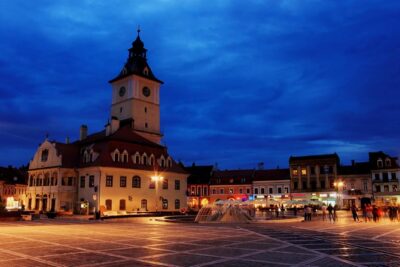
Brasov is an appealing final-day city stop. A walking tour takes you to the Black Church, the Old Town square, and sections of the medieval walls. You also have free time in the cafés, which is welcome after several days of tightly scheduled monuments.
The Black Church admission is not included. The two-hour visit should leave enough time for both the main sights and a little unplanned wandering.
Bran Castle is marketed around Dracula, but the useful way to approach it is as a historic castle that became linked with Bram Stoker’s fictional vampire. The resemblance between the imagined castle and Bran helped create the connection, though the literary and Romanian histories are not identical.
Outside the castle, you can try handmade cheeses, plum and pear brandy called palinka, ham, and sausages. These tastings are described as an opportunity, not as an included meal, so budget separately. The castle ticket is also extra.
Peles Castle provides a more polished royal finale. It was the Romanian royal family’s summer residence and is presented as one of Europe’s most beautiful castles. The two-hour stop should give you time to appreciate the interior and setting, though entrance costs are separate.
Who Will Get the Most from This Tour?
I would recommend this trip to families and friends who value privacy, want a guide with them every day, and prefer seeing many regions without arranging each transfer themselves. It also suits people with a strong interest in medieval architecture, religious art, communist history, and mountain roads.
You should be comfortable with long travel days and frequent changes of scenery. The plan includes several 45-minute visits, major cities, mountain routes, and border-region culture within eight days. It is not ideal if you want a slow holiday based in one or two hotels.
The company’s flexibility is a major asset, and Nicolas’ reply to Camelia is warm and personal. Her praise focuses on the company protecting and respecting its clients, which is the most positive point attached to the experience. Still, the overall rating is based on only one review, so I would treat that as encouraging rather than conclusive.
Cancellation is free up to 24 hours before the start time for a full refund. Changes or cancellations within 24 hours are not accepted or refunded. The tour permits service animals, is near public transportation, and is described as suitable for most participants, but the climb at Poienari is worth discussing if mobility is a concern.
Should You Book This Romania Tour?
Book it if you want a private, high-coverage route and you are happy to pay extra for hotels, meals, and admission tickets. The combination of Transylvania, Maramures, and Moldova is the real value here. Few short trips bring together communist Bucharest, Sighisoara, wooden churches, painted monasteries, and the Transfagarasan.
Skip it if you prefer a relaxed pace or dislike sitting in a car for long stretches. Before paying, confirm the hotel plan, the complete entrance-fee budget, the exact Transfagarasan route for your dates, and the vehicle size. If those details fit your group, this is a strong way to see Romania’s many sides with a guide who can adjust the journey to your interests.
FAQ
Where does the tour begin?
The tour is based in Bucharest, Romania, and pickup is offered.
How long does the tour last?
The private tour lasts approximately eight days.
Is the tour private?
Yes. Only your own group participates, using a private tourism car or minibus.
Is a guide included?
Yes. A private licensed English-speaking guide-driver is available throughout the tour.
Are hotels and meals included?
No. Your accommodation, meals, and beverages are not included. The operator can recommend hotels according to your budget.
Are entrance tickets included?
No. Entrance fees for attractions such as the Palace of Parliament, Poienari Fortress, museums, castles, churches, and monasteries are paid separately.
When is the Transfagarasan Highway fully open?
The highway is fully open only from June through October. Road access can affect this part of the itinerary.
Just added in Bucharest
- Winery touring & private wine tasting – one day private tour★ 5.0 · 3 reviews
- Bucharest: Dealu Mare Winery Private Trip with Wine Tasting★ 4.9 · 6 reviews
- Village Museum Bucharest Guided Tour★ 5.0 · 6 reviews
- Transylvania Tour: Dracula’s Castle, Peles Palace & Brasov★ 5.0 · 19 reviews
- Transfer Airport Otopeni – Bucharest★ 5.0 · 2 reviews
- Private Transfer Bucharest Otopeni Airport (OTP) to/from Brasov★ 5.0 · 2 reviews
- Bucharest Airport Transfer To Constanta Mamaia★ 5.0 · 3 reviews
- Airport Henri Coanda (Otopeni) to Bucharest – Private Transfer – Driver★ 5.0 · 5 reviews
Maramures Tours, compared.
Classic Romania Tour – small group in 8 days: Transylvania and Maramures
Read our review →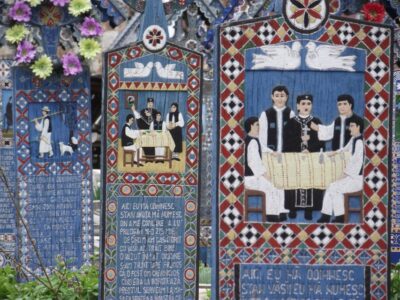
Two days tour to Maramures: local experiences and culture
Read our review →
A Journey Back in Time: Countryside from Transylvania and Maramures – 15 Days
Read our review →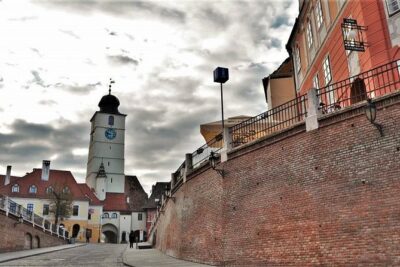
Your rendez-vous with Europe’s past: time-travel to Maramures, Transylvania
Read our review →Browse the lists this tour appears in