
REVIEW · CITY TOURS
Bucharest: City Highlights Guided Walking Tour
History changes quickly in Bucharest. This two-hour walk links medieval ruins, royal buildings, revolution sites, and communist architecture in one compact route. I like the clear east-to-west story, and I like that guide Claudiu has been praised for shaping the walk around each guest’s interests. The main trade-off is simple: at $45 per person, it costs more than some longer city walks.
You begin beside the She-wolf Statue at Bucharest’s 0 km point and finish in front of the Palace of Parliament. I especially like the route’s strong mix of Calea Victoriei architecture and 1989 Revolution history. You should also know that the 3.5-kilometer route takes about 4,600 steps, so it is not a good fit for wheelchair users, people with mobility limits, or anyone seeking a very gentle stroll.
In This Review
- What makes this Bucharest walk worth your time
- Starting at the She-wolf Statue in Old Town
- Old Princely Court: Bucharest before the boulevards
- From royal Bucharest to Revolution Square
- Calea Victoriei and the Little Paris idea
- Crossing the Dambovita into the Civic Center
- Ending at the Palace of Parliament
- Is $45 a fair price for two hours?
- Who will enjoy this walk most?
- Practical ways to get more from the two hours
- The most memorable part of the route
- Should you book this Bucharest walking tour?
- FAQ
- Where does the tour begin?
- Where does the tour finish?
- How long is the Bucharest highlights tour?
- How far do you walk?
- Is the Palace of Parliament entrance included?
- What language is the tour conducted in?
- What should I bring to the tour?
What makes this Bucharest walk worth your time
- Start at Bucharest’s 0 km point: The She-wolf Statue beside the meeting place gives the tour a clear geographic beginning.
- See three versions of the city: The route moves from the Old Princely Court to royal Bucharest, then into the communist Civic Center.
- Walk historic Calea Victoriei: This famous boulevard offers a close look at the buildings behind Bucharest’s old Little Paris nickname.
- Connect architecture with the 1989 Revolution: Revolution Square makes Romania’s recent past part of the city walk, not just a museum topic.
- Finish at the Palace of Parliament: Constitution Square provides a powerful final view of the communist-era rebuilding project.
- Ask Claudiu to shape the walk: He has been praised for answering questions, discussing Romanian life, and adjusting the focus to personal interests.
Starting at the She-wolf Statue in Old Town
The meeting point is next to the Statue of the She-wolf on Lipscani Street, in what the details call Roma Square. It is also described as Bucharest’s 0 km point, giving you a useful starting marker in the center of the city.
That detail matters because this is not a tour that begins with a long transfer or a distant suburb. You start in central Bucharest and begin walking straight into its layered past. The first section takes you through the old town, where the streets lead toward the Old Princely Court and Church.
You should arrive ready to walk rather than expecting a series of short stops reached by vehicle. The route covers roughly 3.5 kilometers, or 2.3 miles, and about 4,600 steps. Two hours is a brisk but manageable length for a city introduction, though frequent explanations and building stops mean you will not simply march from one landmark to the next.
The guide service is in English. Claudiu received particular praise for making the walk personal, asking about interests, answering questions, and sharing parts of his life in Romania. That kind of exchange can make a short tour feel less like a list of dates and more like an introduction to the city.
More City Tours in Bucharest
- Bucharest: City Highlights Guided Walking Tour
★ 4.9 · 1,482 reviews - Bucharest: 2-Hour City Highlights Bike Tour
★ 4.8 · 269 reviews - Bucharest Tuk Tuk city tour
★ 5.0 · 188 reviews
Old Princely Court: Bucharest before the boulevards
The Old Princely Court and Church give you the medieval starting point for Bucharest’s story. Before the royal avenues and massive government buildings, this was a city shaped by princes, courts, religious buildings, and trade.
I like this stop because it prevents the tour from reducing Bucharest to its 20th-century past. The city is often introduced through communism, the Palace of Parliament, and the 1989 Revolution. Those subjects matter, but the Old Princely Court reminds you that Bucharest has much older roots.
Expect this part of the walk to focus on what the site means rather than on a long indoor visit. Entry fees are not included, and the experience is primarily a guided walk. If you want a more detailed archaeological or religious visit, ask about what can be entered during the tour, since the information supplied does not promise interior access at every stop.
This is also where your questions can help shape the pace. Claudiu’s approach has been described as flexible, so you can ask for more context about the old town, architecture, or Romania’s political past instead of simply following a fixed script.
From royal Bucharest to Revolution Square
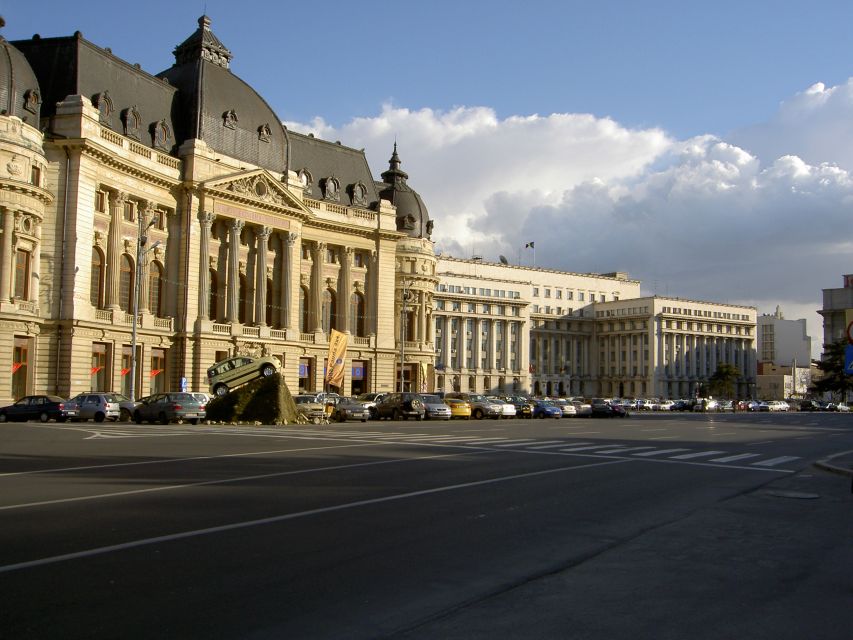
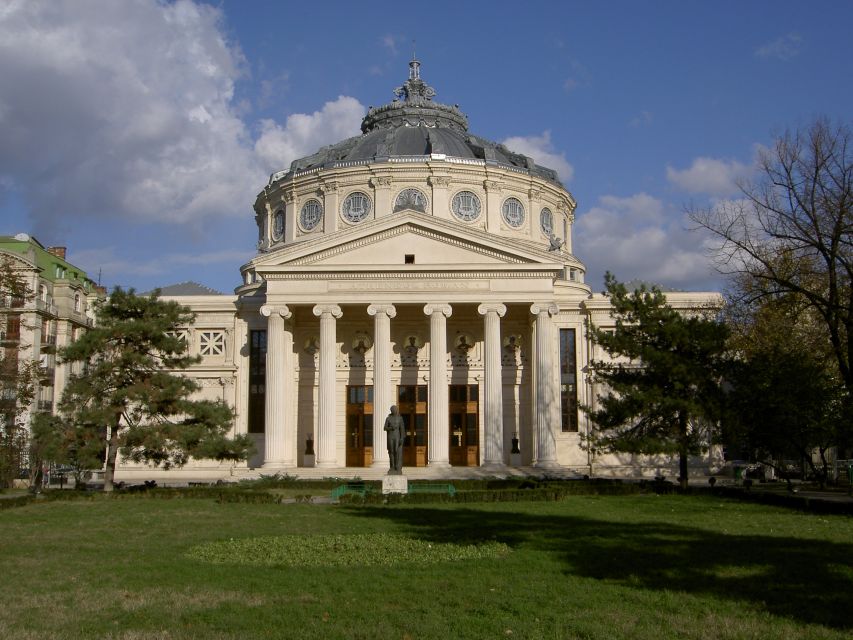
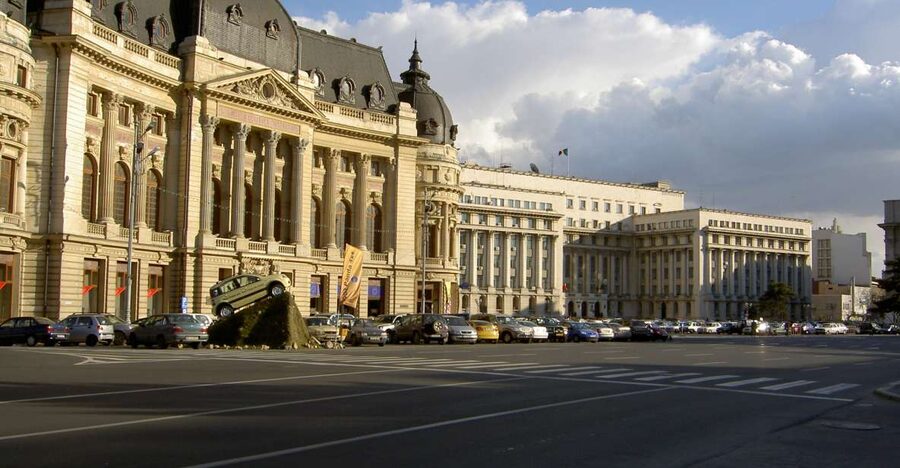
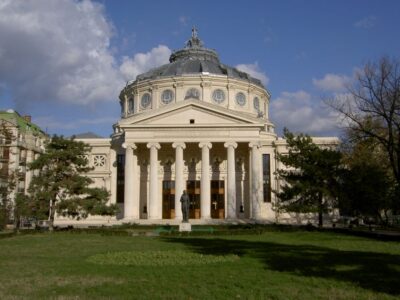
The next section moves toward the former Palace Square, where the former Royal Palace and the Romanian Athenaeum bring a different period into view. Here, Bucharest’s identity shifts from princely center to royal capital.
The Romanian Athenaeum is an especially useful stop for understanding the city’s ambition during its European-facing period. The former Royal Palace adds another layer, linking the boulevard to Romania’s monarchy and public institutions. You are not seeing isolated monuments. You are following the way Bucharest presented itself through grand buildings and formal public spaces.
The route then reaches present-day Revolution Square. This is one of the tour’s most important stops because the buildings carry the memory of the 1989 Revolution. The former Communist Party headquarters connects the physical city to the end of Nicolae Ceaușescu’s rule and the dramatic events that changed Romania.
I value this part of the walk because it places political change in a real setting. You can look at the buildings while hearing how the square became a center of protest and revolution. A guide is useful here, since the significance is not always obvious from the architecture alone.
The tour does not promise a long museum visit or an inside look at every building. Instead, it gives you a compact explanation while standing among the places where events unfolded. For a first visit, that balance works well. If you want a full study of communist Romania, you will need more time elsewhere.
Calea Victoriei and the Little Paris idea
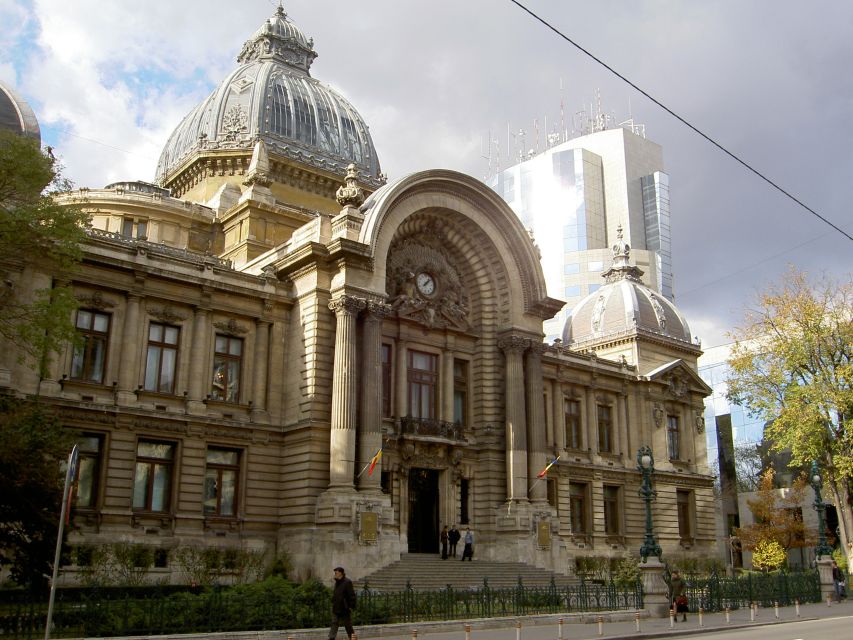
Calea Victoriei is the route’s architectural backbone. Walking this historic boulevard lets you see why Bucharest was once called the Little Paris of the East.
That nickname can sound overly polished if it is treated as a slogan. On foot, you get a better chance to consider what it means. The boulevard carries the city’s older European ambitions through its built heritage, royal associations, and public buildings. The pleasure comes from seeing how those pieces sit together along one historic route.
I like that the tour treats Calea Victoriei as more than a shopping street or a connection between landmarks. It is a record of changing taste and power. The guide can point out the buildings and explain the period when Bucharest was trying to present itself as a modern European capital.
The supplied details do not list every building you will stop at, so you should not book this expecting a complete architectural inventory. The value is in the broad reading of the boulevard and in the guide’s ability to connect what you see with the city’s past.
A short stop at Stavropoleos Church adds a quieter note. Near the History Museum, the church offers a contrast to the larger royal and government buildings. The stop also gives the route a chance to return to religious and older architectural traditions before crossing the Dambovita River.
One useful point: entry fees are not included. The tour description specifically says that inside visits to the Palace of Parliament can be arranged before or after the walk, but only if confirmed when booking and only if available. That option should not be treated as automatic.
More Walking Tours in Bucharest
- Bucharest Highlights Walking Tour
★ 5.0 · 469 reviews - Bucharest: Ghost Stories & Romanian Mythology Walking Tour
★ 4.9 · 287 reviews - Bucharest: Guided Walking Tour with Romanian Snack
★ 4.9 · 228 reviews - Best of Bucharest | Private Walking Tour
★ 5.0 · 199 reviews
Crossing the Dambovita into the Civic Center
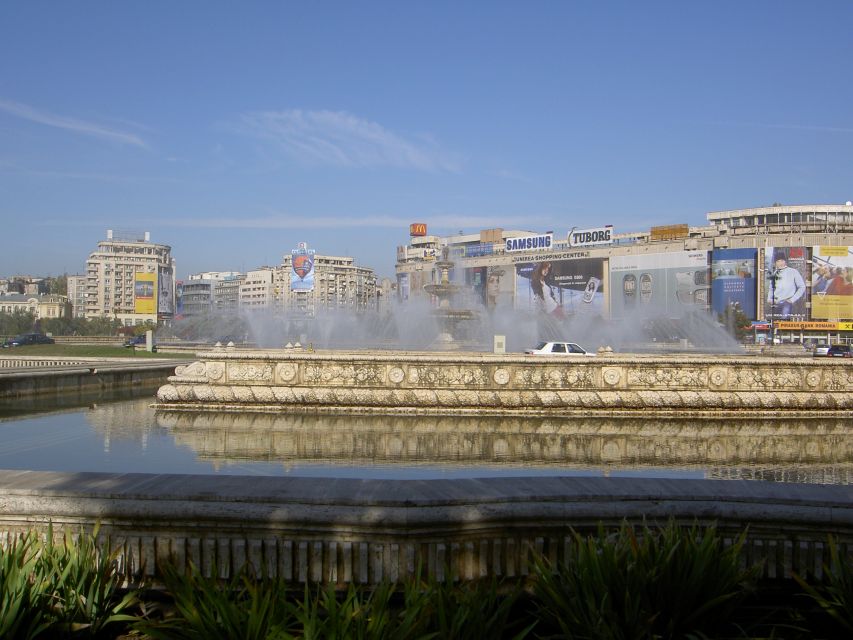
After the old town, royal quarter, and Calea Victoriei, the route crosses the Dambovita River and enters the Civic Center. This is the largest change in mood along the walk.
The Civic Center was built during the communist era as a new central district. Its scale and planning reflect a government project very different from the older streets you have just walked. The tour’s design makes that contrast useful: you see the city’s medieval center, its royal boulevard, and then a state-planned center built under communism.
This section is likely to interest you most if you want to understand how politics shaped Bucharest’s physical form. The buildings are not simply large. They show how a government tried to remake the center of the capital.
At the same time, this part may feel less intimate than the Old Town or Calea Victoriei. Older districts offer small details and close views. The Civic Center is about scale, distance, and power. I would keep that difference in mind when deciding what kind of walking tour you want.
The route ends at Constitution Square, in front of the Palace of Parliament. That finish gives the walk a clear final chapter rather than ending on an ordinary street corner.
Ending at the Palace of Parliament
The Palace of Parliament is the tour’s biggest visual stop and its clearest symbol of communist-era ambition. From Constitution Square, you can take in the relationship between the enormous building and the Civic Center around it.
A short walking tour cannot explain every part of such a building, but it can give you the essential setting. You will have already heard about the communist center, crossed from the older city, and considered the 1989 Revolution. The Palace then becomes a physical endpoint for that story.
If you want to go inside, the visit may be arranged before or after the tour. You must request this when booking, and it depends on availability. Any entry fee is separate from the $45 walking tour price.
That distinction is important for planning. The guided walk itself ends outside, so anyone hoping for an interior visit should confirm it ahead of time rather than assume the guide can add it on the day. If interior access is not available, the exterior finish still gives you a strong sense of the building’s scale and place in Bucharest’s recent past.
Is $45 a fair price for two hours?
At $45 per person, this is not the cheapest way to see central Bucharest. One direct assessment called it a little expensive compared with longer tours. That is a fair concern, especially if you measure value only by time or distance.
The price makes more sense if you care about interpretation and a focused route. You are not paying for transportation, a meal, or included admissions. You are paying for an English-speaking guide who connects several periods of Bucharest in two hours.
The route also saves you from arranging the sequence yourself. Old Princely Court, the former Royal Palace, the Romanian Athenaeum, Revolution Square, Calea Victoriei, Stavropoleos Church, the Dambovita crossing, the Civic Center, and the Palace of Parliament form a useful progression. On your own, you could visit these places, but you would need to research the links between them and manage the walking route.
I would consider the tour better value at the start of a Bucharest visit, when context helps you understand later sightseeing. It is less compelling if you already know the city well or want long interior visits, because the duration limits how much detail you can receive at each place.
Three strong ratings praise Claudiu’s explanations, patience, and willingness to answer questions. One person felt the price was high, but still considered the tour high quality. That is a useful way to frame the cost: the value depends heavily on how much you want a guide’s historical explanation rather than just a route between landmarks.
Who will enjoy this walk most?
I would recommend this tour to a first-time Bucharest visitor who wants a fast orientation with real historical substance. It suits you if you want the old town, royal architecture, Revolution Square, and the Palace of Parliament tied together in one outing.
It is also a good match if you enjoy asking questions. Claudiu has been praised for learning what interested each person and adjusting the walk around those interests. One person even found that he helped with access to a couple of buildings they had assumed were closed, though you should not treat that as a guaranteed part of every departure.
The tour may suit you particularly well if Romania’s transition from monarchy to communism to post-1989 democracy interests you. The route gives that story a visible structure through its buildings and public squares.
I would think twice if you have a low fitness level or cannot comfortably walk 3.5 kilometers. The experience is not suitable for wheelchair users or people with mobility impairments, according to the provided conditions. Large bags and luggage are not allowed, and you should bring a passport or ID card.
Families and older visitors need to judge the walking distance for themselves. The tour lasts only two hours, but the step count is still substantial because the route is continuous and includes several outdoor stops.
Practical ways to get more from the two hours
Wear comfortable shoes and expect to remain outside for much of the experience. The route includes historic streets, a river crossing, major squares, and a large civic district, so comfort matters more than style.
Book the Palace of Parliament interior visit at the same time as the tour if that is important to you. It must be confirmed in advance and depends on availability, and entry is not included.
Bring your passport or ID card, but leave luggage and large bags elsewhere. The tour is conducted in English, so it is best suited to you if you can follow spoken historical explanations and ask questions in English.
Use the meeting point carefully. The guide waits next to the She-wolf Statue on Lipscani Street, at Roma Square. Starting at the stated 0 km point gives the tour its geographic marker, but you still need to identify the statue rather than simply arrive somewhere in the old town.
You can cancel up to 24 hours before the activity for a full refund, and you can reserve now while paying later. Those terms are useful if your Bucharest schedule may change, but they do not remove the need to confirm the optional Palace visit.
The most memorable part of the route
For me, the strongest feature is the contrast between the city’s different centers. The Old Princely Court begins with medieval Bucharest. The former Palace Square and Calea Victoriei show royal and European-facing ambitions. Revolution Square brings the end of communism into focus. The Civic Center and Palace of Parliament then reveal how much the communist state tried to reshape the capital.
That sequence gives you more than a checklist of sights. It helps you read Bucharest as a city repeatedly redesigned by rulers and political change.
The route also leaves room for a human connection. Claudiu’s willingness to discuss his life in Romania and answer questions was a major part of the positive feedback. On a short tour, that personal exchange can matter as much as the number of buildings you see.
Should you book this Bucharest walking tour?
Book it if you want a well-connected introduction to central Bucharest and prefer a guide who can explain architecture, monarchy, communism, and the 1989 Revolution in plain English. The route is thoughtfully arranged, the finish at the Palace of Parliament is memorable, and Claudiu appears especially good at adapting the conversation to your interests.
Skip it if $45 feels high for two hours, if you want included admissions, or if you prefer a slower walk with extended indoor visits. You should also skip it if the 3.5-kilometer distance and 4,600 steps would be difficult.
For most first-time visitors who want context quickly, I think the tour earns its price. Just confirm the Palace of Parliament interior visit before booking, wear good shoes, and arrive at the She-wolf Statue ready to walk.
FAQ
Where does the tour begin?
The guide waits next to the Statue of the She-wolf on Lipscani Street, at Roma Square.
Where does the tour finish?
The walk finishes at Piața Constituției 5, in front of the Palace of Parliament.
How long is the Bucharest highlights tour?
The guided walk lasts two hours.
How far do you walk?
The route covers about 3.5 kilometers, or 2.3 miles, and approximately 4,600 steps.
Is the Palace of Parliament entrance included?
No. Entry fees are not included. An interior visit may be arranged before or after the tour if you request it when booking and availability allows.
What language is the tour conducted in?
The live tour guide service is in English.
What should I bring to the tour?
Bring a passport or ID card. Luggage and large bags are not allowed.
Just added in Bucharest
- Bucharest: Dealu Mare Winery Private Trip with Wine Tasting★ 4.9 · 6 reviews
- Winery touring & private wine tasting – one day private tour★ 5.0 · 3 reviews
- Village Museum Bucharest Guided Tour★ 5.0 · 6 reviews
- Transylvania Tour: Dracula’s Castle, Peles Palace & Brasov★ 5.0 · 19 reviews
- Transfer Airport Otopeni – Bucharest★ 5.0 · 2 reviews
- Private Transfer Bucharest Otopeni Airport (OTP) to/from Brasov★ 5.0 · 2 reviews
- Bucharest Airport Transfer To Constanta Mamaia★ 5.0 · 3 reviews
- Airport Henri Coanda (Otopeni) to Bucharest – Private Transfer – Driver★ 5.0 · 5 reviews
City Tours, compared.


Bucharest Panoramic Sightseeing – Private City Tour
Read our review →
SB01 – City Tour Sibiu: Exploring the Heart of Transylvania
Read our review →
City Tour Sighisoara Legends & Landmarks A Walk Through Time
Read our review →Browse the lists this tour appears in