
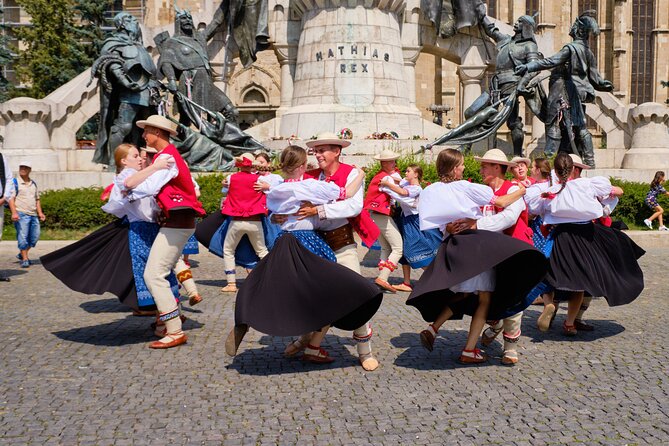
REVIEW · CLUJ NAPOCA TOURS
Clasic Tour of Cluj Napoca
Cluj reveals itself one square at a time. This two-and-a-half-hour private walk links the city’s finest churches, medieval defenses, grand civic buildings, and Bánffy Palace without wasting time on transport. I like the focused route and the chance to enter several important buildings, especially St. Michael’s Church and the Reformed Church on Wolf Street. The main drawback is that interior access can depend on opening hours, and the route is packed with ten stops.
I also like that the tour is led by a licensed guide and includes bottled water, a useful touch on a walking tour. Manuela receives especially warm praise for knowing Cluj well and speaking French very well. You should note one firm timing issue: from November 1, weekday access to the Reformed Church ends at 2 PM, so tours booked after 1 PM may skip that entrance.
In This Review
- Key points at a glance
- Starting in Piața Unirii, Cluj’s grand central square
- St. Michael’s Church, the tour’s Gothic centerpiece
- The Piarist Church and a Baroque change of mood
- Babeș-Bolyai University and the academic side of Cluj
- Reformed Church on Wolf Street and the important cutoff time
- Medieval defenses at Turnul Croitorilor
- The unusual Trovants display
- The Lucian Blaga National Theatre and Opera House
- The Metropolitan Cathedral and its construction story
- Iuliu Maniu Street, Cluj’s mirror street
- Bánffy Palace and the final look at noble Cluj
- What $48.16 buys you
- Who should book this Cluj walking tour?
- Practical booking advice before you go
- Should you book it?
- FAQ
- Where does the Clasic Tour of Cluj-Napoca start?
- Where does the tour end?
- How long does the tour last?
- Is the tour private?
- Is access to St. Michael’s Church Tower included?
- Can the Reformed Church entrance be skipped?
Key points at a glance
- A private route through central Cluj: Only your group takes part, which gives the walk a more personal feel than a large shared tour.
- Ten historic stops in 2 hours 30 minutes: The route covers churches, university buildings, a medieval tower, a theater, a palace, and an unusual geological display.
- Several interior visits are planned: St. Michael’s Church is included, and the Piarist Church and Reformed Church may be entered when open.
- Manuela is a praised local guide: One detailed review highlights her strong knowledge of Cluj and excellent French.
- The tour begins and ends in Piața Unirii: You get a simple central meeting point and no complicated transfer arrangements.
- The price is $48.16 per person: Group discounts may improve the value, especially when the cost is shared across a private party.
Starting in Piața Unirii, Cluj’s grand central square
The tour begins in Piața Unirii, the natural heart of central Cluj-Napoca. This is a practical meeting point because the route immediately places you among the city’s major landmarks instead of spending the first part of the tour on a bus or in a taxi.
The square gives you a useful first lesson in Cluj’s layered identity. Religious buildings, aristocratic homes, academic institutions, and modern city life all sit close together. That compact arrangement is one of the tour’s strengths. You see a lot in a short time, and the guide can explain how the buildings fit into the city’s story rather than treating each one as an isolated sight.
Because the entire activity is private, you are not adjusting your pace to a large public group. That matters most at the churches, where a smaller party should make it easier to hear the guide and ask questions. The available information does not give a maximum group size, so I would still confirm the number of people included in your booking if that affects your decision.
More Cluj Napoca trips:
- Curly Tour – Day trip from Cluj 🙂
★ 5.0 · 330 reviews - Cluj: Turda Salt Mine, Corvin Castle, Alba Carolina Tour
★ 4.8 · 184 reviews - Cluj-Napoca: 2.5-Hour Guided Walking Tour
★ 4.8 · 104 reviews
St. Michael’s Church, the tour’s Gothic centerpiece
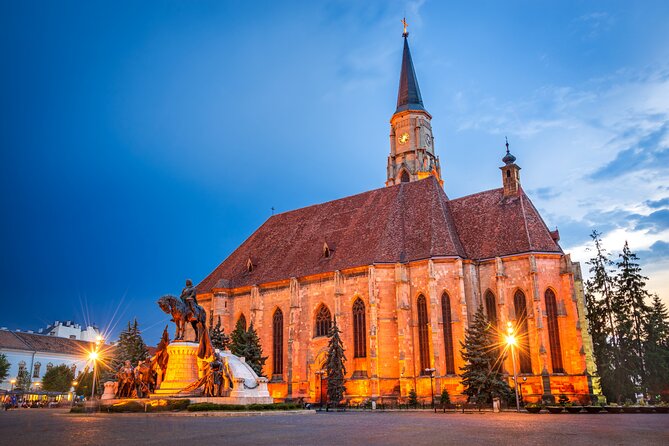
The first stop is Catedrala Sfântul Mihail, or St. Michael’s Church, on the main square. You spend about 25 minutes here, making it the longest stop on the route.
The guide explains how the church grew from a small chapel outside the city walls into one of the grandest Gothic buildings in the region. That story gives the building a human scale. You are not simply looking at stone arches and stained glass. You are following the city’s growth through one structure.
The church is the second-largest church in the geographical region of Transylvania, Romania. The planned interior visit is included at no extra charge, which adds real value to the tour. You can see the Gothic character from outside, but the interior is where the proportions and religious purpose become clearer.
Access to the church tower is not included and is optional. This is worth keeping in mind if you hope for a high view over Cluj. The tour itself does not depend on the tower visit, so you can treat it as an extra rather than a missing part of the main program.
The Piarist Church and a Baroque change of mood
After the Gothic scale of St. Michael’s, the Piarist Church offers a different architectural language. You spend about 15 minutes here, looking at one of Transylvania’s major Baroque monuments.
The church is dedicated to the Holy Trinity. Its principal religious object is an icon of the Virgin Mary with the Infant, so the stop is not only about the exterior design. The guide can connect the building’s ornate style with its religious function and explain why it occupies an important place in Cluj’s architectural story.
The interior visit is possible if the church is open. That wording is important. You should not assume that every church entrance is guaranteed, particularly on a tightly timed walking route. Still, the stop remains worthwhile from the outside, and the short visit keeps the tour moving.
I appreciate the contrast between these first two churches. One is Gothic and medieval in character, while the other presents a more decorative Baroque style. In only 40 minutes, you get a quick lesson in changing artistic tastes and religious architecture.
Babeș-Bolyai University and the academic side of Cluj
The next stop is Babeș-Bolyai University, with about 15 minutes devoted to the institution and its campus. The university is a major part of Cluj’s identity, and this stop prevents the tour from becoming only a church-and-palace circuit.
You discover the university as the center of the city’s academic life. Its long institutional story and active campus help explain why Cluj has such a strong student presence. The supplied information does not promise a particular classroom or interior building visit, so expect this part to focus on the university and its role in the city rather than a formal campus tour.
This is also a useful pause between religious sites. You see how Cluj developed as more than a medieval and noble center. The city’s identity includes education, public life, and the daily movement around a major university.
A completely different kind of day out:
- From Cluj: Turda Salt Mine, Gorge, and Remetea Full-Day Trip
★ 5.0 · 84 reviews - Turda salt mine 4h tour from Cluj
★ 5.0 · 73 reviews - Turda Salt Mine, Corvin Castle and Alba Fortress from Cluj
★ 5.0 · 65 reviews - Turda Salt Mine 4h guided tour from Cluj
★ 4.9 · 45 reviews
Reformed Church on Wolf Street and the important cutoff time
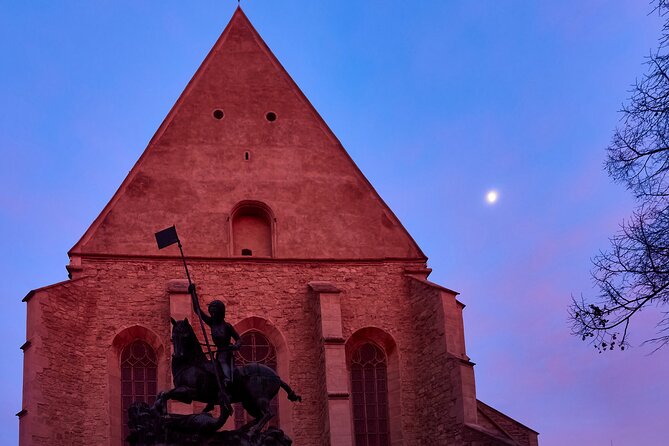
The Reformed Church on Wolf Street is one of the most substantial stops on the walk. You spend about 20 minutes here, and the planned interior visit includes a collection of coats of arms described as the largest in this part of Europe.
The church was built in the late 15th century, giving you another medieval building after St. Michael’s, but with a different religious and civic story. The coats of arms are the key detail to watch for. They turn the interior into a record of political and noble connections, not merely a place of worship.
There is a strict scheduling warning. Starting November 1, weekday visiting hours end at 2 PM. A tour booked later than 1 PM must skip this entrance. If this church matters to you, choose an earlier start and check the date carefully. This is the clearest limitation in the route, and it can change the quality of the experience.
Even with that restriction, the church is an important inclusion. I would give it priority over some of the shorter exterior stops if you have limited time in Cluj.
Medieval defenses at Turnul Croitorilor
Turnul Croitorilor, or the Tailors’ Tower, takes about ten minutes. It is described as the best-preserved corner tower of the medieval city.
This is a brief stop, but it adds something the churches cannot: a physical reminder of Cluj’s defensive walls. The tower’s name and location point to the old system of fortified corners and guarded urban boundaries. The guide also shares its story, so you get more than a quick photograph.
Do not expect a long museum visit here. Ten minutes is enough for an explanation and a look at the structure, but not for a full examination of medieval fortifications. That short format works well within a city walk because it gives you historical variety without pulling you far from the central route.
The unusual Trovants display
Muzeul Trovanților receives about ten minutes and is the route’s most unexpected stop. Trovants are geological formations made of sedimentary rock with hard stone cores and sandy outer layers. When exposed to water, they can appear to grow, which explains the description of them as living and moving geological formations.
This stop breaks up the architectural sequence. After churches, university buildings, and a medieval tower, you encounter a natural phenomenon that sounds almost like local folklore. The explanation is likely to be more memorable because it is so different from the rest of the tour.
The short timing suggests a compact display rather than a long museum visit. You should see it as a curiosity woven into the walking route. If geology interests you, it may become one of the highlights. If your main goal is architecture, it is still a pleasant change of subject, though you may prefer more time at the major churches.
The Lucian Blaga National Theatre and Opera House
The Lucian Blaga National Theatre takes another ten minutes. The opera house was built between 1904 and 1906 by the Austrian architects Ferdinand Fellner and shares its building with the National Theatre in Cluj-Napoca.
The shared building is the detail to remember. This is not simply a theater stop. It reflects the city’s performing arts tradition and the period when major Central European architects were shaping public buildings across the region.
The tour information does not promise entry to the performance spaces, so plan on hearing the building’s story and viewing its architecture from the route. Ten minutes will give you a useful introduction, but not a full theater visit. If you want to attend a performance, that would need to be arranged separately.
The Metropolitan Cathedral and its construction story
Catedrala Mitropolitană Adormirea Maicii Domnului is visited for about 15 minutes. It is presented as a fine example of Byzantine architecture and comes with a humorous story connected to its construction.
That small detail is valuable. A funny building story helps keep the tour from becoming a string of dates and architectural labels. You get a sense that Cluj’s monuments have practical complications and human characters behind them.
The stop also broadens the architectural range of the morning or afternoon. You have already seen Gothic and Baroque churches, and now the Metropolitan Cathedral adds a Byzantine-influenced style. The tour does not list an explicit interior guarantee here, so listen to the guide’s explanation and enjoy the building as part of the city sequence.
Iuliu Maniu Street, Cluj’s mirror street
Iuliu Maniu Street gets about 20 minutes, more time than several individual buildings. The street was laid out in the 19th century in a symmetrical manner, using an eclectic architectural style influenced by the Haussmann urban trend.
Locals commonly call it strada oglindă, or mirror street. The nickname comes from the matching arrangement of the buildings on either side. This is a good example of how a city can be understood through urban planning, not only through monuments.
I like this stop because it asks you to look across the street rather than at one famous facade. The symmetry becomes clearer as you move through the space. It also gives the walk a more everyday urban quality after the churches and civic landmarks.
The 20-minute allowance gives the guide enough time to explain the street’s design. You can appreciate the relationship between the buildings, the alignment, and the 19th-century ambition behind the plan.
Bánffy Palace and the final look at noble Cluj
The last listed landmark is Bánffy Palace, a splendid Baroque building constructed in the 18th century. It was the residence of the noble Bánffy family and now houses the National Museum of Art.
This is a fitting final stop because it brings together architecture, power, and culture. The palace shows how a noble family expressed its status, while the museum gives the building a public role today. You spend about ten minutes here, enough for an introduction to the palace and its former residents.
The tour does not state that museum admission is included, so you should not count on a full museum visit during the walk. If you want to explore the National Museum of Art properly, plan a separate visit. The ten-minute stop is best viewed as an architectural and historical introduction.
The activity ends back at the meeting point in Piața Unirii. That makes it easy to continue sightseeing, find a meal, or return to your accommodation without arranging a separate pickup.
What $48.16 buys you
At $48.16 per person, this is not the cheapest way to take a quick look at Cluj. The value comes from the private format, the licensed guide, the number of landmarks, and the planned church interiors rather than from admission tickets. The listed stops have no admission charge, and bottled water is included.
That pricing makes more sense for a small private party that wants a guide’s explanation instead of a self-guided walk. Group discounts may also improve the per-person cost. Since only your group participates, you are paying for attention and flexibility, though the available details do not promise that the route can be customized.
The tour is also efficient. Ten stops in 150 minutes means an average of about 15 minutes per location, including walking time. You will get a broad introduction, not a slow architectural study. If you prefer to spend 30 minutes inside every church, this route will feel rushed. If you want orientation on your first day, it covers a lot of ground.
Who should book this Cluj walking tour?
I would recommend it to first-time visitors who want a clear introduction to central Cluj-Napoca. It suits people who enjoy architecture, religious buildings, city planning, and short historical stories, especially when those subjects are mixed together.
It also works well for a private family group or friends who want to stay together. Most people can take part, service animals are allowed, and the meeting point is near public transportation. The walk is offered in English, and the strong praise for Manuela’s local knowledge and French language skills may matter if she is your assigned guide and you need French.
You should think twice if your main aim is museum time, tower views, or long interior visits. The St. Michael’s tower is optional and not included, and church access can change with opening hours. The Reformed Church cutoff is especially important from November 1 onward.
The tour has a five-star rating from ten reviews, with 100 percent recommending it. That is a positive signal, though ten ratings are still a small sample. The specific praise for Manuela is more useful than the perfect percentage because it points to what can make or break this kind of walk: a guide who can connect the buildings and explain the city clearly.
Practical booking advice before you go
Book early if your schedule is fixed. The tour is booked an average of 57 days in advance, suggesting that it can fill well before the travel date. Confirmation arrives at booking, and free cancellation is available up to 24 hours before the start time for a full refund.
Changes or cancellations inside the 24-hour window are not accepted for a refund. Cutoff times follow local time. The activity also requires good weather. If poor weather causes cancellation, you are offered another date or a full refund.
Wear shoes suitable for a two-and-a-half-hour city walk, though the supplied information does not specify the surface or degree of difficulty. Carry your own phone or camera if you want photographs, and remember that the included bottled water is a modest but useful addition.
Should you book it?
Book this tour if you want a private, English-language introduction to Cluj with churches, medieval remains, academic buildings, urban design, and noble architecture all in one compact route. I especially like the planned interior visit at St. Michael’s Church, the Reformed Church’s coat-of-arms collection, and the way Iuliu Maniu Street adds a lesson in city planning.
Choose an early start if the Reformed Church is a priority, particularly after November 1. At $48.16 per person, the tour offers fair value for a small group that wants a licensed local guide and a strong overview. It is less suitable for anyone seeking a slow museum visit or extensive time at each landmark.
FAQ
Where does the Clasic Tour of Cluj-Napoca start?
The tour starts in Piața Unirii, Cluj-Napoca, Romania.
Where does the tour end?
The activity ends back at the meeting point in Piața Unirii.
How long does the tour last?
The tour lasts approximately 2 hours and 30 minutes.
Is the tour private?
Yes. Only your group participates in the activity.
Is access to St. Michael’s Church Tower included?
No. Access to the tower is optional and is not included in the tour.
Can the Reformed Church entrance be skipped?
Yes. From November 1, weekday visiting time ends at 2 PM. Tours booked later than 1 PM will have to skip the entrance.
Just added in Cluj Napoca
- Turda salt mine and Corvin Castle day tour from Cluj★ 5.0 · 9 reviews
- Private tour to Turda Salt Mine, Rimetea and Alba Iulia★ 4.8 · 5 reviews
- Turda Salt Mine, Gorge & Rimetea Village (private from Cluj)★ 5.0 · 5 reviews
- Cluj to Rosia: Day Trip to Ferrata and pittoresque country★ 5.0 · 1 review
- 7 Day Best of Transylvania Motorcycle Tour from Cluj★ 5.0 · 4 reviews
- Via Ferrata Transylvania★ 5.0 · 1 review
- Discover Apuseni Mountains – Scarita Summit,Sipote Waterfall and Dumesti Village★ 5.0 · 17 reviews
- Turda salt mine, Rimetea village and Alba Iulia, from Cluj★ 5.0 · 11 reviews
Cluj Napoca Tours, compared.
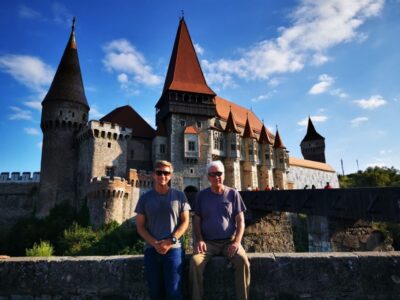
Turda Salt Mine, Corvin Castle, Alba Carolina Tour
Read our review →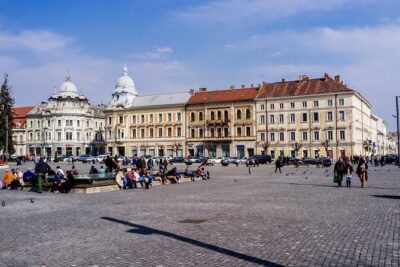
Turda Salt Mine, Gorge, and Remetea Full-Day Trip
Read our review →
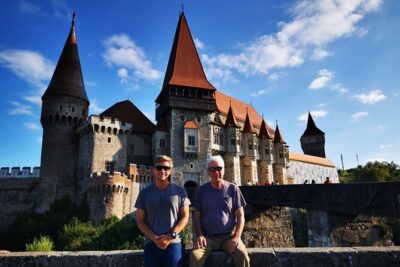
Turda Salt Mine, Corvin Castle and Alba Fortress from Cluj
Read our review →
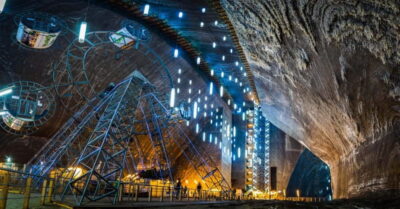
Turda Salt Mines, Rimetea, and Coltesti Fortress Tour
Read our review →Browse the lists this tour appears in