
REVIEW · MARAMURES TOURS
3 Day Tour of Maramures
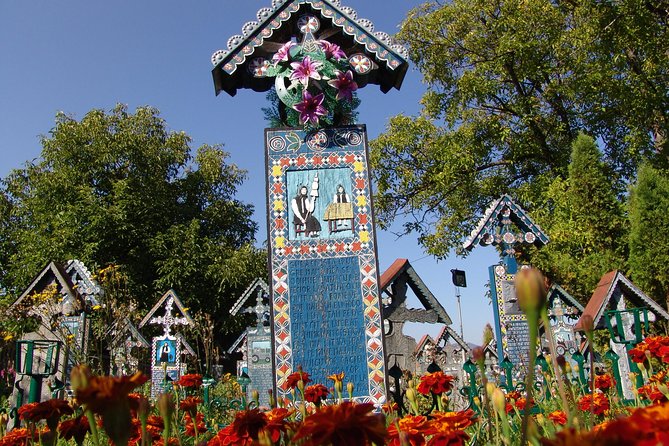
Maramures keeps its old ways alive. This three-day private tour from Cluj-Napoca combines famous sights with genuine village encounters, from the witty painted crosses of Merry Cemetery to wool weaving, pottery, wood carving, and water-powered farm machines. I especially like the small-group format and the chance to meet people in their homes and workshops, rather than simply viewing rural life through a bus window. I also like the strong mix of culture, recent history, and scenery.
The main consideration is the price: $763.34 per person is a serious spend, especially since meals, drinks, snacks, insurance, and tips are not included. Still, private transport, two nights of three-star lodging, breakfasts, admission fees, and a local guide make the cost easier to understand, particularly if you value personal access over a standard sightseeing circuit.
In This Review
- Key points to know before you book
- Why this three-day route works
- Day 1: Painted crosses and the difficult story of Sighet
- Merry Cemetery in Sapanta
- Sapanta-Peri Monastery
- The former prison at Sighet
- Elie Wiesel Memorial House
- Day 2: Wood, wool, pottery, and working hands
- Barsana Monastery
- Botiza and the living craft of wall carpets
- Sacel and Dacian-style pottery
- Day 3: Breb, Sarbi, and an unusual final stop
- Breb and its local voices
- Sarbi’s water-powered machines
- Budesti and the return to Cluj
- What the $763.34 price includes
- Who will enjoy this tour most?
- Should you book the Maramures tour?
- FAQ
- Where does the tour begin and end?
- How long is the tour?
- Is this a private tour?
- What is included in the price?
- Are meals included?
- What level of fitness is required?
Key points to know before you book
- Merry Cemetery uses humor as local history: Its carved wooden crosses show the lives, virtues, and faults of the people buried there.
- The tour goes beyond monuments: In Botiza, Sacel, Breb, and Sarbi, you meet craftspeople and see working village traditions.
- Sighet adds serious historical weight: The former prison museum examines Romanian communism from 1945 to 1989.
- Wooden churches define the region: Sapanta-Peri and Barsana offer two very different encounters with Maramures religious architecture.
- Private travel changes the pace: Only your group participates, with transportation and a professional local guide included.
- The route suits curious, active visitors: You need a moderate level of fitness, and the days include several stops on foot.
Why this three-day route works
Maramures is one of those places where the details matter more than the headline sights. A quick photo stop at a wooden church tells you very little. Meeting a woman who still weaves wool rugs with plant dyes, or seeing machinery driven by flowing water, gives you a better sense of how local life has continued.
This tour is built around that idea. You begin with major cultural sites in Sapanta and Sighet, then spend the next two days in villages where traditional skills are still practiced. The result is a useful balance: you get the places first-time visitors should see, but you also get close to ordinary work and domestic life.
The private format matters here. Your group is the only group on the activity, so the guide can help with questions, translations, and timing. One especially strong account of the tour praises Teo, a local guide whose personal ties with village residents helped open doors and create relaxed conversations. If Teo is leading your departure, his local connections could make a real difference. Guide availability can vary, so it is wise to confirm who will accompany you.
You leave from Piața Unirii 15 in central Cluj-Napoca at 9:30 am. The tour returns to that same meeting point after the final stop on Day 3. Since transport is private, you avoid the uncertainty of joining a large coach group, though the supplied information does not specify the vehicle type or exact driving times.
More Maramures trips:
- Maramures best, full day tour from Cluj
★ 5.0 · 33 reviews - From Cluj-Napoca: Maramures Day Tour
★ 5.0 · 19 reviews - Two days tour to Maramures: local experiences and culture
★ 5.0 · 9 reviews
Day 1: Painted crosses and the difficult story of Sighet
Merry Cemetery in Sapanta
Your first major stop is Merry Cemetery, where the graves are marked by brightly painted wooden crosses. The color most closely linked with the site is the distinctive blue often called Săpânța blue. Each cross carries an image and an epitaph describing the person buried there.
The tone can be affectionate, proud, or surprisingly funny. Some inscriptions praise a person’s good character. Others admit to weaknesses and bad habits. Together, the crosses form a village record written in verse, with ordinary lives given the same care that a grand monument might reserve for a king.
You have about 90 minutes here, with admission included. That is a useful amount of time because the appeal is not just the cemetery as a whole. You need time to pause at individual crosses, look at the carvings, and let the short stories sink in.
I like this stop because it avoids the usual solemn style of European cemeteries. It is not trying to hide the messiness of human life. The possible drawback is that the humor and meaning of the epitaphs may be harder to grasp without translation or explanation, which makes the local guide especially valuable.
Sapanta-Peri Monastery
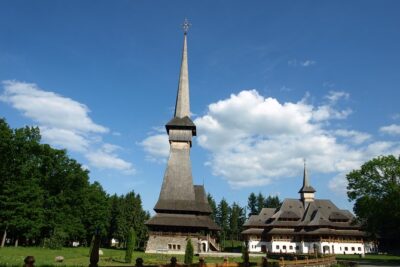
The next stop lasts about 30 minutes and introduces one of Maramures’ grandest wooden structures. Sapanta-Peri Monastery has a wooden church said to rise 75 meters, making it the tallest wooden church in the world.
The setting is described as beautiful, and the church gives you a different perspective from Merry Cemetery. The cemetery is intimate and personal. The monastery is tall, formal, and designed to draw your eyes upward.
Half an hour is enough for a focused visit, but not for a slow architectural study. If you enjoy timber construction, ask the guide about the building’s design and local wood tradition. Admission is included, so you do not need to budget an extra entry fee here.
More Cluj Napoca trips:
- Curly Tour – Day trip from Cluj 🙂
★ 5.0 · 330 reviews - Cluj: Turda Salt Mine, Corvin Castle, Alba Carolina Tour
★ 4.8 · 184 reviews - Cluj-Napoca: 2.5-Hour Guided Walking Tour
★ 4.8 · 104 reviews - From Cluj: Turda Salt Mine, Gorge, and Remetea Full-Day Trip
★ 5.0 · 84 reviews
The former prison at Sighet
The Memorial of the Victims of Communism and of the Resistance occupies a former prison in Sighet. Its cells now serve as museum rooms, with exhibits covering Romania from 1945 until the fall of the Berlin Wall in 1989.
This is the most serious stop of the first day. The museum examines the communist system, political repression, and the experiences of people held in the prison. It is described as one of Romania’s best documented museums and is considered the third Museum of the Memory of Europe, after the memorials of Normandy and Auschwitz.
You have 90 minutes. That gives you time for an introduction, but the subject is large and emotionally demanding. I would not treat this as a casual stop between photo opportunities. The museum is valuable precisely because it connects local history with the wider story of totalitarian rule in Europe.
The practical point is simple: keep some mental room for this visit. After the bright crosses and towering church, the former prison changes the tone sharply. That contrast is part of the strength of the route, but it may feel heavy if you prefer a trip focused only on folk culture.
Elie Wiesel Memorial House
The final stop on Day 1 is the Elie Wiesel Memorial House, which now hosts the Museum of Jewish Culture in Maramures. Elie Wiesel, the Nobel Peace Prize winner and author of Night, was born in this house.
The displays focus largely on the Holocaust. If time and local arrangements allow, you may also visit the Sephardic Synagogue, Jewish Cemetery, and Holocaust Monument. The listed visit is 30 minutes, so ask the guide how these additional sites fit into the schedule before setting expectations.
This stop gives the day another important layer. Maramures is not only a place of wooden churches and rural crafts. It also holds the memory of Jewish communities and the destruction they suffered. The museum is compact in the time allowed, but its subject deserves attention.
Day 2: Wood, wool, pottery, and working hands
Barsana Monastery
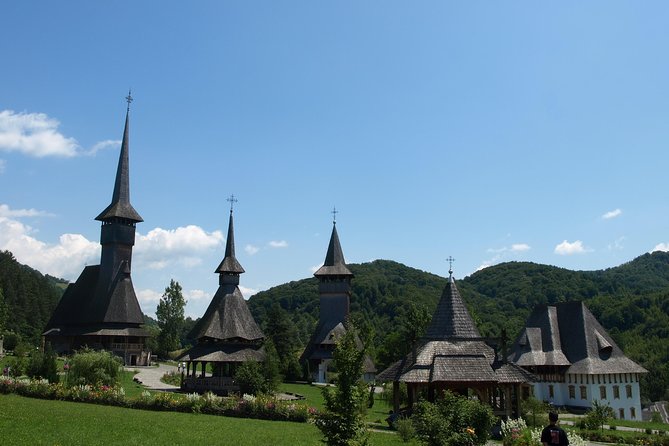
Barsana Monastery is presented as the most impressive monastery complex in northern Transylvania, with buildings made entirely from wood. Flowers and open countryside add to its appeal.
You have 90 minutes here, including admission. Unlike Sapanta-Peri, which is known mainly for its exceptional height, Barsana offers a full complex. The visit is less about one striking tower and more about how several wooden buildings work together in a religious setting.
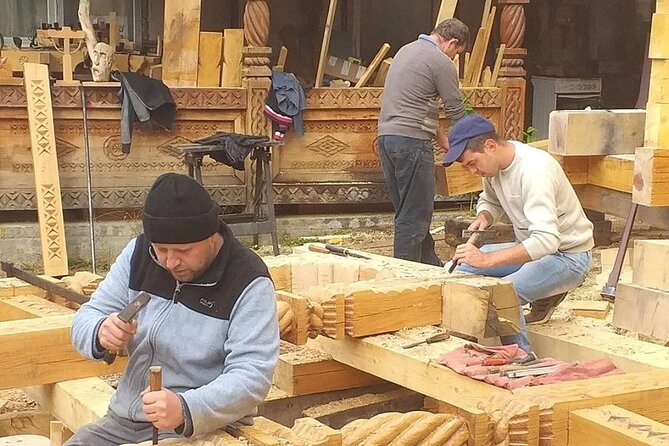
In the same village, you visit the largest wood-carving workshop. That pairing is practical. You first see finished religious and architectural woodwork, then connect it with the skill behind the carving. I would pay close attention to the difference between decorative objects made for visitors and the larger tradition of building and carving that shapes the region’s churches.
Botiza and the living craft of wall carpets
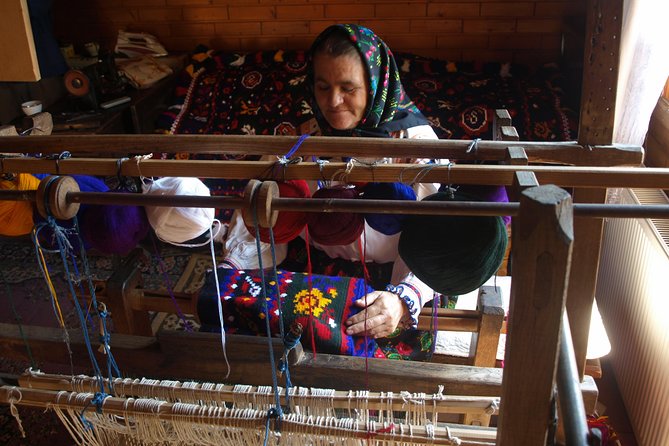
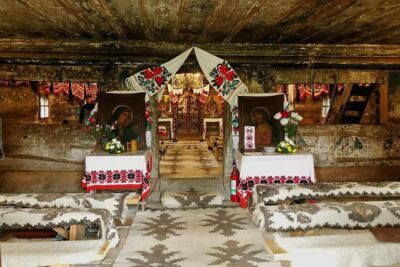
Botiza is one of the tour’s best stops if you want to see a traditional skill rather than simply buy a souvenir. You meet a woman who weaves wool rugs using dyes made from plants. The designs use antique motifs, and the craft of making traditional wall carpets in Maramures was placed on UNESCO’s Representative List of the Intangible Cultural Heritage of Humanity in 2016.
That UNESCO recognition matters, but the face-to-face encounter matters more. You see how a broad cultural label connects to one person’s daily work. The visit lasts about an hour and costs nothing extra.
The route also takes you into the village to meet people working in the fields and to see a mineral spring. These details help you understand that Botiza is not a staged folk village. It is a place where farming and handcraft remain part of community life.
The tour description does not promise a formal demonstration or a chance to purchase rugs, so you should not assume either. Go for the conversation and the craft itself. If your guide is translating, take advantage of the opportunity to ask how the plant dyes are made and what the older motifs mean.
Sacel and Dacian-style pottery
Sacel brings another rare skill. You visit the only ceramist in the area still making unglazed pottery in a Dacian style. Because the pieces are unglazed, they will look quite different from the bright, finished ceramics found in many craft shops.
The stop lasts about 90 minutes and includes several possible encounters. If available, you may meet someone who makes ritual masks from wool and sheepskin. You also meet a wood carver and visit a woman living in a 100-year-old wooden house.
The phrase if available is important. These are personal visits, not fixed museum displays, so availability may depend on the day. That is both the charm and the limitation. You get a more human experience, but the exact encounter cannot be guaranteed in the same way as an admission-ticket attraction.
This is also where the private tour format earns its keep. A guide who knows the area can explain who you are meeting and help the conversation move beyond a quick look at a craft table. One published account places great emphasis on the warmth of these local contacts and on the guide’s ability to translate almost directly between visitors and residents.
Day 3: Breb, Sarbi, and an unusual final stop

Breb and its local voices
Breb is the first stop on the final day, with about 70 minutes set aside. Here you meet local residents, including the village poet, and visit a crafts workshop.
The word poet gives this visit a personal flavor. You are not simply looking at old houses or taking pictures of farm tools. You have the chance to meet someone who expresses the village in words, alongside people who keep practical craft skills alive.
As with Botiza and Sacel, the value depends on conversation. The guide’s role is central, especially if you do not speak Romanian. I would come prepared with a few questions about work, village life, and the objects being made. You will get more from the stop if you treat it as a meeting rather than a performance.
Sarbi’s water-powered machines
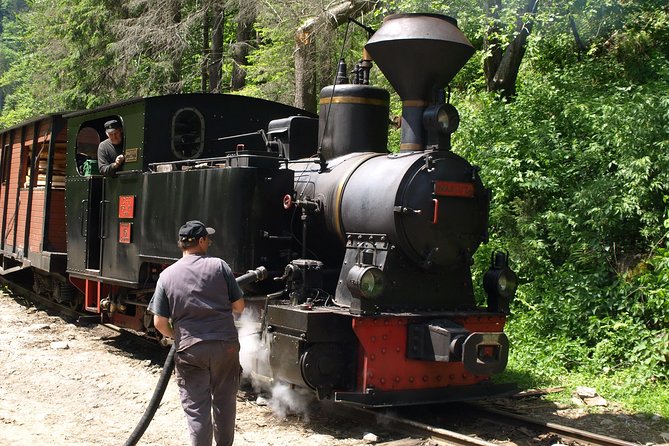
Sarbi offers one of the tour’s most unusual sights: farm machinery powered by water and still used for community needs. The group visits a fulling mill, carding mill, whirlpool, and alcohol distillery.
You have about an hour, and admission is free. These machines show how local ingenuity turned flowing water into useful work. A fulling mill processes woolen cloth, while a carding mill prepares fibers. The grouping of machines gives you a clear view of the production chain behind wool crafts seen earlier in the tour.
This stop also ties the three days together. The rugs in Botiza and the wool and sheepskin work around Sacel are not isolated curiosities. Sarbi shows part of the practical system that supports such traditions.
The alcohol distillery may attract curiosity, but drinks and meals are not included in the tour price. Do not read the stop as a promise of tastings. It is primarily a visit to working equipment and community technology.
Budesti and the return to Cluj
The last stop is Budesti, where you see what is described as Romania’s most unusual optical illusion and visit a fine medieval wooden church. The visit lasts about an hour before the return to Cluj-Napoca.
The supplied details do not explain the optical illusion, so I would avoid building your expectations around a particular visual trick. Let the guide reveal it on site. The wooden church provides a more dependable cultural finish, bringing you back to the religious architecture that appeared at Sapanta-Peri and Barsana.
After Budesti, the tour returns to the original meeting point in Cluj. Because no arrival time is provided, avoid scheduling a tight onward connection or fixed evening plan.
What the $763.34 price includes
At $763.34 per person, this is not a budget excursion. The value comes from what is bundled into a private three-day journey:
- Private transportation
- Two nights in three-star accommodation
- Two breakfasts
- Professional local guide
- Admission fees and taxes
You pay extra for all other meals, drinks, snacks, travel insurance, tips, souvenirs, and personal expenses. The lack of included lunches and dinners gives you less price certainty, but it also leaves meal choices outside the package. You should budget for those costs before deciding.
For a solo visitor, the price may feel steep. For a small private group, the calculation is more favorable, especially since group discounts are offered. The tour also removes the need to arrange transport between scattered villages and cultural sites, which is a major practical benefit.
The strongest value is not the three-star lodging or the admission tickets. It is the access to village residents and craftspeople. If you only want the famous churches, cemetery, and museum, a shorter or more independent trip may cost less. If you want translation, local introductions, and a route that links the sights with working traditions, the higher price has a clearer purpose.
Who will enjoy this tour most?
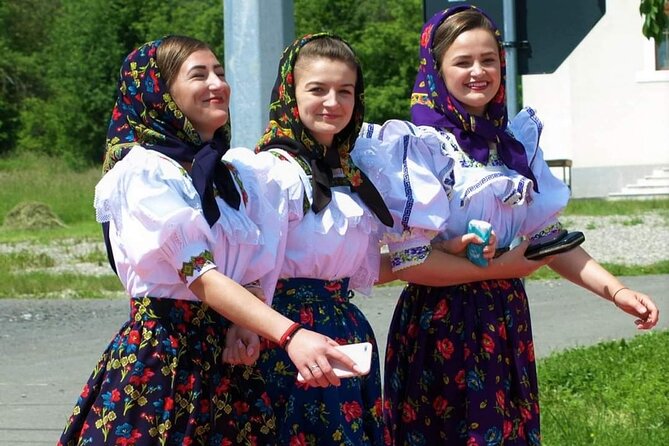
I would recommend it to you if you care about living traditions, local conversations, wood architecture, and the human stories behind cultural sites. It is particularly well suited to curious adults who prefer a slower, more personal experience over a checklist of major attractions.
You should also be comfortable with a moderate level of physical fitness. The information provided does not list exact walking distances, but the days include cemeteries, monastery complexes, museums, workshops, village visits, and church sites.
This may not be the best choice if you want luxury lodging, included meals, a relaxed resort pace, or a tightly predictable schedule. Personal village visits can change depending on who is available, and the first day includes emotionally difficult material at the Sighet prison and Jewish culture museum.
The tour is offered in English and uses mobile tickets. Booking confirmation normally arrives at once, though reservations made within two days of departure may require up to 48 hours and remain subject to availability. For cancellations, you need to act at least three full days before the local start time to receive a full refund.
Should you book the Maramures tour?
Book this tour if you want Maramures as a lived-in region, not just a collection of photogenic buildings. The combination of Merry Cemetery, Sighet’s museums, wooden monasteries, village crafts, and water-powered machinery gives you a broad and unusually personal introduction.
I would be most likely to book it as a small group, where the private transport and guide access offer the best value. Before paying, confirm the guide, the accommodation details, and how the optional visits in Sacel and around the Elie Wiesel Memorial House will be handled.
If your priority is authentic contact and a guide such as Teo who can translate and introduce you to local people, this is a strong choice. If your priority is low cost or a simple sightseeing schedule, the price and open-ended village encounters may not suit you.
FAQ
Where does the tour begin and end?
It begins at Piața Unirii 15, Cluj-Napoca 400394, Romania, at 9:30 am. The tour ends back at the same meeting point in Cluj-Napoca after the final stop in Budesti.
How long is the tour?
The experience lasts approximately three days and includes two nights of accommodation.
Is this a private tour?
Yes. Only your group participates in the activity, and private transportation is included.
What is included in the price?
The price includes private transportation, all fees and taxes, two nights of three-star accommodation, a professional local guide, and two breakfasts.
Are meals included?
Only the two breakfasts are included. Lunches, dinners, drinks, and snacks are not included.
What level of fitness is required?
A moderate level of physical fitness is recommended. The tour includes visits to cemeteries, monasteries, museums, workshops, villages, and wooden churches over three days.
Just added in Cluj Napoca
- Turda salt mine and Corvin Castle day tour from Cluj★ 5.0 · 9 reviews
- Private tour to Turda Salt Mine, Rimetea and Alba Iulia★ 4.8 · 5 reviews
- Turda Salt Mine, Gorge & Rimetea Village (private from Cluj)★ 5.0 · 5 reviews
- Cluj to Rosia: Day Trip to Ferrata and pittoresque country★ 5.0 · 1 review
- 7 Day Best of Transylvania Motorcycle Tour from Cluj★ 5.0 · 4 reviews
- Via Ferrata Transylvania★ 5.0 · 1 review
- Discover Apuseni Mountains – Scarita Summit,Sipote Waterfall and Dumesti Village★ 5.0 · 17 reviews
- Turda salt mine, Rimetea village and Alba Iulia, from Cluj★ 5.0 · 11 reviews
Maramures Tours, compared.

Classic Romania Tour – small group in 8 days: Transylvania and Maramures
Read our review →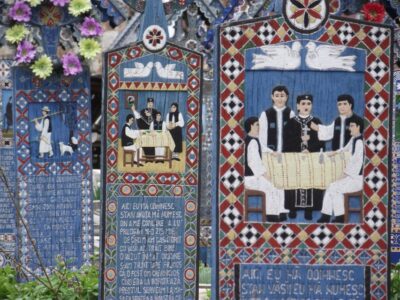
Two days tour to Maramures: local experiences and culture
Read our review →
A Journey Back in Time: Countryside from Transylvania and Maramures – 15 Days
Read our review →
Your rendez-vous with Europe’s past: time-travel to Maramures, Transylvania
Read our review →Browse the lists this tour appears in