
REVIEW · 7-DAY EXPERIENCES
7 Days Private Guided Tour in Romania from Bucharest
Romania rewards curious detours. This seven-day private tour links royal castles, Saxon villages, Orthodox monasteries, Roman ruins, mountain roads, and the Danube Gorge in one long sweep from Bucharest.
I like the chance to travel in a private car with an English-speaking guide and to adjust the plan as you go. I also like the unusual mix: Peles and Bran are famous, but Densus Church, Viscri, Biertan, Bigar Falls, and the Brancusi sculptures give the trip more character. The main drawback is the pace. You cover a large part of Romania, so several days involve long drives and fairly brief stops.
In This Review
- Key points to know before booking
- What the $2,480.58 price really buys
- Day 1: Peles Castle, Sinaia, and Brasov
- Day 2: Bran Castle and medieval Sighisoara
- Day 3: Sibiu’s squares and Biertan’s fortified church
- Day 4: Densus Church, Corvin Castle, and Bigar Falls
- Day 5: The Danube Gorge and Roman Drobeta
- Day 6: Brancusi, Horezu, and Polovragi Cave
- Day 7: Poienari’s 1,480 stairs and the road back
- How flexible is the private format?
- Who should book this Romanian tour?
- Final verdict: a strong choice for a wide-ranging Romania trip
- FAQ
- Where does the seven-day tour begin?
- Is this a private tour?
- Is an English-speaking guide included?
- Are hotels included in the price?
- Are meals and drinks included?
- Are entrance tickets included?
- Can the itinerary be changed during the tour?
- How difficult is the visit to Poienari Castle?
- Is internet access available during the drive?
- What is the cancellation policy?
Key points to know before booking
- Private transport for your group: You travel by private car or minibus with your friends or family, not in a shared coach.
- A full sweep of Romania: The route reaches Transylvania, the Iron Gates, Targu Jiu, Horezu, and the southern Carpathians.
- Flexible daily planning: The itinerary can be changed during the tour, giving your guide room to respond to weather, energy levels, or special interests.
- Major castles plus lesser-known sites: Peles, Bran, Corvin Castle, Poienari, Densus Church, and Biertan all offer very different stories.
- Some serious walking: Poienari Castle requires a climb of 1,480 stairs, and several old town centers are explored on foot.
- The price covers guiding and driving, not your trip extras: At $2,480.58 per person, accommodation, meals, and entrance tickets are separate.
What the $2,480.58 price really buys

The price is high, but this is not simply a seven-day sightseeing transfer. It covers a private car or minibus, an English-speaking licensed guide and driver, fuel, parking, road tolls, the guide’s accommodation and meals, and wireless internet in the vehicle.
That arrangement can be valuable in Romania, where the route crosses a wide area and includes places that are awkward to connect by public transport. You avoid arranging separate transfers between castles, villages, monasteries, and natural sites. You also get one person who can explain the places as you go, rather than piecing together the trip yourself.
Still, calculate the extras before you commit. Your own hotels, food, drinks, and entrance fees are not included. Peles, Bran, Sighisoara’s Clock Tower, Biertan, Corvin Castle, Polovragi Cave, Poienari, and Curtea de Arges may all add ticket costs. Ask for a current estimate of entrance fees and recommended accommodation before booking.
The strongest praise for the experience centers on the personal service. Nicolas is singled out for looking after a group from airport pickup onward, while Andrei is praised for keeping a family of three happy throughout the week and providing the history lesson they wanted. The names matter because a private tour depends heavily on the person behind the wheel and beside you.
A few more Bucharest days worth comparing
- Bucharest: Dracula’s Castle, Peles Castle, & Brasov Old Town
★ 4.5 · 17,858 reviews - Bucharest: Dracula Castle, Peles Castle & Brasov Old Town
★ 4.6 · 10,891 reviews - Bucharest: Dracula’s Castle, Peleș Castle & Brașov Day Trip
★ 4.5 · 5,919 reviews
Day 1: Peles Castle, Sinaia, and Brasov
The first day begins with one of Romania’s most polished sights: Peles Castle. Built as the Romanian royal family’s summer residence, it has the appearance of a storybook castle but the feel of a serious royal home. Allow two hours here. Rooms, decoration, and royal details reward a guided visit, though the admission charge is extra.
Peles is also a place where timing matters. It draws large numbers of people, and the interior visit may have its own entry arrangements. Keep comfortable shoes on, since the day continues beyond the castle grounds.
Sinaia Monastery provides a useful change of mood. The half-hour stop brings you from royal display to Orthodox religious art and architecture. The monastery reflects the mountain resort’s long connection with kings and important figures, but its appeal is quieter. Admission is not included.
The day ends in Brasov’s historical center, with about two hours to see the old buildings and the area near the Black Church. This is a good first taste of a Transylvanian city, with time to look upward at the facades rather than rushing from one photo stop to the next.
You should expect a busy opening day. Peles, Sinaia, and Brasov each deserve more time than the schedule can provide, but together they make a strong introduction to royal, religious, and urban Romania.
Day 2: Bran Castle and medieval Sighisoara

Bran Castle is the most obvious stop for anyone drawn by the Dracula story. The real place is more complicated than the legend. Bram Stoker’s fictional castle is often linked with Bran, although the connection between the novelist and the actual building is not as firm as popular culture suggests.
Inside, you get a castle visit shaped by rooms, passages, and the setting above the surrounding area. Two hours gives you time to look around without treating the site as a quick photograph. The ticket is extra.
Outside Bran, the tour makes room for local food products such as handmade cheeses, plum and pear brandy, ham, and sausages. This is one of the more grounded parts of the day. If you want to understand a place through what people produce and eat, do not rush this part.
Sighisoara then takes the story back to the Middle Ages. Its citadel dates to the 12th century and has remained inhabited for more than 700 years. That makes it more than a preserved monument. You can walk through a living old town, with streets, buildings, and daily activity inside the historic defenses.
The Clock Tower is worth the extra ticket and the climb. Its colored roof is easy to spot, while the top provides a broad view over the citadel. The museum inside includes Roman objects, tools, tombstones, and a model of the fortified town. The English explanations may be uneven, so your guide’s comments can help.
The final stop is Viscri, a village with 12th-century roots and a fortified church. Prince Charles helped bring attention to it, while the Mihai Eminescu Trust supported local renewal. Viscri is now well known, but it still offers a look at village life and Transylvania’s Saxon traditions that you will not get in a city center.
This is a packed day. Bran, Sighisoara, the Clock Tower, and Viscri are all worthwhile, yet the driving time between them can make the schedule feel tight. Ask your guide how long you will spend on the road and where the overnight stay falls.
Day 3: Sibiu’s squares and Biertan’s fortified church
Sibiu begins with Big Square, the broad central space of the old town. It has served as a market and civic center for centuries, and its open shape gives you a clear sense of how the citadel developed.
The Orthodox Cathedral of the Holy Trinity offers a different architectural note. Built about 110 years ago, it recalls the form of the Sofia Cathedral in Constantinople and has the scale of a Byzantine basilica. The stop lasts about 30 minutes, with admission extra.
The Lutheran Evangelical Cathedral and its tower bring in the Transylvanian Saxon side of Sibiu’s past. The visit is shorter, about 45 minutes, but it adds an important religious and cultural layer to the city. Admission is listed as free.
Biertan is the day’s strongest historical stop. Its fortified Lutheran church was built by the ethnic German Transylvanian Saxon community and later changed from Catholic to Lutheran during the Reformation. The church and village belong to the UNESCO World Heritage site covering Transylvania’s fortified villages.
You get about an hour at Biertan, with admission extra. The fortifications show how worship and defense were combined in a region that needed both. This is a place where a guide can make a real difference, especially if you want to understand the Saxon communities rather than simply photograph the walls.
Day 3 is less about famous names and more about the structure of Transylvanian society. It is a good fit if you enjoy architecture, religious history, and old towns. If your priority is dramatic scenery, this may feel quieter than the days ahead.
A completely different kind of day out:
- Bucharest: Palace of Parliament Tickets and Guide
★ 4.3 · 3,182 reviews - Bucharest: Day Trip to Dracula Castle, Peles Castle & Brașov
★ 4.4 · 3,049 reviews - Bucharest to Dracula Castle, Peles Castle and Brasov Guided Tour
★ 4.5 · 2,933 reviews - Bucharest: Palace of Parliament Tickets and Guided Tour
★ 4.4 · 1,877 reviews
Day 4: Densus Church, Corvin Castle, and Bigar Falls
Densus Church is one of the tour’s most unusual stops. It is among Romania’s oldest Orthodox churches, built over the remains of a structure dating to the fourth century. Its final changes were made in the 13th century, and the building combines styles from several periods.
Inside, you can see mural paintings dating to 1443. The church is small, and the planned 30-minute visit is enough for a focused look. Admission is extra. This is not a grand cathedral visit. Its value comes from the strange mix of ancient remains, medieval construction, and later religious art.
Corvin Castle provides the day’s dramatic centerpiece. Also called Hunyadi Castle, it is a large Gothic fortress associated with medieval knights, defense towers, and noble power. After a major fire, it underwent extensive restoration and now operates as a museum.
Two hours is sensible here. Give yourself time to cross the courtyards, inspect the towers, and look for views from the defensive sections. The castle is a strong place for photographs, especially from the towers, but the restored parts may feel more polished than untouched.
Bigar Cascade Falls closes the day with a short nature stop. Water spreads over moss-covered rock in the Minis Canyon, creating a veil-like waterfall. The visit lasts about 30 minutes and has no listed admission fee.
The contrast works well: an ancient church in the morning, a Gothic castle after that, then a forested waterfall. The weakness is that Bigar is a brief stop. If weather or road conditions interfere, you may feel you have only sampled the area.
Day 5: The Danube Gorge and Roman Drobeta

The Iron Gates bring the route to the Danube, where strong currents give the water a restless appearance. The area combines dramatic river scenery with a major engineering project completed during Romania’s communist period in 1966.
The stop lasts about an hour and is free. Your guide can help connect the river, the dam system, and the region’s older settlements. This part of the tour is less about entering a monument and more about understanding how geography shaped transport, defense, and industry.
The Statue of King Decebalus is one of Romania’s boldest modern monuments. Carved into a cliff above the Danube and the Kazan Gorge, the face rises 128 meters above the river. The work took ten years, and the 45-minute stop gives you time to take in its scale.
Decebalus was a Dacian king known for resisting Roman power. You do not need to be an expert in ancient history to appreciate the site. The cliff carving is visually striking, and the setting links the statue to the river and the older story of the region.
At Drobeta, Roman ruins and the remains associated with the ancient bridge provide the historical close to the day. The visit takes about an hour and is free. This is a good reminder that Romania’s past did not begin with medieval castles. Roman engineering and military control also left a mark along the Danube.
Day 5 has a slower rhythm than the castle days, but it still covers plenty of ground. It suits you if you like combining engineering, ancient history, and open-air scenery.
Day 6: Brancusi, Horezu, and Polovragi Cave
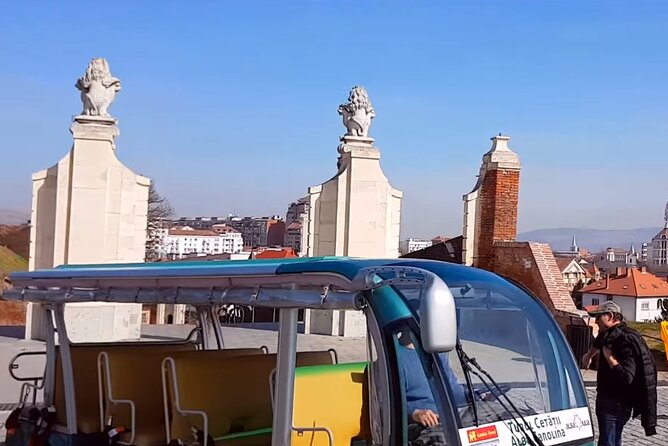
Targu Jiu is home to Constantin Brancusi’s sculptural ensemble, arranged along a 1,275-meter axis. The main works include the Table of Silence, the Chairs Alley, the Gate of the Kiss, and the Infinity Column.
The schedule gives 20 minutes for the Table of Silence, 20 minutes for the Gate of the Kiss, and 30 minutes for the Infinity Column. Those times allow a look, but they do not encourage a slow study of the whole route. If Brancusi matters to you, ask whether the flexible itinerary can give you more time.
The sculptures are powerful because they are simple. Their meaning connects to remembrance, separation, silence, and endurance, but you do not need a long art lecture to appreciate their shapes and placement.
Horezu Monastery shifts the focus to Orthodox architecture. It is a UNESCO World Heritage site known for its refined Romanian design and its connection with Horezu ceramics. The visit is scheduled for 30 minutes and is free.
That half hour is enough to see the monastery, but it may feel short if you want to study the decoration or learn more about the ceramics tradition. The nearby mountain gorges and stone caves add another reason to keep the day flexible.
Polovragi Cave offers a one-hour visit at the foot of the Carpathians, near the Oltet Gorges and Transalpina. Admission is extra. This is another day with several distinct experiences, so sturdy shoes and a willingness to walk will help.
Day 7: Poienari’s 1,480 stairs and the road back
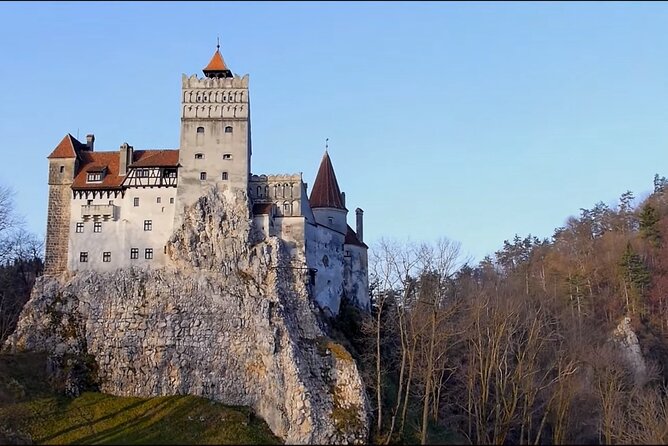
Poienari Castle is for active Dracula fans. Unlike Bran, this is a ruined fortress linked directly with Vlad the Impaler, and reaching it requires climbing 1,480 stairs to a height of about 860 meters.
The scheduled two hours include the climb and time at the site. Treat this as a real physical demand, not a casual castle visit. If stairs are difficult for you, discuss the stop with the guide before the day begins.
Vidraru Dam follows, with a short 15-minute stop. Completed in 1966 on the Arges River, the arch dam is 166 meters high and creates Lake Vidraru. It was built mainly for hydroelectric power, and the reservoir holds 465 million cubic meters of water.
The final stop is Curtea de Arges Monastery, home to an early 16th-century Orthodox cathedral dedicated to the Dormition of the Mother of God. Its pale gray limestone, frescoed interior, and royal connections make it a fitting final monument.
The last day combines effort, engineering, and religion. It is a fitting end, but also one of the most demanding. You will want comfortable shoes and enough energy for the stairs before finishing with the monastery.
How flexible is the private format?
The private setup is the tour’s biggest practical advantage. You travel only with your own group, and changes to the daily plan are allowed even after the tour starts.
That does not mean every stop can be extended without consequence. Romania is large, and adding time in Sighisoara, Sibiu, or Corvin Castle may require reducing another visit or arriving later at the next hotel. Still, you can discuss priorities with the guide instead of accepting a fixed coach schedule.
A private licensed English-speaking guide and driver is available throughout the tour. The included wireless internet is useful during long road sections, though the supplied information does not promise a particular connection speed or coverage.
Pickup is offered, and confirmation is provided at booking. Service animals are allowed, and the experience is described as suitable for most people. The exception is practical rather than formal: Poienari’s stairs and repeated walking through old centers may not suit everyone.
Who should book this Romanian tour?
I would choose this tour if you want to see far more than Bucharest and prefer one organized route rather than several separate excursions. It is especially suitable for families, couples, and small groups who value privacy and want a guide to explain the historical setting.
It also works well for people with specific interests. Castle fans get Peles, Bran, Corvin, and Poienari. Religious and architectural interests are covered by Sinaia, Densus, Sibiu, Biertan, Horezu, and Curtea de Arges. Nature lovers get Bigar Falls, the Danube Gorge, the Oltet Gorges, and the road near Vidraru.
I would hesitate if you prefer slow travel. The itinerary is ambitious, and several stops last 30 to 60 minutes. Since hotels, food, drinks, and tickets are extra, you also need room in your budget beyond the $2,480.58 tour price.
Free cancellation is available up to 24 hours before the start time. Changes made inside that 24-hour window are not accepted, and the amount paid is not refunded for a late cancellation.
Final verdict: a strong choice for a wide-ranging Romania trip
This is a serious countrywide introduction, not a relaxed stay in one region. You get royal Romania at Peles, Dracula folklore at Bran and Poienari, Saxon culture in Sighisoara and Biertan, Orthodox traditions at Sinaia and Horezu, ancient sites at Densus and Drobeta, and impressive river and mountain scenery.
The tour offers its best value when you use the private format actively. Tell the guide whether you care most about castles, churches, art, food, or nature, then ask for sensible adjustments. If you accept the long drives and extra costs, this is a good way to see the real variety of Romania in one week.
FAQ
Where does the seven-day tour begin?
The tour is based in Bucharest, and pickup is offered.
Is this a private tour?
Yes. Only your group participates, and transport is provided by private car or minibus.
Is an English-speaking guide included?
Yes. A private licensed English-speaking guide and driver is available throughout the tour.
Are hotels included in the price?
No. Your accommodation is not included. The tour covers accommodation and meals for the guide.
Are meals and drinks included?
No. Your own food and drinks are separate expenses.
Are entrance tickets included?
No. Entrance fees listed for attractions such as Peles Castle, Bran Castle, the Clock Tower, Corvin Castle, Polovragi Cave, Poienari Castle, and Curtea de Arges Monastery are not included.
Can the itinerary be changed during the tour?
Yes. The private format allows flexibility and changes to the daily itinerary, including after the tour has begun.
How difficult is the visit to Poienari Castle?
You must climb 1,480 stairs to reach Poienari Castle. The stop is scheduled for about two hours.
Is internet access available during the drive?
Yes. Complimentary wireless internet access is provided in the car.
What is the cancellation policy?
You can cancel for a full refund if you do so at least 24 hours before the experience begins. Cancellations or changes made less than 24 hours before the start time are not accepted for a refund.
Just added in Bucharest
- Bucharest: Dealu Mare Winery Private Trip with Wine Tasting★ 4.9 · 6 reviews
- Winery touring & private wine tasting – one day private tour★ 5.0 · 3 reviews
- Village Museum Bucharest Guided Tour★ 5.0 · 6 reviews
- Transylvania Tour: Dracula’s Castle, Peles Palace & Brasov★ 5.0 · 19 reviews
- Transfer Airport Otopeni – Bucharest★ 5.0 · 2 reviews
- Private Transfer Bucharest Otopeni Airport (OTP) to/from Brasov★ 5.0 · 2 reviews
- Bucharest Airport Transfer To Constanta Mamaia★ 5.0 · 3 reviews
- Airport Henri Coanda (Otopeni) to Bucharest – Private Transfer – Driver★ 5.0 · 5 reviews
7-Day Experiences, compared.
4×4 Driving Experience at Flying Altitudes – 7 Days
Read our review →
7-Day Private Tour of Transylvania from Bucharest
Read our review →
Amazing Romania – Seven day private tour from Bucharest
Read our review →
7 days Private Romania Grand Tour from Bucharest
Read our review →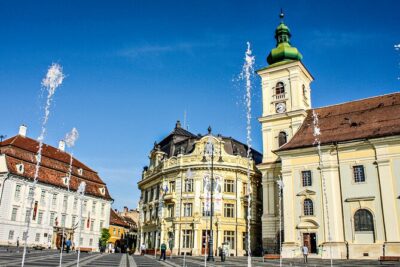
Discover Medieval Transylvania Small Group Tour – 7 days
Read our review →
7 Day Best of Transylvania Motorcycle Tour from Cluj
Read our review →
7-Day Dracula Tour in Romania from Bucharest including ‘The Ritual of Killing of a Living Dead’
Read our review →Browse the lists this tour appears in