
REVIEW · 7-DAY EXPERIENCES
7 days Private Romania Grand Tour from Bucharest
Romania rewards travelers who keep moving. This private seven-day tour links Bucharest with Transylvania, Maramures, Bucovina, and the Carpathian mountain roads, covering places that are hard to connect by public transport. I especially like the one-to-one format, which gives your group a flexible pace, and the mix of famous sights with local traditions such as Marginea pottery and the Vadu Izei whirlpool. The main drawback is the amount of road time. Several days are long, and some stops are brief.
The tour also takes care of the practical work. A driver-guide, private air-conditioned minivan, hotel pickup, six nights of accommodation, six breakfasts, and several entrance fees are included. But not every admission is covered, and a single-room supplement of 150 euros is paid locally. Guide George receives particular praise for helping with travel arrangements, while Liviu is warmly remembered for leading the mountain and monastery route.
In This Review
- Key points worth knowing before you book
- What the seven-day route actually covers
- Day 1: Cozia Monastery and the medieval squares of Sibiu
- Day 2: Alba Iulia, Turda Salt Mine, and Cluj-Napoca
- Day 3: Wooden churches and Maramures traditions
- Day 4: The Merry Cemetery and Bucovina’s painted monasteries
- Day 5: Bicaz Gorges, Red Lake, and the late arrival in Sighisoara
- Day 6: Sighisoara, Bran Castle, and Brasov
- Day 7: Peles Castle and a short Bucharest finale
- What $1,719.59 per person buys you
- Comfort, pace, and the role of the guide
- Who should book this Romania tour?
- Should you book it?
- FAQ
- How long is the Romania Grand Tour?
- Where does the tour begin and end?
- What time does the tour start?
- Is hotel pickup and drop-off included?
- Is this a private tour?
- What type of transport is used?
- Are accommodation and breakfast included?
- Are entrance fees included?
- Is there an extra charge for a single room?
Key points worth knowing before you book
- This is a true cross-country route: You travel from Bucharest through Sibiu, Cluj-Napoca, Maramures, Bucovina, the Bicaz Gorges, Sighisoara, Brasov, and Sinaia.
- The private format matters: Only your own group participates, so you can ask questions and discuss changes with your driver-guide.
- The painted monasteries are a major highlight: Moldovita, Sucevita, and Voronet bring Romania’s religious art into clear focus.
- Road days can be demanding: Day four and day five combine several stops with substantial driving.
- The price includes useful basics: At $1,719.59 per person, accommodation, breakfasts, transport, guiding, and hotel transfers are included.
- Extra costs remain: Entrance fees not listed as included and the 150 euro single-room supplement must be budgeted separately.
What the seven-day route actually covers
This is not a slow stay in one region. You change scenery almost every day, moving from Wallachian monasteries to Saxon towns, salt mines, wooden churches, painted monasteries, mountain passes, castles, and Bucharest landmarks.
The itinerary is best understood as a grand circuit. You begin in Bucharest, head west toward the Olt Valley and Sibiu, continue north to Cluj-Napoca and Maramures, cross into Bucovina, return through the Bicaz Gorges, then finish in the Transylvanian towns of Sighisoara and Brasov before returning to Bucharest.
That reach is the tour’s greatest strength. You see far more than a standard Dracula-themed trip. The tradeoff is that you will spend many hours in the minivan. I would choose this route for variety and access, not for a relaxed holiday with late mornings.
A few more Bucharest days worth comparing
- Bucharest: Dracula’s Castle, Peles Castle, & Brasov Old Town
★ 4.5 · 17,858 reviews - Bucharest: Dracula Castle, Peles Castle & Brasov Old Town
★ 4.6 · 10,891 reviews - Bucharest: Dracula’s Castle, Peleș Castle & Brașov Day Trip
★ 4.5 · 5,919 reviews
Day 1: Cozia Monastery and the medieval squares of Sibiu
The first stop is Cozia Monastery in the Olt Valley, a fourteenth-century Wallachian monument founded by Mircea II the Old and restored in the seventeenth century by a Cantacuzino. You have about 30 minutes here, enough to see the exterior decoration and richly painted interior, though not enough for a long, quiet visit.
The Armenian-style details on the facade give the monastery a look that differs from the painted churches farther north. This is a useful opening stop because it introduces Wallachian religious architecture before the route turns toward Transylvania.
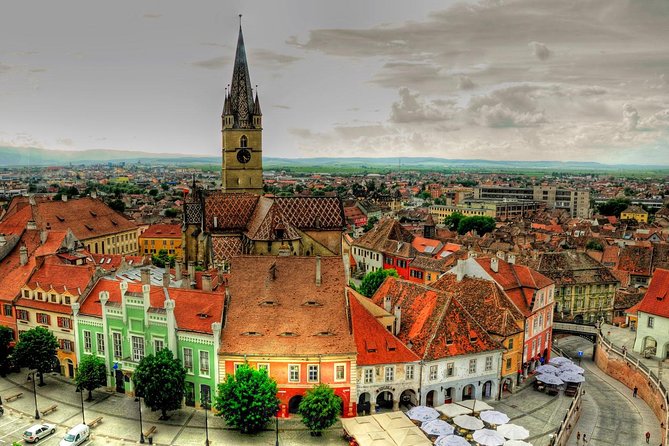
Sibiu receives about three hours, making it the first place where you can slow down and walk. Its Big Square, Small Square, and Huet Square create a compact medieval center, with towers, old fortifications, museums, and the famous houses with eye-shaped roof windows.
You will also see the large Gothic Evangelical church. Sibiu’s appeal comes from its layered population and religious buildings, including Catholic, Orthodox, and Protestant sites. The city was European Capital of Culture in 2007 and remains one of the easier Romanian cities to enjoy on foot.
Three hours is enough for a useful first look, but you may want to ask your guide where to spend your free moments. The center offers more detail than the schedule allows.
Day 2: Alba Iulia, Turda Salt Mine, and Cluj-Napoca
Alba Iulia gets a one-hour visit. Its importance is political rather than decorative: the union that created Greater Romania was proclaimed here on December 1, 1918, soon after the First World War.
The stop gives you a chance to place modern Romanian identity in context. Because the time is short, ask the guide to point out the main historical area rather than trying to cover the entire city.
The day’s major attraction is Salina Turda, an extraordinary salt mine reached after descending about 400 feet. Three hours allow time to appreciate the underground chambers and the unusual recreation area, which includes an amphitheater, bowling alley, underground lake, paddle boats, rowboats, and a Ferris wheel.
The mine is one of the tour’s most unusual stops because it combines industrial history with an almost playful underground setting. The admission fee is not included, so check the current cost before departure and keep that expense in your daily budget.
Cluj-Napoca follows with a one-hour visit. St. Michael’s Church and the statue group of King Matthias Corvinus anchor the central area. Cluj is also an important university city and a major Hungarian cultural center, so it adds a modern, multi-language side of Romania after the historical focus of Alba Iulia.
The short visit means you will get an orientation rather than a full city tour. That is sensible on a route already carrying a great deal of ground.
Day 3: Wooden churches and Maramures traditions
Day three shifts from cities to village culture. At Surdesti, you see a UNESCO-listed wooden church built in 1721 from oak logs. Its 54-meter tower and 72-meter total height made it one of Europe’s tallest wooden churches for many years.
The double-eaved roof is unusual in the Land of Chioar, and the two rows of arches above the porch are distinctive. The church is not just a scenic stop. It shows how local builders created tall, ambitious religious structures from timber, using techniques suited to a forested mountain region.
Admission is not included here. The planned visit lasts one hour.
Barsana Monastery offers a different kind of wooden architecture. The complex is a recently constructed convent with sixteen nuns, built in the regional style that UNESCO sought to protect across Maramures. Its tall Orthodox spire and carved wooden forms make it visually striking, but it is worth remembering that this is not an untouched medieval complex.
At Vadu Izei, the focus becomes practical village life. You see a valtoare, or whirlpool, built beside a fast stream. Water is guided through a wooden channel into a bowl-like mechanism that uses natural force to wash laundry and wool.
The one-hour stop is valuable because it moves beyond grand monuments. You see an old tool still connected to daily life, and the guide can explain how such mechanisms worked. The tour describes it as the world’s first natural washing machine according to the Academy of World Records, a claim best treated as local color rather than the main reason to visit.
A completely different kind of day out:
- Bucharest: Palace of Parliament Tickets and Guide
★ 4.3 · 3,182 reviews - Bucharest: Day Trip to Dracula Castle, Peles Castle & Brașov
★ 4.4 · 3,049 reviews - Bucharest to Dracula Castle, Peles Castle and Brasov Guided Tour
★ 4.5 · 2,933 reviews - Bucharest: Palace of Parliament Tickets and Guided Tour
★ 4.4 · 1,877 reviews
Day 4: The Merry Cemetery and Bucovina’s painted monasteries
At Sapanta’s Merry Cemetery, more than 800 brightly painted wooden crosses tell the stories of the people buried there. The pictures and short verses can be funny, blunt, or sad. The humor does not erase grief, but it does show a distinctive local way of facing death and remembering ordinary lives.
You have about an hour. Admission is not included.
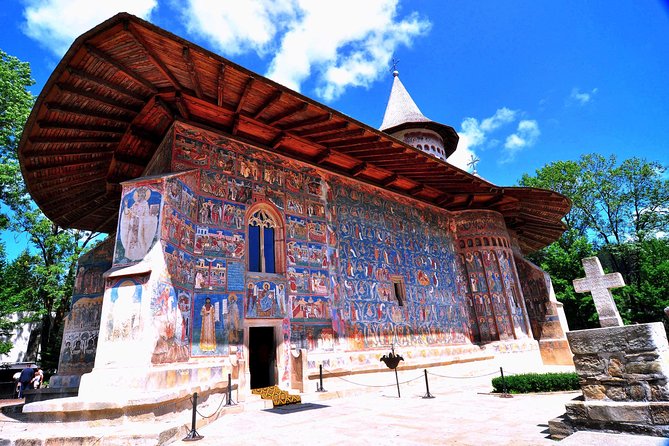
The route then turns toward Bucovina, where the religious art becomes the central theme. Moldovita Monastery was founded by Petru Rares in the sixteenth century. Its exterior and interior frescoes are the reason to linger, even though the scheduled visit is one hour.
Sucevita Monastery, founded by the Movila brothers in the seventeenth century, adds another variation. Its paintings combine Gothic and Byzantine elements, and the frescoes on the northern wall remain visible because the surrounding protective walls were never removed.
These monasteries are among the tour’s finest cultural stops. Each has a related artistic tradition, but the settings, colors, and surviving paintings differ. Entrance fees are not included, so you should expect several small additional payments on this day.
At Marginea, you visit artisans who make the area’s famous black ceramics. A 20-minute stop is enough to see the working process and browse pottery, painted eggs, and other Bucovina crafts. It is a quick visit, and the workshop setting may encourage purchases, but it also gives you a direct connection to a living craft rather than a display behind glass.
The listed final stop at Voronet is described as a visit to another painted monastery, but the supplied schedule repeats the Vadu Izei whirlpool description under this entry. Because of that mismatch, confirm the exact timing and content with the operator before departure. Voronet is traditionally one of Bucovina’s best-known painted monasteries, but the schedule itself does not provide reliable detail about the visit.
Day 5: Bicaz Gorges, Red Lake, and the late arrival in Sighisoara
Piatra Neamt receives a 30-minute stop. The city is surrounded by mountains and preserves a fifteenth-century citadel associated with Stephen the Great. An eighteenth-century synagogue adds another layer to the town’s religious and cultural story.
The route continues through the Bicaz Gorges. The road runs beside a stream between dramatic cliffs, making this one of the most memorable drives of the week. The stop is only about 30 minutes, and traffic or weather may affect how much time you have to walk and take photographs.
There is also a market selling local handicrafts and souvenirs. It can be useful for a quick purchase, though prices and quality will vary.
Red Lake formed when a section of mountain slipped and blocked the valley. Tree trunks still rise from the water, giving the lake its unusual appearance. You have about an hour to hear the local legends and take in the setting.
The day ends with a late arrival in Sighisoara, followed by a more substantial visit on day six. This is a tiring schedule. If you prefer an early dinner and a quiet evening, expect the timing to work against you.
Day 6: Sighisoara, Bran Castle, and Brasov
Sighisoara’s historic center is UNESCO-listed and compact enough to explore on foot. Its colored houses, fortified streets, Clock Tower, and churches reflect the town’s German, Romanian, and Hungarian influences.
The connection with Vlad Dracula is part of the town’s appeal. Vlad was born here in 1431, but the real pleasure is the preserved medieval center rather than the Dracula story alone. Two hours gives you time to walk and see the main sights, although entrance to attractions is not included.
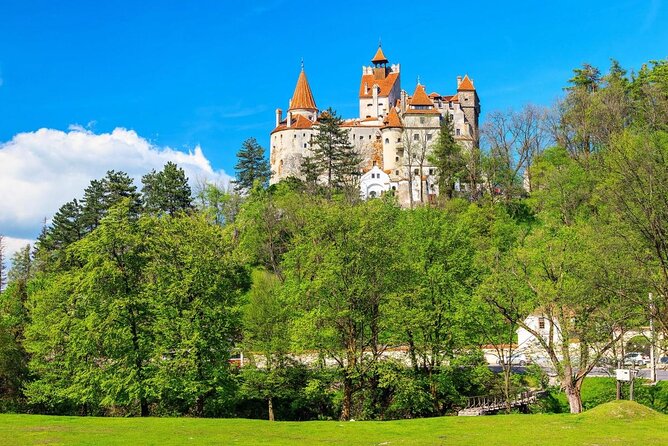
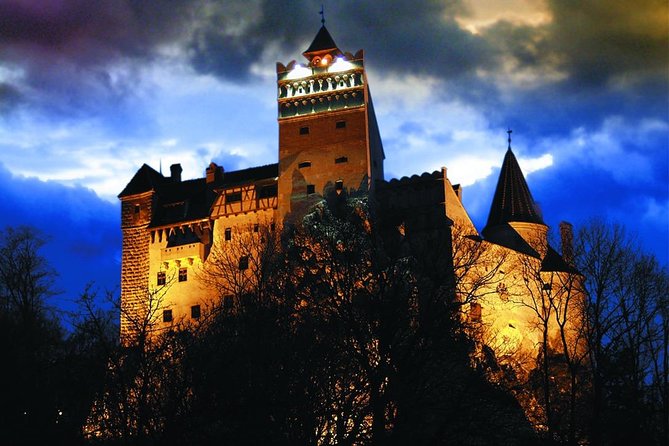
Bran Castle follows with a two-hour visit. The fortress once guarded the border between Wallachia and Transylvania and was important to Brasov’s defense. Its modern fame comes from the Dracula association, even though the historical connection between the fictional character and the real castle is loose.
That tension is part of the fun. You can enjoy the narrow rooms, defensive setting, and spooky branding while keeping the history straight. Admission is not included.
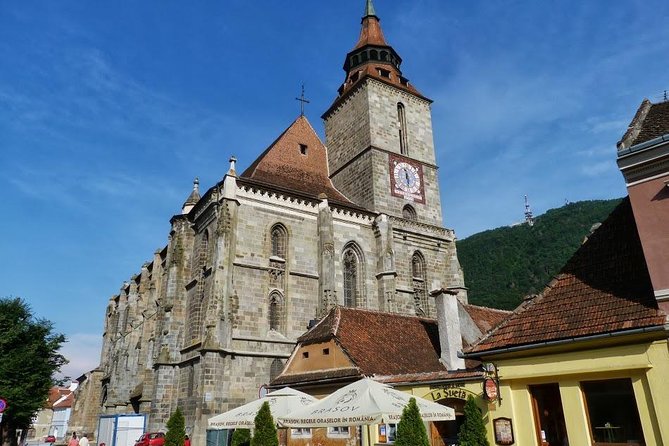
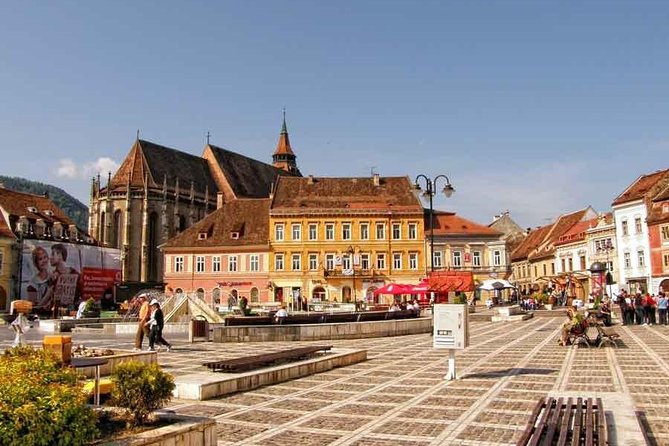
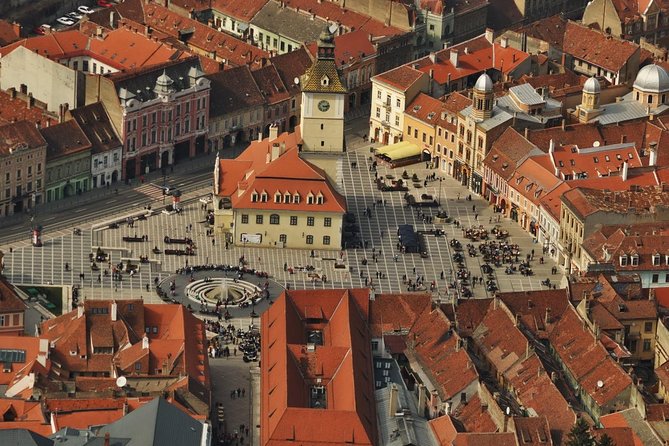
Brasov receives three hours, the longest urban visit of the day. Its German architectural influence appears in Gothic, Baroque, and Renaissance forms. The schedule includes the First Romanian School in the Schei district, as well as the Black Church and old city gates.
Brasov is a good place for the guide’s local explanation because the city’s Romanian and German pasts are visible in a small area. The visit remains an introduction, not a full exploration. Still, three hours is enough to walk through the center, see the main church, and understand why Brasov is one of Transylvania’s most appealing bases.
Day 7: Peles Castle and a short Bucharest finale
Peles Castle is the final major sight. Built as the summer residence of Romania’s first king, Carol I of Hohenzollern, it was designed by a Czech architect and constructed between the nineteenth and twentieth centuries.
Its appeal lies in the interiors. Each room uses a different style, and the Florentine room brings a Renaissance and Italian touch. Two hours is a useful amount of time, especially if you want to study the decoration rather than rush through.
Entrance is not included, so add it to your budget. Castle access rules and fees can change, and the tour does not state which interior areas are available on a particular day.
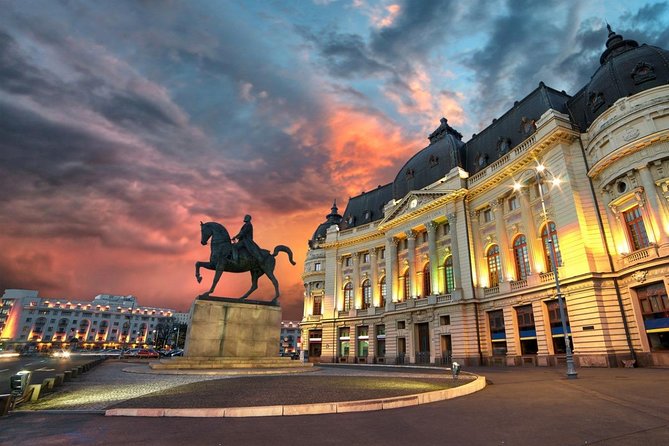
The return to Bucharest ends with a 30-minute panoramic tour. You see the Triumph Arch, Romanian Athenaeum, Revolution Square, and Parliament Palace from the city route. This is a quick orientation rather than a full Bucharest sightseeing day, so plan extra time in the capital if these sights matter to you.
What $1,719.59 per person buys you
The price is substantial, but the route covers a great deal of Romania. You receive six nights of accommodation, six breakfasts, a private vehicle, a driver-guide, hotel pickup and drop-off, and transport throughout the circuit.
That package has real value if you would otherwise need to arrange several hotels, regional transfers, and local guides. A private vehicle also makes the wooden churches, remote villages, mountain roads, and monasteries much easier to reach.
The price does not cover all admissions. Salina Turda, the wooden churches, Merry Cemetery, the painted monasteries, Sighisoara attractions, Bran Castle, Brasov sights, and Peles Castle have listed exclusions. Tips for the guide and driver are also separate.
Solo passengers pay an additional 150 euros for a single room, locally by cash or card. For two or more people sharing rooms, the private format is easier to justify because the cost buys convenience as well as guiding.
Comfort, pace, and the role of the guide
Pickup is offered, and the stated start time is 9:00 a.m. The air-conditioned minivan is important because the route covers long distances and varied terrain. You should still expect many hours on the road, especially around Maramures, Bucovina, and the Bicaz Gorges.
A private tour gives you more control than a large group departure. You can ask for extra explanation at a monastery or move on from a market if it is not your interest. The exact flexibility is not defined, so discuss priorities with the operator before setting out.
George is praised for helping explain travel guidelines and keeping arrangements clear during a difficult travel period. Liviu is also singled out for guiding the mountain roads, painted monasteries, Merry Cemetery, and castles. That feedback suggests the human side of the tour can make a major difference, but the assigned guide may depend on availability.
The tour is described as suitable for most participants and requires a minimum number of travelers to operate. It is still wise to be comfortable with stairs, uneven historic streets, castle interiors, and long sitting periods in a vehicle.
Who should book this Romania tour?
I would recommend it to first-time visitors who want a broad introduction without renting a car or piecing together rural transport. It suits couples, families, friends, and senior travelers who value a private guide and door-to-door movement.
It is especially good for you if your priorities include:
- Medieval towns and fortified centers
- Romanian monasteries and religious art
- Wooden architecture and village customs
- Dracula-related sights balanced with real history
- Mountain roads, gorges, and unusual natural sites
- A private schedule rather than a large coach group
I would hesitate if you want long stays in each city, extensive hiking, or plenty of unplanned free time. The schedule is ambitious, and some visits last only 30 minutes or one hour.
Should you book it?
Book this tour if you want to see the broadest possible slice of Romania in one week and value private transport more than a leisurely pace. The strongest parts are the varied route, the painted monasteries, the Maramures traditions, the dramatic mountain drives, and the guide support associated with George and Liviu.
Before paying, confirm the hotel list, the exact admission costs, the day-four Voronet schedule, and the likely driving times. If those details suit you, the tour offers a practical way to reach Romania’s far-flung cultural sights without managing the logistics yourself.
FAQ
How long is the Romania Grand Tour?
The tour lasts approximately seven days, with six nights of accommodation and six breakfasts included.
Where does the tour begin and end?
The tour begins in Bucharest and returns to Bucharest on the final day.
What time does the tour start?
The stated start time is 9:00 a.m.
Is hotel pickup and drop-off included?
Yes. Hotel pickup and drop-off in Bucharest are included.
Is this a private tour?
Yes. Only your own group participates in the activity.
What type of transport is used?
Transport is provided in a private, air-conditioned vehicle, described as a minivan.
Are accommodation and breakfast included?
Yes. Six nights of accommodation and six breakfasts are included.
Are entrance fees included?
Not all entrance fees are included. Several attractions list admission as extra, including Salina Turda, Bran Castle, Peles Castle, Sighisoara sights, the painted monasteries, and other religious monuments.
Is there an extra charge for a single room?
Yes. A 150 euro single-room supplement is paid locally by cash or credit card.
Just added in Bucharest
- Bucharest: Dealu Mare Winery Private Trip with Wine Tasting★ 4.9 · 6 reviews
- Winery touring & private wine tasting – one day private tour★ 5.0 · 3 reviews
- Village Museum Bucharest Guided Tour★ 5.0 · 6 reviews
- Transylvania Tour: Dracula’s Castle, Peles Palace & Brasov★ 5.0 · 19 reviews
- Transfer Airport Otopeni – Bucharest★ 5.0 · 2 reviews
- Private Transfer Bucharest Otopeni Airport (OTP) to/from Brasov★ 5.0 · 2 reviews
- Bucharest Airport Transfer To Constanta Mamaia★ 5.0 · 3 reviews
- Airport Henri Coanda (Otopeni) to Bucharest – Private Transfer – Driver★ 5.0 · 5 reviews
7-Day Experiences, compared.
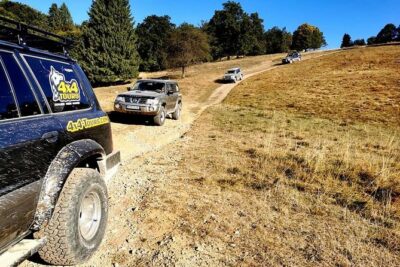
4×4 Driving Experience at Flying Altitudes – 7 Days
Read our review →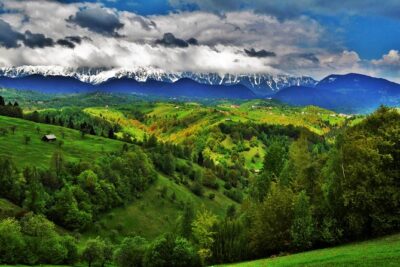
7-Day Private Tour of Transylvania from Bucharest
Read our review →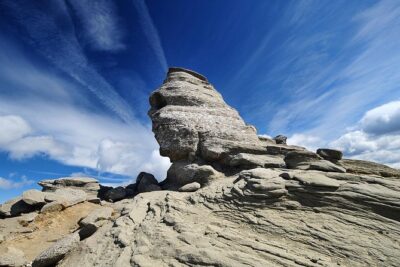
Amazing Romania – Seven day private tour from Bucharest
Read our review →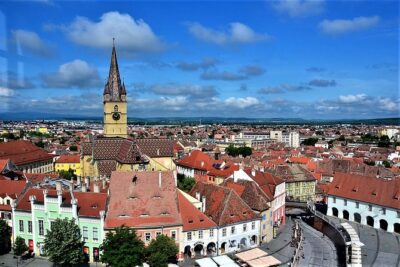
7 Days Private Guided Tour in Romania from Bucharest
Read our review →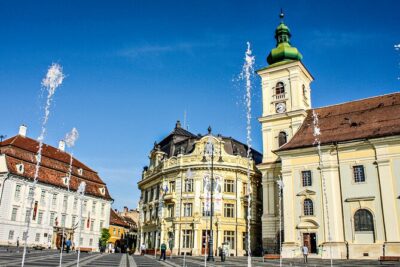
Discover Medieval Transylvania Small Group Tour – 7 days
Read our review →
7 Day Best of Transylvania Motorcycle Tour from Cluj
Read our review →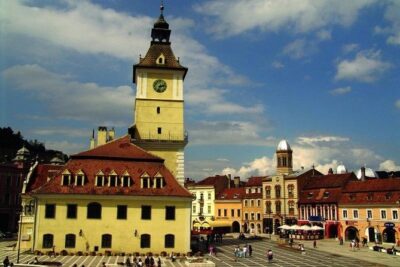
7-Day Dracula Tour in Romania from Bucharest including ‘The Ritual of Killing of a Living Dead’
Read our review →Browse the lists this tour appears in