
REVIEW · CITY TOURS
Cluj-Napoca Walking City Tour
Cluj reveals itself one street at a time. This two-hour walk gives you a useful first look at the city through its architecture, mixed Romanian, Hungarian, and Saxon influences, and the stories attached to its central squares. I especially like the small group of no more than 10 people, which should make it easier to ask questions, and the focus on context rather than a quick parade of monuments. The tour costs $62 per person, so its value depends heavily on how much you want a guide to explain the city rather than simply point out buildings.
I also like that the route reaches a viewpoint, with the Fireman Tower praised as a memorable stop in one account. The main drawback is practical: two hours is enough for an introduction, not a full survey of Cluj, and the walking route is not suitable for wheelchair users. Wear proper shoes, because old-town streets and extended standing are part of the deal.
In This Review
- Key points to know before booking
- Why this Cluj walk is useful on a first visit
- Museum Square and the Franciscan Church
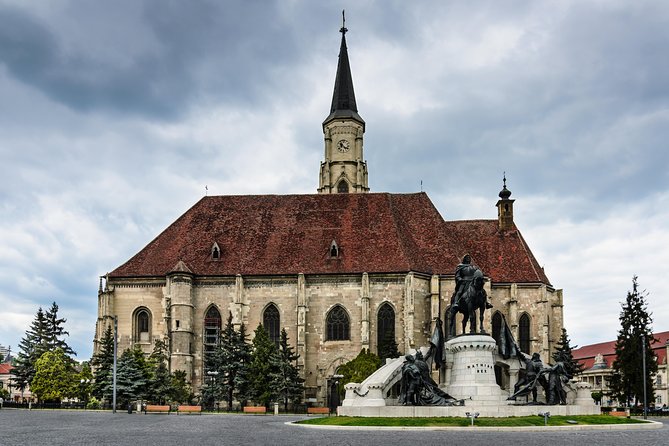
- Union Square and the Gothic St. Michael’s Church
- From Gothic forms to the Baroque National Theatre
- Old-town streets and Cluj’s mixed character
- The final viewpoint and the Fireman Tower
- Guide quality is the main value
- Who should book this walking tour?
- Should you book the Cluj-Napoca Walking City Tour?
- FAQ
- How long does the Cluj-Napoca Walking City Tour last?
- How much does the tour cost?
- What language is the tour conducted in?
- Where is the meeting point?
- What sights are included in the walking route?
- Is the Fireman Tower part of the tour?
- Are meals included?
- Is the tour suitable for wheelchair users?
Key points to know before booking
- A compact introduction to Cluj: The two-hour route links Museum Square, Union Square, major churches, cultural buildings, and a city viewpoint.
- Strong guide-led storytelling: English-speaking guides such as Adrian and Catalin have been praised for clear explanations, humor, patience, and local pride.
- A small group format: With a maximum of 10 participants, you get a more personal setting than on a large coach-style city tour.
- Architecture across several eras: You will see Gothic, Baroque, and later cultural layers rather than only one period of the city.
- The meeting point is easy to identify: Look for the guide in front of the Obelisk, with the tour beginning around Museum Square.
- Plan for a walking-only experience: Meals and photography fees are not included, and pets are not allowed.
Why this Cluj walk is useful on a first visit
Cluj-Napoca can be hard to read at first. It is a modern university city, a cultural center, and a place shaped by several languages and political eras. The old center is compact enough to explore on foot, but its buildings make more sense when someone explains how Romanian, Hungarian, and Saxon influences meet here.
That is the real purpose of this tour. You are not just ticking off St. Michael’s Church and Banffy Palace. You are being shown how the city changed over time, with newer cultural layers added around older streets and squares.
I would consider this a getting-your-bearings tour. It gives you a framework for later wandering. Afterward, you should have a better sense of which parts of the center deserve a second look, and which museums or viewpoints you want to visit at your own pace.
The guide speaks English, and the experience is built around conversation, visual material, and stories about people connected with Cluj. That matters because architecture can become a blur when you see too much of it at once. A clear explanation helps you remember why a building is important.
More Walking Tours in Cluj Napoca
- Cluj-Napoca: 2.5-Hour Guided Walking Tour
★ 4.8 · 104 reviews - Cluj-Napoca: 2.5-Hour Guided Walking Tour
★ 4.5 · 29 reviews - Cluj-Napoca Walking City Tour
★ 4.5 · 16 reviews
Museum Square and the Franciscan Church
The meeting point is in front of the Obelisk, while the walk begins around Museum Square. This is a sensible starting area because it places you in one of the city’s most meaningful historic spaces right away.
Museum Square brings together the Franciscan Church and the building that houses the National Art Museum. The square gives you a first taste of Cluj’s layered character. Religious buildings, civic culture, and older urban streets sit close together, making this a useful place for the guide to explain the city before the group moves farther into the center.
The Franciscan Church adds a quieter, more reflective stop near the beginning. You can expect the guide to connect the church and surrounding buildings to the wider cultural story of Cluj, rather than treat them as isolated sights.
Banffy Palace is one of the major architectural highlights here. The palace houses the National Art Museum, so it links the city’s aristocratic past with its present-day art life. The tour does not include meals or photography fees, and the supplied details do not promise an interior museum visit. I would therefore treat Banffy Palace mainly as an exterior sight unless your guide tells you otherwise.
This is also where visual material can help. Old photographs and images make it easier to compare the city as it was with the streets you see today. That kind of comparison can turn a short stop into a useful lesson in urban change.
Union Square and the Gothic St. Michael’s Church
From Museum Square, the route heads toward Union Square and the Gothic Church of St. Michael. This is likely to be the visual centerpiece of the walk.
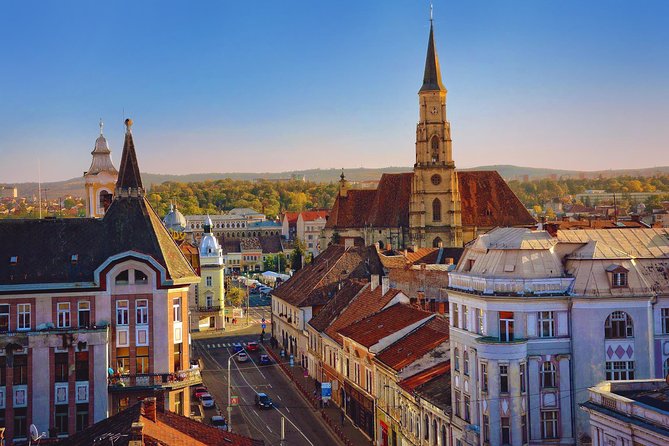
St. Michael’s Church gives the tour a strong Gothic anchor. Its scale and style offer a clear contrast with the Baroque palace seen earlier. The guide’s job here is not simply to identify the church, but to explain how its design fits into Cluj’s wider development.
Union Square also helps you understand the city as a public gathering place. You are seeing architecture in its urban setting, where churches, civic buildings, open space, and daily life overlap. That is more useful than seeing the church alone and moving on.
The route is chronological, so the sequence should help you follow the guide’s explanation. You begin with older parts of the center, then see how later cultural and civic buildings were added. I like this approach because it gives the walk a clear shape. You are following time as well as streets.
The group size matters here. A maximum of 10 people should allow the guide to pause for questions and point out small details without losing half the group. One account singled out Adrian for making the tour engaging while placing Cluj in its cultural and historical setting. That is exactly the sort of guidance that can make a large square feel less anonymous.
From Gothic forms to the Baroque National Theatre
The tour then moves through later architectural styles, including the Baroque-style Cluj National Theatre. This chronological shift is one of the strongest parts of the route because it lets you compare the city’s visual language instead of treating every building as equally old.
The National Theatre represents a different side of Cluj. Where St. Michael’s Church reflects medieval Gothic design, the theatre points toward the city’s later cultural life and public institutions. The pairing gives you a simple way to see how Cluj moved from a fortified historic center toward a more modern civic and artistic identity.
The guide also brings in people and anecdotes. Catalin received repeated praise for clear explanations, amusing stories, kindness, and a willingness to answer individual questions. Another description noted that the guide used humor while discussing the country’s difficult past. Those details suggest a tour that aims to keep serious subjects approachable.
That balance is important in Romania, where a short walk can touch on several political and cultural shifts. You may hear about Romanian, Hungarian, and Saxon connections, along with the tensions and changes that shaped the city. The tour is not a full academic lecture, but it appears designed to give you enough background to understand what you are seeing.
More Cluj Napoca trips:
- Curly Tour – Day trip from Cluj 🙂
★ 5.0 · 330 reviews - Cluj: Turda Salt Mine, Corvin Castle, Alba Carolina Tour
★ 4.8 · 184 reviews - From Cluj: Turda Salt Mine, Gorge, and Remetea Full-Day Trip
★ 5.0 · 84 reviews - Turda salt mine 4h tour from Cluj
★ 5.0 · 73 reviews
Old-town streets and Cluj’s mixed character
Between the headline sights, the walk takes you through the older streets of central Cluj. This may be the part you remember best, because the city’s character often appears in the spaces between major monuments.
You will see a blend of architectural influences rather than one tidy style. Romanian, Hungarian, and Saxon elements are present in both the built environment and the local culture. A guide can point out details you might otherwise pass without noticing, then connect those details to the people and communities who shaped the city.
The experience is not limited to formal dates and names. The descriptions emphasize local features, personal stories, and small observations that bring the streets to life. One visitor from the United Kingdom especially valued the way Adrian connected cultural and historical context with ordinary local details.
That is a good sign for anyone who prefers a tour with personality. You should still expect facts and dates, but the walk is not presented as a dry lecture. Humor and stories are part of the method.
There is also a useful attitude adjustment built into the experience. One German-speaking participant described Cluj as lively, modern, and very different from outdated Western European assumptions. You should not expect the guide to present a postcard version of Romania. The better aim is to see Cluj as a current city shaped by its past, not trapped in it.
The final viewpoint and the Fireman Tower
The walk finishes at a location with a broad view over Cluj. The available details identify the Fireman Tower in one account, where the bird’s-eye view was described as a particularly memorable moment.
A viewpoint is a smart way to end a city walk. After spending two hours among streets and façades, you get a chance to see how the center fits together. You can also use the view to plan the rest of your stay, even though the tour itself does not promise extra sightseeing after the final stop.
The Fireman Tower may require additional attention to stairs or uneven access, though the supplied details do not specify the exact access arrangements. If mobility is a concern, note that the experience is not suitable for wheelchair users.
This ending also gives the tour a sense of reward. You have moved from street-level details to a wider view, and the city’s structure becomes easier to understand. It is a modest feature, but it can make a short tour feel more complete.
Guide quality is the main value
At $62 per person, this is not the cheapest way to walk around Cluj. You can see many central buildings without paying for a guide. The question is what you want from your first two hours.
I think the price is easier to justify if you value clear historical storytelling and personal questions. A professional English-speaking guide can save you from spending your first day trying to sort out the city’s architectural styles and cultural background on your own.
The strongest praise centers on the guides. Adrian is described as cultured, engaging, and effective at linking Cluj’s past with local details. Catalin is praised for clear explanations, funny anecdotes, patience, and attention to individual wishes. Those comments point to a guide-led experience where the quality of the person leading the walk matters more than any single monument.
The small group limit improves that value. Ten people is still enough for a social tour, but it is small enough for a guide to respond to questions. You are less likely to feel like a face in a crowd.
Still, you should keep your expectations reasonable. The fee covers the professional guide, not meals or photography fees. The tour lasts two hours, and the information provided does not include admission to attractions or a dedicated museum visit. Think of the price as payment for interpretation and orientation, not a package of entries and refreshments.
Who should book this walking tour?
I would recommend this tour to a first-time visitor who wants a fast, organized introduction to Cluj-Napoca. It also suits you if you enjoy architecture but want someone to explain the connections between buildings, communities, and historic periods.
It is a good fit for solo visitors and couples who prefer a small group. The English language makes it accessible to international visitors, and the flexible reserve-now, pay-later option can help if your schedule is still changing.
You may also like it if you want a guide who can answer questions rather than deliver a fixed speech. The accounts associated with Adrian and Catalin suggest a warm, responsive approach.
I would be more cautious if you dislike walking, need step-free access, or want a long museum visit. You should also look elsewhere if your main goal is food tasting, since meals are not included. This is a city orientation with cultural and architectural focus.
Wear comfortable shoes. That is the one packing tip provided, and it is the right one for a two-hour route through the old center.
Should you book the Cluj-Napoca Walking City Tour?
Book it if you want context, not just photographs. The route covers the essential central sights, adds a viewpoint, and gives you a way to understand Cluj’s blend of Gothic, Baroque, Romanian, Hungarian, and Saxon influences.
At $62, the tour makes the most sense early in your visit, when a good guide can help you read the city for the days that follow. Its perfect five-star rating across five recorded ratings is encouraging, especially since the praise focuses on specific qualities: clear explanations, humor, local pride, and attention to questions.
Skip it if you prefer to explore entirely on your own or need wheelchair access. For most visitors who want a compact, human introduction to Cluj, the small group and strong guide feedback make this a worthwhile first walk.
FAQ
How long does the Cluj-Napoca Walking City Tour last?
The tour lasts two hours.
How much does the tour cost?
The listed price is $62 per person.
What language is the tour conducted in?
The tour is conducted in English with a live English-speaking guide.
Where is the meeting point?
Meet the guide in front of the Obelisk.
What sights are included in the walking route?
The route includes Museum Square, the Franciscan Church, Banffy Palace, St. Michael’s Church, the Cluj National Theatre, the old-town streets, and a location with a city view.
Is the Fireman Tower part of the tour?
The Fireman Tower is identified as a viewpoint visited during the experience in one description of the tour.
Are meals included?
No. Meals are not included.
Is the tour suitable for wheelchair users?
No. The tour is listed as not suitable for wheelchair users.
Just added in Cluj Napoca
- Turda salt mine and Corvin Castle day tour from Cluj★ 5.0 · 9 reviews
- Private tour to Turda Salt Mine, Rimetea and Alba Iulia★ 4.8 · 5 reviews
- Turda Salt Mine, Gorge & Rimetea Village (private from Cluj)★ 5.0 · 5 reviews
- Cluj to Rosia: Day Trip to Ferrata and pittoresque country★ 5.0 · 1 review
- 7 Day Best of Transylvania Motorcycle Tour from Cluj★ 5.0 · 4 reviews
- Via Ferrata Transylvania★ 5.0 · 1 review
- Discover Apuseni Mountains – Scarita Summit,Sipote Waterfall and Dumesti Village★ 5.0 · 17 reviews
- Turda salt mine, Rimetea village and Alba Iulia, from Cluj★ 5.0 · 11 reviews
City Tours, compared.

Bucharest Panoramic Sightseeing – Private City Tour
Read our review →
SB01 – City Tour Sibiu: Exploring the Heart of Transylvania
Read our review →
City Tour Sighisoara Legends & Landmarks A Walk Through Time
Read our review →Browse the lists this tour appears in