
REVIEW · BRAN CASTLE AND DRACULA TOURS
8h Bucharest Communism Tour – Best of Bucharest with Dracula’s Tomb
Communism still shapes Bucharest’s streets. This eight-hour private tour connects the Palace of Parliament with Revolution Square, Ceausescu’s former home, the Village Museum, and Snagov Monastery, where Dracula’s tomb is said to be. I like the strong historical contrast, from a dictator’s enormous state building to modest rural homes, and I like the private vehicle with hotel pickup and drop-off. The main drawback is cost: at $297.38 per person, entrance tickets and meals still come extra.
The day works best with a guide who can explain Romania rather than merely point at buildings. Guides Nicolas and Răzvan receive especially warm praise for their friendly manner, flexible pacing, clean air-conditioned vehicle, and command of Bucharest’s communist past. You should still allow for a full day on the road, since Snagov is about 40 minutes outside the city.
In This Review
- Key points to know before booking
- Why this eight-hour route works
- The Palace of Parliament and the scale of power
- Village life at the National Village Museum
- Calea Victoriei, where different Bucharests meet
- Revolution Square and the end of Ceausescu’s rule
- Snagov Monastery and the Dracula connection
- Inside the Ceausescu Mansion
- Guides, vehicle, and the private-tour advantage
- Is $297.38 per person fair value?
- Who should book this Bucharest tour?
- Should you book it?
- FAQ
- How long does the Bucharest communism tour last?
- Is hotel pickup included?
- Is this a private tour?
- Are entrance tickets included in the price?
- How far is Snagov Monastery from Bucharest?
- Can I cancel for a full refund?
Key points to know before booking
- The Palace of Parliament takes center stage: Expect about two hours at one of the world’s largest administrative buildings, with admission paid separately.
- The history comes through sharp contrasts: Royal buildings, communist headquarters, Orthodox churches, and modern city life line up along Calea Victoriei.
- Revolution Square gives the tour its emotional core: This is where the December 1989 uprising helped bring Nicolae Ceausescu’s rule to an end.
- Snagov adds a curious Dracula connection: The monastery sits on an island outside Bucharest, and the tomb traditionally linked with Vlad the Impaler is the surprise stop.
- The Ceausescu Mansion shows private privilege: The former family residence reveals how far the ruling family lived from ordinary Romanian life.
- You pay extra for key entries: The price covers private transport, guides, fuel, and pickup, but not admission tickets or food.
Why this eight-hour route works
Bucharest can feel scattered at first. Its grand avenues, Orthodox churches, communist blocks, royal buildings, and leafy residential areas do not always explain themselves. This tour gives you a ready-made thread: how Romania moved from monarchy to dictatorship, how that dictatorship reshaped the capital, and how its fall still marks the city.
I like that the route does not treat communism as a museum subject only. You see the political center, the dictator’s public monument, his family home, and the site of the 1989 revolt. The Village Museum then offers a useful counterpoint, showing the older rural traditions that existed far beyond Bucharest’s official boulevards.
This is a private tour, so only your group participates. That matters here. You can ask why a building matters, stop for clarification, or spend less time on a sight that does not suit your interests. The guides praised most warmly, Nicolas and Răzvan, are described as friendly, entertaining, flexible, and attentive. One account also points to a clean, comfortable, air-conditioned van with large windows, a practical benefit during a long day.
The schedule is full but not frantic on paper. The listed stops add up to roughly eight hours, and the drive to Snagov takes about 40 minutes each way. You will want comfortable shoes, water, and a willingness to spend much of the day moving between sites.
More Bran Castle and Dracula trips:
- Bucharest: Dracula’s Castle, Peles Castle, & Brasov Old Town
★ 4.5 · 17,858 reviews - Bucharest: Dracula Castle, Peles Castle & Brasov Old Town
★ 4.6 · 10,891 reviews - Bucharest: Dracula’s Castle, Peleș Castle & Brașov Day Trip
★ 4.5 · 5,919 reviews
The Palace of Parliament and the scale of power
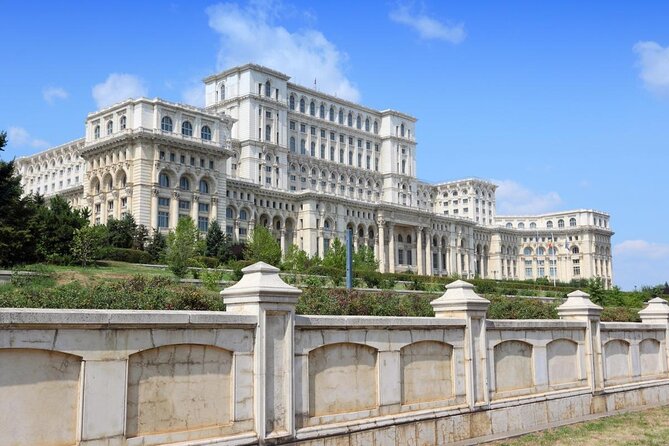
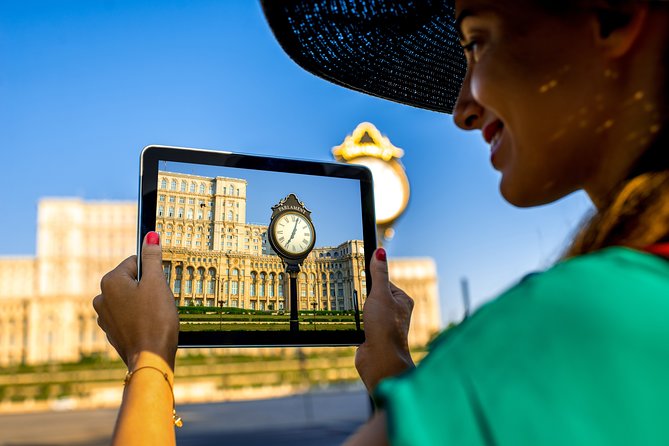
The Palace of Parliament, also called the People’s House, is the day’s biggest visual shock. It is described as the second-largest administrative building in the world after the Pentagon. Size is the point here, but size alone does not explain why the building leaves such a strong impression.
Nicolae Ceausescu ordered a huge section of Bucharest reshaped for this project. The building represents the state’s power, but also the waste and personal ambition of a totalitarian system. As you move through its grand interior, the contrast is hard to miss: lavish materials and monumental rooms existed while ordinary people faced shortages and strict controls.
The visit is planned for about two hours, giving this stop enough time to carry real weight rather than becoming a quick photo stop. Your guide can connect the architecture to Ceausescu’s rule and explain why the building remains controversial.
Admission is not included, so check the ticket arrangements before the day begins. Since entrance rules and available visiting areas can change, your guide or tour operator should be your source for the current entry details. The tour price covers the private vehicle and guiding, not the ticket itself.
My advice is to resist treating the Palace as a grand building alone. Look at it as a political object. Its vast corridors and formal rooms help you understand how a leader tried to turn authority into stone, marble, and chandeliers.
Village life at the National Village Museum
The National Village Museum shifts the mood completely. Instead of state power and urban planning, you see traditional Romanian homes gathered in one outdoor setting. The collection includes houses made from wood, adobe, stone, and other local materials, representing different parts of the country.
You can also see national symbols such as watermills and wooden churches. The point is not simply to admire old buildings. The museum shows how rural families built practical homes and communities around available materials, local customs, and the needs of daily life.
I like this stop because it keeps the tour from becoming only a study of Ceausescu. Romania did not begin with communism, and its identity is much broader than the years of dictatorship. The museum gives your guide a way to explain family life, spiritual customs, work, and the relationship between people and their surroundings.
The stop description does not give a precise visit length, so the exact time may depend on the group and the day’s traffic. Since the tour already includes several major sites, ask your guide how much time is available if traditional architecture is a priority for you.
This is also a good place to slow down mentally. The Palace of Parliament asks you to look upward at power. The Village Museum asks you to look closely at ordinary life.
Calea Victoriei, where different Bucharests meet
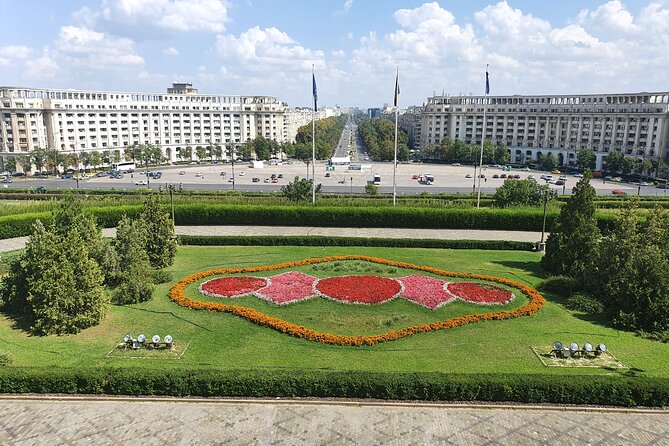
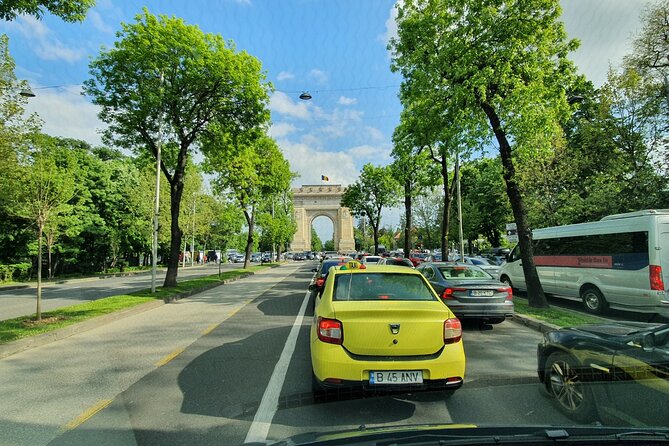
Calea Victoriei, or Victory Avenue, is the city’s historical display case. The route passes old Orthodox churches, museums, theaters, restaurants, shops, tea rooms, and gift stores. It is not a single-period street, and that is precisely why it works so well on this tour.
Your guide points out the Royal Palace on one side and the former Central Committee of the Romanian Communist Party near Revolution Square on the other. This physical contrast makes the political story easier to grasp. Monarchy, communism, and post-1989 Bucharest are not distant chapters here. They sit within the same city center.
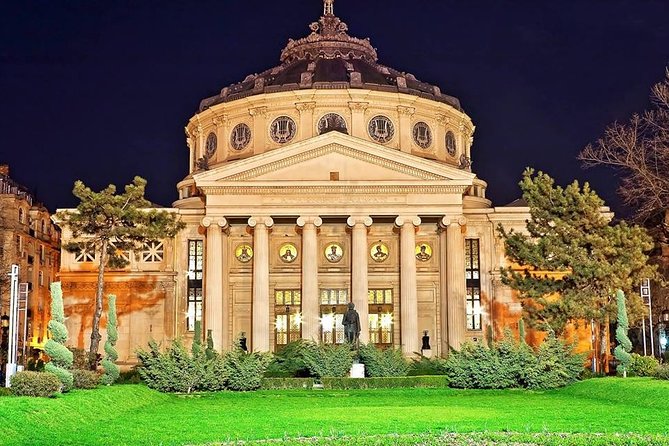
You may also see the Romanian Athenaeum, the CEC Palace, and the National History Museum. These buildings help place the communist period in a longer national story. Old churches add another layer, since religious life survived despite the official ideology of the state.
The scheduled visit lasts about 45 minutes, with no admission charge listed for this portion. That makes it more of a guided city walk and drive than an extended museum visit. If you want detailed interiors, ask what can be entered during your tour. The value is in seeing the connections between the buildings and hearing the explanation as you move through the area.
I especially like Calea Victoriei for first-time visitors because it helps you get your bearings. You see the polished, historic face of Bucharest alongside the political sites that changed the city’s course.
More communism history tours:
- The Real tour of Communism
★ 5.0 · 666 reviews - Life under Communism
★ 5.0 · 358 reviews - 3-Hour Guided Tour of Communist Bucharest
★ 4.9 · 303 reviews - Bucharest Essential Tour: Old Town, Calea Victoriei & Communism
★ 5.0 · 142 reviews
Revolution Square and the end of Ceausescu’s rule
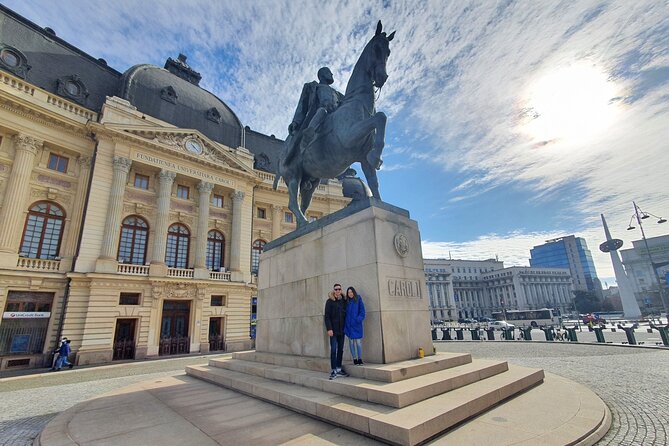
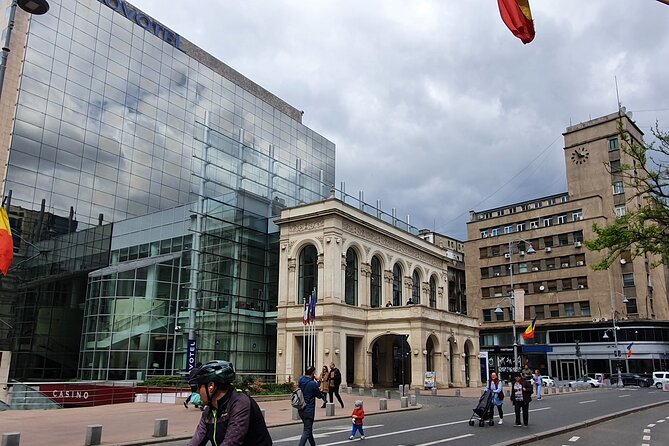
Revolution Square is the most important stop for understanding December 1989. The former Central Committee building, now associated with the Senate Palace area, was where the Romanian Communist Party operated. It was also the place from which Ceausescu fled by helicopter as his rule collapsed.
Your guide sets the scene around the uprising and the human cost of removing the dictatorship. This is not just a story about a leader losing power. It is about public resistance, sacrifice, fear, confusion, and the sudden breakdown of a regime that had controlled Romania for decades.
The stop lasts about 30 minutes and is free to visit. That may sound brief, but a focused explanation at the actual location can be more useful than a long general lecture. Pay attention to the surrounding buildings and the route between the square and Calea Victoriei. The setting helps you see how public space became political space.
The tour also touches on the questions left behind by Ceausescu’s fall, including his fortune, the role of the state security service, and claims about money held outside Romania. These issues remain part of the debate over what happened before and after the revolution.
I would not expect a museum-style examination of every political detail in half an hour. For that, you would need another visit. But as part of a wider route, Revolution Square gives the day its clearest human focus.
Snagov Monastery and the Dracula connection
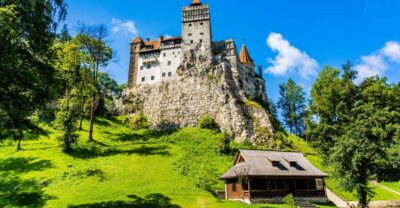
After the city sights, the trip to Snagov Monastery changes the pace. The monastery is about 40 minutes outside Bucharest and sits on an island. Reaching it adds a small sense of adventure to an otherwise urban history tour.
The site is linked by tradition with the tomb of Dracula, more accurately associated with Vlad the Impaler. That connection is the reason this stop surprises many people. It also gives the tour a chance to separate legend from history without removing the fun.
The monastery itself matters beyond the Dracula story. Its island setting and religious character offer a sharp contrast to the Palace of Parliament and the broad avenues of Bucharest. You move from a modern capital shaped by dictatorship to a quieter sacred site tied to medieval Romania.
The planned visit lasts about one hour, and admission is extra. The supplied information does not promise that every part of the tomb story can be verified in a final, unquestionable way, so keep your expectations sensible. Think of it as a historical site with a famous association, not a Dracula theme park.
This stop is best for you if you enjoy a little folklore mixed into a serious history day. If your only aim is communist Bucharest, Snagov is the part that adds the most extra driving and the least direct connection to Ceausescu.
Inside the Ceausescu Mansion

The Ceausescu Mansion, known at the time as the Spring Palace, was Nicolae and Elena Ceausescu’s private residence from 1965 to 1989. Their children, Nicu, Zoia, and Valentin, also lived there. The home gives you a more intimate look at the ruling family than the huge public palace can provide.
The mansion was built in the mid-1960s and enlarged between 1970 and 1972. Aron Grimberg-Solari designed the residence, while architect Robert Woll worked on the interior furnishings and the grounds, with landscape engineer Teodosiu involved in the surrounding design.
The details matter because this was not simply an official office. It was where the family lived privately for a quarter of a century. The residence helps you consider the gap between public ideology and private comfort, especially in a country where the leadership promoted sacrifice while living with access to special resources.
The visit is scheduled for about one hour and 20 minutes, making it one of the longer indoor stops. Admission is not included. Check current entry arrangements before you go, since the tour price does not cover the ticket.
I would place this stop near the top of the list for anyone interested in daily life inside a dictatorship. The Palace of Parliament shows the regime’s public face. The mansion shows its domestic one.
Guides, vehicle, and the private-tour advantage

The guide can make or break a day like this. Bucharest’s sights are interesting, but the links between them are not always obvious. A strong guide explains why a street matters, what changed after 1989, and how the official story differs from ordinary life.
Nicolas is praised for being friendly, professional, flexible, entertaining, and well informed about Bucharest. Răzvan is also described as professional, flexible, and highly attentive. Spanish-speaking visitors can also request help in Spanish, based on the experience provided by a Spanish-speaking participant.
The vehicle is another practical strength. It is described as new, clean, air-conditioned, and comfortable, with large windows and comfortable seats. That is useful when you have several stops and a drive beyond the city.
Hotel pickup and drop-off are included, along with private transport, fuel, facility fees, and a driver-guide. The wording also lists a local guide, so clarify how the guiding is divided if that matters to you. The tour is private, and only your group joins, which gives you more control than a large coach excursion.
The private format also suits mixed-interest groups. One person can ask about architecture, another about the revolution, and another about Dracula without forcing the entire group into a fixed lecture.
Is $297.38 per person fair value?
The listed price is $297.38 per person. That is a serious spend, especially because entrance tickets and food are not included. The right question is not simply if the tour is cheap. It is whether private transport, pickup, a full day of guiding, and a carefully connected route are worth the premium for your group.
For two or more people, the value improves because you are paying for a private vehicle and guide rather than buying separate transport between Bucharest and Snagov. You also avoid piecing together several city visits and working out how to reach an island monastery outside town.
The price makes less sense if you only want a quick introduction to central Bucharest. You could see Calea Victoriei and Revolution Square in less time and spend your budget elsewhere. It also may not suit you if you dislike paying separately for every major interior.
Before booking, budget for:
- Palace of Parliament admission
- National Village Museum admission, if required
- Snagov Monastery admission
- Ceausescu Mansion admission
- Food and drinks
The exact ticket total is not provided, so ask for the current combined cost. That one question will give you a more honest final price.
Who should book this Bucharest tour?
I would recommend it to first-time visitors who want context quickly. In eight hours, you see political landmarks, historic streets, rural buildings, a dictator’s home, and a medieval religious site.
It is particularly good for:
- Couples or families who want a private schedule
- Friends splitting the cost of a private vehicle
- Visitors interested in communism and the 1989 revolution
- People who want to combine serious history with the Dracula connection
- Anyone who values hotel pickup and a guide who can answer questions
- Groups with limited time in Bucharest
I would be more cautious if you want a slow museum day. The route covers a lot of ground, and Snagov adds driving. I would also think twice if you are mainly looking for Dracula attractions, since only one stop centers on that legend.
Free cancellation is available if you cancel at least 24 hours before the start time. Changes or cancellations inside that window are not accepted for a refund. Service animals are allowed, and the activity states that most people can participate, but you should confirm any specific mobility needs before paying.
Should you book it?
Book this tour if you want Bucharest’s communist past explained through real places, not just dates and names. The Palace of Parliament, Revolution Square, and Ceausescu Mansion form a strong core, while the Village Museum and Snagov Monastery widen the story beyond the capital’s political center.
At $297.38 per person before tickets and meals, it is not a bargain outing. It is a convenience purchase for a private day with transport, hotel pickup, and a guide who can connect complicated subjects. I would choose it for a small group with limited time, especially if Nicolas or Răzvan is guiding.
Skip it if your budget is tight, you only want central Bucharest, or you prefer to explore one museum at a slower pace. For the right group, though, this is an unusually efficient way to understand how Romania’s royal past, communist rule, revolution, folk traditions, and Dracula folklore share the same day.
FAQ
How long does the Bucharest communism tour last?
The tour lasts approximately eight hours. The listed stops include the Palace of Parliament, National Village Museum, Calea Victoriei, Revolution Square, Snagov Monastery, and Ceausescu Mansion.
Is hotel pickup included?
Yes. Hotel pickup and drop-off are included, along with transport in a private vehicle.
Is this a private tour?
Yes. Only your group participates in the private tour or activity.
Are entrance tickets included in the price?
No. Entrance tickets are not included. Food and drinks are also excluded from the price.
How far is Snagov Monastery from Bucharest?
Snagov Monastery is about 40 minutes outside Bucharest. It is located on an island and is associated with the tomb of Dracula.
Can I cancel for a full refund?
Yes, if you cancel at least 24 hours before the experience start time. Cancellations or changes made less than 24 hours before the start time are not accepted for a refund.
Just added in Bucharest
- Winery touring & private wine tasting – one day private tour★ 5.0 · 3 reviews
- Bucharest: Dealu Mare Winery Private Trip with Wine Tasting★ 4.9 · 6 reviews
- Village Museum Bucharest Guided Tour★ 5.0 · 6 reviews
- Transylvania Tour: Dracula’s Castle, Peles Palace & Brasov★ 5.0 · 19 reviews
- Transfer Airport Otopeni – Bucharest★ 5.0 · 2 reviews
- Private Transfer Bucharest Otopeni Airport (OTP) to/from Brasov★ 5.0 · 2 reviews
- Bucharest Airport Transfer To Constanta Mamaia★ 5.0 · 3 reviews
- Airport Henri Coanda (Otopeni) to Bucharest – Private Transfer – Driver★ 5.0 · 5 reviews
Bran Castle and Dracula Tours, compared.
Dracula’s Castle, Peles Castle, & Brasov Old Town
Read our review →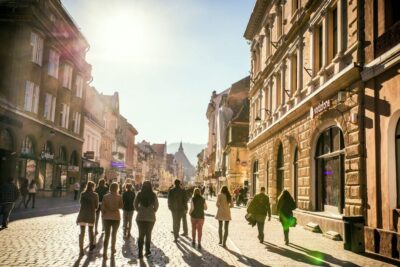
Dracula Castle, Peles Castle & Brasov Old Town
Read our review →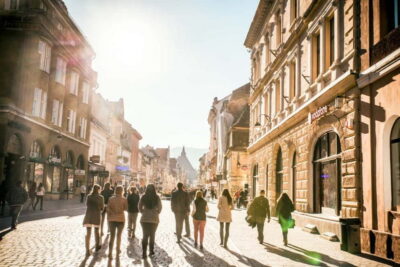
Dracula’s Castle, Peleș Castle & Brașov Day Trip
Read our review →Day Trip to Dracula Castle, Peles Castle & Brașov
Read our review →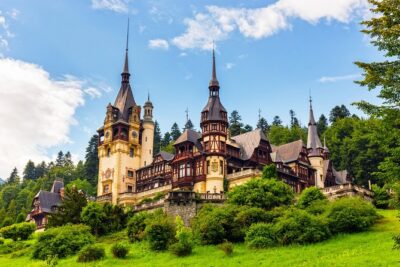
Bucharest to Dracula Castle, Peles Castle and Brasov Guided Tour
Read our review →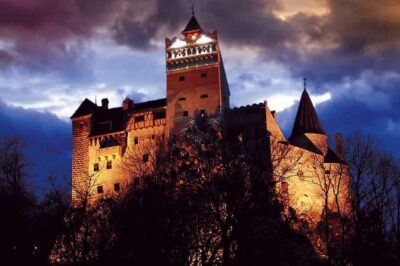
Dracula’s Castle, Peles Castle and Brasov Day Trip from Bucharest
Read our review →
Transylvania and Dracula Castle Full Day Tour from Bucharest
Read our review →
Browse the lists this tour appears in