
REVIEW · COMMUNISM AND CEAUSESCU TOURS
3-Hour Guided Tour of Communist Bucharest
Romania’s past is written into Bucharest’s streets. This three-hour walk connects grand communist projects with surviving inter-war neighborhoods, helping you understand why the city can feel elegant, awkward, damaged, and hopeful all at once. I especially like the focus on ordinary life under communism, not just monuments, and the way guides use family memories and old photographs to make recent history easier to grasp. The main drawback is that you spend much of the tour standing outdoors, so hot days, rain, or tired feet can affect the experience.
The tour also handles difficult subjects with care. You hear about Ceausescu, forced demolitions, nationalization, political control, and the violence of the 1989 revolution without being pushed toward one simple opinion. A short café stop helps break up the walking, but drinks and additional snacks cost extra, and the Palace of Parliament is viewed from outside rather than visited inside.
In This Review
- Key points to know before you go
- Why communist Bucharest is worth seeing on foot
- Meeting beneath the Patriarchy bell tower
- Ceausescu’s rise and the machinery of control
- The Palace of Parliament from the outside
- Surviving inter-war neighborhoods and the Uranus area
- The 1989 Revolution and the end of the regime
- A useful café pause halfway through
- Is $29 a fair price?
- Who will enjoy this walking tour?
- Practical advice before booking
- Should you book it?
- FAQ
- How long does the Communist Bucharest tour last?
- What language is the tour conducted in?
- How much does the tour cost?
- Where does the tour meet?
- Is the meeting point near central Bucharest?
- Is entry to the Palace of Parliament included?
- Are museum fees included?
- Are drinks and café snacks included?
- What should I bring?
- Can I cancel the tour for a full refund?
Key points to know before you go
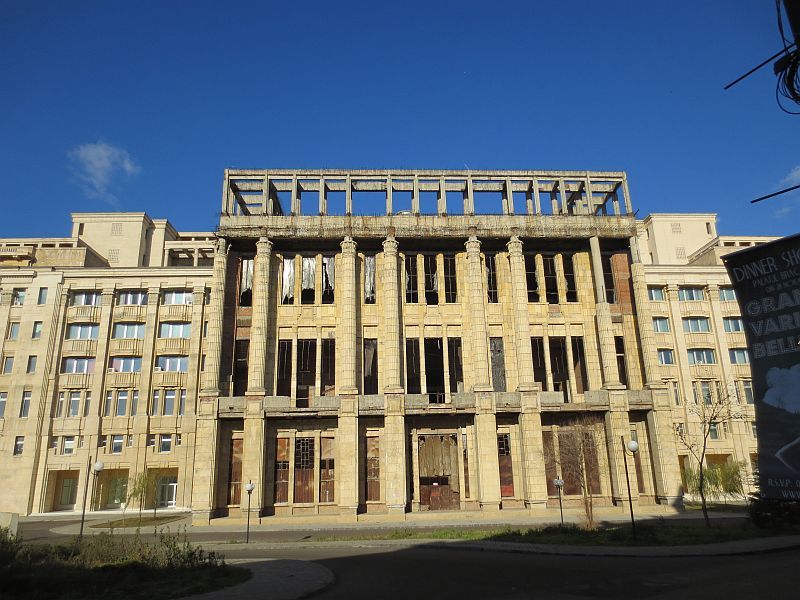
- See Bucharest’s sharpest contrasts: Communist-era avenues and monumental buildings sit close to charming inter-war streets that survived major redevelopment.
- Learn the personal side of history: Guides such as Cristina have used family stories, photographs, and even an old communist-era snack to explain daily life.
- Visit revolution-related locations: The route connects political memorials and places linked to the anti-communist uprising of 1989.
- Expect a walking lesson, not a museum tour: The experience lasts three hours and includes outdoor explanations, city views, and a café break.
- Bring practical gear: Comfortable shoes and water are important, especially in sunny or hot weather.
- Strong value at $29: For a small price, you get a focused local guide and a useful introduction to Bucharest’s modern history.
Why communist Bucharest is worth seeing on foot
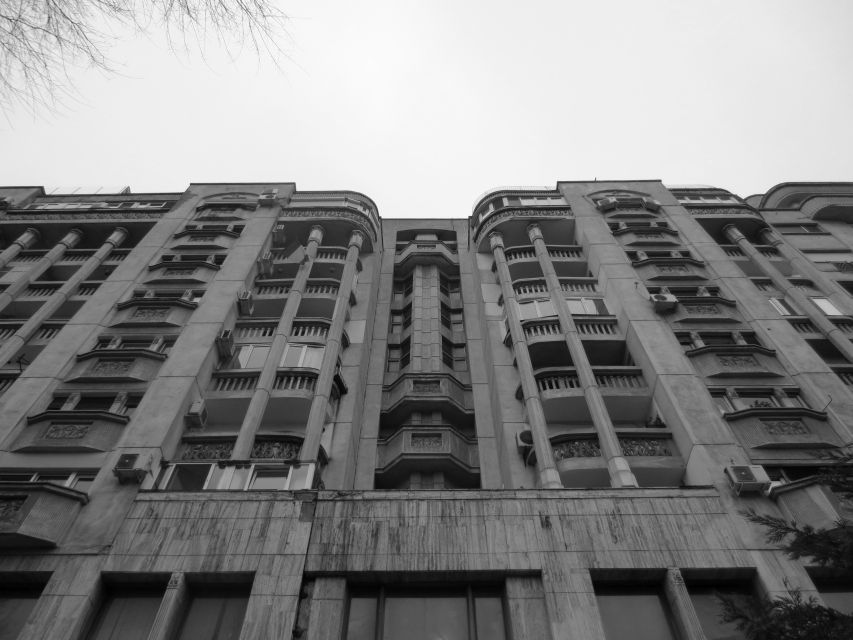
Bucharest is not a city with one clear architectural identity. It has elegant buildings from the inter-war years, Orthodox churches, broad communist avenues, concrete apartment blocks, and vast government architecture. The result can look confusing if you simply walk from one sight to another.
This tour gives that confusion a reason. You learn how different governments altered the city, what they destroyed, and what they tried to make visible. The contrast between the relatively prosperous inter-war period and the controlled, austere communist years becomes a running theme.
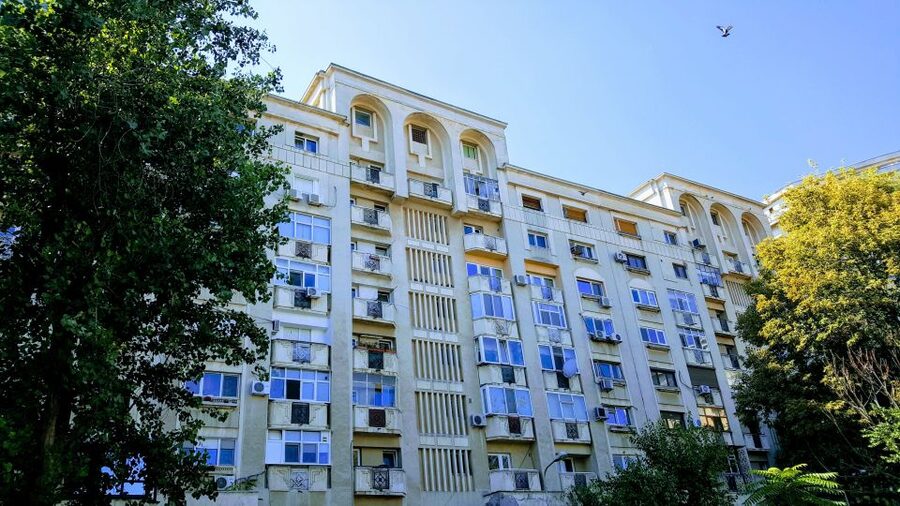
I like this approach because it puts buildings into human context. A large boulevard is not just a large boulevard. It may represent forced relocation, political display, or the erasure of an older neighborhood. A surviving villa district is not only attractive. Its survival can tell you something about how unevenly communist urban planning changed Bucharest.
The focus is Romania’s communist period, but the tour also explains enough earlier history to show what was lost. That broader frame makes the walk useful even if you know little about Bucharest before arriving.
More communism history tours:
- The Real tour of Communism
★ 5.0 · 666 reviews - Life under Communism
★ 5.0 · 358 reviews - Bucharest Essential Tour: Old Town, Calea Victoriei & Communism
★ 5.0 · 142 reviews
Meeting beneath the Patriarchy bell tower
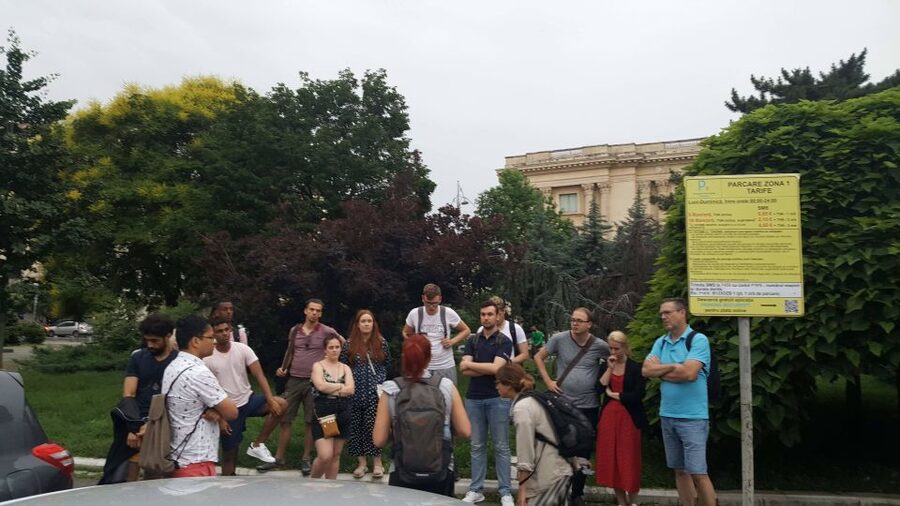
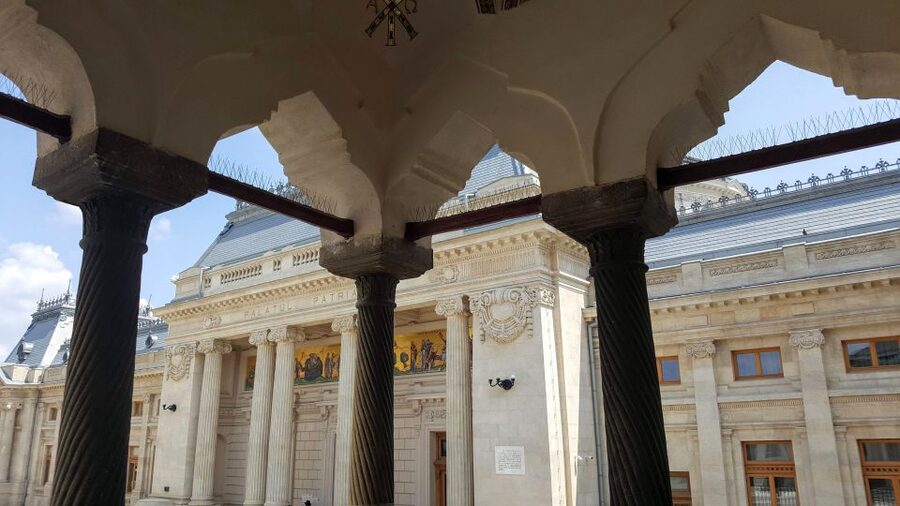
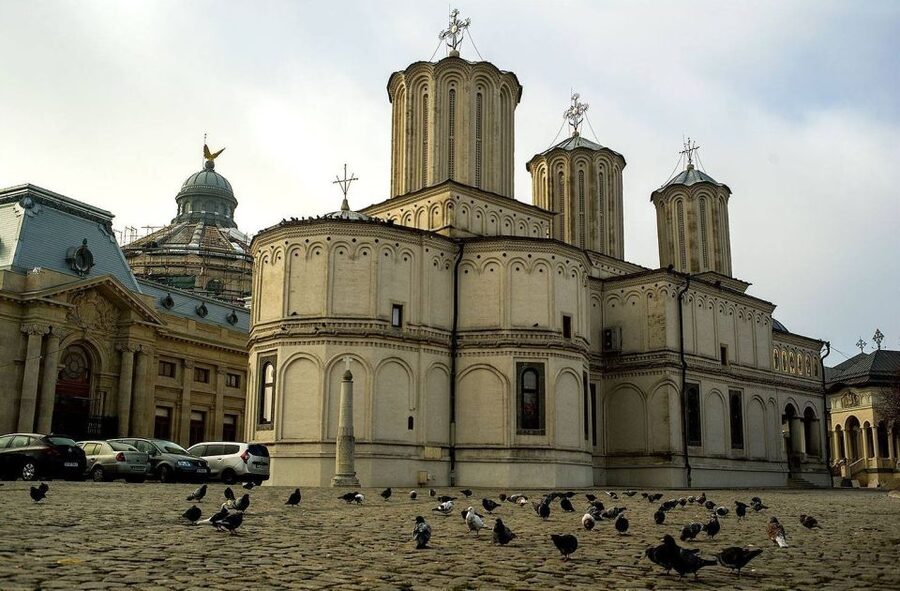
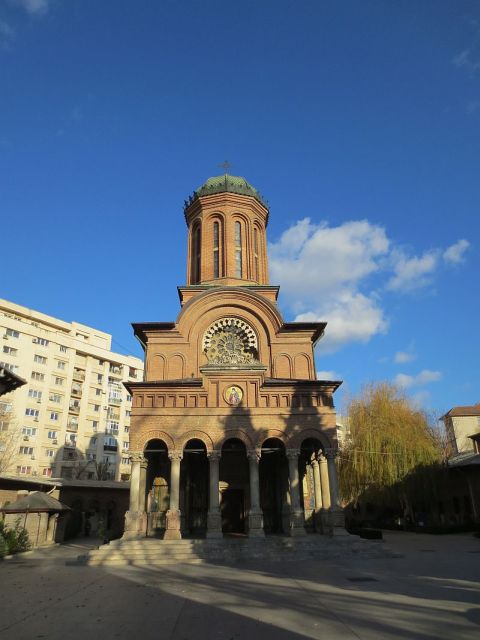
The tour begins near the red-brick bell tower of the Patriarchy, at Aleea Dealul Mitropoliei 19, within walking distance of Piata Unirii. This is a practical central meeting point, but allow a little time to locate the exact spot around the church complex.
Starting here works well. You are not dropped immediately into a list of dates and rulers. Instead, the guide can begin by placing Bucharest’s political and religious spaces in context before the walk moves toward the city’s communist story.
Your English-speaking guide leads the tour on foot. Guide quality matters greatly on a subject like this, and the strongest feedback has centered on people such as Cristina, who is described as warm, funny, well prepared, and able to explain difficult material clearly. Other guides named by past participants include Anna, Elena, Florycica, Andreea, and Ene.
The guide may use a binder of photographs or other visual material. That is a real advantage. Old pictures can show how a street, building, or neighborhood looked before communist remodelling, making the changes much easier to see than they would be from spoken explanation alone.
Ceausescu’s rise and the machinery of control
A central part of the walk deals with Nicolae Ceausescu and the political system he led. You learn about the rise of the communist regime, its violent beginnings, and the nationalization of private property.
That last subject is especially important. Nationalization was not an abstract policy for many Romanian families. Homes and businesses could be taken by the state, while planned redevelopment changed whole sections of Bucharest. The tour explains how forced demolition affected residents and how people experienced the city when private choice was tightly limited.
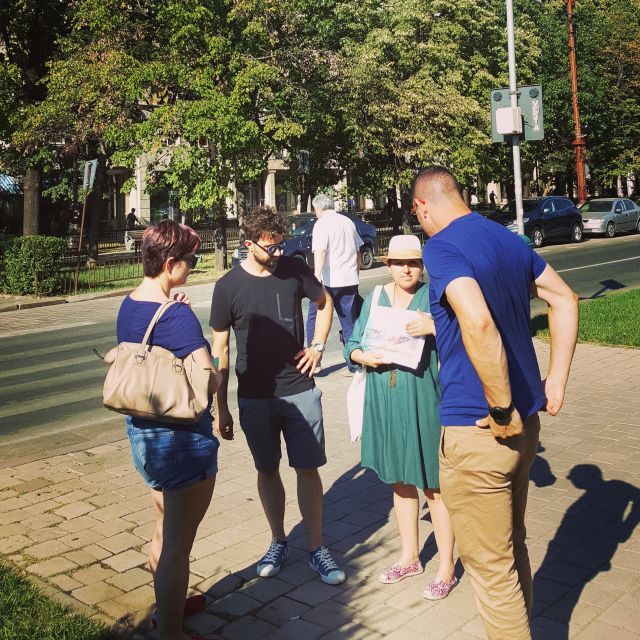
This is where a good guide can make the difference between memorizing facts and understanding consequences. Cristina, in particular, has used personal family anecdotes to describe what life felt like during the period. Those stories add warmth, but they do not turn the walk into a private memoir. The best explanations set personal experience beside the larger political picture.
You should expect a serious subject, but not a dry lecture. Guides are praised for using humor carefully, answering many questions, and keeping the pace lively. The result is a lesson that remains approachable without pretending that the period was easy or harmless.
The tour also looks beyond Ceausescu himself. You hear about the wider system and the daily routines it created. Food, housing, work, shortages, propaganda, and restrictions are part of the picture. The supplied information does not promise a detailed account of every aspect of daily life, but it does make ordinary people a key part of the story.
The Palace of Parliament from the outside
The Palace of Parliament is the tour’s most obvious communist-era landmark. Its scale is hard to miss, and the guide explains its connection to Ceausescu, his family, and the political ambitions of the regime.
The building is impressive in the bluntest sense of the word. It was intended to project state power, and its size still shapes the city around it. Yet the guide also helps you consider the cost of creating such a symbol, including the homes and neighborhoods removed during redevelopment.
This outside visit is worth understanding correctly before you book. Admission to the interior is not included, and the tour does not take you inside the Palace of Parliament. If you want an interior visit, you must arrange and pay for any museum or attraction entry separately.
For many people, that limitation will not be a problem. The purpose here is to understand the building as part of a larger urban and political plan. You get the setting, the story, and the exterior view, then continue through the city rather than spending the whole afternoon inside one monumental complex.
A few more Bucharest days worth comparing
- Bucharest: Dracula’s Castle, Peles Castle, & Brasov Old Town
★ 4.5 · 17,858 reviews - Bucharest: Dracula Castle, Peles Castle & Brasov Old Town
★ 4.6 · 10,891 reviews - Bucharest: Dracula’s Castle, Peleș Castle & Brașov Day Trip
★ 4.5 · 5,919 reviews - Bucharest: Palace of Parliament Tickets and Guide
★ 4.3 · 3,182 reviews
Surviving inter-war neighborhoods and the Uranus area
One of the tour’s best features is that it does not show only official communist landmarks. You also visit lesser-known inter-war neighborhoods that escaped total remodelling.
These areas provide the visual counterpoint the tour needs. After hearing how streets and homes were demolished, you can see what older Bucharest looked like where it survived. The contrast gives the city more depth and stops the communist period from becoming a story told only through concrete, government buildings, and broad avenues.
You also see remains of the Uranus neighborhood. This adds a more difficult layer to the walk. The area is linked to the major urban changes carried out under Ceausescu, so what remains can suggest the scale of what disappeared.
I find this kind of stop more valuable than another polished viewpoint. You are asked to notice gaps, altered streets, and traces of an older city. The experience becomes less about photographing grand buildings and more about reading Bucharest as evidence.
Because the route covers several parts of the city, comfortable shoes matter. One participant specifically advised bringing water, even though the group stops for refreshments. On a sunny day, you may also appreciate the guide’s effort to find shade during explanations, though another comment noted that standing for long periods can be uncomfortable in strong heat.
The 1989 Revolution and the end of the regime
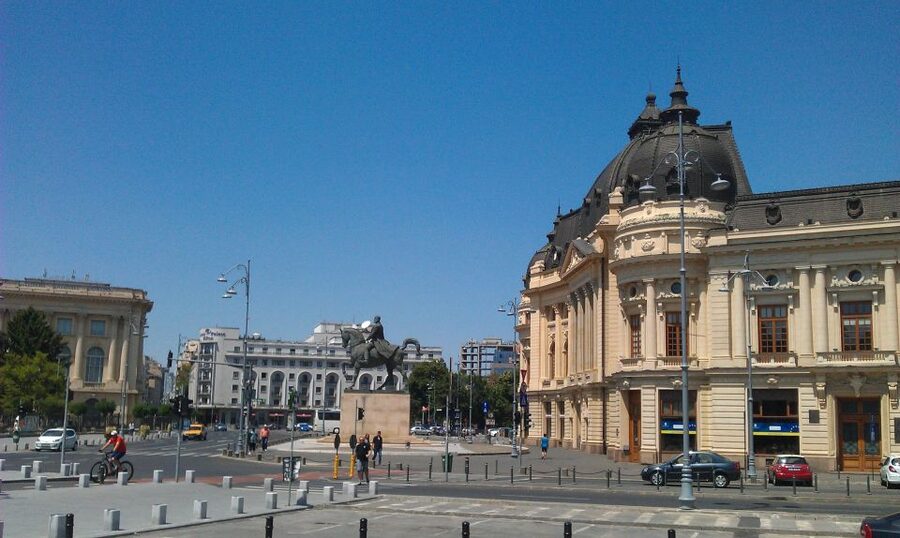
The final part of the story concerns the anti-communist revolution of 1989 and the fall of the Iron Curtain. You visit political memorials and locations that played a role in those events.
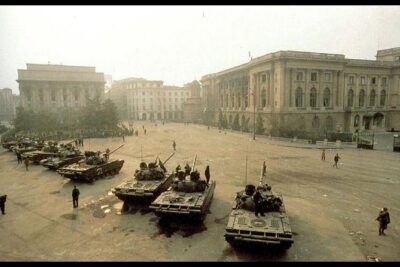
This section gives the walk a strong sense of movement. You begin with the construction of state power, pass through the lived reality of dictatorship, and finish with the collapse of that system. The transition was not peaceful everywhere, and the tour addresses the bloody nature of the revolution rather than reducing it to a neat celebration.
That balance is one of the tour’s strengths. The guide presents several viewpoints on complex issues, allowing you to form your own judgment. You can ask questions, and past participants have especially valued the willingness of guides to pause, explain details, and respond to different levels of prior knowledge.
The subject can be emotionally heavy. Still, the personal stories and conversational style keep the material from becoming remote. You leave with a clearer idea of why 1989 remains so important in Romania and why memories of communism can differ between generations.
A useful café pause halfway through
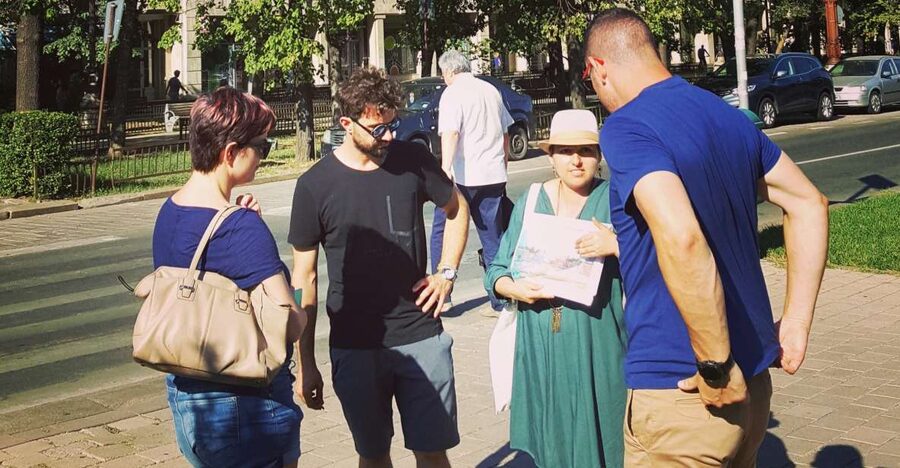
The tour includes a short stop at a café. You can buy a drink or snack at your own expense, and the pause offers time to sit, cool down, and chat with others in the group.
Small snacks are included as part of the experience, but do not expect a full food tasting. Additional café purchases are not included. One guide has brought an old communist-era snack for the group to try, which adds a memorable sensory detail to a topic often taught through buildings and political events.
I would treat the café stop as a welcome break rather than a main attraction. Bring water from the start, especially in summer. The break does not remove the need for walking shoes or sensible clothing for the weather.
Is $29 a fair price?
At $29 per person, this is good value if you want context rather than a quick city photo walk. The price covers three hours with a live English-speaking guide, a planned route, historical explanation, and a small snack element.
You are paying for interpretation. Bucharest’s communist architecture is easy to see on your own, but its meaning is not always obvious. A guide can explain why an area changed, connect a building to the regime, and show how the city’s older fabric was affected.
The value is also helped by the range of material. In three hours, you cover Ceausescu, the Palace of Parliament, forced demolitions, daily life, inter-war neighborhoods, Uranus, political memorials, and the 1989 revolution. That is a lot, so the walk cannot provide an exhaustive account of every subject. Instead, it gives you a strong foundation for exploring further.
Museum fees are not included, and there is no interior Palace visit. Keep those limits in mind when comparing the price with a longer private tour or a visit built around museum admission.
Who will enjoy this walking tour?
I would recommend it to first-time visitors who want to understand Bucharest beyond its restaurants and old churches. It is also a good choice if you have seen communist landmarks elsewhere but want a local account of Romania’s particular experience.
History-minded visitors will appreciate the clear political background. So will anyone interested in architecture, urban change, and the way governments use streets and buildings to shape public memory.
The tour suits people who prefer conversation to a recorded audio guide. You can ask questions and adjust to the group’s pace. Several guides have been praised for explaining ideas clearly in English, while Cristina has even explained the tour in almost perfect Spanish when needed, though English is the stated tour language.
I would hesitate only if you dislike outdoor walking, standing, or serious political history. On very hot days, the pace may feel demanding. The route is also not designed as a light sightseeing stroll with constant cafés and photo stops. Its purpose is to make you think.
Practical advice before booking
Wear comfortable shoes and bring water. The tour lasts three hours, and a café stop does not replace your own drink.
Check the starting time when booking, since the available schedule can vary. Cancellation is free up to 24 hours before the tour, and you can reserve now and pay later, which helps if your Bucharest plans are still changing.
The meeting point is near Piata Unirii, but use the red-brick Patriarchy bell tower as your main landmark. Museum entry, café drinks, and extra snacks are separate costs.
Most importantly, arrive ready to look carefully. The tour’s value comes from connecting what you see with what once occupied the same space.
Should you book it?
Book this tour if you want Bucharest’s communist past explained by a local guide who can connect national events with family memories and everyday life. At $29, it offers a lot of historical context for a short city walk, and the 4.9 rating from 303 reviews reflects consistently strong praise for guides such as Cristina.
You may prefer another experience if you need an indoor tour, a full visit inside the Palace of Parliament, or a shorter route with little standing. For most curious visitors, though, this is one of the better ways to understand why Bucharest looks the way it does today. Bring water, wear good shoes, and give the city permission to be complicated.
FAQ
How long does the Communist Bucharest tour last?
The tour lasts three hours.
What language is the tour conducted in?
The live guided tour is conducted in English.
How much does the tour cost?
The listed price is $29 per person.
Where does the tour meet?
The meeting point is near the red-brick bell tower of the Patriarchy, at Aleea Dealul Mitropoliei 19, București 030167, Romania.
Is the meeting point near central Bucharest?
Yes. It is within walking distance of Piata Unirii.
Is entry to the Palace of Parliament included?
No. The tour visits the Palace of Parliament from the outside. A visit inside is not included.
Are museum fees included?
No. Any museum or attraction entry fees are paid separately.
Are drinks and café snacks included?
No. Drinks and snacks purchased at the café are at your own expense. Small snacks are included in the tour.
What should I bring?
Bring comfortable shoes. Water is also a useful idea, especially on sunny or hot days.
Can I cancel the tour for a full refund?
Yes. You can cancel up to 24 hours in advance for a full refund. You can also reserve now and pay later.
Just added in Bucharest
- Bucharest: Dealu Mare Winery Private Trip with Wine Tasting★ 4.9 · 6 reviews
- Winery touring & private wine tasting – one day private tour★ 5.0 · 3 reviews
- Village Museum Bucharest Guided Tour★ 5.0 · 6 reviews
- Transylvania Tour: Dracula’s Castle, Peles Palace & Brasov★ 5.0 · 19 reviews
- Transfer Airport Otopeni – Bucharest★ 5.0 · 2 reviews
- Private Transfer Bucharest Otopeni Airport (OTP) to/from Brasov★ 5.0 · 2 reviews
- Airport Henri Coanda (Otopeni) to Bucharest – Private Transfer – Driver★ 5.0 · 5 reviews
- Private Bucharest Otopeni Airport (OTP) Transfer★ 5.0 · 2 reviews
Communism and Ceausescu Tours, compared.

Bucharest Essential Tour: Old Town, Calea Victoriei & Communism
Read our review →
Communism in Bucharest – Landmarks, Museum & Communist Appetizers
Read our review →


Museum of Communism Ticket with Communist Coffee
Read our review →Browse the lists this tour appears in