
REVIEW · COMMUNISM AND CEAUSESCU TOURS
Bucharest: Relics of Communism 3-Hour Walking Tour
Communist Bucharest tells its story in stone. This three-hour walk connects Revolution Square with Ceausescu’s grand Civic Centre, while explaining how ration cards, propaganda, the secret police, and the 1989 uprising shaped daily life. I like the way the tour joins architecture with personal experience, rather than treating the city as an outdoor museum. I also like the small-group format, limited to 10 people, which gives you room to ask questions.
The route includes tucked-away churches that survived the communist rebuilding schemes, plus the enormous Palace of the Parliament. Guides such as Elena, Stefan, Tudor, and Stephan have been praised for clear explanations, personal stories, photographs, and an unhurried pace. The main consideration is simple: this is a walking tour, with no hotel pickup, and the advertised experience does not include an interior visit to the Palace of the Parliament.
In This Review
- Key points before you book
- Why Bucharest’s communist past is worth seeing
- Beginning at Revolution Square and the final Ceausescu speech
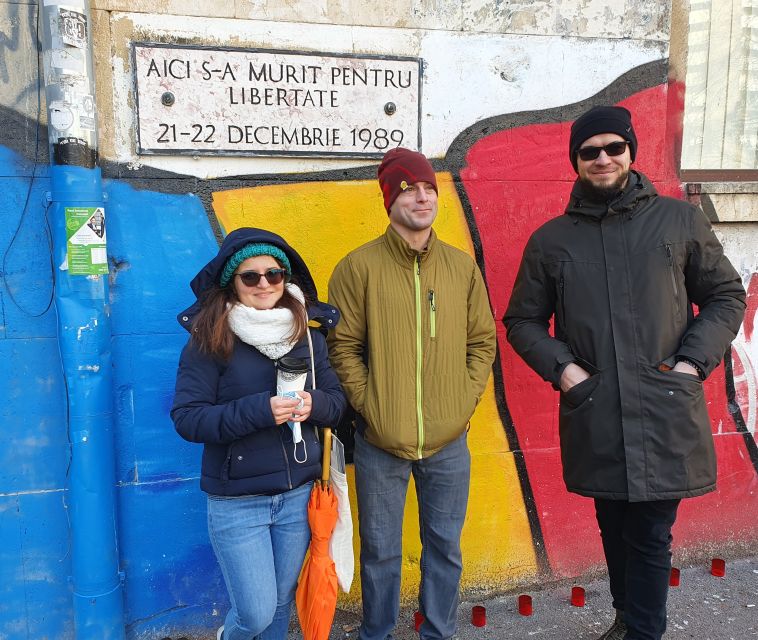
- Piața 21 Decembrie 1989 and the human story of 1989
- Michael the Voivode Church and the buildings that survived
- Piața Unirii and the collision of old and new Bucharest
- The Palace of the Parliament and Ceausescu’s Civic Centre
- What the tour teaches about daily life under communism
- Price, group size, and what you receive
- Who should book this Bucharest walk?
- Final verdict: a strong choice for serious Bucharest context
- FAQ
- Where does the tour begin?
- Where does the tour finish?
- How long does the walking tour last?
- What language is the tour conducted in?
- How large is the group?
- Does the tour include hotel pickup and drop-off?
- Does the tour include entry inside the Palace of the Parliament?
- What is included in the price?
- Can I cancel the booking?
- Can I reserve now and pay later?
Key points before you book
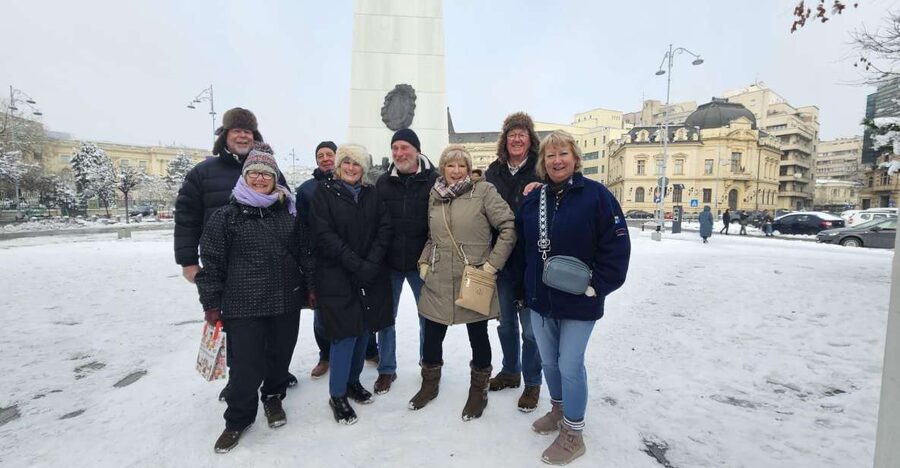
- Start at the Memorial of Rebirth: The tour begins in Revolution Square, beside the place where Nicolae Ceausescu delivered his final public speech.
- See two Bucharests at once: Elegant older buildings meet vast communist apartment blocks and the monumental Civic Centre.
- Connect buildings to real life: You learn about ration cards, shortages, black-market shopping, propaganda, and surveillance.
- Visit a church the regime tried to erase: The stop at Michael the Voivode Church adds a human and religious side to the story.
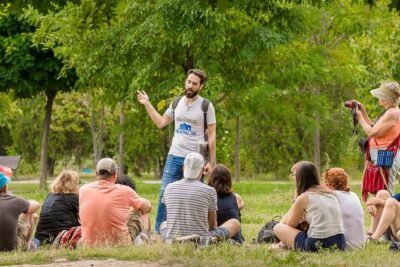
- Small groups keep it personal: The maximum group size is 10, and past guides have used books, scarves, photographs, and other visual material.
- Good value for history-minded visitors: At $44 per person, the price covers three hours with an English-speaking guide and a Romanian snack souvenir.
Why Bucharest’s communist past is worth seeing
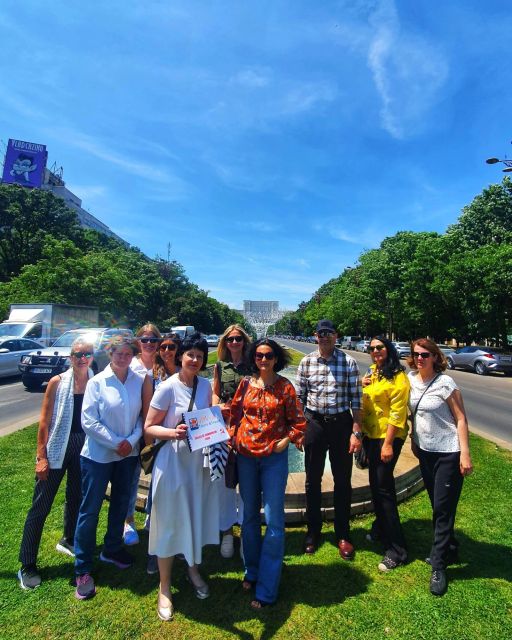
Bucharest can look confusing at first. An ornate nineteenth-century building may sit near a gray apartment block, while a small church seems squeezed between broad roads and oversized government buildings. This tour helps you read those contrasts.
Communism shaped Bucharest for more than 40 years, especially under Nicolae Ceausescu. The regime did not just change laws and workplaces. It changed streets, neighborhoods, food supplies, religion, public speech, and the way people related to one another.
The tour is useful because it explains both the official image and the private reality. You hear about propaganda and state power, but also about ordinary shopping, ration cards, shortages, and the black market. That balance matters. Without it, the Palace of the Parliament is only a gigantic building. With it, the building becomes part of a much larger story about control, ambition, fear, and forced change.
The 1989 Revolution gives the walk its emotional center. You are not only looking at monuments from a distance. You are standing in the same central area where the regime began to break apart. The guide connects the physical places with the events that brought Romania out of communism and toward democracy.
More Walking Tours in Bucharest
- Bucharest: City Highlights Guided Walking Tour
★ 4.9 · 1,482 reviews - Bucharest Highlights Walking Tour
★ 5.0 · 469 reviews - Bucharest: Ghost Stories & Romanian Mythology Walking Tour
★ 4.9 · 287 reviews
Beginning at Revolution Square and the final Ceausescu speech
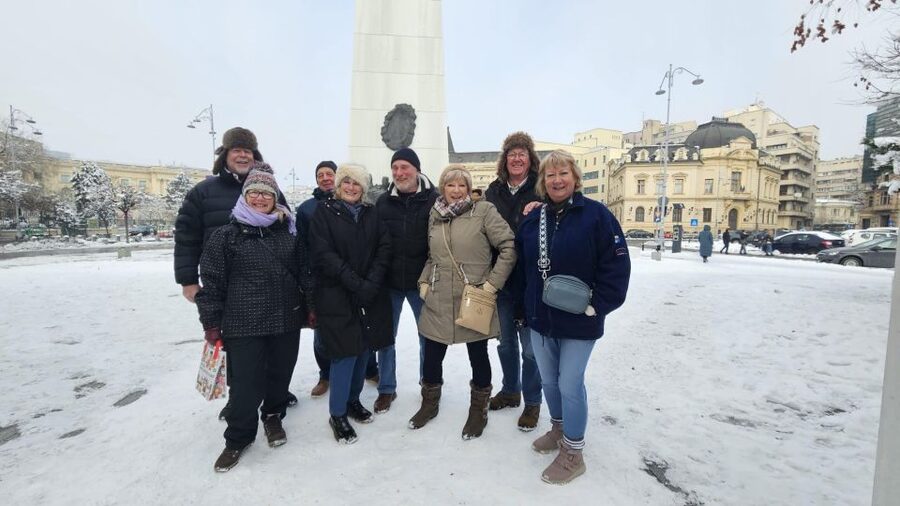
Meet your guide at the Memorial of Rebirth in Revolution Square. This is a practical central starting point, but it is also the right place for the subject. The square is tied directly to the last days of Ceausescu’s rule.
The first guided section lasts about 20 minutes. Here, the guide explains the setting of Ceausescu’s final speech and how the atmosphere changed when the crowd began to react against him. The story of the 1989 Revolution is not presented as a distant textbook chapter. You get the location, the public gathering, and the sudden collapse of political authority in one place.
This opening works especially well if you already know a little about Eastern European history. If you do not, the guide gives you enough background to understand why the speech mattered and why the square became such a powerful symbol.
The Memorial of Rebirth itself is part of the conversation. Its stark form fits the mood of a city still deciding how to remember the revolution. Your guide may also use photographs or other visual material to show how the square looked during the upheaval. Elena was especially praised for bringing pictures and personal detail to the explanation, while other guides were described as using a warm, conversational style.
Allow a few extra minutes before the start so you can locate the meeting point without rushing. The tour begins at the memorial, not at your hotel, and hotel pickup and drop-off are not included.
Piața 21 Decembrie 1989 and the human story of 1989
The next stop is Piața 21 Decembrie 1989, with about 15 minutes of guided discussion. The name itself points to the date associated with the revolution in Bucharest.
This short stop adds detail to the first explanation. Instead of treating the revolution as one dramatic afternoon, the guide can place it within the wider transition from dictatorship to democracy. You learn how public anger, political uncertainty, and the changing mood in the capital affected the city.
I find this part particularly useful for visitors who want more than a list of dates. The strongest explanations on this tour focus on how large political events reached ordinary people. The guides have been praised for answering questions fully and presenting the period from more than one angle.
One practical note: the amount of detail can depend on the guide and the questions in your group. Elena has been described as especially thorough and willing to continue beyond the scheduled time, while Stefan was praised for keeping complex material light and easy to follow. A small group helps here because you can ask about topics that interest you, from the revolution itself to life after the regime fell.
Michael the Voivode Church and the buildings that survived
The route then turns to the Michael the Voivode Church, known in Romanian as Biserica Sfântul Mihai Vodă. The visit and explanation take about 15 minutes.
This is one of the more unusual parts of the walk. The Palace of the Parliament and the Civic Centre are impossible to miss, but a church hidden among the newer construction can be easy to overlook. The stop shows what happened when the communist authorities reshaped central Bucharest on a huge scale.
The church represents a different kind of memory. Instead of monumental state power, you see a religious building connected with the older city. The guide explains how communist planning threatened or obscured churches that did not fit the new vision of Bucharest.
Do not expect a long church tour. The listed visit is brief, so think of it as a focused stop within the walking route. Its value comes from the contrast: after hearing about public ideology and state authority, you pause at a place that points to traditions the regime wanted to push aside.
This is also where the walk begins to make architectural sense. Bucharest is not divided into a neat old quarter and a neat communist quarter. The older city and the socialist rebuilding project overlap, often awkwardly. That friction is one of the most revealing things you will see.
More communism history tours:
- The Real tour of Communism
★ 5.0 · 666 reviews - Life under Communism
★ 5.0 · 358 reviews - 3-Hour Guided Tour of Communist Bucharest
★ 4.9 · 303 reviews - Bucharest Essential Tour: Old Town, Calea Victoriei & Communism
★ 5.0 · 142 reviews
Piața Unirii and the collision of old and new Bucharest
At Piața Unirii, the guide spends about 15 minutes explaining the square and its place in the city. This stop helps connect the smaller historical sites with the enormous redevelopment that follows.
You see the contrast between elegant older architecture and the concrete apartment blocks associated with socialist urban planning. The point is not simply that one style is attractive and another is severe. The guide explains how the new districts were built to serve a political vision, with wide avenues, large buildings, and an emphasis on the state.
This is where the idea of Socialist realism becomes easier to understand. The phrase can sound like an art-history term, but on the street it means scale, order, and power made visible. Buildings were meant to project authority. Space was arranged for ceremonies, official movement, and the image of a confident government.
The walk is also a lesson in everyday geography. A neighborhood may have looked grand on an official plan, yet the people living there faced shortages and restrictions. That contrast between public image and private life is one of the tour’s main strengths.
You may want to bring water and wear comfortable shoes. The route is three hours on foot, and several stops involve standing while the guide speaks. The pace has been described as relaxed, but relaxed walking is still walking, especially in warm weather.
The Palace of the Parliament and Ceausescu’s Civic Centre
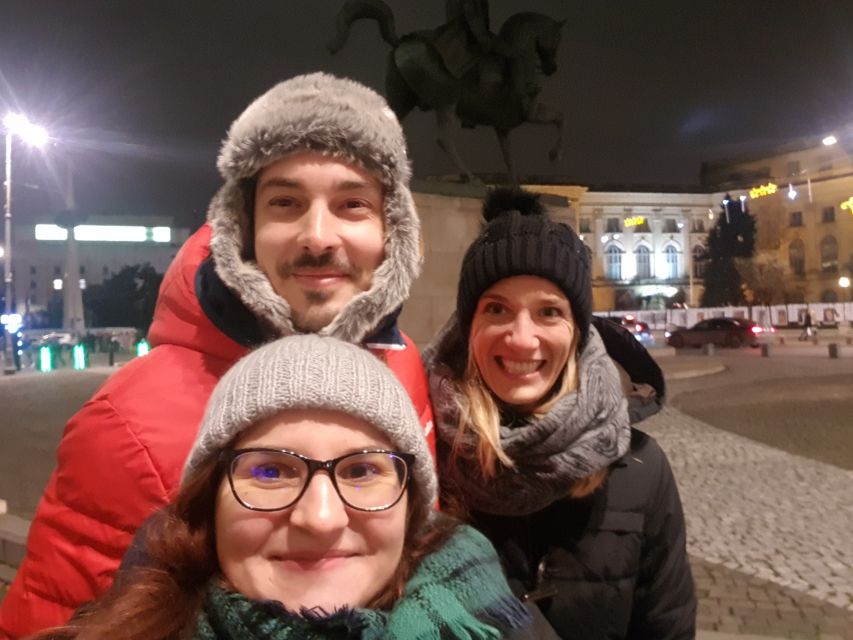
The most dramatic section comes at the Palace of the Parliament. The guided explanation lasts about 20 minutes, and the route ends nearby at Piața Constituției.
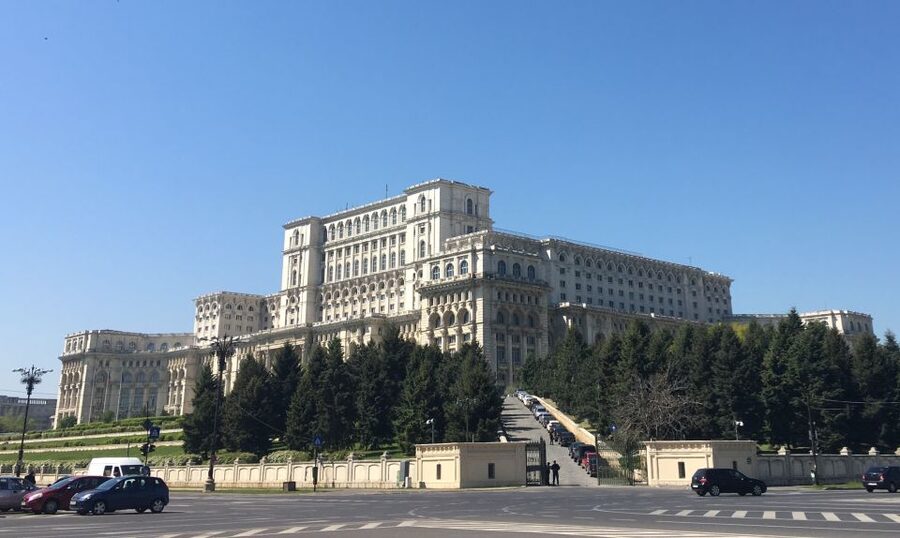
The Palace was designed as the absolute center of political power. Its size is the obvious feature, but the guide gives you the political reason behind that scale. It was part of Ceausescu’s Civic Centre project, a sweeping redesign of central Bucharest that replaced large areas of the existing city.
This is the place where architecture and human cost meet. The building and surrounding districts were not created in isolation. They formed part of a major urban project that altered the old city and pushed aside buildings, homes, and religious sites. The tour’s earlier stop at Michael the Voivode Church makes more sense once you see the Civic Centre in person.
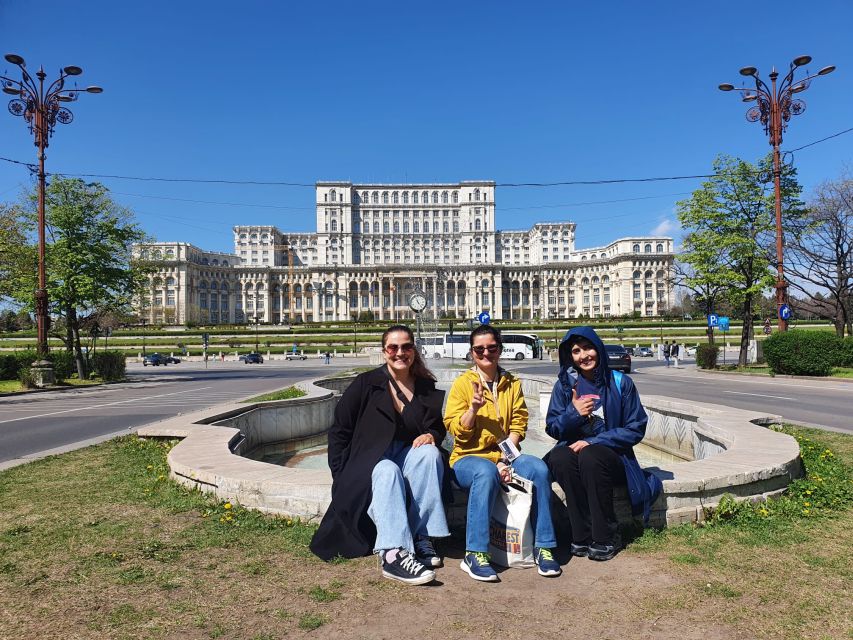
The Palace can feel almost unreal from street level. Its bulk is hard to take in, and the broad setting around it makes the building seem even larger. A guide is valuable here because the building’s scale can overwhelm the details. You need someone to explain what the project was intended to communicate and how it fit Ceausescu’s rule.
Be clear about what is included. This walking tour brings you to the Palace and explains it from the route, but the supplied information does not promise entry or an interior tour. If you want to see the inside, you will need to arrange that separately and check the Palace’s own visiting conditions.
The finish at Piața Constituției is convenient for continuing your day, but no onward transport is provided. You can use the end of the walk as a natural point to stop for a meal, continue exploring, or arrange your own way back.
What the tour teaches about daily life under communism
The buildings are only half the experience. The social history is what makes the walk worth the $44 price.
You hear about ration cards, which controlled access to basic goods, and the black market, which became one way people coped with official shortages. You also learn about propaganda and the secret police, two forces that shaped what Romanians saw, said, and trusted.
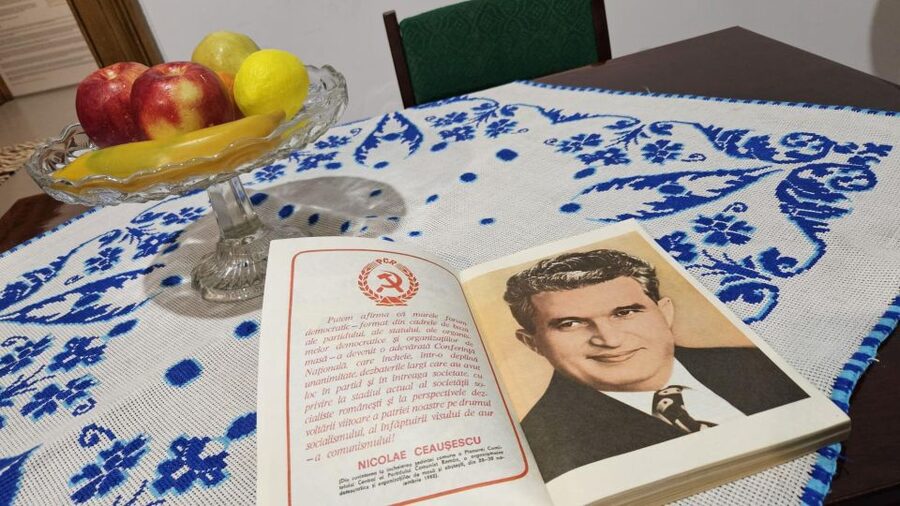
These subjects can easily become abstract. The best guides make them concrete with stories and objects. Past tours have used old communist schoolbooks, a mandatory pupil scarf, photographs comparing old and new Bucharest, and a photographic record of the revolution. Those items give you something to look at while the guide explains the wider system.
Elena has received repeated praise for her personal approach and detailed answers. One visitor was the only person booked on a particular departure, yet the tour still ran rather than being canceled. Another guide, Tudor, was praised for using photographs to support his explanations and for allowing extra time when the discussion became lively.
You should also expect different guide personalities. Elena has been described as enthusiastic, thoughtful, and able to offer reading suggestions and links after the walk. Stefan was praised for a witty, easy style, while Tudor was described as especially attentive and generous with time. The common thread is strong preparation and a willingness to answer questions.
That matters because communism in Romania is not a subject that fits neatly into a heroic or villainous story. A good explanation shows the political oppression without reducing every Romanian experience to one simple version. It also explains why some people remember particular details, such as shortages or school rituals, so clearly decades later.
Price, group size, and what you receive
The price is $44 per person. For three hours with an English-speaking guide, a group capped at 10, and a Romanian snack souvenir, I consider that a fair price for visitors who care about modern Romanian history.
You are paying for interpretation, not admission tickets or transportation. The route covers several important areas, and a guide helps you understand what you are seeing instead of simply photographing large buildings. The small group is a real part of the value. With no more than 10 people, you have a better chance to ask about your own interests.
The price may feel less attractive if you only want a general introduction to Bucharest or prefer to explore at your own speed. This tour is focused on communism, the 1989 Revolution, architecture, and everyday life. It is not a broad city sightseeing walk.
The Romanian snack souvenir is a modest extra rather than a reason to book. The real return is the guide’s time and the access to places that are easy to miss without local context.
Free cancellation is available up to 24 hours before the tour for a full refund. You can also reserve now and pay later, which helps if your Bucharest plans are still shifting.
Who should book this Bucharest walk?
I would choose this tour early in a Bucharest visit if you want a clear framework for the city. It helps you understand why the center looks the way it does, and it can make later visits to the Palace or Revolution Square more meaningful.
It is especially suitable for:
- First-time visitors interested in twentieth-century Europe
- Anyone curious about the 1989 Revolution
- Architecture fans who want more than pretty façades
- People who prefer small groups and conversation
- Visitors who enjoy social history, not only famous monuments
- Anyone who wants local explanations of ordinary life under Ceausescu
It may not suit you if you dislike walking, want a full interior visit to the Palace included, or prefer a tour with hotel transport. It is also not the best choice for someone seeking only medieval or royal Bucharest.
The tour is in English. Some past guides have delivered tours in other languages, including Spanish, but the advertised language is English, so confirm before booking if another language is important to you.
Final verdict: a strong choice for serious Bucharest context
I recommend the Bucharest Relics of Communism walk for the way it links public monuments with private life. Revolution Square explains the fall of the regime. The church shows what was threatened by redevelopment. Piața Unirii reveals the clash between older Bucharest and socialist planning. The Palace of the Parliament brings the scale of Ceausescu’s ambition into view.
At $44, the tour earns its price through careful explanation and a small group rather than through tickets or transport. Book it if you want to understand the city’s communist scars and the people who lived through them. Skip it only if your interests lie elsewhere or you need an indoor Palace visit included. For most history-minded visitors, this is three useful hours and a smart way to see Bucharest with sharper eyes.
FAQ
Where does the tour begin?
The tour begins at the Memorial of Rebirth in Revolution Square, Bucharest.
Where does the tour finish?
It finishes at Piața Constituției.
How long does the walking tour last?
The advertised duration is three hours.
What language is the tour conducted in?
The tour is conducted in English with a live English-speaking guide.
How large is the group?
The tour is limited to 10 participants.
Does the tour include hotel pickup and drop-off?
No. Hotel pickup and drop-off are not included.
Does the tour include entry inside the Palace of the Parliament?
The supplied tour details include a guided stop at the Palace of the Parliament, but they do not state that interior admission is included.
What is included in the price?
The price includes the walking tour with an English guide and a Romanian snack souvenir.
Can I cancel the booking?
Yes. You can cancel up to 24 hours in advance for a full refund.
Can I reserve now and pay later?
Yes. The booking option allows you to reserve your place and pay later.
Just added in Bucharest
- Bucharest: Dealu Mare Winery Private Trip with Wine Tasting★ 4.9 · 6 reviews
- Winery touring & private wine tasting – one day private tour★ 5.0 · 3 reviews
- Village Museum Bucharest Guided Tour★ 5.0 · 6 reviews
- Transylvania Tour: Dracula’s Castle, Peles Palace & Brasov★ 5.0 · 19 reviews
- Transfer Airport Otopeni – Bucharest★ 5.0 · 2 reviews
- Private Transfer Bucharest Otopeni Airport (OTP) to/from Brasov★ 5.0 · 2 reviews
- Bucharest Airport Transfer To Constanta Mamaia★ 5.0 · 3 reviews
- Airport Henri Coanda (Otopeni) to Bucharest – Private Transfer – Driver★ 5.0 · 5 reviews
Communism and Ceausescu Tours, compared.
Bucharest Essential Tour: Old Town, Calea Victoriei & Communism
Read our review →
Communism in Bucharest – Landmarks, Museum & Communist Appetizers
Read our review →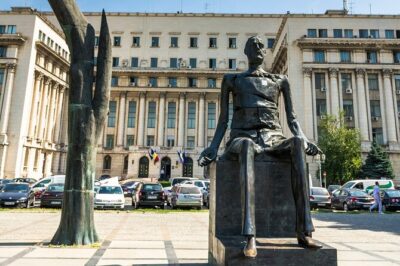
Museum of Communism Ticket with Communist Coffee
Read our review →Browse the lists this tour appears in