
REVIEW · COMMUNISM AND CEAUSESCU TOURS
The Real tour of Communism
Communism left fingerprints everywhere. This three-hour Bucharest walk connects grand buildings, moved churches, old restaurants, and the bloody events of 1989 into one clear story. I like the way it links architecture with daily life, and I like the personal memories guides such as Octavian, Daniela, Andrea, and John Sever bring to the subject. The main drawback is simple: you will be outdoors for about three hours, so cold, rain, or summer heat can shape the experience.
You begin at the Patriarchal Cathedral and finish at Revolution Square, with the Palace of Parliament and Bucharest’s Old Town along the way. The group is capped at 15 people, which gives you a fair chance to ask questions. At $32.65 per person, I see this as good value if you want context rather than a quick parade of monuments, but it is less appealing if you prefer to explore at your own pace.
In This Review
- Key points to know before you book
- Why this Bucharest walk is worth your time
- Starting at the Patriarchal Cathedral and former assembly headquarters
- The Palace of Parliament and Ceaușescu’s oversized vision
- Mihai Voda Monastery and the churches that escaped demolition
- Bucharest Old Town and the restaurants of the ruling class
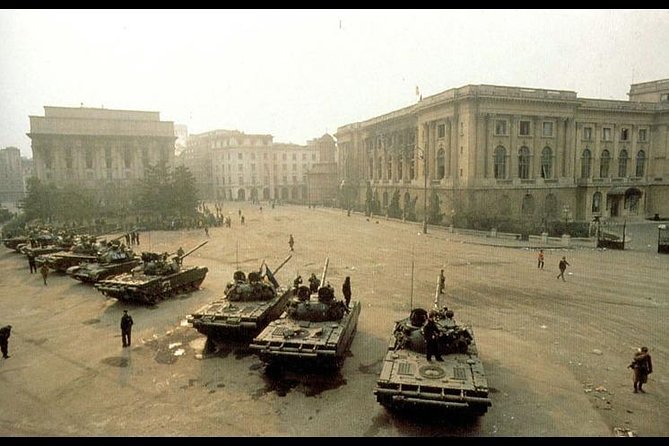
- Revolution Square and the final days of Ceaușescu
- The guide makes or breaks this experience
- Duration, walking effort, and weather
- Is $32.65 a fair price?
- Who should book this tour?
- Final call: a strong choice for context
- FAQ
- How long does the tour last?
- Where does the tour begin?
- Where does the tour finish?
- Is admission to the Palace of Parliament included?
- What is included in the price?
- Can I cancel for a full refund?
Key points to know before you book
- The walk follows communism from power to collapse: You start at the former headquarters of the Great National Assembly and finish where Ceaușescu’s rule began to fall in 1989.
- The Palace of Parliament is viewed from the outside: Its admission fee is not included, and the scheduled stop is about 15 minutes.
- Personal stories are a major strength: Guides have explained rationing, food shortages, politics, family life, and the pressure of living under the regime.
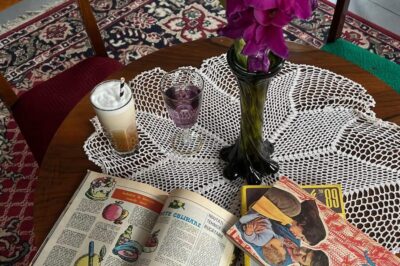
- A surviving communist-era snack is included: This gives the history a small but memorable taste of everyday life.
- The group stays fairly small: A maximum of 15 people makes discussion easier than on a large city bus tour.
- The meeting point takes care: The cathedral is inside the Patriarchal complex, up a slope on Dealul Mitropoliei, not simply beside a street-level entrance.
Why this Bucharest walk is worth your time
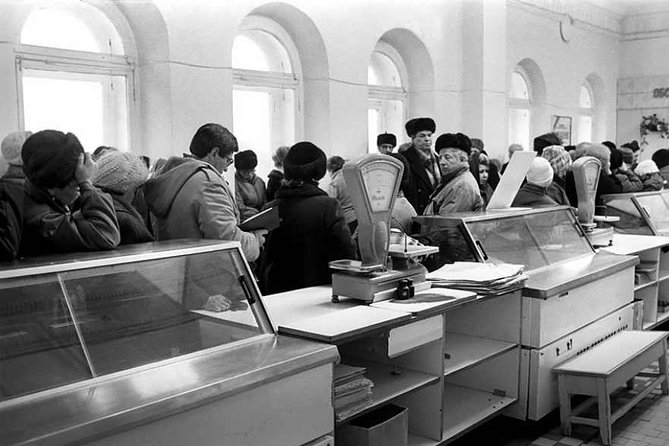
Romania’s communist period can be hard to understand from monuments alone. You need the grand scale of Nicolae Ceaușescu’s building projects, but you also need the smaller details: rationing, restricted choices, favored restaurants, altered churches, and the fear surrounding public protest.
This tour handles both sides. It shows you the buildings created or reshaped by the regime, then explains how those policies affected ordinary people. The result is more useful than a list of dates. You begin to see Bucharest as a city shaped by political power, forced demolition, hurried construction, and the difficult years after 1989.
The guides are especially important here. Octavian, also referred to as Oktavian or Octavio in tour feedback, has been praised for using personal memories and explaining the period in plain language. Daniela has been appreciated for connecting the communist era to current Romanian politics. John Sever and Andrea have also received strong praise for combining facts with stories about how the system affected families and everyday routines.
The subject is recent enough that some guides remember it directly. That makes the tour feel less like a museum lecture and more like a conversation with someone who knows what the official version left out.
More communism history tours:
- Life under Communism
★ 5.0 · 358 reviews - 3-Hour Guided Tour of Communist Bucharest
★ 4.9 · 303 reviews - Bucharest Essential Tour: Old Town, Calea Victoriei & Communism
★ 5.0 · 142 reviews
Starting at the Patriarchal Cathedral and former assembly headquarters
The meeting point is the Patriarchal Cathedral at Aleea Dealul Mitropoliei 25. Give yourself a little extra time to find it. The cathedral sits within the Patriarchal complex, and one helpful practical detail is that you need to walk up a slope to reach the meeting area.
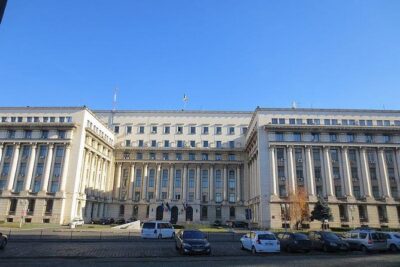
The first stop lasts about 15 minutes and focuses on the Patriarchal Palace. During the communist period, this building served as the former headquarters of the Great National Assembly. That makes it a useful opening scene: the tour begins not with abstract ideology, but with the physical place where the state’s official political machinery operated.
The cathedral itself also adds contrast. Religious buildings and communist authority occupied the same urban setting, even though the regime often treated religion with suspicion and sought to control public life. Your guide uses this first stop to explain how power was organized and how the city’s symbolic spaces were used.
Because this is an outdoor walking tour, you will not spend a long time inside the cathedral or palace. The value comes from the explanation around the buildings, so listen closely and ask questions early. It sets up the rest of the walk.
The Palace of Parliament and Ceaușescu’s oversized vision
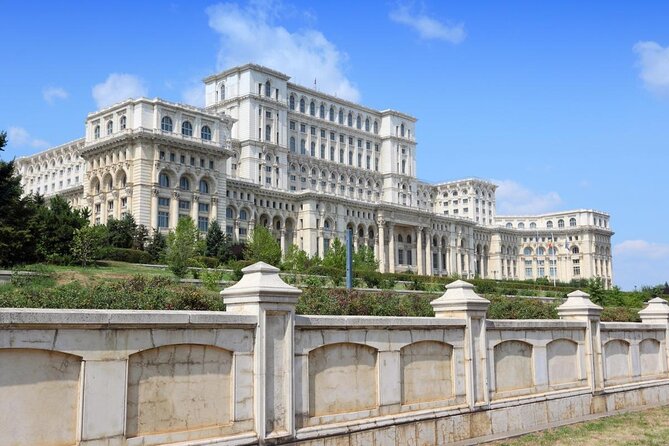
The Palace of Parliament receives another roughly 15-minute stop. This is the tour’s most obvious architectural spectacle, but the guide’s job is to move beyond its size.
You will hear the story of the building often described as the second-largest building in the world. Its scale reflects Ceaușescu’s desire to project state power through architecture. The building is not just an impressive photo stop. It represents the resources, labor, demolitions, and political priorities poured into monumental construction while ordinary people faced shortages.
The tour does not include admission inside the Palace of Parliament. That is important when you compare the price with a formal palace visit. You will see and discuss the building from the outside, but you should not book this walk expecting an interior tour.
I think the short stop works well within the larger route. The palace is visually overwhelming, and a guide can explain what the camera cannot: why it was built, what it replaced, and how its scale fit the regime’s public image. If you want to tour the interior, plan that as a separate activity.
Mihai Voda Monastery and the churches that escaped demolition
At Mihai Voda Monastery, the focus shifts from monumental construction to what was nearly lost. The tour explains how some sixteenth and seventeenth-century churches were physically moved rather than demolished.
This is one of the most unusual parts of the walk. The idea of translating a church sounds almost absurd until you understand the pressure created by Ceaușescu’s urban plans. Historic religious buildings stood in the path of redevelopment, and moving them offered a way to preserve some structures without abandoning the project entirely.
The stop gives you a sharper sense of what communist city planning meant on the ground. It was not only a matter of constructing new buildings. It also meant deciding which older places could survive, which would disappear, and which could be shifted out of sight.
The scheduled time is again about 15 minutes. That is enough for the main story, but not enough for a slow architectural study. If old churches and urban change are central interests for you, this is a moment to ask the guide for extra detail.
A few more Bucharest days worth comparing
- Bucharest: Dracula’s Castle, Peles Castle, & Brasov Old Town
★ 4.5 · 17,858 reviews - Bucharest: Dracula Castle, Peles Castle & Brasov Old Town
★ 4.6 · 10,891 reviews - Bucharest: Dracula’s Castle, Peleș Castle & Brașov Day Trip
★ 4.5 · 5,919 reviews - Bucharest: Palace of Parliament Tickets and Guide
★ 4.3 · 3,182 reviews
Bucharest Old Town and the restaurants of the ruling class
The Old Town stop shows another side of the period. Instead of focusing on official government buildings, the guide explains which restaurants were favored by the communist leadership and the stories behind them.
This is where the tour becomes especially human. Political systems are often easier to understand through food, access, and privilege than through slogans. The leadership’s preferred restaurants reveal the gap between the public language of equality and the private advantages available to those in power.
The Old Town is also a useful setting because it helps you compare different periods of Bucharest’s development. The tour places the communist years alongside the city before and after them, showing how places changed in meaning over time.
Do not expect a food tour. Food and drinks are not generally included, apart from the specified communist-era snack. Still, the snack is a clever touch. It connects the large political story to what people could actually eat and remember from the period.
Some tour departures have also included a coffee, restroom, and warming break around the middle of the walk. Treat that as a welcome feature rather than a guarantee of a full café stop, and dress for the weather regardless.
Revolution Square and the final days of Ceaușescu
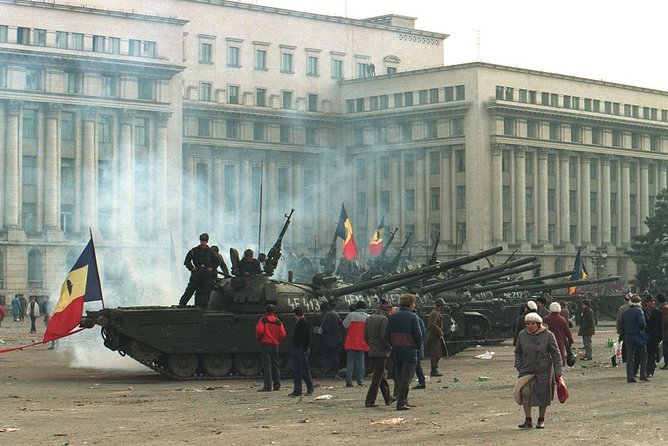
The walk ends at Revolution Square, or Piața Revoluției. This is the emotional center of the experience and the place where the separate strands of the tour come together.
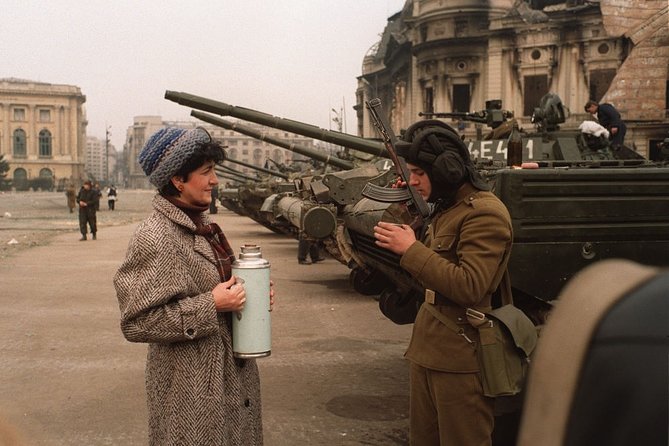
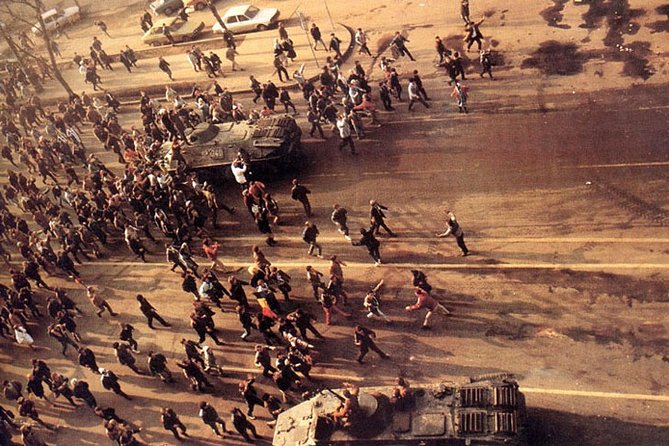
Here, you learn about the final days of Nicolae Ceaușescu’s rule, the 1989 uprising, and the first days after more than four decades of communist government. Romania’s revolution was the only bloody overthrow among the former Iron Curtain countries, and the guide explains why the events became so violent.
The square is not just a place to hear that the regime ended. You get a sense of how quickly authority could unravel, how public protest grew, and how confusion shaped the first days of freedom. Guides have used photographs and personal recollections to make this section easier to follow.
This final stop also gives you a chance to ask about Romania after communism. The tour connects past decisions to current political and social questions without pretending that 1989 solved every problem overnight. That balance is one of its strongest features.
Because the tour ends here, you can continue independently after the guide says goodbye. The route does not return you to the cathedral, so consider that when planning the rest of your day.
The guide makes or breaks this experience
The subject matter is strong, but the guide determines how much you take away. The best accounts describe guides who summarize complicated politics without flattening the story. That matters in Romania, where communist rule had its own character and cannot simply be explained as a copy of every other Eastern European system.
Octavian has been praised for detailed explanations and personal memories of rationing and tougher years. Daniela has been noted for her passion, clear structure, and ability to connect architecture, food, power, and ordinary lives. Andrea has been praised for placing the period in context, while John Sever has been appreciated for including both historical facts and the effect of communism on his family and community.
You should feel free to ask questions. The tour is designed for discussion, and the small group limit helps. A guide who knows the subject well can explain why Romania’s experience differed from neighboring countries, how Ceaușescu and his wife Elena shaped public life, and why old buildings deteriorated or were repurposed after the regime fell.
The personal angle is valuable, but you should also expect differences between guides. Some may focus more on political history, while others spend more time on food, architecture, or daily life. That variety is normal for a walking tour led by several different people.
Duration, walking effort, and weather
The experience lasts about three hours and moves between five main stops. Each listed stop receives roughly 15 minutes, with the rest of the time spent walking and listening.
You need moderate physical fitness. There is no suggestion of technical walking, but you will be outside for a sustained period and the meeting point includes an uphill slope. Wear shoes you can walk in comfortably.
The tour operates in all weather conditions, so check the forecast and dress with purpose. A freezing, rainy day can make the walk harder, although a strong guide and a mid-tour warm-up break can help. In hot weather, water, sun protection, and a slower pace will matter.
This is not the right choice if you want a relaxed indoor history talk. It is a walking tour through active city streets, with all the distractions and weather exposure that implies. On the other hand, walking helps you see how the buildings relate to one another and how political decisions altered the city.
Is $32.65 a fair price?
At $32.65 per person, the tour sits in a reasonable range for a three-hour guided city walk. You are paying for a small group, a structured route, a guide who can answer questions, and historical interpretation that would be difficult to assemble on your own.
The strongest value comes from the personal and local detail. You can photograph the Palace of Parliament without paying for this tour, and you can walk through Revolution Square independently. What you cannot easily reproduce is the connection between those places, the explanation of the moved churches, the stories of favored communist restaurants, and the memories of rationing and political pressure.
The price does not include admission to the Palace of Parliament, hotel pickup, or ordinary food and drinks. If you want a palace interior visit, budget for that separately. Group discounts may be available, and the experience is often booked about 22 days ahead, so advance planning makes sense during busy periods.
I would call it good value for first-time visitors who want a serious introduction to Bucharest’s twentieth-century past. It is less valuable for someone already deeply familiar with Romanian communism or someone who wants a purely architectural walk.
Who should book this tour?
I would recommend it to history fans, curious first-time visitors, and anyone who wants to understand why Bucharest looks the way it does. It also suits people who have studied the Cold War but want the Romanian case explained through local stories rather than broad political labels.
You will get the most from it if you ask questions and stay open to ordinary details. Rationing, restaurants, food, family memories, and altered churches can tell you as much as a political speech.
The tour may not suit very young children who need frequent activity changes, visitors with limited walking ability, or anyone who dislikes outdoor touring in poor weather. It is also not a replacement for a full Palace of Parliament interior visit.
Booking is flexible up to 24 hours before the start time, when you can cancel for a full refund. Changes or cancellations inside that window are not accepted, and a weather cancellation offers either another date or a full refund.
Final call: a strong choice for context
I would book this tour if you want Bucharest to make more sense. The route covers major sights, but the real benefit is the explanation connecting them: political power at the Patriarchal Palace, monumental ambition at the Palace of Parliament, threatened heritage at Mihai Voda, privilege in the Old Town, and revolution at Revolution Square.
The walk is not perfect. The palace visit is exterior only, the weather can be rough, and the meeting point requires care. Still, the small group, personal stories, communist-era snack, and clear treatment of daily life give the experience real value. If you have three hours in Bucharest and want more than pretty façades, this is a smart way to spend them.
FAQ
How long does the tour last?
The walking tour lasts approximately three hours.
Where does the tour begin?
It begins at the Patriarchal Cathedral, Aleea Dealul Mitropoliei 25, Bucharest. The cathedral is inside the Patriarchal complex, so allow time to walk up the slope to the meeting area.
Where does the tour finish?
The tour ends at Revolution Square, Piața Revoluției, in Bucharest.
Is admission to the Palace of Parliament included?
No. The Palace of Parliament admission ticket is not included. The tour includes a short stop there as part of the walking route.
What is included in the price?
The price includes the three-hour walking tour and a snack that has survived from the communist period. Hotel pickup, drop-off, and food and drinks unless specified are not included.
Can I cancel for a full refund?
Yes. You can cancel at least 24 hours before the local start time for a full refund. Cancellations or changes made less than 24 hours before the start time are not accepted, and the amount paid is not refunded.
Just added in Bucharest
- Bucharest: Dealu Mare Winery Private Trip with Wine Tasting★ 4.9 · 6 reviews
- Winery touring & private wine tasting – one day private tour★ 5.0 · 3 reviews
- Village Museum Bucharest Guided Tour★ 5.0 · 6 reviews
- Transylvania Tour: Dracula’s Castle, Peles Palace & Brasov★ 5.0 · 19 reviews
- Transfer Airport Otopeni – Bucharest★ 5.0 · 2 reviews
- Private Transfer Bucharest Otopeni Airport (OTP) to/from Brasov★ 5.0 · 2 reviews
- Bucharest Airport Transfer To Constanta Mamaia★ 5.0 · 3 reviews
- Airport Henri Coanda (Otopeni) to Bucharest – Private Transfer – Driver★ 5.0 · 5 reviews
Communism and Ceausescu Tours, compared.
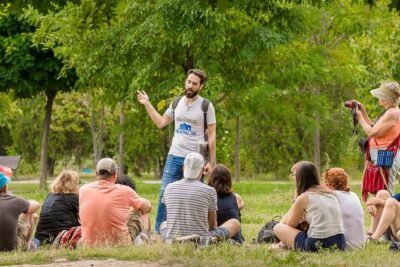
Bucharest Essential Tour: Old Town, Calea Victoriei & Communism
Read our review →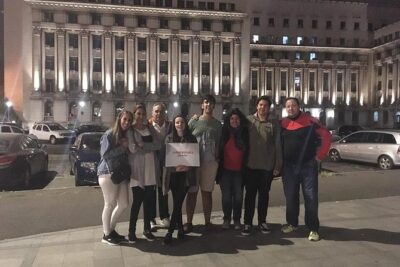
Communism in Bucharest – Landmarks, Museum & Communist Appetizers
Read our review →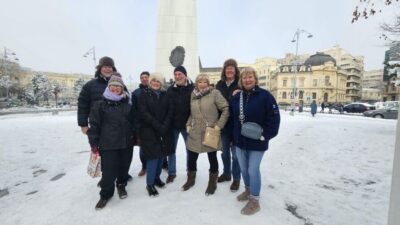
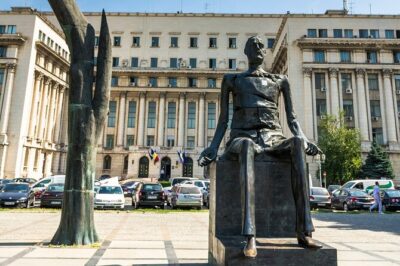
Museum of Communism Ticket with Communist Coffee
Read our review →Browse the lists this tour appears in