
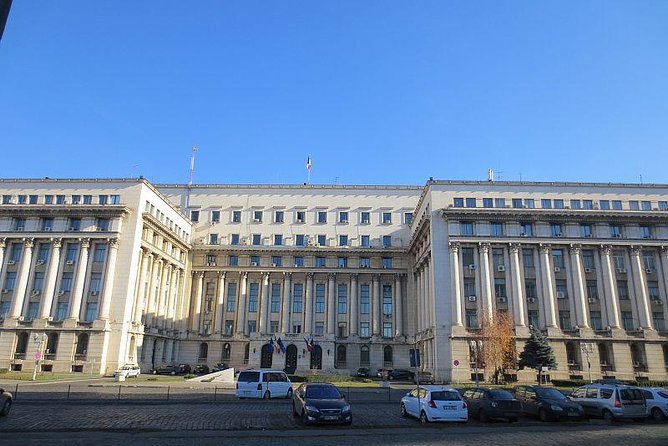
REVIEW · COMMUNISM AND CEAUSESCU TOURS
Life under Communism
Communism left its mark on every corner of Bucharest. This three-hour walking tour connects grand state buildings, religious sites, quiet memorials, and ordinary streets to explain how Romania changed under Nicolae Ceausescu. I especially like the way it combines major landmarks with easy-to-miss communist sites, and the way guides such as Cristina use family stories to make political history feel personal. The main drawback is that this is a walking tour in all weather, so comfortable shoes and suitable clothing matter.
I also like the tour’s effort to avoid a simple good-versus-bad lecture. You hear about dictatorship, shortages, surveillance, and violence, but also about the complicated ways people adapted to daily life. At $42.33 per person, it is not Bucharest’s cheapest history walk, and the Palace of Parliament admission is not included, but the small-group setting and detailed local perspective give it solid value for anyone who wants more than a quick look at Communist-era architecture.
In This Review
- Key points at a glance
- Why Bucharest is the right place for this subject
- Starting at the Patriarchal Cathedral
- The Palace of Parliament and the cost of power
- Antim Monastery and the pressure on religion
- Old Town, Caru’ cu bere, and public diplomacy
- Small clues to ordinary life
- Revolution Square and Ceausescu’s downfall
- The guides are the heart of the experience
- Walking pace, weather, and group size
- Is $42.33 a fair price?
- Booking tips and the cancellation rule
- Who should book this tour?
- Should you book Life Under Communism?
- FAQ
- How long does the Life Under Communism tour last?
- Where does the tour start?
- Where does the tour finish?
- Is admission to the Palace of Parliament included?
- Is food included?
- What happens if I need to cancel?
Key points at a glance
- Personal accounts make the period easier to understand: Cristina and other guides connect national events with family experiences and everyday life.
- The route links five important Bucharest sites: You move from the Patriarchal Cathedral to the Palace of Parliament, Antim Monastery, Old Town, and Revolution Square.
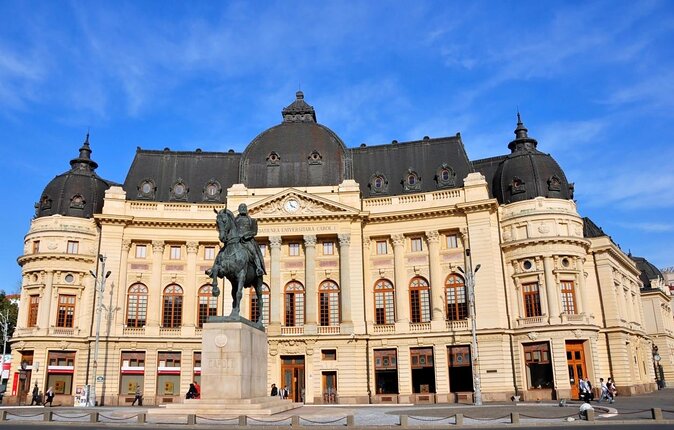
- You see more than the famous buildings: The tour can point out overlooked places such as former food shops, Communist-era offices, and traces of the 1989 fighting.
- The tone is designed to be balanced: The aim is to explain the era rather than simply praise or condemn it.
- Revolution Square gives the tour a powerful ending: Bullet holes and the sites connected to Ceausescu’s downfall bring the final chapter close.
- Plan for a real walk: The tour lasts about three hours, and comfortable footwear is essential.
Why Bucharest is the right place for this subject
Bucharest can feel like several cities layered together. Medieval religious buildings, ornate nineteenth-century restaurants, huge Communist government projects, and plain apartment blocks all occupy the same urban space. That makes it a useful city for understanding Romania’s twentieth century, because the political changes are visible in the streets rather than confined to a museum display.
This tour focuses mainly on the period after the Second World War and the collapse of Communist rule in 1989. You learn how the country moved toward socialism, how Ceausescu gained and kept power, and what that system meant for ordinary people.
The strongest part is the human scale. A lecture can tell you that the Communist state controlled food, religion, travel, and public speech. A local guide can explain how those policies shaped family decisions, daily routines, and private opinions. Guides Cristina, Stefan, and Victor have all led this experience, and the clearest praise has gone to their storytelling, English, patience, and ability to answer questions.
The experience is also useful for visitors who arrive with a general Cold War understanding but little sense of Romania’s particular path. Romanian Communism was not simply a copy of the Soviet model. The tour helps place Ceausescu’s long rule, his personal power, and the final uprising within the country’s own political and social setting.
More communism history tours:
- The Real tour of Communism
★ 5.0 · 666 reviews - 3-Hour Guided Tour of Communist Bucharest
★ 4.9 · 303 reviews - Bucharest Essential Tour: Old Town, Calea Victoriei & Communism
★ 5.0 · 142 reviews
Starting at the Patriarchal Cathedral
The tour begins at Aleea Dealul Mitropoliei, by Catedrala Patriarhala. This is a fitting place to begin because the first stop introduces the violent rise of Communism and the new government’s relationship with religion.
You spend about ten minutes here, and there is no admission charge. The cathedral and its setting also provide a useful contrast with the later concrete monuments. You are looking at a place tied to Romania’s religious and older civic traditions before moving into the architecture of the Communist state.
The point is not simply to admire the building. Your guide explains how religion was affected after the Communist takeover, and how religious institutions had to operate under a government that promoted an officially atheist system. That makes this short stop more important than its length suggests.
I would pay close attention here to the transition between public policy and private belief. The tour is strongest when it explains not only what the government announced, but also how people and institutions adjusted to those announcements.
The Palace of Parliament and the cost of power
The Palace of Parliament is the tour’s biggest visual statement. You spend about fifteen minutes hearing the real story behind what is described as the world’s second-largest administrative building.
The building is often treated as a curiosity: enormous, grand, and difficult to believe. This tour gives it political weight. Its scale reflects Ceausescu’s desire to reshape central Bucharest around the authority of the state. The story is not just about architecture. It is about resources, control, forced change, and the gap between official grandeur and ordinary life.
The Palace of Parliament is especially useful for first-time visitors because its size can otherwise overwhelm the details. Your guide helps you read it as a product of the period rather than as an isolated attraction. You begin to see the building as a statement about power, not merely an oversized government office.
Admission to the palace is not included. The tour itself appears to focus on the outside and the surrounding context, so you should not assume that this stop includes a full interior visit. If entering the building is important to you, check the arrangements before booking and allow for a separate ticket.
There is a practical point here: fifteen minutes at the palace is enough for an explanation and exterior viewing, but not a complete tour of the building. That is not a flaw if your goal is to understand Bucharest’s Communist transformation. It would be a limitation if you expected an extended architectural visit.
Antim Monastery and the pressure on religion
From the monumental palace, the route moves to Manastirea Antim, a picturesque medieval monastery. This change of setting helps show that Communist Bucharest was not built on empty ground. Older religious and architectural traditions remained, even as the government tried to control public life.
You spend around ten minutes at the monastery, with free admission. The stop adds variety to the route and keeps the tour from becoming a parade of concrete state buildings.
Here, the guide explains how the Communist regime affected religion. The value lies in the contrast. At the Patriarchal Cathedral, you hear about the violent beginning of the system. At Antim, you see how that system dealt with a living religious tradition over time.
This is also a good point to ask questions. Several guides are praised for taking questions about culture, politics, family life, and the legacy of the period today. If you are trying to understand how official policy differed from personal practice, this stop gives you a natural opening.
A few more Bucharest days worth comparing
- Bucharest: Dracula’s Castle, Peles Castle, & Brasov Old Town
★ 4.5 · 17,858 reviews - Bucharest: Dracula Castle, Peles Castle & Brasov Old Town
★ 4.6 · 10,891 reviews - Bucharest: Dracula’s Castle, Peleș Castle & Brașov Day Trip
★ 4.5 · 5,919 reviews - Bucharest: Palace of Parliament Tickets and Guide
★ 4.3 · 3,182 reviews
Old Town, Caru’ cu bere, and public diplomacy
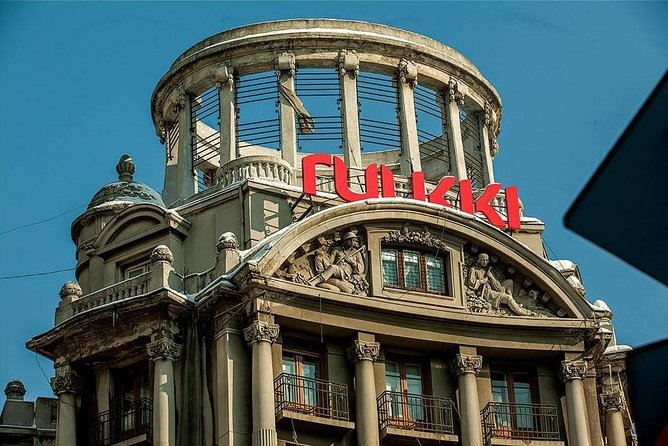
Old Town may seem like an odd stop on a Communist history tour. Its ornate streets and famous restaurants are usually associated with food, nightlife, and older Bucharest. That contrast is exactly why the stop works.
The tour highlights Caru’ cu bere, one of the city’s spectacular restaurants, and explains its role in foreign policy during the Communist period. This gives you a glimpse of how the state presented Romania to foreign visitors. Some places were not simply restaurants. They could also serve as carefully selected stages for official hospitality and international relations.
The visit lasts about ten minutes and is free. Food and drinks are not included, so this is not a meal stop. You may want to return later if you would like to eat there, but the tour’s purpose is to explain the restaurant’s political role rather than give you a dining experience.
I like this part because it moves the story away from government offices and protest sites. You see how Communism operated through appearances, social rituals, and controlled contact with outsiders. It also keeps the route connected to modern Bucharest, where the old city and the Communist past sit side by side.
Small clues to ordinary life
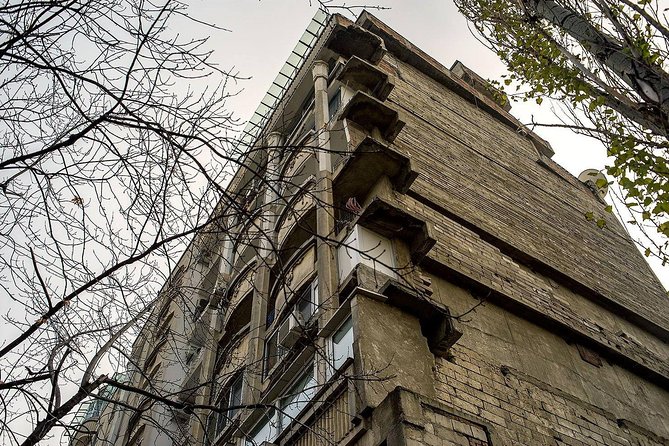
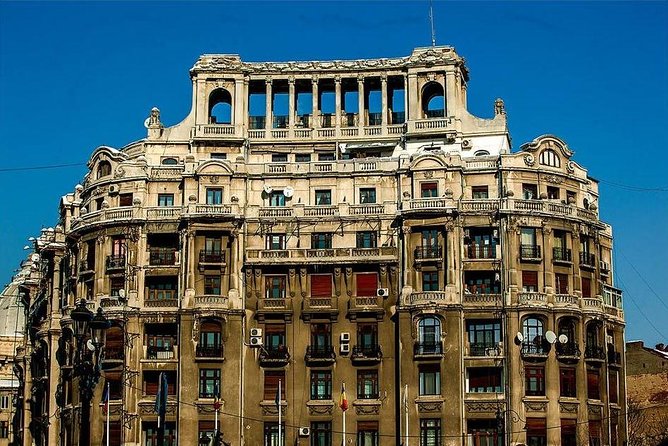
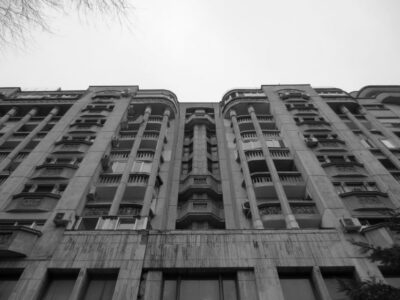
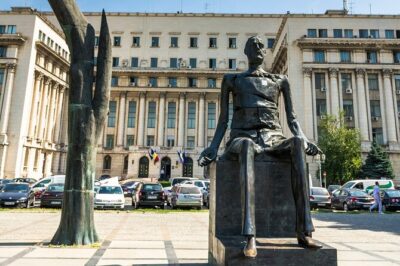
One of the most useful features of this experience is its attention to places you could easily pass without noticing. Guides can point out modest Communist-era buildings, a former Securitate office, and an old Alimentara food shop connected with the period.
These places may not look impressive. That is their value. A giant palace tells you about state power. A plain food shop helps explain how people bought things, waited for supplies, and experienced shortages in daily life.
The route can also include the memory of Communist food lines and the small consumer details that rarely appear in a standard political account. One guide even gives participants a Communist-era snack, adding a simple sensory detail to the discussion.
You should not expect every stop to look polished or photogenic. Some of these locations are ordinary, worn, or tucked into less inviting parts of the city. Bring curiosity rather than a checklist of grand sights. The most meaningful details may be the ones that seem almost random at first.
Revolution Square and Ceausescu’s downfall
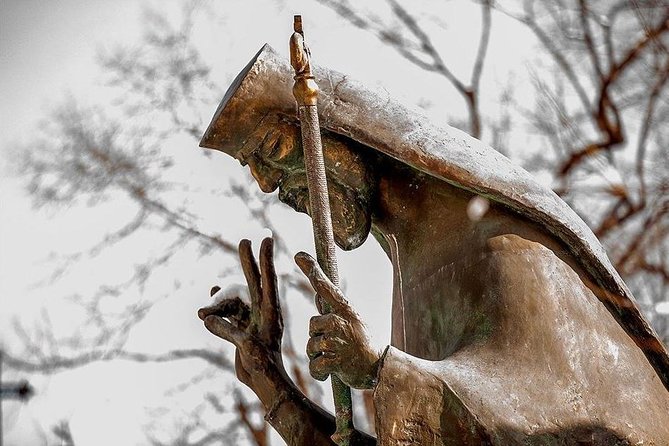
The tour ends at Piata Revolutiei, or Revolution Square. This is where the story of Communist rule turns into a story of collapse.
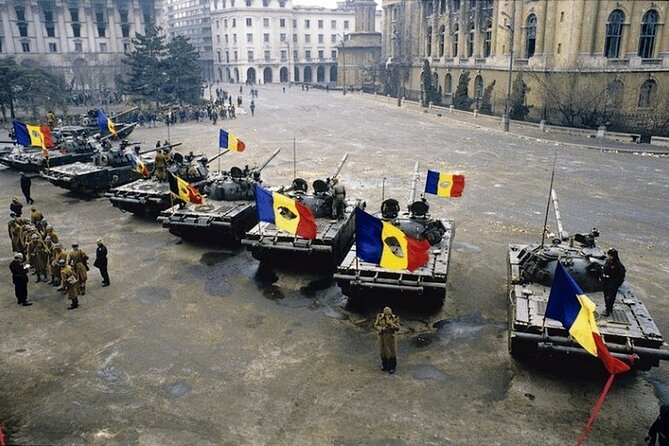
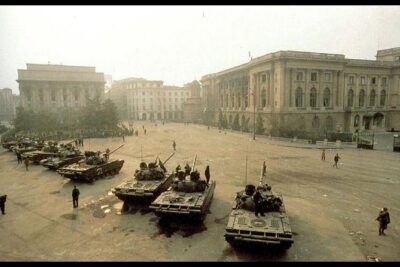
You spend about fifteen minutes here learning about the violent end of the regime and Ceausescu’s downfall. The square contains several sites tied to the 1989 Revolution, and guides explain how the events unfolded and why this place became central to Romania’s break with Communism.
The physical evidence matters. You may see bullet holes in buildings, a reminder that the revolution was not a tidy political handover. The square connects television images and textbook dates with a real urban setting where people gathered, confronted the regime, and faced violence.
Ending here gives the tour a clear shape. It begins with the Communist takeover, moves through the machinery and habits of the system, and finishes at the place where that system came apart. You are left with a better sense of how recent the change was. Romania did not move away from Communism in some distant, abstract past. The events remain within living memory.
The guides are the heart of the experience
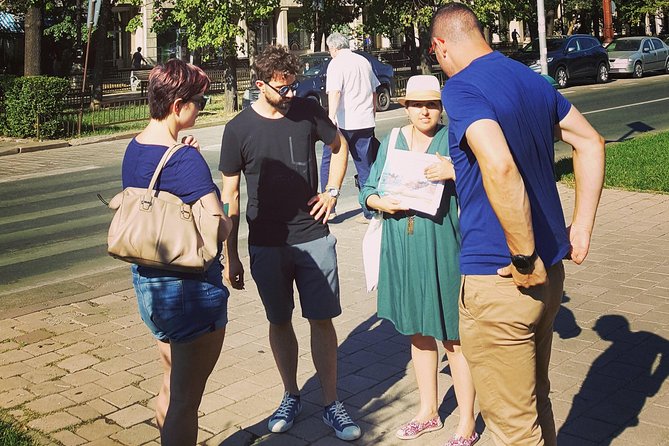
The most praised part of this tour is the guiding. Cristina receives particular credit for clear English, warmth, patience, and personal stories. She has been described as especially helpful with slower walkers and people who need occasional places to sit or lean. That matters on a three-hour walking tour, especially when the group includes people with different walking speeds.
Stefan and Victor have also led the experience. Stefan is praised for creating an intimate discussion and answering difficult questions openly. Victor is known for connecting the political story with personal experiences, and one participant booked another tour with him afterward.
Because several guides may lead the tour, your experience can vary in style. The common thread is the use of stories from family life and different generations. This helps explain why two Romanian families could experience the same period in very different ways.
I also appreciate the stated effort to keep the discussion nuanced. Communism is neither praised nor reduced to a cartoon villain story. You hear about the costs of dictatorship and repression, while also getting room to understand why some people remember particular policies or periods in complicated ways.
That approach suits you if you want context rather than slogans. If you prefer a fast tour of only famous sights, the personal and political discussion may feel more detailed than necessary.
Walking pace, weather, and group size
The tour lasts about three hours and is limited to a maximum of 20 participants. That is small enough for questions, though the atmosphere can change depending on the final group size. Some departures may feel almost private, while others will be a fuller group walk.
You start at Aleea Dealul Mitropoliei 19 and finish at Revolution Square. Hotel pickup and drop-off are not included, so you need to make your own way to the starting point and arrange your onward plans from the square. Both locations are near public transportation.
Wear comfortable shoes. The route links several parts of central Bucharest, and the experience is built around walking and stopping outdoors. Dress for the forecast because the tour operates in all weather unless conditions cause cancellation.
Most people can participate, and service animals are allowed. If you walk slowly or need occasional support, tell the guide at the start. One especially useful aspect of Cristina’s guiding style is her willingness to stop where someone can sit or lean, but it is still wise to judge the route against your own comfort level.
Is $42.33 a fair price?
At $42.33 per person, this is not a bargain-priced city walk. You are paying for a professional guide, a focused subject, a small maximum group size, and a local explanation of places you might otherwise see without understanding.
The price makes more sense if you value interpretation. The Palace of Parliament, Revolution Square, and the older religious sites are easy to visit independently. What is harder to reproduce on your own is the link between them, especially the personal accounts of shortages, surveillance, religion, public life, and the 1989 uprising.
You should also remember what the price does not cover. Food and drinks are excluded, and Palace of Parliament admission is not included. There is no hotel pickup or drop-off. Those omissions are normal for a walking tour, but they affect your total budget.
If you are on a tight budget, you may find free walking tours in Bucharest. A free tour can be good for general orientation. I would choose this paid experience when the Communist period is a main reason for your visit and you want more time for questions, personal context, and less obvious sites.
Booking tips and the cancellation rule
The experience is often booked about 25 days ahead, so I would reserve early if your Bucharest dates are fixed. Confirmation arrives when you book, and the mobile ticket makes it easy to keep the details on your phone.
You can cancel for a full refund up to 24 hours before the start time. Cancellations or changes made inside that period are not refunded or accepted. The cut-off follows local Bucharest time.
The tour can be canceled for poor weather. In that case, you are offered another date or a full refund. Even when the tour runs, rain can make the walking less pleasant, so bring suitable clothing and do not rely on a dry forecast from another destination.
Be precise about the meeting point and arrive early. One poor experience involved a participant and guide failing to connect at the start, followed by delayed messages and a dispute over the cancellation. The provider’s response said the guide waited 15 minutes and tried calling and messaging. The practical lesson is simple: confirm the meeting point, keep your phone available, and arrive before the official start.
Who should book this tour?
I would book it if you enjoy modern European history, want to understand Romania beyond its attractive Old Town, or are curious about how political systems shape ordinary routines. It is also a strong choice if you have already seen Bucharest’s main sights and want the stories behind them.
The tour suits couples, families with older children, and small groups who like asking questions. It can also work well for visitors who know little about Romania, since the guide builds the story from the postwar period through 1989.
You may want to skip it if you dislike walking, have only a short time in Bucharest, or mainly want interiors and formal museum exhibits. The tour spends limited time at each named stop, and some of the most useful places are visually modest.
Should you book Life Under Communism?
Yes, if Romania’s Communist past is high on your list. I like the balance between Ceausescu’s grand projects, the damage done to religious and civic life, the small clues of daily hardship, and the very real violence of the 1989 Revolution.
The strongest reason to book is the guide. Cristina, Stefan, and Victor bring different voices and personal connections, while the route gives those stories a physical setting. At $42.33, it costs more than a free general walk, but it offers a sharper subject and more useful context.
Wear good shoes, confirm the meeting point, and leave room for questions. If you do, this tour can turn Bucharest’s odd mix of palace, monastery, restaurant, food shop, and bullet-marked square into one clear story.
FAQ
How long does the Life Under Communism tour last?
The tour lasts approximately three hours.
Where does the tour start?
It starts at Aleea Dealul Mitropoliei 19, București 030167, Romania.
Where does the tour finish?
The tour ends at Revolution Square, also called Piața Revoluției, in Bucharest.
Is admission to the Palace of Parliament included?
No. Admission to the Palace of Parliament is not included in the tour price.
Is food included?
No. Food and drinks are not included unless specifically stated.
What happens if I need to cancel?
You can receive a full refund if you cancel at least 24 hours before the experience starts. Cancellations or changes made less than 24 hours before the start time are not refunded or accepted.
Just added in Bucharest
- Bucharest: Dealu Mare Winery Private Trip with Wine Tasting★ 4.9 · 6 reviews
- Winery touring & private wine tasting – one day private tour★ 5.0 · 3 reviews
- Village Museum Bucharest Guided Tour★ 5.0 · 6 reviews
- Transylvania Tour: Dracula’s Castle, Peles Palace & Brasov★ 5.0 · 19 reviews
- Transfer Airport Otopeni – Bucharest★ 5.0 · 2 reviews
- Private Transfer Bucharest Otopeni Airport (OTP) to/from Brasov★ 5.0 · 2 reviews
- Bucharest Airport Transfer To Constanta Mamaia★ 5.0 · 3 reviews
- Airport Henri Coanda (Otopeni) to Bucharest – Private Transfer – Driver★ 5.0 · 5 reviews
Communism and Ceausescu Tours, compared.
Bucharest Essential Tour: Old Town, Calea Victoriei & Communism
Read our review →
Communism in Bucharest – Landmarks, Museum & Communist Appetizers
Read our review →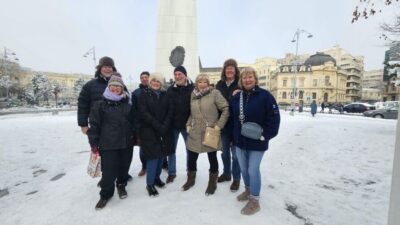
Museum of Communism Ticket with Communist Coffee
Read our review →Browse the lists this tour appears in