
REVIEW · COMMUNISM AND CEAUSESCU TOURS
Bucharest Under Communism: Life, Terror & Hope
Communist Bucharest still speaks through its streets. This 3.5-hour walking tour links grand avenues, hidden churches, protest sites, and the giant Palace of the Parliament while explaining how 45 years of communist rule shaped daily life in Romania.
I like the route for two reasons: it connects famous sights to the human cost behind them, and guides such as Laura and Tamar add personal stories, old photographs, humor, and clear political context. The main drawback is that the tour covers a lot of ground on foot, and the Palace of the Parliament admission fee is not included.
The $23.22 price is fair for a guided walk of this length, especially if you are new to Bucharest. Just arrive ready for an outdoor experience, allow the full advertised time, and wear shoes that can handle city pavement.
In This Review
- Key points to know before you book
- Why this Bucharest communism tour matters
- Starting at Unirii Square and Victory of Socialism Boulevard
- Seeing the Palace of the Parliament from several angles
- Mihai Voda Monastery and the churches that survived
- Revolution Square and Ceaușescu’s final public speech
- University’s Square and the cost of protest
- Guides, photographs, and the value of a small group
- Is $23.22 a fair price?
- Practical advice for a smoother walk
- Who should book Bucharest Under Communism?
- Should you book this Bucharest walking tour?
- FAQ
- How long does the Bucharest Under Communism tour last?
- What time does the tour start?
- Where does the tour begin?
- Where does the tour end?
- Is admission to the Palace of the Parliament included?
- How many people can join the tour?
- Can I cancel for a full refund?
Key points to know before you book
- Unirii Square reveals Ceaușescu’s grand urban plan: The fountains and broad former Victory of Socialism Boulevard show how the dictator reshaped central Bucharest around power and display.
- The Palace of the Parliament is viewed from outside: You learn how it was built and what it meant for ordinary Romanians, but admission inside is not part of this experience.
- Mihai Voda Monastery adds a surprising religious chapter: This medieval church survived the demolition of nearby buildings and now offers a glimpse of the city that existed before communist redevelopment.
- Revolution Square brings the story to a human scale: You see the balcony linked to Nicolae Ceaușescu’s final speech and the places tied to the 1989 uprising.
- Laura and Tamar receive especially strong praise: Their clear explanations, historical photographs, warmth, and willingness to answer questions are central to the experience.
- The walk ends near Bucharest’s Old Town: Revolution Square is about five minutes from the historic center, which makes it easy to continue your evening afterward.
Why this Bucharest communism tour matters
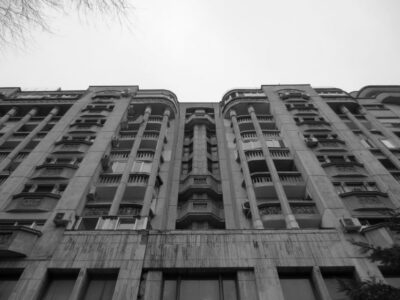
Bucharest can look confusing at first. Austere apartment blocks sit near ornate churches. Huge government buildings dominate streets that once held homes and historic neighborhoods. A guide helps you read those contrasts instead of treating them as random pieces of architecture.
This experience focuses on Romania’s transition from monarchy to communism and then from dictatorship to democracy. That wider frame matters. You are not only hearing about Nicolae Ceaușescu, but also learning how the country reached his rule and what happened after his fall.
The strongest part of the tour is its attention to daily life. The Palace of the Parliament is easy to photograph, but the more useful question is what its construction demanded from the population. During the 1980s, large amounts of money, building material, and labor went into Ceaușescu’s projects while ordinary people faced serious shortages.
That contrast gives the grand architecture its meaning. You see power made physical, then hear how that power affected food, energy, housing, religion, and public life.
The walk is also designed as a personal experience. The maximum group size is 15 people, so it should feel more manageable than a large coach excursion. The tour is described as private, though the listed group limit suggests you should check the exact booking arrangement if having a completely exclusive guide is important to you.
More communism history tours:
- The Real tour of Communism
★ 5.0 · 666 reviews - Life under Communism
★ 5.0 · 358 reviews - 3-Hour Guided Tour of Communist Bucharest
★ 4.9 · 303 reviews
Starting at Unirii Square and Victory of Socialism Boulevard
The meeting point is Piața Sfântul Anton 64, in central Bucharest, with a start time of 4:00 pm. The first main stop is Unirii Square, a useful place to begin because it shows the scale of Ceaușescu’s urban vision immediately.
Unirii Square was designed during the final phase of Romanian communism. Its fountains and broad open space are not just decorative features. They form part of a larger plan built around the former Victory of Socialism Boulevard, a huge avenue intended to direct attention toward the dictator’s monumental projects.
I like this opening because it gives you a visual key for the rest of the walk. Instead of hearing an abstract lecture about megalomania, you are standing in the middle of the plan. The width of the avenue and the scale of the surrounding structures make the political message clear.
The stop lasts about 30 minutes and is free. You can expect time to look around, hear how the area was created, and consider what was removed to make room for it. The guide also explains how the boulevard reflected Ceaușescu’s desire to control the appearance and movement of the capital.
This is one of the best places to ask questions. If you are interested in urban planning, architecture, or the effect of dictatorships on city life, Unirii Square gives you plenty to discuss.
Seeing the Palace of the Parliament from several angles
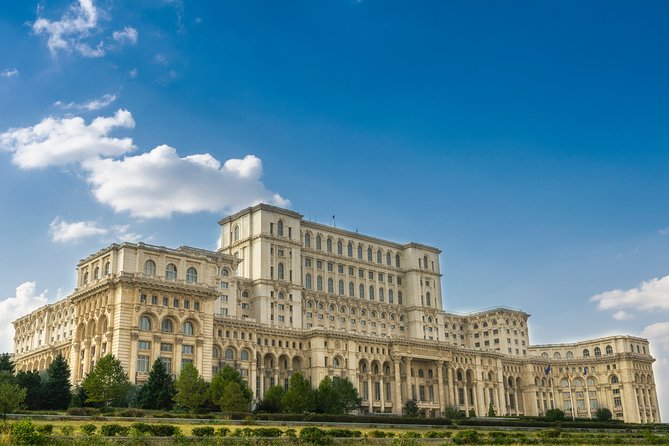
The Palace of the Parliament is the tour’s biggest visual statement. It is described as the second-largest building in the world after the Pentagon and the most expensive administrative building. Even from outside, its size can be difficult to grasp.
The guide discusses the project’s construction, the resources it consumed, and the way Romanians view it today. That last point is important. The building can be admired as an extraordinary feat of engineering while also being criticized as a symbol of coercion, waste, and suffering.
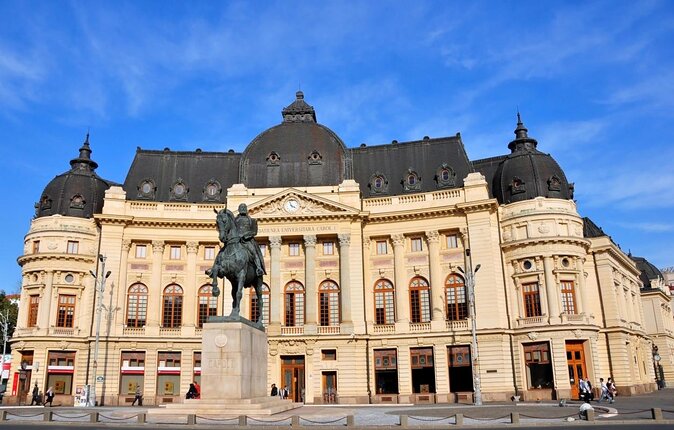
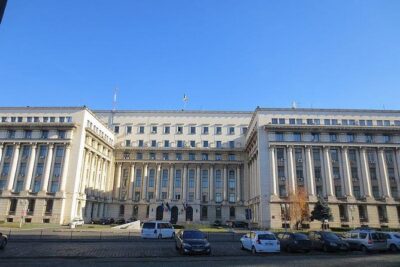
You see the palace from different angles rather than stopping for a single photograph. This helps you understand its bulk and its relationship to the surrounding avenue. Across from it is the Academia Romana building, another large construction associated with Elena Ceausescu, Nicolae’s wife.
Admission to the Palace of the Parliament is not included. The itinerary gives you about an hour here, but the focus is exterior interpretation rather than an inside visit. If touring the interior is a priority, you will need to arrange that separately and account for its own entry conditions and timing.
That limitation is worth considering before booking. The exterior visit still has value because the guide explains the building as part of a wider social story. But this is not a replacement for a dedicated palace interior tour.
I would also plan for open-air conditions at this stop. The square and avenues offer little shelter from sun, wind, or rain, and the experience requires good weather. If poor weather forces cancellation, you can receive a different date or a full refund.
Mihai Voda Monastery and the churches that survived
The move to Mihai Voda Monastery changes the mood. After the enormous scale of the palace and boulevard, you reach a medieval religious site connected to the older Bucharest.
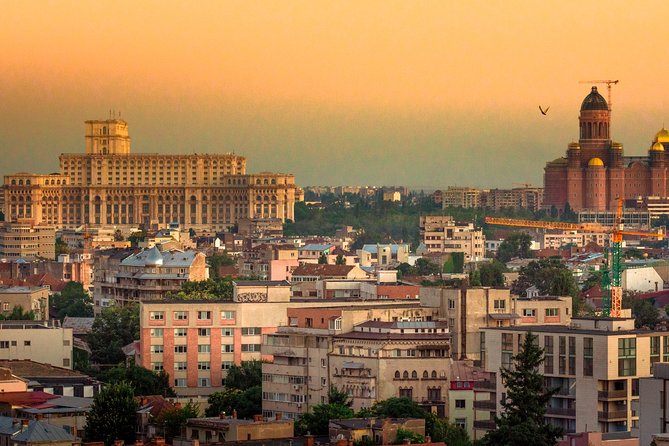
This stop explains how communist authorities treated religion and historic buildings. Some churches were destroyed during redevelopment, while others were saved in remarkable ways. Mihai Voda Church survived the demolition campaign and remains a reminder of what Bucharest looked like before the city was reshaped.
The church is also notable because it is hidden behind utilitarian buildings. That odd placement tells its own story. Rather than simply removing every religious structure, authorities sometimes moved or concealed buildings to make them fit the new urban order.
The scheduled visit lasts about 30 minutes and costs nothing. You should not expect a long religious tour or a separate admission experience. Its value comes from the explanation of survival, displacement, and the tension between old Bucharest and the communist capital.
For me, this is the stop that keeps the tour from becoming a parade of monumental architecture. It gives you a quieter place to think about the people, traditions, and buildings that existed before the regime’s rebuilding projects.
A few more Bucharest days worth comparing
- Bucharest: Dracula’s Castle, Peles Castle, & Brasov Old Town
★ 4.5 · 17,858 reviews - Bucharest: Dracula Castle, Peles Castle & Brasov Old Town
★ 4.6 · 10,891 reviews - Bucharest: Dracula’s Castle, Peleș Castle & Brașov Day Trip
★ 4.5 · 5,919 reviews - Bucharest: Palace of Parliament Tickets and Guide
★ 4.3 · 3,182 reviews
Revolution Square and Ceaușescu’s final public speech
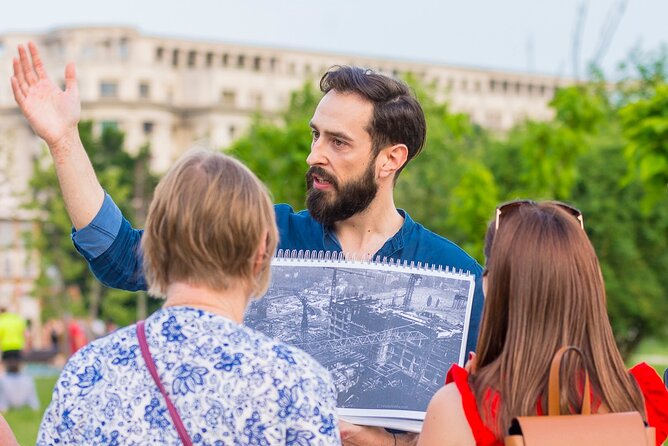
Revolution Square is the emotional center of the walk. This is where the communist regime began to collapse in public view during the 1989 protests.
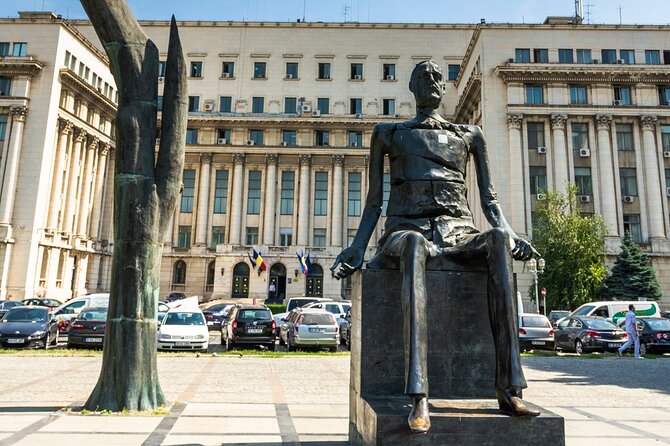
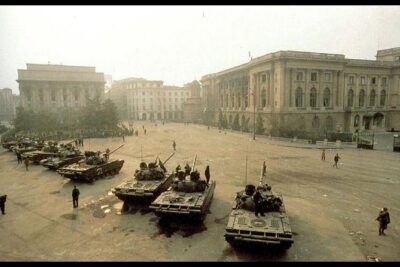
You see the building that held Ceaușescu’s office, the balcony where he delivered his last speech, and the locations connected with the first mass demonstration in Bucharest. The guide explains how the crowd turned against him and what happened to those who challenged the regime.
The square also introduces the aftermath of the revolution. The end of dictatorship did not produce an instant, tidy transition. Understanding what happened after the protests helps you see Romania’s move from socialism to democracy as a difficult process rather than a single triumphant day.
The monument dedicated to those killed during the uprising becomes part of that discussion. The guide explains its meaning and the painful questions surrounding the events. This is a serious subject, but the tour’s tone appears to balance gravity with approachable storytelling.
You can expect roughly an hour here. That is useful because the site needs time. A quick photograph at the balcony would tell you very little. The explanations, photos, and questions are what turn the square into a readable historical place.
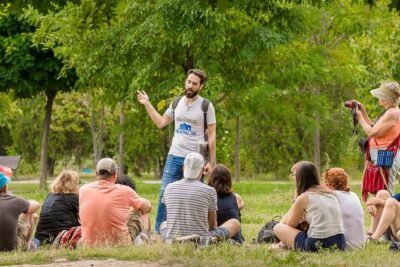
Guides Laura and Tamar are especially well suited to this part of the route. Laura is described as having a degree in history, and her use of additional photographs helps connect the current buildings with the events of 1989. Tamar is praised for mixing facts with anecdotes and answering many follow-up questions.
University’s Square and the cost of protest
The final stop is University’s Square, another major site of anti-communist protest. The location became a center of demonstrations in 1989, where people demanded a free society and many were killed.
This stop widens the story beyond Ceaușescu’s speech and the collapse of his rule. It reminds you that political change came with a terrible human cost. The tour does not treat the revolution as a neat ending, and that honesty is one of its strengths.
The stop is scheduled for about 30 minutes, with admission included. The route then ends at Revolution Square, not at University’s Square, according to the listed endpoint details. Revolution Square is about five minutes from Bucharest’s Old Town, so you can easily continue with dinner, drinks, or another evening walk.
Because the tour ends in the center, the timing works well for a first evening in Bucharest. You finish with a clearer sense of the city and remain close to places where you can eat or explore.
Guides, photographs, and the value of a small group
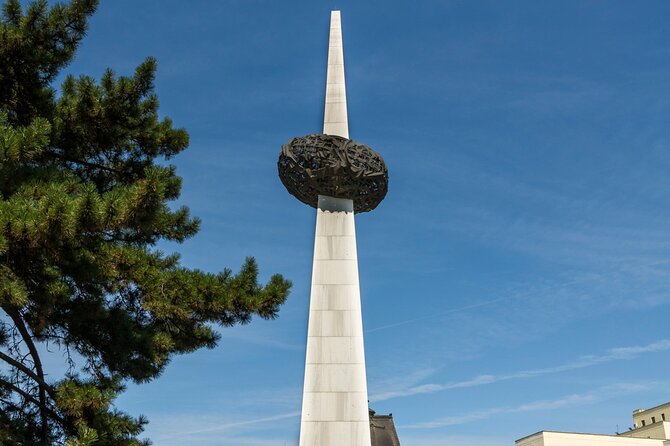
The guide is the main reason to choose this experience over reading a short account online. The route itself includes major landmarks, but the quality of the explanations determines whether you remember disconnected facts or understand how the pieces fit.
Laura receives especially warm praise for her passion, humor, strong English, and detailed answers. She explains the change from monarchy to communism and adds personal stories connected with the communist period. Her use of historical photographs is useful because Bucharest’s present-day streets do not always show what stood there before.
Tamar is also praised for clear explanations, historical detail, and a friendly style. Her ability to combine anecdotes with facts appears to keep the walk moving without turning it into a dry classroom.
That combination matters on a 3.5-hour tour. You need substance, but you also need a guide who can keep the group engaged while walking between sites. The feedback describes both guides as attentive and willing to include everyone in the conversation.
Some descriptions of similar walks refer to about two hours, while this experience is listed at approximately three hours and 30 minutes. I would plan around the longer time. The route includes five stops, and the listed stop times add up to the full duration.
The group limit of 15 is another positive. It allows more room for questions than a large group, though the experience may feel different depending on the number of people booked that day.
Is $23.22 a fair price?
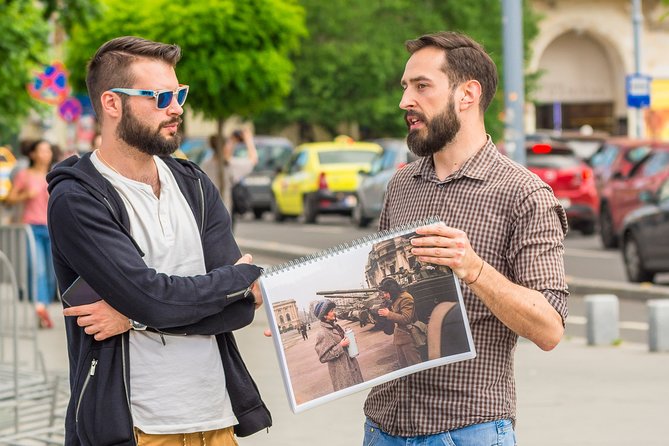
At $23.22 per person, I consider this good value if you want context rather than a simple walk past buildings. You receive a guide for around three and a half hours, several major central sights, and an explanation of one of the defining periods in modern Romanian history.
The price is especially reasonable for first-time visitors who might otherwise miss the meaning of Unirii Square, the Palace of the Parliament, or Revolution Square. A guide can also help you connect the monarchy, communist rule, the 1989 protests, and the democratic transition in one sitting.
The value is lower if you only want to enter the Palace of the Parliament. Palace admission is not included, and the building is viewed from outside during this walk. You would need to add a separate visit if the interior is your main goal.
I also would not choose this tour solely for architecture. The buildings matter, but the focus is political and social history. You should be ready to hear about shortages, repression, demolished churches, deaths during protest, and the uncertainty that followed the revolution.
Practical advice for a smoother walk
The meeting point is in central Bucharest and near public transportation. Confirmation arrives at booking, and a mobile ticket is provided, which keeps the arrival process simple.
Arrive early enough to find Piața Sfântul Anton 64 without rushing. The tour starts at 4:00 pm and ends at Revolution Square, so you do not return to the starting point. That makes it easy to continue toward the Old Town but means you should not leave anything at the start location.
Wear comfortable shoes. The walk connects several sites, and the full experience is on foot. Bring water and dress for the forecast because the activity requires good weather.
Most people can take part, and service animals are allowed. Free cancellation is available up to 24 hours before the start time for a full refund. Changes or cancellations inside that window are not accepted, and poor weather may lead to a new date or a full refund.
Who should book Bucharest Under Communism?
I would choose this tour if you are visiting Bucharest for the first time and want a strong introduction to the city’s modern past. It also suits anyone interested in dictatorship, urban planning, religious survival, revolution, or the daily effects of political systems.
It is a good match for curious couples, solo visitors, families with older children, and anyone who prefers questions and conversation to a recorded audio guide. Romanian visitors can also find value here, since the route brings together details that are easy to overlook even if you already know the broad story.
You might skip it if you dislike long walks, want a palace interior visit included, or prefer a light sightseeing tour with little political discussion. The subject is serious, and the best experience comes when you are willing to spend time with difficult parts of Romania’s past.
Should you book this Bucharest walking tour?
Yes, if you want the city’s monuments explained in human terms. The combination of Unirii Square, the Palace of the Parliament, Mihai Voda Monastery, Revolution Square, and University’s Square gives you a clear route through Ceaușescu’s vision, the damage it caused, and the protests that ended his rule.
I would book it early in a Bucharest stay, ideally on your first or second day. The route gives you useful bearings, places you can revisit later, and practical food suggestions from guides such as Laura. Just allow the full 3.5 hours, bring good walking shoes, and arrange a separate palace interior visit if you want to see inside.
FAQ
How long does the Bucharest Under Communism tour last?
The tour lasts approximately 3 hours and 30 minutes. It includes five main stops, with scheduled visits ranging from 30 minutes to one hour.
What time does the tour start?
The listed start time is 4:00 pm.
Where does the tour begin?
The meeting point is Piața Sfântul Anton 64, București 030167, Romania.
Where does the tour end?
The tour ends at Revolution Square, Piața Revoluției, Bucharest. The square is about five minutes from the Old Town.
Is admission to the Palace of the Parliament included?
No. Admission to the Palace of the Parliament is not included. The tour explains and views the building from outside.
How many people can join the tour?
The maximum group size is 15 people. The experience is also described as private and personalized.
Can I cancel for a full refund?
Yes. You can cancel at least 24 hours before the local start time for a full refund. Cancellations or changes made less than 24 hours before the start time are not accepted, and poor weather may result in a new date or full refund.
Just added in Bucharest
- Bucharest: Dealu Mare Winery Private Trip with Wine Tasting★ 4.9 · 6 reviews
- Winery touring & private wine tasting – one day private tour★ 5.0 · 3 reviews
- Village Museum Bucharest Guided Tour★ 5.0 · 6 reviews
- Transylvania Tour: Dracula’s Castle, Peles Palace & Brasov★ 5.0 · 19 reviews
- Transfer Airport Otopeni – Bucharest★ 5.0 · 2 reviews
- Private Transfer Bucharest Otopeni Airport (OTP) to/from Brasov★ 5.0 · 2 reviews
- Bucharest Airport Transfer To Constanta Mamaia★ 5.0 · 3 reviews
- Airport Henri Coanda (Otopeni) to Bucharest – Private Transfer – Driver★ 5.0 · 5 reviews
Communism and Ceausescu Tours, compared.
Bucharest Essential Tour: Old Town, Calea Victoriei & Communism
Read our review →
Communism in Bucharest – Landmarks, Museum & Communist Appetizers
Read our review →


Museum of Communism Ticket with Communist Coffee
Read our review →Browse the lists this tour appears in