
REVIEW · VILLAGE MUSEUM TICKETS
Bucharest: Village Museum Guided Tour
Traditional Romania is laid out in a park. Bucharest’s Village Museum gives you a quick, useful look at rural life through 123 authentic peasant settlements and 363 historic monuments. I like the easy hotel pickup and the chance to see homes from regions as different as Transylvania, Maramures, Moldavia, and Dobrogea without leaving the capital. The main drawback is the short one-hour visit, especially since the museum covers more than 100,000 square meters.
I also like that the tour includes an English-speaking guide and private transport by car, minivan, or minibus. Guides such as Lonut and Mitran have been praised for being friendly, helpful, and clear in their explanations. You should note that the 30 lei adult entry fee is extra, and the experience is not officially suitable for wheelchair users.
In This Review
- Key points to know before you book
- Why the Village Museum matters in Bucharest
- Hotel pickup keeps the visit simple
- Entering King Michael I Park
- What you see during the one-hour museum visit
- How the guides shape the experience
- Is $67 good value?
- The main benefit is context, not just transport
- What the itinerary feels like from start to finish
- Tips for getting more from a short visit
- Should you book this Village Museum tour?
- FAQ
- Where does the Village Museum tour take place?
- How long is the museum visit?
- Is hotel pickup included?
- How will the driver contact me?
- What language is the tour conducted in?
- Is the museum entry fee included?
- What does the $67 price include?
- Is the tour suitable for wheelchair users?
- Can I cancel the booking?
Key points to know before you book
- A large open-air museum: The Village Museum covers over 100,000 square meters in King Michael I Park.
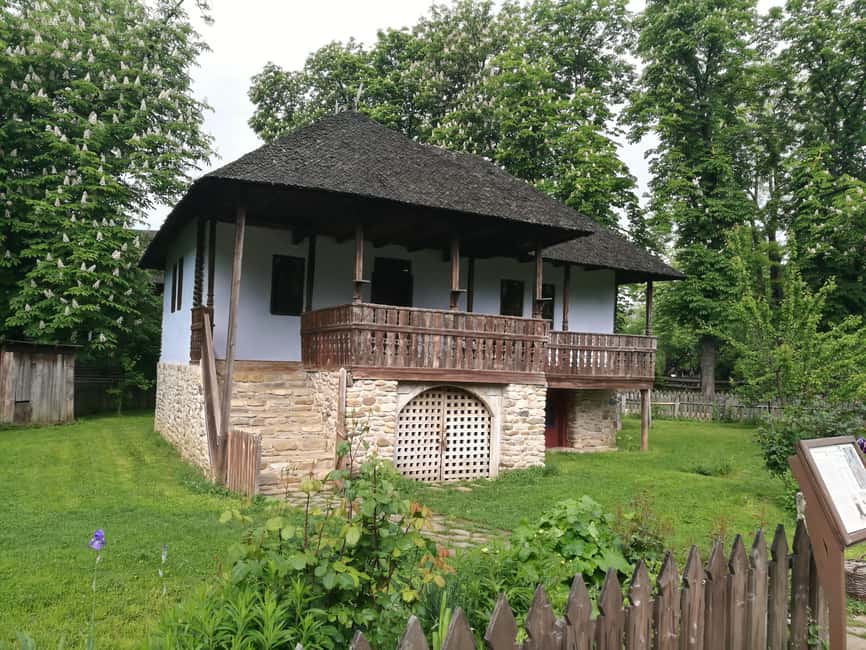
- Authentic buildings from across Romania: See 123 peasant settlements and 363 monuments dating from the 17th to the 20th century.
- A short guided visit: The museum portion lasts one hour, so a guide helps you focus on the most useful sights.
- Hotel pickup and drop-off: Transport is included from Bucharest hotels, with the driver contacting you before the tour.
- A strong human touch: Lonut and Mitran have been praised for their kind, professional help and clear explanations.
- Budget for admission: The tour price is $67 per person, but adult museum entry costs 30 lei separately.
Why the Village Museum matters in Bucharest
Bucharest can feel like a modern European capital, with busy roads, grand buildings, and layers of 20th-century history. The Village Museum offers a different view of Romania. Instead of focusing on political events or city life, it shows how people lived in rural communities over several centuries.
The museum is officially called the Dimitrie Gusti National Village Museum. It sits in King Michael I Park, giving you a change of pace from central Bucharest. You walk among traditional houses, farm buildings, churches, and other rural structures gathered from Romanian villages.
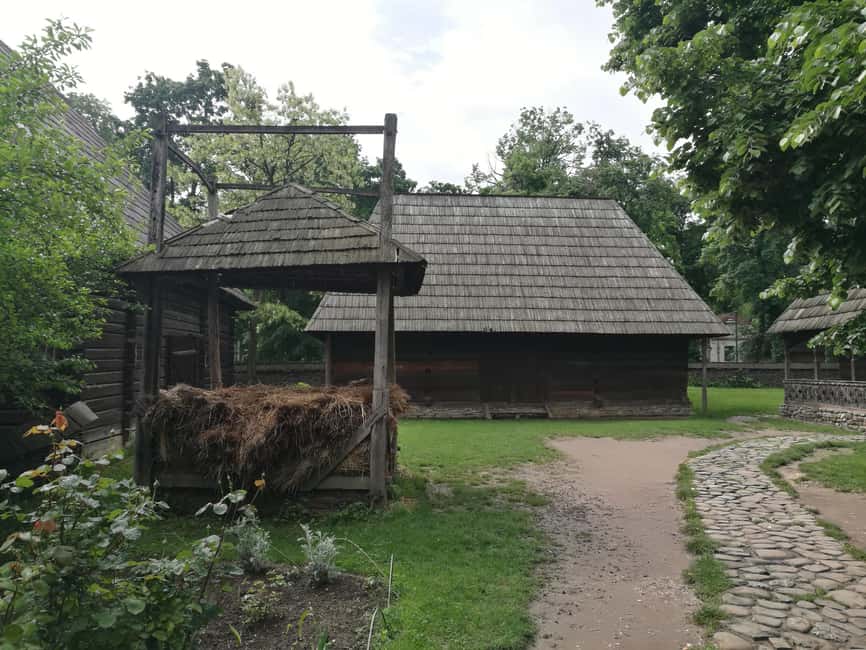
The collection is impressive in size. You will find 123 authentic peasant settlements, 363 monuments, and more than 50,000 artifacts from different parts of the country. These are not simply decorative buildings made to look old. The structures were brought together to represent real regional building styles and ways of life.
That regional range is the museum’s greatest strength. Romania is not one uniform cultural area. Banat, Transylvania, Moldavia, Maramures, Oltenia, Dobrogea, and Muntenia each developed their own building traditions, household objects, and village patterns. A guided walk helps you notice those differences instead of seeing the museum as one long row of old houses.
More Village Museum tickets:
- Palace of the Parliament, Village Museum & Ceaușescu Mansion
★ 4.9 · 31 reviews - Traditions in Bucharest: Village Museum and Wine Tasting Tour
★ 5.0 · 27 reviews - Private Bucharest city tour visit the Palace of the Parliament & Village Museum
★ 4.5 · 21 reviews
Hotel pickup keeps the visit simple
The tour begins with pickup in Bucharest. Hotel transport is included, and you may be taken in a car, minivan, or minibus, depending on the arrangements for your booking.
This matters because the museum is not simply a single building with a front door and a few rooms. It occupies a wide area in the park. Starting with hotel pickup removes the need to work out local transport before a fairly short activity.
You must provide a contact phone number or email address and tell the operator your hotel name or pickup address. The driver contacts you before the start by phone call, text, email, or WhatsApp. You also receive the driver’s phone number, which is useful if your hotel entrance is difficult to identify.
I would keep your phone available on the day of the tour. Since the pickup details are handled directly with the driver, clear communication is more important than simply waiting in a hotel lobby and hoping the vehicle finds you.
The transfer time is separate from the one-hour museum visit. The advertised activity lasts one hour, but your total outing will be longer once pickup and return are included. The exact starting time depends on availability, so check the schedule before planning another Bucharest sight immediately afterward.
Entering King Michael I Park
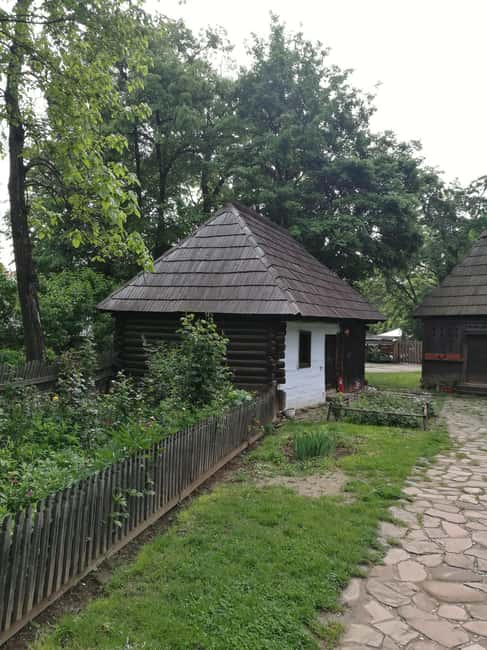
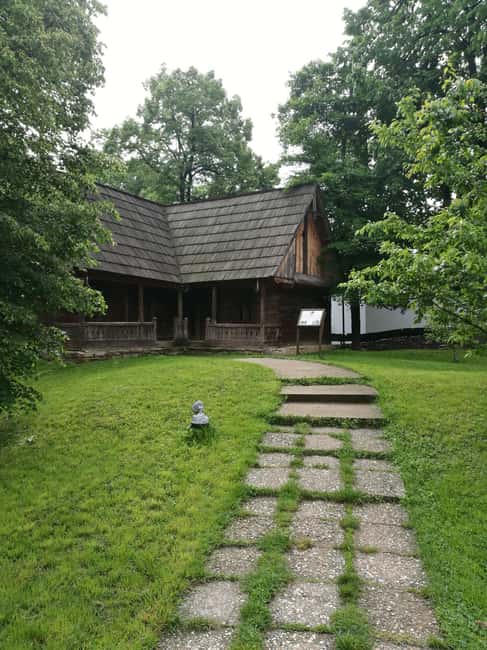
The museum’s setting in King Michael I Park is part of its appeal. You leave the city’s dense streets and enter an open-air collection arranged around traditional rural buildings.
The park setting also gives the visit a more natural rhythm than a standard indoor museum. You move between structures rather than passing from gallery to gallery. The experience is based on seeing the relationship between homes, working buildings, yards, and village spaces.
Still, this is a walking visit. The museum covers over 100,000 square meters, and the ground may require more effort than a compact city attraction. The official information says the tour is not suitable for wheelchair users. If you have mobility concerns, contact the provider before booking and explain what help you need.
That advice is especially important because one guide, Mitran, was praised for helping a husband with mobility issues. This suggests that personal assistance may be possible in some situations, but it does not change the official accessibility warning. I would treat the experience as potentially manageable for some people with limited mobility, but not as a wheelchair-accessible tour.
What you see during the one-hour museum visit
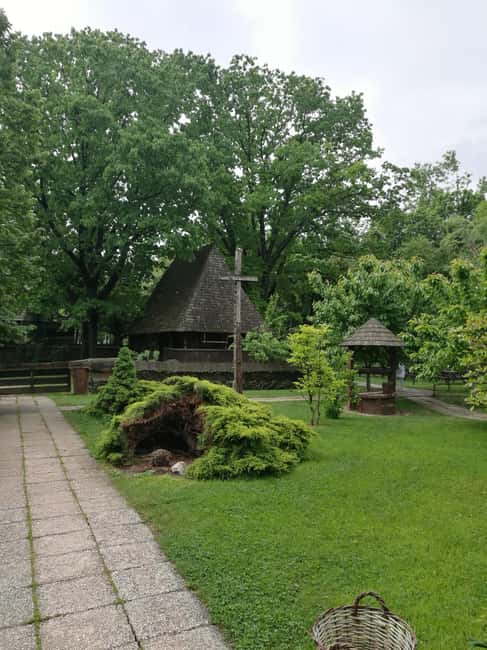
The main stop is the Dimitrie Gusti National Village Museum. You receive a guided one-hour visit, with the guide explaining the buildings and the rural traditions they represent.
In that short time, you cannot inspect all 363 monuments or anything close to all 50,000 artifacts. That is the central tradeoff. The museum is large enough for a much longer visit, but this tour is designed as a compact introduction.
A guide is useful here because the buildings can look similar if you do not know what to watch for. The explanations give meaning to the construction, regional differences, and household objects. You get a better sense of why one home belongs to one part of Romania and another building reflects a different local tradition.
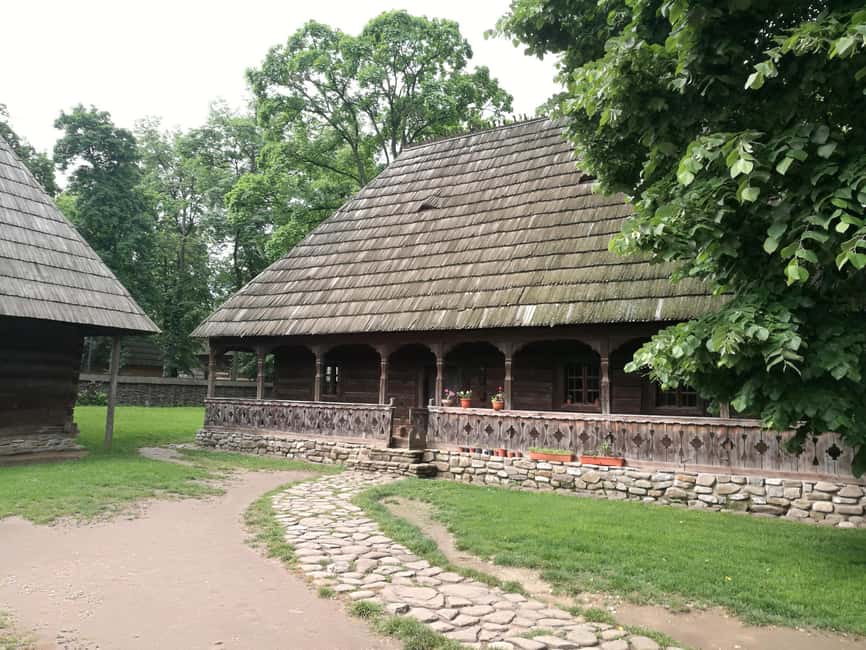
The collection includes structures dating from the 17th through the 20th century. That range lets you see changes over time, not just one frozen picture of village life. You might notice how homes and farm buildings reflect local materials, climate, work, and family needs, though the exact buildings shown depend on the guide’s route and the time available.
The museum represents seven named ethnographic regions:
- Banat
- Transylvania
- Moldavia
- Maramures
- Oltenia
- Dobrogea
- Muntenia
This list is valuable for planning your expectations. You are not visiting a single reconstructed village from one county. You are getting a broad survey of rural Romania, brought together in Bucharest.
The 50,000 artifacts add another layer to the buildings. Household objects, tools, and other items help show how the structures were used. A house becomes more meaningful when you can connect it with the work and daily routines that took place inside and around it.
More Museum Tours in Bucharest:
- Bucharest: Museum of Senses Entry Ticket
★ 4.2 · 364 reviews - Communism in Bucharest – Landmarks, Museum & Communist Appetizers
★ 5.0 · 111 reviews - Bucharest: Entry ticket at the Museum of Communism
★ 4.6 · 57 reviews - Bucharest: Museum of Communism Ticket with Communist Coffee
★ 4.6 · 52 reviews
How the guides shape the experience
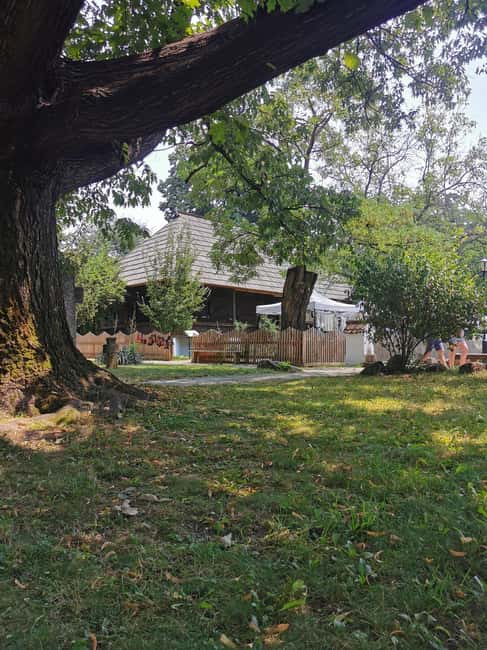
The quality of a one-hour tour depends heavily on the guide. With such a large museum and limited time, a good guide keeps the visit from becoming a simple stroll past old walls.
Lonut has been praised for explaining everything in detail and for being kind throughout the visit. He even gave small gifts, a personal touch that made the experience feel more welcoming. You should not book expecting gifts, of course, but the comment points to a warm style of guiding.
Mitran has also been praised for making the visit more interesting through his explanations. His help with a visitor who had mobility issues was another strong point, along with his friendly and professional manner.
These names are worth noting when you receive your pickup details. They give you an idea of the service style associated with the tour: personal, attentive, and focused on explaining rather than simply transporting you to the gate.
The guide speaks English. Since the museum contains a lot of information, I would ask questions early in the visit. Tell the guide whether you are most interested in architecture, village customs, regional differences, or the objects inside the homes. With only one hour, that can help make the tour feel more tailored to you.
Is $67 good value?
The price is $67 per person. That is not the cheapest way to see an open-air museum, especially because the 30 lei adult entry fee is not included.
The price makes more sense if you value convenience. You are paying for hotel pickup and drop-off, transport, a driver, and an English-speaking guide. If you would otherwise need to arrange your own transport and find your way around a large museum, the added cost buys simplicity and a short explanation-led visit.
The value is less convincing if you are already comfortable reaching the museum independently and want several hours to explore. The one-hour museum visit is brief for a collection of this size. An independent visit may suit you better if you prefer to set your own pace, pause often, or study the buildings and artifacts in detail.
There is also no food or drink included. That is not a major problem for a one-hour attraction, but remember that the museum stop itself is focused on sightseeing rather than a full-day outing.
The flexible booking terms help reduce the risk. You can cancel up to 24 hours ahead for a full refund, and you can reserve now while paying later. Those terms are useful if your Bucharest schedule is still changing.
The main benefit is context, not just transport
You could visit the Village Museum without a guide, but the guided format changes what you take away. The museum’s size and variety can be confusing at first. A guide gives you a framework for understanding what you are looking at.
I like this tour best for a first visit to Bucharest or for anyone with limited time in the city. You get a clear introduction to the country’s regional traditions without committing half a day to a large museum.
It also works well if you want an activity that is cultural but not formal. You walk outdoors, look inside traditional structures, and hear explanations in plain English. The setting feels more relaxed than a conventional museum, though the amount of walking still matters.
Families may appreciate the variety of buildings and the open-air layout, but the official restrictions and the one-hour pace should guide your decision. Couples, solo visitors, and small groups who want a short cultural stop can get good value from the guided format.
I would be less enthusiastic if you have already visited Romanian villages extensively or if your main interest is modern Bucharest. The museum is focused almost entirely on traditional rural life, not the capital’s urban history.
What the itinerary feels like from start to finish
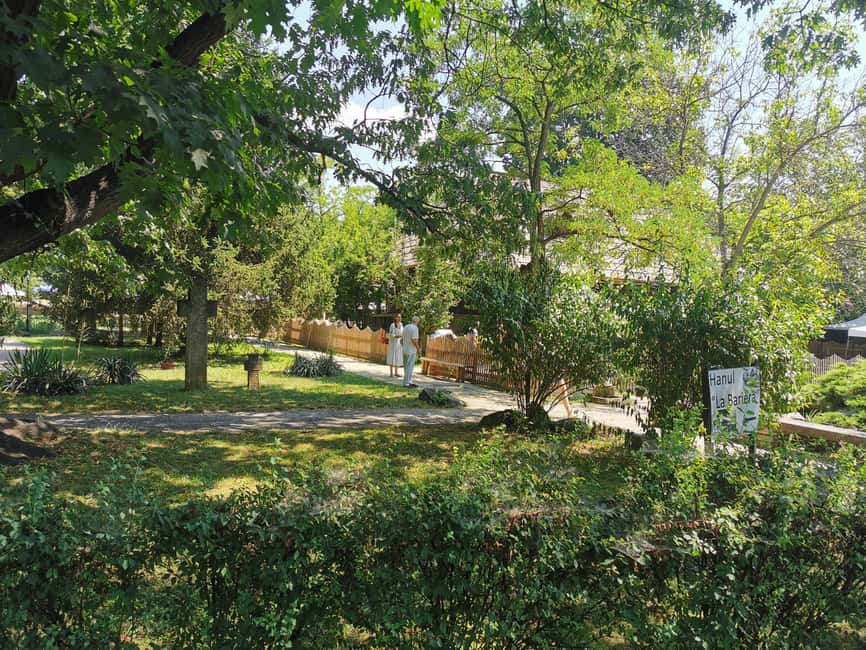
Your experience begins with hotel pickup in Bucharest. The driver contacts you before the tour, so make sure the provider has accurate contact details and your exact hotel or pickup address.
You then travel to King Michael I Park and enter the Village Museum. The one-hour visit focuses on the open-air collection, with your English-speaking guide explaining traditional Romanian village life and the regional background of the buildings.
The route is a guided walk rather than a long free period. The guide can point out representative homes, monuments, and artifacts, helping you use the limited time well. Because the museum includes 123 settlements and 363 monuments, you should expect a selected introduction rather than a complete survey.
At the end, you return to Bucharest by included transport. The itinerary lists the museum as a visit and photo stop, so bring a camera if you want pictures of the traditional structures and park setting. Smoking is not allowed in the vehicle or indoors, and alcohol, drugs, and audio recording are prohibited.
Tips for getting more from a short visit
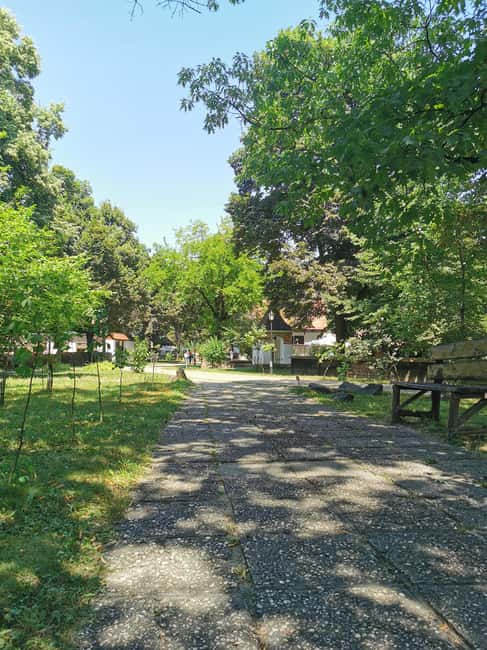
Arrive ready to walk. The museum is spread across a very large area, and comfortable footwear will make the visit easier.
Keep your phone charged. The driver may contact you by phone, text, email, or WhatsApp, and you may want photographs during the museum visit.
Ask the guide to compare regions. The strongest part of the museum is the range from Banat and Transylvania to Moldavia, Maramures, Oltenia, Dobrogea, and Muntenia. A regional comparison will give you more than a list of buildings.
Remember that the entry fee is separate. The tour costs $67 per person, and adult admission to the museum is 30 lei.
If you have mobility issues, explain them before the day of the tour. Mitran’s help with a visitor who had mobility problems is encouraging, but the activity is still marked as unsuitable for wheelchair users.
Keep your schedule flexible after pickup. The museum time is fixed at one hour, but hotel transfers can add time depending on your location and the day’s traffic.
Should you book this Village Museum tour?
Book it if you want an easy, guided introduction to Romanian rural life and you value hotel pickup more than the lowest possible price. The combination of regional variety, English explanations, and private transport makes this a practical choice during a short Bucharest stay.
I would especially recommend it to first-time visitors, people who prefer guided sightseeing, and anyone who wants to see traditional Romania without arranging transport on their own. The friendly service associated with Lonut and Mitran adds to the appeal.
Skip it, or choose a longer independent visit, if you want to examine the full collection at a slow pace. One hour is enough for a strong overview, not enough for every monument. Also think carefully about mobility, since the museum is large and the activity is not suitable for wheelchair users.
For the right visitor, this tour does something useful: it turns a huge outdoor collection into a manageable lesson in Romania’s regional village life.
FAQ
Where does the Village Museum tour take place?
The tour takes place at the Dimitrie Gusti National Village Museum in King Michael I Park, Bucharest.
How long is the museum visit?
The guided museum tour lasts one hour. Pickup, transport, and return to your Bucharest hotel take additional time.
Is hotel pickup included?
Yes. Hotel pickup and drop-off in Bucharest are included.
How will the driver contact me?
The driver may contact you by phone call, text message, email, or WhatsApp before the tour. You receive the driver’s phone number as well.
What language is the tour conducted in?
The live tour guide speaks English.
Is the museum entry fee included?
No. The adult entry fee to the Village Museum is 30 lei and must be paid separately.
What does the $67 price include?
The price includes hotel pickup and drop-off, transport by car, minivan, or minibus, the one-hour museum tour, a guide, and a driver.
Is the tour suitable for wheelchair users?
No. The activity is listed as not suitable for wheelchair users. If you have other mobility concerns, contact the provider before booking.
Can I cancel the booking?
Yes. You can cancel up to 24 hours in advance for a full refund. You can also reserve now and pay later.
Just added in Bucharest
- Bucharest: Dealu Mare Winery Private Trip with Wine Tasting★ 4.9 · 6 reviews
- Winery touring & private wine tasting – one day private tour★ 5.0 · 3 reviews
- Village Museum Bucharest Guided Tour★ 5.0 · 6 reviews
- Transylvania Tour: Dracula’s Castle, Peles Palace & Brasov★ 5.0 · 19 reviews
- Transfer Airport Otopeni – Bucharest★ 5.0 · 2 reviews
- Private Transfer Bucharest Otopeni Airport (OTP) to/from Brasov★ 5.0 · 2 reviews
- Bucharest Airport Transfer To Constanta Mamaia★ 5.0 · 3 reviews
- Airport Henri Coanda (Otopeni) to Bucharest – Private Transfer – Driver★ 5.0 · 5 reviews
Village Museum Tickets, compared.

Palace of the Parliament, Village Museum & Ceaușescu Mansion
Read our review →
Traditions in Bucharest: Village Museum and Wine Tasting Tour
Read our review →
Private Bucharest city tour visit the Palace of the Parliament & Village Museum
Read our review →
Traditions in Bucharest: Village Museum and Wine Tasting
Read our review →
National Village Museum and Salt Mine in a Day Tour
Read our review →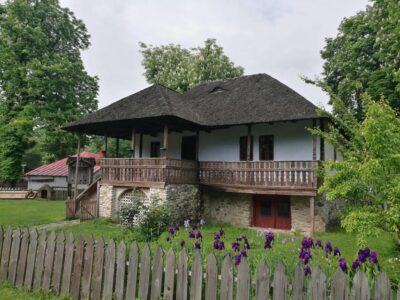


Bucharest one day tour with Parliament Palace and Village Museum
Read our review →Browse the lists this tour appears in