
REVIEW · VILLAGE MUSEUM TICKETS
Traditions in Bucharest: Village Museum and Wine Tasting
Bucharest’s best cultural shortcut starts outside the center. This private 4.5-hour tour links the National Village Museum, Romanian folk crafts, and a tasting of three local wines, giving you a useful introduction to rural life, regional art, and food traditions without sending you across the country. I especially like the contrast between the open-air museum’s old wooden houses and the polished city streets beyond its gates.
I also like the human scale of the day. Your guide collects you at your accommodation, explains the places in clear English or Romanian, and ends near the Romanian Athenaeum, within walking distance of the Old Town. The main consideration is price: at $153 per person, this is not a budget sightseeing outing, especially for a solo visitor, though the private transport, admission, guide, and wine tasting make it more appealing for couples or small private groups.
In This Review
- Key points to know before booking
- Why this tour works for a first look at Bucharest
- Walking through the National Village Museum
- The Romanian Athenaeum and the city connection
- Handmade Romanian crafts at Victoriei
- Romanian wine in three glasses
- What the private format adds
- Timing, comfort, and who should book
- Is $153 per person good value?
- Should you book it?
- FAQ
- How long does the tour last?
- Where does pickup take place?
- Where does the tour finish?
- Is transportation included?
- Is the Village Museum entrance included?
- How much time do you spend at the Village Museum?
- What is included in the wine tasting?
- Are extra drinks and food included?
- Which languages are available?
- Can children join the tour?
Key points to know before booking
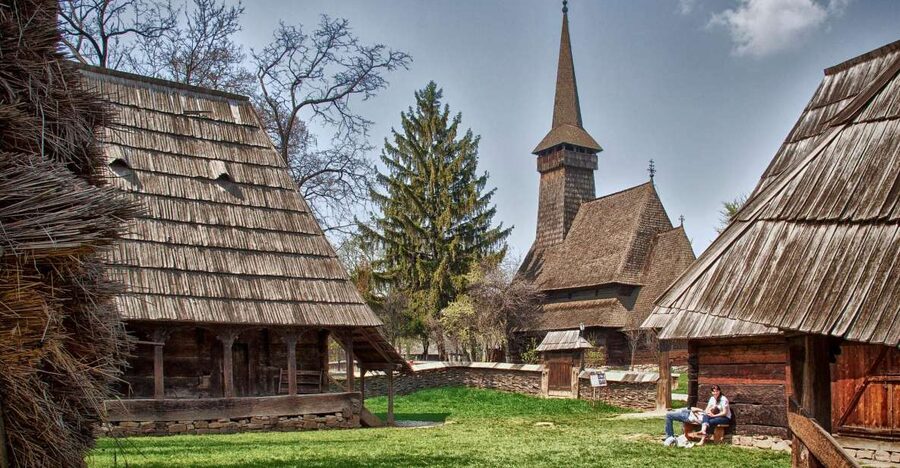
- Over 300 historic buildings: The National Village Museum brings houses, churches, barns, windmills, and other structures from across Romania into one large park.
- Three distinct cultural stops: You move from architecture, to handmade objects, to wine and local snacks, so the tour has a clear cultural arc.
- Romanian grape varieties: The tasting can include Feteasca Neagra, Negru de Dragasani, and Tamaioasa Romaneasca, wines you may not often find outside Romania.
- A private half-day format: Pickup, transport, and a live guide keep the schedule simple and personal.
- A flexible finish: The tour ends at the Romanian Athenaeum, and you can stay longer at the wine bar or walk toward Bucharest’s Old Town.
- Good guidance in hot weather: Guide Mihai received particular praise for arriving on time, adapting the pace, and keeping the experience comfortable on a very hot day.
Why this tour works for a first look at Bucharest
Bucharest can be difficult to read at street level. Its grand buildings, communist-era blocks, modern cafés, and leafy parks do not always explain how Romanian life developed outside the capital. This tour gives you that missing context in a compact way.
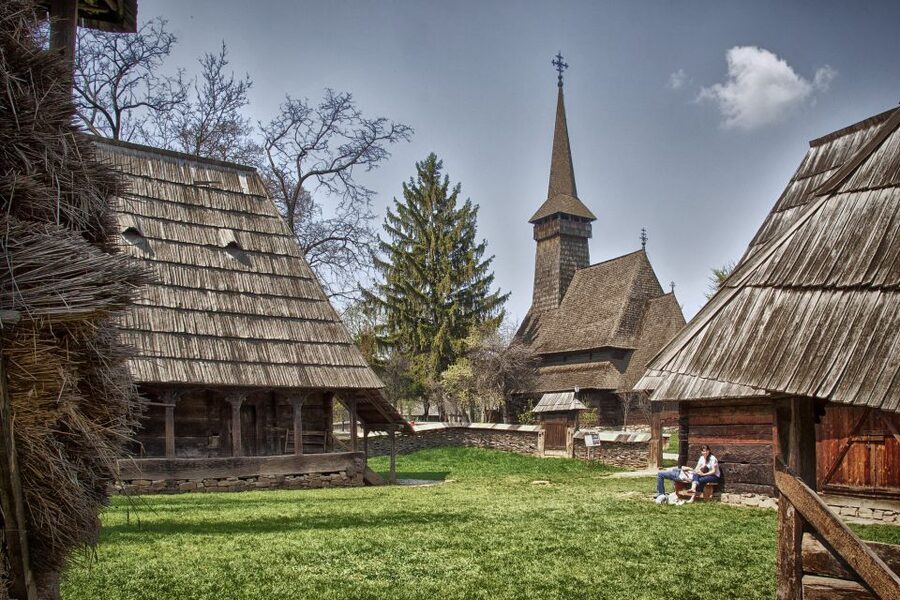
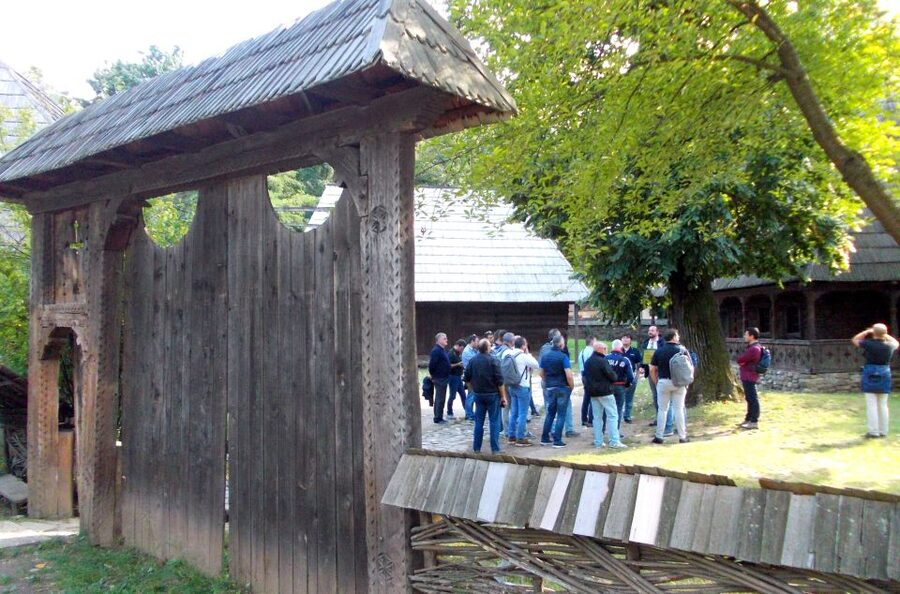
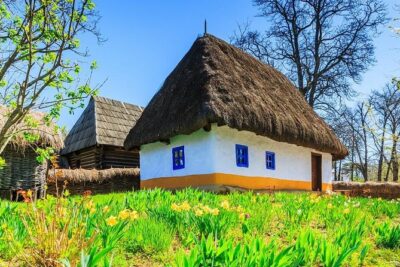
The Village Museum is the anchor. It is not a collection of copies built to look old. The more than 300 buildings were brought from villages across Romania and reassembled inside King Michael Park. That means one walk can show you how homes and farm buildings differed between Transylvania, Wallachia, Moldavia, the Danube Delta, and the Black Sea coast.
The rest of the tour adds useful detail. At the craft shop, you see the patterns and objects that turn regional customs into everyday decoration. At the wine bar, your guide connects agriculture, place, and national identity through the glass in front of you. I like this structure because it avoids treating Romanian culture as a list of monuments. You see how people lived, what they made, and what they drank.
More Food and Drink Tours in Bucharest
- Taste Bucharest: A Food Lover’s Tour of Markets & Neighbourhoods
★ 5.0 · 689 reviews - Street Food’n’Culture Tour
★ 5.0 · 209 reviews - Wine Tasting in Bucharest
★ 5.0 · 183 reviews
Walking through the National Village Museum
Plan on about 1.5 hours at the Dimitrie Gusti National Village Museum. That is enough time for a guided introduction and a solid walk, though the grounds contain plenty to examine if you could spend a full day there.
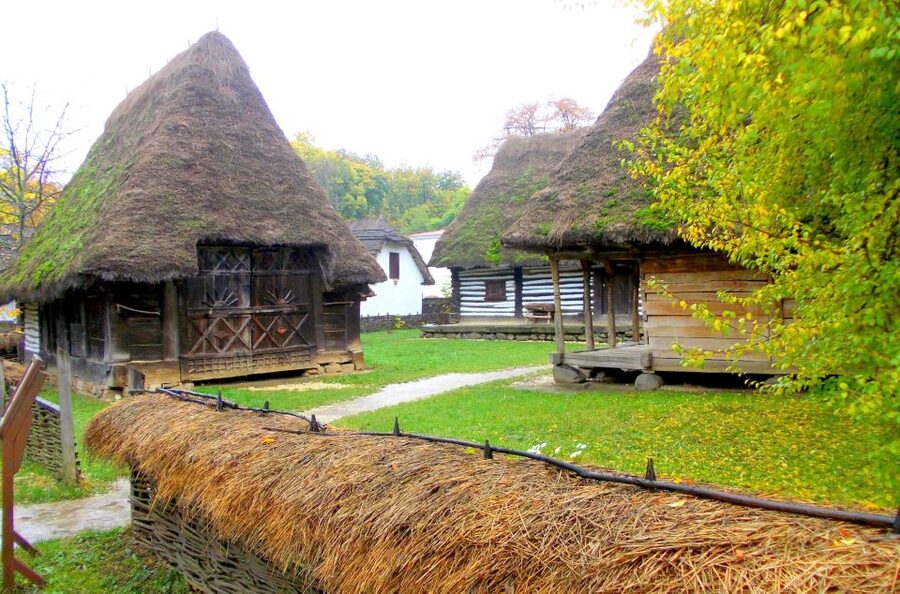
The museum opened in 1936 inside King Michael Park. Its purpose was to present the architecture and daily life of Romania’s historic regions in one setting. The buildings include steep-roofed peasant houses, thatched barns, wooden churches, mountain cabins, inns, mansions, windmills, and homes from areas near the Danube Delta and Black Sea.
This range is what makes the visit valuable. A single word such as traditional can hide major regional differences. In the mountains, you might notice building forms suited to colder weather and sloping ground. In the delta and coastal areas, the homes and farm structures reflect a different environment. Wallachian and Moldavian buildings bring another set of shapes, materials, and social clues.
Your guide matters here. Without context, the museum can feel like a pleasant park filled with old buildings. With a guide, the houses become evidence of work, family life, religion, and local customs. The tour description connects architecture with history, and that is the right way to approach this place. Look at the construction, roof shape, painted details, and placement of each building, then ask what those choices reveal about the people who used it.
The museum also introduces Romanian folklore through objects such as traditional clothing, painted eggs, and pottery. These details help explain the culture beyond the buildings. You are not only looking at where people lived, but also at the patterns and objects they carried into religious celebrations, household work, and village rituals.
A practical point: this is a walking stop in a large outdoor setting. Wear comfortable shoes and be prepared for sun or heat. The tour includes transport, but the museum itself is explored on foot. Mihai’s flexible pacing was especially useful during a hot July visit, and that kind of adjustment can make a real difference here.
The Romanian Athenaeum and the city connection
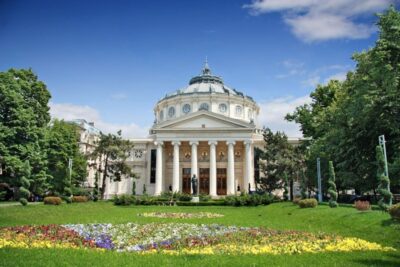
The Romanian Athenaeum serves as a photo stop and the tour’s finish, with about 10 minutes passing by it during the city portion of the route. It is also a practical landmark because the tour ends there, close to the Old Town area.
The Athenaeum gives the outing a pleasing change of scale. You begin with rural homes and farm buildings, then return to one of Bucharest’s best-known urban landmarks. The contrast reinforces the point of the tour: Romanian identity is not limited to village traditions or grand city culture. Both belong in the same story.
You should not expect a full guided visit inside the Athenaeum. The scheduled stop is a photo opportunity and pass-by, not an extended interior tour. Still, ending here is convenient. You can ask your guide for directions to your accommodation, walk toward the Old Town, or continue at the wine bar before making your own way onward.
Handmade Romanian crafts at Victoriei
The second major stop is Art&Craft Victoriei, a handmade art and craft shop where you have about 30 minutes to browse. This is more than a souvenir pause if you pay attention to the materials and regional references.
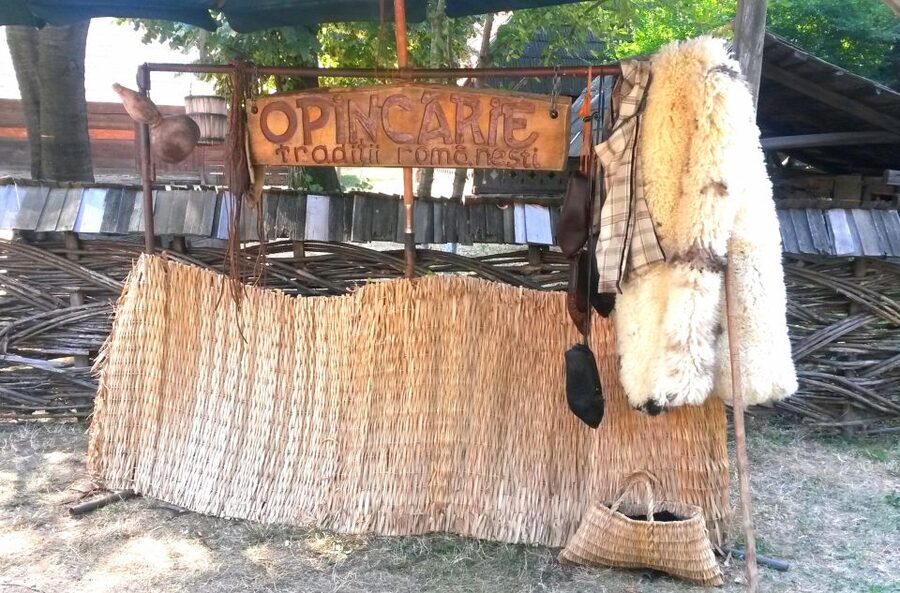
Look for Romanian blouses known as ie, glass-painted icons, Moldavian Easter eggs, Horezu pottery from Wallachia, wooden masks associated with Transylvania, and small handmade objects. Each category offers a different look at local skill. The painted eggs, for example, connect decoration with religious and seasonal customs. Horezu pottery gives you a sense of Wallachian ceramic tradition. The ie brings folk pattern and clothing into a form many visitors recognize immediately.
The shop also carries books, traditional sweets, Dracula-themed souvenirs, knot cookies, and chocolate nuts. That mix is useful because it covers both serious craft and lighter gifts. If you want an object with a clear regional connection, ask your guide to explain what you are seeing before you buy.
The drawback is time. Thirty minutes is enough to browse and choose a few items, but not enough for a long shopping session. The stop works best as a cultural bridge between the museum and wine tasting, not as the main shopping event of your Bucharest visit.
More Wine Tastings in Bucharest
- Peles & Cantacuzino Castles: Gourmet Wine & Cultural Day trip
★ 4.5 · 67 reviews - Private Tour to Salt Mine, Lunch at Winery and Dracula Grave
★ 5.0 · 60 reviews - Bucharest: Private Wine Tasting Experience
★ 5.0 · 44 reviews - Traditions in Bucharest: Village Museum and Wine Tasting Tour
★ 5.0 · 27 reviews
Romanian wine in three glasses
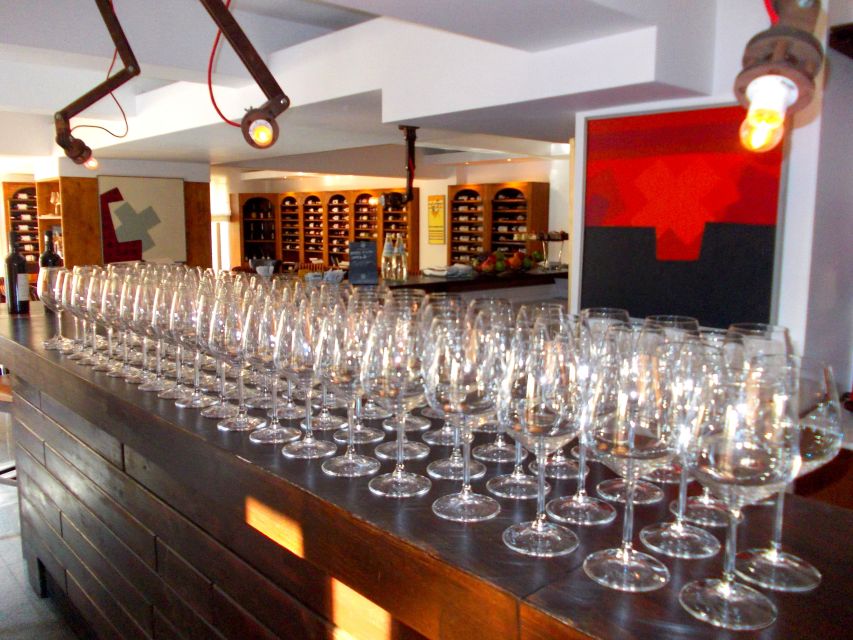
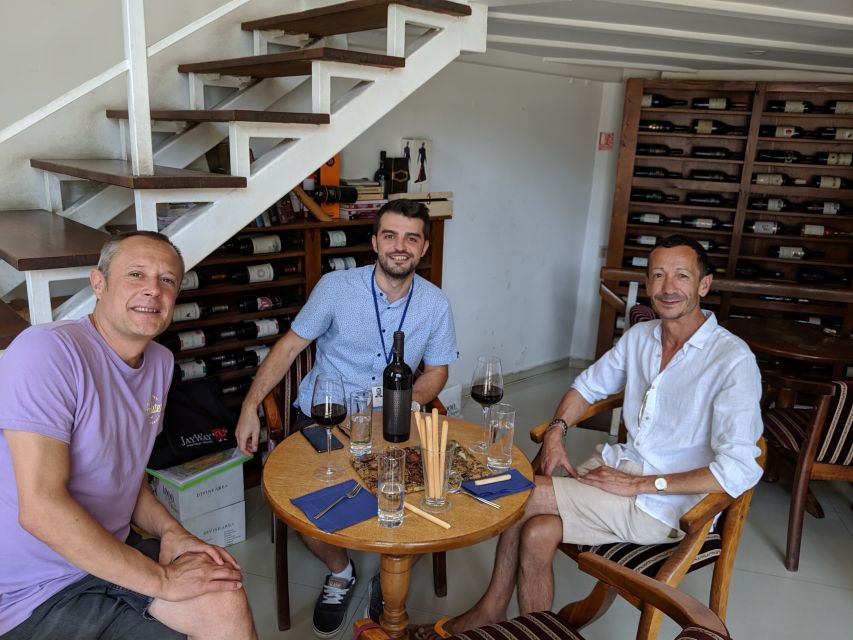
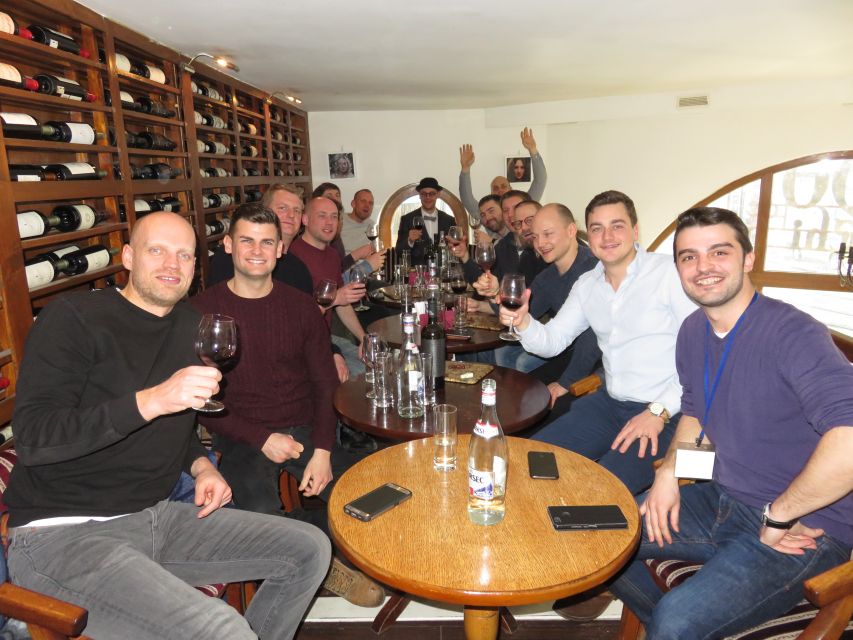
After the museum and craft stop, the tour turns to food and drink at a local wine bar. The tasting lasts about 1.5 hours and includes three glasses of Romanian wine, one glass of water, and a small plate of local cheese and charcuterie.
This is one of the strongest parts of the experience because Romanian wine is still unfamiliar to many visitors. Romania has centuries of wine production and is described as the world’s 12th largest wine producer. Your guide explains the recent revival of the industry, the role of local growing areas, and the idea of terroir, meaning the way soil, climate, and place shape a wine.
The tasting may introduce you to Feteasca Neagra, a local red variety with a name that translates roughly to Black Maiden, along with Negru de Dragasani and Tamaioasa Romaneasca. Dealu Mare is another important reference point. Learning these names gives you something practical to look for later, whether you visit another bar in Bucharest or spot Romanian bottles in a wine shop.
I like the way the wine stop completes the museum visit. At the Village Museum, you see how different regions built their homes. At the bar, you begin to understand how those regions can also produce different agricultural products and wine styles. The food plate is modest, not a meal, so plan to eat separately if you need a full lunch or dinner.
You can also choose to stay longer at the wine bar after the official tasting. Additional food and drinks are not included, so anything beyond the three wines, water, cheese, and charcuterie comes at your own expense. That flexibility is useful if you want to continue the conversation or sample another bottle.
What the private format adds
The private setup is a major part of the value. Your guide picks you up at your accommodation, using a car, van, or taxi, and handles the transport between stops. You do not need to work out a route to the museum, find a taxi after the tasting, or watch a large group move through the park.
The pickup instructions are simple. If your accommodation has a lobby, the guide waits beside the reception desk. If it does not, the guide waits downstairs at the entrance, in front of the building. The tour ends at the Romanian Athenaeum rather than returning you to your accommodation, so tell the guide where you want to go next.
The private format also allows some flexibility. A French-language review praised the guide for communicating clearly at pickup and asking where the group wanted to be dropped off. The advertised guiding languages are English and Romanian, so confirm that arrangement if language is important to you.
The tradeoff is cost. A shared group tour could be cheaper, but this experience includes private transport, museum entrance fees, a licensed guide, and a structured tasting. For two people who value convenience and conversation, the price can make sense. For one person watching every lei, it is a premium way to cover sights that you could partly visit independently.
Timing, comfort, and who should book
The total duration is 4.5 hours, making this a manageable half-day activity. It suits a first or second day in Bucharest because it gives you cultural bearings without taking over your entire schedule.
I would recommend it to:
- Couples who want a private introduction to Romanian traditions
- First-time visitors who prefer a guide to explain regional differences
- Food and wine fans curious about lesser-known Romanian varieties
- Visitors with limited time in Bucharest
- People who enjoy crafts, architecture, and local history more than a standard city bus tour
It may be less suitable if you want a fast-paced list of major city monuments. Much of the experience centers on the village museum, and the craft stop is focused on browsing rather than a workshop. It is also not suitable for children under three or wheelchair users, according to the activity information.
Comfort deserves attention. The museum walk can be exposed to warm weather, and July conditions have already led a guide to adjust the pace. Bring water, use sun protection, and wear shoes you can walk in. The wine bar offers water as part of the tasting, but that should not replace preparing for the outdoor portion.
The experience has received a perfect rating from eight verified bookings, with repeated praise for the guides, the museum, the clear explanations, and the wine tasting. Specific praise for Mihai includes punctual pickup, enthusiasm, and flexibility. One solo participant also had a positive experience despite being the only person on the tour, which suggests the private arrangement can work well even without a larger party.
Is $153 per person good value?
At $153 per person, this is best judged as a private cultural package, not as three cheap admissions stitched together. You receive hotel pickup, private transport, a licensed guide, museum entry, a 1.5-hour guided museum visit, a craft stop, and three wines with water, cheese, and charcuterie.
The value is strongest if you would otherwise pay for separate taxis, arrange museum tickets, and search for a wine bar on your own. The guide’s explanations are central to the experience, especially at the Village Museum, where context changes the visit from an attractive walk into a lesson about regional Romania.
The value is weaker if your main goal is simply to see the museum and drink wine at the lowest possible cost. You are paying for ease, private attention, and the link between the stops. That is worthwhile for many couples and small groups, but it is a personal choice for solo visitors.
Should you book it?
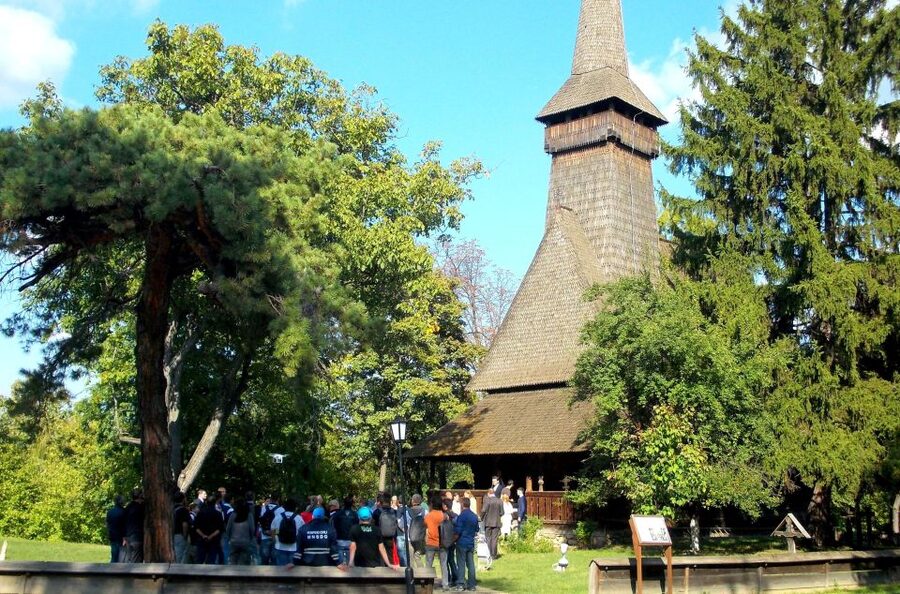
Book this tour if you want Romanian culture explained through buildings, handmade objects, and wine, all in one private half-day. It is particularly useful early in your Bucharest stay, when you want a broader sense of the country before visiting other regions.
Skip it if you prefer independent sightseeing, a full meal instead of a small tasting plate, or a tour focused mainly on central Bucharest landmarks. For everyone else, the combination is thoughtful and well paced: rural architecture first, folk craft next, and Romanian wine to finish.
FAQ
How long does the tour last?
The experience lasts 4.5 hours, including transportation, the Village Museum visit, the craft shop, the wine tasting, and the city-center finish.
Where does pickup take place?
Pickup is included from your accommodation in Bucharest. The guide waits in the hotel lobby beside reception, or downstairs at the entrance if the accommodation has no lobby.
Where does the tour finish?
The tour finishes at the Romanian Athenaeum. From there, you can walk toward Bucharest’s Old Town or ask the guide for directions back to your accommodation.
Is transportation included?
Yes. Private transport is included and may be by car, van, or taxi.
Is the Village Museum entrance included?
Yes. Museum entrance fees are included in the tour price.
How much time do you spend at the Village Museum?
The guided visit and walk at the National Village Museum take about 1.5 hours.
What is included in the wine tasting?
The tasting includes three glasses of Romanian wine, one glass of water, and a local cheese and charcuterie platter.
Are extra drinks and food included?
No. Additional food and drinks beyond the included tasting items are not covered.
Which languages are available?
The live guide is available in English or Romanian.
Can children join the tour?
Children under three years old are not suitable for this activity. The tour is also not suitable for wheelchair users.
More Museum Tours in Bucharest
- Bucharest: Museum of Senses Entry Ticket
★ 4.2 · 364 reviews - Communism in Bucharest – Landmarks, Museum & Communist Appetizers
★ 5.0 · 111 reviews - Bucharest: Entry ticket at the Museum of Communism
★ 4.6 · 57 reviews - Bucharest: Museum of Communism Ticket with Communist Coffee
★ 4.6 · 52 reviews
More Village Museum Tickets
- Palace of the Parliament, Village Museum & Ceaușescu Mansion
★ 4.9 · 31 reviews - Private Bucharest city tour visit the Palace of the Parliament & Village Museum
★ 4.5 · 21 reviews - Village Museum Bucharest Guided Tour
★ 5.0 · 6 reviews - National Village Museum and Salt Mine in a Day Tour
★ 5.0 · 6 reviews
Just added in Bucharest
- Winery touring & private wine tasting – one day private tour★ 5.0 · 3 reviews
- Bucharest: Dealu Mare Winery Private Trip with Wine Tasting★ 4.9 · 6 reviews
- Village Museum Bucharest Guided Tour★ 5.0 · 6 reviews
- Transylvania Tour: Dracula’s Castle, Peles Palace & Brasov★ 5.0 · 19 reviews
- Transfer Airport Otopeni – Bucharest★ 5.0 · 2 reviews
- Private Transfer Bucharest Otopeni Airport (OTP) to/from Brasov★ 5.0 · 2 reviews
- Bucharest Airport Transfer To Constanta Mamaia★ 5.0 · 3 reviews
- Airport Henri Coanda (Otopeni) to Bucharest – Private Transfer – Driver★ 5.0 · 5 reviews
Village Museum Tickets, compared.

Palace of the Parliament, Village Museum & Ceaușescu Mansion
Read our review →
Traditions in Bucharest: Village Museum and Wine Tasting Tour
Read our review →
Private Bucharest city tour visit the Palace of the Parliament & Village Museum
Read our review →
National Village Museum and Salt Mine in a Day Tour
Read our review →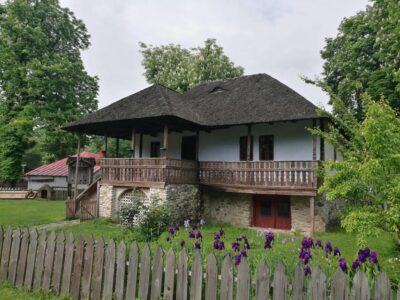
Bucharest one day tour with Parliament Palace and Village Museum
Read our review →
Snagov Monastery, Ceaușescu Mansion, & Village Museum – 6h
Read our review →Browse the lists this tour appears in