
REVIEW · COMMUNISM AND CEAUSESCU TOURS
Snagov Monastery, Ceaușescu Mansion, & Village Museum – 6h
Romania’s past fits into one busy day. This private tour links Snagov Monastery, the island site associated with Dracula’s tomb, to the Ceaușescu family home and Bucharest’s grandest streets. I like the sharp contrast between village traditions and communist privilege, and I like having a private guide and car for a route that would be awkward to arrange alone. The main drawback is pace: six hours covers a lot, so some stops are closer to focused visits than leisurely explorations.
I also like the flexibility. Your guide can adjust the day for your group, and pickup is included in Bucharest. The strongest praise for this experience centers on its cultured, informative guiding, with one guest describing a day full of contrasts, from communist megastructures and old city buildings to the romantic lake setting at Snagov. Still, the $254 per-person price is high unless your group values private transport, personal commentary, and a tightly planned route.
In This Review
- Key points at a glance
- Why this six-hour route works
- Village houses at the Dimitrie Gusti National Village Museum
- The island setting of Snagov Monastery
- Inside the Ceaușescu family’s private residence
- Calea Victoriei and the city’s competing faces
- Revolution Square and the turning point of 1989
- The Athenaeum, CEC Palace, and Parliament
- Guide, transport, and group style
- Who should book this private Bucharest day?
- Should you book it?
- FAQ
- How long does the tour last?
- Where does the tour begin?
- Is this a private tour?
- What languages are available?
- Is Snagov Monastery inside Bucharest?
- What is Snagov Monastery known for on this tour?
- Are entrance fees included?
- Are food and drinks included?
- Can the itinerary be changed?
- What is the cancellation policy?
Key points at a glance
- Snagov Monastery sits on an island about 40 minutes from Bucharest, giving the city tour a sudden change of pace and setting.
- The Ceaușescu Mansion reveals private life behind public dictatorship, including the former home of Nicolae, Elena, and their children.
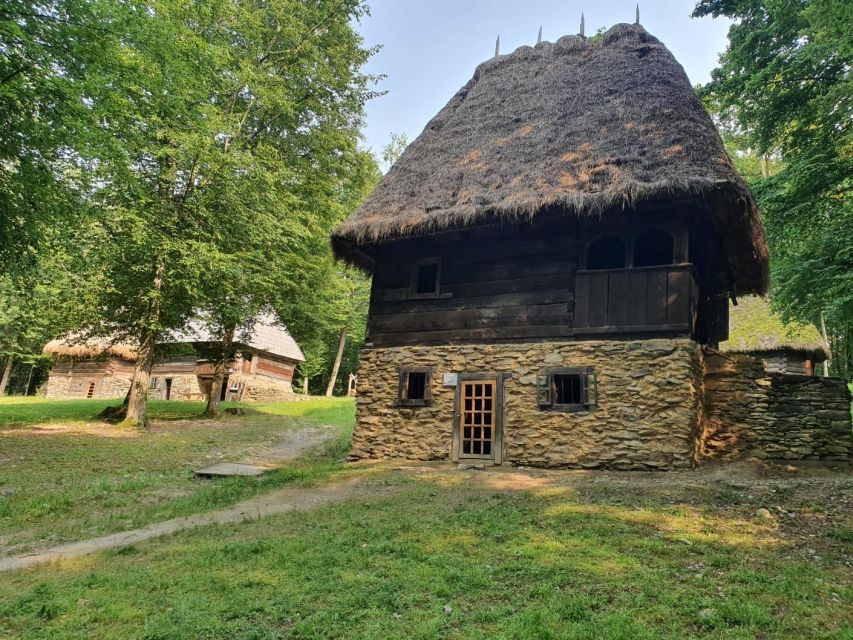
- The Village Museum puts Romanian rural traditions in one open-air setting, with houses made from wood, adobe, stone, and other local materials.
- Calea Victoriei brings together royal, communist, religious, cultural, and commercial Bucharest in one long city-center visit.
- Revolution Square explains the December 1989 uprising, including the former Central Committee building from which Ceaușescu fled by helicopter.
- The private format suits families and friends, especially if you want several historic sights without changing vehicles or following a large group.
Why this six-hour route works
This is not a single-theme tour. It is a compressed portrait of Bucharest and its surroundings, moving from village life to dictatorship, revolution, monarchy, religion, and modern city culture.
That range is the point. The Village Museum shows how ordinary rural communities lived. The Ceaușescu Mansion shows how Romania’s ruling family lived in private. Snagov adds a small dose of mystery and a quieter setting away from the city. The central Bucharest stops then connect those stories to national power and public memory.
You travel in a private car or minibus reserved for your party. That matters here because the route includes an out-of-town stop, several city-center landmarks, and a return to Bucharest. With a guide who stays with you throughout the tour, you can ask questions as the subject changes from architecture to politics to folklore.
The stated price is $254 per person. That is not a budget sightseeing trip. It may make sense for a small group that would otherwise need separate taxis, a rental car, entrance tickets, and a self-guided plan. For one or two people watching expenses, the cost is harder to justify. About €17 per person in entrance fees is extra, and food and drinks are not included.
The schedule is full. The listed stops add up to many short visits, while the full experience is described as six hours. Treat the times as planning guides rather than promises. Traffic, road conditions, museum access, and the amount of time you spend in the center can affect the balance of the day.
More Village Museum tickets:
- Palace of the Parliament, Village Museum & Ceaușescu Mansion
★ 4.9 · 31 reviews - Traditions in Bucharest: Village Museum and Wine Tasting Tour
★ 5.0 · 27 reviews - Private Bucharest city tour visit the Palace of the Parliament & Village Museum
★ 4.5 · 21 reviews
Village houses at the Dimitrie Gusti National Village Museum
The tour begins with the Dimitrie Gusti National Village Museum, an open-air collection that brings rural Romania into Bucharest. In one place, you can see traditional houses from different parts of the country, built with wood, adobe, stone, and other local materials.
This is a useful first stop because it gives you a visual base for understanding Romanian life beyond the capital. You are not just looking at old buildings. You are seeing how homes, work, worship, and local resources fit together.
The museum includes national symbols such as mills and wooden churches. Your guide can explain how these structures relate to village life and how local communities created practical environments around their homes. The supplied visit time is about one hour, enough for a guided introduction and a look at several representative buildings, but not enough for a slow examination of everything.
I like the way this stop broadens the tour. Bucharest can feel dominated by large public buildings and twentieth-century politics. The Village Museum reminds you that Romania is also a country of regional building styles, handmade traditions, and close ties between daily life and the natural world.
The open-air format has one practical catch: your experience depends on the weather. The information provided does not specify indoor alternatives or accessibility details, so ask the operator if those issues matter to you before booking.
The island setting of Snagov Monastery
Snagov Monastery is the surprise stop, about 40 minutes outside Bucharest and reached on an island. That setting gives the day a welcome pause from city streets and makes the monastery feel separate from the capital, even though it is relatively close.
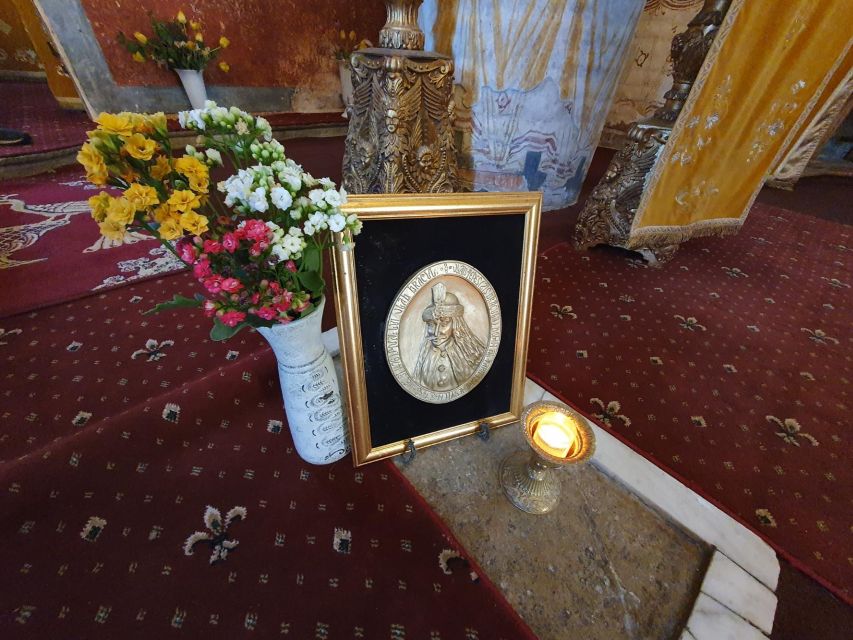
The site is presented as the location of Dracula’s tomb. More precisely, it is tied to the Dracula legend and the burial tradition associated with Vlad the Impaler. Your guide is important here because the appeal comes from both the place and the story surrounding it.
The itinerary allows about an hour for a visit, photographs, and guided sightseeing. You can expect a compact historical stop rather than a full day at the monastery. The island location is the main visual reward, while the tomb tradition supplies the talking point.
I would not book this tour only for a dramatic Dracula attraction. The appeal is more modest and more interesting than that. You get a religious site, a lake setting, a short trip beyond Bucharest, and a story that mixes medieval history with later popular legend.
The road trip also changes the rhythm of the day. After the Village Museum, Snagov gives you time to look out at the scenery on the way and listen to the guide without standing in another urban square. If you prefer a slower monastery visit or want extensive time for photography, the six-hour format may feel restrictive.
Inside the Ceaușescu family’s private residence
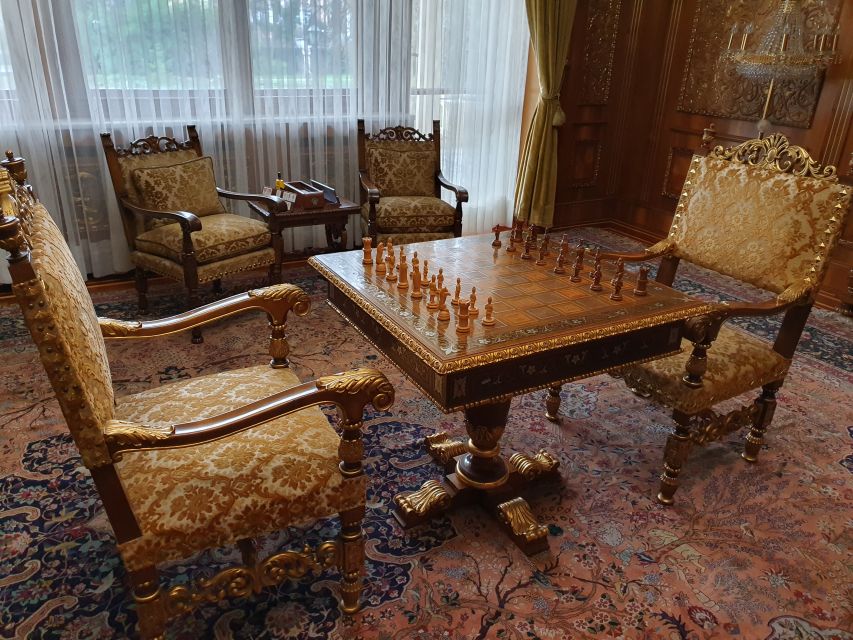
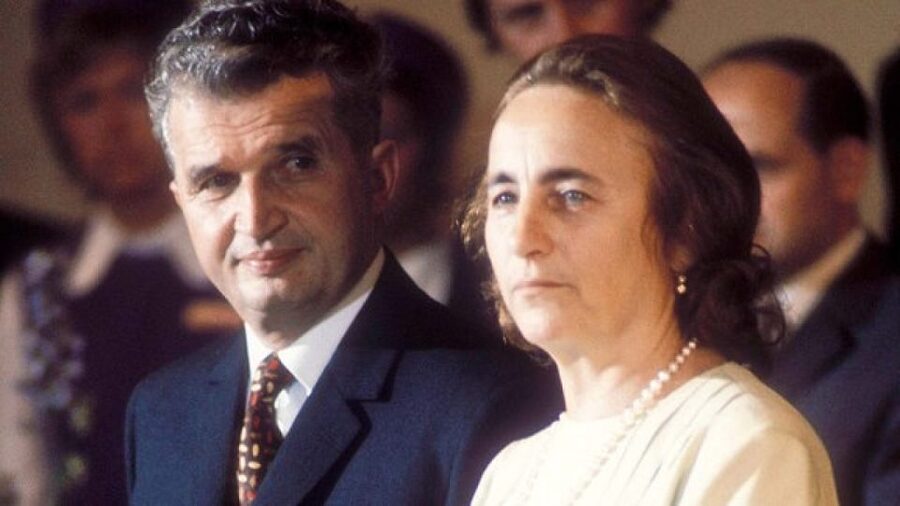
The Ceaușescu Mansion was the private residence of Nicolae and Elena Ceaușescu and their children, Nicu, Zoia, and Valentin, for roughly a quarter of a century, from 1965 to 1989.
The house was built in the mid-1960s and later enlarged between 1970 and 1972. At the time, it was known as the Spring Palace. The design was associated with architect Aron Grimberg-Solari, while architect Robert Woll worked on the landscaping and furniture design. Teodosiu handled the garden planning.
That background helps you read the building as more than a dictator’s address. It was a private world built during a period when ordinary Romanians faced severe limits and shortages. The contrast between public austerity and the family’s protected domestic surroundings is the central reason to visit.
The tour allows about an hour here, including a guided visit and time to walk around the property. The guide’s commentary should help connect the rooms and design choices to the larger political story. Without that context, a mansion can become a series of rooms and furnishings. With it, the house becomes evidence of how power shaped private life.
This stop works especially well for anyone interested in recent European history. It also adds balance to the Village Museum. One shows practical homes shaped by local materials and community life. The other shows a highly protected residence linked to a ruling family.
The subject can be uncomfortable, and the visit is not simply decorative. You are looking at the home of a family that ruled Romania until the 1989 revolution. The value comes from examining that contradiction directly, not from treating the mansion as a glamorous celebrity house.
More communism history tours:
- The Real tour of Communism
★ 5.0 · 666 reviews - Life under Communism
★ 5.0 · 358 reviews - 3-Hour Guided Tour of Communist Bucharest
★ 4.9 · 303 reviews - Bucharest Essential Tour: Old Town, Calea Victoriei & Communism
★ 5.0 · 142 reviews
Calea Victoriei and the city’s competing faces
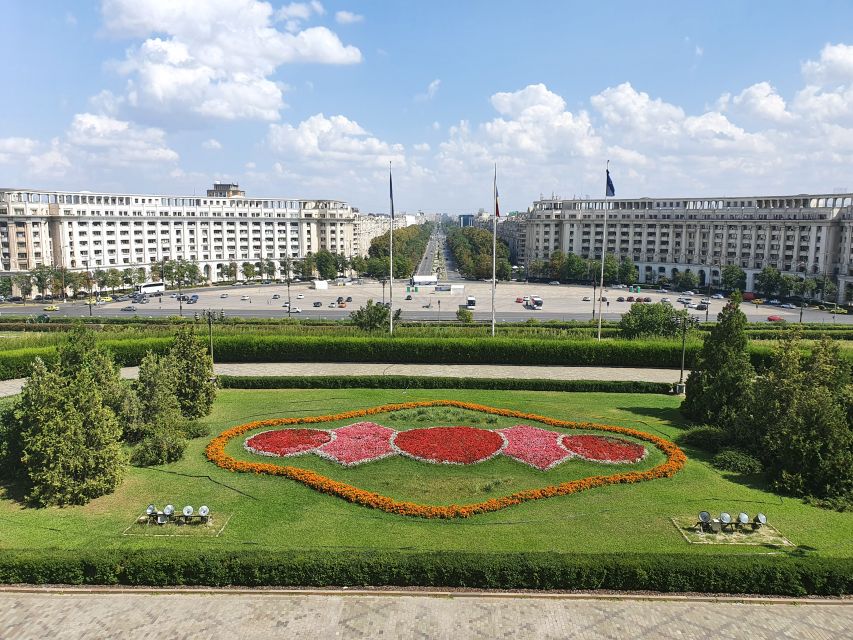
The Calea Victoriei portion lasts about an hour and a half, making it the longest city-center section of the tour. This is where Bucharest’s layers come together most clearly.
Your guide points out the Royal Palace on one side and the former Central Committee of the Romanian Communist Party on the other near Revolution Square. That pairing gives you a simple way to read the city: monarchy, communism, revolution, and modern public life occupying the same central corridor.
Along the avenue, you may see old Orthodox churches, museums, theatres, casinos, restaurants, tea shops, music stores, retail shops, and places to buy souvenirs. The route also includes major landmarks such as the National History Museum, the Romanian Athenaeum, and the CEC Palace.
This is a good stretch for walking and orientation. You can ask your guide how the buildings fit together rather than trying to identify them from a map. You also have some free time for shopping and sightseeing, though the exact amount depends on traffic and how long you spend at earlier stops.
I like this part because it avoids presenting Bucharest as only a communist capital. The city center has older religious buildings, royal architecture, ornate civic institutions, cultural venues, and commercial streets. The contrasts can be abrupt, but that is part of the city’s character.
The limitation is that Calea Victoriei can become a quick parade of façades if you expect long interior visits. The schedule names several landmarks, but the tour does not promise extended entry into each one. Ask your guide which buildings are being entered on your date and which are viewed from outside.
Revolution Square and the turning point of 1989
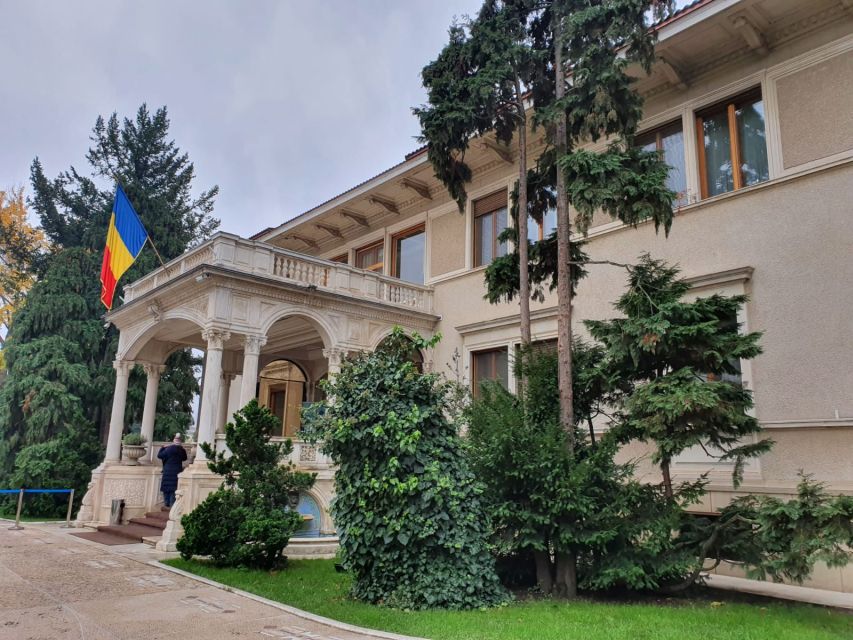
Revolution Square receives about 30 minutes, but its importance is much greater than the time suggests. This is the place to focus on the events that ended Ceaușescu’s rule in December 1989.
You see the building that once housed the Central Committee of the Romanian Communist Party. It was here that the revolution began and where Ceaușescu fled by helicopter after losing power. The square connects the mansion visit to the public collapse of the regime.
The guide’s role matters most at this stop. A short explanation can turn an impressive government building into a place tied to human sacrifice, protest, fear, and sudden political change. The supplied feedback especially praises the guide’s ability to explain these sharp contrasts and the complicated story around Ceaușescu’s wealth and state security service.
You should expect a focused historical explanation and sightseeing rather than a museum-style visit. Thirty minutes is enough to see the main setting and ask questions, but not enough to explore every detail of the 1989 revolution.
The Athenaeum, CEC Palace, and Parliament
The Romanian Athenaeum receives about 30 minutes and adds a cultural note to the political story. You visit with the guide, walk around, and take in the architecture and surrounding views. It is one of Romania’s best-known architectural landmarks and an important counterpoint to the nearby symbols of state power.
The CEC Palace follows with roughly 15 minutes. This is a short stop for photographs, a visit, and free time. Because the time is limited, treat it as a chance to see the exterior and hear its place in Bucharest’s architectural story rather than as a lengthy building tour.
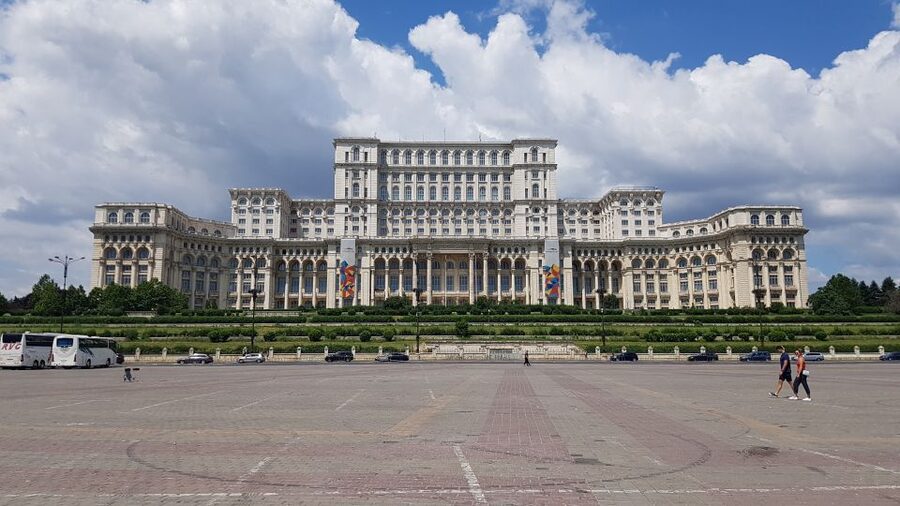
The Palace of the Parliament receives about 30 minutes, again with a photo stop, walking, and guided sightseeing. Its scale is central to understanding Ceaușescu’s urban vision. The building represents the public face of a regime that also produced the private world seen at the mansion.
The provided information does not promise a full interior tour of the Palace of the Parliament. That distinction matters. If entering the building is a priority, confirm what is included before you reserve, since entrance fees are separate and the listed schedule is short.
After these landmarks, the final Bucharest segment allows about 45 minutes for sightseeing, free time, shopping, and photographs before returning to your pickup area. It gives the day a little breathing room, though the packed route means you should not expect an unstructured afternoon.
Guide, transport, and group style

This is a private group experience, not a shared coach trip. The car or minibus is for you and your friends or family, and the driver-guide stays available throughout the day.
Pickup is included in Bucharest. The driver holds a sign with your last name, which makes the start straightforward. Fuel, parking, and road tolls are included, so you do not need to manage those costs during the route.
Guiding is offered in Romanian, English, Italian, French, Spanish, and German. The strongest praise attached to the experience is for the guide’s cultured, informative approach. One guest described the day as a series of contrasts, from huge communist buildings and art deco or baroque city architecture to the romantic lake setting and Dracula tradition at Snagov.
That is the right way to think about the tour’s value. You are paying for transport, but also for interpretation. A private guide can shift the emphasis toward architecture, communist history, religious sites, or local traditions depending on your interests.
The flexibility is another advantage. Changes to the daily route are allowed even after the tour begins. Still, flexibility cannot create extra hours. If you add time at Snagov or the mansion, you may have less time for shopping or central Bucharest.
Who should book this private Bucharest day?
I would recommend this tour to you if you want a broad first look at Bucharest and do not want to organize several separate trips. It suits couples, families, and friends who value privacy and want to combine the city with one nearby excursion.
It is particularly useful for:
- First-time visitors with only one day for major sights
- People interested in Ceaușescu and the 1989 revolution
- Anyone curious about Romanian rural traditions
- Small groups that prefer a private car to public transport
- Visitors who appreciate historical explanation at each stop
- Guests who want guide service in one of six listed languages
I would hesitate if you prefer slow museum visits, long meals, or independent wandering. The route is ambitious, and several stops receive only 15 to 30 minutes. You should also compare the $254 per-person cost with the price of arranging transport and guides separately.
Should you book it?
Book this tour if you want Romania’s major contrasts in one carefully connected day: village houses, an island monastery, a dictator’s mansion, revolutionary sites, royal and cultural buildings, and the enormous Parliament complex.
Skip it if your priority is spending several hours at one museum or taking a relaxed excursion with no fixed rhythm. The best reason to choose this experience is not any single sight. It is the way a private guide connects ordinary village life, political power, public revolt, and Bucharest’s mixed architecture.
The tour has a five-star rating from three verified bookings, with especially warm praise for the guide’s ability to explain a complicated past. That small number of ratings is not enough to prove everything, but the comments point to the experience’s main strength: a well-informed guide can make this fast-moving day feel coherent rather than scattered.
Free cancellation is available up to 24 hours before departure, and you can reserve without paying immediately. Entrance fees, estimated at about €17 per person, plus food and drinks, remain extra.
FAQ
How long does the tour last?
The stated duration is six hours.
Where does the tour begin?
Pickup is included in Bucharest, and the driver holds a sign with your last name.
Is this a private tour?
Yes. The car or minibus is reserved for you and your friends or family.
What languages are available?
The private guide and driver may speak Romanian, English, Italian, French, Spanish, or German.
Is Snagov Monastery inside Bucharest?
No. It is about 40 minutes outside Bucharest and is located on an island.
What is Snagov Monastery known for on this tour?
It is presented as the place associated with Dracula’s tomb.
Are entrance fees included?
No. Entrance fees are extra and are estimated at about €17 per person.
Are food and drinks included?
No. Food and drinks are not included.
Can the itinerary be changed?
The tour allows considerable flexibility, including changes after the tour has started.
What is the cancellation policy?
You can cancel up to 24 hours in advance for a full refund.
More Museum Tours in Bucharest
- Bucharest: Museum of Senses Entry Ticket
★ 4.2 · 364 reviews - Communism in Bucharest – Landmarks, Museum & Communist Appetizers
★ 5.0 · 111 reviews - Bucharest: Entry ticket at the Museum of Communism
★ 4.6 · 57 reviews - Bucharest: Museum of Communism Ticket with Communist Coffee
★ 4.6 · 52 reviews
Just added in Bucharest
- Bucharest: Dealu Mare Winery Private Trip with Wine Tasting★ 4.9 · 6 reviews
- Winery touring & private wine tasting – one day private tour★ 5.0 · 3 reviews
- Village Museum Bucharest Guided Tour★ 5.0 · 6 reviews
- Transylvania Tour: Dracula’s Castle, Peles Palace & Brasov★ 5.0 · 19 reviews
- Transfer Airport Otopeni – Bucharest★ 5.0 · 2 reviews
- Private Transfer Bucharest Otopeni Airport (OTP) to/from Brasov★ 5.0 · 2 reviews
- Private Bucharest Otopeni Airport (OTP) Transfer★ 5.0 · 2 reviews
- Bucharest Airport Transfer To Constanta Mamaia★ 5.0 · 3 reviews
Communism and Ceausescu Tours, compared.
Bucharest Essential Tour: Old Town, Calea Victoriei & Communism
Read our review →
Communism in Bucharest – Landmarks, Museum & Communist Appetizers
Read our review →
Browse the lists this tour appears in