
REVIEW · BRAN CASTLE AND DRACULA TOURS
From Dracula to Ceaușescu-Romanian Terror Stories Tour with Dacia
Romania’s dark past rides in a Dacia. This six-hour private tour covers roughly 110 kilometers in a restored 1980s Romanian car, linking Vlad the Impaler, Communist-era crimes, Bucharest’s old streets, and the Comana area. The stories are grim, sometimes shocking, and aimed at people who prefer their history with a sharp edge.
I like the old Dacia itself, since it turns the journey into part of the experience rather than simple transportation. I also like the way the route connects several periods, from medieval executions to the Ceaușescu years, instead of treating Dracula as a stand-alone legend. The main consideration is the subject matter: stories of murder, cannibalism, organ trafficking, mass death, and political terror will not suit everyone.
You meet at Revolution Square at 9:00 a.m., though hotel pickup and drop-off from a Bucharest address are included. The tour is private, so you get the guide and car to yourselves, but the small vehicle and moderate physical requirements may matter if you prefer a spacious ride or a gentle sightseeing day.
In This Review
- The essential details at a glance
- Why the Dacia makes this more than a history tour
- Piața Constituției and Ceaușescu’s brutal building project
- Revolution Square, where modern Romanian history turns bloody
- Old Town and the city’s ugliest stories
- Comana Monastery and the Dracula finale
- Comana’s natural reservation and the battlefield stories
- What the six-hour schedule feels like
- What is included for the price
- The guides and the human side of the day
- Who should book this experience
- Should you book the Dracula to Ceaușescu tour?
- FAQ
- Where does the tour start?
- What time does the tour begin?
- Does the tour provide hotel pickup?
- How long does the experience last?
- Is this a private tour?
- Is lunch included?
- Is admission to Comana Monastery included?
- Is Parliament admission included?
- Can I cancel for a full refund?
The essential details at a glance
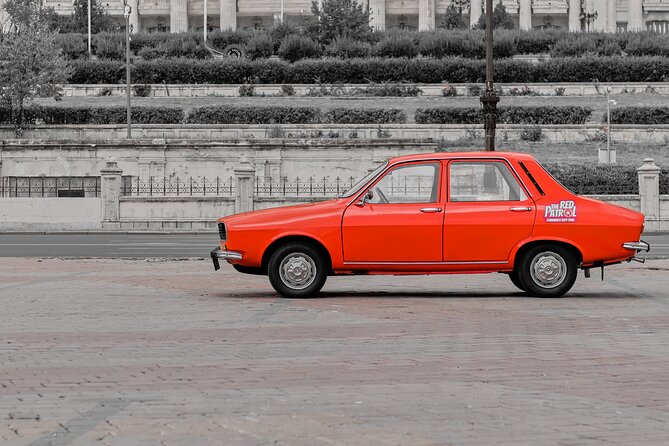
- A restored Dacia 1300 from the 1980s: The car is not just a ride. It gives the tour a strong Romanian Communist-era feel and adds an unusual touch of local character.
- Five centuries of violent history: The route moves from Vlad the Impaler and medieval warfare to 1970s crimes, Socialist-era bank robberies, and Ceaușescu’s building projects.
- About 110 kilometers in six hours: You cover central Bucharest and the Comana area, with driving time connecting the main stops.
- A private experience: Only your group participates, with hotel pickup and return included.
- Comana Monastery and its ossuary: The final rural stop links the Dracula story to a monastery, a burial site, and the remains of World War I victims.
- Strong guide-led experience: Guide Crinu is specifically praised for his friendly and capable approach, while Costin Nenciu Catalin is singled out for making one tour especially memorable.
Why the Dacia makes this more than a history tour
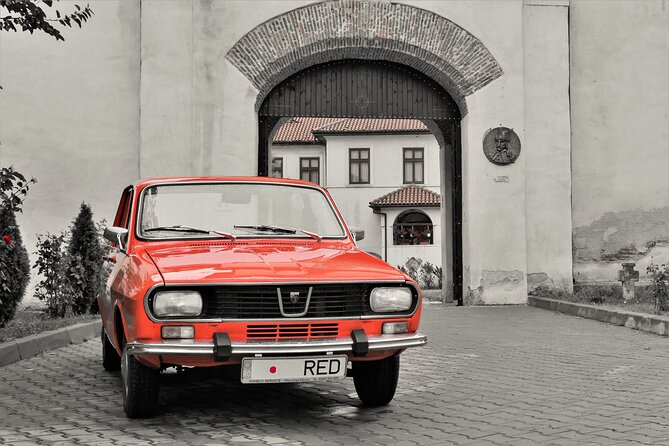
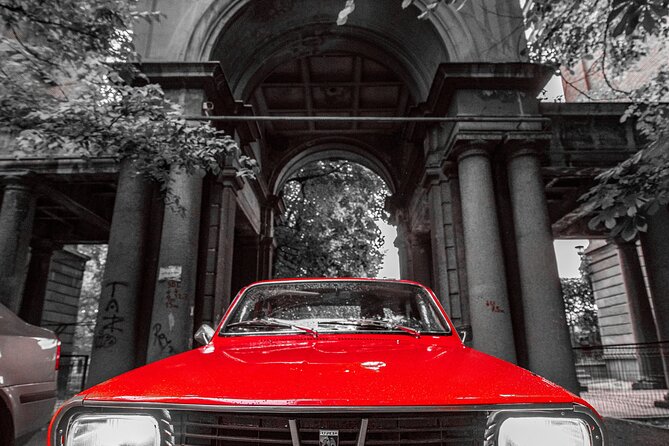
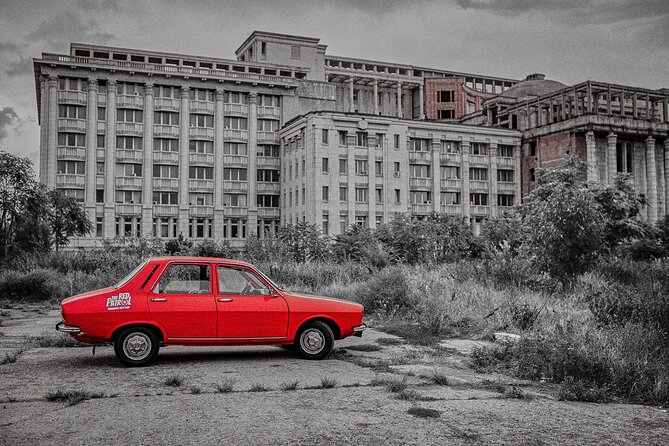
A standard car would get you from one sight to another. The restored Dacia changes the mood. This boxy Romanian car from the 1980s recalls the years when Dacia was part of everyday life under Communist rule.
The tour provider calls it a Dacia 1300, and one particularly enthusiastic guest praised the car as the best in the world. That is playful rather than an objective claim, but it tells you what makes the vehicle appealing. You are not simply sitting in a modern taxi with air-conditioning and tinted glass. The car is part of the story.
That novelty also comes with a practical trade-off. The experience is built around an older vehicle, so you should choose it for atmosphere rather than for the quietest or roomiest ride. The supplied information does not give exact seating or comfort details, so anyone with mobility concerns should ask before booking.
The private format helps. Your group can focus on the guide’s stories without sharing the car with strangers. One guest returned for a third tour with the same company and praised guide Crinu as friendly and capable. Another singled out Costin Nenciu Catalin, whose personal approach made the day especially memorable. Guide quality matters on a story-heavy outing, and these names are useful to know when arranging your booking.
More Bran Castle and Dracula trips:
- Bucharest: Dracula’s Castle, Peles Castle, & Brasov Old Town
★ 4.5 · 17,858 reviews - Bucharest: Dracula Castle, Peles Castle & Brasov Old Town
★ 4.6 · 10,891 reviews - Bucharest: Dracula’s Castle, Peleș Castle & Brașov Day Trip
★ 4.5 · 5,919 reviews
Piața Constituției and Ceaușescu’s brutal building project
The first major stop is Piața Constituției, the broad square in front of the House of Parliament. You spend about 30 minutes here, with no admission charge listed.
The building began under Nicolae Ceaușescu in 1983. The tour focuses not on architectural admiration but on the human cost behind the project. The presentation includes the claim that 30,000 Romanians worked in three shifts over four years, along with stories of about 3,000 victims on the construction site.
This is a useful opening because it places Ceaușescu’s dictatorship in physical form. The House of Parliament is enormous, but the tour asks you to think about the labor, fear, and loss tied to its construction. You will hear stories from the 1980s before moving toward earlier and more sensational episodes.
The stop is outdoors and relatively short. It is less about entering the building than about understanding its role in Romania’s recent past. Admission to the Parliament is not included as part of this experience, so do not expect an interior visit during this tour.
Revolution Square, where modern Romanian history turns bloody
At the Revolution Square Fountain, you spend about 45 minutes. This is presented as a central point for Romania’s history over the past century, while also serving as a place to connect Bucharest’s modern era with stories from the time of Vlad the Impaler.
The guide covers the 1989 Revolution period and the violence connected with the fall of Communism. The tour also moves into the tale of a 1970s Bucharest serial killer described as a vampire, along with crimes from the years before World War I.
That combination can feel abrupt, but it reflects the tour’s method. You are not following one dynasty or one war. You are moving through a selection of Romanian stories that involve power, fear, murder, and public memory.
The fountain itself is not listed with an admission fee. Plan to listen while standing or walking around the square, since the tour information does not promise a formal indoor presentation. If you want a calm introduction to Bucharest, this may feel intense. If you enjoy political history with a macabre angle, it gives the city a more unsettling face.
Old Town and the city’s ugliest stories
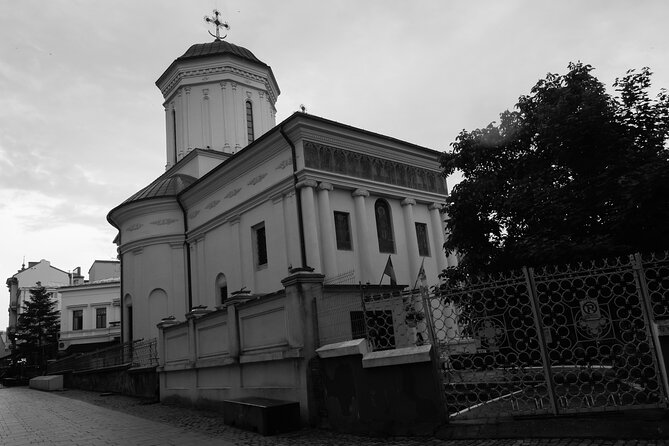
The Old Town stop lasts about 45 minutes and takes the tour into Bucharest’s most famous central district. You will hear stories tied to restaurants that allegedly served human meat pies in the 1970s, an organ-trafficking network linked to a 1970s orphanage center, and the largest bank robbery of Romania’s Socialist period.
These are the sort of stories that can dominate a conversation, but the value here is not simply shock. The Old Town has long been associated with commerce, food, nightlife, and crowded streets. The tour uses that familiar setting to show a less comfortable side of urban life.
Some subjects are disturbing enough that you may want to treat them as reported historical stories rather than repeat every detail as proven fact. The supplied information does not provide dates, names, court records, or sources for each account. A good question for the guide is which stories are documented, which are local lore, and which have changed through retelling.
There is no admission charge listed for this stop. Since you are already in central Bucharest, the walk and storytelling may be more important than any single landmark. I like that the tour does not limit Romanian darkness to Dracula. The Old Town section shows how modern crimes and Socialist-era scandals also shape the city’s memory.
More communism history tours:
- The Real tour of Communism
★ 5.0 · 666 reviews - Life under Communism
★ 5.0 · 358 reviews - 3-Hour Guided Tour of Communist Bucharest
★ 4.9 · 303 reviews - Bucharest Essential Tour: Old Town, Calea Victoriei & Communism
★ 5.0 · 142 reviews
Comana Monastery and the Dracula finale
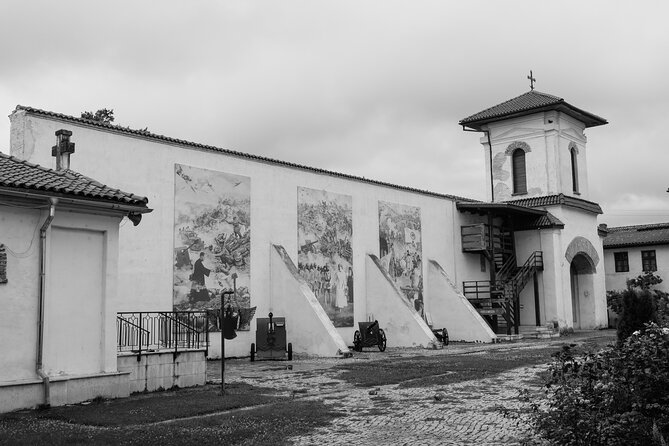
The most distinctive stop comes at Comana Monastery, around 45 minutes outside the central city route. Admission is included, along with access to the monastery, the ossuary, and the nearby natural reservation.
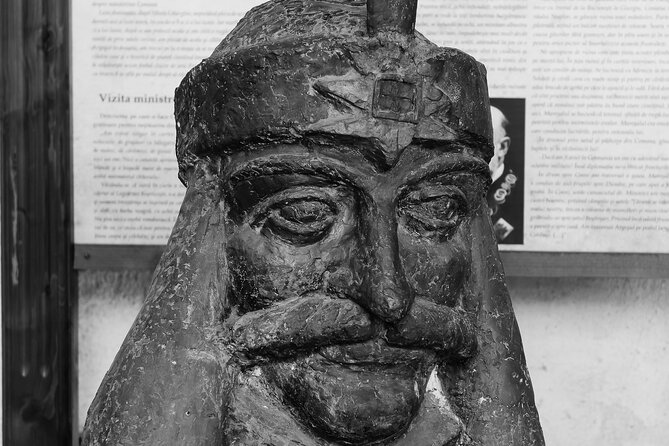
Here the tour presents the site as the place of Vlad Dracula’s assassination and burial. Vlad the Impaler, also called Vlad Dracul in the tour material, is linked with Bucharest’s foundation and with stories of beheadings, arson, impalement, and poisoning.
You should approach the Dracula material with two ideas in mind. First, the stop is atmospheric because it moves beyond the city and into a religious setting associated with his death and burial. Second, the tour is designed as a horror-history experience, so the storytelling may emphasize its most violent details.
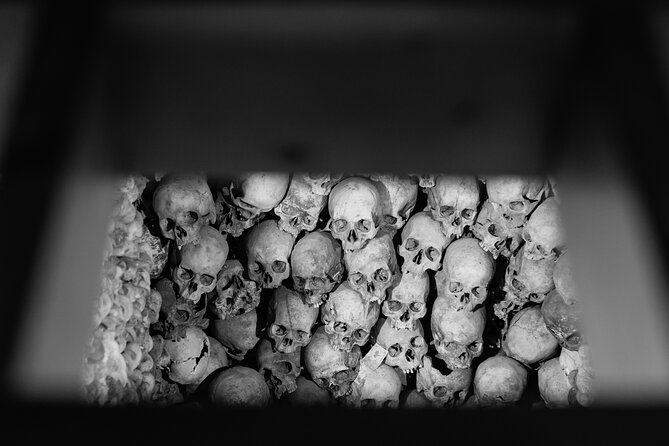
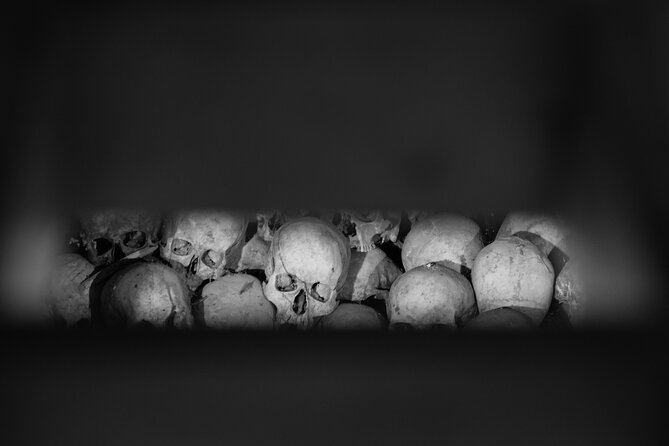
The monastery also contains an ossuary for victims of World War I. That gives the stop a second layer. It is not only a Dracula destination. It is also a place connected with ordinary people who died in a later conflict, and the ossuary shifts the focus from legend to mass human loss.
Access to the monastery and ossuary is included in the tour price. You should expect some walking and standing, which fits the stated moderate fitness requirement. The exact walking distance is not provided, so ask if anyone in your group has difficulty with uneven ground or stairs.
Comana’s natural reservation and the battlefield stories
After the monastery, you spend about 20 minutes in Comana and hear about the natural reservation in the surrounding area. The presentation connects the area with battles and murders dating back to the fifteenth century.
This short stop gives the tour a needed change of pace. After several hours of palace-scale dictatorship, public violence, and gruesome crimes, the rural setting offers room to consider why this location mattered strategically. It also links the physical setting to Vlad’s era instead of ending at the monastery door.
Do not expect a full nature excursion. Twenty minutes is enough for an introduction, not a long walk or wildlife outing. The tour includes access to the reservation, but the description does not promise a special activity within it.
What the six-hour schedule feels like
The listed stops add up to about three hours and five minutes. The remaining time is used for driving between Bucharest and Comana, hotel pickup and return, and transitions between locations.
That pacing is sensible for a route covering about 110 kilometers. You get several story-rich stops without turning the day into a rushed checklist. Still, the six-hour estimate is approximate, so traffic or longer discussions could affect the return time.
The starting point is Revolution Square at 9:00 a.m., and the activity ends back at the meeting point. Hotel pickup and drop-off from a Bucharest address are included, which makes the morning easier, especially if you are staying away from the central square.
Bring water, although bottled water is supplied. Lunch is not included, and no meal stop is promised. Eat before departure or ask the provider how the schedule handles food, since the day includes a long drive and several stops.
What is included for the price
The listed cost is $185.22 per person. That is a substantial price for a six-hour outing, but it covers more than a basic city walk.
Your package includes:
- Hotel pickup and drop-off from a Bucharest address
- Private transportation in the restored 1980s Dacia
- A tour newspaper
- A personalized tour gift
- Bottled water
- Entry to Comana Monastery
- Entry to the ossuary
- Access to the natural reservation
The price makes the most sense for a private group that values a themed vehicle, a custom route, and a guide-led experience. If you are comparing it with a low-cost walking tour, it will look expensive. If you are splitting the cost among several people and want transport beyond Bucharest, the value improves.
Group discounts are available, though the exact discount is not stated. Ask for the current group rate before paying. Lunch is extra, and Parliament admission is not included, so budget separately if you want to add either.
The guides and the human side of the day
A tour built around gruesome stories can become silly if the guide treats every tale as a punchline. The strongest comments about this experience focus on the people leading it, especially Crinu and Costin Nenciu Catalin.
Crinu is praised for being friendly and competent, while Costin is credited with making the day fun and educational. One particularly unusual outing even included driving international visitors to a local Romanian wedding, an unexpected personal touch that shows how flexible the private format can be.
That does not guarantee that every departure will feel identical. Your guide will shape the balance between documented history, local tales, and theatrical horror. If you want a serious historical discussion, say so at the start. If you enjoy a more dramatic presentation, the tour’s theme gives the guide plenty to work with.
The tour newspaper and personalized gift are modest extras, but they fit the experience. They give you something tangible beyond photographs and a collection of grim stories.
Who should book this experience
I would choose this tour if you have already seen Bucharest’s main sights and want a different angle on the city. It also suits you if old cars, Communist history, Vlad the Impaler, and crime stories all sound more appealing than a standard palace or museum route.
History fans should find plenty to discuss, particularly in the contrast between medieval violence and twentieth-century state terror. The Dacia makes the Communist-era sections feel more connected to daily Romanian life, while Comana adds a rural and religious setting.
This is less suitable for young children or anyone who dislikes graphic subjects. The tour includes references to beheadings, impalement, arson, poisoning, serial murder, cannibalism, organ trafficking, and mass death. Even adults who like history should know the tone before booking.
You also need moderate physical fitness. The supplied information does not describe every walking surface or the vehicle’s accessibility, so contact Red Patrol in advance if you need specific mobility arrangements.
Should you book the Dracula to Ceaușescu tour?
Book it if you want a private, unusual day that treats Bucharest as a city of political trauma, crime, legend, and memory. The restored Dacia, hotel transport, named guides, and included Comana access make the experience more distinctive than a standard sightseeing drive.
Skip it if you want a relaxed city tour, a clear academic history lesson, or a meal included in the price. The stories are deliberately dark, and the cost is easiest to justify when you care about the theme and can share the private experience with your own group.
Free cancellation is available until 24 hours before the 9:00 a.m. start time. Within 24 hours, refunds are not provided and changes are not accepted.
FAQ
Where does the tour start?
The stated meeting point is Revolution Square, Piața Revoluției, in Bucharest.
What time does the tour begin?
The tour starts at 9:00 a.m.
Does the tour provide hotel pickup?
Yes. Hotel pickup and drop-off from a Bucharest address are included, although the listed meeting point is Revolution Square.
How long does the experience last?
The tour lasts approximately six hours.
Is this a private tour?
Yes. Only your group participates in the activity.
Is lunch included?
No. Lunch is not included in the tour price.
Is admission to Comana Monastery included?
Yes. Access to Comana Monastery, the ossuary, and the natural reservation is included.
Is Parliament admission included?
No admission ticket is listed for the House of Parliament stop. The tour focuses on stories about the building and the Ceaușescu period.
Can I cancel for a full refund?
Yes, if you cancel at least 24 hours before the experience begins. Cancellations made less than 24 hours before the start time are not refunded.
Just added in Bucharest
- Bucharest: Dealu Mare Winery Private Trip with Wine Tasting★ 4.9 · 6 reviews
- Winery touring & private wine tasting – one day private tour★ 5.0 · 3 reviews
- Village Museum Bucharest Guided Tour★ 5.0 · 6 reviews
- Transylvania Tour: Dracula’s Castle, Peles Palace & Brasov★ 5.0 · 19 reviews
- Transfer Airport Otopeni – Bucharest★ 5.0 · 2 reviews
- Private Transfer Bucharest Otopeni Airport (OTP) to/from Brasov★ 5.0 · 2 reviews
- Airport Henri Coanda (Otopeni) to Bucharest – Private Transfer – Driver★ 5.0 · 5 reviews
- Private Bucharest Otopeni Airport (OTP) Transfer★ 5.0 · 2 reviews
Bran Castle and Dracula Tours, compared.
Dracula’s Castle, Peles Castle, & Brasov Old Town
Read our review →
Dracula Castle, Peles Castle & Brasov Old Town
Read our review →
Dracula’s Castle, Peleș Castle & Brașov Day Trip
Read our review →Day Trip to Dracula Castle, Peles Castle & Brașov
Read our review →
Bucharest to Dracula Castle, Peles Castle and Brasov Guided Tour
Read our review →
Dracula’s Castle, Peles Castle and Brasov Day Trip from Bucharest
Read our review →
Transylvania and Dracula Castle Full Day Tour from Bucharest
Read our review →
Browse the lists this tour appears in