
REVIEW · DAY TRIPS IN CLUJ NAPOCA
Saxon Heritage in Transylvania: Day Trip from Cluj-Napoca
Sibiu rewards the long ride south. This full-day trip links Sibiu’s medieval squares with a fortified church, Saxon village life, painted glass icons, and a taste of țuică, Romania’s traditional schnapps. I especially like the cultural focus and the chance to see both a major city and smaller communities in one outing. The main drawback is simple: long distances mean a busy day, with roughly 11 to 12 hours from pickup to return.
The tour costs $129.86 per person and includes hotel pickup, return transport in a private vehicle, a driver-guide, admission fees, and alcoholic beverages. I see good value here if you want context as well as sightseeing, though food is not included and the day may feel rushed for anyone who prefers slow visits.
In This Review
- Key points to know before booking
- Why Saxon Transylvania is worth a full day
- Four hours among Sibiu’s squares and walls
- Cristian’s fortified church and village traditions
- Sibiel, Fântânele, and the taste of țuică
- The Zosim Oancea Museum of Icons on Glass
- Transport, timing, and the real cost of the day
- Who will enjoy this Saxon heritage trip most
- Should you book Saxon Heritage in Transylvania?
- FAQ
- Where does the Saxon Heritage in Transylvania tour start?
- How long does the day trip last?
- What places does the tour visit?
- Is admission included?
- Is transportation included?
- Is food included?
- Is the tour offered in English?
- How many people can join the tour?
- Can children join the excursion?
- Can I cancel for a full refund?
Key points to know before booking
- Sibiu receives the biggest share of the day: You get about four hours for the old city, churches, squares, walls, and Council Tower.
- The Saxon story continues outside the city: Cristian, Sibiel, and Fântânele show village traditions and local life beyond the polished center of Sibiu.
- Țuică is part of the visit: A locally made schnapps tasting is included, along with the chance to ask about Romanian customs.
- The Council Tower adds a useful viewpoint: Climbing it gives you an overview of Sibiu’s old town and helps you understand the city’s layout.
- Guide quality matters: George and Andrei received especially warm praise, but the operator may sometimes use an external guide depending on availability.
- This is a small-to-large group format: The maximum is 40 people, so ask about the expected group size if personal attention matters to you.
Why Saxon Transylvania is worth a full day
The word Saxon can be misleading if you picture modern Germany. The Transylvanian Saxons were German-speaking settlers brought to the region during the medieval period. Over time, they shaped towns, villages, churches, crafts, farming customs, and local government.
That story is easier to understand when you move from Sibiu’s grand squares into the surrounding villages. In the city, you see the public face of Saxon influence: defensive walls, churches, orderly squares, and civic buildings. In Cristian, Sibiel, and Fântânele, you get a look at customs and daily life tied to smaller communities.
I like this structure because it gives you a useful progression. You first learn how the Saxons built and organized urban life, then you see how their traditions were carried into the countryside. The trip is not only a collection of pretty stops. It gives you a reason to connect them.
The trade-off is travel time. Cluj-Napoca and Sibiu are not next-door cities, and the villages add more road miles. You should choose this outing because you want a broad regional view, not because you want to spend every hour on foot in one place.
More Day Trips in Cluj Napoca
- Curly Tour – Day trip from Cluj 🙂
★ 5.0 · 330 reviews - From Cluj: Turda Salt Mine, Gorge, and Remetea Full-Day Trip
★ 5.0 · 84 reviews - Day Trip To Turda Salt Mine, Rimetea Village & Coltesti Fortress
★ 5.0 · 25 reviews
Four hours among Sibiu’s squares and walls
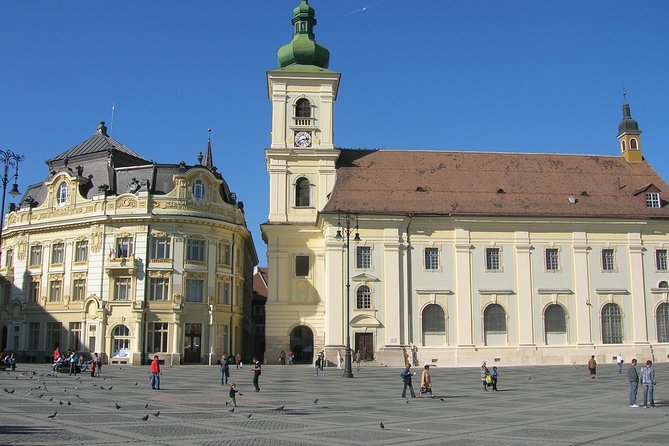
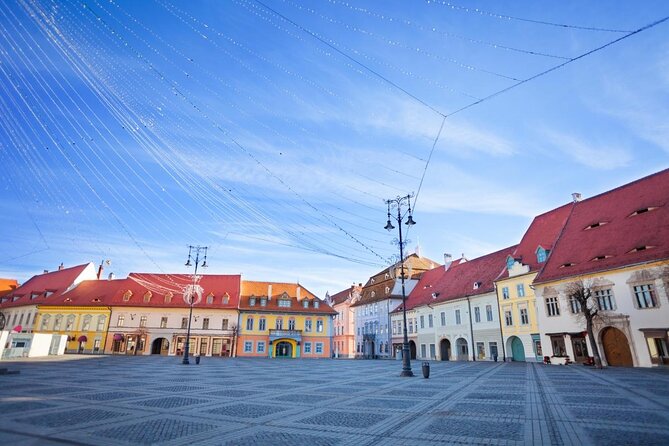
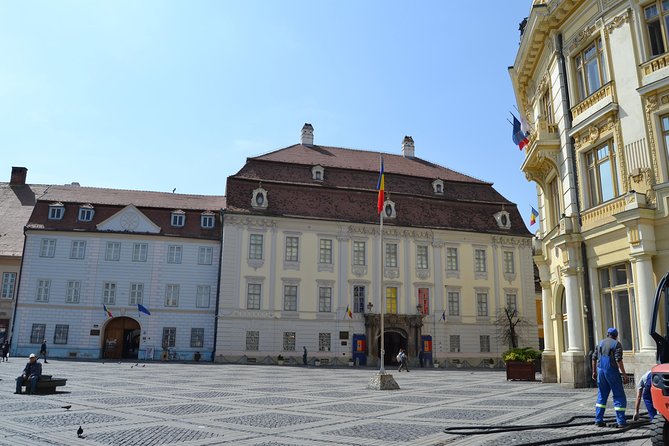
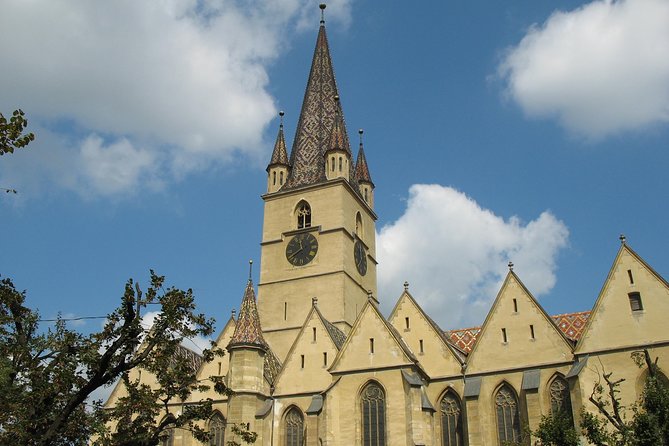
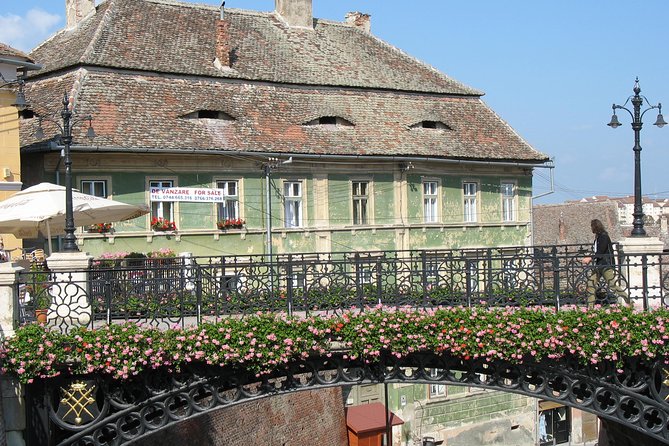
Sibiu is the centerpiece. The visit begins around Big Square, or Piata Mare, the broad historic center that gives the city much of its medieval character. From there, the route takes in the city walls and three main squares, creating a compact introduction to the old town.
The squares are useful for more than photographs. Their different sizes and layouts show how the city developed as a trading and administrative center. Your guide can connect the buildings and fortifications to the Saxon presence in Transylvania, which adds meaning to what might otherwise feel like a simple walking tour.
Two important churches are included. The supplied details do not name them, so you should ask your guide for their names and for the specific features to watch for. Church visits can be especially valuable here because religious buildings help explain the region’s cultural and religious diversity.
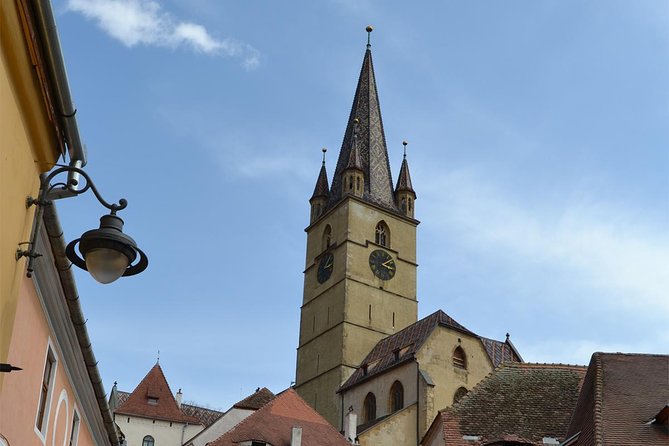
The Council Tower is another strong part of the stop. You climb to the top for a view over the old city. This is one of those short additions that improves the rest of your visit: after seeing Sibiu from above, the walls, squares, and streets make more sense below.
The four-hour allocation is generous compared with a quick photo stop, but it still has limits. You will have time to see the main sights, yet this is not a full museum day or an unhurried architectural study. Keep your attention on the old center rather than trying to cover every side street.
The city also received the title European Capital of Culture, a useful reminder that Sibiu is more than a stopover on the way to somewhere else. It has enough historic material to support a full visit, but this tour gives you a focused first look before turning to the countryside.
Cristian’s fortified church and village traditions
After Sibiu, the visit to Cristian shifts the tone. The fortified church is not presented as a quick exterior photo stop. You spend about 45 minutes learning about local Saxon traditions and the way of life in the village.
Fortified churches are an important part of Transylvania’s identity. Here, the church also had a defensive role, reflecting a period when communities needed protection as well as a place of worship. The setting helps show how religion, safety, and village organization were connected.
Cristian is described as feeling close to the 19th century. That does not mean every detail is frozen in time, but the village offers a quieter counterpoint to Sibiu’s formal squares. If you enjoy seeing how historic customs fit into a real community, this stop may be more revealing than another grand urban building.
The 45-minute visit is short. You should expect an introduction rather than an exhaustive examination of the church, its collections, or village architecture. The guide’s explanation will make a major difference here. George was praised for giving a very good tour, while Andrei was praised for patience, humor, and detailed explanations. Guide assignment is not guaranteed, but those names are worth noting when you book or confirm the outing.
Sibiel, Fântânele, and the taste of țuică
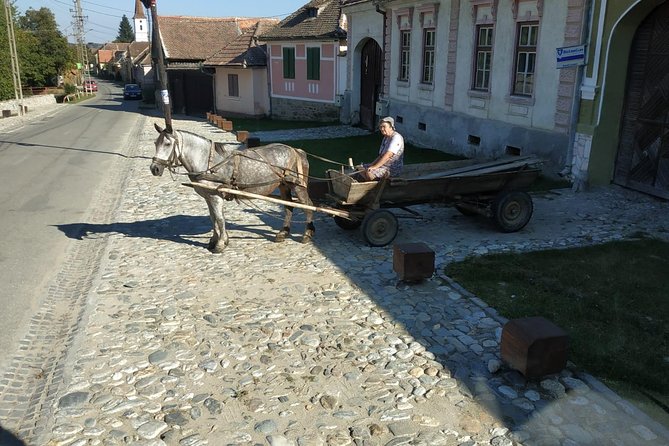
The afternoon excursion reaches Sibiel and Fântânele, two villages described as places where local production still plays a large role in daily life. Horse-drawn carriages are part of the scene, and the visit offers a different sense of Transylvania from the one found in Sibiu’s restored center.
You should not expect a staged rural theme park. The appeal is the ordinary quality of the setting: local work, village roads, and traditions that have not been replaced entirely by city routines. Details are limited about exactly how much walking takes place in each village, so comfortable shoes remain a sensible choice for a full day that includes several stops.
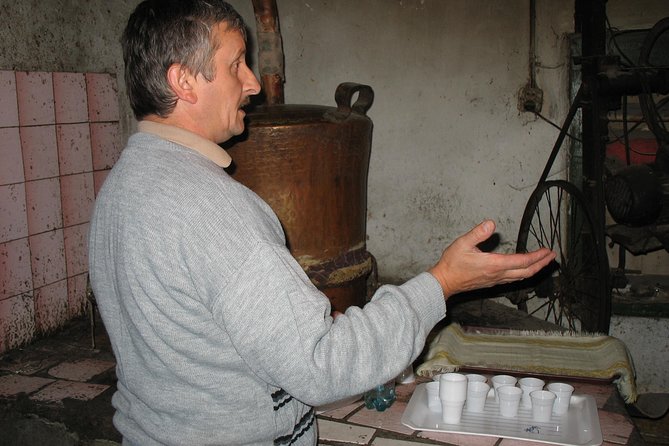
The țuică tasting gives the countryside visit a social touch. This clear fruit schnapps is a familiar part of Romanian hospitality, and sampling a locally made version helps explain how food and drink connect to village life. Alcoholic beverages are included, but food and other drinks are not, so do not treat the tasting as lunch.
If you do not drink alcohol, the tour still has value because the villages and museum remain the main purpose of the stop. The supplied details do not specify a nonalcoholic alternative, so ask ahead if that matters to you.
More Day Trips in Transylvania
- Castles of Transylvania: Private Day Trip from Bucharest
★ 4.5 · 248 reviews - Transylvania: Cultural Full-Day Trip by Minivan
★ 4.8 · 57 reviews - Transylvania Private Castle Day Trip from Bucharest
★ 4.5 · 26 reviews - Three Castles in Transylvania Day Trip from Bucharest
★ 4.4 · 20 reviews
The Zosim Oancea Museum of Icons on Glass
The museum in Sibiel is the most distinctive cultural stop. The Zosim Oancea Museum of Icons on Glass presents a local art tradition that is easy to miss if you only visit Romania’s major cities.
Glass icons have a particular visual character. Rather than expecting grand church paintings or polished court art, you will see devotional works tied to local religious practice and village culture. The museum gives the wider Saxon and Transylvanian story a more personal side, showing how belief and art lived in homes and communities.
About one hour is set aside for this part of the excursion. That should allow a proper introduction, though the time also includes the movement involved in an afternoon village visit. I would listen closely to the explanation of how the icons were made and used, since the technique and purpose are as important as the individual images.
The museum also broadens the tour beyond Saxon architecture. You get churches, fortifications, squares, and village customs, but you also see a form of folk art. That range is one reason this excursion is stronger than a simple Sibiu day trip.
Transport, timing, and the real cost of the day
The tour begins at 8:30 a.m. and returns to the meeting point after the village visits. Hotel pickup and drop-off are included, along with transport by private vehicle. That removes one of the harder parts of planning a long regional day from Cluj-Napoca.
At $129.86 per person, the price is not budget transport. Still, it covers a very long day, a driver-guide, admissions, private-vehicle transport, hotel transfers, taxes, and the schnapps tasting. If you tried to arrange the same combination of Sibiu, Cristian, Sibiel, and Fântânele independently, you would need to coordinate transport, opening times, directions, and explanations at each stop.
The value depends on what you want from the day. I think the cost makes sense for you if you want the Saxon background explained as you go and prefer one organized outing. It is less attractive if you only want free time in Sibiu, since part of the price pays for the countryside visits and guiding.
The maximum group size is 40 people. That is large enough for the level of personal contact to vary. A strong guide can keep a group moving and make history lively, but a group near the maximum may mean less time for individual questions or quiet viewing.
A specific caution comes from the operator’s use of external guides when availability requires it. One review raised concern that the experience can depend more on the assigned guide than on the company itself. That point is worth taking seriously, especially for a history-focused trip. George received praise for the tour, and Andrei was described as friendly, patient, funny, and willing to explain many subjects. Those are encouraging signs, but no guide assignment is promised.
Who will enjoy this Saxon heritage trip most
I would recommend this outing to you if:
- You have one free day in Cluj-Napoca and want to reach Sibiu without arranging several connections.
- You care about history, architecture, religion, and local customs.
- You want both a well-known city and smaller villages.
- You are comfortable with a long day and significant time in the vehicle.
- You appreciate having a guide explain the connections between places.
- You want a regional overview rather than a slow, single-city visit.
Families can participate, but children must be accompanied by an adult. Most people can take part, though the day includes walking through historic areas and climbing the Council Tower. The available information does not give details about step-free access, so ask before booking if mobility is a concern.
The tour is less suited to you if you dislike early starts, prefer independent schedules, or want a relaxed lunch and long shopping break. Food is not included, and the schedule is built around several cultural stops rather than extended personal time.
The average booking lead time is 52 days. That does not mean you must book that far ahead, but it suggests planning early may be sensible, especially if your dates are fixed.
Should you book Saxon Heritage in Transylvania?
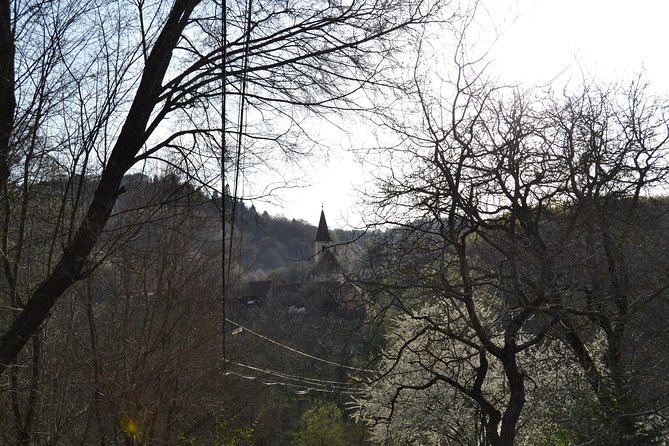
Book it if you want the why behind Transylvania, not just its best-known views. Sibiu supplies the medieval city, Cristian adds the fortified church, and Sibiel and Fântânele bring in village traditions, horse-drawn carriages, țuică, and glass icons.
I would book this as a one-day regional sampler, then return to Sibiu on another trip if you want more time there. The $129.86 price is fair for the transport, admissions, guide, and range of stops, but the 11 to 12-hour schedule demands energy.
Before paying, confirm the pickup details and ask which guide is expected to lead the outing. If you receive George or Andrei, the available feedback points to a strong history lesson with patience and humor. If the operator assigns an external guide, the quality may vary. Free cancellation is available until 24 hours before the start time, which gives you some useful flexibility.
FAQ
Where does the Saxon Heritage in Transylvania tour start?
The tour starts from Cluj-Napoca with hotel pickup and begins at 8:30 a.m.
How long does the day trip last?
The experience lasts approximately 11 to 12 hours and ends back at the meeting point.
What places does the tour visit?
The route includes Sibiu’s Big Square, city walls, three main squares, two important churches, and the Council Tower. It also visits the fortified church in Cristian, Sibiel, Fântânele, and the Zosim Oancea Museum of Icons on Glass.
Is admission included?
Yes. Admission tickets for the listed visits are included in the tour price.
Is transportation included?
Yes. Hotel pickup and drop-off and round-trip transport by private vehicle are included.
Is food included?
No. Food and drinks are not included unless specifically stated. The included alcoholic beverage is the local țuică tasting.
Is the tour offered in English?
Yes. The tour is offered in English.
How many people can join the tour?
The maximum group size is 40 people.
Can children join the excursion?
Yes. Children can participate, but they must be accompanied by an adult.
Can I cancel for a full refund?
Yes. You can cancel at least 24 hours before the experience start time for a full refund. Cancellations or changes made less than 24 hours before the start time are not accepted for a refund.
More History Tours in Cluj Napoca
- Cluj-Napoca: Jewish Heritage Walking Tour
★ 5.0 · 1 review - Bucharest: 3-Hour Dark History Tour with a Local
★ 4.9 · 301 reviews - Bucharest: Small Group History, Art & Secrets Tour
★ 4.7 · 152 reviews - Guided Walking Tour of Historical Bucharest
★ 5.0 · 84 reviews
Just added in Cluj Napoca
- Turda salt mine and Corvin Castle day tour from Cluj★ 5.0 · 9 reviews
- Private tour to Turda Salt Mine, Rimetea and Alba Iulia★ 4.8 · 5 reviews
- Turda Salt Mine, Gorge & Rimetea Village (private from Cluj)★ 5.0 · 5 reviews
- Cluj to Rosia: Day Trip to Ferrata and pittoresque country★ 5.0 · 1 review
- 7 Day Best of Transylvania Motorcycle Tour from Cluj★ 5.0 · 4 reviews
- Via Ferrata Transylvania★ 5.0 · 1 review
- Discover Apuseni Mountains – Scarita Summit,Sipote Waterfall and Dumesti Village★ 5.0 · 17 reviews
- Turda salt mine, Rimetea village and Alba Iulia, from Cluj★ 5.0 · 11 reviews
Day Trips in Cluj Napoca, compared.

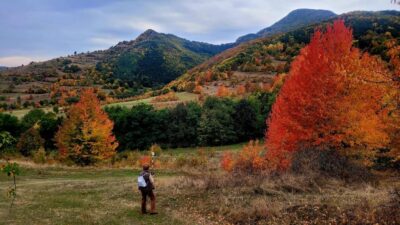
Turda Salt Mine, Gorge, and Remetea Full-Day Trip
Read our review →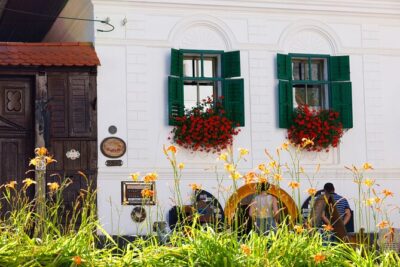
Day Trip To Turda Salt Mine, Rimetea Village & Coltesti Fortress
Read our review →
CJ03 – Day trip to Maramures Mocanita Train from Cluj Napoca
Read our review →
Outdoor Activities Day Trip with Zip Line and Hike
Read our review →
Sighisoara, UNESCO & wine tasting (1 day, from Cluj)
Read our review →CJ03 – Day trip to Maramures Mocanita Train from Cluj Napoca
Read our review →
Cluj to Rosia: Day Trip to Ferrata and pittoresque country
Read our review →Browse the lists this tour appears in