
REVIEW · HISTORY TOURS IN BUCHAREST
Bucharest: Small Group History, Art & Secrets Tour
Bucharest reveals itself one story at a time. This $22 walking tour links grand palaces, old churches, covered passages, and street art with the help of guides who know how to make the city’s past feel clear and human. I like the route’s range, and I like that it ends at the Palace of the Parliament after passing through the old center.
The strongest part is the guiding. Elena, Alexandra, Helen, Stefan, Alessandro, and others have been praised for lively storytelling, useful local advice, and a good sense of pace. The main consideration is the amount of walking: three hours on city streets can be tiring, and the activity is also listed as unsuitable for people with mobility impairments despite wheelchair accessibility being noted.
In This Review
- Key points at a glance
- Why this Bucharest walk works so well
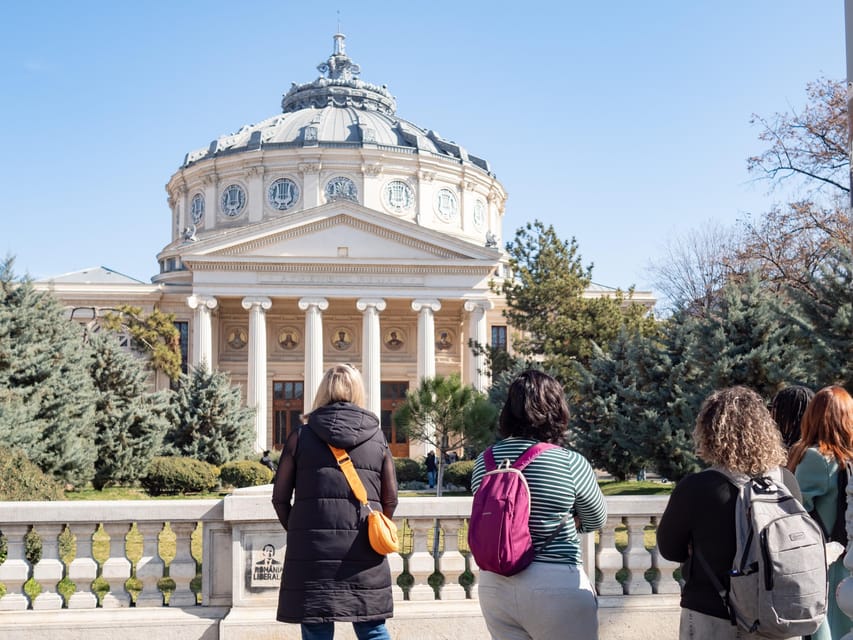
- Starting beneath the Athenaeum’s columns
- Royal power and Revolution Square
- Kretzulescu Church and Bucharest’s older character
- Theater, military grandeur, and a useful café pause
- Passages, banks, and the old center
- Manuc’s Inn and Antim Monastery
- Ending at the Palace of the Parliament
- What the guides add to the experience
- Pace, group size, and practical comfort
- Is $22 good value?
- Who should book this walk?
- FAQ
- How long does the Bucharest History, Art and Secrets Tour last?
- Where does the tour begin?
- Where does the tour finish?
- What languages are available?
- Is this a small-group tour?
- Is the Romanian Athenaeum included?
- Is entry to the Palace of the Parliament included?
- Is food included?
- What should I bring?
- Can I cancel or pay later?
- Should you book it?
Key points at a glance
- A three-hour walk from the Romanian Athenaeum to the Palace of the Parliament: The route gives you a useful first look at central Bucharest without spending a full day on one subject.
- A smart mix of famous sights and smaller stops: You see Revolution Square, the Royal Palace, Stavropoleos Monastery, Manuc’s Inn, and several atmospheric passages.
- History told through buildings: The guide connects royal Bucharest, communist rule, the 1989 revolution, religion, banking, theater, and daily life.
- A 25-minute café break: Coffee or tea gives your feet a rest and lets you ask questions in a calmer setting.
- Strong multilingual guiding: Tours are offered in English, Italian, Spanish, and French.
- Excellent value at $22: Entrance tickets are not included, but the route, guide, and three hours of orientation make the price appealing.
Why this Bucharest walk works so well
Bucharest can feel scattered at first. Its grand avenues, Orthodox churches, French-influenced buildings, communist monuments, old-town lanes, and modern street art do not always seem to belong to one city. This tour gives those pieces a human thread.
You begin at the Romanian Athenaeum and finish at the Palace of the Parliament, two buildings that frame very different ideas of Romania. One speaks of music, civic pride, and European culture. The other reflects the scale and force of Nicolae Ceaușescu’s communist regime. Between them, the route moves through royal sites, revolutionary history, religious architecture, cafés, theater, finance, and food.
I especially like the route because it does not treat Bucharest as a parade of façades. The buildings become clues. A church can open a conversation about faith and survival. A passage can reveal the city’s commercial past. Revolution Square can turn a pretty urban space into a place of memory.
The guides are the real reason to book. Elena has been praised for giving enough detail without making the tour feel like a lecture. Alexandra is known for making both older events and present-day Bucharest easy to follow. Helen has also offered practical suggestions for cafés, food, and places to visit after the walk. One particularly useful recommendation was a pastrami stop that several people enjoyed.
More History Tours in Bucharest
- Bucharest: 3-Hour Dark History Tour with a Local
★ 4.9 · 301 reviews - Guided Walking Tour of Historical Bucharest
★ 5.0 · 84 reviews - Bucharest Jewish Heritage | Holocaust Memorial | Private Car Tour
★ 5.0 · 38 reviews
Starting beneath the Athenaeum’s columns
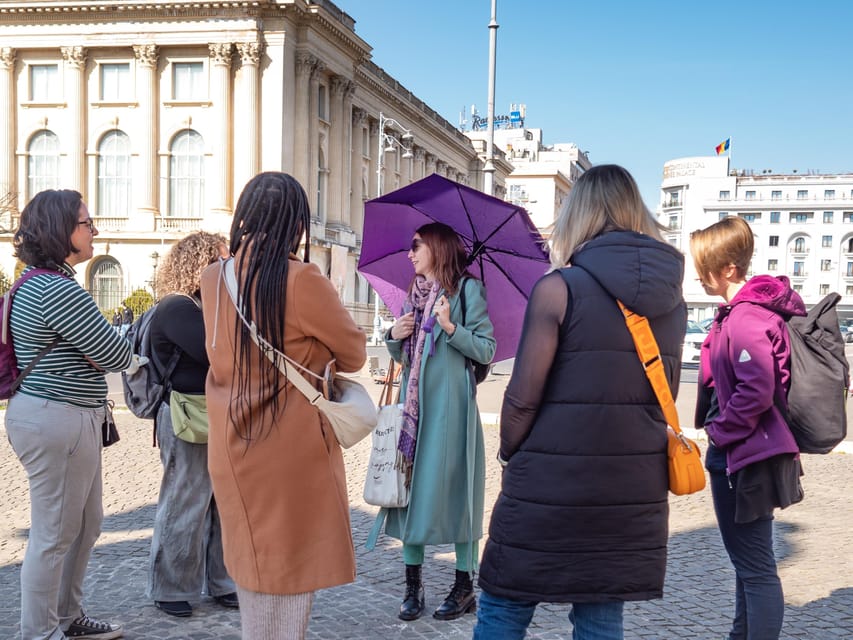
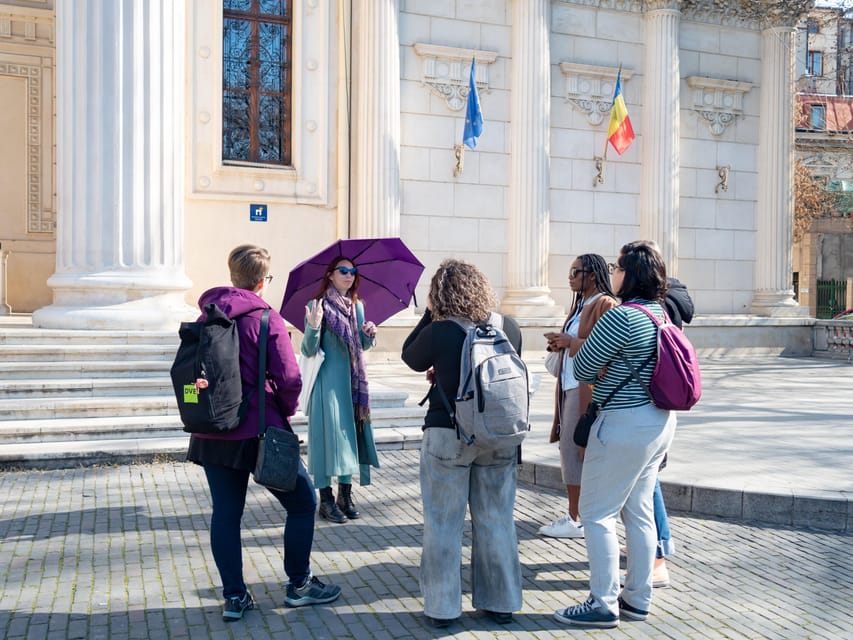
Meet your guide in front of the Romanian Athenaeum, by the columns and the purple umbrella. This is a practical meeting point, but it can be awkward if you arrive by taxi. A cab may not leave you directly at the entrance, so allow a little extra time and look for the columns rather than simply searching for a broad address.
The Athenaeum is an excellent place to begin. Its neoclassical design gives the tour an immediate sense of occasion, and it remains home to the George Enescu Philharmonic Orchestra. Your guide introduces the building as more than a pretty concert hall. It represents Bucharest’s cultural ambitions and its connection to European artistic life.
You do not pay an entrance fee on this tour, so the Athenaeum is primarily an exterior stop. Bring a camera, since the façade and columns make a fine opening photograph.
Royal power and Revolution Square
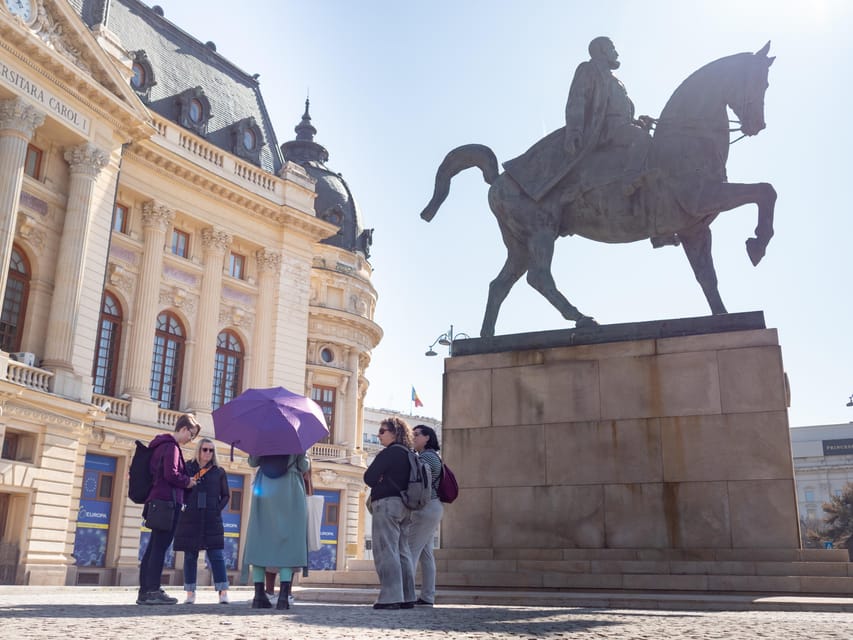
The Royal Palace is next, with about 10 minutes for a guided explanation, sightseeing, and photographs. The building gives you a way to think about Romania’s monarchy and the changing role of the capital’s center. The short stop will not satisfy anyone seeking a full museum visit, but it works well in a walking route that keeps moving.
Revolution Square follows. This is one of the most important historical points on the walk because it connects the city’s architecture to the collapse of communist rule. The square can look formal and orderly, but the guide’s political and historical context gives it weight.
One of the tour’s best qualities is its willingness to deal with Romania’s difficult 20th century. The guides have been praised for explaining Cold War politics and the country’s turbulent past in a way that remains approachable. If you enjoy history but dislike dates delivered without context, this approach should suit you.
Kretzulescu Church and Bucharest’s older character
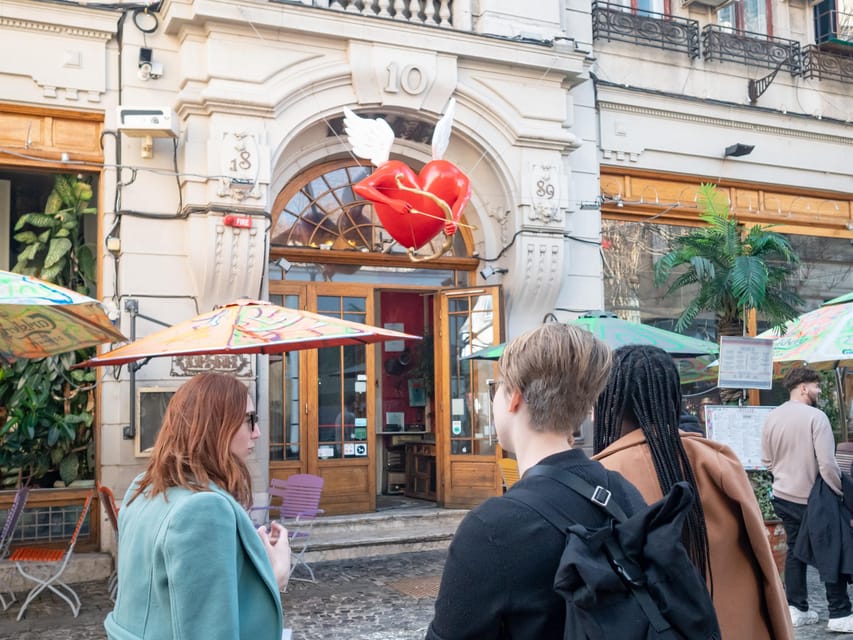
Kretzulescu Church provides a sharp change of mood. After the grand secular buildings, you reach a smaller religious site with a more intimate presence. The stop helps show that Bucharest is not only about monumental avenues and government buildings.
The church also adds balance to the tour. Romania’s story is not just monarchy followed by communism. Religious buildings, traditions, and local customs are part of the city’s identity too. Your guide can help you notice details you might otherwise pass without understanding.
The route then passes Pasajul Englez and the Umbrellas Street. These stops are lighter and more visual. Covered passages and colorful street decoration offer a glimpse of Bucharest’s playful side, while also showing how older spaces have found new uses.
Do not expect every stop to be a major monument. Some are brief photo opportunities. That is part of the design. You get a broad introduction rather than long interior visits.
A completely different kind of day out:
- Bucharest: Dracula’s Castle, Peles Castle, & Brasov Old Town
★ 4.5 · 17,858 reviews - Bucharest: Dracula Castle, Peles Castle & Brasov Old Town
★ 4.6 · 10,891 reviews - Bucharest: Dracula’s Castle, Peleș Castle & Brașov Day Trip
★ 4.5 · 5,919 reviews - Bucharest: Palace of Parliament Tickets and Guide
★ 4.3 · 3,182 reviews
Theater, military grandeur, and a useful café pause
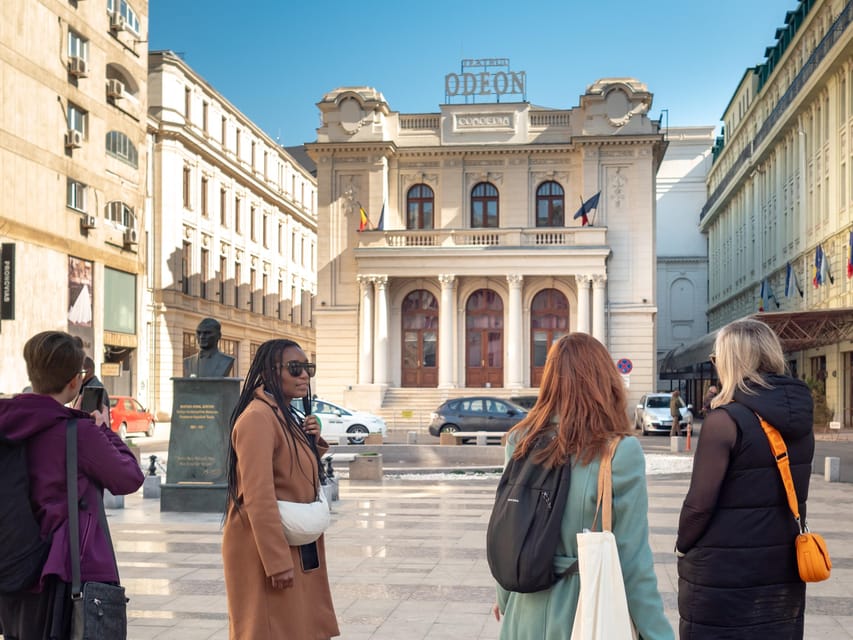
The Odeon Theatre adds a cultural stop to the route. It helps explain why Bucharest has a strong theater and performance tradition alongside its concert life. The building is part of the city’s cultural fabric, and the guide’s commentary gives you a reason to look beyond its exterior.
At the National Military Circle, the scale shifts again. The building brings military and state ceremony into the picture, with a formal façade that contrasts with the narrower old-town passages earlier in the walk.
After these stops, you take a 25-minute break at a local café for coffee or tea. This is one of the most practical features of the experience. Three hours of sightseeing can become a steady march, especially in warm weather or rain, so a real pause matters.
The break also gives you a chance to ask for suggestions. Helen, in particular, has been praised for offering ideas for things to do after the tour and for pointing people toward places to eat. Use this time to ask about the parts of Bucharest you want to explore next.
Meals and drinks are not included, so any café purchase is your own expense. The tour description does not specify the café, so you should think of it as a rest stop rather than a planned food experience.
Passages, banks, and the old center
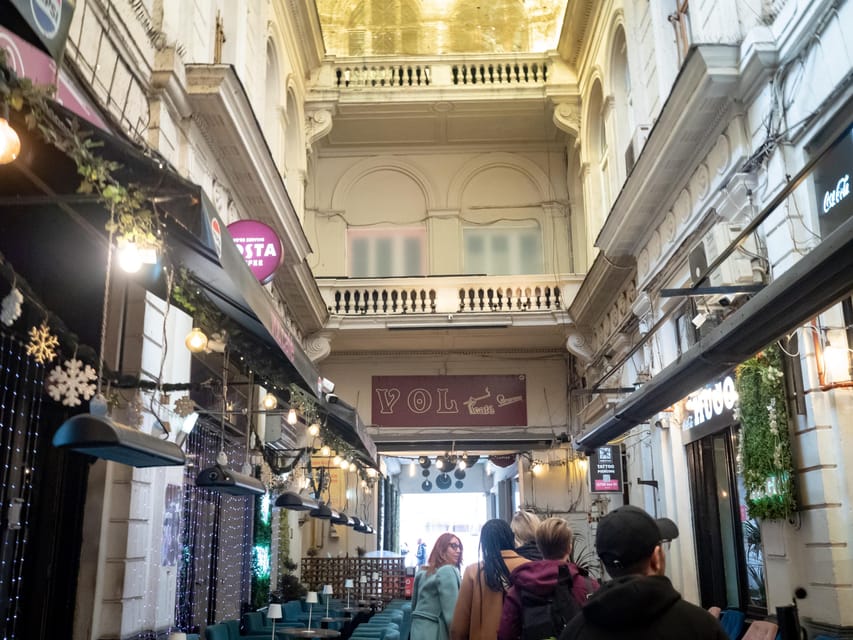
After the café, the walk continues to Macca and Vilacrosse Passage. This is one of the more atmospheric portions of the route. The covered passage brings together architecture, small-scale urban space, and the feel of old commercial Bucharest.
The National Bank of Romania follows. This stop shows another side of the capital, one tied to money, institutions, and national development. A guide can make a bank building more interesting by explaining what it represents, rather than leaving you with only an ornate façade.
Stavropoleos Monastery is a major highlight. Its age, religious character, and detailed architecture offer a quiet counterpoint to the monumental state buildings. The stop is especially valuable if you want to see the old city’s spiritual side without committing to a separate religious architecture tour.
Caru’ cu bere comes next. The restaurant is famous enough to appear on many Bucharest sightseeing lists, but the guide adds context to the setting. It is also a useful place to remember that food and social life belong in the city’s story. If you want to eat there later, ask your guide for current practical advice rather than assuming the tour includes a meal.
The CEC Palace and National Museum of Romanian History continue the architectural and civic theme. Again, the tour focuses on exterior sightseeing and explanation. Entrance fees are not included, so you can return later if one of these museums or buildings deserves more of your time.
Manuc’s Inn and Antim Monastery
Manuc’s Inn provides a welcome pause and a connection to Bucharest’s commercial past. The stop includes time for photographs, guided commentary, and a short break. It is the sort of place where the old center feels less like a collection of restored façades and more like a place shaped by movement, trade, and travelers.
The route then reaches Antim Monastery. This gives you another religious landmark, but it does not repeat the exact experience of Stavropoleos. Together, the two monasteries show how much sacred architecture survives within the central city.
The sequence works because the tour keeps changing scale. You move from imposing institutions to narrow passages, from restaurants to monasteries, and from royal settings to ordinary street corners. That variety keeps the three hours from feeling like one long lecture.
Ending at the Palace of the Parliament
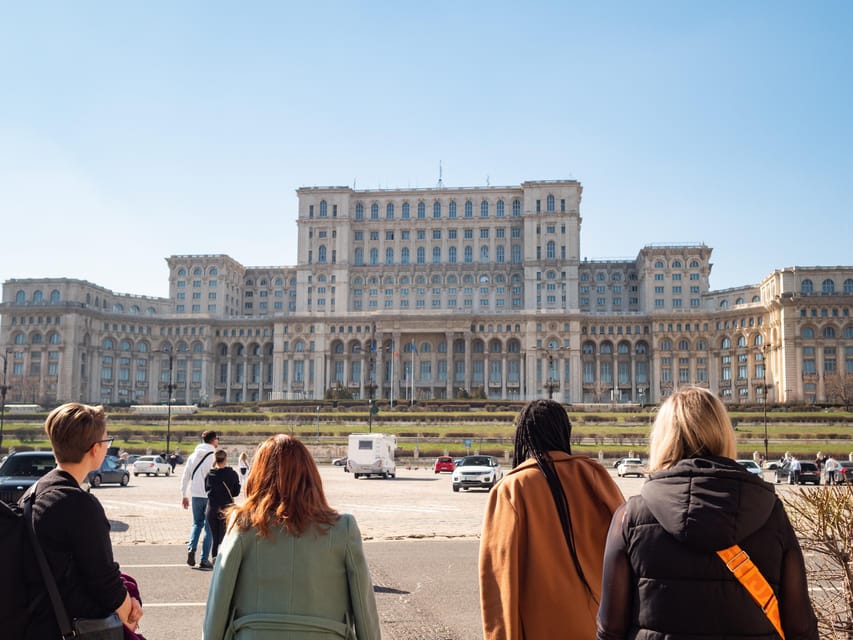
The final stop is the Palace of the Parliament, with about 15 minutes for a break, photographs, and sightseeing. The building is one of Bucharest’s defining sights and one of Europe’s most controversial symbols of power.
It is also described as the second-largest administrative building in the world. Its size is difficult to grasp from photographs alone. The guide’s role here is to explain both the building’s physical scale and the political cost of the project, along with its effect on Bucharest’s streets and neighborhoods.
You should be clear about what this tour includes. It takes you to the Palace of the Parliament and explains its importance, but entrance to attractions is not included. This is not an interior palace visit. If you want to tour the inside, you need to arrange that separately and check the current entry rules.
Ending here is practical. You finish near one of the city’s most recognizable landmarks, with a stronger understanding of how Bucharest changed from royal capital to communist showcase and then into a modern European city.
What the guides add to the experience
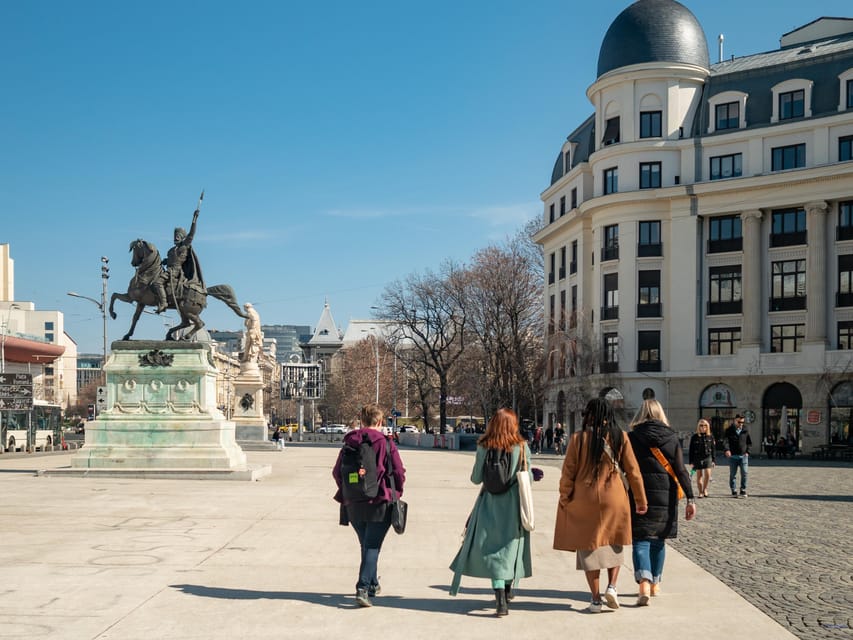
The guide quality appears to be the most praised part of this tour. Names that have received especially warm attention include Elena, Alexandra, Helen, Stefan, Alessandro, and Elvis.
Elvis has been praised for unusually broad academic knowledge and for explaining Cold War politics with care. Stefan has been described as both informative and helpful when introducing places that visitors might otherwise save for another day. Alessandro has been appreciated for fluent English, friendly delivery, and historical stories that make the old center easier to understand.
Elena’s strength is presentation. She has been praised for making complicated subjects clear, keeping the pace comfortable, and showing genuine regret when a participant had to leave before the final stops. Alexandra brings enthusiasm and an ability to share just enough information to spark curiosity without overloading you.
Guides can vary, of course, but the repeated pattern is clear: this is not meant to be a dry monument checklist. Expect stories, political context, local suggestions, and room for questions.
Pace, group size, and practical comfort
The experience lasts three hours and is offered as a small-group tour. That format should make it easier to hear the guide and ask questions than on a large coach-style outing. The route includes many short stops, generally around 10 minutes each, with a longer café break and a final pause at the parliament building.
You need comfortable walking shoes and water. The tour covers a lot of ground, and the streets may be tiring in poor weather. Bring a camera, but do not bring luggage or large bags.
The accessibility information needs careful attention. The activity is marked wheelchair accessible, yet it is also listed as unsuitable for people with mobility impairments. Since this is a long walking route with many stops, you should contact the provider before booking if you have mobility concerns and ask exactly what assistance and surfaces to expect.
Tours are available in English, Italian, Spanish, and French. Free cancellation is available up to 24 hours before the start time, and you can reserve now and pay later, which helps if your Bucharest schedule is still shifting.
Is $22 good value?
At $22 per person, the value is strong if you want orientation and history in one outing. You receive three hours with a local professional artist guide, a route through many major central sights, historical explanation, and a café pause. The price is low enough that you can still budget for a separate museum or interior visit afterward.
The tradeoff is depth at individual sites. You will not spend an hour inside the Athenaeum, National Museum of Romanian History, or Palace of the Parliament. You also pay separately for drinks, food, and entrance fees.
I would treat this as a first-day Bucharest walk, not a complete sightseeing program. It helps you decide which buildings deserve a return visit and gives you enough local context to make the rest of your stay more rewarding.
Who should book this walk?
I would recommend it to first-time visitors, history fans, architecture lovers, and anyone who wants an active introduction to central Bucharest. It is also a good fit if you prefer a guide who can explain politics, culture, religion, and city life in one continuous route.
It suits curious people who enjoy asking questions and picking up practical suggestions for later. The tour may be less suitable if you want a slow museum visit, dislike walking, or prefer to explore only one neighborhood in depth.
Book it early in your stay if possible. The route gives you useful bearings, and the guides’ food and café recommendations can shape the rest of your visit.
FAQ
How long does the Bucharest History, Art and Secrets Tour last?
The tour lasts three hours.
Where does the tour begin?
It begins in front of the Romanian Athenaeum, by the columns and a purple umbrella.
Where does the tour finish?
The tour finishes at the Palace of the Parliament.
What languages are available?
The live tour guide is available in English, Italian, Spanish, and French.
Is this a small-group tour?
A small-group option is available.
Is the Romanian Athenaeum included?
The Athenaeum is the starting point and an exterior sightseeing stop. Entrance fees to attractions are not included.
Is entry to the Palace of the Parliament included?
No. The tour visits the Palace of the Parliament for sightseeing and photographs, but attraction entrance fees are not included.
Is food included?
No. Meals and drinks are not included. The tour does include a café break with time for coffee or tea, but you pay for your own purchases.
What should I bring?
Bring comfortable walking shoes, water, and a camera. Luggage and large bags are not allowed.
Can I cancel or pay later?
You can cancel up to 24 hours in advance for a full refund. Reserve now and pay later is also available.
Should you book it?
Book this tour if you want Bucharest explained through its buildings, politics, art, churches, and everyday corners rather than seen from a vehicle. At $22, it offers a lot of ground, and the guides appear to be the main attraction.
Skip it if you need an interior-focused tour or cannot manage several hours of walking. For most active first-time visitors, though, this is a smart and affordable way to get your bearings, learn the city’s complicated story, and finish at Bucharest’s most imposing landmark.
Just added in Bucharest
- Winery touring & private wine tasting – one day private tour★ 5.0 · 3 reviews
- Bucharest: Dealu Mare Winery Private Trip with Wine Tasting★ 4.9 · 6 reviews
- Village Museum Bucharest Guided Tour★ 5.0 · 6 reviews
- Transylvania Tour: Dracula’s Castle, Peles Palace & Brasov★ 5.0 · 19 reviews
- Transfer Airport Otopeni – Bucharest★ 5.0 · 2 reviews
- Private Transfer Bucharest Otopeni Airport (OTP) to/from Brasov★ 5.0 · 2 reviews
- Bucharest Airport Transfer To Constanta Mamaia★ 5.0 · 3 reviews
- Airport Henri Coanda (Otopeni) to Bucharest – Private Transfer – Driver★ 5.0 · 5 reviews
History Tours in Bucharest, compared.

Bucharest Jewish Heritage | Holocaust Memorial | Private Car Tour
Read our review →
Private Bucharest: History & Food with Traditional Meal
Read our review →
Half-Day Jewish Heritage Walking Tour in Bucharest
Read our review →
Sweet Delights History and Desserts Walking Tour
Read our review →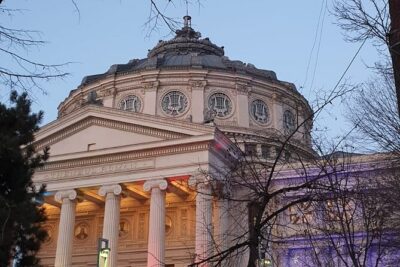
Private Tour – Food, Culture, History & Traditions
Read our review →Browse the lists this tour appears in