
REVIEW · FOOD
Private Bucharest: History & Food with Traditional Meal
Bucharest tells its story through lunch. This private four-hour walk links Revolution Square, Victory Street, Old Town, and the People’s Palace with the food that shaped them. I especially like the small-group format and the way the tour connects Ottoman, Balkan, Russian, and Austro-Hungarian influences to dishes you can actually taste. The main consideration is simple: the food stops before the final meal may be lighter than the description suggests.
You meet at the Equestrian Statue of Carol I and finish at a traditional Romanian inn with three courses, local beer, wine, or a soft drink. Guides such as Elaina, Mara, Andra, Ioanna, Monica, Dana, and Andrei have been praised for their warmth, patience, and command of local stories. Families should note that children under six join free, but the four-hour walk still calls for comfortable shoes.
In This Review
- Bucharest in four hours: key points
- Starting at Carol I and Revolution Square
- Walking Victory Street from royal power to modern Bucharest
- Old Town, where East meets West on the plate
- The People’s Palace and the cost of Ceausescu’s vision
- A three-course Romanian meal at a traditional hanu
- What the private format adds
- The eco-certified approach
- Who will get the most from this Bucharest tour?
- Practical details before you book
- Should you book Private Bucharest: History & Food?
- FAQ
- How long does the Bucharest history and food tour last?
- Where does the tour meet?
- What language is the tour offered in?
- Is the tour private?
- What food and drinks are included?
- Can children join the tour?
- Can I cancel the booking?
Bucharest in four hours: key points

- Revolution Square begins the story: See the former Royal Palace, Romanian Athenaeum, Athenee Palace, and the place where Nicolae Ceausescu’s 1989 speech went badly wrong.
- A covrig adds an edible history lesson: This salty pretzel-like snack may trace its arrival to Hapsburg or German merchants in the medieval period.
- Victory Street ties architecture to nation-building: The route passes the Telephone Palace, Military Circle, Kretzulescu Church, and other landmarks from Bucharest’s grand interwar years.
- Old Town explains Romania’s mixed cooking pot: Mici, sarmale, borscht, ciorba, and schnitzel reflect centuries of contact with neighboring powers.
- The final meal is substantial: A three-course spread at a handsome traditional hanu gives you a proper taste of regional Romanian food.
- Private guiding keeps the pace flexible: You can ask questions, pause for photos, and adjust the conversation more easily than on a large group outing.
Starting at Carol I and Revolution Square
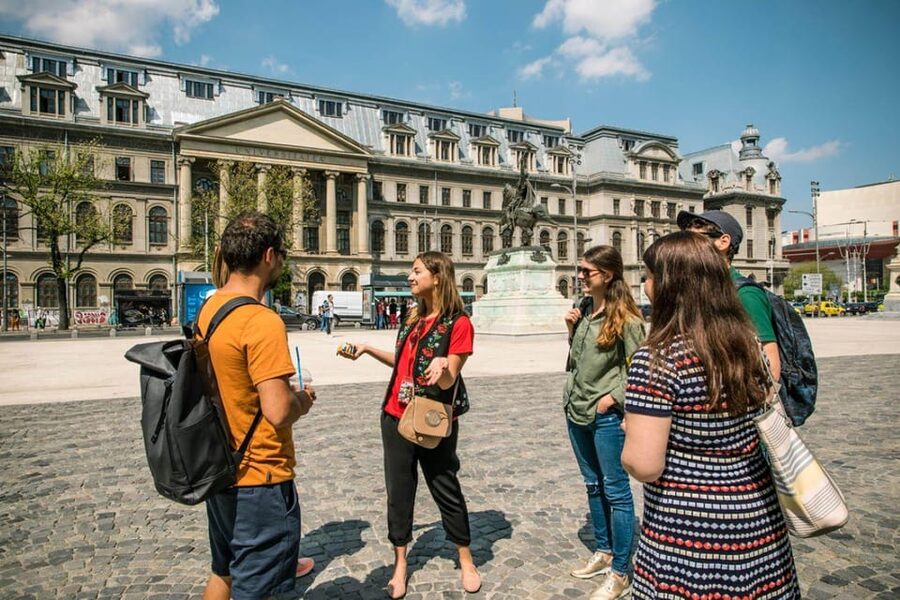
The meeting point is the Equestrian Statue of Carol I in central Bucharest. From there, your guide introduces Revolution Square, once called Palace Square, a place where royal ceremony, state power, protest, and political upheaval have all collided.
This is a smart starting point for a first visit because you get Bucharest’s basic framework before heading into its older lanes. The square brings together several important buildings. The former Royal Palace now houses the National Museum of Art of Romania, while the Romanian Athenaeum remains one of the city’s most recognizable concert halls. The Athenee Palace, long associated with diplomats, journalists, spies, and political maneuvering, adds a more shadowy interwar chapter.
Your guide will also explain the square’s role in the 1989 revolution. Ceausescu addressed a crowd here, expecting the usual display of obedience. The crowd turned against him instead, helping set Romania’s revolution in motion. That moment makes the square more than a collection of handsome facades. You are looking at a place where Romania’s political order cracked in public.
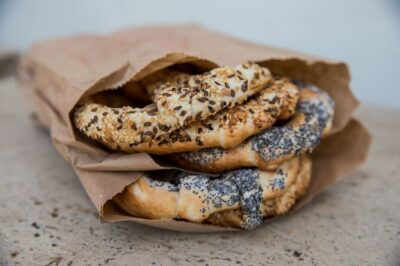
The first bite is a covrig, a salted baked snack eaten daily by many Romanians. Its possible Hapsburg or German connection gives you an early example of how food crossed borders long before modern tourism. It is a modest snack, not a grand tasting, but that is part of its appeal. You begin with something ordinary and local rather than a staged culinary performance.
More Food and Drink Tours in Bucharest
- Taste Bucharest: A Food Lover’s Tour of Markets & Neighbourhoods
★ 5.0 · 689 reviews - Street Food’n’Culture Tour
★ 5.0 · 209 reviews - Wine Tasting in Bucharest
★ 5.0 · 183 reviews
Walking Victory Street from royal power to modern Bucharest
From Revolution Square, the route heads south along Victory Street, or Calea Victoriei. Its name refers to Romania’s 1871 victory in the War of Independence, though the country’s full unification of its historic principalities came later, in 1918.
That timeline matters at the dinner table. Moldova, Transylvania, and Muntenia developed distinct habits, flavors, and traditions. The food discussion is organized around those differences, with Moldova associated with sweeter tastes, Transylvania with earthier cooking, and Muntenia with spicier flavors. These are broad regional patterns, not strict rules, but they help you understand why Romanian cuisine does not fit into one neat category.
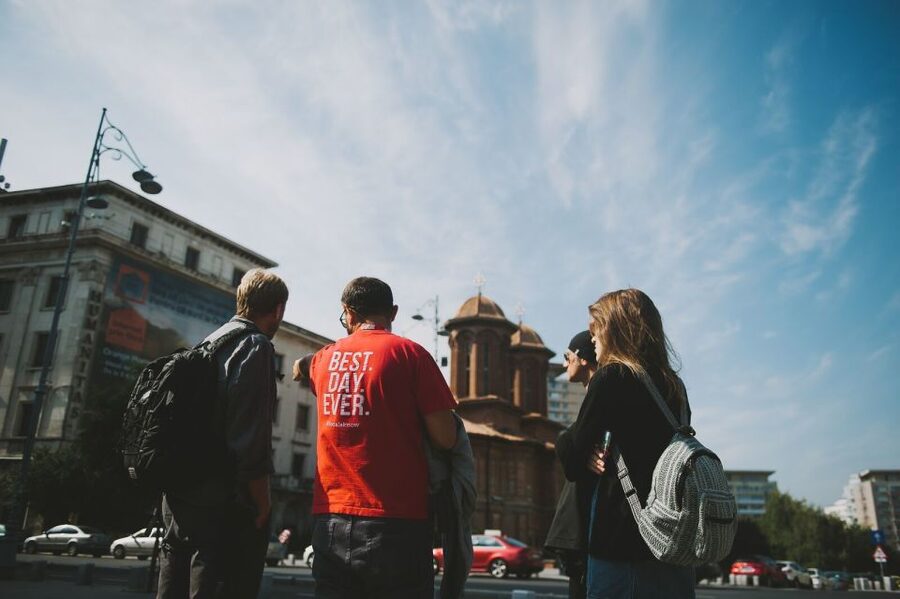
Victory Street also gives you a quick lesson in Bucharest’s early twentieth-century ambitions. You pass the former National Theatre, the Military Circle, and the Telephone Palace, a striking piece of interwar modernism. The Kretzulescu Church provides a sharp contrast, with its ornate Orthodox design and long religious history.
I like this section because it prevents the tour from treating Bucharest as only an old city or only a Communist capital. Within a short walk, you see royal prestige, French-influenced urban design, Orthodox tradition, modern communications, and the marks of a rapidly changing state.
The route is on foot, and the tour lasts four hours. That gives you time to hear stories without turning every building into a long lecture. Still, you should expect a steady city walk rather than a sit-down food crawl. Casual clothing and comfortable footwear are sensible choices.
Old Town, where East meets West on the plate
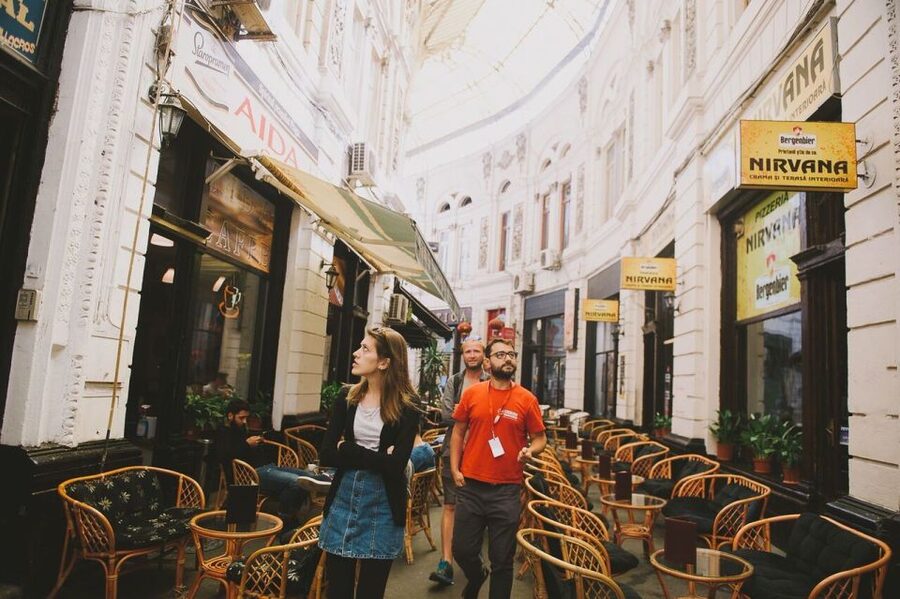
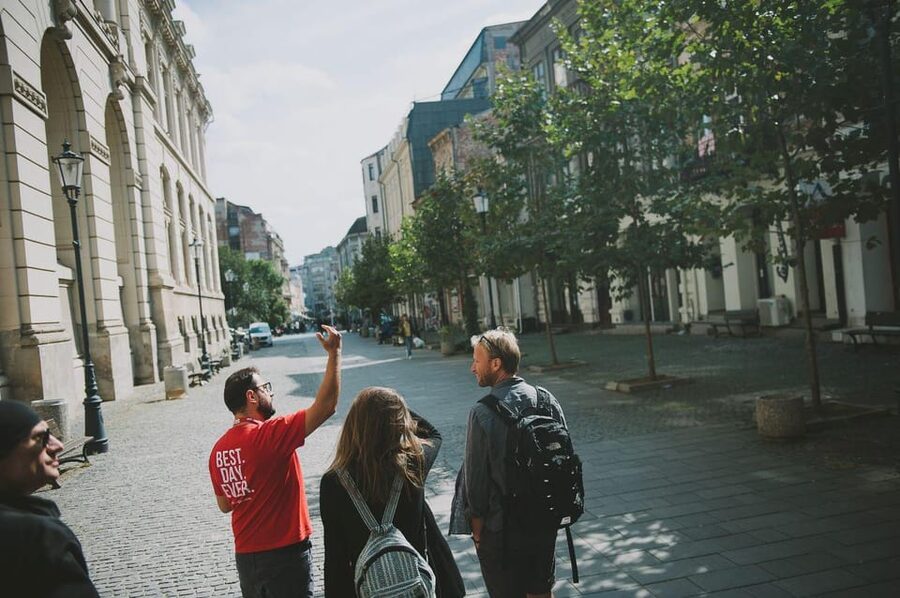
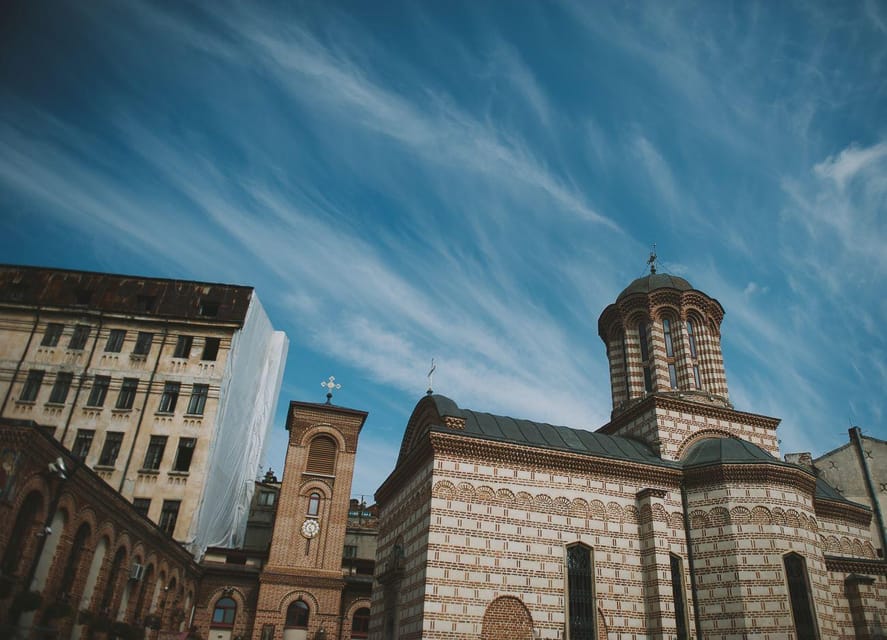
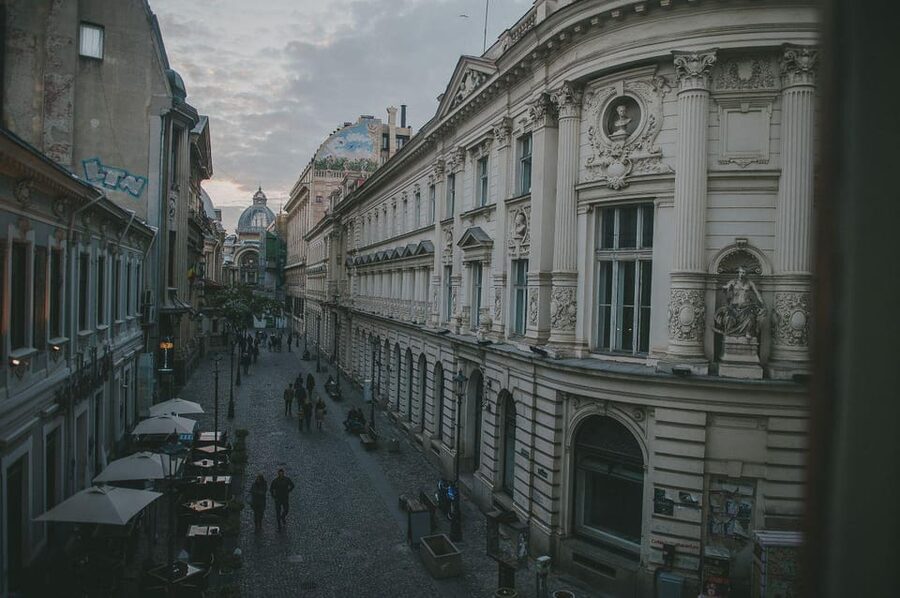
The walk then turns into Bucharest’s Old Town, the medieval core and the most atmospheric part of the route. This was a crossroads between East and West, where Ottoman officials, Transylvanian princes, merchants, clergy, and local rulers shaped the city together.
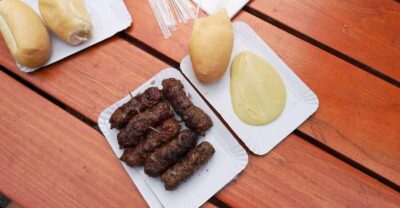
The food here becomes a useful map of those connections. Mici, the Balkan-style skinless sausages, point south. Sarmale, stuffed cabbage leaves often linked to Ottoman cooking, reflect centuries of contact with the Ottoman world. Russian influence appears in borscht and ciorba, the latter covering a family of sour soups. Schnitzel recalls Austro-Hungarian influence.
You do not need to be a food historian to enjoy this approach. The guide gives you a reason for each flavor and shows that Romanian cooking developed through contact, adaptation, and local preference. It is less about claiming that one country invented every dish and more about seeing how Bucharest absorbed ideas from several directions.
Old Town also supplies the best setting for stories. You might pass princely courts, richly decorated interiors, quiet Orthodox religious spaces, and Hanul lui Manuc, the great wooden inn associated with historic Bucharest. The contrast is striking. A lane may feel intimate and calm, then open toward a restaurant street filled with evening activity.
The modern Old Town has a lively night scene, but it also carries the scars of neglect and Communist-era decay. The area’s new capitalist life has brought restaurants, bars, and renovation, though not every building feels equally polished. That mixture is worth seeing honestly. Old Town is not a preserved medieval village. It is an old center being used, repaired, commercialized, and argued over in the present.
For families, the private format helps here. A guide can explain things in simpler terms, slow down for a child, or answer food questions without holding up a large group. One guide, Andra, was especially praised for including an eight-year-old, keeping a sensible pace, and building in photo breaks. That is useful if your children are curious but not ready for a nonstop lecture.
The People’s Palace and the cost of Ceausescu’s vision
Before the meal, you get a look at the People’s Palace, now officially known as the Palace of the Parliament. It was the centerpiece of Ceausescu’s plan to reshape Bucharest according to his grand political vision.
The building is often described as the second-largest administrative building in the world, after the Pentagon. Its size is the point. The palace was not designed merely to house offices. It was meant to display control, scale, and the power of the state.
The tour does not appear to include an interior visit, so you should think of this as an exterior look and a conversation about Communist urban planning. That is still valuable, especially after seeing royal buildings, churches, old inns, and interwar architecture earlier in the day. You can compare several versions of power through the city itself.
This stop also helps explain why Bucharest can feel visually uneven. Grand avenues and monumental buildings sit beside older streets and surviving fragments of earlier neighborhoods. The city’s history was not layered gently. In places, it was cut apart and rebuilt.
More History Tours in Bucharest
- Bucharest: 3-Hour Dark History Tour with a Local
★ 4.9 · 301 reviews - Bucharest: Small Group History, Art & Secrets Tour
★ 4.7 · 152 reviews - Guided Walking Tour of Historical Bucharest
★ 5.0 · 84 reviews - Bucharest Jewish Heritage | Holocaust Memorial | Private Car Tour
★ 5.0 · 38 reviews
A three-course Romanian meal at a traditional hanu
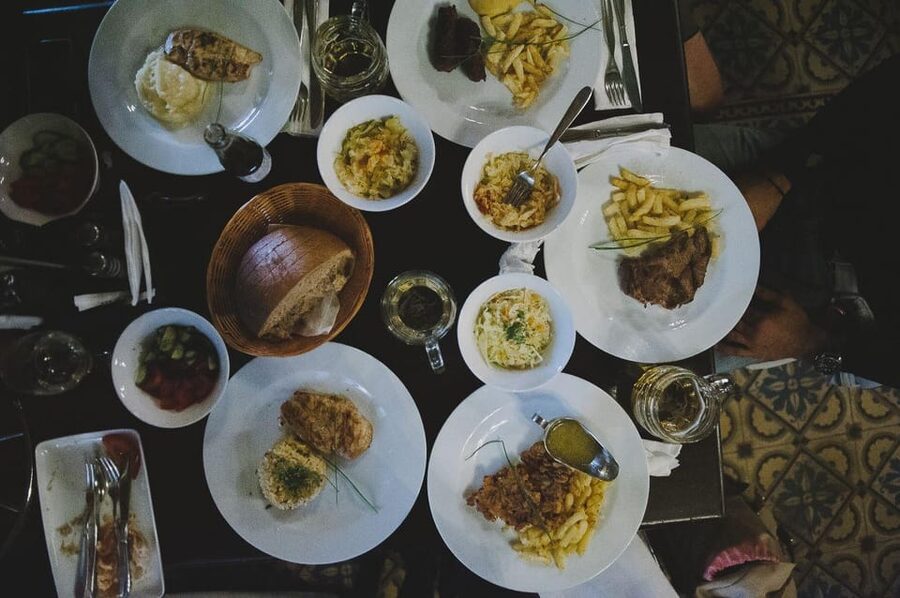
The tour ends at a traditional hanu, or inn, described as one of Bucharest’s most beautiful. Here, the format changes from walking and tasting small bites to sitting down for a full three-course meal.
The meal is designed as a taste tour of Romania’s geography and past. You can expect platters of local specialties rather than a single carefully isolated dish. The included drink is house beer, wine, or a soft drink. The ancient Dacian wine story adds a playful touch: Burebista is said to have banned wine production because his people drank so much of it, only for the inventive Dacians to turn to beer.
The meal has been a major strength of the experience. It is described as delicious and plentiful, and the quiet restaurant setting offers a welcome break from the Old Town streets. One guide even helped a participant obtain recipes for favorite dishes, which captures the practical spirit of a good food guide: you leave with more than a full stomach.
I would set your expectations carefully. The activity description names many Romanian foods, but the actual structure is a three-course meal plus the earlier covrig, not a long procession of separate samples. One participant specifically wanted more small tastings. If you want a food crawl with many tiny portions at several businesses, this may feel limited.
If you want history explained over a proper meal, the arrangement works well. The meal gives the tour a satisfying finish and lets you discuss what you have seen while seated. Additional food and drinks cost extra, so the included house beverage is the portion covered by the price.
What the private format adds
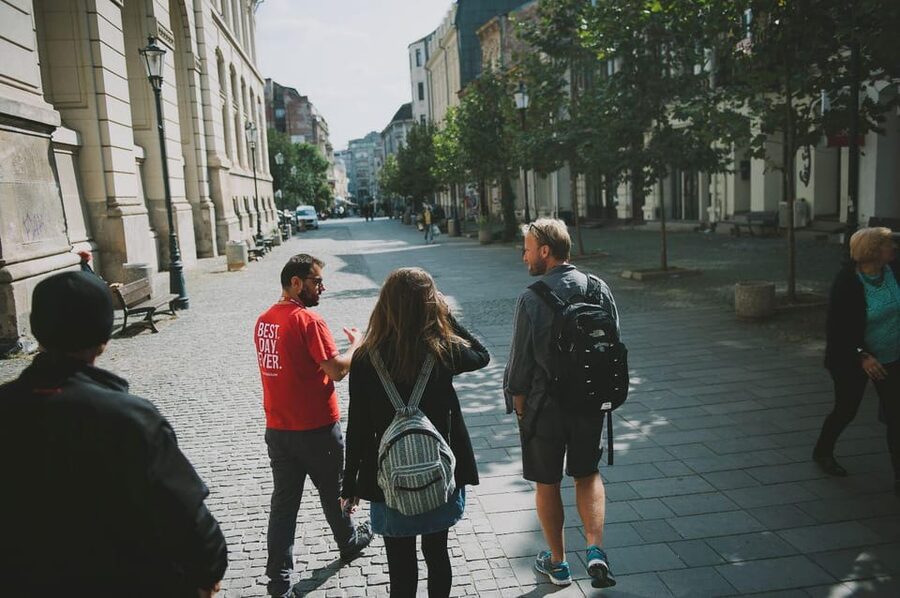
At $140 per person, this is not the cheapest way to see central Bucharest. The price makes more sense if you are traveling as a couple, family, or small private party and care about personal attention.
You are paying for a four-hour English-language guide, a private group, a three-course meal, and one house drink. You also avoid the compromises of a large group, where the guide must keep everyone moving at the same speed and questions can get lost.
The strongest guide comments focus on warmth as much as information. Elaina was praised for patience with a jet-lagged child. Andra was singled out for her care with families and her food knowledge. Ioanna was described as passionate about Bucharest, while Monica, Dana, Mara, and Andrei were praised for friendly, engaging tours.
That pattern matters because a history-and-food walk depends heavily on the person leading it. The buildings are fixed, but the quality of the experience rests on how well the guide connects them. A good guide can turn the Telephone Palace into a story about modern Romania, or a stuffed cabbage leaf into a lesson in cultural exchange.
The private setting also lets you ask about practical matters that may matter to your trip, such as other places to eat or details of local customs. The available comments specifically note helpful city tips and recipe suggestions.
The eco-certified approach
The tour is carbon neutral and operated by a B Corp certified company that presents travel as a force for good. That does not change the route or make the meal automatically better, but it gives you a useful extra reason to choose it if environmental policy matters to your booking decisions.
Since the experience is primarily a walking tour, its format already avoids a dedicated sightseeing vehicle. The important point is not to oversell this. Carbon-neutral status is a company commitment, not a promise that every part of your trip has no environmental cost.
Who will get the most from this Bucharest tour?
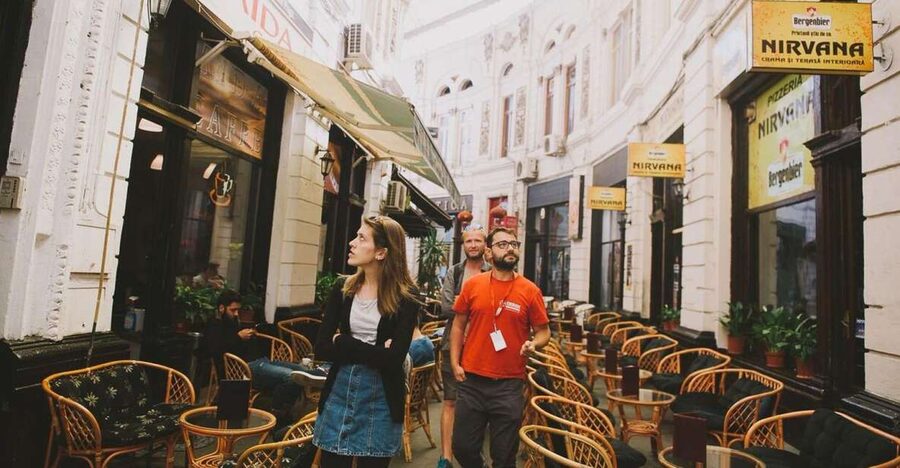
I would choose this experience if you want a first-day introduction to Bucharest with a strong sense of place. It covers political history, architecture, Old Town, Communist planning, and Romanian food in one compact route.
It suits you especially well if:
- You prefer a private guide to a large group.
- You want context for what you are eating.
- You are visiting Bucharest for the first time.
- You enjoy architecture and political history.
- You are traveling with children and want room for questions.
- You want a full meal rather than only snack-sized tastings.
It may not suit you if you want an intensive culinary crawl, a market visit, or a tour built around many restaurants. The food is important, but the experience is still a city history walk first.
The four-hour length is also a useful middle ground. It is long enough to give Bucharest a proper introduction, but short enough to leave part of your day open. I would avoid scheduling it immediately before another fixed activity unless you have a generous time cushion, since the route includes several stops and a sit-down meal.
Practical details before you book
The tour is offered in English with a live local guide. It is a private group, and starting times depend on availability.
You receive the guide, three-course Romanian meal, and house beer, wine, or soft drink. Extra food, extra drinks, souvenirs, and personal purchases are not included.
Children under six can join free, but you should tell the supplier when booking. The stated dress standard is casual clothing. Since the route is a city walk, comfortable shoes are the sensible choice.
You can cancel up to 24 hours before the experience for a full refund. A reserve-now, pay-later option is also available, which helps if your Bucharest schedule is still changing.
Should you book Private Bucharest: History & Food?
I would book it for a first visit, especially if you value a flexible guide and want your introduction to Bucharest to include both monuments and meals. The combination of Revolution Square, Victory Street, Old Town, the People’s Palace, and a traditional inn gives you a clear outline of the city in four hours.
The best reason to choose it is the personal guiding. The meal is a real part of the experience, not a token snack, and the history gives each dish a setting. Just keep your expectations in check: this is not a sample-heavy food crawl, and $140 per person is easiest to justify when the private format matters to you.
FAQ
How long does the Bucharest history and food tour last?
The tour lasts four hours.
Where does the tour meet?
The meeting point is the Equestrian Statue of Carol I, in Sector 1, Bucharest.
What language is the tour offered in?
The tour is offered in English with a live English-speaking guide.
Is the tour private?
Yes. It is organized for a private group.
What food and drinks are included?
The price includes a three-course traditional Romanian meal and one house beer, wine, or soft drink. Additional food and drinks are not included.
Can children join the tour?
Yes. The tour is child-friendly, and children under six may join free of charge. You should inform the supplier when booking if you are bringing a child under six.
Can I cancel the booking?
Yes. You can cancel up to 24 hours in advance for a full refund. A reserve-now, pay-later option is also available.
Just added in Bucharest
- Bucharest: Dealu Mare Winery Private Trip with Wine Tasting★ 4.9 · 6 reviews
- Winery touring & private wine tasting – one day private tour★ 5.0 · 3 reviews
- Village Museum Bucharest Guided Tour★ 5.0 · 6 reviews
- Transylvania Tour: Dracula’s Castle, Peles Palace & Brasov★ 5.0 · 19 reviews
- Transfer Airport Otopeni – Bucharest★ 5.0 · 2 reviews
- Private Transfer Bucharest Otopeni Airport (OTP) to/from Brasov★ 5.0 · 2 reviews
- Airport Henri Coanda (Otopeni) to Bucharest – Private Transfer – Driver★ 5.0 · 5 reviews
- Private Bucharest Otopeni Airport (OTP) Transfer★ 5.0 · 2 reviews
Food, compared.
Taste Bucharest: A Food Lover’s Tour of Markets & Neighbourhoods
Read our review →
Discover Bucharest: Private Highlights and Traditional Food Tour
Read our review →
Half-Day Private Food and Wine Walking Tour Oradea Romania
Read our review →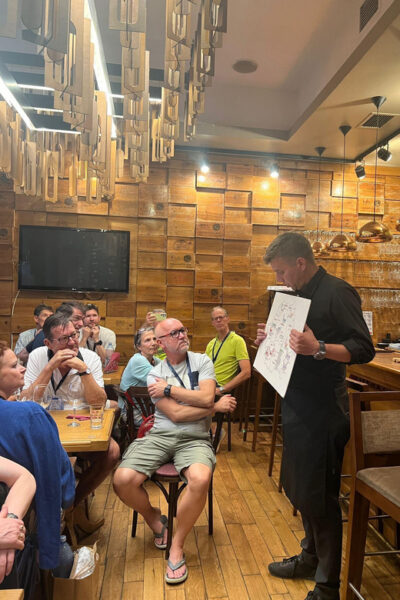

Browse the lists this tour appears in