
REVIEW · 3-HOUR EXPERIENCES
Bucharest: 3-Hour Dark History Tour with a Local
Some cities hide their hardest stories. This three-hour Bucharest tour brings them into the open, linking cemeteries, revolution sites, communist terror, interwar sex work, and a notorious 1970s killer. I especially like the visit to Bellu Cemetery, where elaborate tombs turn a graveyard into an outdoor gallery, and the clear connection between the city’s landmarks and Romania’s troubled modern past. The traditional Romanian snack and included metro tickets are useful touches, too.
The main thing to consider is the amount of walking. You spend much of the tour outdoors, often standing while listening, so comfortable shoes and weather-appropriate clothing matter. The subject is also genuinely grim at times, making this a better fit for adults and older teenagers than for anyone seeking a light sightseeing stroll.
In This Review
- What makes this Bucharest tour different
- Starting at the National Theatre and heading toward the cemeteries
- Bellu Cemetery, where tombs become storytelling stages
- University Square and the bloodied road out of communism
- A return to Little Paris, with brothels and a killer
- Revolution Square and the machinery of fear
- Guides who make or break the experience
- How the $55 price holds up
- Who will enjoy this dark history walk?
- Practical tips before you go
- Should you book the Bucharest Dark History Tour?
- FAQ
- How long is the Bucharest Dark History Tour?
- How much does the tour cost?
- Where does the tour meet?
- What language is the tour conducted in?
- Is Bellu Cemetery included?
- Which historical events are covered?
- Does the tour include public transportation?
- Is food included?
- Can children join the tour?
- How large is the group?
- What should I bring?
- Can I cancel the booking?
What makes this Bucharest tour different
- Six cemeteries on one city street: Begin near a remarkable concentration of burial grounds, including the 1989 Revolution cemetery, a Jewish cemetery, a Russian soldiers’ cemetery, and historic Bellu Cemetery.
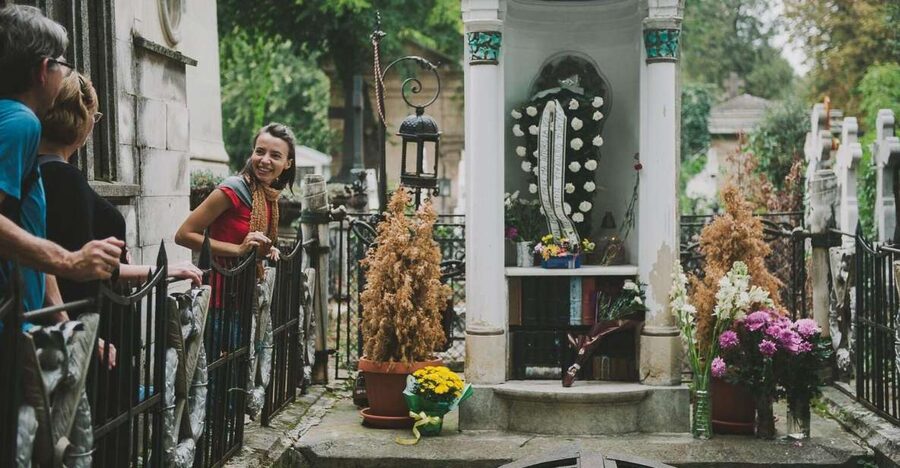
- Bellu Cemetery as an open-air gallery: See ornate funerary architecture and hear stories ranging from tragic romance to unsettling mystery.
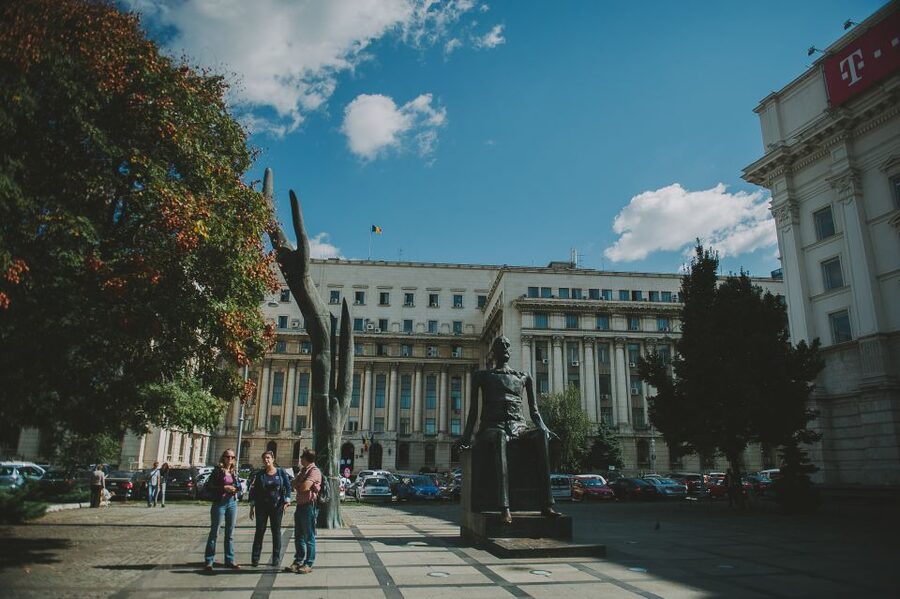
- Romania’s bloody turning points: Visit University Square and Revolution Square, two places tied to the 1989 uprising and later anti-communist protests.
- The Little Paris era: Learn about interwar Bucharest, its sex trade, and the remains of a former brothel.
- The Vampire of Bucharest: Hear the story of the serial killer who terrorized the city in the early 1970s.
- A small, personal group: The maximum group size is 12, and guides such as Alex, Elena, Andra, Irina, Vlad, and Bogi are praised for their storytelling and personal approach.
Starting at the National Theatre and heading toward the cemeteries
The tour meets at the main entrance of the Ion Luca Caragiale National Theatre, at Bulevardul Nicolae Bălcescu 2. This is a practical starting point in central Bucharest, and the meeting place is reported to be easy to find.
From here, the route moves toward a street lined with no fewer than six cemeteries. That opening gives you an immediate sense of Bucharest as a city built in layers. The burial grounds are not treated as isolated sights. Instead, they help explain the city’s religious communities, military past, political violence, and changing social order.
The group uses the Bucharest Metro during the tour, with tickets included in the $55 price. That keeps the route from becoming one long city walk and lets the guide connect different parts of Bucharest without wasting much of the three-hour schedule on transport.
Still, do not mistake the metro rides for a relaxed excursion. You will walk between stops and spend time standing outside while the guide explains what happened there. I would wear sturdy shoes, bring water, and check the weather before leaving. In winter, several people found the cold sharper than expected because it is easy to lose track of the temperature while listening to a good story.
More History Tours in Bucharest
- Bucharest: Small Group History, Art & Secrets Tour
★ 4.7 · 152 reviews - Guided Walking Tour of Historical Bucharest
★ 5.0 · 84 reviews - Bucharest Jewish Heritage | Holocaust Memorial | Private Car Tour
★ 5.0 · 38 reviews
Bellu Cemetery, where tombs become storytelling stages
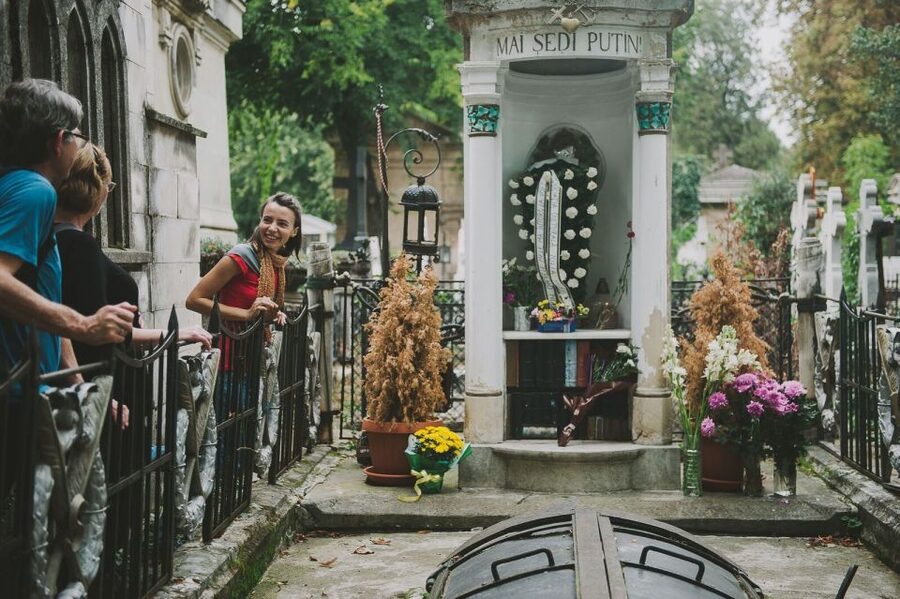
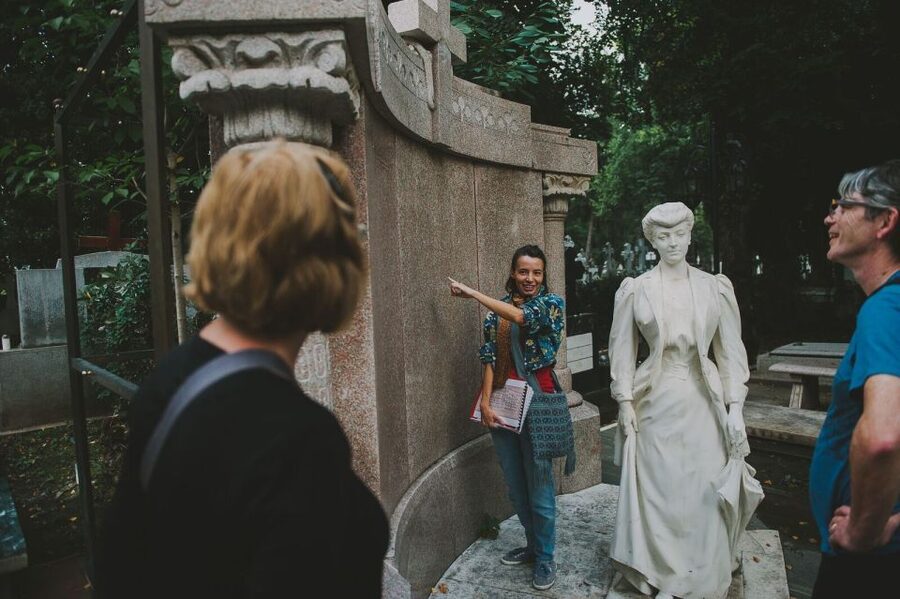
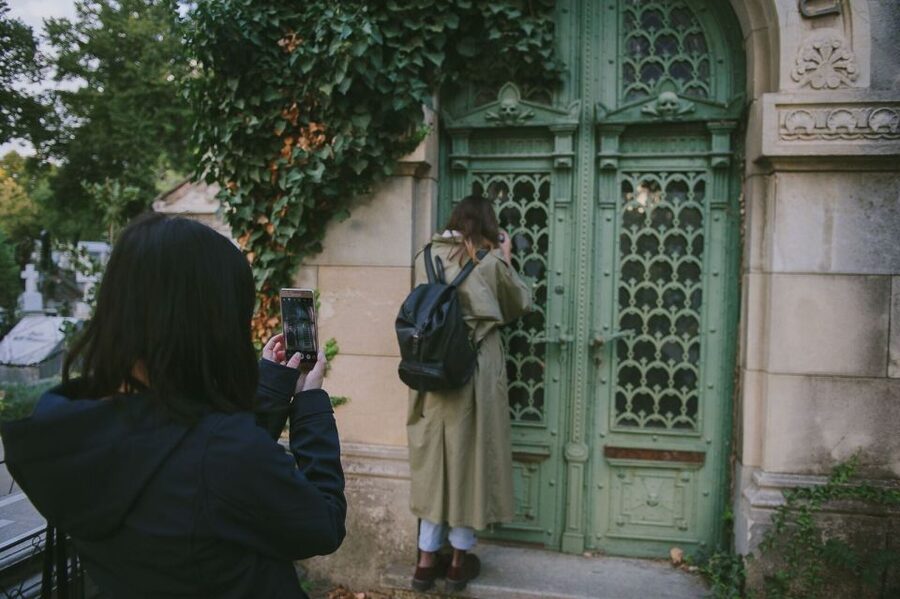
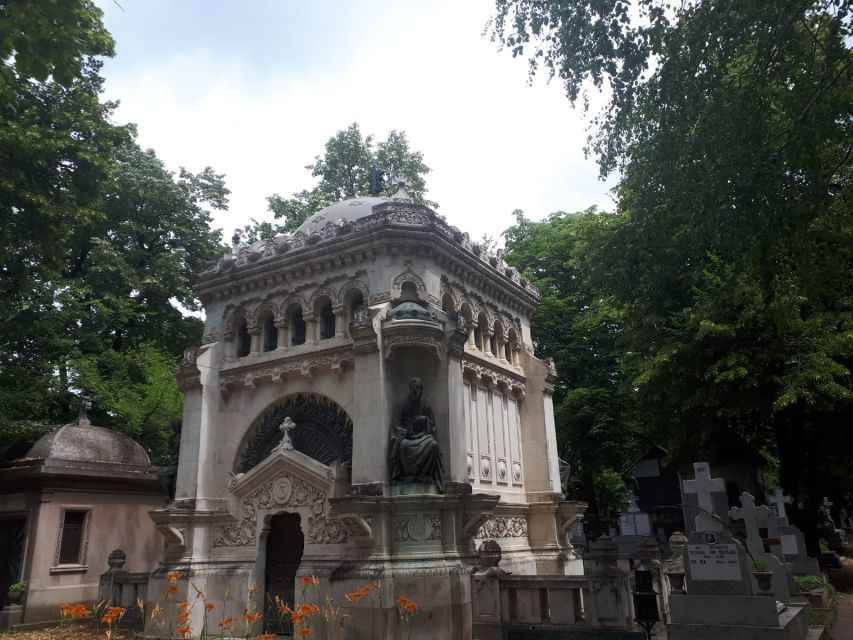
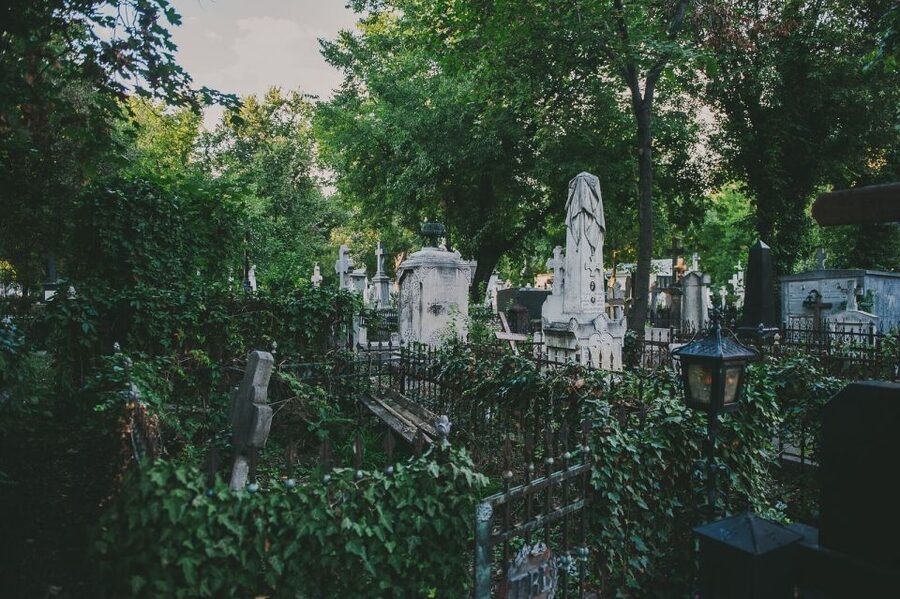
Bellu Cemetery is the heart of the experience. It is a national historical monument, and its appeal goes far beyond the usual cemetery visit. The grounds contain ornate tombs, statues, crypts, and elaborate funerary details that give the place the feel of an outdoor art collection.
This is where the guide’s skill matters most. A name and date on a gravestone can mean little on its own. A story about a family, a love affair, a public figure, or a strange death gives the monument a human place in Bucharest’s past.
The tour covers a range of stories, from sad love stories to sinister mysteries. You also hear about Romanian beliefs and folklore connected with death. The tone is not simply horror for its own sake. The cemetery becomes a way to understand how people remembered the dead, displayed status, expressed grief, and passed local stories from one generation to the next.
The setting has an informal side, too. Cemetery cats and dogs appear often in the experience, and guides such as Elena and Irina are known for caring for them. You may get the chance to feed or pet some of the animals living around the grounds. That is an unexpected human touch, although it should not be the reason you book. The main attraction remains the architecture and the stories.
Bellu can also be emotionally heavy. You are walking through a working cemetery, not a theme park. A respectful attitude is essential, especially when the discussion turns to death, murder, or personal tragedy.
University Square and the bloodied road out of communism
The next major section focuses on University Square, one of Bucharest’s most important public spaces. Its meaning comes from the events connected with it, especially the 1989 Revolution and the anti-communist student protests of the 1990s.
The guide explains how these events shaped modern Romania and why this square matters beyond its ordinary city traffic and buildings. The tour’s strength here is its focus on physical places. Instead of treating the Revolution as a distant textbook event, it connects political change to the streets where people gathered, resisted, and died.
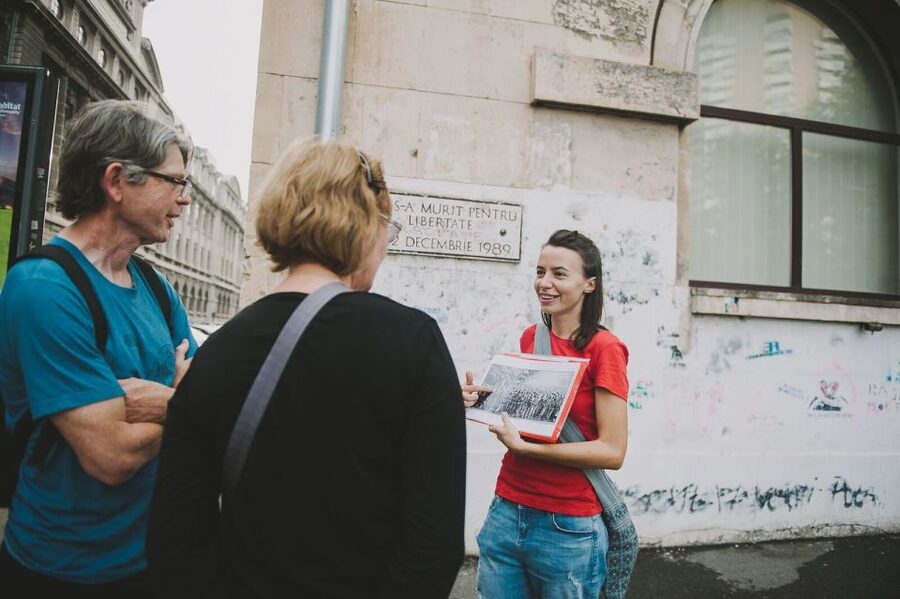
You will also hear about the student protests that followed the fall of Nicolae Ceaușescu. Both periods were marked by violence, and the tour does not soften that fact. Depending on the guide, you may be encouraged to notice small traces around the city, such as bullet holes, street art, and other details that are easy to pass without understanding.
Alex has received particular praise for pointing out such small features and explaining their meaning. That kind of attention changes the way you look at Bucharest after the tour. A damaged wall or ordinary intersection may suddenly carry a much heavier story.
This part is especially useful if you already know a little about the 1989 Revolution but want to understand its local setting. If you know nothing about Romanian politics, the guide helps connect the main names and events without turning the walk into a lecture.
A return to Little Paris, with brothels and a killer
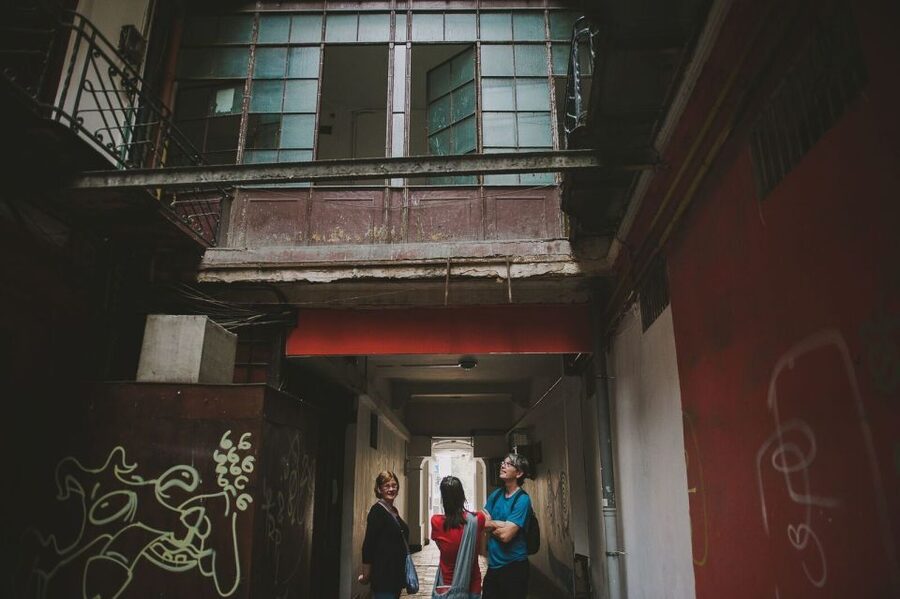
Bucharest was once known as Little Paris, a nickname linked to its sophisticated interwar culture, architecture, and fashionable social life. This tour uses that era to show a less polished side of the city.
You learn about the sex trade in interwar Bucharest and see what remains of a former brothel. The stop is brief enough to fit into the wider route, but it adds an important social dimension. The city’s glamorous image did not tell the whole story, and the guide shows how pleasure, poverty, commerce, and reputation met in the same streets.
This section also introduces the serial killer nicknamed the Vampire of Bucharest, who terrorized the city in the early 1970s. The story adds a crime-history thread to the political and cemetery material.
Some people will find this the most gripping part of the tour. Others may find the mixture of folklore, murder, and social history uneven. That is fair. This is not a specialist crime tour, and the killer’s story forms one part of a much wider account of Bucharest.
I like the way this section breaks up the political material. After the cemetery and Revolution discussions, the interwar and crime stories remind you that dark history is not limited to dictatorships and war. Ordinary city life can carry its own secrets.
A completely different kind of day out:
- Bucharest: Dracula’s Castle, Peles Castle, & Brasov Old Town
★ 4.5 · 17,858 reviews - Bucharest: Dracula Castle, Peles Castle & Brasov Old Town
★ 4.6 · 10,891 reviews - Bucharest: Dracula’s Castle, Peleș Castle & Brașov Day Trip
★ 4.5 · 5,919 reviews - Bucharest: Palace of Parliament Tickets and Guide
★ 4.3 · 3,182 reviews
Revolution Square and the machinery of fear
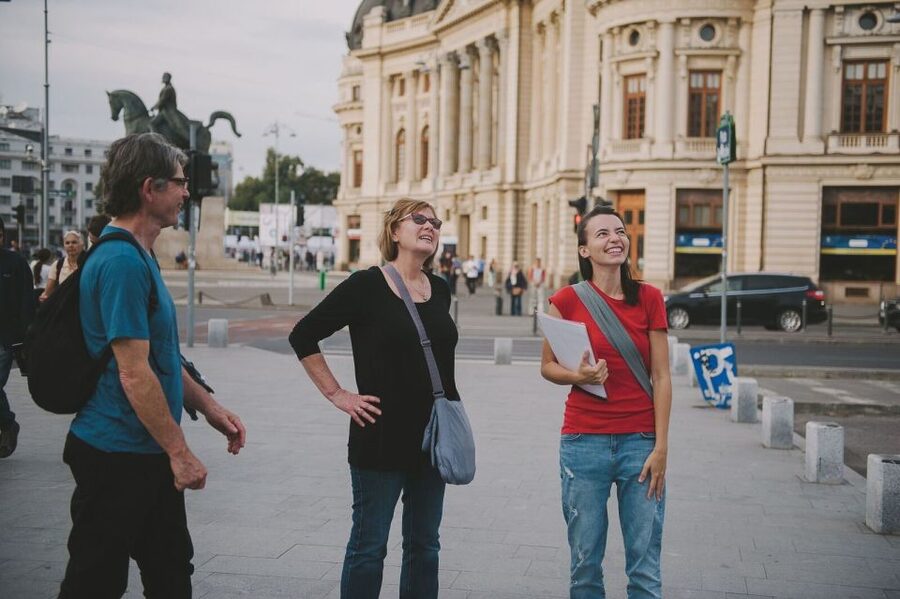
The final major stop is Revolution Square, where the 1989 Revolution began in Bucharest. Here the focus turns firmly to Ceaușescu’s dictatorship and the methods used to silence opposition.
You learn about prisons, labor camps, and torture under the communist regime. The guide also explains the role of the Securitate, Romania’s feared secret police, described here as the country’s own KGB. The discussion covers not only political repression but also the daily hardship people endured to survive.
That last point matters. A history tour can become a list of dates, leaders, and dramatic moments. This one aims to show how dictatorship affected ordinary routines and personal choices. Fear was not confined to prison cells. It reached into workplaces, families, neighborhoods, and the basic task of finding enough to eat and get through the day.
Guides who lived through Romanian communism can add personal context. Vlad, for example, has shared his own experiences of life under the regime, giving the historical material a direct local voice. Personal accounts do not replace careful history, but they can help you grasp what official statistics and political labels often fail to convey.
Revolution Square is also a strong place to end because it brings the story forward. You begin with older graves and local mysteries, then move through interwar society and communist oppression, finishing at the point where Romania’s political order began to break apart.
Guides who make or break the experience
This tour depends heavily on the person leading it. The route covers difficult subjects, and a flat delivery would make three hours feel long. Fortunately, the guides are repeatedly praised for warmth, humor, clear explanations, and genuine enthusiasm for Bucharest.
Alex is known for extensive knowledge of history, culture, and architecture, as well as for using photographs and personal anecdotes. Elena is praised for her friendliness, humor, and ability to tailor the conversation to the group. Andra brings a thoughtful style and explains complex events in a way that is easy to follow.
Irina, Vlad, Bogi, and other guides have also led the experience. Their personalities may differ, but the strongest pattern is a personal approach. Guides ask about your interests, answer questions, make regular comfort stops, and sometimes send additional material through WhatsApp after the tour.
That flexibility is valuable in a small group. With a maximum of 12 people, you can ask about architecture, Romanian culture, folklore, language, food, or the communist period without trying to interrupt a crowd. On quieter dates, the tour may feel almost private. Several bookings have involved only a few people, and some guides extended the time or added extra information.
You should not book expecting a guaranteed private tour or a specific guide. The advertised group limit is 12, not one-to-one service. But the small maximum gives the guide room to respond to questions and adjust the pace.
How the $55 price holds up
At $55 per person, this is not the cheapest way to spend three hours in Bucharest. The value comes from the combination of a local English-speaking guide, a specialized subject, two metro rides, and a traditional street snack.
You are paying for interpretation rather than admission tickets. The cemeteries and public squares are the setting, while the guide supplies the context that makes them meaningful. If you walked to these places alone, you would see statues, graves, streets, and buildings, but you would miss much of the connection between them.
The included metro tickets remove a small but useful expense. The snack is modest, likely a Romanian chocolate bar or similar traditional treat, but it is a pleasant detail rather than a major part of the value. Food and drinks beyond that are not included, so bring money if you want anything else.
I think the price is fair for someone who wants history delivered with local insight and does not want a standard list of famous buildings. It is less compelling if you prefer museums, a short panoramic overview, or a tour focused on beautiful architecture without difficult subjects.
Who will enjoy this dark history walk?
I would recommend it to:
- Adults interested in political history, crime, folklore, cemeteries, or social history.
- First-time visitors who want a side of Bucharest beyond the standard central sights.
- People curious about the 1989 Revolution and Ceaușescu’s Romania.
- Visitors who enjoy asking questions and having a conversational guide.
- Anyone comfortable with long periods of walking and outdoor storytelling.
I would think twice if you are traveling with children under 16, since they are not permitted. The tour also may not suit you if subjects involving murder, torture, prostitution, and political violence are not your idea of a pleasant afternoon.
It is also not the best choice for anyone who needs a fully indoor activity. Much of the experience takes place outside, and cold weather can make the stops uncomfortable. In summer, comfortable shoes and water remain sensible because the route involves plenty of walking.
Practical tips before you go
Meet at the National Theatre entrance and arrive ready to move. The tour lasts three hours, and the schedule includes both walking and metro travel.
Wear comfortable shoes, as requested by the operator. Bring an extra layer in cold months. Several people found that standing in cemeteries and squares felt colder than expected, even when they were focused on the guide.
Keep an open mind about the tone. The tour is informative and often funny, but it does not turn grim events into cheap entertainment. The best moments use dark stories to explain Bucharest’s culture and Romania’s past.
If you enjoy the conversation, ask questions. Guides have been praised for discussing architecture, language, local food, personal experiences, and broader recommendations as well as the planned subjects. The tour can become more useful when you tell the guide what you want to understand.
Free cancellation is available up to 24 hours before the start, and you can reserve now and pay later. Those options are helpful if your Bucharest schedule is still shifting.
Should you book the Bucharest Dark History Tour?
Book it if you want a serious but approachable look at Bucharest, especially the 1989 Revolution, communist repression, Bellu Cemetery, and stories that standard sightseeing tours tend to skip.
The strongest reasons to go are the cemetery, the small group size, and the quality of the local guides. Bellu gives the tour its visual center, while University Square and Revolution Square provide the political weight. The interwar brothel and Vampire of Bucharest story add unusual material without taking over the whole afternoon.
I would not choose it as your only introduction to Bucharest if you want the city’s art museums, royal landmarks, or food scene. But as a second look, or as an opening tour for anyone drawn to difficult stories and local voices, it offers strong value for three hours and $55.
FAQ
How long is the Bucharest Dark History Tour?
The tour lasts three hours.
How much does the tour cost?
The listed price is $55 per person.
Where does the tour meet?
It meets at the main entrance of the Ion Luca Caragiale National Theatre, Bulevardul Nicolae Bălcescu 2, Bucharest.
What language is the tour conducted in?
The tour is conducted in English by a live English-speaking guide.
Is Bellu Cemetery included?
Yes. Bellu Cemetery is one of the main places visited during the tour.
Which historical events are covered?
The tour covers the 1989 Revolution, anti-communist student protests in the 1990s, Ceaușescu’s dictatorship, communist prisons and labor camps, torture, and the Securitate.
Does the tour include public transportation?
Yes. Metro tickets used during the tour are included.
Is food included?
A traditional street snack is included. Additional food and drinks are not included.
Can children join the tour?
No. Participants under 16 years old are not permitted.
How large is the group?
The maximum group size is 12 people.
What should I bring?
Bring comfortable shoes. Warm clothing is also a sensible choice during cold weather because parts of the tour take place outdoors.
Can I cancel the booking?
Yes. You can cancel up to 24 hours in advance for a full refund.
Just added in Bucharest
- Bucharest: Dealu Mare Winery Private Trip with Wine Tasting★ 4.9 · 6 reviews
- Winery touring & private wine tasting – one day private tour★ 5.0 · 3 reviews
- Village Museum Bucharest Guided Tour★ 5.0 · 6 reviews
- Transylvania Tour: Dracula’s Castle, Peles Palace & Brasov★ 5.0 · 19 reviews
- Transfer Airport Otopeni – Bucharest★ 5.0 · 2 reviews
- Private Transfer Bucharest Otopeni Airport (OTP) to/from Brasov★ 5.0 · 2 reviews
- Bucharest Airport Transfer To Constanta Mamaia★ 5.0 · 3 reviews
- Airport Henri Coanda (Otopeni) to Bucharest – Private Transfer – Driver★ 5.0 · 5 reviews
3-Hour Experiences, compared.
Alternative Bucharest: 2.5-3 Hours Walking tour (Small groups)
Read our review →
3h Bucharest Private Walking Tour – only your group
Read our review →

Private Transfer and 3H Tickets to Therme Bucharest
Read our review →Browse the lists this tour appears in