
REVIEW · WALKING TOURS
Bucharest: Sweet Delights History and Desserts Walking Tour
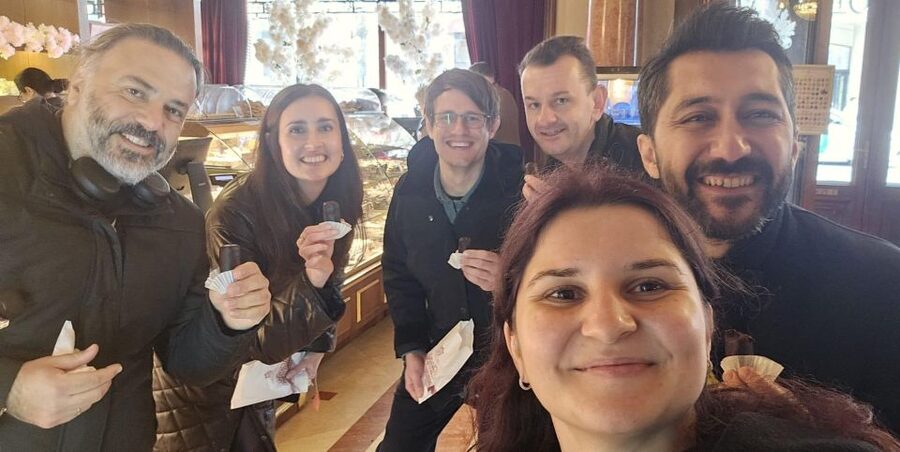
Dessert can explain a city. This three-hour Bucharest walk links French-style pastry, Ottoman and Balkan flavors, and more than 500 years of local history. I like the clever route from the Romanian Athenaeum to the Old Town, and I like that the small group is limited to 10 people, with guides such as Mara and Elena adding personal insight.
The tasting stops are more than snack breaks. You get an éclair, chocolate truffle, Romanian sweet snack, and papanasi while learning about monarchy, communism, the 1989 Revolution, and modern Bucharest. The main drawback is that the tour suits people comfortable walking and eating several sweet items, while the Romanian Athenaeum entrance costs an extra 15 lei in cash.
In This Review
- Key points to know before booking
- Why sweets are a smart way to meet Bucharest
- Starting beside the Romanian Athenaeum
- Carol I and the royal chapter
- Revolution Square and a taste of communist Bucharest
- Walking Calea Victoriei and finding Little Paris
- Capsa Pastry and the flavor of the past
- Old Town, medieval stories, and the final papanasi
- What $77 includes, and what it does not
- Guides, pace, and the practical side
- Who will enjoy this Bucharest dessert walk
- Should you book the Sweet Delights History and Desserts Walking Tour?
- FAQ
- Where does the tour begin?
- Where does the tour end?
- How long does the experience last?
- What desserts are included?
- Is entry to the Romanian Athenaeum included?
- Is the tour conducted in English?
- How large is the group?
Key points to know before booking
- Four included sweet tastings: Try an éclair, chocolate truffle, famous Romanian sweet snack, and papanasi, plus water.
- A history-led central route: Visit the Athenaeum, Revolution Square, Calea Victoriei, Capsa Pastry, and Bucharest Old Town.
- A small English-speaking group: The maximum group size is 10, which leaves room for questions and conversation.
- A strong guide makes the difference: Mara and Elena have been praised for clear explanations, humor, useful city advice, and personal perspective.
- Three hours on foot: Wear casual clothing and comfortable shoes, especially since the tour includes several walking stretches.
- Good value for a first look: At $77 per person, the price covers the guide, tastings, water, and a focused introduction to central Bucharest.
Why sweets are a smart way to meet Bucharest
Bucharest is often linked with the nickname Little Paris, but the city’s food culture is not simply French. Its pastries reflect French training, Ottoman traditions, Balkan customs, and Romanian tastes. That mix gives this walk a useful purpose: you are not just eating cake, you are following the city’s changing influences.
The tour begins with an éclair near the Romanian Athenaeum. From there, the route moves through the royal period, communist rule, the 1989 Revolution, French-style architecture, an old pastry shop, and medieval stories in the Old Town. The sweets act as small markers along the way.
I like this approach because Bucharest can be hard to read at first. Its grand avenues, ornate buildings, communist-era scars, and lively Old Town do not always seem to belong to the same city. A guide can connect those pieces in a way a quick sightseeing walk may not.
The experience is also a useful first-day activity. You get a central orientation, hear ideas for restaurants and other things to do, and learn the broad shape of Romanian history before exploring on your own. Just remember that the tour is conducted in English, so it works best if you are comfortable listening to a fairly detailed explanation while walking.
More History Tours in Bucharest
- Bucharest: 3-Hour Dark History Tour with a Local
★ 4.9 · 301 reviews - Bucharest: Small Group History, Art & Secrets Tour
★ 4.7 · 152 reviews - Guided Walking Tour of Historical Bucharest
★ 5.0 · 84 reviews
Starting beside the Romanian Athenaeum
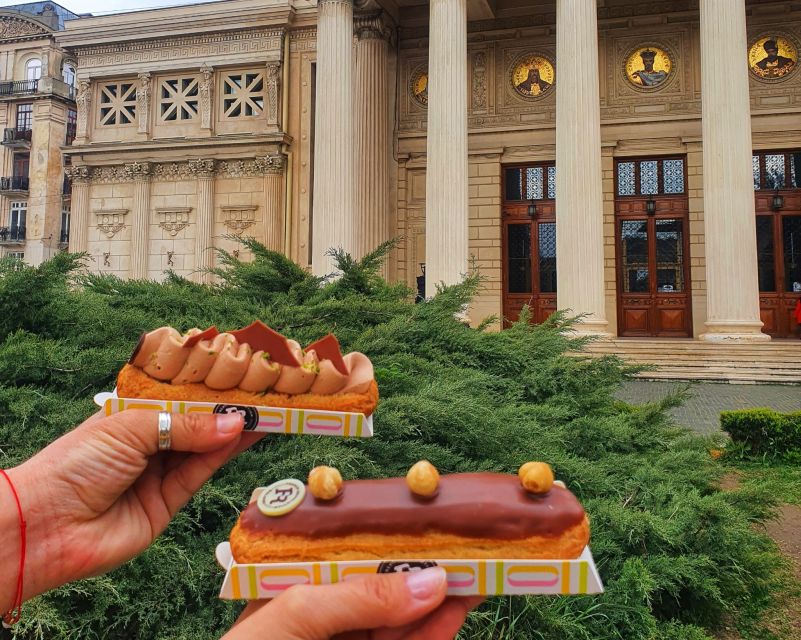
Meet your guide on the stairs of the Romanian Athenaeum at Strada Benjamin Franklin 10. Look for a guide wearing a tag and carrying a sign for Mara’s Tours&Travel. This clear landmark is helpful in central Bucharest, and the building gives the tour an impressive opening point.
The Athenaeum is tied to Bucharest’s royal and cultural past. The first stop, listed as French Revolution Ateneul Român, includes the first dessert and about 15 minutes of guided explanation. Here, the éclair introduces the French side of Bucharest’s pastry story and the period when Romania was a prosperous monarchy.
This is a good example of the tour’s method. The food gives you something immediate to focus on, while the setting opens a larger discussion about the city. The guide can explain how pastry chefs trained in France brought techniques back to Romania, helping fashionable French-style desserts gain a place beside older Oriental sweets.
The tour does not include entry to the Romanian Athenaeum. If you want to go inside, the listed price is 15 lei, or about 3 euros, and you must pay in cash. Since the visit is optional and the tour meets outside, you can decide based on your schedule and interest in the building.
Carol I and the royal chapter
The route then reaches the Equestrian Statue of Carol I for about 10 minutes of guided commentary. This stop keeps the focus on monarchy and helps explain the setting around the Athenaeum and central Bucharest.
The value here is not a long museum visit. It is a concise public-space lesson. You are looking at a monument while the guide places it within the story of Romania’s royal period. That makes the stop easy to follow, even if you know little about Romanian political history before arriving.
I would pay attention to how the guide handles the idea of Bucharest as Little Paris. The nickname refers to more than a few elegant façades. It points to an era when French cultural influence shaped architecture, fashion, education, and food among the city’s elite.
Because this is a walking tour, the explanation stays tied to what you can see. You are not sitting in a classroom listening to a long lecture. You move from one city space to another, with a short tasting or landmark helping break up the information.
Revolution Square and a taste of communist Bucharest
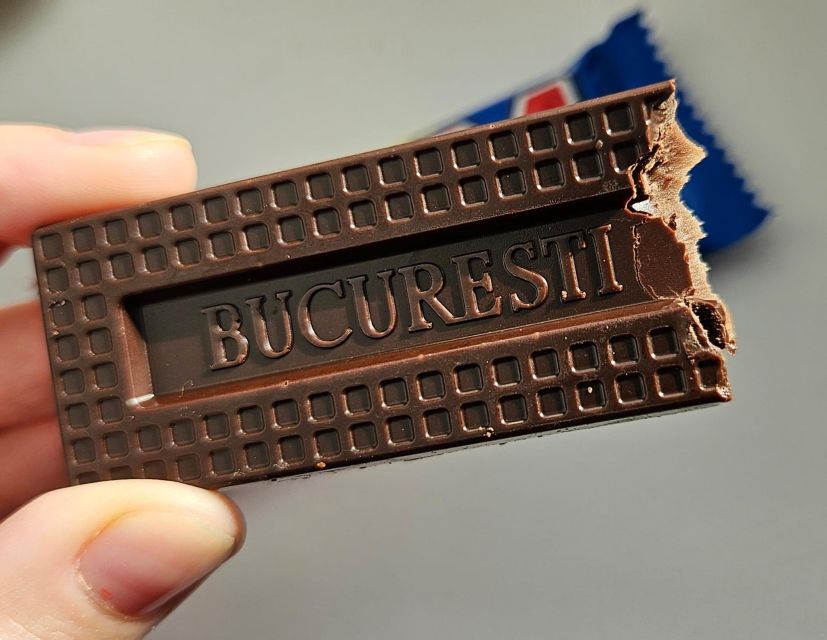
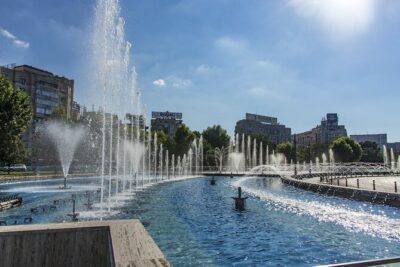
The tour spends about 25 minutes at Revolution Square, one of the most important stops on the route. Here, you learn about daily life during the communist period and the events of the 1989 Revolution. You also taste the famous Romanian chocolate bar included in the experience.
This is where the food theme becomes especially effective. A familiar sweet snack can open a discussion about ordinary life, shortages, childhood memories, and changing consumer culture. The provided information does not specify the brand, so you should treat it as a Romanian sweet snack rather than expect a particular product.
The historical subject is serious, and the tour appears to give it room rather than rushing past it. One guide, Elena, has been praised for connecting Romanian history with personal experience and for explaining the country’s past through to the present. That personal angle can make a difficult period easier to understand, while still leaving room for questions.
Revolution Square is also a useful place to pause and look around. The tour’s appeal is not only the major event itself, but the chance to consider how political change affected the city and the people who lived through it. If you prefer tours that stay light and avoid modern history, this section may feel more intense than the dessert theme suggests.
More Walking Tours in Bucharest
- Bucharest: City Highlights Guided Walking Tour
★ 4.9 · 1,482 reviews - Bucharest Highlights Walking Tour
★ 5.0 · 469 reviews - Bucharest: Ghost Stories & Romanian Mythology Walking Tour
★ 4.9 · 287 reviews - Bucharest: Guided Walking Tour with Romanian Snack
★ 4.9 · 228 reviews
Walking Calea Victoriei and finding Little Paris
The route continues along Calea Victoriei for about 20 minutes. This is the main architectural walk, where the guide explains why Bucharest earned its Little Paris nickname and points out French-style buildings.
Calea Victoriei gives the tour visual variety. You are no longer learning only from statues and squares. You are walking through one of Bucharest’s best-known central streets and seeing the architectural influence discussed earlier.
I like the order of the route. The French pastry introduction comes first, the royal setting follows, and then Calea Victoriei lets you see how those cultural ambitions appeared in the city itself. The food and buildings support each other instead of feeling like separate parts of a standard city tour.
Do not expect a full architectural survey. The walk lasts about 20 minutes, and the entire experience has to make room for food, history, and the Old Town. Still, it provides enough context to help you notice details you might otherwise pass without a second look.
Capsa Pastry and the flavor of the past
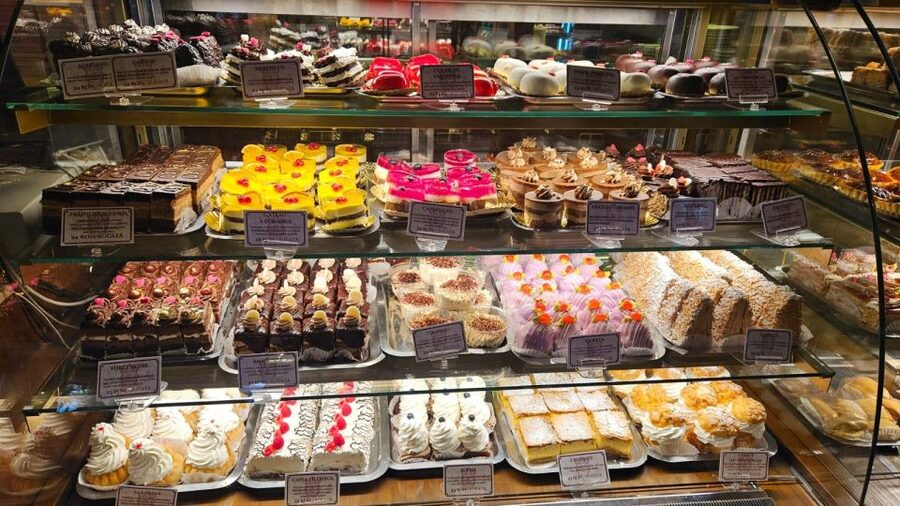
At Capsa Pastry, the tour pauses for about 20 minutes, including another dessert and guided discussion. This is described as the oldest standing cakeshop in town, making it one of the most distinctive stops on the route.
The pastry shop connects Bucharest’s social and culinary past. Earlier, you heard how French-trained pastry chefs changed the city’s dessert culture. At Capsa, that story gains a physical setting. The tasting becomes a chance to consider how sweets once signaled refinement, fashion, and contact with Western Europe.
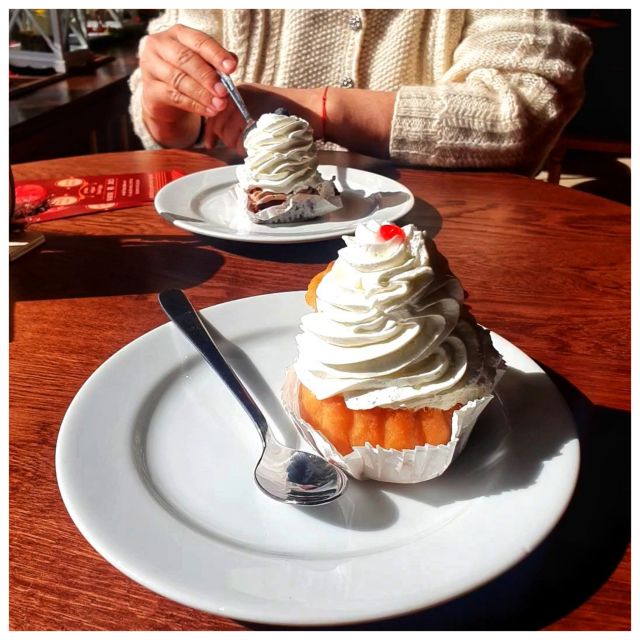
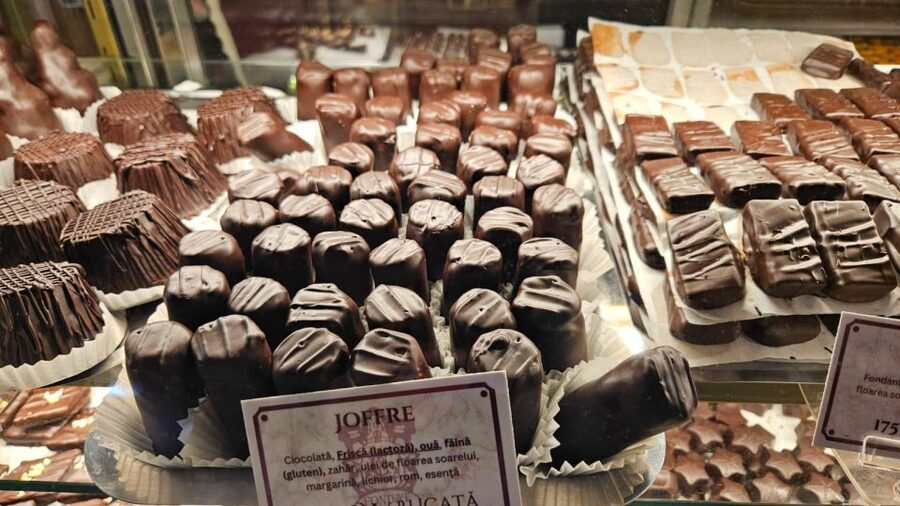
The exact pastry served here is not specified separately in the supplied details, so the included tasting may be one of the listed sweets rather than an additional item. You receive one éclair, one chocolate truffle, one famous Romanian sweet snack, one Romanian doughnut, and water in total. Additional food and drinks cost extra.
That distinction matters for the $77 price. This is not an all-you-can-eat food tour. The portions are tasting-sized, and much of what you pay for is the guide’s interpretation of Bucharest. If you want a meal, plan to eat before or after the walk.
Old Town, medieval stories, and the final papanasi
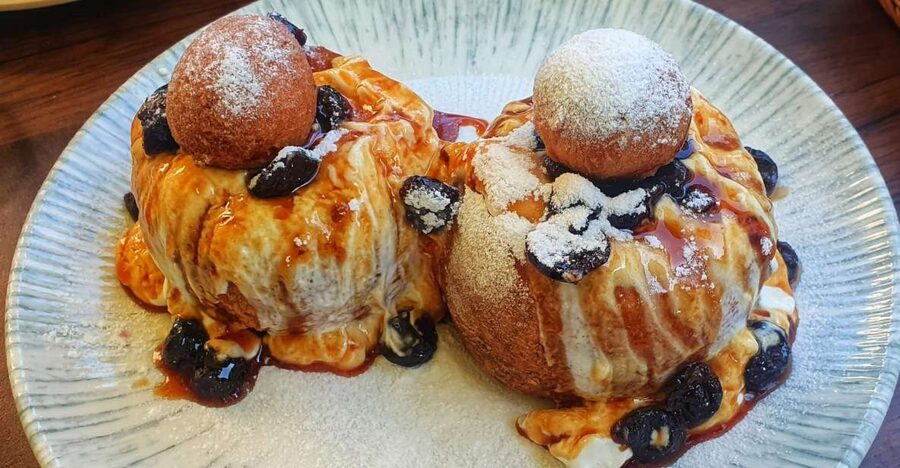
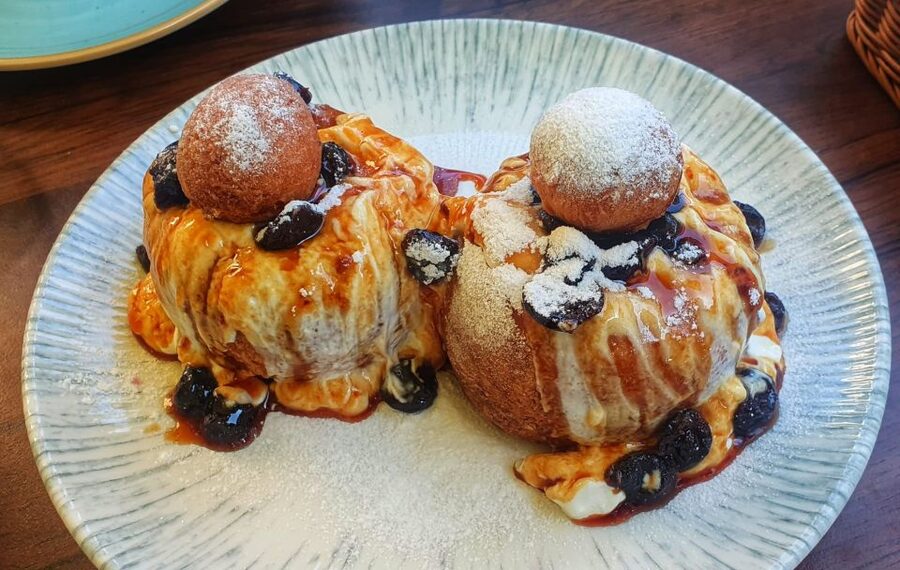
The final major section takes about 45 minutes in Bucharest Old Town and ends at City Grill Covaci. The guide brings together medieval legends, customs, and influences from the empires that shaped Romanian culture. The tour finishes with papanasi, the most famous Romanian dessert included in the experience.
Papanasi is a fitting final course because it gives you a distinctly Romanian sweet after the earlier French and broader European influences. The tour has moved from éclair to chocolate to older pastry traditions, then ends with a dessert that feels like a local signature.
The Old Town portion is the longest stop, so you get time to ask questions and connect the earlier historical periods. The guide’s role is especially important here. Mara has been praised for making the walk funny and energetic while explaining Bucharest and Romania in detail. Elena has received similar praise for being personable, clear, and able to bring the city’s story into the present.
The finish at City Grill Covaci is practical. You are left in the Old Town, where you can continue exploring or stop for a fuller meal. Since the tour ends with a sweet rather than lunch, do not arrive expecting the final papanasi to replace a proper meal.
What $77 includes, and what it does not
The cost is $77 per person. That is not the cheapest way to eat a few desserts in Bucharest, but the comparison is not quite fair. The fee includes three hours with an English-speaking local guide, four included tastings, water, and a structured route through major central sights.
You are paying for context as much as calories. The guide connects pastry to monarchy, cultural exchange, communism, revolution, and modern Romanian identity. If you would otherwise book a separate history walk and then search out traditional sweets on your own, the combined format can offer solid value.
The small group also matters. With a maximum of 10 people, the guide can answer questions more easily than on a large coach-style walk. One booking happened to have only two participants, which created a particularly personal experience, though you should not assume every departure will be that small.
The Athenaeum entrance is not included and costs 15 lei in cash. Extra food and drinks are also excluded. Taken together, the tour is best for someone who wants guided interpretation and a sample of local sweets, not someone mainly looking for the lowest-cost way to fill up on pastries.
Guides, pace, and the practical side
The strongest feature is the human element. Mara is repeatedly described as friendly, professional, funny, energetic, and very well informed about Bucharest and Romania. Elena is praised for being charming, personable, and able to explain history through both national events and personal experience.
Those qualities matter because the subject moves across several centuries and includes difficult political material. A dry guide could make the route feel like a list of dates. A warm guide can help you understand why the places and desserts matter.
The walk lasts three hours and includes several stops with standing and movement between them. Comfortable shoes are specifically advised, and casual clothing is suitable. The route remains in central Bucharest, but you should still be ready to walk rather than treat it as a seated tasting.
The tour runs in English, with starting times depending on availability. You can cancel up to 24 hours ahead for a full refund, and the reserve-now, pay-later option allows you to hold a place without paying immediately. Those policies are useful if your Bucharest plans are still changing.
Who will enjoy this Bucharest dessert walk
I would recommend it most strongly to first-time visitors who want a central introduction without committing to a full-day excursion. The route covers several major areas and gives you practical ideas for what to do and where to eat afterward.
It also suits anyone who prefers history in small portions. You learn about monarchy at the Athenaeum and Carol I, communism and 1989 at Revolution Square, French influence on Calea Victoriei, old pastry culture at Capsa, and medieval and imperial influences in the Old Town.
Families and mixed-interest groups may find the food helpful because it gives younger participants something to anticipate between historical stops. People who are not especially interested in desserts can still enjoy it, since one participant specifically found the mix worthwhile despite not being a big fan of sweets.
I would think twice if you dislike sugary foods, have dietary restrictions not addressed in the tour details, or want a deep architectural tour with interior visits. The Athenaeum entrance is optional and extra, and the route’s main focus is the connection between sweets and history.
Should you book the Sweet Delights History and Desserts Walking Tour?
Book it if you want Bucharest explained through places you can see and sweets you can taste. The route is well shaped, the subject matter reaches beyond postcard sights, and the small English-speaking group gives the guide space to be personal and useful.
The best reason to choose it is the combination of serious history and simple pleasures. You can learn about the 1989 Revolution, admire Calea Victoriei, hear why Bucharest was called Little Paris, and finish with papanasi without spending a whole day in museums.
Skip it if you want a full meal, a budget food crawl, or a tour with no political history. For most first-time visitors with an interest in Romanian culture and a sweet tooth, $77 is a reasonable price for three hours of orientation, explanation, and carefully chosen tastes.
FAQ
Where does the tour begin?
It begins on the stairs of the Romanian Athenaeum at Strada Benjamin Franklin 10. Your guide will wear a tag and carry a sign for Mara’s Tours&Travel.
Where does the tour end?
The tour ends at City Grill Covaci in Bucharest Old Town.
How long does the experience last?
The walking tour lasts three hours. Starting times vary, so you need to check availability when booking.
What desserts are included?
The experience includes one éclair, one chocolate truffle, one Romanian doughnut, one famous Romanian sweet snack, and one papanasi, along with water.
Is entry to the Romanian Athenaeum included?
No. Entry costs 15 lei, about 3 euros, and must be paid in cash.
Is the tour conducted in English?
Yes. The tour is led in English by a live English-speaking guide.
How large is the group?
The tour is limited to 10 participants, making it a small-group experience.
Just added in Bucharest
- Bucharest: Dealu Mare Winery Private Trip with Wine Tasting★ 4.9 · 6 reviews
- Winery touring & private wine tasting – one day private tour★ 5.0 · 3 reviews
- Village Museum Bucharest Guided Tour★ 5.0 · 6 reviews
- Transylvania Tour: Dracula’s Castle, Peles Palace & Brasov★ 5.0 · 19 reviews
- Transfer Airport Otopeni – Bucharest★ 5.0 · 2 reviews
- Private Transfer Bucharest Otopeni Airport (OTP) to/from Brasov★ 5.0 · 2 reviews
- Private Bucharest Otopeni Airport (OTP) Transfer★ 5.0 · 2 reviews
- Bucharest Airport Transfer To Constanta Mamaia★ 5.0 · 3 reviews
Walking Tours, compared.

Walking Tour- Delightful Bucharest (Highlights, Stories, Sights)
Read our review →

4h Bucharest Private Tour (2h by Car and 2h Walking in Old Town)
Read our review →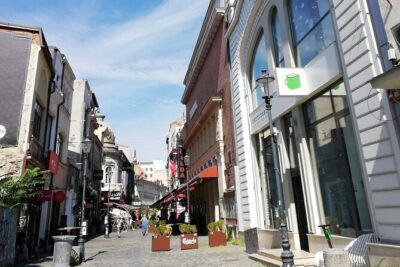
Browse the lists this tour appears in