
REVIEW · COMMUNISM AND CEAUSESCU TOURS
Bucharest Communism: From Lenin to Ceausescu
Communist Bucharest tells a brutal story. This 2.5-hour walking tour connects grand boulevards, demolished neighborhoods, food shortages, secret police, and the 1989 Revolution into one clear account of Romania’s past. I like its strong political focus and the way it links famous sights to ordinary life under dictatorship. The $23 price is also fair for a live guide and a long city walk.
I also like the range of guides praised by name, especially Alex and Horia, who bring humor, detail, and personal warmth to a difficult subject. The main drawback is that entrance tickets, food, and drinks are not included, and much of the experience takes place outdoors. Arrive ready to walk, listen, and think.
In This Review
- Key points before you book
- Starting beside the Palace of Parliament
- From Marxist theory to Romania’s political past
- Antim Monastery and the Patriarchal Cathedral
- Bucharest Fountains and Piața Unirii
- Old Town and the question of what changed
- University Square and the Royal Palace
- The Romanian Athenaeum and competing ideas of Romania
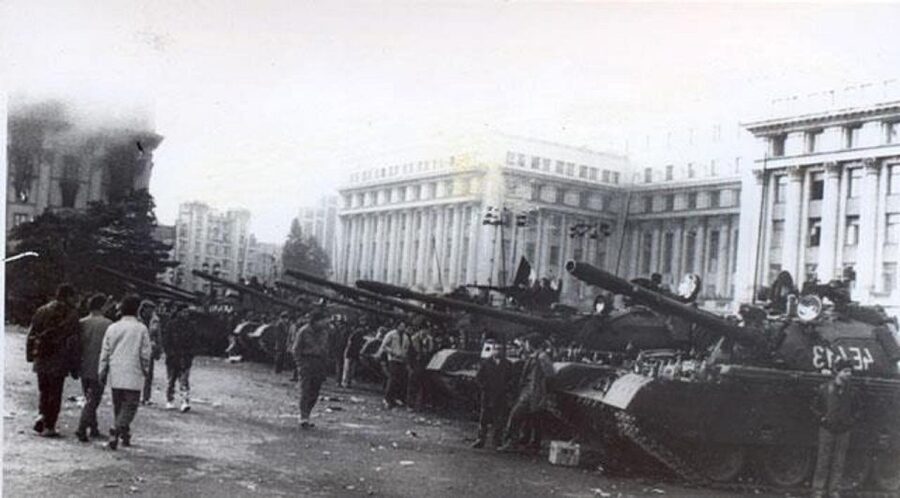
- Revolution Square and the final days of Ceausescu
- What the guides add to the experience
- Is $23 a fair price?
- Who should take this walk?
- Should you book Bucharest Communism: From Lenin to Ceausescu?
- FAQ
- How long does the Bucharest Communism tour last?
- How much does the tour cost?
- Where does the tour begin?
- Where does the tour finish?
- Is the Palace of Parliament entrance ticket included?
- Are food and drinks included?
- Which languages are available?
- Can I cancel for a full refund?
Key points before you book
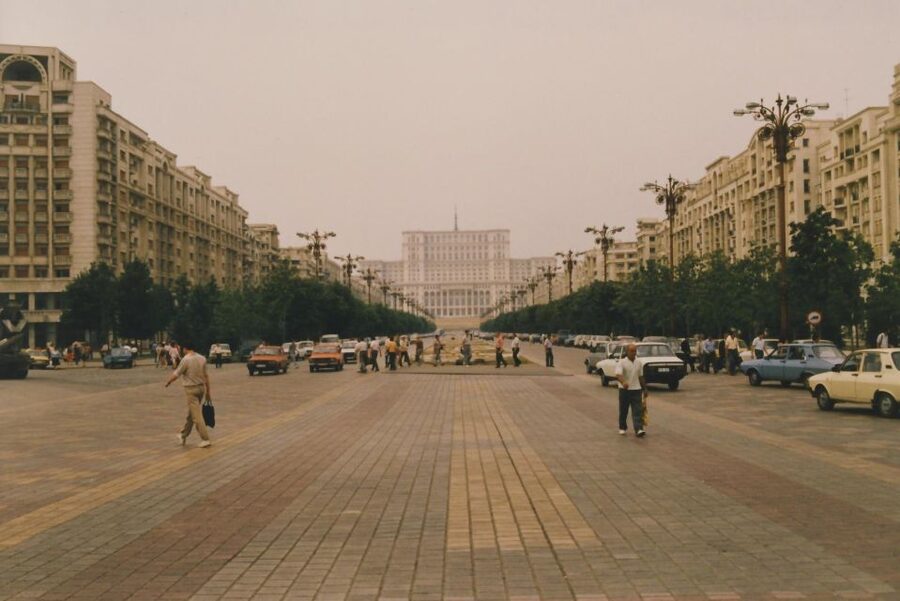
- The tour follows Ceausescu’s grandest project: You begin along Socialist Victory Boulevard, the huge axis built to frame the Palace of Parliament.
- It explains destruction as well as architecture: The redevelopment erased three neighborhoods and about 40,000 households.
- Daily life gets equal attention: Food rationing, 2,000 calories per day, and monthly supplies of cheese, eggs, and meat show what dictatorship meant at home.
- The story reaches beyond Ceausescu: The guide sets Romanian communism against Marxist ideas, the Bolshevik Revolution, and the country’s earlier social order.
- The final stop carries real weight: Revolution Square is where the tour explains the last days, trial, and execution of Nicolae Ceausescu.
- You get a walking history lesson for $23: It is especially good value if you want political context rather than a quick photo tour.
Starting beside the Palace of Parliament
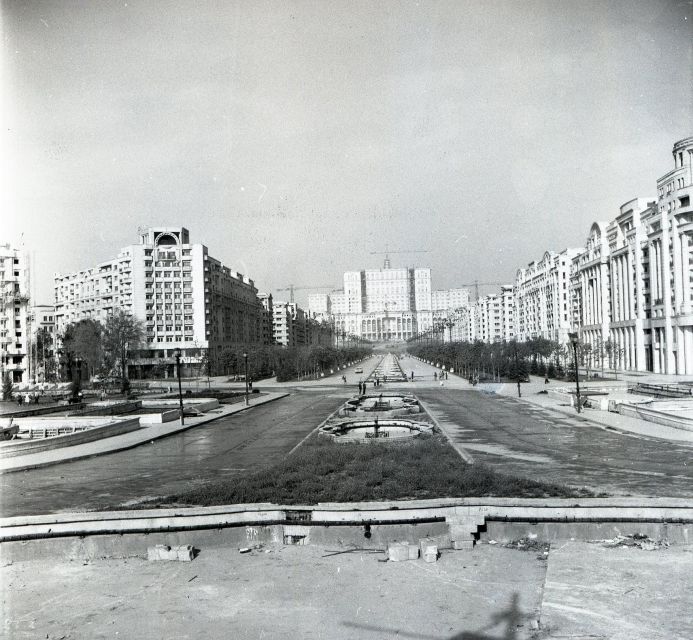
Meet next to The Coffee Shop Constitutiei at Bulevardul Unirii 5. This is a useful starting point because you begin close to the physical symbol of Ceausescu’s rule, rather than warming up with a general city introduction.
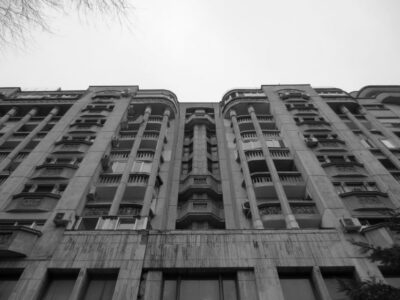
The opening setting is Socialist Victory Boulevard, the last major communist building project. Its scale was designed to project power. The Palace of Parliament dominates the scene, and the boulevard gives you an immediate sense of how the state reshaped Bucharest to serve one leader’s vision.
The guide uses this place to explain the demolition of three neighborhoods and roughly 40,000 households. That detail matters. The palace was not simply built on empty land. Entire streets, homes, churches, and established communities were swept aside for a grand political statement.
You are scheduled to spend about 20 minutes around the Palace of Parliament, with guided sightseeing and walking. This is not a full interior tour. Entrance tickets are not included, so you should treat this stop as an exterior and historical introduction unless you arrange a separate palace visit.
I find that approach sensible for a short walking tour. The building needs context more than another rushed room-by-room visit. You will understand why its size is so controversial, and why the boulevard feels less like an ordinary city street and more like a stage set for state power.
More communism history tours:
- The Real tour of Communism
★ 5.0 · 666 reviews - Life under Communism
★ 5.0 · 358 reviews - 3-Hour Guided Tour of Communist Bucharest
★ 4.9 · 303 reviews
From Marxist theory to Romania’s political past
The tour does not begin with Ceausescu alone. One of its strongest features is the attempt to explain the ideas behind communism before describing how those ideas worked in practice.
The guide may begin with Hegel, Marx, and Engels, then move through the feudal system in Eastern Europe and the Bolshevik Revolution. That broader frame helps you follow the chain from political theory to one-party rule. You do not need a background in philosophy. The point is to show how a promise of social equality became a system of control.
The title refers to Lenin and Ceausescu, but the route is firmly rooted in Bucharest. You see how international ideology was adapted to Romanian conditions, then how power became more personal and repressive under Ceausescu.
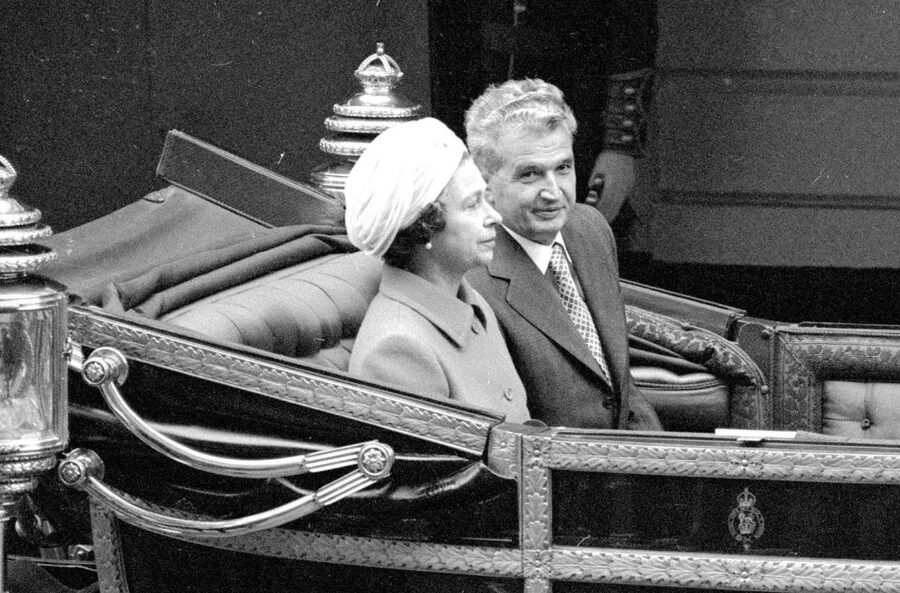
The tour also covers Ceausescu’s poor background and rise to power. That part gives the later dictatorship a human timeline. He did not appear suddenly as the all-powerful ruler seen in the final years. His career developed within the communist system, and his authority grew until the party and the state were almost impossible to separate from his family and image.
The guide’s job here is important. Political history can turn into a list of names and dates very quickly. Alex is repeatedly praised for making the subject digestible, funny, and interactive. Horia is also singled out for combining detailed explanation with the relaxed feel of a walk with a friend. Those qualities suit a subject that can otherwise become heavy going.
Antim Monastery and the Patriarchal Cathedral
From the palace area, the route moves to Antim Monastery, with about 10 minutes for a visit and guided sightseeing. This stop gives the tour a different texture. You are not looking only at communist construction. You are also seeing religious places affected by the state’s approach to tradition and public life.
The visit is brief, so do not expect an extended religious tour. Its value comes from the contrast between older sacred architecture and the enormous modern political project nearby. That contrast helps show what was being pushed aside, controlled, or absorbed during the communist period.
The next stop is the Patriarchal Cathedral. You have around 20 minutes here for a visit, walking, and explanation. Again, the strength is the setting and the story rather than a long interior examination.
The route shows Bucharest as a city with layers. Communist power did not replace everything from scratch. It had to operate among churches, royal buildings, old streets, and established institutions. Seeing those pieces together makes the political changes easier to grasp.
If you prefer a tour focused only on concrete communist architecture, these religious stops may feel like a slight detour. I think they improve the story. They remind you that dictatorship affected an existing society, not just a collection of building sites.
Bucharest Fountains and Piața Unirii
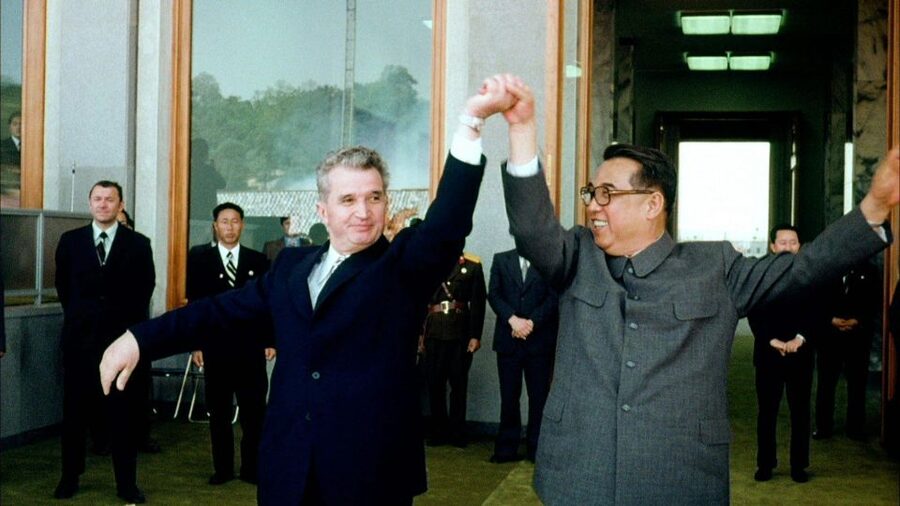
The Bucharest Fountains receive a short five-minute stop. Piața Unirii also has about five minutes of guided sightseeing and walking.
These are quick orientation points rather than full visits. You should expect the guide to use them to explain the planning and symbolism of central Bucharest. The wide spaces and monumental design fit the story of a government that wanted to display order, scale, and authority.
Do not judge these stops by their short timings. Their purpose is to connect the palace district with the historic center. The route keeps moving, and the guide can show how the grand communist axis meets older parts of the city.
This is also where the physical demands of the walk begin to matter. The entire experience lasts 2.5 hours, with several stops and regular walking between them. The supplied information does not give a precise distance or group size, so you should allow for an active urban walk rather than a seated lecture.
A few more Bucharest days worth comparing
- Bucharest: Dracula’s Castle, Peles Castle, & Brasov Old Town
★ 4.5 · 17,858 reviews - Bucharest: Dracula Castle, Peles Castle & Brasov Old Town
★ 4.6 · 10,891 reviews - Bucharest: Dracula’s Castle, Peleș Castle & Brașov Day Trip
★ 4.5 · 5,919 reviews - Bucharest: Palace of Parliament Tickets and Guide
★ 4.3 · 3,182 reviews
Old Town and the question of what changed
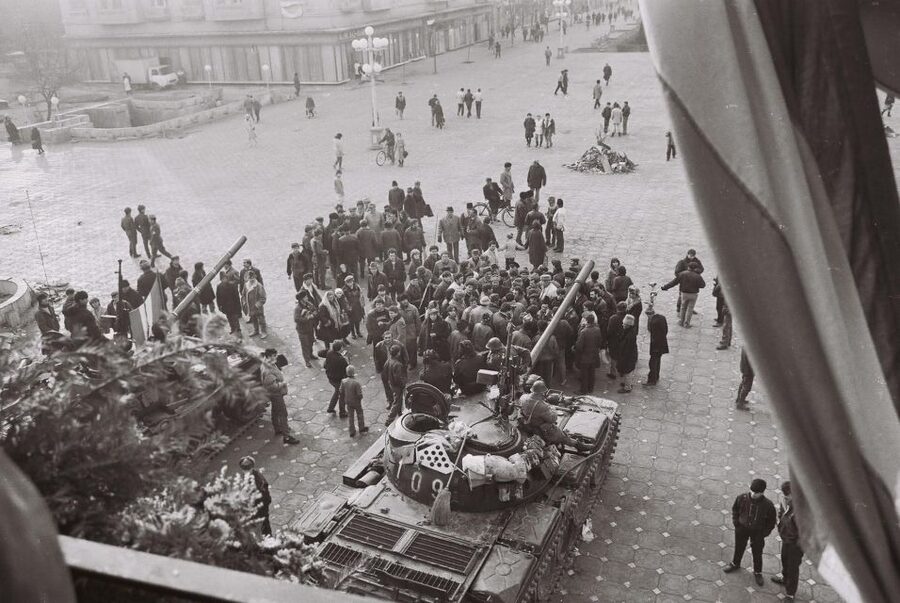
The Old Town stop lasts about 15 minutes. It offers a useful counterpoint to the monumental spaces around the palace and Unirii Square.
Here, the guide can place communist Bucharest within the city that existed before the dictatorship. The tour’s stated focus includes how society was shaped before communist rule, so the Old Town is more than a pleasant break from politics. It helps establish what came before the party state.
The value of this section is comparison. You see a city of older streets and historic buildings after hearing about huge clearances and carefully planned boulevards. The contrast makes the cost of Ceausescu’s urban vision easier to understand.
The Old Town visit is short, so do not expect a full survey of its restaurants, nightlife, or architecture. Food and drinks are not included, and there is no meal built into the tour. If you want to stop for something to eat, plan to do it before or after the walk rather than count on a long break.
University Square and the Royal Palace
University Square is another brief five-minute stop. Its place in the route helps explain the public center of Bucharest and the connection between political authority, education, and protest.
The guide then takes you toward the Royal Palace of Bucharest, with about 10 minutes for guided sightseeing and walking. The palace adds another layer to the political timeline. It points back to the monarchy and the state structure that existed before communist power fully took hold.
The tour works best when you pay attention to these transitions. It is not simply showing one communist building after another. It is asking you to compare monarchy, party rule, royal symbolism, public squares, and mass political control.
The Royal Palace stop is not listed as an interior museum visit, and entrance tickets are not included. Consider it a short historical waypoint. You get the guide’s explanation and the surrounding setting, not a separate palace admission.
The Romanian Athenaeum and competing ideas of Romania
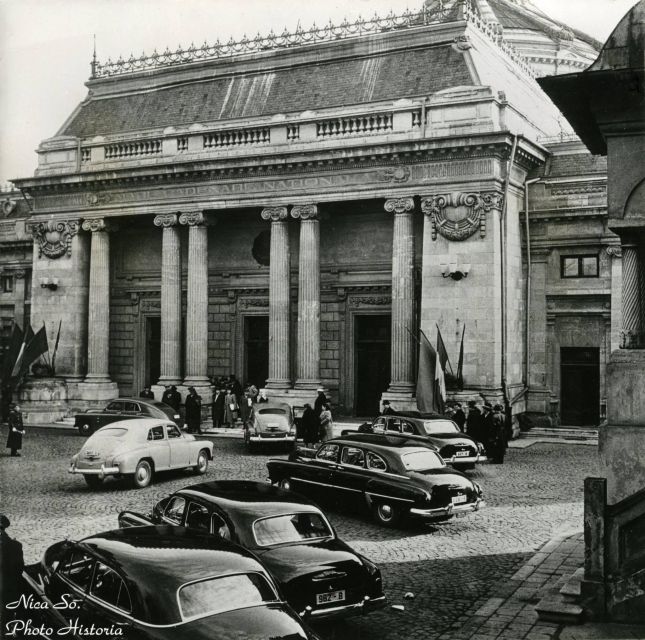
The Romanian Athenaeum receives around 10 minutes. Like the Royal Palace, it helps widen the story beyond the dictatorship itself.
This building represents a different idea of national identity from the one promoted by Ceausescu’s monumental projects. The route places it among the institutions and public spaces that shaped Bucharest before, during, and after communism.
The guide can use this part of the walk to show how the capital’s identity was never only communist. The city carried older cultural, royal, religious, and civic traditions at the same time. That is one reason this tour works better than a simple list of dictatorship facts.
If your interest is specifically in the final years of Ceausescu, the Athenaeum may feel less urgent than the last stop. Still, it prepares you for the change in mood at Revolution Square by showing the broader city that the regime tried to control.
Revolution Square and the final days of Ceausescu
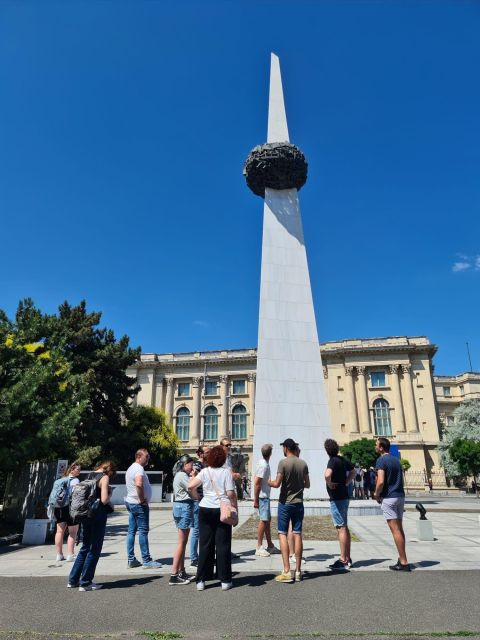
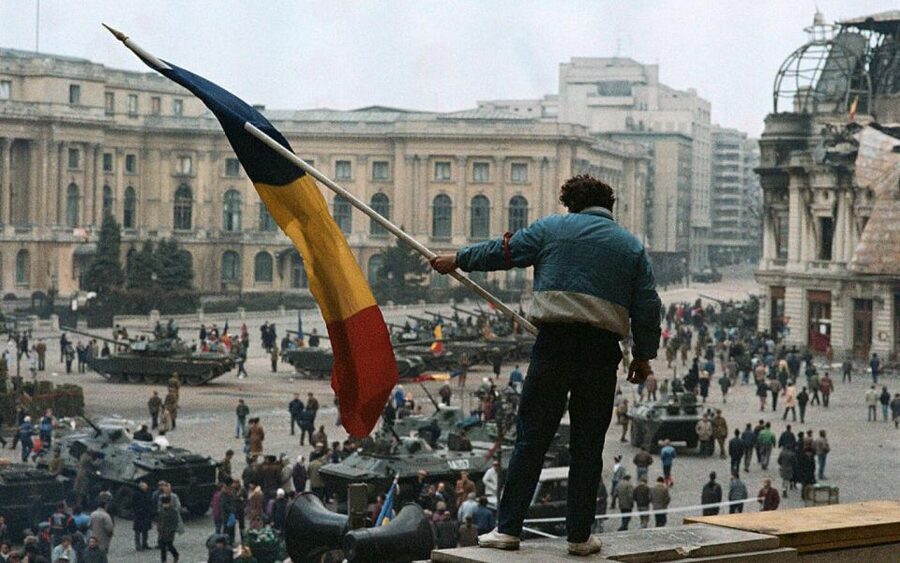
The tour ends at Revolution Square, with roughly 20 minutes for guided sightseeing and explanation. This is the emotional center of the route.
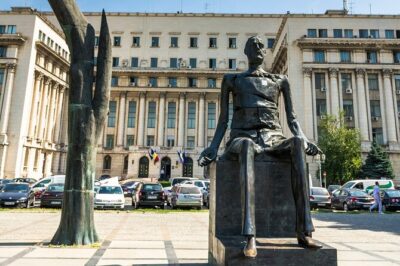
The guide covers the last days of Ceausescu’s regime, the 1989 Revolution, the trial, and the execution. A group of agitators plotted the end of the regime here, and the square became tied to the public collapse of his authority.
This section benefits from the groundwork laid earlier. You have already heard about rationing, surveillance, political ideology, and the destruction caused by the palace project. By the time you reach the revolution, the fall of the regime is not presented as an isolated dramatic event. It becomes the result of years of pressure and fear.
The tour also explores the secret police and the mechanics of control. That is essential. Ceausescu’s rule was not defined only by speeches and giant buildings. It reached into food, employment, information, movement, and private life.
The food figures are especially effective because they make an abstract system concrete. The tour discusses a target of 2,000 calories per day, along with monthly supplies described as 500 grams of cheese, 10 eggs, and 1.5 kilograms of meat. These numbers give you a stark picture of scarcity and state rationing.
The guide also explains the unusual shorthand of four classes, six years in prison, and 25 years of dictatorship. The exact meaning is best heard in context from the guide, but the broader point is clear: education, punishment, and time under one ruler all shaped life in communist Romania.
Do not expect Revolution Square to be a light finish. The subject includes violence, fear, and the abrupt end of a dictatorship. The guide’s humor can make the earlier sections easier to absorb, but the final part carries a more serious tone.
What the guides add to the experience
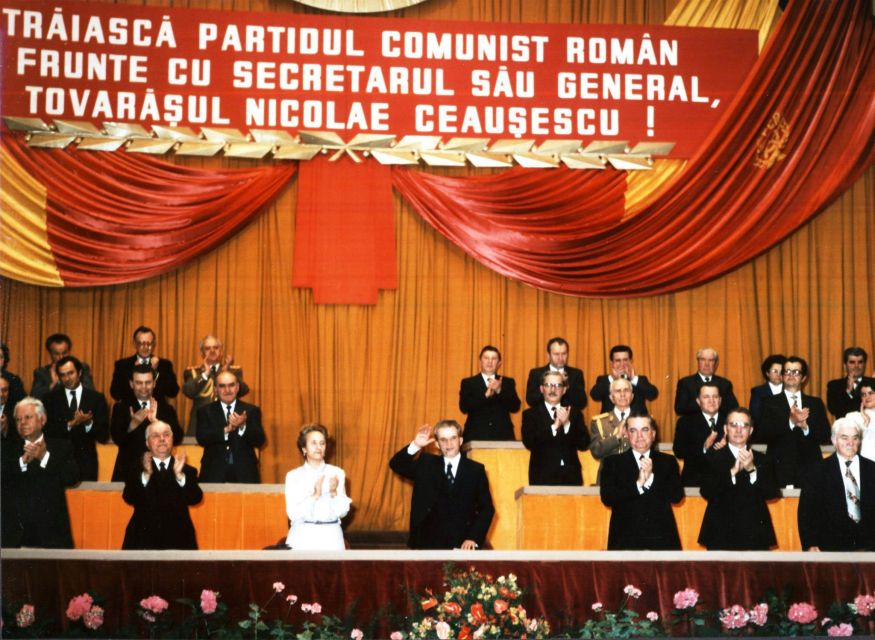
The strongest pattern in the feedback is praise for the guides’ ability to explain, answer questions, and keep the walk engaging.
Alex is repeatedly described as friendly, passionate, funny, and well prepared. His handling of the revolution is singled out as a favorite part, and he is praised for adding personal detail to a difficult political story. Horia is also praised for his historical knowledge, relaxed manner, and practical help, including recommending books and helping one visitor find a souvenir.
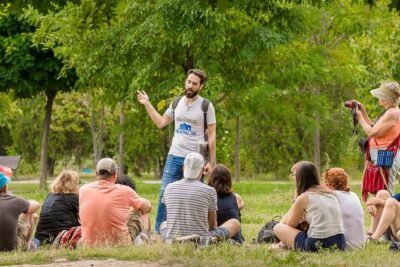
That matters because this experience depends heavily on the person leading it. The route includes many short stops, so a guide who can connect them quickly is more useful than one who simply recites dates. You should feel free to ask questions about Bucharest, Romanian politics, or daily life under communism. The guides are praised for answering them directly.
English and Romanian are available. The tour is not presented as a silent audio walk or self-guided route. You get a live guide, which makes the experience more flexible, but the exact guide is not guaranteed in advance.
Is $23 a fair price?
At $23 per person, I consider this a good-value introduction to Bucharest’s political past. You receive 2.5 hours with a local guide and cover a long chain of major sites, from the Palace of Parliament to Revolution Square.
The value is strongest if you want interpretation. You can walk past many of these places on your own, but the buildings will not explain the demolished neighborhoods, ration cards, food limits, secret police, or the final days of Ceausescu. The guide turns separate sights into one connected story.
The price does not include entrance tickets, food, or drinks. That keeps the base cost low, but it also means you should budget separately if you want to enter the Palace of Parliament or any other paid attraction afterward.
I would not choose this tour mainly for interiors. I would choose it for the route, the explanations, and the chance to ask questions. For that purpose, $23 is reasonable.
Who should take this walk?
I would recommend it to first-time Bucharest visitors who want political context before exploring the city alone. It also suits anyone interested in totalitarian regimes, Eastern European history, urban planning, or the Cold War period.
The tour is especially useful if you have heard of Ceausescu but know little about how ordinary people lived under his rule. The rationing details and discussion of surveillance fill that gap.
It may be less suitable if you want a relaxed sightseeing stroll with little serious discussion. The subject is demanding, the walk is outdoors, and the route includes painful parts of Romania’s past. It is also not the best choice if you want a full interior visit to the Palace of Parliament, since entrance tickets are not part of the experience.
Wear comfortable shoes and arrive 10 minutes early at the meeting point. Starting on time matters when a 2.5-hour route includes so many locations.
Should you book Bucharest Communism: From Lenin to Ceausescu?
Book it if you want to understand how Bucharest was reshaped, how Ceausescu gained and used power, and why the 1989 Revolution mattered. The mix of grand architecture, religious landmarks, older civic buildings, daily shortages, and political violence gives you far more than a palace photo stop.
I would book this tour early in a Bucharest visit, especially if you want the city’s streets to make more sense afterward. Choose it for the guide-led storytelling, not for included admissions or a leisurely food break. With a 4.9 rating from 41 bookings and repeated praise for Alex and Horia, it is a strong pick for a serious but approachable introduction to communist Romania.
The free cancellation option up to 24 hours before the start and reserve-now, pay-later terms also make it easy to fit into a changing schedule.
FAQ
How long does the Bucharest Communism tour last?
The tour lasts 2.5 hours.
How much does the tour cost?
The price is $23 per person.
Where does the tour begin?
It begins at Bulevardul Unirii 5, next to The Coffee Shop Constitutiei.
Where does the tour finish?
The tour finishes at Revolution Square in Bucharest.
Is the Palace of Parliament entrance ticket included?
No. Entrance tickets are not included in the tour price.
Are food and drinks included?
No. Food and drinks are not included.
Which languages are available?
The live guide offers the tour in English and Romanian.
Can I cancel for a full refund?
Yes. You can cancel up to 24 hours before the activity starts for a full refund.
Just added in Bucharest
- Winery touring & private wine tasting – one day private tour★ 5.0 · 3 reviews
- Bucharest: Dealu Mare Winery Private Trip with Wine Tasting★ 4.9 · 6 reviews
- Village Museum Bucharest Guided Tour★ 5.0 · 6 reviews
- Transylvania Tour: Dracula’s Castle, Peles Palace & Brasov★ 5.0 · 19 reviews
- Transfer Airport Otopeni – Bucharest★ 5.0 · 2 reviews
- Private Transfer Bucharest Otopeni Airport (OTP) to/from Brasov★ 5.0 · 2 reviews
- Bucharest Airport Transfer To Constanta Mamaia★ 5.0 · 3 reviews
- Airport Henri Coanda (Otopeni) to Bucharest – Private Transfer – Driver★ 5.0 · 5 reviews
Communism and Ceausescu Tours, compared.
Bucharest Essential Tour: Old Town, Calea Victoriei & Communism
Read our review →
Communism in Bucharest – Landmarks, Museum & Communist Appetizers
Read our review →

Browse the lists this tour appears in