
REVIEW · COMMUNISM AND CEAUSESCU TOURS
Bucharest: The “Last Days of Communism” Tour
Communism left a huge mark on Bucharest. This five-hour tour connects the city’s grand socialist buildings with the people, fear, and upheaval behind them, taking you from Revolution Square to the former presidential home and the enormous Parliament Palace. I like the way it combines major sights with political context, rather than treating Bucharest as a collection of impressive buildings.
I also like the hotel pickup and private vehicle transport, which saves you from piecing together distant sights on your own. Guides are another strong point. Boogie, one guide associated with this experience, was praised for being passionate, helpful, and eager to tailor the day to the guest’s interests. The main drawback is that Parliament Palace and Primaverii Palace are not always open, and weekend access to Parliament is limited for small groups.
In This Review
- Key points to know before booking
- Why Bucharest’s communist past needs a full morning
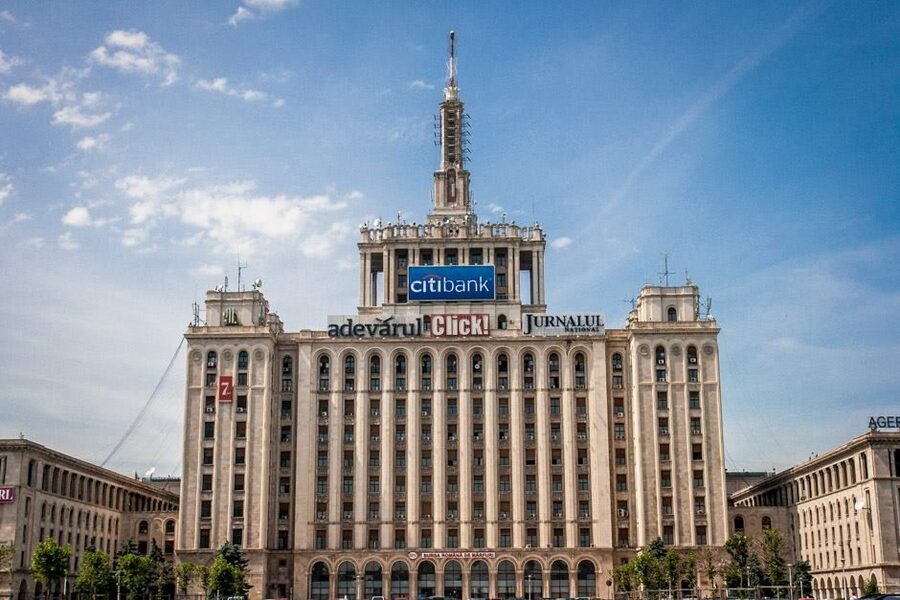
- Starting at Free Press Square and the first communist building
- The Arch of Triumph and Charles de Gaulle Square
- Victoriei Square and the political center of Bucharest
- Revolution Square and Ceausescu’s final speech
- Entering Parliament Palace, the House of the People
- Union Square, University Square, and Romana Square
- Primaverii Palace, where the presidential couple lived
- What the guide and vehicle add to the experience
- Is $69 a fair price?
- Timing, cancellations, and seasonal group rules
- Who should book this Bucharest tour?
- Should you book the Last Days of Communism Tour?
- FAQ
- How long does the Bucharest communist tour last?
- Is hotel pickup included?
- Are entrance fees included in the $69 price?
- Is Parliament Palace always part of the visit?
- What identification should I bring?
- What happens if the minimum group size is not reached?
Key points to know before booking
- Communist-era story: Learn how Romania changed from one-party rule in 1948 to revolution and the execution of Nicolae Ceausescu in December 1989.
- Two interior visits: Entry to Parliament Palace and Primaverii Palace is planned, but admission fees are extra and closures can affect the schedule.
- Wide Bucharest route: Pass major squares and boulevards, including Free Press Square, University Square, Revolution Square, Union Square, and Victoriei Square.
- Hotel pickup included: You begin at your Bucharest hotel and travel by car or minibus with an English-speaking guide and driver.
- Seasonal minimums matter: The tour needs at least four people from March through October and from December 16 to January 6, or at least two during much of the rest of the year.
- Weekend limitation: Groups under 10 may not enter Parliament Palace on weekends and may receive an alternative attraction or Old Town walking tour instead.
Why Bucharest’s communist past needs a full morning
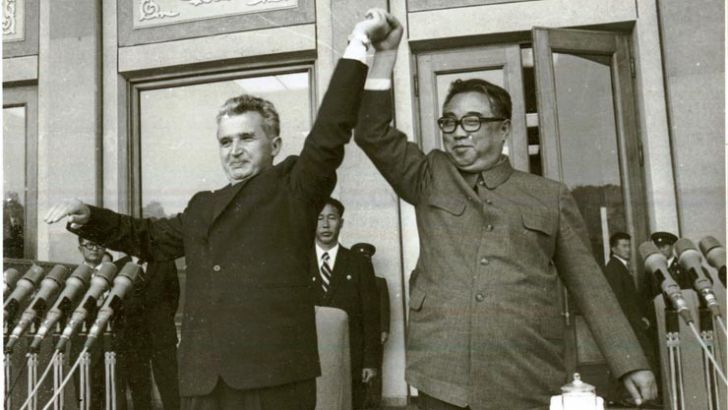
Romania lived under communist rule for more than 40 years, from 1948 until December 1989. Nicolae Ceausescu became head of the Romanian Communist Party in 1965 and president in 1974, then lost power during a violent winter revolution 15 years later.
That timeline gives the tour its shape. You are not simply looking at broad avenues and oversized government buildings. You are seeing the physical remains of a system that promised a golden age while demanding sacrifice, obedience, and control.
The experience is especially useful if Bucharest is new to you. Several of the sights are spread across the city, and their meaning is not always obvious from the street. A guide can explain why certain squares mattered, how propaganda shaped public space, and how the final days of the regime unfolded.
You should expect a moving tour, but not a museum visit focused only on objects. Much of the experience happens from the vehicle, with stops and visits placed within a larger city route. That makes it efficient, though anyone wanting a slow walking tour of one neighborhood may find the pace a little broad.
More communism history tours:
- The Real tour of Communism
★ 5.0 · 666 reviews - Life under Communism
★ 5.0 · 358 reviews - 3-Hour Guided Tour of Communist Bucharest
★ 4.9 · 303 reviews
Starting at Free Press Square and the first communist building
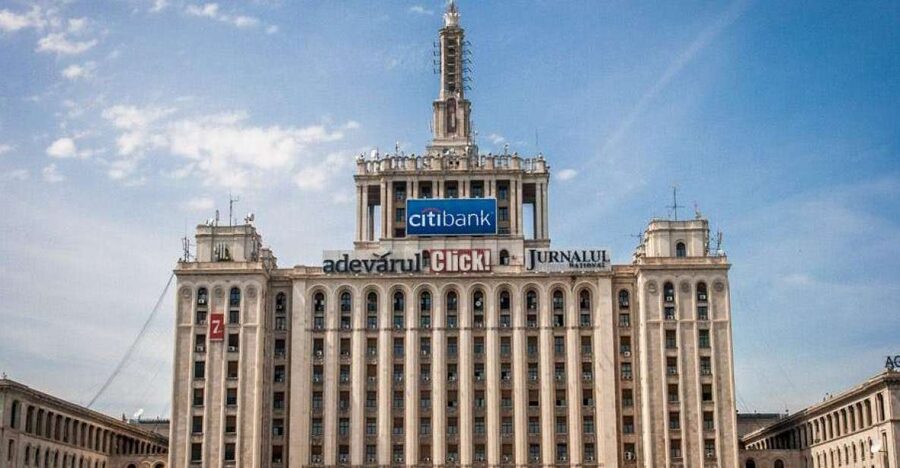
The route may begin at your hotel and then move toward Free Press Square, or Piata Presei Libere, depending on where you are staying. This area introduces the scale and style of communist Bucharest.
The square is associated with the first communist building in the city, an important point because it shows how quickly the new regime began reshaping the capital. The building and its setting help explain the visual language of the period: imposing scale, formal symmetry, and architecture designed to project state power.
Your guide’s explanation matters here. On your own, you might see a large institutional building and move on. With context, the site becomes part of a story about newspapers, public messaging, and the government’s control of information.
This stop may appeal most to visitors who enjoy architecture and politics. It is less about a single dramatic room and more about seeing how a new government announced itself through stone, concrete, and carefully planned public space.
The Arch of Triumph and Charles de Gaulle Square
The drive can continue past the Arch of Triumph, or Arcul de Triumf, before reaching Charles de Gaulle Square. These places are not communist monuments in the same direct way as Parliament Palace, but they help you understand Bucharest’s wider civic layout.
Charles de Gaulle Square is included in the route along with several other major points in the city. This gives you a sense of how the communist period was layered onto an older capital rather than built in an empty place.
The practical benefit is clear: you cover a lot of ground without spending the day changing buses or guessing which streets connect the sights. You can also compare different periods of Bucharest architecture during one outing.
Do not expect a long stop at every square. The tour has a wide route and a limited number of hours. Think of these locations as visual chapters, with your guide providing the connections as you move through town.
Victoriei Square and the political center of Bucharest
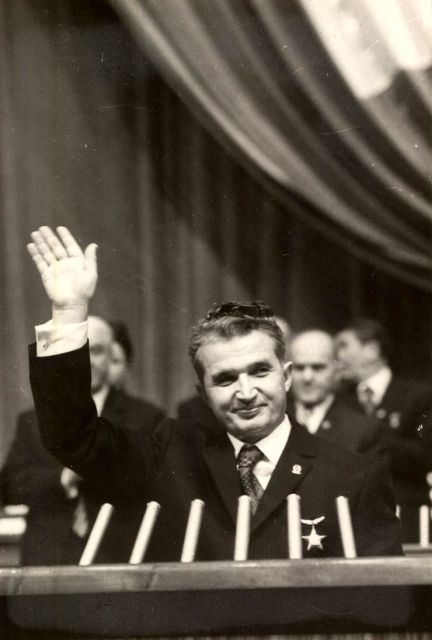
Victoriei Square, or Piata Victoriei, is another key point on the route. It is one of the city’s major public spaces and helps place the communist period within Bucharest’s broader political geography.
The route may pass through Victoriei Square more than once, depending on your hotel and the exact order of the day. That is not a problem, since the tour is designed around the city rather than a fixed walking loop.
Calea Victoriei leads toward Revolution Square, one of the most important stops. Along the way, you may see how historic institutions and newer state buildings share the same central corridor.
I appreciate this part of the tour because it prevents the communist story from becoming isolated from the rest of Bucharest. The city is not a preserved communist set. Older landmarks, modern streets, government offices, and memorials all exist side by side.
A few more Bucharest days worth comparing
- Bucharest: Dracula’s Castle, Peles Castle, & Brasov Old Town
★ 4.5 · 17,858 reviews - Bucharest: Dracula Castle, Peles Castle & Brasov Old Town
★ 4.6 · 10,891 reviews - Bucharest: Dracula’s Castle, Peleș Castle & Brașov Day Trip
★ 4.5 · 5,919 reviews - Bucharest: Palace of Parliament Tickets and Guide
★ 4.3 · 3,182 reviews
Revolution Square and Ceausescu’s final speech
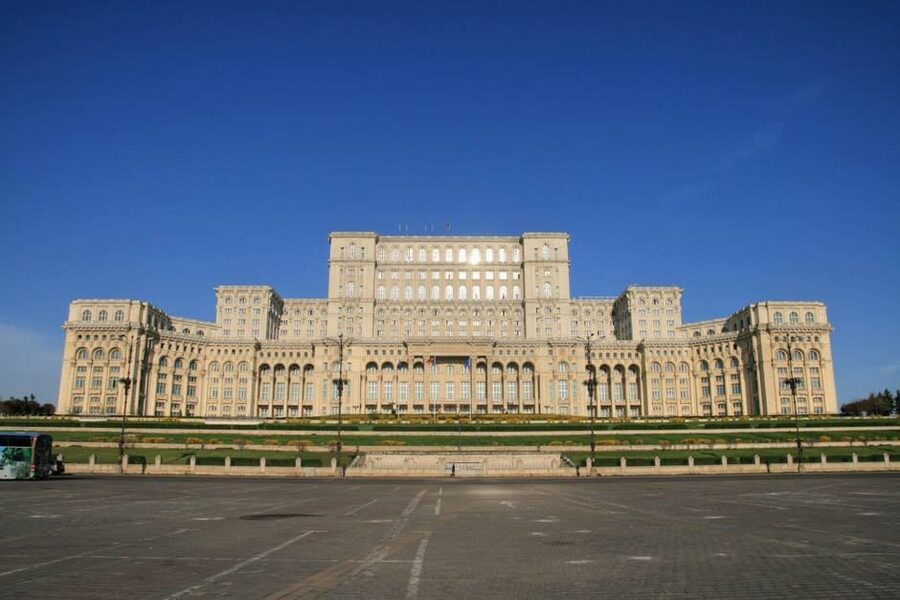
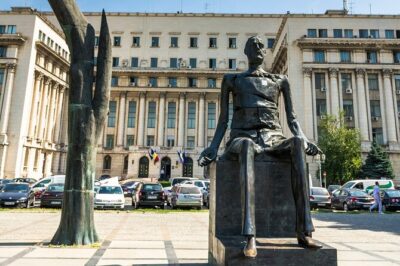
Revolution Square is the emotional center of the tour. Here, you see the balcony where Ceausescu delivered his last speech before the regime collapsed.
That moment is central to modern Romanian history. A speech intended to reinforce authority instead became a public sign that the government had lost control. From this point, the story moves quickly toward the revolution, Ceausescu’s removal, and his execution in December 1989.
The square also includes the Romanian Athenaeum and the Revolution Memorial. These sights give the stop more depth. The Athenaeum represents the older cultural identity of Bucharest, while the memorial marks the human cost and upheaval of the revolution.
You should allow yourself time to take in the contrast. The square is not only about a dictator’s final appearance. It is also about people gathering in public, challenging official power, and changing the course of the country.
This is one place where a good guide makes a major difference. The best commentary will connect the physical balcony and memorial to the experience of ordinary people who lived through the final days of the regime. The strongest praise for this tour focuses on guides who explain modern Romania with energy and care, rather than reciting dates.
Entering Parliament Palace, the House of the People
Parliament Palace, once called the House of the People, is the tour’s largest and most imposing stop. It was built during Ceausescu’s rule and remains one of the clearest symbols of the regime’s ambition and excess.
The building is enormous. Its scale is part of the political message. It was intended to show the power of the state, yet its size also reflects the human and financial cost of Ceausescu’s plans.
Inside, your visit should help turn the building from a famous photograph into a more understandable place. You will see grand official interiors rather than a modest government workplace. The contrast between lavish public spaces and the difficult daily life endured by many Romanians under the regime is an important part of the story.
Admission is not included in the $69 tour price, so budget for that separately. The price therefore makes the most sense if you value the vehicle, guide, hotel pickup, and historical explanation, not simply the entry ticket.
There is an important scheduling warning. Parliament can close for meetings and conferences, so the visit is not guaranteed. Weekend entry is available only for groups of 10 or more. If your group is smaller and you book a weekend, Parliament may be replaced by another attraction or a guided walk through the Old Town.
That rule is easy to miss and could affect your decision. If Parliament Palace is the one sight you most want to enter, a weekday booking is the safer choice.
Union Square, University Square, and Romana Square
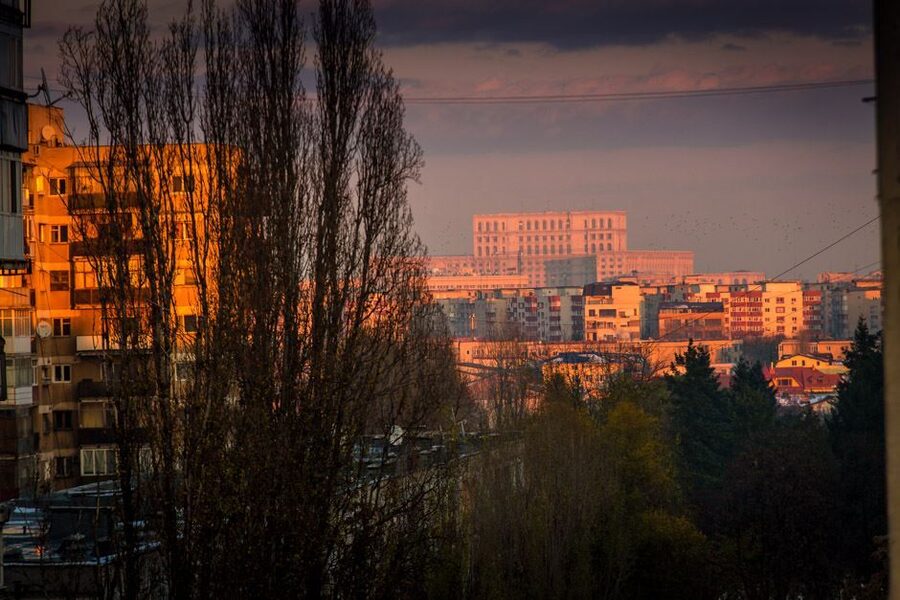
The route continues through several important central squares, including Union Square, University Square, and Romana Square.
Union Square, or Piata Unirii, shows the scale of central Bucharest and the way major roads and public spaces were reorganized. University Square has a special connection to the city’s public life and the events surrounding the fall of communism. Romana Square adds another major central setting to the route.
These stops are generally best understood as part of the tour’s citywide sweep. You may not spend a long time walking around each one, but seeing them in sequence helps you understand the capital’s structure.
For first-time visitors, this is useful orientation. You learn where several central areas sit in relation to one another, while also hearing how public spaces were used for speeches, gatherings, protests, and official displays.
The tradeoff is depth. You cannot study every square in detail during a five-hour outing. If you want photographs, cafés, or long independent walks in these areas, save time for another day.
Primaverii Palace, where the presidential couple lived
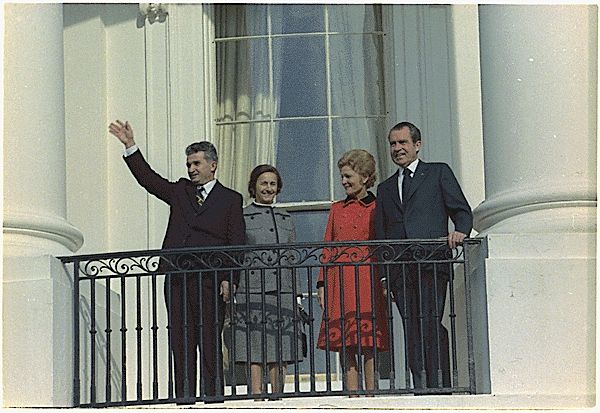
Primaverii Palace offers the most personal view of the former regime. It was the former residence of Nicolae and Elena Ceausescu, the presidential couple who ruled Romania for decades.
Parliament Palace shows the state’s public face. Primaverii Palace shows the private world created for the ruling family. That contrast is one of the tour’s greatest strengths.
The residence can help you understand the distance between official communist ideals and the lifestyle of the leadership. Public messages emphasized sacrifice and collective purpose, while the presidential household occupied a protected and privileged space.
Admission to Primaverii Palace is not included, and the site can also be closed at times. Bring your original passport or national ID card, since identification is required for the visit.
The palace is likely to interest you most if you want more than political dates and monuments. It gives the tour a domestic angle and helps explain why resentment toward the leadership became so intense.
What the guide and vehicle add to the experience
The tour includes an English-speaking guide and driver, with transport by car or minibus. Hotel pickup is included, but you need to provide your hotel details when booking.
I see this as a practical advantage. Bucharest’s communist sights are not all clustered around one compact square, so private transport saves time and energy. You can spend the morning following the story instead of working out public transport connections.
The guide also shapes the quality of the experience. Three short ratings describe the tour as friendly, interesting, and informative, while the most detailed praise goes to Boogie for passion, modern Romanian context, and making sure the guest saw and learned what mattered most to them.
That suggests a personal style rather than a rigid script, though your exact experience will depend on who leads the tour. If you have a particular interest in architecture, the 1989 revolution, daily life, or Ceausescu’s rule, tell the guide early.
The stated sightseeing plan takes about four hours, while the full activity lasts five hours. The extra time likely allows for pickup, transfers, and entry arrangements, but the exact pace depends on your hotel location and the day’s conditions.
Is $69 a fair price?
At $69 per person, this is not the cheapest way to see Bucharest. You also pay the entrance fees to Parliament Palace and Primaverii Palace, so the final cost will be higher.
Still, the price can be fair if you want an efficient introduction to a complicated subject. You receive hotel pickup, transport, an English-speaking guide, a citywide route, and planned visits to two major communist-era sites.
I would compare it with the cost of arranging taxis, admission, and research on your own. The tour’s value is less about saving money on tickets and more about saving time and gaining a coherent explanation.
It suits you best if you have only a few days in Bucharest, prefer guided sightseeing, or want to connect the city’s major communist landmarks in one morning. It is less appealing if you already know the history well or prefer exploring independently at a slow pace.
Timing, cancellations, and seasonal group rules
You can cancel up to 24 hours before the activity for a full refund, and reserve now while paying later. That flexibility is useful because institutional closures and group minimums can affect the schedule.
From March through October, and from December 16 through January 6, the tour runs with a minimum of four people. From January 7 through February 29, and from November 1 through December 15, the minimum is two people.
If the minimum is not met, you are offered another date or a full refund. Check availability for the starting time, and bring your original passport or ID card. Pets are not allowed.
The seasonal rules make advance planning worthwhile, especially if you are visiting in a quieter month. A weekday booking also gives you a better chance of seeing Parliament Palace if that is important to you.
Who should book this Bucharest tour?
I would recommend it to first-time visitors who want a clear introduction to Romania’s communist period without spending days researching the subject.
It is also a good fit for anyone interested in political history, architecture, modern European history, or the 1989 revolutions. The mix of public squares, state buildings, memorials, and a former presidential residence gives you several ways into the story.
Families with older children and teenagers may find the route useful because it connects dramatic events to real places. The subject is serious, but the wide range of stops keeps it from becoming a lecture in one room.
You may want another option if you mainly want to wander Bucharest’s Old Town, visit museums, or spend hours inside each landmark. The route covers a lot, but it does not promise long independent time at every stop.
Should you book the Last Days of Communism Tour?
Book it if you want efficient transport and strong historical framing, especially on your first Bucharest visit. The guide can turn scattered squares and imposing buildings into a story about power, privilege, protest, and change.
Before booking, check the day of the week, confirm the season’s minimum group rule, and accept that Parliament Palace and Primaverii Palace can close without notice. If those conditions work for you, $69 is a reasonable price for a five-hour introduction led by an English-speaking guide.
Choose a weekday if Parliament is essential. Choose this tour over a basic city drive if you want to understand why Bucharest looks the way it does, and how Romania moved from dictatorship to democracy in the winter of 1989.
FAQ
How long does the Bucharest communist tour last?
The activity lasts five hours. The sightseeing itinerary itself is described as taking about four hours, with the remaining time used for hotel pickup, transport, and other arrangements.
Is hotel pickup included?
Yes. Pickup is included from your hotel in Bucharest. You need to provide your hotel details when booking.
Are entrance fees included in the $69 price?
No. Entrance fees for Parliament Palace and Primaverii Palace are not included in the tour price.
Is Parliament Palace always part of the visit?
No. Visits are not guaranteed because Parliament Palace and other institutions can close for meetings and conferences. For groups under 10, weekend Parliament visits are replaced with an alternative attraction or a guided Old Town walk.
What identification should I bring?
Bring your original passport or national ID card. Identification is required for the visits.
What happens if the minimum group size is not reached?
You will be offered an alternative date or a full refund. The minimum is four people from March through October and from December 16 through January 6. From January 7 through February 29 and from November 1 through December 15, the minimum is two people.
Just added in Bucharest
- Winery touring & private wine tasting – one day private tour★ 5.0 · 3 reviews
- Bucharest: Dealu Mare Winery Private Trip with Wine Tasting★ 4.9 · 6 reviews
- Village Museum Bucharest Guided Tour★ 5.0 · 6 reviews
- Transylvania Tour: Dracula’s Castle, Peles Palace & Brasov★ 5.0 · 19 reviews
- Transfer Airport Otopeni – Bucharest★ 5.0 · 2 reviews
- Private Transfer Bucharest Otopeni Airport (OTP) to/from Brasov★ 5.0 · 2 reviews
- Bucharest Airport Transfer To Constanta Mamaia★ 5.0 · 3 reviews
- Airport Henri Coanda (Otopeni) to Bucharest – Private Transfer – Driver★ 5.0 · 5 reviews
Communism and Ceausescu Tours, compared.

Bucharest Essential Tour: Old Town, Calea Victoriei & Communism
Read our review →
Communism in Bucharest – Landmarks, Museum & Communist Appetizers
Read our review →
Browse the lists this tour appears in