
REVIEW · COMMUNISM AND CEAUSESCU TOURS
Bucharest: Tour of Old Town, Calea Victoriei & Communism
Bucharest’s past changes block by block. This $21 walking tour links the royal city, Communist-era Revolution Square, elegant Calea Victoriei, and the cobbled Old Town in one compact route. I like the clear historical arc, and I like that guide Laura has been praised for sharing plenty of Romanian history with warmth and professionalism. The main consideration is pace: 2.5 hours on foot covers a lot, so comfortable shoes are essential.
I also like the contrast between grand French-inspired buildings and the smaller medieval lanes, courtyards, and inns that follow. You get a useful first look at central Bucharest without paying for transport or spending half a day on one museum. The tour takes place rain or shine, and the route details give both Manuc’s Inn and Unirii Square as possible finishing points, so it is worth confirming the exact endpoint when you book.
In This Review
- Key points to know before you go
- Why this short Bucharest walk works
- Beginning at the Romanian Athenaeum
- Revolution Square and the end of royal certainty
- Calea Victoriei, Bucharest’s grand avenue
- Macca-Vilacrosse Passage and a change of scale
- Old Town’s medieval inns and merchant houses
- Stavropoleos Church, a calm center-city stop
- Manuc’s Inn and the end of the route
- How much history can fit into 2.5 hours?
- Who should book this walk?
- Practical details that affect your day
- Should you book this Bucharest tour?
- FAQ
- How long does the Bucharest walking tour last?
- How much does the tour cost?
- Where does the tour start?
- How do I identify the guide?
- Which languages are available?
- Is a local guide included?
- Is a map included?
- Is hotel pickup included?
- Is food or drink included?
- Is the tour wheelchair accessible?
- What should I bring?
- Can I cancel for a full refund?
Key points to know before you go
- Start beneath the Romanian Athenaeum columns: Meet your guide on the steps of Bucharest’s great neoclassical concert hall.
- Royal glamour meets Communist trauma: Revolution Square connects kings, world wars, Nicolae Ceaușescu, and the 1989 uprising.
- Calea Victoriei packs in the architecture: Belle Epoque hotels, Art Deco buildings, the Telephone Palace, and the Military Club appear along the city’s grandest avenue.
- Old Town turns down the volume: Cobblestones, merchant houses, medieval inns, and small passages create a sharp change of mood.
- Stavropoleos Church offers a quiet pause: This active monastery is one of the most attractive and peaceful stops in central Bucharest.
- English and Spanish tours are available: The professional local guide also provides a map of Bucharest.
Why this short Bucharest walk works
Bucharest can be hard to read at first. Its center mixes royal buildings, interwar landmarks, Communist scars, modern shops, old churches, and rougher edges. A casual walk may show you plenty, but it may not explain why the city looks so uneven.
This tour gives you a simple way to connect those pieces. You begin with the royal and French-influenced center, move into the painful story of Communist rule, follow Calea Victoriei, then finish among the historic lanes of the Old Town. I like that order because the city’s changes become easier to understand as you walk.
The tour lasts 2.5 hours and costs $21 per person. That is a fair price for a local guide, a focused route, and a map, especially if Bucharest is new to you. You are paying mainly for explanation and orientation, not for a long list of paid attractions.
There is no hotel pickup or drop-off, and food and drinks are not included. That is not a serious weakness for a central walking tour, but you should arrive ready to walk and plan your own coffee or meal afterward.
More communism history tours:
- The Real tour of Communism
★ 5.0 · 666 reviews - Life under Communism
★ 5.0 · 358 reviews - 3-Hour Guided Tour of Communist Bucharest
★ 4.9 · 303 reviews
Beginning at the Romanian Athenaeum
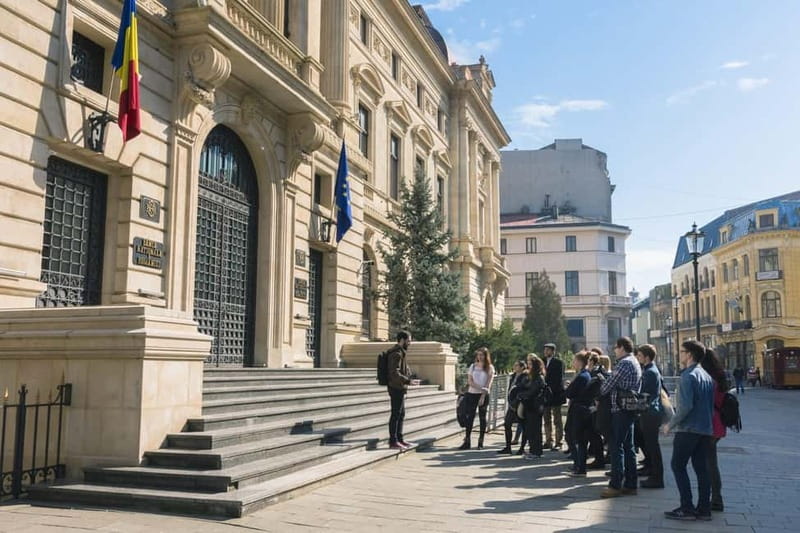
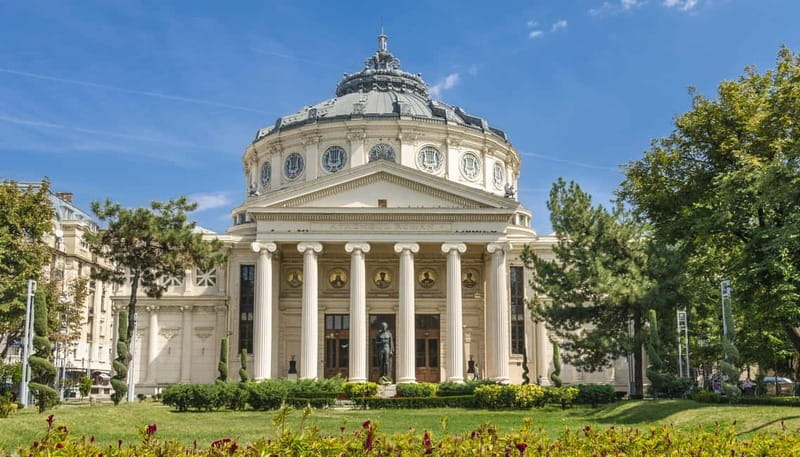
The meeting point is in front of the columns, on the steps of the Romanian Athenaeum. Look for the guide wearing a name tag with their name. This is a sensible place to start because the building gives you an immediate introduction to Bucharest’s royal-era ambitions.
The Athenaeum is a grand neoclassical concert hall. Around it are several buildings shaped by French architectural influence, including the former Royal Palace, the University Library, and the Athenee Palace Hotel. You do not simply see an attractive square here. You see the city presenting itself as a European capital.
That old nickname, Paris of the East, makes more sense around these streets than it does in every part of Bucharest. The name points to the French taste, grand avenues, and Belle Epoque buildings that shaped the city before the Communist period. Your guide can help separate the polished image from the more complicated past behind it.
The start is especially useful for first-time visitors who want an overview before wandering alone. It also gives you a strong architectural reference point. Later, when the tour reaches Communist buildings and the Old Town, the differences feel more dramatic.
Revolution Square and the end of royal certainty
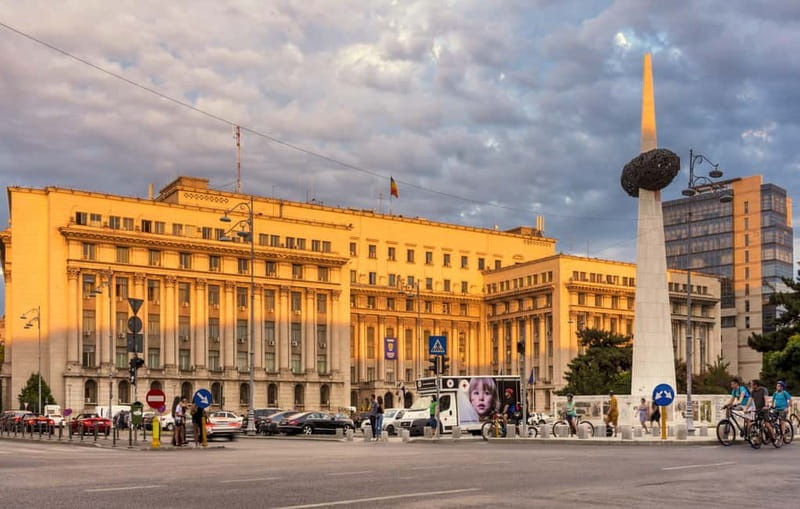
From the Athenaeum, the walk continues to Revolution Square for about 30 minutes of guided touring. Here, the mood changes. The square is linked to kings and the world wars, but it is best known for the Communist period and the events of 1989.
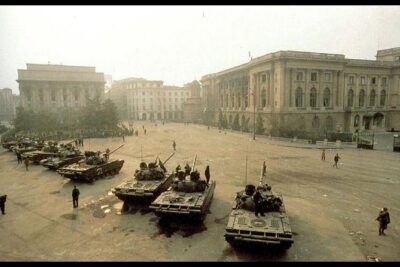
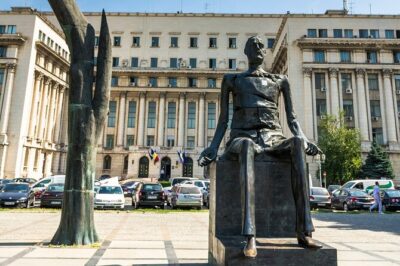
The former headquarters of the Communist Party dominates the story. From this building, major decisions were made in Romania between 1950 and 1989. The tour explains the life and rule of Nicolae Ceaușescu, including the machinery of Communist oppression and the final crisis that brought his regime down.
The 1989 revolution is a key reason this stop matters. It was the first revolution in the world broadcast live on television, and it ended in bloodshed. You get more than a general account of dictatorship. You get a place where political power was concentrated, then publicly challenged.
The statue of King Carol adds another layer. In the shadow of a royal monument, you hear about the monarchy, the world wars, and the later Communist takeover. That physical contrast makes the timeline easier to follow than a simple list of dates.
I would give this section your full attention. The buildings may not all look dramatic at first glance, but the events connected to them are central to understanding modern Romania. If you want only pretty streets and photo stops, this part may feel heavier. If you want context, it is one of the tour’s most valuable sections.
Calea Victoriei, Bucharest’s grand avenue
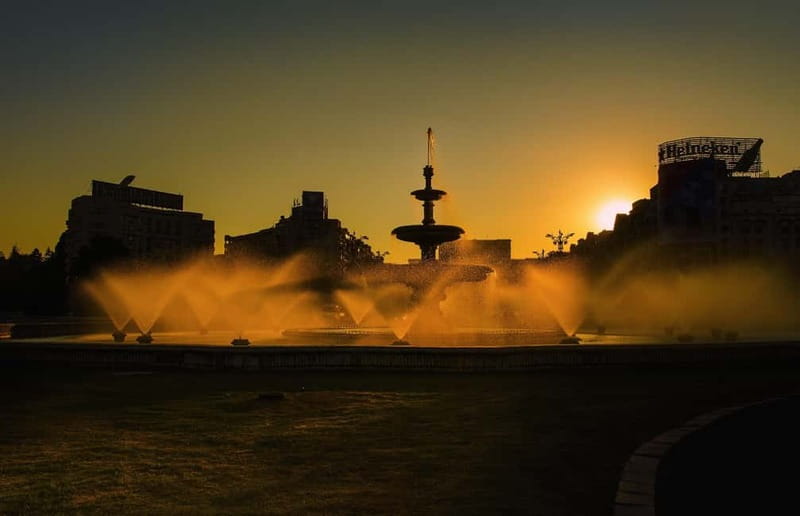
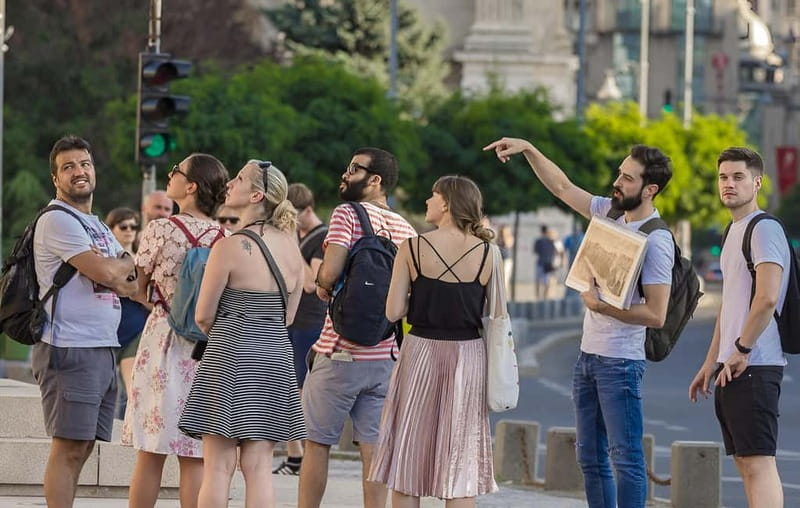
The walk then follows Calea Victoriei for about an hour. This is the longest section of the route, and it provides the tour’s best concentration of architecture.
Calea Victoriei was the city’s most famous and extravagant street. During the interwar years, bourgeois life flourished along it. Belle Epoque hotels and Art Deco buildings give the avenue a polished look, though each belongs to a different chapter of Bucharest’s growth.
The Grand Hotel Continental, the Telephone Palace, and the Military Club are among the named landmarks along this stretch. They help you see how commercial life, communication, hotels, social clubs, and public institutions shaped the avenue.
I like this part because it avoids treating architecture as decoration. The guide connects the façades to the people and periods that used them. You can look at a hotel and think about interwar society, then look at the Telephone Palace and consider how a modern communications network changed the capital.
The hour on Calea Victoriei also gives the tour a steady rhythm after the political intensity of Revolution Square. You continue walking, but the subject shifts from dictatorship and revolt to city life, design, and public ambition.
Keep your shoes comfortable here. The tour is not a strenuous hike, but two and a half hours of city walking can feel long if you wear hard-soled shoes. Since the outing runs rain or shine, a weather check before leaving your hotel is sensible.
A few more Bucharest days worth comparing
- Bucharest: Dracula’s Castle, Peles Castle, & Brasov Old Town
★ 4.5 · 17,858 reviews - Bucharest: Dracula Castle, Peles Castle & Brasov Old Town
★ 4.6 · 10,891 reviews - Bucharest: Dracula’s Castle, Peleș Castle & Brașov Day Trip
★ 4.5 · 5,919 reviews - Bucharest: Palace of Parliament Tickets and Guide
★ 4.3 · 3,182 reviews
Macca-Vilacrosse Passage and a change of scale
The Macca-Vilacrosse Passage is a 15-minute visit and one of the route’s smaller but more characterful stops. After the broad sweep of Calea Victoriei, this covered passage brings you into a tighter urban space.
Its importance is partly visual. Bucharest’s center is not only made of monuments and big avenues. Passages like this show the commercial and social life that developed between larger streets. The enclosed setting also gives the walk a welcome change of scale.
This is a place where your guide’s explanation helps. Without context, you might simply take a few photographs and move on. With a short story about the passage and its role in the city, you get a better sense of how central Bucharest worked in the 19th century.
Do not expect a long stop. Fifteen minutes is enough for an introduction, but not enough for an extended visit or independent exploration. That short timing is typical of the whole experience: the aim is to connect many places rather than study one in detail.
Old Town’s medieval inns and merchant houses
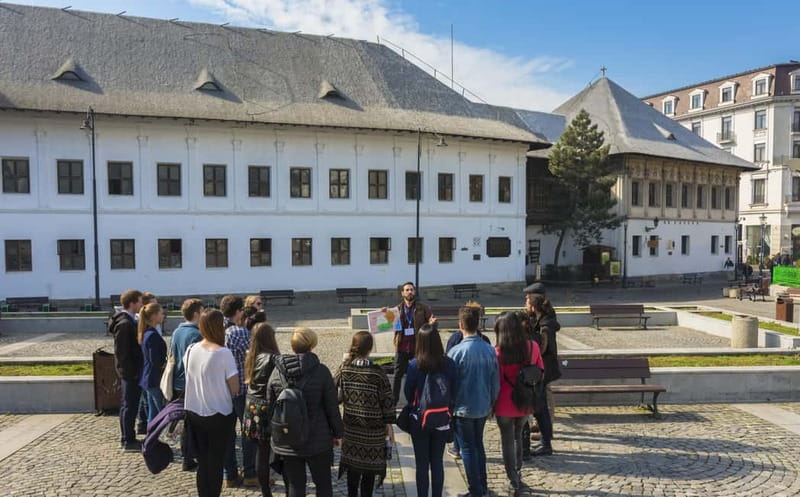
The tour then reaches the cobblestone streets of Bucharest’s Old Town. This is where the route feels most intimate. The architecture shifts from royal scale and interwar polish to medieval Oriental inns, small 19th-century merchant houses, and imposing palaces.
That mixture is part of Old Town’s appeal. The quarter is not a single carefully preserved period. You see layers pressed together, sometimes neatly and sometimes not. It is a useful place to hear how Bucharest developed as a trading center and how different architectural traditions met in the capital.
The tour also brings in medieval Bucharest and Dracula’s influence on the city. The connection should be treated as part of the city’s historical storytelling rather than the whole reason to visit. You get the medieval setting, the local legends, and the political background without reducing Bucharest to a Dracula theme park.
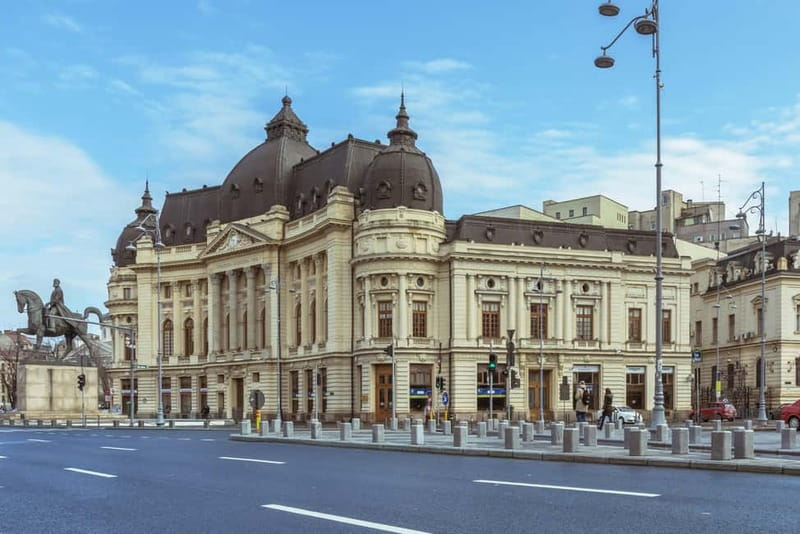
Several major Old Town sights appear along the walk. The History Museum offers an anchor for the city’s past, while the CEC Palace provides one of the area’s most memorable façades. Manuc’s Inn adds a strong link to the old commercial world, with its historic inn setting and stories of merchants and movement.
Old Town is also where the tour can feel busiest underfoot. The supplied details do not specify group size, so I would not assume an intimate private walk. In a narrow street or passage, stay close enough to hear your guide and expect occasional interruptions from normal city activity.
Stavropoleos Church, a calm center-city stop
The visit to Stavropoleos Church lasts about 30 minutes. This is one of the tour’s best pauses because it changes the mood without leaving central Bucharest.
Stavropoleos is described as the only active monastery in the center of Bucharest. Its colorful design and quiet setting offer a welcome break from the larger avenues and political landmarks. After hearing about Communist oppression, royal power, and commercial life, you get a place connected to religious continuity.
The stop is not just a quick exterior photograph. The tour includes a visit and guided explanation. You should still remember that it is an active religious site, so respectful behavior is appropriate.
I especially like the balance this creates in the itinerary. Bucharest can seem defined by rulers, regimes, and grand public projects. Stavropoleos points to another kind of endurance, one tied to worship, craftsmanship, and a smaller human scale.
The 30-minute timing allows the church to register as more than a passing image. It also gives your feet a break, though the tour remains a walking experience overall.
Manuc’s Inn and the end of the route
Manuc’s Inn is the final named stop in the route details. You have a 15-minute photo stop, visit, and guided tour here, which is enough to understand why the inn belongs on a tour of Old Town.
The inn represents the commercial side of old Bucharest. Alongside the medieval Oriental inns and merchant houses, it helps explain how people, goods, and stories passed through the city. It is a fitting final point for a route that began with royal ambition and moved through Communist politics into the older trading quarter.
The wider tour description also mentions finishing near the fountains in Unirii Square, while the detailed stop sequence gives Manuc’s Inn as the finish. Since those points are not identical, confirm the exact endpoint before booking if you have a restaurant reservation, transport connection, or evening plan.
The stated meeting information says the activity ends back at the meeting point, so there is some variation in the supplied route details. I would treat Manuc’s Inn as the final named stop and ask the operator to clarify whether the guide continues toward Unirii Square or returns to the Athenaeum afterward.
How much history can fit into 2.5 hours?
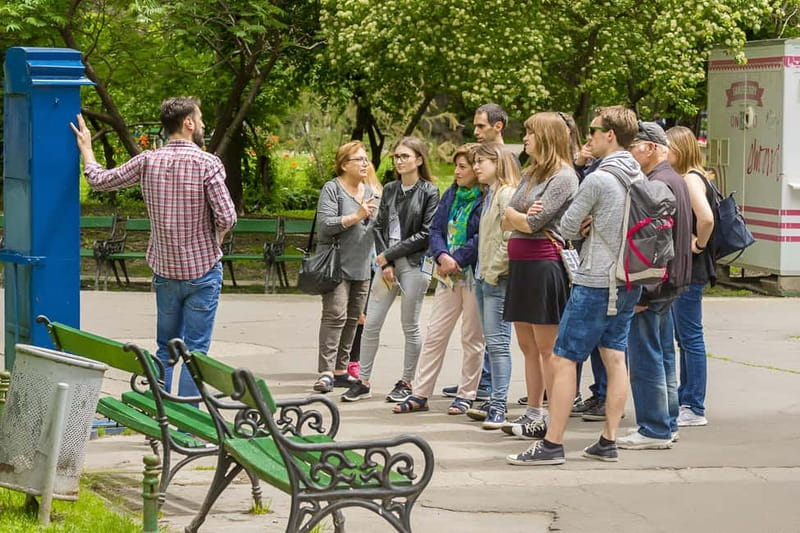
Quite a lot, but not in museum depth. The tour covers medieval Bucharest, Dracula’s influence, the royal period, the world wars, interwar culture, Communism, Ceaușescu, the 1989 revolution, Calea Victoriei, and the Old Town.
That breadth is the point. You get a city orientation and a set of stories to pursue later. You will not have time for long interior visits, extended shopping, or an unhurried meal.
I see the short duration as a benefit for a first day in Bucharest. You can learn the basic shape of the center, mark places you want to revisit, and still have time afterward for your own plans. It is less suitable if you already know the center well and want specialist detail about one period.
The strong rating of 4.9 from 15 reviews supports the overall appeal, though the sample is small. The most specific praise is directed at Laura, described as friendly and professional while walking the group to important Bucharest sights and sharing Romanian history. If Laura is your guide, that personal approach could make the history easier to absorb. Guide assignment is not guaranteed in the supplied information, so do not book solely on her name.
Who should book this walk?
I would recommend it to first-time visitors who want a useful central overview, especially if you are interested in how political history shapes streets and buildings.
It also suits anyone who prefers walking to bus sightseeing. The route gives you direct contact with cobblestones, passages, façades, church details, and public squares. You are not looking at Bucharest through a vehicle window.
History-minded visitors should enjoy the combination of royal stories, Communist rule, and the 1989 revolution. Architecture fans get a good range too, from neoclassical and French-inspired buildings to Belle Epoque, Art Deco, merchant houses, inns, and religious architecture.
You may want another plan if you dislike walking in rain, want a very slow museum visit, or need a tour built around food and drinks. Neither hotel transfers nor refreshments are included, and the tour continues in poor weather.
The activity is wheelchair accessible, according to the provided details. Because the route includes cobblestone streets and passages, you should still confirm the practical route conditions with the operator if you need specific access information.
Practical details that affect your day
The guide meets you at the Romanian Athenaeum, directly in front of the columns on the steps. Arrive with enough time to find the building and look for the name tag.
English and Spanish are available. A professional local guide and a Bucharest map are included, which adds value beyond the walk itself. The map can help you return to Calea Victoriei, the Old Town, or other central sights after the tour.
Food and drinks are not included, so plan a café or meal separately. This is easy to build around a central walking tour, but do not expect a scheduled refreshment break.
The activity offers free cancellation up to 24 hours in advance and a reserve-now, pay-later option. Those terms are useful if your Bucharest plans may shift. Starting times depend on availability, so check the date and time before you make other reservations.
Should you book this Bucharest tour?
Book it if you want one well-shaped walk through Bucharest’s biggest contrasts: royal grandeur, Communist trauma, interwar architecture, medieval trade, and a living monastery. At $21, the price is sensible for a 2.5-hour guided introduction, especially when you are new to the city.
I would be most likely to choose it early in a Bucharest stay. The route can help you decide where to return, while the guide’s stories give meaning to buildings you might otherwise pass without noticing.
Skip it if you want long interior visits, a food experience, or a narrow specialist tour. Also confirm the final stop because the route details mention both Manuc’s Inn and Unirii Square. For most first-time visitors who are happy to walk, this is a practical and engaging way to get Bucharest’s complicated center into focus.
FAQ
How long does the Bucharest walking tour last?
The tour lasts 2.5 hours.
How much does the tour cost?
The listed price is $21 per person.
Where does the tour start?
It starts in front of the Romanian Athenaeum, with the guide waiting by the columns on the steps.
How do I identify the guide?
The guide wears a name tag with their respective name.
Which languages are available?
The tour is available in English and Spanish.
Is a local guide included?
Yes, a professional local guide is included.
Is a map included?
Yes, a map of Bucharest is included.
Is hotel pickup included?
No. Hotel pickup and drop-off are not included.
Is food or drink included?
No. Food and drinks are not included.
Is the tour wheelchair accessible?
Yes, the activity is listed as wheelchair accessible.
What should I bring?
Bring comfortable shoes. The tour takes place rain or shine.
Can I cancel for a full refund?
Yes, you can cancel up to 24 hours in advance for a full refund.
Just added in Bucharest
- Bucharest: Dealu Mare Winery Private Trip with Wine Tasting★ 4.9 · 6 reviews
- Winery touring & private wine tasting – one day private tour★ 5.0 · 3 reviews
- Village Museum Bucharest Guided Tour★ 5.0 · 6 reviews
- Transylvania Tour: Dracula’s Castle, Peles Palace & Brasov★ 5.0 · 19 reviews
- Transfer Airport Otopeni – Bucharest★ 5.0 · 2 reviews
- Private Transfer Bucharest Otopeni Airport (OTP) to/from Brasov★ 5.0 · 2 reviews
- Airport Henri Coanda (Otopeni) to Bucharest – Private Transfer – Driver★ 5.0 · 5 reviews
- Private Bucharest Otopeni Airport (OTP) Transfer★ 5.0 · 2 reviews
Communism and Ceausescu Tours, compared.


Bucharest Essential Tour: Old Town, Calea Victoriei & Communism
Read our review →
Communism in Bucharest – Landmarks, Museum & Communist Appetizers
Read our review →
Browse the lists this tour appears in