
REVIEW · COMMUNISM AND CEAUSESCU TOURS
Bucharest’s scars of Communism-half day private walking tour
Communism left visible scars. This four-hour Bucharest walk connects party origins, revolution sites, abandoned projects, and the Palace of Parliament with a local guide who can explain the Romanian experience in plain terms. I like the private format and the way the route can be adjusted to your interests. I also like that public transport tickets are included, so you can see more than a short downtown loop.
The main consideration is that several stops are outside views or pass-by visits. You will not tour the Palace of Parliament or enter every communist-era building, and the Casa Radio stop is best understood as a look at an unfinished project rather than a formal museum visit. The route also includes a quick subway ride and some city walking, so ask about mobility before booking.
Guide Razvan Trancu is a strong fit if you want history explained through personal knowledge of Romania. One verified booking praised his ability to bring Bucharest to life and tailor the tour around an interest in World War II as well as the city’s key communist-era sites.
In This Review
- Key points to know before you book
- Why Bucharest’s communist story works best on foot
- Starting at the birthplace of the communist party
- University Square and the night that changed Romania
- Revolution Square and the collapse of dictatorship
- Sala Palatului and the public face of power
- Casa Radio and the ghost of an unfinished project
- The Palace of Parliament and the 1980s utopian center
- What the private format adds
- Who will get the most from this Bucharest tour
- Practical details before meeting Razvan
- Should you book Bucharest’s communist scars tour?
- FAQ
- Where does the tour start?
- Where does the tour finish?
- How long does the experience last?
- What languages does the guide speak?
- Is the tour private?
- Does the price include public transportation?
- Can the tour be customized?
Key points to know before you book
- The tour begins at University Square: You start at the Starbucks by the main door, close to one of the central places in Bucharest’s modern political story.
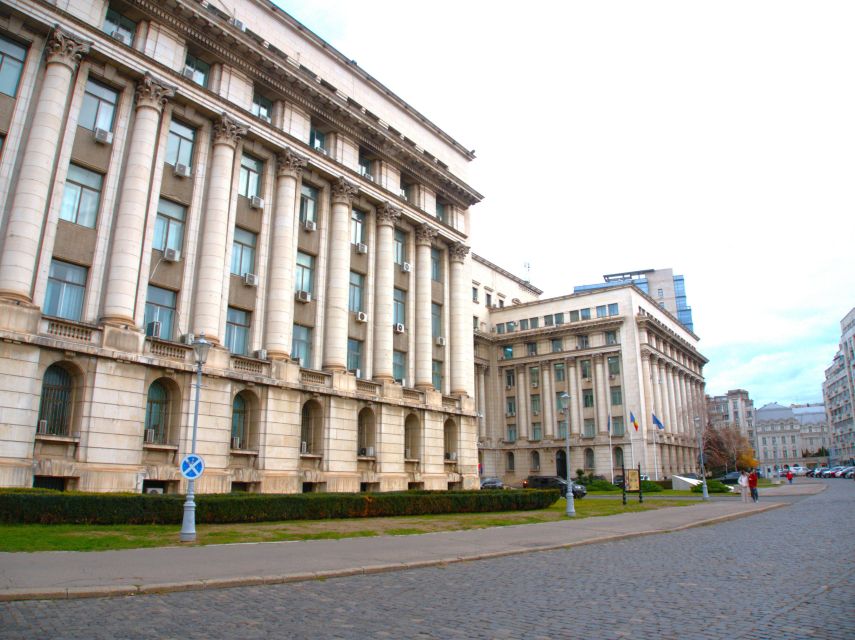
- Revolution Square gets serious attention: Plan on about an hour here, with the dictatorship, the 1989 revolt, and the former Communist Party headquarters explained on site.
- You see major buildings from outside: The route includes the Congress hall, Sala Palatului, Casa Radio, and the Palace of Parliament, but interior visits are not part of the plan.
- A subway ride adds range: Public transportation tickets are included, allowing the tour to reach the unfinished communist museum project and the 1980s administrative district.
- The private group can shape the conversation: The price is $165 for up to seven people, useful for families or friends who want a flexible pace.
- It works best for history-minded visitors: The focus is political history, urban planning, dictatorship, and revolt rather than food, art, or royal Bucharest.
Why Bucharest’s communist story works best on foot
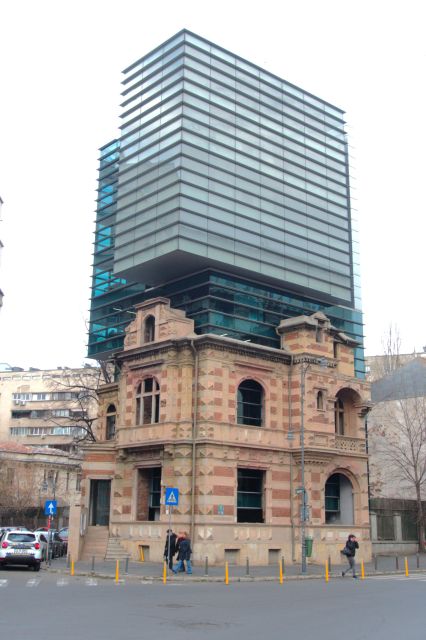
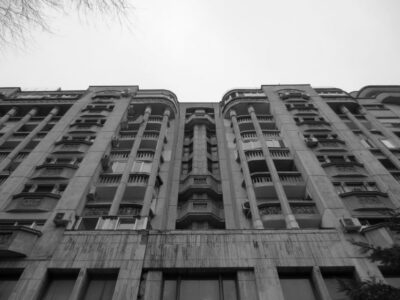
Bucharest’s communist past is not confined to one museum. It appears in open squares, oversized avenues, damaged buildings, memorial traces, and vast government projects that changed the city’s shape. That makes a walking tour useful. You move through the places where decisions were made and where people later challenged them.
I like the route because it follows a clear political arc. You begin with the birth of the communist movement, move into the decades of Soviet influence and dictatorship, then reach the violence and confusion of the 1989 revolution. The final section shows what the regime wanted Bucharest to become, including its giant administrative center and unfinished construction schemes.
You should not expect a light overview with a few dates. The tour is intended to explain causes, main figures, and consequences. Razvan can also adjust the discussion. If your interest leans toward World War II, Soviet connections, or recent political history, say so at the start.
The private setup matters here. In a large group, a complicated story about Romania can turn into a stream of names and dates. With up to seven people, you can stop to ask why a square mattered, how the revolution unfolded, or why a building was left unfinished.
More Walking Tours in Bucharest
- Bucharest: City Highlights Guided Walking Tour
★ 4.9 · 1,482 reviews - Bucharest Highlights Walking Tour
★ 5.0 · 469 reviews - Bucharest: Ghost Stories & Romanian Mythology Walking Tour
★ 4.9 · 287 reviews
Starting at the birthplace of the communist party
The meeting point is the Starbucks at University Square, by the main door. This is a practical location in central Bucharest, and it gives you an easy place to find the guide before the history begins.
The opening section looks at the birthplace of the communist party and its early Soviet connections. That starting point helps you see communism as a political movement with outside links, not simply as a local chapter that appeared fully formed after World War II.
I value this part because it sets up the rest of the walk. The later dictatorship did not come from nowhere. You begin with the movement’s origins, then follow its growth and the way Romania’s position was shaped by the Soviet Union.
Ask Razvan to pause over any point that interests you. The experience is described as flexible, and that is most useful at the beginning. You can make clear that you want more political detail, more World War II context, or a broader explanation of how Bucharest changed under communist rule.
University Square and the night that changed Romania
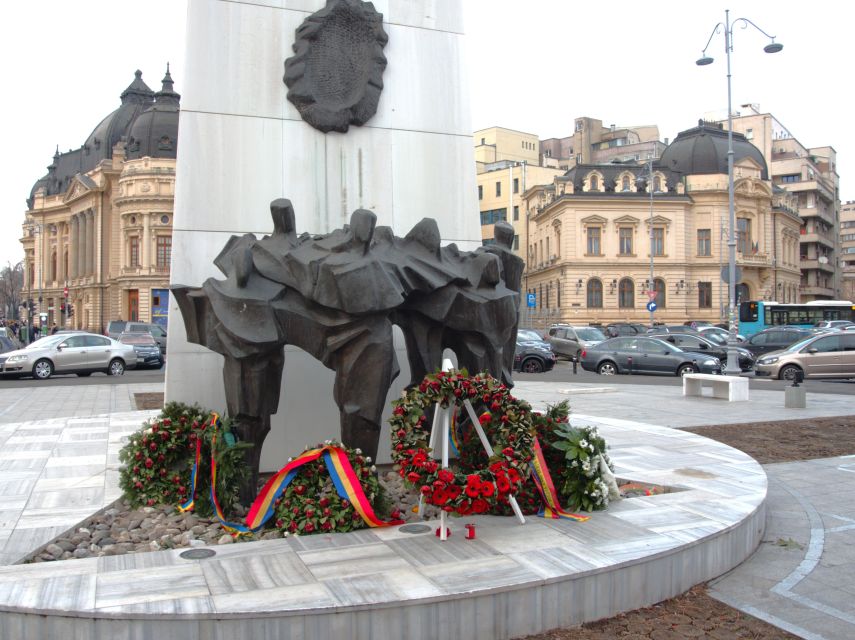
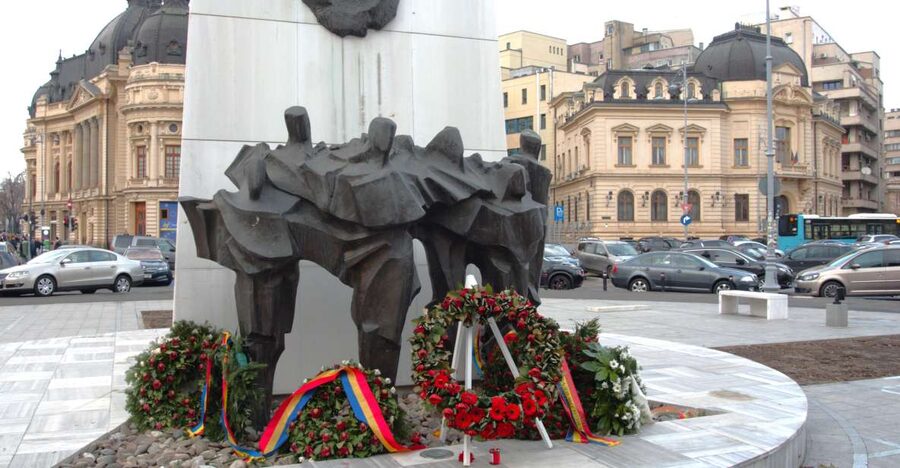
University Square receives about an hour of guided attention. It is one of the most important stops because the tour connects the physical square with a violent night that altered Romania’s recent history and its geopolitical direction.
The value here lies in location. Instead of hearing about the 1989 revolution only in a classroom or museum, you stand in one of the city’s central public spaces while the guide explains what happened there. The tour also points out graffiti connected with the upheaval, giving you a small but direct visual link to the conflict.
I would listen closely during this section. Revolutions can sound tidy when reduced to a timeline: protests, violence, regime change. On the ground, events are usually less clean. This stop is designed to explain the causes of revolt and the people involved, not just announce that a revolution happened.
The hour gives Razvan room to answer questions, but it also means the tour is not racing from landmark to landmark. If you prefer a quick photographic circuit, this may feel slow. If you want the reasons behind the revolt, it is one of the strongest parts of the route.
Revolution Square and the collapse of dictatorship
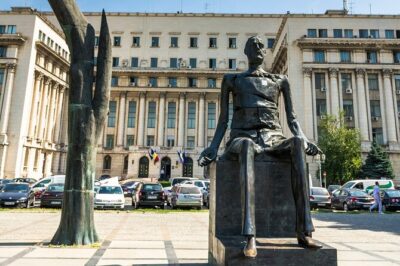
From University Square, the tour continues to Revolution Square for another hour. Here you receive an outside view of the Central Committee of the Romanian Communist Party, a key building in the story of the dictatorship and its final collapse.
This is where the tour’s timeline reaches its central point. You learn about the years of authoritarian rule, Romania’s relationship with the Soviet bloc, and the pressures that made the system increasingly unstable. The guide also explains the main figures and the causes that led to revolt.
The building matters because political power was concentrated there. Seeing it from the outside helps connect architecture with authority. It is not just another large government building. It was tied to the machinery of the Communist Party and to the events that ended its rule.
The tour also provides an outside view of the Congress hall. Since the route does not include entry, you should think of this as an architectural and historical stop, not an interior sightseeing visit. Bring questions. The buildings can look imposing but confusing without someone explaining their original purpose.
For me, the hour at Revolution Square is where a local guide adds the most value. A guide can explain why the setting mattered, how the revolt developed, and why the end of the dictatorship remains such a defining part of modern Romanian identity.
More communism history tours:
- The Real tour of Communism
★ 5.0 · 666 reviews - Life under Communism
★ 5.0 · 358 reviews - 3-Hour Guided Tour of Communist Bucharest
★ 4.9 · 303 reviews - Bucharest Essential Tour: Old Town, Calea Victoriei & Communism
★ 5.0 · 142 reviews
Sala Palatului and the public face of power
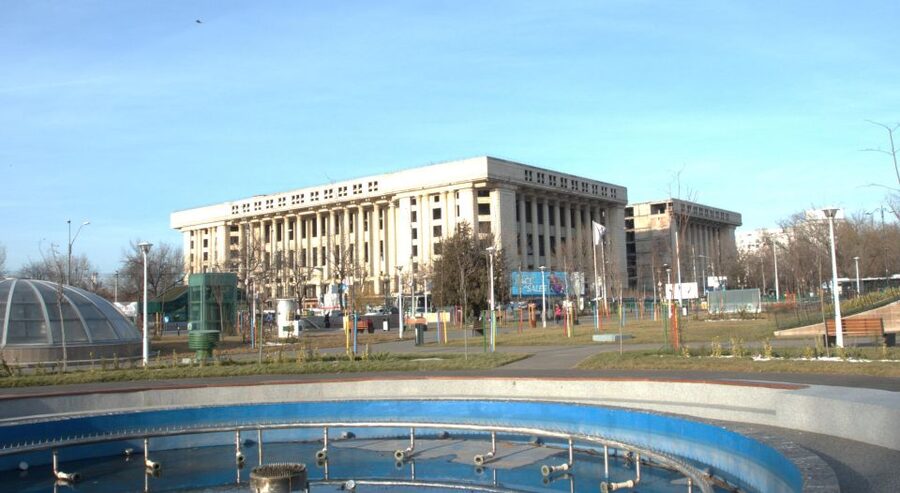
Sala Palatului is a shorter stop, listed as a ten-minute pass-by. That tells you what to expect: a quick look and explanation rather than a full visit.
The building belongs to the central zone where public events, official power, and communist-era planning came together. You will have time to place it within the wider story, but not to study every architectural detail or go inside.
I see this stop as useful connective tissue. It links the main squares with the larger group of state buildings that shaped central Bucharest. It also keeps the route moving toward the western part of the city without turning every building into a long lecture.
If your main interest is architecture, tell Razvan early. The tour is customizable, so you may be able to spend more time on buildings that catch your eye, though the overall four-hour route still has several fixed areas to cover.
Casa Radio and the ghost of an unfinished project
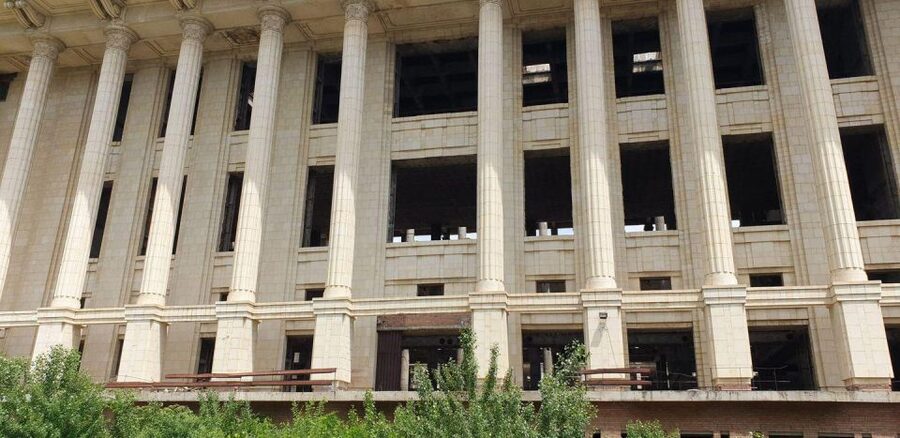
After a quick subway ride, the tour reaches Casa Radio, in the west-central part of Bucharest. The building is presented as the ruins of an unfinished Communist history museum, a large project that was never completed.
This is one of the route’s more unusual stops. Most communist tours focus on completed monuments, official buildings, and memorials. Casa Radio shows another side of the period: grand plans, abandoned work, and the physical remains of an idea that did not reach its intended form.
The stop lasts about twenty minutes as a pass-by. Do not expect a polished museum or a standard exhibition. The point is the unfinished structure itself and what it reveals about communist-era planning.
I find this kind of stop valuable because it complicates the usual story of monumental power. A regime may present itself as permanent, yet its projects can be wasteful, incomplete, or overtaken by political change. Casa Radio gives you something concrete to look at while discussing that contradiction.
The subway connection is also practical. It saves time and shows you a small piece of everyday public transport in Bucharest. Tickets are included in the guiding service, so you do not need to arrange that part yourself.
The Palace of Parliament and the 1980s utopian center
The tour ends in the administrative center built during the 1980s, with an outside view of the Palace of Parliament. The building is the route’s largest visual statement and the clearest expression of the dictatorship’s ambition to reshape Bucharest around centralized power.
You will spend about thirty minutes passing by and discussing the site. Again, this is not an interior tour. If you want to visit the building inside, you will need to make separate plans, and this experience will not replace a dedicated Palace of Parliament visit.
The outside view still has real value. The palace is not presented as an isolated landmark. You learn about the broader administrative center around it and the utopian scale of the 1980s project. Its size reflects a political system that wanted to place state authority at the center of daily life and city design.
The final stop at Piața Constituției gives the route a natural ending. You have moved from the origins of the communist movement to the government center it eventually created. The contrast between the beginning and the end is the tour’s main structural strength.
I would save questions for this section about urban change, construction, and the human cost of the 1980s. The route is designed to explain the disaster that ended the dictatorship, so the palace is not treated as a simple photo stop.
What the private format adds
The cost is $165 for a private group of up to seven people. With the full group, that works out to about $23.60 per person. For two people, the individual cost is much higher, but you are paying for a private guide, a four-hour route, flexibility, and included public transportation rather than a basic group walk.
That price makes the most sense if you care about the subject and want to ask questions. A private tour is less useful if you only want a quick introduction to Bucharest’s main sights. You will spend a large part of the time on political history and communist-era urban planning.
The ability to adjust the route is the main value. Razvan can offer suggestions for exploring Bucharest on your own after the tour, and he can shape the conversation around your interests. One booking specifically praised his adjustment of the experience for a group interested in the city and World War II.
The language options are English and Italian. The tour is also listed as wheelchair accessible, but the information advises you to inquire about mobility details. That is sensible because the route combines walking, public transport, public squares, and outside views.
The duration is four hours, so wear comfortable shoes and allow enough energy for a serious history lesson. Snacks, souvenirs, and personal expenses are not included. You may want to eat before or after, since the tour itself is built around sightseeing and discussion rather than scheduled refreshment stops.
Who will get the most from this Bucharest tour
I would recommend this experience to you if you:
- Want the political story behind Bucharest’s major central buildings
- Prefer a private guide to a fixed large-group route
- Have an interest in communism, the Soviet period, or the 1989 revolution
- Like to ask questions and adjust the focus as you go
- Want suggestions for further self-guided time in the city
- Are comfortable with outside views instead of interior admissions
I would be more cautious if your main goal is royal Bucharest, traditional food, museums, or detailed architectural access. Those subjects are not the core of this experience.
It is also worth setting expectations about pace. The route covers several important areas, but some stops are brief. University Square and Revolution Square receive the most attention, while Sala Palatului and Casa Radio are shorter pass-by visits.
The strongest reason to book is Razvan’s personal approach. The available feedback praises his ability to make the city understandable and customize the route. That matters for a subject that can otherwise feel remote, grim, and overloaded with political names.
Practical details before meeting Razvan
You meet at Starbucks University, at the main door. The tour lasts four hours and finishes at Piața Constituției.
English and Italian guiding are available. It is a private group experience for as many as seven people, and public transportation tickets are included. The tour can be canceled up to 24 hours before departure for a full refund, and you can reserve now and pay later, which helps if your Bucharest schedule is still moving around.
For mobility questions, contact the provider before booking. The tour is listed as wheelchair accessible, but the combination of walking and a subway ride makes it wise to discuss your specific needs.
You should also remember that the route does not include snacks, souvenirs, personal purchases, or interior entry to the buildings described as outside views. The tour is about interpretation and place, not a package of admissions.
Should you book Bucharest’s communist scars tour?
Book it if you want Bucharest explained through the people, buildings, and public spaces tied to communism and the 1989 revolution. The route has a clear shape, covers the city’s key downtown political sites, and reaches less familiar places such as Casa Radio. The private format gives you room to ask questions and steer the discussion.
Skip it if you want a general city highlights tour or expect to enter the Palace of Parliament and other major buildings. This is a serious, history-led walk with several exterior stops.
For a first visit, I think it works especially well early in your stay. You will finish with suggestions for spending more time in Bucharest, and the city’s oversized squares and government buildings will make more sense afterward. At $165 for up to seven people, it is a fair buy for a group that wants context rather than a quick checklist of sights.
FAQ
Where does the tour start?
The meeting point is Starbucks University, at the main door.
Where does the tour finish?
The tour finishes at Piața Constituției.
How long does the experience last?
The tour lasts four hours.
What languages does the guide speak?
Guiding is available in English and Italian.
Is the tour private?
Yes. It is a private group experience for up to seven people.
Does the price include public transportation?
Yes. Public transportation tickets are included.
Can the tour be customized?
Yes. The tour can be adjusted to your preferences, and the guide provides suggestions for spending more time in Bucharest.
Just added in Bucharest
- Winery touring & private wine tasting – one day private tour★ 5.0 · 3 reviews
- Bucharest: Dealu Mare Winery Private Trip with Wine Tasting★ 4.9 · 6 reviews
- Village Museum Bucharest Guided Tour★ 5.0 · 6 reviews
- Transylvania Tour: Dracula’s Castle, Peles Palace & Brasov★ 5.0 · 19 reviews
- Transfer Airport Otopeni – Bucharest★ 5.0 · 2 reviews
- Private Transfer Bucharest Otopeni Airport (OTP) to/from Brasov★ 5.0 · 2 reviews
- Bucharest Airport Transfer To Constanta Mamaia★ 5.0 · 3 reviews
- Airport Henri Coanda (Otopeni) to Bucharest – Private Transfer – Driver★ 5.0 · 5 reviews
Communism and Ceausescu Tours, compared.
Bucharest Essential Tour: Old Town, Calea Victoriei & Communism
Read our review →
Communism in Bucharest – Landmarks, Museum & Communist Appetizers
Read our review →

Browse the lists this tour appears in