
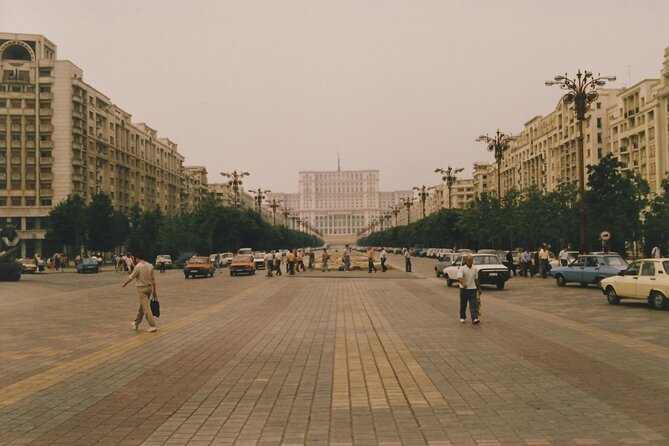
REVIEW · COMMUNISM AND CEAUSESCU TOURS
Communism Walking Tour from Lenin to Ceausescu in Bucharest
History feels close to the pavement here. This 2.5-hour Bucharest walking tour links grand communist projects, royal buildings, churches, and the sites of the 1989 revolution. I like the clear route from the Palace of Parliament to Revolution Square, and I like the way guides such as Alex and Lucia connect buildings to ordinary life under communism. The main drawback is that the tour is offered only in English, so you need a good command of the language to catch the political detail and humor.
I also appreciate the modest $24 price, especially since you get a local guide and a strong introduction to central Bucharest. You should know, though, that this is an outdoor walking experience. Food, drinks, and paid entries are not included, and some stops are short viewings rather than interior visits.
In This Review
- Six details that make this Bucharest tour useful
- Starting beside the Palace of Parliament
- Antim Monastery and the city nearly erased
- The Patriarchate, opera-inspired design, and early communism
- Piata Unirii and the socialist boulevard
- Old Town after the communist era
- University’s Square and the bloody end of communism
- The Royal Palace and Romania’s changing power
- Ateneul Roman and the five lei note
- Revolution Square and Ceausescu’s final speech
- What the $24 price gets you
- Guides, language, and the pace of the walk
- Who should book this Bucharest history walk?
- FAQ
- How long does the Communism Walking Tour last?
- What time does the tour begin?
- Where does the tour start?
- Where does the tour end?
- What language is the tour offered in?
- What is included in the price?
- Can I cancel for a full refund?
- Should you book this tour?
Six details that make this Bucharest tour useful

- The route crosses three very different eras: communist Bucharest, royal Romania, and the older city that survived the redevelopment schemes.
- The Palace of Parliament begins the story: you see the scale of Nicolae Ceausescu’s final building project before walking toward the places tied to resistance and revolution.
- You visit Revolution Square at the end: this is where Ceausescu gave his last speech to the Romanian public from the former Communist Party headquarters.
- The 1989 uprising is treated seriously: University’s Square was one of the main sites of the bloody end of communism in Romania.
- The route includes overlooked places: Antim Monastery and the Patriarchate show what was threatened, reused, or reshaped by the socialist city plan.
- The group can reach 25 people: large enough for a social outing, but less intimate than a private walk.
Starting beside the Palace of Parliament
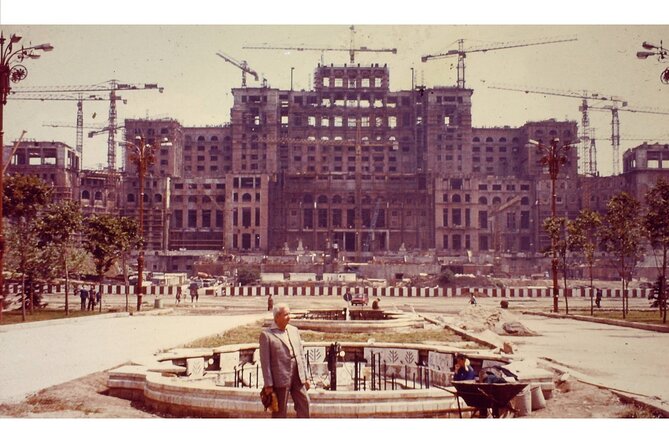
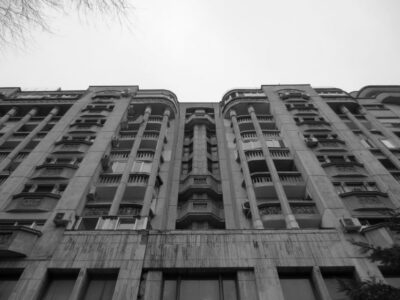
The tour begins at 10:30 a.m. in front of the Palace of Parliament on Bulevardul Unirii. This is a fitting place to start. The building was part of Ceausescu’s last megalomaniac communist project and is described as the second-largest administrative building in the world.
You have about 20 minutes here. That is enough time to take in the huge facade, hear why it was built, and understand the urban changes that followed. The building is not simply a large government office. It represents a plan to remake Bucharest around the power of one party and one leader.
I find this opening useful because it gives the rest of the walk a clear frame. You are not just looking at impressive architecture. You are asking what had to be cleared, moved, or sacrificed to create it. The tour’s focus is on that connection between physical space and political power.
The Palace of Parliament can feel almost absurd in scale, and that is part of the lesson. Its size tells you something about the ambitions of the regime, but it does not tell the whole story. Your guide helps put the building beside the human cost and daily realities of the period.
This stop is an exterior visit, with free admission listed for the tour. If you want a formal interior tour of the palace, this walking experience does not include it. Keep that distinction in mind when comparing it with other Bucharest activities.
More Walking Tours in Bucharest
- Bucharest: City Highlights Guided Walking Tour
★ 4.9 · 1,482 reviews - Bucharest Highlights Walking Tour
★ 5.0 · 469 reviews - Bucharest: Ghost Stories & Romanian Mythology Walking Tour
★ 4.9 · 287 reviews
Antim Monastery and the city nearly erased
From the palace area, the walk reaches Manastirea Antim, an old religious site that was almost demolished to make room for the new Socialist Victory Boulevard. The stop lasts about 15 minutes.
This is one of the most useful parts of the route because it shifts the story away from monumental government buildings. Antim Monastery shows how older Bucharest could get in the way of a grand new plan. A church complex was not valued only for its religious role or architecture. Under the redevelopment program, it was also an obstacle to a wider boulevard.
You will not spend a long time here, but the short visit works as a visual pause. The contrast between the monastery and the broad socialist avenue helps you see the city as a place that was edited by force.
I would listen closely during this stop. The details about what was nearly removed are more important than a quick photograph. If you are interested in architecture, urban planning, or the effects of dictatorship on old neighborhoods, this is one of the sharper moments of the walk.
The Patriarchate, opera-inspired design, and early communism
The next stop is Palatul Patriarhiei, visited for about 20 minutes. Its design was inspired by the Garnier Opera in Paris, giving the building a distinctly formal and grand appearance.
The site is tied to both the beginning of democracy in Romania and the beginning of the communist movement. That pairing makes it more interesting than a simple architectural stop. The guide can show you how one location can carry several political meanings, depending on the period you are studying.
This is where a good storyteller matters. Alex received special praise for connecting the pieces of Romanian communist history, while also using humor and adapting to the group. That ability is valuable here because the story is not a straight line from monarchy to dictatorship to freedom. Romania’s political changes were tangled, and the buildings reflect that.
You should expect the guide to do most of the interpreting. The tour does not list an admission to the palace, so think of this as an exterior and historical stop rather than a museum visit.
Piata Unirii and the socialist boulevard

The walk continues to Piata Unirii, a major landmark built during the 1980s as part of the Socialist Victory Boulevard. You spend about 20 minutes here.
Today, the area is known for its Dancing Fountains, a feature that gives the square a lighter public image. The tour asks you to look past the fountains and see the square as part of Ceausescu’s attempt to reshape the capital.
That contrast is useful. Modern Bucharest can make the communist plan feel distant, especially when a square is busy with everyday activity and public entertainment. Your guide brings back the original purpose and scale of the project.
I like this stop because it shows how places change meaning. A square built to serve state power can later become a familiar civic space. The fountains are visually enjoyable, but the main value here is the explanation of the boulevard and the planning behind it.
The 20-minute timing also gives you a little room to look around without turning the tour into a long architectural lecture. Still, you should wear comfortable shoes. The full route takes about two and a half hours, and there is no food or drink included along the way.
More communism history tours:
- The Real tour of Communism
★ 5.0 · 666 reviews - Life under Communism
★ 5.0 · 358 reviews - 3-Hour Guided Tour of Communist Bucharest
★ 4.9 · 303 reviews - Bucharest Essential Tour: Old Town, Calea Victoriei & Communism
★ 5.0 · 142 reviews
Old Town after the communist era
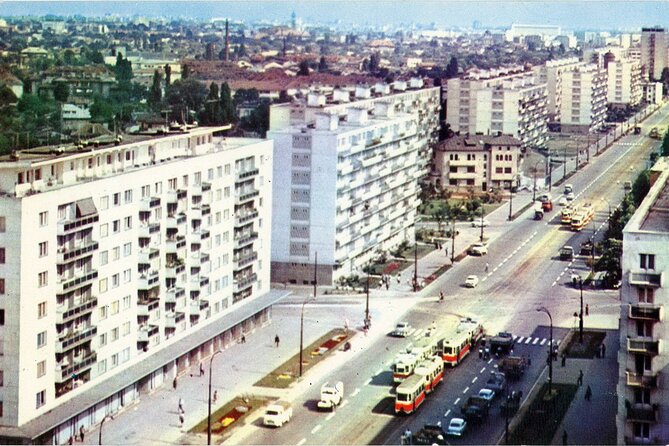
The route then reaches Bucharest’s Old Town for roughly 15 minutes. The area is presented as a symbol of the old regime, but it was abandoned during the communist period.
This is an important counterpoint to the new boulevards and giant administrative buildings. Old Town represents a different Bucharest, one connected with the city before the socialist redevelopment. Its neglect under communism helps explain how the regime favored planned avenues and official buildings over older urban fabric.
The stop is brief, so do not expect a full Old Town tour. Instead, use it to understand what happened when historic areas no longer fit the priorities of the state.
I find this kind of stop more useful than a simple list of famous buildings. You get a sense of what disappeared from daily city life, not only what the government built. The tour keeps returning to that question: What did Bucharest gain, and what did it lose?
University’s Square and the bloody end of communism
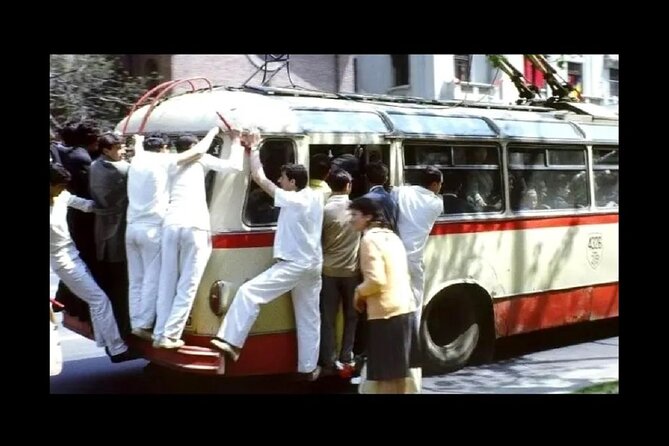
University’s Square is one of the most serious stops. You spend about 15 minutes here, learning about Romania’s 1989 revolution.
Romania was the only country in the communist bloc whose regime ended in a bloody revolution. University’s Square was one of the places where many victims were shot. That fact changes the mood of the walk. The earlier stops focus on urban planning and political symbolism. Here, the story becomes immediate and personal.
This is also a good reason to take the tour early in your Bucharest visit. The guide provides a framework for later visits to museums, memorials, or revolutionary sites. Without that background, it is easy to see the square as simply a central traffic and meeting point.
You should give this stop your full attention. The 15-minute visit is short, but the subject is heavy. A guide who can explain the sequence of events without turning it into a dry date list adds real value.
The Royal Palace and Romania’s changing power
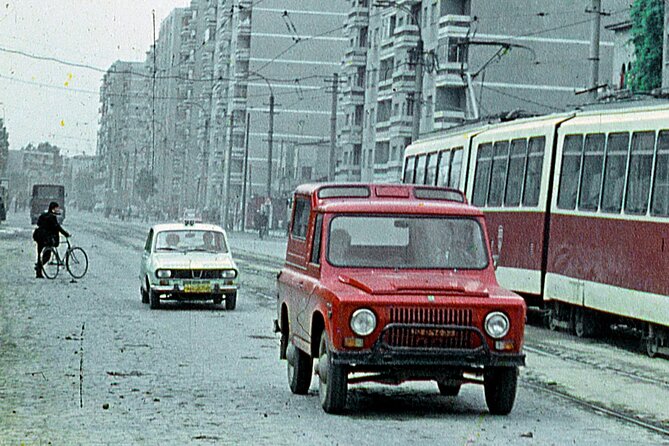
The former Royal Palace comes next, with about 15 minutes devoted to it. The building now houses the National Art Museum and once served as the winter residence of Romania’s royal family.
During the first years of communism, it became the Palace of the Republic and a protocol building. That change in use neatly captures the shift from monarchy to communist government. The building remained important, but its political meaning was rewritten.
I like this stop because it complicates the usual communist story. The regime did not create every important building from scratch. It also took existing symbols of authority and assigned them new roles.
The present-day National Art Museum is not included as an interior visit in this walking tour. If you want to see the collections, plan a separate visit. On the walk, the palace works as a historical marker and a chance to compare royal ceremony with communist state ceremony.
Ateneul Roman and the five lei note
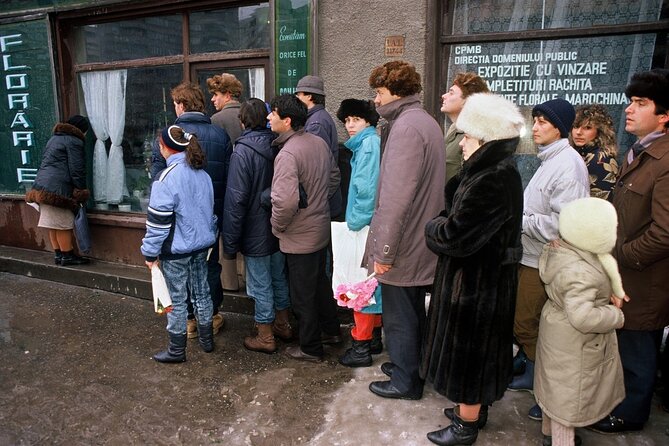
Ateneul Roman receives only about five minutes, making it the quickest stop. It is one of Bucharest’s most representative buildings and appears on the five lei banknote.
That short pause is enough to identify its importance and take in the exterior. It also adds some welcome visual variety after the heavier political material. The building is a reminder that Bucharest’s identity is not limited to communist monuments and revolutionary sites.
Do not expect an extended concert-hall visit or a detailed art lecture here. The value is in the connection between a familiar national image and the city around you. If you have seen the five lei note, you will recognize the reference immediately.
Revolution Square and Ceausescu’s final speech
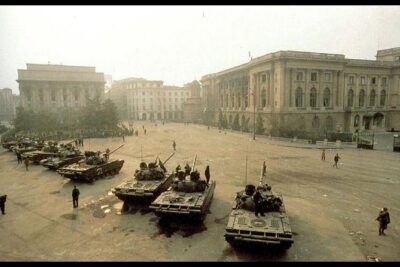
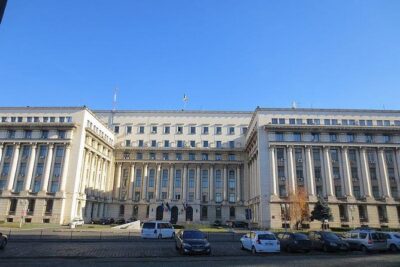
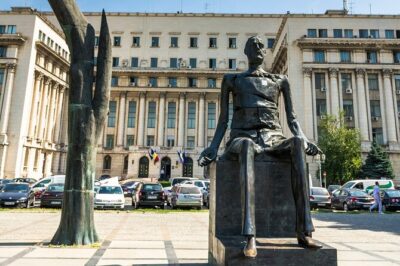
The tour ends at Piata Revolutiei, or Revolution Square, after about 25 minutes. This is the most important closing stop because the main building here was the Central Committee of the Communist Party.
From this location, Nicolae Ceausescu gave his last speech in front of the Romanian people. The square is therefore tied directly to the collapse of his rule and the events that brought communist government to an end.
Ending here gives the route a strong shape. You begin with the physical expression of Ceausescu’s power at the Palace of Parliament and finish at the place where that power faltered in public.
The final 25 minutes are long enough for the guide to connect several earlier stops. Antim Monastery showed what the new city plan threatened. Piata Unirii showed how the socialist boulevard was built. University’s Square showed the violence of the revolution. Revolution Square brings those strands together.
Your endpoint is useful, too. You finish in a central part of Bucharest rather than returning to the start. The tour does not include transport back, but the route ends near major city sights and public transportation.
What the $24 price gets you
At $24 per person, this tour offers solid value if you want historical context rather than only sightseeing photographs. You receive a local English-speaking guide, a planned route through major central sites, and two and a half hours of explanation for less than the cost of many paid attractions.
The strongest value comes from the links between locations. You could walk past the Palace of Parliament, Old Town, the Royal Palace, and Revolution Square on your own, but the political connections would be easy to miss.
You are not paying for entrance tickets. The listed stops are free, and the experience does not include food, drinks, or access to the interiors of the Palace of Parliament or National Art Museum. That makes the price fair, but you should budget separately if you want to go inside those buildings.
The group size can reach 25 people. That is manageable for a city walk, though it may feel less personal than a small private tour. If you want to ask many questions, try to stay near the guide and arrive ready to listen.
Guides, language, and the pace of the walk
The experience is offered in English. Alex is praised for his storytelling, humor, scientific background, and ability to adjust his explanations to a mixed-age group. That makes the tour suitable for a family or a three-generation group with a shared interest in history.
Lucia is also named as a strong guide. The available feedback includes one person who found the English difficult to understand, even with Google Translate. That is an important practical warning: translation apps may not keep up with a fast walking explanation, political terms, or jokes.
I would choose this tour if you can follow spoken English comfortably. If you understand only basic English, you may still enjoy the buildings and route, but you could miss the main benefit, which is the detailed interpretation.
Most people can take part, and service animals are allowed. The tour runs near public transportation, starts at 10:30 a.m., and has mobile ticketing. Free cancellation is available up to 24 hours before the start time. If the minimum number is not reached and the operator cancels, you are offered another date or experience, or a full refund.
Who should book this Bucharest history walk?
I would recommend it to you if you want a clear introduction to Romania’s communist period before exploring more museums and monuments. It suits first-time Bucharest visitors, history readers, architecture fans, and families who want a shared activity that can work across generations.
It is also a good choice if you prefer walking and discussion to sitting in a museum. The route mixes major sights with less obvious places, and the guide’s stories give the city a human scale.
You may want something else if you need extensive interior access, a short activity, or a language other than English. This is not a general Bucharest highlights tour, and it does not spend long at each sight. Its subject is focused, sometimes somber, and tied closely to the political past.
FAQ
How long does the Communism Walking Tour last?
The tour lasts approximately 2 hours and 30 minutes.
What time does the tour begin?
It starts at 10:30 a.m.
Where does the tour start?
The meeting point is Bulevardul Unirii 5, Bucharest, Romania.
Where does the tour end?
The walk ends at Revolution Square, or Piata Revolutiei, in Bucharest.
What language is the tour offered in?
The tour is offered in English.
What is included in the price?
A local guide is included. Food, drinks, and paid admissions are not included.
Can I cancel for a full refund?
Yes. You can cancel at least 24 hours before the experience start time for a full refund. Cancellations or changes made less than 24 hours before the start are not refunded or accepted.
Should you book this tour?
Book it if you want the city’s communist past explained through real streets and buildings, not reduced to a few dates. The route from the Palace of Parliament to Revolution Square is logical, the price is reasonable, and guides such as Alex and Lucia add personality to a serious subject.
I would schedule it near the beginning of your Bucharest stay. You will look at the boulevards, royal buildings, Old Town, and revolutionary squares with sharper eyes afterward. Just bring comfortable shoes, arrive prepared for English commentary, and remember that the tour provides context rather than interior admissions.
Just added in Bucharest
- Bucharest: Dealu Mare Winery Private Trip with Wine Tasting★ 4.9 · 6 reviews
- Winery touring & private wine tasting – one day private tour★ 5.0 · 3 reviews
- Village Museum Bucharest Guided Tour★ 5.0 · 6 reviews
- Transylvania Tour: Dracula’s Castle, Peles Palace & Brasov★ 5.0 · 19 reviews
- Transfer Airport Otopeni – Bucharest★ 5.0 · 2 reviews
- Private Transfer Bucharest Otopeni Airport (OTP) to/from Brasov★ 5.0 · 2 reviews
- Bucharest Airport Transfer To Constanta Mamaia★ 5.0 · 3 reviews
- Airport Henri Coanda (Otopeni) to Bucharest – Private Transfer – Driver★ 5.0 · 5 reviews
Communism and Ceausescu Tours, compared.
Bucharest Essential Tour: Old Town, Calea Victoriei & Communism
Read our review →
Communism in Bucharest – Landmarks, Museum & Communist Appetizers
Read our review →

Browse the lists this tour appears in