
REVIEW · COMMUNISM AND CEAUSESCU TOURS
Contrasts of Communism – Small Group Walking Tour in Bucharest
History gets personal here. Contrasts of Communism links Bucharest’s grand political squares with ordinary neighborhoods, a cemetery, street art, and the scars left by the 1989 Revolution. You move by foot and public transport, so you see more than the polished center.
I like the small maximum group of eight, which makes it easier to ask direct questions and hear personal stories. I also like the use of old photographs, praised repeatedly for helping you match past scenes with the city in front of you. The main consideration is physical effort: three hours includes a fair amount of walking, hills, and public transportation, so eat breakfast and wear comfortable shoes.
In This Review
- Key Points Before You Book
- Why This Tour Gives Bucharest More Meaning
- Revolution Square and Ceausescu’s Last Speech
- University’s Square and the First Heroes of Freedom
- A Working-Class District by Metro and Bus
- The Memorial Cemetery at Eroii Revolutiei
- Carol I Park and the Communist Monument
- The Palace of Parliament: Ceausescu’s Final Project
- Unirii Boulevard and the Dancing Fountains
- What $42.05 Gets You
- Group Size, Pace, and Practical Comfort
- Who Will Get the Most From It
- Should You Book Contrasts of Communism?
- FAQ
- How long does Contrasts of Communism last?
- What language is the tour offered in?
- How many people can join the tour?
- Where does the tour begin?
- Where does the tour end?
- Does the tour include Palace of Parliament admission?
- Is public transportation part of the tour?
- How physically demanding is the experience?
- Can I cancel for a full refund?
Key Points Before You Book
- The route begins at Revolution Square, where Nicolae Ceausescu gave his final speech in December 1989.
- You travel beyond the central sights by metro and public bus to see a working-class district and communist-era apartment blocks.
- The Memorial Cemetery gives the revolution a human face, with time to consider the people killed in 1989.
- Old photographs make the past easier to picture, especially around changed buildings and public spaces.
- The tour ends near the Palace of Parliament and Old Town, a useful location for continuing your Bucharest sightseeing.
- The price is $42.05 per person for about three hours, with a maximum of eight people and Palace of Parliament admission not included.
Why This Tour Gives Bucharest More Meaning
Bucharest can be confusing at first. It mixes grand nineteenth-century buildings, enormous communist projects, battered apartment blocks, modern cafés, and memorials to a revolution that still shapes public life. A standard sightseeing walk may show you the architecture without explaining why the city looks this way.
This tour takes a clearer route through that story. It focuses on the communist dictatorship, the events of 1989, and the years after communism. You hear about Nicolae Ceausescu’s rule, the cult of personality around him, the effect of shortages and state control, and the way ordinary Romanian families experienced that period.
The strongest part is the link between public history and private life. Elena, the guide most often associated with this experience, brings an approachable style and uses family experience to explain how communism affected people at home. She is also praised for speaking excellent English, answering questions fully, and offering useful suggestions for restaurants and other things to do in Bucharest.
The tone is conversational rather than memorized. That matters with a subject this heavy. You can ask about politics, daily life, the revolution, or the transition after 1989 without being pushed through a fixed speech. Guide assignments can vary, so check your confirmation if having Elena specifically is important to you. One account names Martha as the guide.
More Walking Tours in Bucharest
- Bucharest: City Highlights Guided Walking Tour
★ 4.9 · 1,482 reviews - Bucharest Highlights Walking Tour
★ 5.0 · 469 reviews - Bucharest: Ghost Stories & Romanian Mythology Walking Tour
★ 4.9 · 287 reviews
Revolution Square and Ceausescu’s Last Speech
The tour starts at Boteca 13, on Strada Boteanu, near the central sights. The first major stop is Revolution Square, where Ceausescu delivered his final public speech in 1989.
This is not just a square with a plaque and a quick photo stop. It is the place where the communist system began to crack in public. You hear about the rise of the dictatorship, the concentration of power, and the events that led to Ceausescu’s fall.
Allow about 30 minutes here. That is enough time to establish the political background before moving into the street-level story. The guide’s old photographs are especially useful at this point, since they let you compare the familiar city with images from the final days of the regime.
I like the restraint of beginning here rather than launching into a long general history of Romania. You start with a specific place and a specific moment. The drawback is that the square can feel visually ordinary if you do not already know what happened there, so the explanation is essential.
University’s Square and the First Heroes of Freedom
The next stop is University’s Square, described as KM0 of Romanian freedom of speech. It is tied to the first people killed in Bucharest on December 21, 1989, when protests against the regime were spreading.
You spend around 30 minutes here, unpacking how demonstrations began, how fear changed into public resistance, and how the city remembers those who died. The stop also connects the events of 1989 with Romania’s current political climate, giving you a sense that this is not sealed-off history.
That present-day link is valuable. You are not just memorizing dates. You are considering how a society deals with dictatorship, revolution, memory, and political change. Several accounts describe the tour as thought-provoking for precisely this reason.
This section may be the most rewarding part for anyone who already knows the broad outline of the revolution but wants a Romanian perspective. If you prefer only architecture and quick facts, the conversation about political effects may feel more serious than a typical city tour.
A Working-Class District by Metro and Bus
The route then leaves the usual central circuit. You use public transportation to reach Eroii Revolutiei and explore a typical working-class neighborhood.
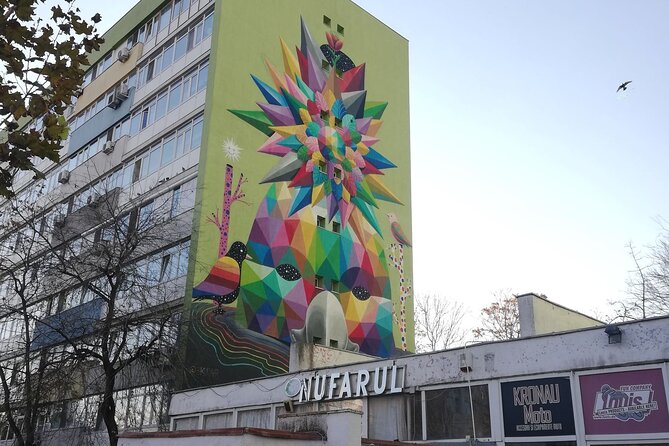
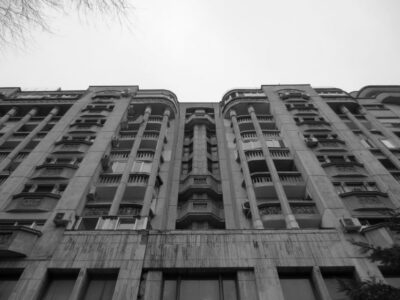
This is where the title, Contrasts of Communism, earns its keep. Instead of staying among monuments and official buildings, you see the type of district shaped by communist urban planning. The 1970s gray apartment blocks are now being changed by colorful street art.
The contrast is plain. The blocks reflect an era of mass housing and functional design, while the murals suggest a newer city trying to add color, identity, and public expression. You get to consider both the original purpose of these neighborhoods and the way they are being reinvented.
The stop itself lasts about 15 minutes, but the transport adds an important layer. Taking the metro and public bus helps you experience Bucharest as a resident might, rather than viewing the city only from a sightseeing vehicle. It also means the tour is not a pure walking route, so expect a little waiting, boarding, and moving between modes.
If you have mobility concerns, moderate physical fitness is advised. The route includes walking as well as public transport, and the total pace is not designed as a seated city tour.
More communism history tours:
- The Real tour of Communism
★ 5.0 · 666 reviews - Life under Communism
★ 5.0 · 358 reviews - 3-Hour Guided Tour of Communist Bucharest
★ 4.9 · 303 reviews - Bucharest Essential Tour: Old Town, Calea Victoriei & Communism
★ 5.0 · 142 reviews
The Memorial Cemetery at Eroii Revolutiei
From the neighborhood, you walk through the Memorial Cemetery dedicated to the Heroes of the 1989 Revolution. This quieter stop lasts about 30 minutes.
The cemetery changes the mood. Revolution Square and University’s Square are public, political spaces. Here, the focus turns to names, graves, and individual lives. The guide shares personal stories of people killed during the revolution, helping you understand that the events were not only about speeches, crowds, and changing governments.
I consider this one of the most important stops because it prevents the tour from turning into a story about famous leaders alone. The dead were not symbols first. They were people with families and unfinished lives.
You should give this section your attention and patience. It is not a lively photo opportunity, and the quiet paths invite a slower pace. For that reason, it may not suit someone seeking a light morning walk. For anyone trying to understand Romania’s recent past, it adds emotional weight without needing theatrical presentation.
Carol I Park and the Communist Monument
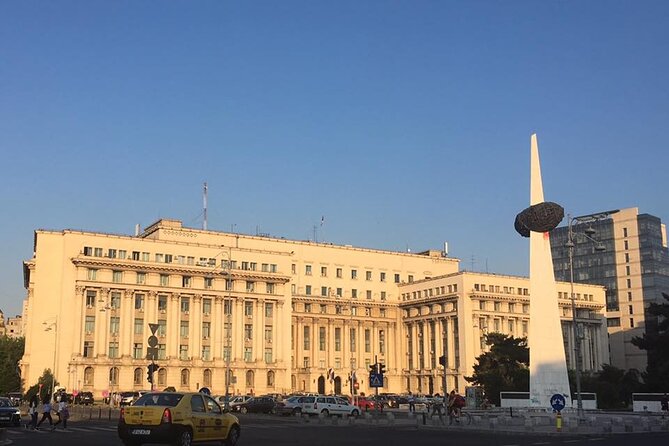
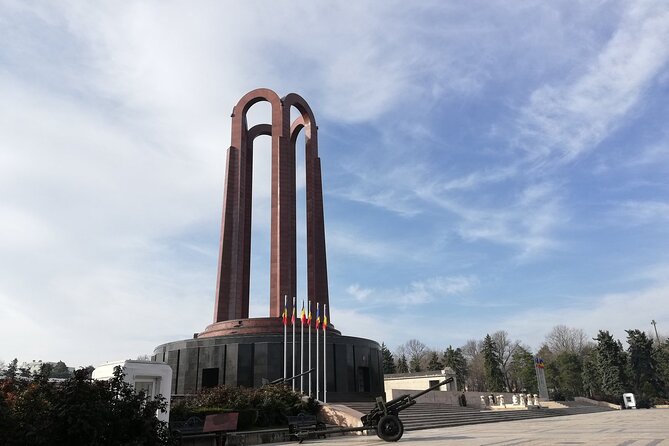
The route continues to Carol I Park, one of the higher points in Bucharest. From here, you get a broad view over the city and visit the Monument of the Heroes for the Freedom of the Motherland.
The monument was built in honor of communist party leaders. Its position in the park gives the guide a chance to explain how public monuments were used to promote the state and its political message.
This is a useful architectural pause after the cemetery. You are looking at the physical language of power: height, ceremony, scale, and official memory. The view also helps you see Bucharest as a city shaped by several political eras, not a place defined by one style.
The hill is one reason to take the footwear warning seriously. The route is manageable for someone with moderate fitness, but this is not a flat stroll through the Old Town. The tour includes rest stops when needed, according to the experience details, yet you should still plan for steady movement.
The Palace of Parliament: Ceausescu’s Final Project
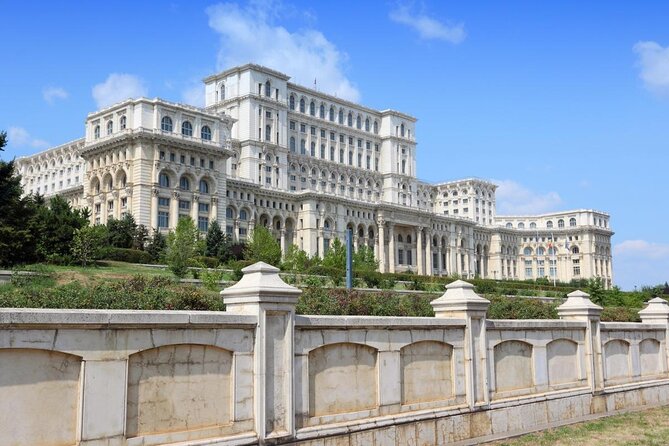
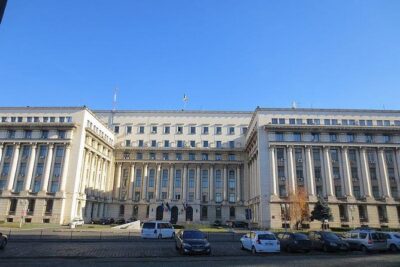
The tour returns to the center for a 30-minute stop outside the Palace of Parliament. You stand before one of the largest administrative buildings in the world, described here as the second-largest administrative building in the world.
The building was Ceausescu’s last great project and one of the clearest symbols of his rule. Its scale is hard to separate from the cost of creating it. The story is not simply about impressive architecture. It is also about political power, forced urban change, and a leader’s desire to remake Bucharest around the state.
This is an exterior stop, and admission to the building is not included. If you want to tour the interior, you will need to make separate arrangements. The tour itself concentrates on the building’s role in the communist period and on what its continued presence means in modern Bucharest.
I like having this stop near the end. After seeing ordinary blocks, a memorial cemetery, and a communist monument, you can read the Palace with more context. Without that background, it is easy to treat the building as a giant photograph. After this route, you understand why it provokes such mixed reactions.
Unirii Boulevard and the Dancing Fountains
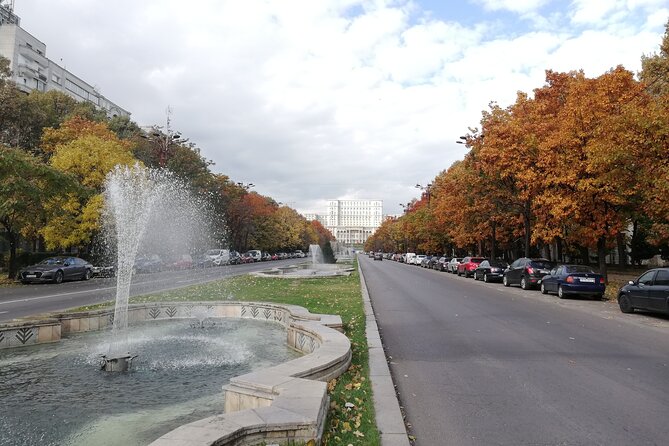
The final 15-minute stop is on Bulevardul Unirii, near the dancing fountains. This boulevard was designed as a kind of home-court advantage, intended to humble visiting world leaders with its scale and formal layout.
It is a fitting ending. The route began with Ceausescu speaking to a crowd and ends with the urban stage he created around his power. The boulevard and the Palace show how architecture can be used to impress, control movement, and shape public memory.
The end point is Bulevardul Unirii 25, close to the Palace of Parliament and Bucharest’s Old Town. That makes the tour easy to fold into a larger day of sightseeing. You can continue toward the historic center, stop for a meal, or visit another nearby attraction.
What $42.05 Gets You
At $42.05 per person, the tour is not the cheapest way to spend three hours in Bucharest, but the value is strong if you want interpretation rather than a simple route map.
The price covers a small-group experience with a maximum of eight people, a guide, several central and less central locations, and the use of public transportation as part of the route. The stops themselves have no admission charge. Palace of Parliament entry is separate, which is important if you are comparing this with a tour that includes an indoor visit.
You are also paying for the route design. Most visitors could find Revolution Square, University’s Square, the Palace, and Unirii Boulevard without help. Fewer would think to connect those places with a working-class district, the Memorial Cemetery, and Carol I Park in one compact outing.
The strongest value comes if you ask questions. The guide’s ability to explain family life, political control, the cult of personality, and post-communist change turns a set of locations into a connected story. If you only want landmark photographs, you may find the price less compelling.
Group Size, Pace, and Practical Comfort
The maximum group size is eight. That is small enough for a personal exchange, and it helps explain why the experience receives such strong praise for its relaxed pace and individual attention.
You should expect about three hours, though one account describes the outing as roughly two and a half hours. Allow the full three hours in your schedule. The route includes walking, public transit, a hill, and several pauses for discussion.
Eat before you go. One direct piece of advice from the experience is to have a good breakfast because there is quite a bit of walking. Bring water, wear shoes suited to uneven urban walking, and avoid scheduling a tight appointment immediately afterward.
The meeting point is Boteca 13, Strada Boteanu 3, Bucharest 010027. The tour ends on Bulevardul Unirii near the Palace and Old Town. It is offered in English and uses a mobile ticket. Service animals are allowed, and the starting area is near public transportation.
Confirmation is sent within 48 hours, subject to availability. You can cancel for a full refund up to 24 hours before the start time. The experience requires good weather, so a poor-weather cancellation results in either another date or a full refund.
Who Will Get the Most From It
I would choose this tour if you want to understand why Bucharest looks the way it does today. It suits you especially well if you are interested in:
- Communist-era politics and daily life
- The 1989 Romanian Revolution
- Personal accounts and family memory
- Architecture as a tool of state power
- Neighborhoods beyond the main tourist circuit
- Present-day political and social questions
It is also a good first activity in Bucharest. Several people found that the historical context improved the rest of their visit, since they could recognize the significance of buildings and public spaces they might otherwise have passed without a thought.
You may want a different activity if you dislike walking, public transport, cemeteries, or serious political discussion. This is not a quick highlights tour, and it does not try to make Romania’s recent past comfortable. Its value comes from taking the subject seriously while keeping the conversation open and friendly.
Should You Book Contrasts of Communism?
Book it if you want context, personal stories, and places beyond the postcard route. At $42.05, the small group and carefully connected itinerary offer good value, especially because the tour includes public transport and several stops you might not reach alone.
I would be most likely to book it early in a Bucharest visit, ideally when I have enough energy for the walking and enough time afterward to think about what I saw. Confirm the guide if Elena is important to you, bring breakfast, and remember that Palace of Parliament admission is not part of the price.
Skip it only if you want a purely architectural tour or an easy, flat walk. For everyone else, this is a thoughtful way to meet Bucharest through its difficult recent past, not just its grand buildings.
FAQ
How long does Contrasts of Communism last?
The experience lasts approximately three hours. One account describes the outing as about two and a half hours, so allow the full three hours when planning your day.
What language is the tour offered in?
The tour is offered in English.
How many people can join the tour?
The maximum group size is eight people.
Where does the tour begin?
The meeting point is Boteca 13, Strada Boteanu 3, București 010027, Romania.
Where does the tour end?
The tour ends at Bulevardul Unirii 25, near the Palace of Parliament and Bucharest’s Old Town.
Does the tour include Palace of Parliament admission?
No. The tour stops outside the Palace of Parliament, and admission is not included.
Is public transportation part of the tour?
Yes. The route uses public transportation to reach Eroii Revolutiei and a working-class neighborhood. The provided information does not specify whether transportation fares are included in the price.
How physically demanding is the experience?
You should have a moderate level of physical fitness. The route includes considerable walking, public transportation, and a visit to Carol I Park, which is on one of Bucharest’s higher hills.
Can I cancel for a full refund?
Yes. You can cancel at least 24 hours before the experience start time for a full refund. Cancellations or changes made less than 24 hours before the start time are not accepted for a refund.
Just added in Bucharest
- Winery touring & private wine tasting – one day private tour★ 5.0 · 3 reviews
- Bucharest: Dealu Mare Winery Private Trip with Wine Tasting★ 4.9 · 6 reviews
- Village Museum Bucharest Guided Tour★ 5.0 · 6 reviews
- Transylvania Tour: Dracula’s Castle, Peles Palace & Brasov★ 5.0 · 19 reviews
- Transfer Airport Otopeni – Bucharest★ 5.0 · 2 reviews
- Private Transfer Bucharest Otopeni Airport (OTP) to/from Brasov★ 5.0 · 2 reviews
- Bucharest Airport Transfer To Constanta Mamaia★ 5.0 · 3 reviews
- Airport Henri Coanda (Otopeni) to Bucharest – Private Transfer – Driver★ 5.0 · 5 reviews
Communism and Ceausescu Tours, compared.
Bucharest Essential Tour: Old Town, Calea Victoriei & Communism
Read our review →
Communism in Bucharest – Landmarks, Museum & Communist Appetizers
Read our review →
Browse the lists this tour appears in