
REVIEW · COMMUNISM AND CEAUSESCU TOURS
Follow in the Footsteps of Communism in Romania
Communist Romania still feels close in Bucharest. I like the way this private tour connects grand political places with the personal story of Nicolae Ceausescu, from Parliament Palace to the military unit where he and his wife spent their final hours. I also like the practical setup: hotel pickup, a private vehicle, an English-speaking guide, and entrance fees included.
The main drawback is the pace. Seven hours covers Bucharest and Targoviste, so you spend part of the day on the road and may find the history intense rather than light sightseeing. Still, for anyone interested in Romania’s communist past, this is a focused and useful way to understand the country beyond its pretty old streets.
In This Review
- Key points at a glance
- Why this tour matters in Bucharest
- Parliament Palace: the clearest symbol of Ceausescu’s rule
- Revolution Square and the end of public loyalty
- Primaverii District and Ceausescu’s private life
- The former headquarters and the story behind the dictator
- The drive to Targoviste and the military unit
- What the private format adds
- Is $187 per person fair?
- Who should book this experience?
- Practical advice for making the day work
- Should you book this tour?
- FAQ
- How long does the tour last?
- Where does the tour take place?
- Is hotel pickup included?
- Is transportation included?
- Is the tour private?
- What language is the tour offered in?
- Are entrance fees included?
- Are meals and photo fees included?
Key points at a glance
- Parliament Palace puts communist ambition on a massive scale, with an in-depth guided visit inside the former People’s Palace.
- Revolution Square explains the 1989 Romanian Revolution, the turning point in Ceausescu’s rule.
- Primaverii District shows the dictator’s private world, including a drive by his former villa.
- Targoviste brings the story to its stark ending, at the military unit where the couple were held, prosecuted, and executed.
- A private vehicle and hotel pickup make the long day easier, especially since Bucharest and Targoviste are combined.
- The $187 price reflects the private format, transport, guide, and entrance fees, not just admission to one attraction.
Why this tour matters in Bucharest
Romania’s communist period lasted for decades, but Ceausescu’s rule is often reduced to a few familiar images: gray apartment blocks, long queues, propaganda, and the giant Parliament Palace. This tour gives those images a timeline.
Your guide begins with Ceausescu’s rise to power and explains how he changed from a popular and widely admired leader into a totalitarian ruler. That shift is the key to understanding the tour. You are not simply looking at large buildings. You are following how political power became personal power, and how that power eventually collapsed.
I appreciate the structure because it moves from public authority to private life, then to revolution and death. You see the buildings created to display control, the district where Ceausescu lived, and the sites tied to the final days of his government.
The experience is in English and designed for a private group. That matters here. Communist history can raise complicated questions, and a private setting gives you room to ask your guide about details that might get lost in a larger group.
More communism history tours:
- The Real tour of Communism
★ 5.0 · 666 reviews - Life under Communism
★ 5.0 · 358 reviews - 3-Hour Guided Tour of Communist Bucharest
★ 4.9 · 303 reviews
Parliament Palace: the clearest symbol of Ceausescu’s rule
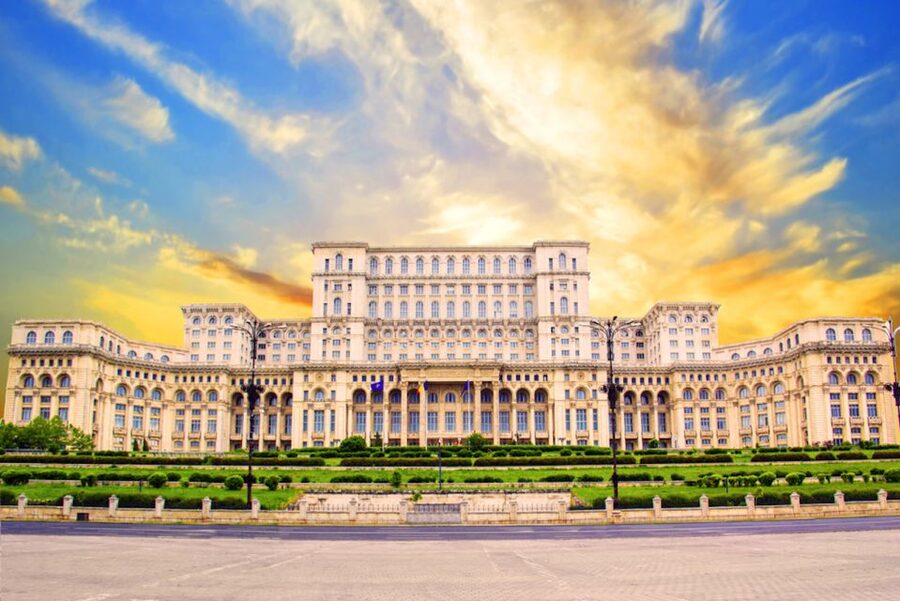
The visit to Parliament Palace is the centerpiece. Formerly called the People’s Palace, it was built during the communist period as a huge expression of state power. It is described as the second largest building in the world, and its sheer scale helps explain the ambition behind Ceausescu’s project.
Inside, you take an in-depth tour with an English-speaking guide from the Parliament. The value is not only the chance to enter the building. It is the chance to connect its size and purpose with the story of Ceausescu himself.
A building this grand can be hard to understand from the outside. Inside, your guide helps you read it as political architecture. Its scale says that the state should dominate the city, and that Ceausescu’s vision mattered more than the ordinary needs of the people living around it.
The visit also gives you a fuller picture of the dictator. The tour description presents Parliament Palace as a way to understand who he really was, not just where he worked. That makes this stop more useful than a quick photo break.
Plan for the building to be visually impressive but emotionally uncomfortable. The grandeur came from a period when the country was pushed into darkness under totalitarian rule. The tour does not treat the palace as a simple architectural attraction, and you should not expect a light or purely decorative visit.
Revolution Square and the end of public loyalty
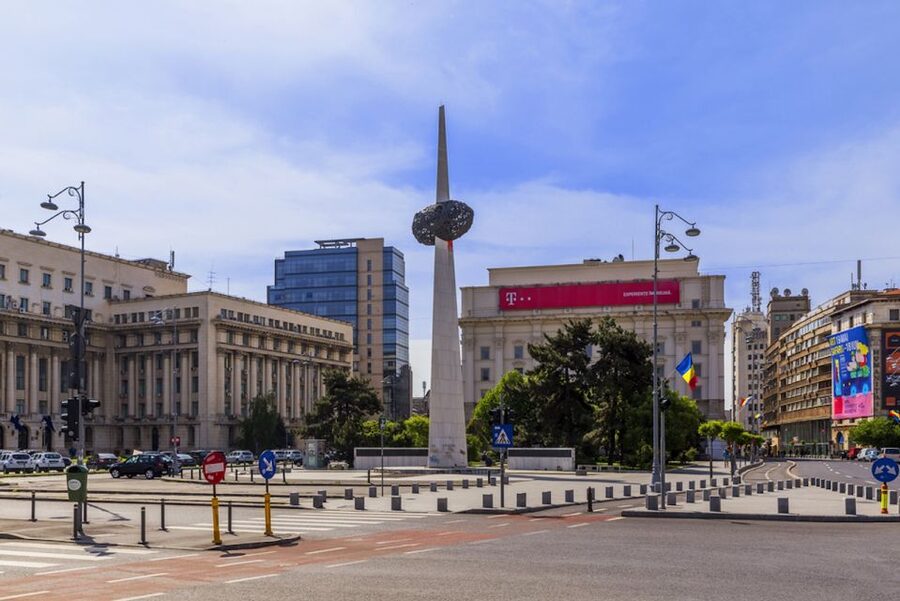
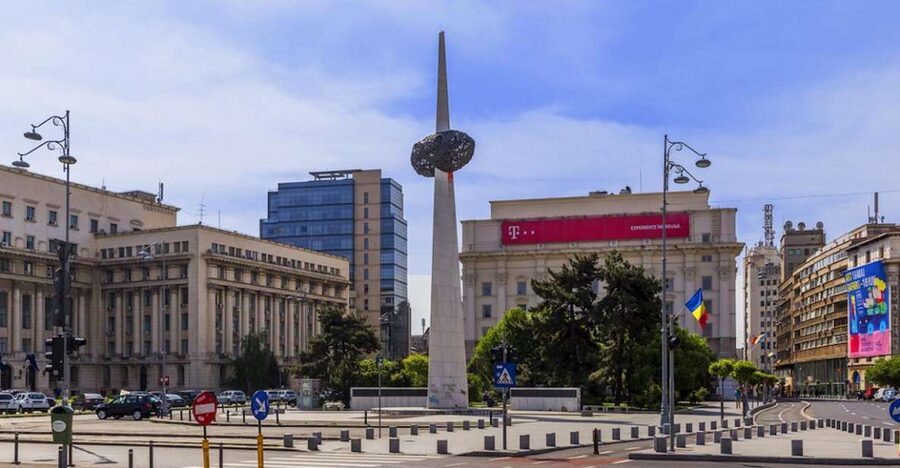
The stop at Revolution Square shifts the focus from Ceausescu’s power to its collapse. This is where you learn about the Romanian Revolution and the events that brought his rule to an end.
The square is important because it links political authority with public reaction. Ceausescu’s rise and long rule may seem distant when you are looking at a palace, but Revolution Square brings the story back to people, protest, and a government losing control.
Your guide provides an overview of the revolution rather than leaving you to guess what happened from the setting. That context is especially valuable if you know only the broad outline of 1989. The tour presents the fall of the regime as the final stage in a long change from popular leadership to dictatorship.
This stop may feel shorter than Parliament Palace, but do not dismiss it. Public squares often tell the story through movement and confrontation rather than grand architecture. Here, the point is the change in atmosphere and authority.
Primaverii District and Ceausescu’s private life
You drive through the Primaverii District to see Ceausescu’s villa. The tour does not describe an interior visit, so think of this as a view of the place where he lived rather than a house tour.
That distinction matters. Parliament Palace shows the public face of power. The villa points to the private world behind that public image. Seeing both in one day helps you compare the ruler’s monumental political project with the more personal setting of his home.
The villa stop also adds a human scale to the story. Ceausescu was not only a name attached to a regime or a giant building. He was a political figure with a residence, a family life, and a carefully protected position in Bucharest.
I would keep your expectations realistic here. The strongest value comes from the guide’s explanation and the contrast with the palace, not from a long stop at the villa itself. You are driving by, so this is a supporting part of the itinerary rather than the main attraction.
A few more Bucharest days worth comparing
- Bucharest: Dracula’s Castle, Peles Castle, & Brasov Old Town
★ 4.5 · 17,858 reviews - Bucharest: Dracula Castle, Peles Castle & Brasov Old Town
★ 4.6 · 10,891 reviews - Bucharest: Dracula’s Castle, Peleș Castle & Brașov Day Trip
★ 4.5 · 5,919 reviews - Bucharest: Palace of Parliament Tickets and Guide
★ 4.3 · 3,182 reviews
The former headquarters and the story behind the dictator
The tour also stops at Ceausescu’s former headquarters. The supplied details do not identify the building by name or specify how long you spend there, but the purpose is clear: you hear more about the center of his political control and the way the regime operated.
This stop helps bridge the gap between the public square and the private villa. You see where power was organized, then where the leader lived, while your guide fills in the political story between them.
I like this middle section because it keeps the tour from becoming a collection of unrelated addresses. Each place has a job. Parliament Palace shows ambition, the headquarters shows authority, the villa shows privilege, and Revolution Square shows the regime’s downfall in Bucharest.
The drive to Targoviste and the military unit
After the Bucharest stops, you travel north to Targoviste, the old capital of Wallachia. The drive makes this a full-day experience rather than a compact city walk, but it also allows the story to reach the exact place where Ceausescu’s final days unfolded.
At Targoviste, you visit the military unit where Nicolae and Elena Ceausescu were held. This is the place where they were prosecuted and executed. The setting gives the final chapter a physical location, rather than leaving it as a date in a history book.
The stop is likely to feel stark. The focus is not on decoration or entertainment. It is on the last hours of the dictatorial couple and the sudden end of a regime that had shaped Romania for years.
This part makes the tour different from a standard Bucharest city excursion. You are not only seeing monuments connected to communist Romania. You are going to the place where the story ended. For me, that makes the longer drive worthwhile for readers who want political history with a clear beginning, middle, and end.
At the same time, Targoviste is the reason to think carefully about your interests. If you want a relaxed day of architecture, cafés, and easy sightseeing, the military unit may feel heavy. If you want a direct look at the fall of Ceausescu, it is one of the most meaningful stops.
What the private format adds
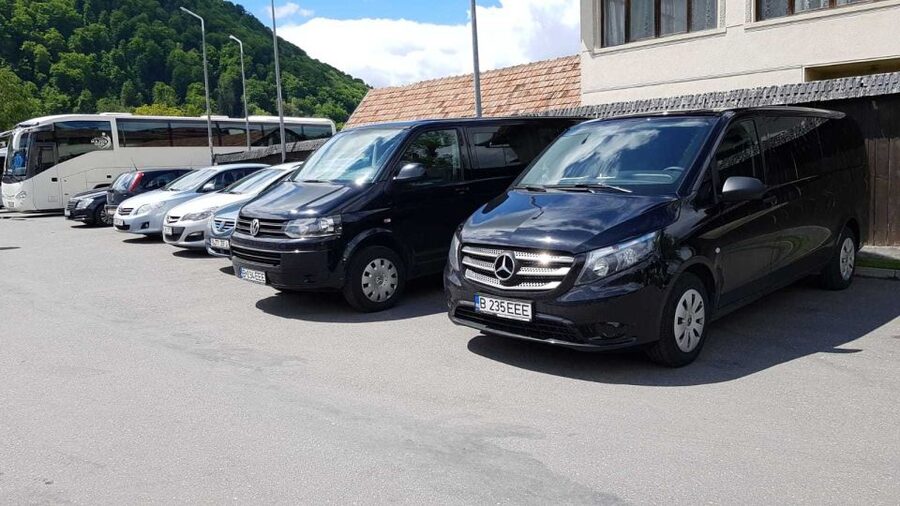
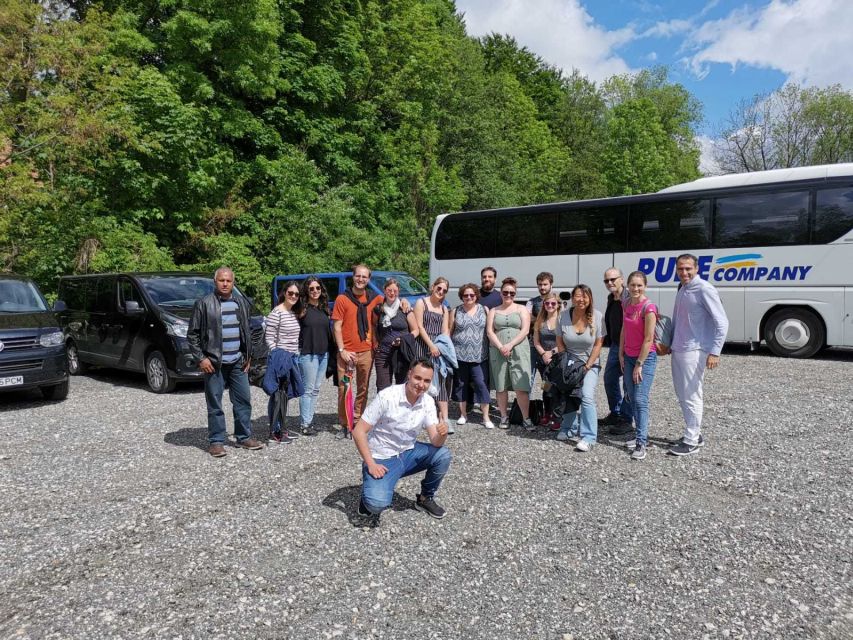
The tour lasts seven hours and uses private transportation. Pickup and drop-off are included from your accommodation, which removes the need to find a meeting point in Bucharest or arrange your own transport to Targoviste.
That convenience has real value. The itinerary covers several sites in the city and then continues outside Bucharest. A private vehicle keeps the day organized and gives you a more comfortable way to handle the distance.
You also get free Wi-Fi onboard the vehicle and bottled water. These are modest extras, but they are useful on a long road-based day. Meals are not included, so plan to handle food on your own. The supplied details do not specify a restaurant stop or meal break, so do not book this expecting lunch to be part of the package.
A private group can also make the subject easier to discuss. Communist Romania involves political repression, public fear, personal privilege, and a violent end. You may want to ask questions or pause over certain details, and a private guide can usually shape the explanation around your interests.
The tour is wheelchair accessible, and pickup is included from your accommodation. Starting times vary, so you need to check availability for the date you want.
Is $187 per person fair?
At $187 per person, this is not a budget sightseeing trip. The price makes more sense when you count what is bundled into the day: a seven-hour private experience, hotel pickup and drop-off, private transportation, a professional English-speaking guide, entrance fees to the listed sites, Wi-Fi, and bottled water.
You are paying for coordination as much as for admission. Reaching Targoviste independently would require separate transport planning, and you would still need to arrange visits to Parliament Palace and the Bucharest locations. The private format also means you are not sharing the vehicle with a large group.
The value is strongest for two or more people who want a focused history day and prefer not to manage the logistics. Solo visitors may find the per-person cost harder to justify, though the private format offers a more personal experience.
Photo fees are not included, and meals are also excluded. Those costs are usually small compared with the tour price, but they are worth remembering when you set your day’s budget.
Free cancellation is available up to 24 hours in advance for a full refund, and you can reserve now and pay later. Those terms give you some flexibility if your Bucharest plans are still shifting.
Who should book this experience?
I would recommend this tour to you if you have a serious interest in modern Romanian history, political change, or the personal story of Ceausescu. It is also a good choice if you want to see Parliament Palace but would prefer to place it inside a wider story.
The tour suits first-time visitors who want an organized introduction to the communist period. You do not need to arrive with a detailed knowledge of Romanian politics. The guide covers Ceausescu’s rise, his transformation into a dictator, the revolution, and his final days.
It may be less suitable if you have only one short morning in Bucharest, since the full experience takes seven hours. It is also not the best match for someone seeking a casual city tour with lots of free time. The subject is serious, the schedule covers several locations, and the trip to Targoviste adds travel time.
Families with older children and teenagers may find the story educational, but the final stop concerns prosecution and execution. Consider the tone and the age of your group before booking.
Practical advice for making the day work
Wear comfortable clothing and shoes. You will visit large sites, move through multiple locations, and spend part of the day in a vehicle.
Keep your schedule flexible around the seven-hour duration. The tour includes Bucharest and Targoviste, so road conditions or the pace of the visits may affect the exact timing. Starting times are based on availability.
Bring questions. This is the kind of experience that improves when you ask about Ceausescu’s rise, the former headquarters, daily life under the regime, or the events at Revolution Square. Your English-speaking guide is there to provide the political and personal context that the buildings alone cannot provide.
Also, keep your camera expectations in check. Photo fees are not included, and the information provided does not say which sites permit photography or what those fees are. Ask your guide before taking pictures inside the sites.
Should you book this tour?
Book it if you want a serious, well-organized look at Ceausescu’s Romania rather than a quick visit to one famous building. The strongest feature is the complete route: Parliament Palace, Revolution Square, the Primaverii villa, the former headquarters, and the military unit in Targoviste.
The $187 price is fair for a private seven-hour day with transport, guide service, and entrance fees included. It is less attractive if you are traveling alone on a tight budget or would rather explore Bucharest at your own pace.
For history-focused visitors, I think the Targoviste visit is the deciding factor. Parliament Palace explains the scale of the regime, but the military unit explains how abruptly it ended. Together, the stops give you a clearer picture of Ceausescu’s rise, rule, privilege, and downfall.
FAQ
How long does the tour last?
The tour lasts seven hours.
Where does the tour take place?
It begins in Bucharest and the surrounding Bucharest-Ilfov area, then continues north to Targoviste.
Is hotel pickup included?
Yes. Pickup and drop-off from your accommodation are included.
Is transportation included?
Yes. Transportation is provided in a private vehicle.
Is the tour private?
Yes. The group type is a private group.
What language is the tour offered in?
The live tour guide speaks English, and English is the listed tour language.
Are entrance fees included?
Yes. Entrance fees to the sites mentioned in the experience are included.
Are meals and photo fees included?
No. Meals and photo fees are not included.
Just added in Bucharest
- Bucharest: Dealu Mare Winery Private Trip with Wine Tasting★ 4.9 · 6 reviews
- Winery touring & private wine tasting – one day private tour★ 5.0 · 3 reviews
- Village Museum Bucharest Guided Tour★ 5.0 · 6 reviews
- Transylvania Tour: Dracula’s Castle, Peles Palace & Brasov★ 5.0 · 19 reviews
- Transfer Airport Otopeni – Bucharest★ 5.0 · 2 reviews
- Private Transfer Bucharest Otopeni Airport (OTP) to/from Brasov★ 5.0 · 2 reviews
- Bucharest Airport Transfer To Constanta Mamaia★ 5.0 · 3 reviews
- Airport Henri Coanda (Otopeni) to Bucharest – Private Transfer – Driver★ 5.0 · 5 reviews
Communism and Ceausescu Tours, compared.
Bucharest Essential Tour: Old Town, Calea Victoriei & Communism
Read our review →
Communism in Bucharest – Landmarks, Museum & Communist Appetizers
Read our review →
Browse the lists this tour appears in